


0,99 €
Niedrigster Preis in 30 Tagen: 0,00 €
Niedrigster Preis in 30 Tagen: 0,00 €
Mehr erfahren.
- Herausgeber: e-artnow
- Kategorie: Gesellschafts- und Liebesromane
- Sprache: Englisch
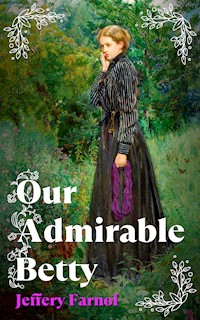
Lady Elizabeth Carlyon carries a nickname "Bewitching Bet" because those who can see her can't think or dream of another woman. She is staying at her aunt Belinda and her admirers follow her and woo her, but she catches the eye of Major John D'arcy who catches her stealing his cherries. There is a significant age difference between them, but they both become bewitched by each other, not realizing the chaos their affair is causing. Many are not happy about them, but there are some who are willing to act against their love.
Das E-Book können Sie in Legimi-Apps oder einer beliebigen App lesen, die das folgende Format unterstützen:
Veröffentlichungsjahr: 2023
Ähnliche



















Our Admirable Betty
Table of Contents
CHAPTER I
CONCERNING THE MAJOR'S CHERRIES
"The Major, mam, the Major has a truly wonderful 'ead!" said Sergeant Zebedee Tring as he stood, hammer in hand, very neat and precise from broad shoe-buckles to smart curled wig that offset his square, bronzed face.
"Head, Sergeant, head!" retorted pretty, dimpled Mrs. Agatha, nodding at the Sergeant's broad back.
"'Ead mam, yes!" said the Sergeant, busily nailing up a branch of the Major's favourite cherry tree. "The Major has a truly wonderful 'ead, regarding which I take liberty to ob-serve as two sword-cuts and a spent bullet have in nowise affected it, Mrs. Agatha, mam, which is a fact as I will maintain whenever and wherever occasion demands, as in dooty bound mam, dooty bound."
"Duty, Sergeant, duty!"
"Dooty, mam—pre-cisely." Here the Sergeant turning round for another nail, Mrs. Agatha bent over the rose-bush, her busy fingers cutting a bloom here and another there and her pretty face quite hidden in the shade of her mob-cap.
"Indeed," she continued, after a while, "'tis no wonder you be so very—fond of him, Sergeant!"
"Fond of him, mam, fond of him," said the Sergeant turning to look at her with glowing eyes, "well—yes, I suppose so—it do be a—a matter o' dooty with me—dooty, Mrs. Agatha, mam."
"You mean duty, Sergeant."
"Dooty, mam, pre-cisely!" nodded the Sergeant, busy at the cherry tree again.
"See how very brave he is!" sighed Mrs. Agatha.
"Brave, mam?" The Sergeant paused with his hammer poised—"Sixteen wounds, mam, seven of 'em bullet and the rest steel! Twenty and three pitched battles besides outpost skirmishes and the like and 'twere his honour the Major as saved our left wing at Ramillies. Brave, mam? Well—yes, he's brave."
"And how kind and gentle he is!"
"Because, mam, because the best soldiers always are."
"And you, Sergeant, see what care you take of him."
"Why, I try, mam, I try. Y'see, we've soldiered together so many years and I've been his man so long that 'tis become a matter o'——"
"Of duty, Sergeant—yes, of course!"
"Dooty, mam—pre-cisely!" nodded the Sergeant.
"Pre-cisely, Sergeant and, lack-a-day, how miserable and wretched you both are!"
The Sergeant looked startled.
"And the strange thing is you don't know it," said Mrs. Agatha, snipping off a final rose.
The Sergeant rubbed his square, clean-shaven chin and stared at her harder than ever.
"See how monstrous lonely you are!" sighed Mrs. Agatha, hiding her face among her newly-gathered blooms, a face as sweet and fresh as any of them, despite the silver that gleamed, here and there, beneath her snowy mob-cap.
"Lonely?" said the Sergeant, staring from her to the hammer in his hand, "lonely, why no mam, no. The Major's got his flowers and his cherries and his great History of Fortification as he's a-writing of in ten vollums and I've got the Major and we've both got—got——
"Well, what, Sergeant?"
The Sergeant turned and began to nail up another branch of the great cherry tree, ere he answered:
"You, mam—we've both got—you, mam—"
"Lud, Sergeant Tring, and how may that be?"
"To teach," continued the Sergeant slowly, "to teach two battered old soldiers, as never knew it afore, what a home might be. There never was such a housekeeper as you, mam, there never will be!"
"A home!" repeated Mrs. Agatha softly. "'Tis a sweet word!"
"True, mam, true!" nodded the Sergeant emphatically. "'Specially to we, mam, us never having had no homes, d'ye see. His honour and me have been campaigning most of our days—soldiers o' fortune, mam, though there weren't much fortune in it for us except hard knocks—a saddle for a piller, earth for bed and sometimes a damned—no, a—damp bed, mam, the sky for roof——"
"But you be come home at last, Sergeant," said Mrs. Agatha softer than ever.
"Home? Aye, thanks to his honour's legacy as came so sudden and unexpected. Here's us two battered old soldiers comes marching along and finds this here noble mansion a-waiting for us full o' furniture and picters and works o' hart——"
"Art, Sergeant!"
"Aye, hart, mam—pre-cisely—and other knick-knacks and treasures and among 'em—best and brightest——"
"Well, Sergeant?"
"Among 'em—you, mam!" said he; and here, aiming a somewhat random blow with the hammer he hit himself on the thumb and swore. Whereon Mrs. Agatha, having duly reproved him, was for examining the injured member but, shaking his head, he sucked it fiercely instead and thereafter proceeded to hammer away harder than ever.
"But then—you are—neither of you so very—old, Sergeant."
"The Major was thirty-one the day Ramillies was fought and I was thirty-three—and that was ten years agone mam."
"And you are both monstrous young for your age—so straight and upright—and handsome. Y-e-e-s, the Major is very handsome—despite the scar on his cheek—the wonder to me is that he don't get married."
Hereupon the Sergeant dropped the hammer.
"As to yourself, Sergeant," pursued Mrs. Agatha, her bright eyes brim-full of mischief, "you'll never be really happy and content until you do."
Hereupon the Sergeant stooped for the hammer and seemed uncommonly red in the face about it.
"As to that mam," said he, a thought more ponderously than usual, "as to that, I shall never look for a wife until the Major does, it has become a matter o'——"
"Duty, of course, Sergeant!"
"Of dooty, mam—pre-cisely!" Saying which, the Sergeant turned to his work again; but, chancing to lift his gaze to a certain lofty branch that crawled along the wall just beneath the coping, he fell back a pace and uttered a sudden exclamation:
"Sacré bleu!"
"Lud, Sergeant!" cried Mrs. Agatha, clasping her posy to her bosom and giving voice to a small, a very small scream, "how you do fright one with your outlandish words! What ails the man—there be no Frenchmen here to fight—speak English, Sergeant—do!"
"Zounds!" exclaimed the Sergeant with his gaze still fixed.
"Sergeant—pray don't oathe!"
"But zookers, mam——!"
"Sergeant—ha' done, I say!"
"But damme, Mrs. Agatha mam, asking your pardon, I'm sure—but don't ye see—he's been at 'em again! The three best clusters on the tree—gone, mam, gone! Stole, Mrs. Agatha mam, 'twixt now and twelve o'clock noon——"
"O Gemini, the wretch!"
"I'll take my oath them cherries was a-blowing not an hour agone, mam, on that branch atop the wall!"
"Who could ha' done it?"
"Not knowing, mam, can't say, but this last week the rogue has captured fourteen squads of our best cherries—off this one tree, and this, as you know, Mrs. Agatha mam, be the Major's favourite tree! So I say, mam, whoever the villain be, I say—damn him, Mrs. Agatha mam!"
"Fie—fie, Sergeant, swearing will not mend matters."
"Maybe not, mam, maybe not, but same does me a power o' good! Egad, when I mind how I've watched and tended them particular cherries Mrs. Agatha I could——"
"Then don't, Sergeant!"
"What beats me," said he, rubbing his square chin with the shaft of the hammer, "what beats me is—how did he do it? Must be uncommonly long in the arms and legs to reach so high unless he used a pole——"
"Or a ladder?" suggested Mrs. Agatha.
"Meaning he did it by escalade, mam? Hum—no, I see no signs of scaling ladders mam and the ground is soft, d'ye see? But a pole now——"
"Or a ladder—on the other side of the wall, Sergeant——"
"B'gad, mam!" he exclaimed. "I believe you're right—though to be sure the house next door is empty."
"Was!" corrected Mrs. Agatha. "Lud, Sergeant, there's a great lady from London been living there a month and more with a houseful of lackeys and servants."
"Ha, a month, mam? Lackeys and servants say you? B'gad, say I, that's them! Must report this to the Major. Must report at once!" and the Sergeant laid down his hammer.
"And where is the Major?"
"Mam," said the Sergeant, consulting a large, brass chronometer, "the hour is pre-cisely three-fourteen, consequently he is now a-sitting in his Ramillie coat a-writing of his History of Fortification—in ten vollums."
"'Twill be pity to wake him!" sighed Mrs. Agatha.
"Wake him?" repeated the Sergeant, staring; whereupon Mrs. Agatha laughed and went her way while he continued to stare after her until her trim figure and snowy mob-cap had vanished behind the yew-hedge.
Then the Sergeant sighed, reached for his coat, put it on, adjusted his tall, leathern stock, sighed again and turning sharp about, marched into the house.
CHAPTER II
INTRODUCING THE RAVISHER OF THE SAME
Major John D'Arcy was hard at work on his book (that is to say, he had been, for divers plans and papers littered the table before him) but just now he leaned far back in his elbow-chair, long legs stretched out, deep-plunged in balmy slumber; perceiving which the Sergeant halted suddenly, stood at ease and stared.
The Major's great black peruke dangled from the chair-back, and his close-cropped head (already something grizzled at the temples) was bowed upon his broad chest, wherefore, ever and anon, he snored gently. The Major was forty-one but just now as he sat lost in the oblivion of sleep he looked thirty; but then again when he strode gravely to and fro in his old service coat (limping a little by reason of an old wound) and with black brows wrinkled in sober thought he looked fifty at the least.
Thus he continued to sleep and the Sergeant to stare until presently, choking upon a snore, the Major opened his eyes and sat up briskly, whereupon the Sergeant immediately came to attention.
"Ha, Zeb!" exclaimed the Major in mild wonder, "what is it, Sergeant Zeb?"
"Your honour 'tis the cherries——"
"Cherries?" yawned the Major, "the cherries are doing very well, thanks to your unremitting care, Sergeant, and of all fruits commend me to cherries. Now had it been cherries that led our common mother Eve into—ha—difficulties, Sergeant, I could have sympathised more deeply with her lamentable—ha—I say with her very deplorable—ha——"
"Reverse, sir?"
"Reverse?" mused the Major, rubbing his chin. "Aye, reverse will serve, Zeb, 'twill serve!"
"And three more squads of 'em missing, sir—looted, your honour's arternoon by means of escalade t'other side party-wall. Said cherries believed to have been took by parties unknown lately from London, sir, not sixty minutes since and therefore suspected to be not far off."
"Why, this must be looked to, Zeb!" said the Major, rising. "So, Sergeant, let us look—forthwith."
"Wig, sir!" suggested the Sergeant, holding it out.
"Aye, to be sure!" nodded the Major, taking and clapping it on somewhat askew. "Now—Sergeant—forward!"
"Stick, sir!" said the Sergeant, proffering a stout crab-tree staff.
"Aye!" smiled the Major, twirling it in a sinewy hand, "'twill be useful like as not."
So saying (being ever a man of action) the Major sallied forth carrying the stick very much as if it had been a small-sword; along the terrace he went and down the steps (two at a time) and so across the wide sweep of velvety lawn with prodigious strides albeit limping a little by reason of one of his many wounds, the tails of his war-worn Ramillie coat fluttering behind. Reaching the orchard he crossed to a particular corner and halted before a certain part of the red brick wall where grew the cherry tree in question.
"Sir," said the Sergeant, squaring his shoulders, "you'll note as all cherries has been looted from top branch—only ones as was ripe——"
"A thousand devils!" exclaimed the Major.
"Also," continued the Sergeant, "said branch has been broke sir."
"Ten thousand——" The Major stopped suddenly and shutting his mouth very tight opened his grey eyes very wide and stared into two other eyes which had risen into view on the opposite side of the wall, a pair of eyes that looked serenely down at him, long, heavy-lashed, deeply blue beneath the curve of their long, black lashes; he was conscious also of a nose, neither straight nor aquiline, of a mouth scarlet and full-lipped, of a chin round, white, dimpled but combative and of a faded sun-bonnet beneath whose crumpled brim peeped a tress of glossy, black hair.
"Now God—bless—my soul!" exclaimed the Major.
"'Tis to be hoped so, sir," said the apparition gravely, "you were swearing, I think?"
The Major flushed.
"Young woman——" he began.
"Ancient man!"
"Madam!"
"Sir!"
The Major stood silent awhile, staring up into the grave blue eyes above the wall.
"Pray," said he at last, "why do you steal my cherries?"
"To speak truth, sir, because I am so extreme fond of cherries."
Here Sergeant Tring gurgled, choked, coughed and finding the Major's eye upon him immediately came to attention, very stiff in the back and red in the face.
The Major stroked his clean-shaven chin and eyed him askance.
"Sergeant, you may—er—go," said he; whereat the Sergeant saluted, wheeled sharply and marched swiftly away.
"And pray," questioned the Major again, "who might you be?"
"A maid, sir."
"Hum!" said he, "and what would your mistress say if she knew you habitually stole and ate my cherries?"
"My mistress?" The grave blue eyes opened wider.
"Aye," nodded the Major, "the fine London lady. You are her maid, I take it?"
"Indeed, sir, her very own."
"Well, suppose I inform her of your conduct, how then?"
"She'd swear at me, sir."
"Egad, and would she so?"
"O, sir, she often doth and stamps at and reviles and rails at me morning, noon and night!"
"Poor child!" said the Major.
"Truly, sir, I do think she'd do me an injury if she didn't care for me so much."
"Then she cares for you?"
"More than anyone in the world beside! Indeed she loveth me as herself, sir!"
"Women be mysterious creatures!" said the Major, sententiously.
"But you know my lady belike by repute, sir?"
"Not even her name."
"Not know of the Lady Elizabeth Carlyon!" and up went a pair of delicate black brows in scornful amaze.
"I have known but three women in my life, and one of them my mother," he answered.
"You sound rather dismal, methinks. But you must have remarked my lady in the Mall, sir?"
"I seldom go to London."
"Now, sir, you sound infinite dismal and plaguily dull!"
"Dull?" repeated the Major thoughtfully, "aye perhaps I am, and 'tis but natural—ancient men often are, I believe."
"And your peruke is all askew!"
"Alack, it generally is!" sighed the Major.
"And you wear a vile old coat!"
"Truly I fear it hath seen its best days!" sighed the Major, glancing down wistfully at the war-worn garment in question.
"O, man," she cried, shaking her head at him, "for love of Heaven don't be so pestilent humble—I despise humility in horse or man!"
"Humble? Am I?" queried the Major and fell to pondering the question, chin in hand.
"Aye, truly," she answered, nodding aggressively, "your humility nauseates me, positively!"
"Child," he answered smiling, "what manner of man would you have?"
"Grandad," she answered, "I would have him tall and strong and brave, but—above all—masterful!"
"In a word, a blustering bully!" he answered gently, grey eyes a-twinkle.
"Aye," she nodded vehemently, "even that, rather than—than a—a——"
"An ancient man, ill-dressed and humble," he suggested and laughed; whereat she frowned and bit her bonnet-string in strong, white teeth, then:
"'Tis a very beast of a coat!" she exclaimed, "stained, spotted, tarnished, tattered and torn!"
"Torn!" exclaimed the Major, glancing down at himself again. "Egad and Sergeant Zebedee mended it but a week since——"
"And the buttons are scratched and hanging by threads!"
"Aye, but they'll not come off," said the Major confidently, "I sewed 'em on myself."
"You sewed them—you!" and she laughed in fine scorn. "Indeed, sir, I marvel they don't drop off under my very eyes!"
"Madam," said he gravely, "among few accomplishments, permit me to say I am a somewhat expert—er—needles-man."
Hereupon the apparition seated herself dexterously on the broad coping of the wall and from that vantage surveyed him with eyes of cold disparagement. And after she had regarded him thus for a long moment she spoke 'twixt curling red lips:
"O, Gemini—I might have known it!"
At this the Major ruffled the curls of his great wig and regarded her with some apprehension. At last he ventured a question:
"And pray madam, what might you have known concerning me?"
"A man who sews on his own buttons is a disgrace to his sex," she answered.
"But how if he have no woman to do it for him?"
"He should be a man and—get one."
"Hum!" said the Major thoughtfully, "a needle is a sharp engine and apt to prick one occasionally 'tis true, and yet a man may prefer it to a woman."
"And you," she exclaimed, drooping disdainful lashes, "you—are a—soldier!"
"I was!" he answered.
"Soldiers are gallant, they say."
"They are kind!" bowed the Major.
"You are, I think, the poor, old, wounded soldier Major d'Arcy who lives at the Manor yonder?" she questioned.
"I am that shattered wreck, madam, and what remains of me is very humbly at your service!" and setting hand to bosom of war-worn coat he bowed with a prodigious flourish.
"And you have never been so extreme fortunate as to behold my Lady Elizabeth Carlyon?"
"Hum!" said the Major, pondering, "what like is she?"
At this slender hands clasped each other, dark eyes upturned themselves to translucent heaven and rounded bosom heaved ecstatic:
"O sir, she is extreme beautiful, 'tis said! She is a toast adored! She is seen but to be worshipped! She hath wit, beauty and a thousand accomplishments! She hath such an air! Such a killing droop of the eyelash! She is—O, she is irresistible!"
"Indeed," said the Major, glancing up into the beautiful face above, "the description is just, though something too limited, perhaps."
The eyes came back to earth and the Major in a flash:
"Then you have seen her, sir?"
"I'm sure of it."
"Then describe her—come!"
"Why, she is, I judge, neither too short nor too tall!"
"True!" nodded the apparition, gently acquiescent.
"Of a delicate slimness——"
"True—O, most true, sir!"
"Yet sufficiently—er—full and rounded!"
The dark eyes were veiled suddenly by down-drooping lashes:
"You think so, sir?"
"Hair night-black, a chin well-determined and bravely dimpled—
"It hath been remarked before, sir!"
"Rosy lips——"
"Fie, sir, 'tis a vulgar phrase and trite. I suggest instead rose-petals steeped in dew."
"A nose——"
"Indeed, sir?"
"Neither arched nor straight and eyes—eyes——" the Major hesitated, stammered and came to an abrupt pause.
"And what of her eyes, sir? I have heard them called dreamy lakes, starry pools and unfathomable deeps, ere now. What d'you make of them?"
But the Major's own eyes were lowered, his bronzed cheek showed an unwonted flush and his sinewy fingers were fumbling with one of his loose coat-buttons.
"Nought!" said he at last, "others methinks have described 'em better than ever I could."
"Major d'Arcy," said the voice softer and sweeter than ever, "I grieve to tell you your wig is more over one eye than ever. And as for your old coat, some fine day, sir, an you chance to walk hereabouts I may possibly trouble to show you how a woman sews a button on!"
Saying which the apparition vanished as suddenly as it had appeared.
The Major stood awhile deep-plunged in reverie, then setting the crabtree staff beneath his arm he wended his way slowly towards the house, limping a little more than usual as he always did when much preoccupied.
On his way he chanced upon the Sergeant wandering somewhat aimlessly with a hammer in his hand.
"Sergeant," said he slowly, "er—Zebedee—if any more cherries—should happen to—er—go astray—vanish——"
"Or be stole, sir!" added the Sergeant.
"Exactly, Zeb, precisely,—if such a contingency should arise you will—er——"
"Challenge three times, sir and then—"
"Er—no, Sergeant, no! I think, under the circumstances, Zeb, we'll just—er—let 'em—ah—vanish, d'ye see!"
Then the Major limped slowly and serenely into the house and left the Sergeant staring at the hammer in his hand with eyes very wide and round.
"Ventre bleu! Sacré bleu! Zookers!" said he.
CHAPTER III
WHICH TELLS HOW THE MAJOR CLIMBED A WALL
A wonderfully pleasant place was the Major's orchard, very retired and secluded by reason of its high old walls flushing rosily through green leaves; an orchard, this, full of ancient trees gnarled and crooked whose writhen boughs sprawled and twisted; an orchard carpeted with velvety turf whereon plump thrushes and blackbirds hopped and waddled, or, perched aloft, filled the sunny air with rich, throaty warblings and fluty trills and flourishes. Here Sergeant Tring, ever a man of his hands, had contrived and built a rustic arbour (its architecture faintly suggestive of a rabbit-hutch and a sentry-box) of which he was justly proud.
Now Major d'Arcy despite his many battles had an inborn love of peace and quietness, of the soft rustle of wind in leaves, of sunshine and the mellow pipe of thrush and blackbird, hence it was not at all surprising that he should develop a sudden fancy for strolling, to and fro in his orchard of a sunny afternoon, book in hand, or, sitting in the Sergeant's hutch-like sentry-box, puff dreamily at pipe of clay, or again, tucking up his ruffles and squaring his elbows, fall to work on his History of Fortification; and if his glance happened to rove from printed page or busy quill in a certain direction, what of it? Though it was to be remarked that his full-flowing peruke was seldom askew and the lace of his cravat and the ruffles below the huge cuffs of his Ramillie coat were of the finest point.
It was a hot afternoon, very slumberous and still; flowers drooped languid heads, birds twittered sleepily, butterflies wheeled and hovered, and the Major, sitting in the shady arbour, stared at a certain part of the old wall, sighed, and taking up his pipe began to fill it absently, his gaze yet fixed. All at once he sprang up, radiant-eyed, and strode across the smooth grass.
The faded sun-bonnet was not; her black hair was coiled high, while at white brow and glowing cheek silken curls wantoned in an artful disorder, moreover her simple russet gown had given place to a rich, flowered satin. All this he noticed at a glance though his gaze never wandered from the witching eyes of her. Were they blue or black or dark brown?
"Sir," said she, acknowledging his deep reverence with a stately inclination of her shapely head, "I would curtsey if I might, but to curtsey on a ladder were dangerous and not to be lightly undertaken."
Quoth the Major:
"It has been a long time—a very long time since you—since I—er—that is—
"Exactly five days, sir!"
"Why—ah—to be sure these summer days do grow uncommon long, mam—
"Which means, sir, that you've wanted me?"
The Major started:
"Why er—I—indeed I—I hardly know!" he stammered.
"Which proves it beyond all doubt!" she nodded serenely.
The Major was silent.
"Then, sir," she continued gravely, "since 'tis beyond all doubt you wanted me and hither came daily to look for me, as methinks you did—?"
Here she paused expectant, whereupon the Major stooped to survey his neat shoe-buckle.
"Well, sir, did you not come patiently a-seeking me here?"
"Why, mam," he answered, rubbing his chin with his pipe-stem, "'tis true I came hither—having a fancy for——"
"Then, sir, since being hither come you found me not, why, having legs, didn't you climb over the wall and seek me where you might have found me?"
The Major caught his breath and nearly dropped his pipe.
"Indeed it never occurred to me!"
"To be sure the climbing of walls is an infinite trying and arduous task for—ancient limbs," she sighed, shaking her head, "yet—even you, might have achieved it—with care."
The Major laughed:
"'Tis possible, mam," said he.
"And it never occurred to you?"
"No indeed, mam, and never would!"
"Then you lack imagination and a man without imagination is akin to the brutes and—" but here she broke off to utter a small scream and glancing up in alarm he saw her eyes were closed and that she shuddered violently.
"Madam!" he cried, "mam! My lady—good heaven are you sick—faint?"
Regardless of the cherry-tree he reached up long arms and swinging himself up astride the wall, had an arm about her shivering form all in a moment; thus as she leaned against him he caught the perfume of all her warm, soft daintiness, then she drew away.
"What was it?" he questioned anxiously as she opened her eyes, "were you faint, mam? Was it a fit? Good lack, mam, I——"
"Do—not—call me—that!" she cried, eyes flashing and—yes, they were blue—very darkly blue—"Never dare to call me—so—again!"
"Call you what, mam?"
"Mam!" she cried, gnashing her white teeth—"'tis a hateful word!"
"Indeed I—I had not thought it so," stammered the Major. "It is, I believe, a word in common use and——"
"Aye, 'tis common! 'Tis odious! 'Tis vulgar!"
"I crave your ladyship's pardon!" And he bowed as well as his position would allow, though a little stiffly.
"You are marvellous nimble, sir!"
"Your ladyship is gracious!"
"Considering your age, sir!"
"And you, madam, I lament that at yours you should be subject to fits."
"Fits!" she cried in frowning amaze.
"Seizures, then——"
"'Twas no seizure, sir—'twas yourself!"
"Me?" he exclaimed, staring.
"You—and your abominable tobacco-pipe!" Here she shivered daintily.
"Alack, madam, see, 'tis broke!"
"Heaven be thanked, sir."
"'Twas an admirable pipe—an old friend," he murmured.
"O fie, sir—only chairmen and watchmen and worse, drink smoke. 'Tis a low habit, vicious, vain and vulgar."
"Is it so indeed, madam?"
"It is! Aunt Belinda says so and I think so. If you must have vices why not snuff?"
"But I hate snuff!"
"But 'tis so elegant! There's Sir Jasper Denholm takes it with such an air I vow 'tis perfectly ravishing! And Sir Benjamin Tripp and Viscount Merivale in especial—such grace! Such an elegant turn of the wrist! But to suck a pipe—O Gemini!"
"I'm sorry my pipe offends you!" said he, glancing at her glowing loveliness.
And here, because of her beauty and nearness he grew silent and finding he yet held part of his clay pipe, broken in his hasty ascent, he fell to turning it over in his fingers, staring at it very hard but seeing it not at all; whereat she fell to studying him, his broad shoulders and powerful hands, his clean-cut aquiline features, his tender mouth and strong, square chin. Thus, the Major, glancing up suddenly, eye met eye and for a long moment they looked on one another, then, as she turned away he saw her cheek crimson suddenly and she, aware of this, clenched her white fists and flushed all the deeper.
"'Tis abominable rude to—stare so!" she said, over her shoulder.
"You are the Lady Elizabeth Carlyon, I think?" he enquired.
"And then, sir?"
"Then you are well used to being stared at, methinks."
"At a distance, sir!"
Here the Major edged away a couple of inches.
"You have heard of such a person before, then?" she enquired loftily.
"I go to London—sometimes, madam, when I must and when last there I chanced to hear her acclaimed and toasted as the 'Admirable Betty'!" said he, frowning.
"I am sometimes called Betty, sir," she acknowledged.
"Also 'Bewitching Bet'!" Here he scowled fiercely at a bunch of cherries.
"Do you think Bet so ill a name, sir?" she enquired, stealing a glance at him.
"'Bewitching Bet'!" he repeated grimly and the hand that grasped his broken pipe became a fist, observing which she smiled slyly.
"Or is it that the 'bewitching' offends you, sir?" she questioned innocently.
"Both, mam, both!" said he, scowling yet.
"La, sir," she cried gaily, "in this light and at this precise angle I do protest you look quite handsome when you frown."
The Major immediately laughed.
"If," she continued, "your chin were less grim and craggy and your nose a little different and your eyes less like gimlets and needles—if you wore a modish French wig instead of a horsehair mat and had your garments made by a London tailor instead of a country cobbler and carpenter you would be almost attractive—by candle light."
"Is my wig so unmodish?" he enquired smiling a trifle ruefully, "'tis my best."
"Unmodish?" White hands were lifted, and sparkling eyes rolled themselves in agonised protest. "There's a new tie-wig come in—un peu negligée—a most truly ravishing confection. As for clothes——"
"And needles," he added, "pray what of your promise?"
"Promise, sir?"
"You were to teach me how to sew on a button, I think?"
"Button!" she repeated, staring,
"If you've forgot, 'tis no matter, madam," said he and dropped very nimbly from the wall.
"Ah, my forgetfulness hath angered you, sir."
"No, child, no, extreme youth is apt to be extreme thoughtless and forgetful——"
"Sir, I am twenty-two."
"And I am forty-one!" he said wistfully.
"'Tis a monstrous great age, sir!"
"I begin to fear it is!" said he rather ruefully.
"And great age is apt to be peevish and slothful and childish and fretful and must be ruled. So come you over the wall this instant, sir!"
"And wherefore, madam?"
"'Tis so my will!"
"But——"
"Plague take it, sir, how may I sew on your abominable buttons with a wall betwixt us? Over with you this moment—obey!"
The Major obeyed forthwith.
CHAPTER IV
CONCERNING THE BUTTONS OF THE RAMILLIE COAT
"Now pray remark, sir," said the Lady Elizabeth Carlyon, seating herself in a shady arbour and taking up her needle and thread, "a woman, instead of sucking her thread and rubbing it into a black spike and cursing, threads her needle—so! Thereafter she takes the object to be sewed and holds it—no, she can't, sir, while you sit so much afar, prithee come closer to her—there! Yet no—'twill never do—she'll be apt to prick you sitting thus——"
"If I took off my coat, madam——"
"'Twould be monstrous indecorous, sir! No, you must kneel down—here at my feet!"
"But—madam——"
"To your knees, sir, or I'll prick you vilely! She now takes the article to be sewed and—pray why keep at such a distance? She cannot sew gracefully while you pull one way and she another! She then fits on her thimble, poises needle and—sews!" The which my lady forthwith proceeded to do making wondrous pretty play with white hand and delicate wrist the while.
And when she had sewn in silence for perhaps one half-minute she fell to converse thus:
"Indeed you look vastly appealing on your knees, sir. Pray have you knelt to many lovely ladies?"
"Never in my life!" he answered fervently.
"And yet you kneel with infinite grace—'tis quite affecting, how doth it feel to crouch thus humbly before the sex?"
"Uncommon hard to the knees, madam."
"Indeed I fear you have no soul, sir."
"Ha!" exclaimed the Major, rising hastily, "someone comes, I think!"
Sure enough, in due time, a somewhat languid but herculean footman appeared, who perceiving the Major, faltered, stared, pulled himself together and, approaching at speed, bowed in swift and supple humility and spoke:
"Four gentlemen to see your ladyship!"
"Only four? Their names?"
The large menial expanded large chest and spake with unction:
"The Marquis of Alton, Sir Jasper Denholm, Sir Benjamin Tripp and Mr. Marchdale."
"Well say I'm out—say I'm engaged—say I wish to be private!"
The large footman blinked, and the Major strove to appear unconscious that my lady held him tethered by needle and thread.
"Very good, madam! Though, 'umbly craving your ladyship's pardon, my lady, your aunt wished me to tell you most express——"
"Well, tell her I won't!"
"My lady, I will—immediate!" So saying, the large footman bowed again, blinked again and bore himself off, blinking as he went.
"And now, Major d'Arcy, if you will condescend to abase yourself we will continue our sewing lesson."
"But mam——"
"Do—not——"
"Your ladyship's guests——"
"Pooh! to my ladyship's guests! Come, be kneeling, sir, and take heed you don't break my thread."
"Now I wonder," said the Major, "I wonder what your lackey thinks——"
"He don't, he can't, he never does—except about food or drink or tobacco—faugh!"
Up started the Major again as from the adjacent yew-walk a faint screaming arose.
"Good God!" exclaimed the Major. "'Tis a woman!"
"Nay sir, 'tis merely my aunt!"
"But madam—hark to her, she is in distress!"
"Nay sir, she doth but wail—'tis no matter!"
"'Tis desperate sound she makes, madam."
"But extreme ladylike, sir, Aunt Belinda is ever preposterously feminine and ladylike, sir. Her present woe arises perchance because she hath encountered a grub on her way hither or been routed by a beetle—the which last I do fervently hope."
This hope, however, was doomed to disappointment for very suddenly a lady appeared, a somewhat faded lady who, with dainty petticoats uplifted, tripped hastily towards them uttering small, wailing screams as she came.
"O Betty!" she cried. "Betty! O Elizabeth, child—a rat! O dear heart o' me, a great rat, child! That sat in the path, Betty, and looked at me, child—with a huge, great tail! O sweet heaven!"
"Looked at you with his tail, aunt?"
"Nay, child—faith, my poor senses do so twitter I scarce know what I say—but its wicked wild eyes! And it curled its horrid tail in monstrous threatening fashion! And O, thank heaven—a man!"
Here the agitated lady tottered towards the Major and, supported by his arm, sank down upon the bench and closing her eyes, gasped feebly.
"Madam!" he exclaimed, bending over her in great alarm.
"O lud!" she murmured faintly.
"By heaven, she's swooning!" exclaimed the Major.
"Nay, sir," sighed Lady Betty, "'tis no swoon nor even a faint, 'tis merely a twitter. Dear aunt will be herself again directly—so come let me sew on that button or I'll prick you, I vow I will!"
At this Lady Belinda, opening her languid eyes, stared and gasped again.
"Mercy of heaven, child!" she exclaimed, "what do you?"
"Sew on this gentleman's buttons, aunt!"
"Buttons, child! Heaven above!"
"Coat-buttons, aunt!"
"Mercy on us! Buttons! In the arbour! With a man——"
"Major d'Arcy, our neighbour, aunt. Major, my aunt, Lady Belinda Damain."
Hereupon the Major bowed a trifle awkwardly since Lady Betty still had him in leash, while her aunt, rising, sank into a curtsey that was a wonder to behold and thereafter sighed and languished like the faded beauty she was.
"My undutiful niece, sir," said she, "hath no eye to decorum, she is for ever shocking the proprieties and me—alack, 'tis a naughty baggage—a romping hoyden, a wicked puss——"
"Aunt Belinda, dare to call me a 'puss' again and I'll scratch!"
"And you are Major d'Arcy—of the Guards?"
"Late of the Third, madam."
"Related to the d'Arcys of Sussex?"
"Very distantly, I believe."
"Charming people! A noble family!"
The Major would have bowed again but for my lady Betty's levelled needle; thereafter while her aunt alternately prattled of the joys of Bath and languished over the delights of London, the Major's buttons were rapidly sewn into place and my lady was in the act of nibbling the thread when once again the ponderous menial drew nigh who, making the utmost of his generous proportions, announced:
"Lord Alvaston, Captain West and Mr. Dalroyd——"
"O Betty!" exclaimed Lady Belinda, clasping rapturous fingers, "Mr. Dalroyd—that charming man who was so attentive at Bath and afterwards in London—such legs, my dear, O Gemini!"
"To see the Lady Elizabeth—most express, my ladies."
"Tell them to go—say I'm busy——"
"Betty!" wailed her aunt.
"Say I'm engaged, say——"
"O Bet—Betty—my child," twittered her aunt, "why this cruel coldness—this harsh rigour?"
"O say I'm out—say anything!"
"Which, my lady, I did—most particular and Mr. Dalroyd remarks as how he'll wait till you will—most determined!"
"O the dear, delightful, bold creature! And such a leg, my dear! Such an air and—O dear heart o' me, if he isn't coming in quest of us yonder! The dear, desperate, audacious man! I'll go greet him and do you follow, child!"
And Lady Belinda fluttered twittering away, followed by the ponderous lackey.
The Major sighed and glanced toward the distant ladder.
"You would appear to be in much request, madam," said he, "and faith, 'tis but natural, youth and such beauty must attract all men and——"
"All men, sir?"
"Indeed, all men who are blessed with eyes to see——"
Here chancing to meet her look he faltered and stopped.
"To see—what?" she enquired.
"'Bewitching Bet'!" he answered bowing very low.
"Ah—no!" she cried—"not you!" and turning suddenly away she broke off a rose that bloomed near by and stood twisting it in her white fingers.
"And wherefore not?" he questioned.
"'Tis not for your lips," she said, softly.
The Major whose glance happened to be wandering, winced slightly and flushed.
"Aye—indeed, I had forgot," said he, rather vaguely—"Youth must to youth and——"
"Must it, sir?
"Inevitably, madam, it is but natural and——"
"How vastly wise you are, Major d'Arcy!" The curl of her lip was quite wasted on him for he was staring at the rose she was caressing.
"'Twas said also by one much wiser than I 'crabbed age and youth cannot live together.' And you are very young, my lady and—very beautiful."
"And therefore to be pitied!" she sighed.
"In heaven's name, why?"
"For that I am a lonely maid that suffers from a plague of beaux, sir, most of them over young and all of them vastly trying. 'Bewitching Bet'!" This time he did see the scorn of her curling lip. "I had rather you call me anything else—even 'child' or—'Betty.'"
They stood awhile in silence, the Major looking at her and she at the rose: "'Betty'!" said he at last, half to himself, as if trying the sound of it. "'Tis a most—pretty name!"
"I had not thought so," she answered. And there was silence again, he watching where she was heedlessly brushing the rose to and fro across her vivid lips and looking at nothing in particular.
"Your guests await you," said he.
"They often do," she answered.
"I'll go," said the Major and glanced toward the ladder. "Good-bye, my lady."
"Well?" she asked softly.
"And—er—my grateful thanks——"
"Well?" she asked again, softer yet.
"I also hope that—er—I trust that since we're neighbours, I—we——"
"The wall is not insurmountable, sir. Well? O man," she cried suddenly—"if you really want it so why don't you ask for it—or take it?"
The Major stared and flushed.
"You—you mean——"
"This!" she cried and tossed the rose to his feet. Scarcely believing his eyes he stooped and took it up, and holding it in reverent fingers watched her hasting along the yew-walk. Standing thus he saw her met by a slender, elegant gentleman, saw him stoop to kiss her white fingers, and, turning suddenly, strode to the ladder.
So the Major presently climbed back over the wall and went his way, the rose tenderly cherished in the depths of one of his great side-pockets and, as he went, he limped rather noticeably but whistled softly to himself, a thing very strange in him, whistled softly but very merrily.
CHAPTER V
HOW SERGEANT ZEBEDEE TRING BEGAN TO WONDER
Mrs. Agatha sat just within the kitchen-garden shelling peas—and Mrs. Agatha did it as only a really accomplished woman might; at least, so thought Sergeant Zebedee, who, busied about some of his multifarious carpentry jobs, happened to come that way. He thought also that with her pretty face beneath snowy mob-cap, her shapely figure in its neat gown, she made as attractive a picture as any man might see on the longest day's march—of all which Mrs. Agatha was supremely conscious, of course.
"A hot day, mam!" said he, halting.
Mrs. Agatha glanced up demurely, smiled, and gave all her attention to the peas again.
"You do be getting more observant every day, Sergeant!" she said, shelling away rapidly.
The Sergeant stroked his new-shaven cheek with a pair of pincers he chanced to be holding and stared down at her busy fingers; Mrs. Agatha possessed very shapely hands, soft and dimpled—of which she was also aware.
"But you look cool enough, mam," said he, ponderously, "and 'tis become a matter of——"
"Duty, Sergeant?" she enquired.
"No, mam, a matter of wonder to me how you manage it?"
"Belike 'tis all because Nature made me so."
"Natur', mam—aye, 'tis a wonderful institootion——"
"For making me cool?"
"For making you at all, mam!" Having said which, he wheeled suddenly, and took three quick strides away but, hearing her call, he turned and took three slow ones back again. "Well, mam?" he enquired, staring at the pincers.
"'Tis a hot day, Sergeant!" she laughed. At this he stood silent awhile, lost in contemplation of her dexterous hands.
"Egad!" he exclaimed, suddenly, "'Tis a beautiful finger!"
"Is it, Sergeant?"
"For a trigger—aye mam. To shoot straight a man must have a true eye, mam, but he must also have a shooting-hand, quick and light o' the finger, d'ye see, not to spoil alignment. If you'd been a man, now, you'd ha' handled a musket wi' the best if you'd only been a man——"
"But I'm—only a woman."
"True, mam, true—'tis Natur' again—fault o' circumstance——"
"And I don't want to be a man——"
"Certainly not, mam——"
"And wouldn't if I could!"
"Glad, o' that, mam."
"O, and prithee why?"
"Because as a woman you're—female, d'ye see—I mean as you're what Natur' intended and such being so you're—naturally formed—I mean——"
"What d'you mean, pray?"
"A woman. And now, talking o' the Major——"
"But we're not!"
"Aye, but we are, mam, and so talking, the Major do surprise me—same be a-changing, mam."
"Changing? How?"
"Well, this morning he went——"
"Into the orchard!" said Mrs. Agatha, nodding.
"Aye, he did. Since I finished that arbour he's took to it amazing—sits there by the hour—mam!" Mrs. Agatha smiled at the peas. "But this morning, mam, arter breakfast, he went and turned out all his—clothes, mam. 'Sergeant,' says he, 'be these the best I've got'—and him as never troubled over his clothes except to put 'em on and forget 'em."
"But you hadn't built the arbour then!" said Mrs. Agatha softly.
"Arbour!" exclaimed the Sergeant, staring.
"You've known him a long time?"
"I've knowed him nigh twenty years and I thought I did know him but I don't know him—there's developments—he's took to whistling of late. Only this morning I heard him whistling o' this song 'Barbary Allen' which same were a damned—no, a devilish—no, a con-founded barbarious young maid if words mean aught."
"True, she had no heart, Sergeant!"
"And a woman without an 'eart, mam——"
"A heart, Sergeant!"
"Aye, mam," said he, staring at the pincers, "a maid or woman without an 'eart is no good for herself or any——"
"Man!" suggested Mrs. Agatha, softly.
"True, mam, and speaking o' men brings us back to the Major and him a-whistling as merry as any grig."
"Grigs don't whistle, Sergeant."
"No more they do, mam, no—lark's the word. Also he's set on buying a noo wig, mam, and him with four brand-noo—almost, except his service wig which I'll grant you is a bit wore and moth-eaten like arter three campaigns which therefore aren't to be nowise wondered at. But what is to be wondered at is his honour troubling about suchlike when 'tis me as generally reports to him when garments is outwore and me as has done the ordering of same, these ten year and more. And now here's him wanting to buy a noo wig all at once! Mam, what I say is—damme!"
"Sergeant, ha' done!"
"Ax your pardon, mam, but 'tis so strange and onexpected. A noo wig! Wants one more modish! Aye," said the Sergeant, shaking his head, "'modish' were the word, mam—'modish'! Now what I says to that is——"
"Sergeant, hush!"
"Why I ain't said it yet, mam——"
"Then don't!"
"Very well, mam!" he sighed. "But 'modish'——"
"And why shouldn't he be modish?" demanded Mrs. Agatha warmly, "he's young enough and handsome enough."
"He's all that, mam, yet——"
"Why should any man be slovenly and old before his time?"
"Aye, why indeed, mam but——"
"There's yourself, for instance."
"Who—me, mam?" exclaimed the Sergeant, hitting himself an amazed blow on the chest with the pincers, "me?"
"Aye, you! Not that you're slovenly, but you talk and act like a Methusalem instead of a—a careless boy of forty."
"Three, mam—forty-three."
"Aye, a helpless child of forty-three."
"Child!" murmured the Sergeant. "Helpless child—me? Now what I says to that is——"
"Hush!" said Mrs. Agatha, severely; but beholding his stupefaction she laughed merrily and taking up the peas, vanished into the kitchen, laughing still.
"Child—me—helpless child!" said the Sergeant, staring after her. "Now what I says is——"
And there being none to hush him, the Sergeant, in English, French and Low Dutch, proceeded to "say it" forthwith.
CHAPTER VI
WHICH DESCRIBES, AMONG OTHER THINGS, A POACHER
The Major rubbed his chin with dubious finger, pushed back his wig and taking up the letter from the desk before him, broke the seal and read as follows:
"MY VERY DEAR UNCLE:
"Being in a somewhat low state of health and spirits—"
"Spirits!" said the Major. "Ha!"
"—induced by a too close application to my duties—"
"Hum!" quoth the Major, rubbing his chin harder than ever.
"—I purpose (subject to your permission) to inflict myself upon you—"
"The devil he does!"
"—having been ordered rest and quiet and country air."
"Hum! I wonder!" mused the Major.
"Pray spare yourself the fatigue of writing as I leave London at once and well knowing your extreme kindness I hope to have the felicity of greeting you within a day or so,
Your most grateful, humble and obedient nephew, TOM."
Having read this through the Major fell to profound meditation.
"I wonder?" he mused and pulled the bell.
"Sergeant!" said he, as the door opened.
"Sir?" said the Sergeant advancing three paces and coming to attention.
"Are there any—er—strangers in the village?"
"Last time I chanced to drop into the 'George and Dragon' there was a round dozen gentlemen a-staying there, sir."
"Young gentlemen?"
"Aye, sir, them as I ob-served was, and very fine young gents too—almost as fine as their lackeys, sir."
"A dozen of 'em, Zebedee!"
The Major rubbed his chin again and frowned slightly.
"Then my nephew will make the thirteenth. Tell Mrs. Agatha to have a chamber ready for him to-night."
"The Viscount a-comin' here, sir? Always thought same couldn't abide country!"
"He hath changed his mind it seems or——"
The Major paused suddenly and glanced toward the open window, for, upon the air without was a distant clamour of voices and shouting pierced, ever and anon, by a wild hunting yell. As the uproar grew nearer and louder the Major rose, and crossing to the casement, beheld his lodge-gates swung wide before an insurging crowd, a motley throng, for, among rustic homespun and smock-frock he espied velvet coats brave with gold and silver lace. Before this riot a tall and slender gentleman strode waving a richly be-laced hat in one hand and flourishing a whip in the other.
"Hark away! Hark away!" he yelled, while from those behind came boisterous laughter and shouts of "Yoick!" "Tally-ho!" "Gone away!" and the like.
At the terrace steps the concourse halted and out upon this clamorous throng the quiet figure of the Major limped, his wig a little askew as usual. As he came, the clamour subsided and the crowd, falling back, discovered half-a-dozen stalwart keepers who dragged between them a slender youth, bruised and bloody.
"Ah," said the Major, surveying the scene with interest, "and what may all this be?"
"O demmit, sir!" cried the slender young gentleman, clapping hat to gorgeous bosom and bowing, "Step me vitals, sir—what should it be but a demmed rogue and a rebbit, sir!"
"O, a rabbit?" said the Major.
"And a rogue, sir! Pink me, 'tis the demmdest, infernal, long-leggedest rascal and led us the demmdest chase I promise you! Hill and dale, hedge and wall, copse and spinney, O demn! Better than any fox I ever hunted, there was only Alvaston, Marchdale, your humble and one or two keeper-fellows in at the death—pace too hot, sir—strike me dumb!"
"And pray, sir," enquired the Major, "whom have I the fortune to address?"




