


Erhalten Sie Zugang zu diesem und mehr als 300000 Büchern ab EUR 5,99 monatlich.
- Herausgeber: The History Press
- Kategorie: Geisteswissenschaft
- Sprache: Englisch
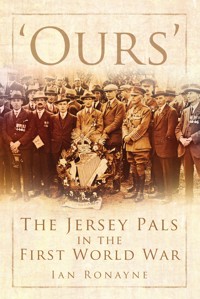
For the first time, the story of Jersey in the First World War is revealed. Whilst the island's role in the Second World War is well documented, a generation earlier another devastating war had struck Jersey, jeopardising the lives and liberties of its people. In 1915, a band of 300 young men known as the Jersey Company volunteered to fight for king and country in a war beyond the comprehension of many. Feted as heroes, they proudly took their place in the trenches of the Western front. But the war was to have a devastating effect - both on the Jersey Company and their island. Soon the volunteers were not only fighting the enemy, but also waging a bitter struggle for continued recognition and support from home. Accompanied by some incredible rare photographs, this book tells the moving but ultimately tragic story of one small and unique unit caught in the maelstrom of the Great War. This is an eye-opening account of one of the most important periods in Jersey's history and promises to fascinate anyone interested in the island's extraordinary past.
Sie lesen das E-Book in den Legimi-Apps auf:
Seitenzahl: 384
Veröffentlichungsjahr: 2009
Das E-Book (TTS) können Sie hören im Abo „Legimi Premium” in Legimi-Apps auf:
Ähnliche




















To Christopher ‘Jimmy’ Scoones, father, footballer, soldier, and the starting point for this book.
Contents
Title
Dedication
Foreword
Introduction
Prologue: The Proudest Day in Our History?
1 No Cause for Panic
2 Are We Roused?
3 Not so far from Tipperary
4 Autumn in Aldershot
5 Caveland
6 Guillemont and Ginchy
7 Cold Front
8 Triumph and Tragedy
9 A Kick from the Trenches
10 The Tigers
11 Till the Last Man
Epilogue: The Proudest Day in Our History?
Appendix A: Roll of Service
Appendix B: Roll of Honour
Sources and Recommended Further Reading
Plates
Copyright
Foreword
HIS EXCELLENCY LIEUTENANT GENERAL ANDREW RIDGWAY CB CBE
LIEUTENANT-GOVERNOROF JERSEY
Each year the people of Jersey gather around the Cenotaph in The Parade on Remembrance Day and listen to the moving words of the Kohima Epitaph, and to the haunting sound of the Last Post played by a member of the Island of Jersey Band. They stand in silence and remember with pride the 6,000 Jerseymen who left the island to fight in the First World War, and especially the 862 who made the ultimate sacrifice and never returned to these shores. But how much do the people of Jersey really know of these brave young, and not so young, men who willingly answered the call and marched off to war; and especially of the 300 or so who volunteered, long before conscription was in force on the island, to join the Jersey Company, a company of Jersey pals, and thus to represent the island’s most tangible contribution to the war effort.
In this excellent and well researched book, Ian Ronayne traces the story of the Jersey Company from its conception in 1914, through the heady day of the recruits’ departure from the New North Quay on board SS Ibex with bands playing and flags waving in 1915, to their almost unnoticed return to the island in 1919. The lives of the young soldiers as they prepare for war with the 7th Battalion the Royal Irish Rifles in Ireland and subsequently in Aldershot are brought vividly to life and characterised by the impromptu Muratti football match played between the contingents from Jersey and Guernsey in Aldershot in October 1915, and which I am pleased to report that Jersey won with a single goal scored by Lance Corporal Mick McCarthy. Life for the Jerseymen in the trenches is also brought into sharp relief; the monotony of routine around Loos and the desperate battles against trench raiding parties, the awful slaughter of the offensives at the Somme and Ypres, and the desperate attempt to cling on to the ground gained at Cambrai after the major tank battle of November 1917. In each case the dramatic events are vividly brought to life by the accounts of the individuals who fought and died so gallantly there.
But this book is much more than just a series of connected war stories. It also highlights the political and constitutional battles that were going on behind the scenes. The initial reluctance of the War Office in London to accept a Jersey unit at all; the perceived failure of the island to support the Jersey Company by failing to generate the necessary reinforcements; the protracted debate on the island over the introduction of conscription; and the Company’s eventual disbandment and incorporation into the Hampshire Regiment – a relationship that continues through the Princess of Wales’ Royal Regiment to this day.
It is a remarkable story of momentous events and how they affected a whole community, and a story of individual courage and devotion. On the very last pages of the book it is stated that the day the Jersey Company sailed from St Helier’s harbour was the proudest day in the island’s history, but goes to observe that, ninety years on, few on the island have ever heard of this unique little band. Well now there is no excuse. This book will ensure that the memory of the Jersey Company in the First World War and the bravery and devotion of this loyal band of ‘Jersey Pals’ will live on forever.
Introduction
I had not expected to have to write this book. When drawn to the subject some years ago by the passing comments of a colleague, I naturally assumed somebody must have done so already. It seemed inconceivable that the story of more than 300 young ‘Jersey Pals’ who left their island to fight in one of the most terrible of wars had not yet been written.
Yet a search of local history shelves in the public library revealed nothing published on the subject – or for that matter on any aspect of Jersey in the First World War. It was as though written history had skipped this period in a leap from the Victorian era to the dark days of the Second World War. Investigation of the archives and local history interest groups revealed much the same, although some tantalising glimpses did appear.
Undeterred, I sought people who may have known these ‘Jersey Pals’ – the men themselves having all passed away by then. Several names led to several meetings, but the response was almost universally the same: they had known the men, but never been invited to discuss their wartime experiences. The old soldiers, it seems, had been reluctant to share their memories with anyone but their own.
At this point, a growing sense of purposeful excitement began to take over. The story of the Jersey Company, its raising, training, wartime service and losses was missing, and growing dimmer by the year. Moreover, in the strands of information I had gathered, there seemed to be an underlying theme of alleged duplicity and broken promises. It was a story that demanded research, and to be told.
In the absence of primary sources of information, the task of research proved challenging. Fortunately, there was at least a wide selection of secondary information available from which to gain or decipher the facts. Most important were the newspapers of the period, by then stored on reels of microfiche at the public library. Endless hours of scrutiny brought forth both snippets and sometimes chunks of important information, albeit slanted in the understandably jingoistic style of the day. The war diaries and the records of military units with whom the Jersey Company served with directly, or fought alongside, contained key elements of the story, along with other relevant books on the First World War. Finally, the Jersey Archive, Commonwealth War Graves Commission, contemporary trench maps, servicemen’s records, and even walking the old battlefields made important contributions.
In the end, like a jigsaw, the facts came together to complete a picture, although inevitably, there remain some pieces missing or distorted by time. On encountering them, I relied on interpretation, logical comparisons, and even some assumptions to fill the gaps and maintain continuity. This invariably must mean some (hopefully minor) errors and oversights on my account, for which I apologise unreservedly.
A number of people, either knowingly or not, have assisted in the production of this book, and to them I offer sincere thanks. Notable among them are friends and colleagues from the Channel Islands Great War Study Group (www.greatwarci.net), in particular my brother Paul, Ned Malet De Carteret, Warwick Blench, Mark Bougourd, Roger Frisby and Barrie Bertram. Thanks also to Gareth Syvret of the Société Jersiaise for his kind assistance with some of the photographs. Special thanks to the His Excellency the Lieutenant-Governor of Jersey, Lieutenant General Andrew Ridgway CBE CB, for taking an interest and contributing the Foreword, and to The History Press for agreeing to publish this book. Finally to those individuals and organisations who kindly allowed me to include quotations from their publications.
A last word of thanks must go to the men of the Jersey Company, that small band of ‘pals’ who volunteered more than ninety years ago to fight for king, country, and their island. Although all are long gone by now, it is their deeds, camaraderie and sufferings that are the inspiration for this book. I like to think they would have approved of it, though I may have had a hard time as they put me right on several things.
Ian Ronayne
August2009
Prologue
The Proudest Day in Our History?
Cursing, Sergeant Charles Laugeard threw himself to the ground for the third time in as many minutes. With eyes tightly screwed shut, he held his breath and waited. The piercing whistle of a descending artillery shell grew louder, louder, and louder. It sounded frightening close; where would it land? The answer came almost instantaneously. Just moments after its approach had been detected, the shell buried itself into the earth twenty or so yards to his left and exploded – harmlessly.
That was close. Only when the last debris thrown up by the explosion settled did Laugeard feel secure enough to open his eyes and start breathing again. Slowly gulping air, he remained prone however, and waited for the wave of shock and anger to subside. Artillery was the great killer of the First World War. Anyone in the trenches for more than a few days understood the carnage it could inflict on vulnerable flesh and bone, and everyone at the front lived in fear of its impact. Particularly despised was the impersonal nature of shellfire. Artillery, remorselessly served day and night by nameless, faceless gunners, claimed its victims in a cold-hearted and indiscriminate fashion. Worse still, it might even be your own guns firing the shells. Sergeant Laugeard knew that British batteries were firing many of those landing around him that day, the confused fighting of recent days having left the gunners unclear over the new location of the front line. Despite urgent appeals to cease, British artillery had sporadically continued to shell its own side with so-called ‘friendly fire’.
Bad enough being killed by a shell, thought Laugeard as he scrambled back to his feet and set off once more, but one fired by your own side. What a way to fight a war!
Minutes later, he found the rest of the Company – or rather, what was left of it – still huddled along both sides of the low trench they had dug the previous night. Despite being in the middle of an artillery battle, most were dozing, trying to snatch a few moments rest after five days of more or less continuous shellfire and five nights of labour. Only one or two had the energy or enthusiasm to look up and acknowledge his return.
One who did was the young Lieutenant that had sent him back to headquarters half an hour earlier for any changes to orders. He picked his way down the trench towards Laugeard, carefully stooping and ducking to avoid presenting a target to vigilant German snipers. ‘Well Sergeant,’ he enquired in a low voice when close enough, ‘are we still due to go over the top as planned?’
‘Over the top’. Such an innocent phrase, masking the terrifying reality of what it actually entailed. For a soldier in the First World War it was probably the most dangerous thing he would have to do. Climbing out of the trench and advancing across no man’s land towards the enemy seemed innocuous enough; but take one or two well-sited machine guns, fired by a determined enemy, and the advance could falter in seconds. It was a fearful prospect. Yet it was exactly what Laugeard and the others in the Company would have to do that afternoon – for their very first time.
‘Nothing changed, sir,’ he confirmed with a nod, ‘the attack will start at a quarter to five this afternoon as planned. Two hours from now.’
Leaving the Lieutenant to his thoughts, he sought a space in the trench and slumped down. Sprinkled around were the remnants of his platoon. Such familiar faces, such trusted faces, all etched now with the grime and trauma of their ordeal. Good friends, he thought. How many would still be alive tonight?
The sounds of laughter from somewhere in the trench shook him from his gloomy reflections. Remarkably, amid this folly, there were some men actually enjoying themselves! Straining to peer round a slight bend, Laugeard saw that the sound of merriment came from one small group playing cards crouched around an upturned ammunition box. Seemingly oblivious to the shells whistling overhead, the staccato crackle of machine gun fire and the dull crump of mortars landing nearby, the four members of the card school were focused only on winning the next hand. Laugeard knew them all of course. They had been with the Company since the beginning, and seemed to have led a charmed life ever since. During training in Ireland, while hanging around at Aldershot, when learning how to survive at Loos, these four always managed to land the best jobs – and miss the worst. Even in the last few days, during the toughest conditions yet encountered, fortune seemed to smile on them. Real characters, thought Laugeard leaning back and closing his eyes, but great to have around.
Minutes later, he awoke suddenly with a start. Something was wrong. The trench was heaving with commotion. Men were shouting and hurling themselves to the ground. Laugeard barely had time to move before the shell struck with a deafening crash and reverberating force.
For a few seconds, his world seemed to turn upside down. Everything went quiet; then as sound returned it was distant or muffled, like noises heard underwater. Had he been hit? Where was the pain? He waited – but it never came. Regaining his senses, to Laugeard’s great relief a quick look down revealed no injuries, no blood, everything present. Just another near miss – or was it?
The shell had struck the lip of the trench just above the card school. Fortunately, this meant most of the explosive force dissipated away; unfortunately, those directly below had stood little chance. By the time Laugeard arrived, two players were already dead, their contorted and bloodied bodies sprawled face down in the dirt. A third was badly wounded, being held down, struggling and screaming in unnatural fashion as attempts were made to press iodine and dressings onto jagged wounds. The last of the players remained sitting beside the makeshift table, apparently unhurt. To everyone’s horror, however, as he tried to stand the extent of his injuries became clear. A splinter from the shell had neatly severed his arm above the elbow and left it lying on his lap.
Medical help took some time to arrive, and longer to half-carry, half-drag the wounded men away. Passing by, the young man who had lost the arm turned a deathly pale face towards Sergeant Laugeard and tried to say something. Grimly noting the growing damp red stain that suggested the roughly applied tourniquet was not working, Laugeard smiled back, unconvincingly. ‘You’ll be alright son,’ he mouthed, ‘count yourself lucky to be getting out of it.’ A few walking-wounded followed – the real lucky ones. What a time to pick up a ‘Blighty Wound’. Looking both embarrassed and elated at the same time, they made their way through the trench, shaking a hand here, tweaking a cheek there. ‘Good luck’ they called back, disappearing from sight.
The commotion was over. All that remained was to heave the dead unceremoniously out of the trench and onto the ground behind. With luck, a Graves Registration Unit would recover the bodies later and deposit them in one of the many official burial grounds; without it, like thousands of others, the dead would eventually be swallowed by the battlefield and remain there forever. Job done, Laugeard settled down once more to await the order to attack.
Fifteen minutes to go. Still seated, Sergeant Laugeard stared incessantly down at his wristwatch. The second hand swept irresistibly round the face, relentlessly and unstoppably ticking off the minutes to zero-hour. By now, the bombardment of the German positions in front had increased noticeably in intensity. The air overhead seemed thick with flying shells, their explosions combining to make the very ground tremble. Could anyone survive that level of destruction? They would soon find out, he thought with a wry smile. Reinforcements arrived, filing into the trench and taking a place along the side. Everyone nervously focused on some task or another; tightening straps, checking weapons, scribbling a few last lines.
With five minutes to go, the men made final preparations. In the British trenches, officers took out whistles and stared at their watches, waiting for the moment to give the signal. ‘Good luck mate’, an unnamed man at Sergeant Laugeard’s side said quietly, thrusting a hand out to shake. ‘See you in Ginchy.’
It was Saturday 9 September 1916, in a small corner of the Battle of the Somme. The 16th (Irish) Division had orders to capture the German fortress village of Ginchy – a position that had resisted all previous assaults. The Irish were determined to do better.
At a quarter to five that afternoon, along a broad swathe, the 16th (Irish) Division’s soldiers scrambled out of the trenches and lined up to face their objective. Ahead, at the top of a gentle slope, the smoking remains of the village brooded. Even now, shells continued to crash into the ruins, each explosion sending great plumes of dust and debris into the air. Suddenly, there was the order to advance. With a great shout, the wave of men surged forward.
Just for a moment, Sergeant Laugeard hesitated. Not through fear – the last nine months had proved he was no fugitive from danger – but to take in the significance of the moment. This, after all, was what it had been all for: why they had volunteered; why they had left their island; why they had spent so long training; why they had endured nine months in the trenches.
On that day, on a broken field in northern France, the ‘Jersey Pals’ would finally have the chance to truly prove their island’s worth. Would it turn out to be the proudest in Jersey’s history?
One
No Cause for Panic
It would be foolish to underestimate the gravity of a situation unparalleled in civilised history, yet, on the other hand, it would be equally unwise to rush to the other extreme, as so many of our people seem inclined to do.
Editorial, Evening Post, August 1914.
The outbreak of war in August 1914 came as something of a shock to the island of Jersey. Not just because its approach had been missed by most inhabitants, nor again because no one could possibly know how it would end. What really infuriated, at the very start at least, was that it interrupted what was turning out to be a first-class summer.
Lying only fifteen miles from the French coast, snug in the protective embrace of the Bay of St Malo, the largest of the British Channel Islands has always enjoyed a mild, if somewhat fickle, climate. With its surrounding waters gently warmed by the Gulf Stream, fine and dry summers are often the result. The summer of 1914 had certainly been following this trend. May, June and July had been mostly warm and settled, and Jersey’s 52,000 inhabitants were looking forward to more of the same.
Proprietors in the up-and-coming tourism industry had been especially pleased with the fine weather. The island’s charming aspect and appealing climate were first ‘discovered’ by the Victorians in the late nineteenth century, and a steady business been building ever since. Right up to the end of July that year, hotels and lodging houses were reporting healthy rates of occupancy, while advance bookings held the promise of more to come. Indeed, even in the last days of peace, the hardworking little steamers plying the seas between the Channel Islands, England and France continued to deliver boatloads of visitors. Many were eager to deposit what money they had in island tills; and most islanders were eager to take it.
Members of the island’s foremost industry were also satisfied with the conditions. In 1914, agriculture dominated Jersey’s forty-five square miles – from a geographical, financial and political perspective. This had become particularly so in the last fifty years when the industry had dramatically grown from a mainly local business into a powerful and successful exporter of produce. Strong overseas markets had been developed, firstly for the famous Jersey cow, and then, after its discovery in 1878, for the equally renowned Jersey Royal potato. By the start of the twentieth century, great shipments of Jersey Royals were making their way to Britain, and the resulting profits making their way back. In a good season, everyone could do well, and the years leading up to the First World War were some of the best ever. Hopes were high that 1914 would exceed all previous records. Up until the end of July, the year showed every sign of doing just that.
Success in tourism and agriculture was a key factor shaping life in Jersey at this time. Success meant profits, and profits had helped fund a remarkable half-century of civic and commercial development. The summer of 1914 capped a period of impressive transformation. Schools, hospitals, railways and fine public buildings had all sprung up for the benefit of islanders. The general expectation was for more to come. Profits also trickled down, eventually reaching the pockets of most by one means or another, and that summer, with its long evenings and fine weekends, a little more money had been more than welcome. Leisure time was becoming increasingly important – there were fêtes, fairs and open-air concerts to enjoy, or strolls along coastal promenades and walks through leafy inland lanes. In those final days of peace, the annual Battle of Flowers spectacle – fast becoming the highlight of the summer – was approaching. With only weeks to go, tickets were fast selling out.
Business success, fine weather and personal enjoyment had all contributed to a general sense of wellbeing. ‘There was no doubt about it,’ claimed a senior government figure at the time, ‘the tide of prosperity in Jersey has reached high water mark, and I hope it will remain so.’1 There appeared no obvious reason why this should not continue to be the case. The traditionally resourceful and hard-working islanders were enjoying the fruits of a well-established and successful economy, and looking forward to the future with confidence.
Yet events elsewhere, and far beyond the control of this small community, were conspiring to bring this halcyon summer to a dramatic end. A startling series of unprecedented shocks were set to herald the end of an era, and the beginning of one of the most testing periods on the island’s history. And it had all started in St Helier on the warm evening of 29 July 1914.
Jersey’s capital and chief port is the town of St Helier, in 1914 the bustling heart of island life. As the beneficiary of much of the previous half-century’s development, it had grown tremendously in recent years. From an original modest settlement centred on the historic Royal Square and Town Church, an expanding population had pushed out its boundaries until most of the land surrounding Mont De La Ville with its imposing Fort Regent was filled with houses and businesses. By the eve of war, St Helier was home to 27,000 people, or just over half of the island’s population. It was also home to a number of popular theatres and playhouses. One was the iconic and imposing West’s Picture House that filled the corner made by Peter Street and Bath Street. In recent years, along with others, it had been adapted to accommodate the latest and most exciting form of public entertainment, cinema. On the evening of 29 July, a packed auditorium was enjoying a programme that included a film starring that up-and-coming young comedian, Charlie Chaplin.
Located in nearby Charles Street were the offices of the Evening Post, then one of the island’s foremost newspapers. In those days before television or radio broadcasting, it dominated local media together with fierce rival the Morning News. The offices of the Evening Post also happened to host the local telegraph bureau, making them the central location for the latest overseas news. As the cinemagoers left West’s that evening, some had noticed a large and excited crowd gathered in Charles Street. Going over to find out what the fuss was about, they found the focus of attention was a notice posted in the Evening Post office window. In impassive type, it spelled out the astonishing news that was about to stop Jersey in its tracks.
As of the following day, 30 July 1914, the Jersey Militia was being mobilised for war.
War itself was nothing new for Jersey. In centuries past, islanders had been accustomed to its threat as frequent conflicts between England and France placed them in a front-line position. The last French invasion, however, was in 1781, and since the defeat of Napoleon in 1815, relations between the old enemies had steadily improved. In 1914, the chance of an attack from France was all but unthinkable. Yet 133 years after its last battle, the Jersey Militia was to be mobilised once more.
The Royal Militia of the Island of Jersey, to give its full and proper title, was a distinguished and historic corps that dated back to the fourteenth century at least. At that time, English monarchs anxious to retain their southern bulwark had ordered the island fortified against the French. Castles had been built, military garrisons installed, and island’s men ordered to form a military force to be mobilised against the threat of invasion. Down the centuries, with this threat never far away, the principle of a local Militia had become enshrined in Jersey’s traditions and laws. By the start of the twentieth century, although the threat had diminished, the Jersey Militia remained one of the pillars of island life.
Although its organisation had changed over the years, in 1914 the principle of Militia service remained the same. By law, all able-bodied Jerseymen between the ages of sixteen and forty-five were liable for Militia service. Once enrolled, they trained to be soldiers, giving up a number of evenings and weekends for drill, instruction and rifle practice. For those between the ages of eighteen and twenty-eight, there was also mandatory attendance at a two-week summer military camp. The most important expectation, however, was that if the island was ever threatened, the men had to fight in its defence.
Remarkably, it was an arrangement unique to Jersey (and the other Channel Islands of Guernsey and Alderney). In no other part of the British Empire did such a compulsory military service exist. There were militias in the Dominions and Colonies, and in England, Scotland and Wales an equivalent force called the Territorial Army existed, but service in all these was on a voluntary basis only. Outside of the Channel Islands, no one was compelled to join by law.
In 1914, this local law established that Jersey should have a Militia force capable of defending its shores. The backbone of this force was its three infantry battalions, recruited on a parochial basis from an allocated number of the island’s twelve parishes. The 1st, or West Battalion, represented the parishes of St Lawrence, St Brelade, St Peter, St Ouen, St Mary and St John. The 2nd, or East Battalion, took men from St Saviour, St Clement, St Martin, Grouville and Trinity. The 3rd, or Town Battalion, was raised exclusively from a single parish, St Helier. In addition to the infantry, there existed an artillery regiment with two batteries of field artillery and two companies of garrison artillery, a medical company and a company of engineers. The mobilisation order of 29 July 1914 demanded that all these units turn out for service.
The news that the Militia was being mobilised once again had spread through the island like a shock wave. On the streets of St Helier, there was lively and heated discussion over what exactly was going on. Was it just an exercise, or the real thing? How long was the Militia expected to be mobilised? And what was it expected to do? With no information forthcoming that night, in the end there could only be speculation as to the answers. Everyone would have to wait until 2.00 p.m. on 30 July, the time at which the men of the Militia had orders to report for duty.
On the following day, the men of the 3rd Battalion mustered at the Town Arsenal. Throughout the morning, an excited crowd of onlookers had built up outside cheering and waving as the men went in. Their presence, it was reported, lent the occasion a Sunday school outing atmosphere rather than that of a serious military mobilisation. Once inside the Arsenal, the excited mood persisted. The mobilisation order had dramatically interrupted everyday life and there were plenty of stories swapped on the sacrifices made to make the deadline. One man had apparently even missed his wedding to be there. Yet the chief topic of conversation remained why exactly were they there, and how long would they have to stay. At 2.00 p.m., the men at last started to receive some firm answers.
With the Battalion paraded, their Commanding Officer, Lieutenant Colonel Gerald McKenzie, stepped up to address the now hushed ranks. In ringing tones, he explained the reason for the mobilisation, and the strict expectations on the men from now on:
At the outset I wish you to realise that this was not merely a test mobilisation, as supposed by some, but a serious mobilisation ordered by the War Office. I repeat that this is not a joke, but a serious mobilisation ordered by the War Office in view of the state of feeling amongst the European Powers.
You have been called up as soldiers, and I expect and know that you will behave as such. How long it would last, I cannot say, but all ranks must understand that they are under Military Law until demobilisation takes place.2
In a more subdued mood, the men had filed away after the speech to collect weapons and supplies. Clearly, this was no exercise. As they formed up behind their officers and marched out of the Arsenal, questions nevertheless remained in many minds. What exactly was this ‘state of feeling amongst the European Powers’? And for that matter, how could it possibly affect Jersey?
Europe’s slide to war in July 1914 had not been widely reported in Jersey. Apart from local news, the attention of island newspapers had been on events closer to home. With divisive national issues such as the struggle for women’s rights and Home Rule for Ireland grabbing headlines, European news found comparatively limited space among the columns. Yet one story that had managed to receive a few terse paragraphs was that of the assassination of Archduke Franz Ferdinand.
On 28 June 1914, the heir to the throne of the Austro-Hungarian Empire was visiting the city of Sarajevo. In 1914, as now, Sarajevo lay at the heart of a troubled Balkans, a region of mixed nationalities and religions held together and apart by poorly defined borders. Waiting among the crowd that day were a number of people determined to take a stand against the presence of the Austro-Hungarians in the Balkans. One was a young Serbian nationalist called Gavrilo Princip. Encountering the car carrying the Archduke and his wife Sophie, he had gone over and shot them both dead.
Austro-Hungary and Serbia were rivals in the region. With the killings, the former had seized upon the chance to humble its small Serbian neighbour. Uncovering tenuous evidence linking the actions of Princip to the Serbian government in Belgrade, the Austro-Hungarians decided to act. On 28 July, after the Serbians had understandably declined to meet a series of humiliating demands, Austro-Hungary declared war. Suddenly, the Balkan incident was becoming more serious - and not just because of the looming regional conflict. The Serbians had a powerful friend.
The sprawling Russian Empire was Serbia’s traditional supporter and protector. Faced with the prospect of fellow Slavs being crushed in a one sided war, Russia decided to become involved. It demanded the Austro-Hungarians back down, and threatened to mobilise part of the Russian Army if they refused. Given the delicate state of affairs in Europe at this time, this was a decision with far-reaching and potentially explosive consequences.
In 1914, a complex web of alliances and treaties divided Europe into two powerful opposing camps. On one side lay the Triple Alliance of Germany, Austro-Hungary and Italy, and on the other, the Triple Entente of Russia, France and Great Britain. Like the nuclear deterrents of a later age, in theory these alliances had existed to minimise the risk of war breaking out. In reality, however, all of the countries involved expected conflict sooner or later, and each had detailed plans for just such an eventuality. In the case of Germany, this was the famous, or more correctly perhaps the infamous, Schlieffen Plan.
Of all the European powers, Germany’s position had been one of the most precarious at this time. Confronted by Russia on one side and France on the other, it needed a plan to deal with both at the same time. The answer was the Schlieffen Plan. Devised by the military, the plan assumed that because of its immense size and limited infrastructure, Russia would take at least six weeks to mobilise its army and launch an attack on Germany. During this period, the plan directed that virtually the whole German Army could attack France and win a decisive victory there. Then, with the French defeated in the west, Germany could turn to face its lumbering eastern neighbour.
It was a risky but audacious proposal, with one obvious and major flaw. The plan assumed war would start with both Russia and France at the same time. In late July 1914, however, with Russia then mobilising unilaterally against the Austro-Hungarians, this flaw suddenly became critically obvious. Trapped by its own strategy, Germany was forced to weigh up its options. In the end, the decision was to follow the provisions of the Schlieffen Plan – regardless of the consequences. If Russia did continue to mobilise in the east, Germany would just have to attack in the west.
The murders in Sarajevo had unexpectedly started the countdown to a general European war. Within a month, and virtually without warning, the incident in the Balkans had escalated to the point where communities across Europe found themselves unexpectedly on the verge of conflict. This included the tiny Channel Island of Jersey, for which even the threat of war had immediate and far-reaching consequences.
During the years leading up to the First World War, Britain had maintained a garrison in Jersey for the island’s defence. In 1914, around 1,000 men were present, the majority from the 1st Battalion of the Devonshire Regiment. Under the terms of its alliance with France, however, these men would join the army sent to the Continent as part of Britain’s contribution to a war. On 29 July 1914, with tension between Germany and Russia rising, the British War Office ordered the men of the Devonshire Regiment to start preparations to leave Jersey. To take their place, an order had arrived at the same time to mobilise the island’s Militia. Although war might still be avoided, the War Office clearly reasoned it was better to be safe than sorry.
So although it may not have been necessarily clear on 30 July as the Militia left their barracks, war was expected and Jersey needed to be prepared. On that night – and in the days and nights that followed – the men had stood guard around the island’s coast and kept watch over key installations. On the morning of 31 July, islanders woke to find themselves in the midst of an army camp, as the Evening Post reported:
It must surely be many years since the island was so well guarded as it was last evening. Patrols and pickets practically surrounded the coasts, and many amusing tales are told of country folk arriving home to find militiamen camping out in their fields and hedges.3
Despite the depravations of now having to sleep rough, and the unexpected interruption to their normal lives, spirits were high among the men of the Militia. Absenteeism, even in the country parishes where busy farms needed every hand, was negligible. How long this spirit remained would of course depend on how long the mobilisation lasted – few held out any illusions that what seemed enjoyable in July would be anything but come winter. Hopefully, things would be back to normal long before that time.
From the Continent, however, the news was not good. On 1 August 1914, Germany had declared war on Russia. That same day, France ordered its army to mobilise for war – with further dramatic consequences for Jersey.
To service its booming agricultural industry, Jersey had needed a labour force larger that the island was capable – or perhaps willing – to provide. The solution lay in the nearby French region of Brittany. From the end of the nineteenth century, Breton labourers were coming to the island in large numbers to work on farms, and later in hotels and boarding houses. By 1914, they represented a considerable portion of the population – around 20 per cent according to the 1911 census. Virtually all, however, had remained French nationals, with the men liable for military service and recall in the event of a general mobilisation.
At that time, France relied on massive armies of conscripts for its defence. This meant that upon reaching a certain age, all suitable men received a call-up to the armed forces. Following a number of years service, they returned to civilian life, but remained liable for recall in the event of war. This recall, together with a movement of men and material from their peacetime stations towards the frontier, was termed mobilisation. It extended to national subjects outside of the country, including those men working at the time in Jersey. Late on the evening of 1 August 1914, the widely expected French mobilisation order had arrived in the telegraph office of the Evening Post.
By mid-morning of the next day, the French Consulate building in St Helier’s Church Street was crowded with men applying for passports and arranging transport to France. Outside in the street, hundreds more awaited their turn. The French mobilisation order left little room for delay; war was imminent and men were to report for duty in the shortest possible time. With the necessary documents secured, they had made the short journey to St Helier’s harbour in order to catch one of the specially chartered ships to France. As it was a Sunday, a large crowd of curious onlookers had gathered at the harbour to watch the unfolding spectacle. Yet little preparation had been made for these extra numbers, and soon the situation became somewhat chaotic as departing French reservists jostled their way through the crowd to reach the quayside. A reporter later described the scene, and some of the emotional farewells that ensued:
Naturally several pathetic incidents were witnessed just prior to the vessel’s departure, wives separating from their husbands and girls from their sweethearts. In short, yesterday’s scenes were such as have rarely if ever been witnessed before in Jersey. So ended our first acute touch with this great European tragedy.4
In all, more than 2,400 Frenchmen would leave the island to fight in the First World War, most in the days immediately following the mobilisation order. For the island’s farmers in particular, it was a devastating blow. Coming hard on the heels of the Militia mobilisation, many wondered how they would manage to keep up any kind of production.
It was, of course, also a devastating blow for the families of the departing men, many of whom had accompanied their husbands and fathers to Jersey and settled there. On 3 August, even as many French reservists were still leaving, Germany had declared war on France, ending the last slim chance of avoiding conflict in Western Europe. It was a fateful moment for France and its people. During the course of the war, of all nations, it was one of those to suffer most in respect of material damage and casualties. Indeed, within weeks of leaving Jersey, many of the Frenchmen would find themselves fighting and dying in the first desperate clashes of the war.
There was one more wave of departures for Jersey to witness in those first few days of August as a number of British reserve soldiers and sailors had also left to rejoin their units. Despite ordering preparations for war to begin, Britain hesitated for a moment when it came to actually joining in. There were hopes that it could remain out of the unfolding conflict. A German invasion of neutral Belgium, however, had forced the matter. On 4 August 1914, Britain declared war on Germany.
Britain’s declaration of war brought to a close one of the most dramatic weeks in Jersey’s history. It was hard to comprehend that just seven days earlier, the island had been enjoying a normal, peaceful and successful summer season. Now, through a series of unprecedented events, the situation had changed beyond all recognition and few, if anyone, knew what might happen next.
There were many, however, prepared to speculate. It was an anxious time. In the absence of any real news, rumour and hearsay understandably filled the gaps. Fanciful reports quickly circulated regarding the enemy’s intentions. A German warship had been apprehended in local waters; a fleet of German airships were heading towards Jersey; a gang of German spies were on the island with plans to put poison in the reservoirs. On 5 August, with rumours reaching fever pitch, the Evening Post had called for calm:
The suspense of the last few days has, we admit, been difficult to endure in serenity, and in addition other causes have contributed to the feverish excitement that prevails … but while our hearts are moved we must see to it that we keep our heads, remembering that under the circumstances patience and self control are the first essentials.
Had the German fleet been anchored in St Aubin’s Bay yesterday one could have understood the pitiable nervousness to which many women were reduced, but under the circumstances it was as unwarranted as it was inexplicable.5
Potentially the most serious rumour circulating was that food and other vital goods were about to run out, and in truth there was a genuine ground for concern. The island relied on imports of many necessities, including all of its fuel. Any disruption to supplies could be serious, although given that the war was only a few days old the situation had been far from critical. Yet that did not stop an immediate run on food shops as people rushed to stock up. It also did not stop merchants from swiftly raising the price of goods in response. To ensure the continuation of supply was the justification; to everyone else, however, it was just plain profiteering. Tensions rose with the prices and the situation threatened to spiral out of control. It was time for the island’s government to intervene.
Jersey was then, and is now, a self-governing Crown Dependency of Britain. This status dated back to the time of William the Conqueror and his invasion of England in 1066. As one of William’s original possessions, Jersey (and the other Channel Islands) had become part of his enlarged realm following the Norman victory at the Battle of Hastings. This situation persisted until 1204, when one of William’s less successful heirs managed to lose control of their lands on the French side of the Channel. Faced with a choice, Jersey had decided to remain with the English Crown, rather than side with the new French rulers. It was a far-reaching decision. In return for their loyalty, the English monarch had granted the islanders certain entitlements and privileges, including the right to self-government.
Understandably, however, Britain had retained responsibility for the island’s defence because almost overnight, Jersey had changed from a sleepy community in the middle of the realm to an exposed and vulnerable outpost pressed against the enemy’s border. To ensure security from outside attack (and to persuade against any change of heart by the people) the king had appointed a trusted lieutenant to govern the island and watch over his affairs. This turned out to be a long-lasting arrangement. In 1914, as the war started, the man holding the post of Lieutenant-Governor was Major General Sir Alexander Rochfort, KCB, CMG.
History showed that the relationship between the often independently-minded islanders and their Lieutenant-Governor was not always harmonious. Fortunately, sixty-six-year-old Rochfort was well suited to the position. After arriving in 1910, he endeared himself with a friendly and welcoming nature. In dealing with issues of government, he had adopted an even-handed approach and managed to maintain a good working balance between Jersey’s interests and those of Britain. This was just as well as the war was going to put considerable stress on this balance. Indeed Rochfort’s first act as conflict threatened had been to call out the Militia on 30 July following instruction from the War Office. The second was summoning the States of Jersey for an Extraordinary Session on 5 August 1914.
The States of Jersey, or simply the States as they were called, was the island’s long-standing and time-honoured parliament. Its membership in 1914 was an interesting blend of elected and appointed members, drawn mainly from the island’s traditional ruling classes. Unsurprisingly, it was an all-male affair – women on the island being unable to stand or even vote. There were no political parties; technically, members represented the people’s interests as independents. Presiding over the States was the island’s Bailiff.
The role of Bailiff is a hard one to describe easily. At various times, they had to play the role of States president, the island’s mayor, and its senior judge. In essence, however, if the Lieutenant-Governor was responsible for all military matters, then the Bailiff was responsible for everything of a civil nature. As in the case of the Lieutenant-Governor, the British monarch appointed the Bailiff to the position – although this was usually based on the advice of senior figures on the island. Once selected, they held the post until they retired at the age of seventy. As the island’s most senior figure, only men (there has never been a female Bailiff) of impeccable experience, character and integrity were chosen. In 1914, the man deemed to possess these traits was Sir William Henry Vernon.




