


18,99 €
Mehr erfahren.
- Herausgeber: John Wiley & Sons
- Kategorie: Geisteswissenschaft
- Sprache: Englisch
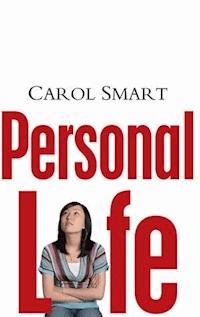
For more than a decade, Carol Smart has been at the forefront of debates about the sociology of the family. Yet she has become frustrated by the fixation of many commentators with the supposed decline of commitment, and even the decline of the possibility of family life. In this exciting new book, she puts forward a new way of understanding families and relationships.
Breaking with conventional wisdom, her book offers a fresh conceptual approach to understanding personal life, which realigns empirical research with theoretical analysis. She gives emphasis to ideas of connectedness, relationality and embeddedness, rejecting many of the assumptions found in theories of individualisation and de-traditionalisation by authors such as Beck and Beck-Gernsheim, Bauman and Giddens.
Instead, her approach prioritises the bonds between people, the importance of memory and cultural heritage, the significance of emotions (both positive and negative), how family secrets work and change over time, and the underestimated importance of things such as shared possessions or homes in the maintenance and memory of relationships.
This ground-breaking text will be essential reading for anyone who cares about the future of families and personal relationships, and who wants to understand this most intimate area of social life.
Sie lesen das E-Book in den Legimi-Apps auf:
Seitenzahl: 390
Veröffentlichungsjahr: 2013
Ähnliche




















Personal Life
Personal Life
New directions in sociological thinking
CAROL SMART
polity
Copyright © Carol Smart 2007
The right of Carol Smart to be identified as Author of this Work has been asserted in accordance with the UK Copyright, Designs and Patents Act 1988.
First published in 2007 by Polity Press
Polity Press
65 Bridge Street
Cambridge CB2 1UR, UK
Polity Press
350 Main Street
Malden, MA 02148, USA
All rights reserved. Except for the quotation of short passages for the purpose of criticism and review, no part of this publication may be reproduced, stored in a retrieval system, or transmitted, in any form or by any means, electronic, mechanical, photocopying, recording or otherwise, without the prior permission of the publisher.
ISBN-13: 978-0-7456-4564-3
A catalogue record for this book is available from the British Library.
Typeset in 11 on 13pt Bembo
by Servis Filmsetting Ltd, Manchester
Printed and bound in Great Britain by MPG Books Ltd, Bodmin, Cornwall
The publisher has used its best endeavours to ensure that the URLs for external websites referred to in this book are correct and active at the time of going to press. However, the publisher has no responsibility for the websites and can make no guarantee that a site will remain live or that the content is or will remain appropriate.
Every effort has been made to trace all copyright holders, but if any have been inadvertently overlooked the publisher will be pleased to include any necessary credits in any subsequent reprint or edition.
For further information on Polity, visit our website: www.polity.co.uk
Contents
List of Illustrations
Acknowledgements
Introduction
1
A Sociology of Personal Life
2
The Cultural Turn in the Sociology of Family Life
3
Emotions, Love and the Problem of Commitment
4
Connections, Threads and Cultures of Tradition
5
Secrets and Lies
6
Families we Live with
7
Possessions, Things and Relationality
Conclusion
Notes
References
Index of Names
Index of Subjects
List of Illustrations
Plate 1.1
My paternal grandparents
Figure 2.1
Overlapping core concepts
Plate 5.1
Gertrude in her prime
Plate 5.2
My maternal grandfather
Plate 5.3
My aunt at a cabaret rehearsal, Paris 1932
Plate 5.4
Society wedding
Acknowledgements
I am indebted to my colleagues in the Morgan Centre for the Study of Relationships and Personal Life at the University of Manchester for providing the immensely supportive and intellectually exciting context within which I was able to write this book. In particular I wish to thank Jennifer Mason, Brian Heaphy, Vanessa May, Wendy Bottero and Dale Southerton who have all contributed substantially to my understanding of personal life. Other forms of intellectual support have come from colleagues whose work has been inspirational, including David Morgan, Janet Finch and John Gillis. Those with whom I have worked on previous research projects must also be acknowledged for their intellectual generosity and hard graft. These include Bren Neale, Amanda Wade, Beccy Shipman and Jennifer Flowerdew. And, in addition, I want to give thanks to the ESRC, the Nuffield Foundation and the Joseph Rowntree Foundation, all of whom have funded the various projects drawn upon in this book, and to the University of Manchester for allowing me time to write. Finally my most personal thanks go to John Adams.
Introduction
Some years ago I became the keeper of my family’s photographs. I ‘inherited’ them from my mother, whose main reason for keeping them seemed solely that she hated throwing anything away. They were not cherished but thrown together in no order at all in a large carrier bag. My mother was not the sort to spend time putting photos in albums with helpful captions and dates. Having inherited them I then found I could not throw them away either and so they lived for about two decades in the same plastic bag until I was left another batch from a maternal aunt – this time kept with slightly more reverence in an old sewing box. I was prompted to start sorting them, a task as yet unfinished. In the processes I found myself going through a journey of the imagination, of memory, of emotion and of history. I found photographs of relatives I had never met and of whom I had only the dimmest knowledge. Take the couple overleaf whom I know to be my paternal grandparents. They died when my father was twelve years old and all I know about them is that my grandfather was a butcher with a stall on Harrow Road in West London sometime after the First World War.
I found myself trying to imagine their lives and to read into the photograph whether they were happy or not, whether their lives were very hard or reasonably comfortable, whether they were respected members of their community or not. On the third point I have to confess that the photograph conveys an ambivalent relationship with respectability. I suppose one can say that at least they are standing outside the (more respectable) ‘Saloon Bar’ of the public house rather than the (rougher) ‘Public Bar’. My grandfather is wearing a suit and my grandmother sports a hat – it must be a Sunday afternoon. But he looks distinctly shifty, possibly even a bit menacing, perhaps because of his fedora (hat), the creases in the suit and the manner of cupping his cigarette to his lips. Her coat has seen better days, while her hat and shabby fox stole suggest a certain working-class flamboyance not exactly associated with (refined) feminine respectability. Moreover, they are pictured together outside a pub (not a church or more salubrious venue) and my grandfather’s slightly louche pose against the door frame suggests that he was a regular, definitely familiar with the place.
Plate 1.1 My paternal grandparents
I love this photograph. Whenever I look at it I wish I could step into it and back in time to ask them questions or merely to observe them. I do not, of course, feel like this about any old photograph, so this is not a generalized desire. The only reason I want to step back to be near these people is because I believe them to be related to me and this sense of connectedness across the generations means I want to know more about them, their daily lives, their feelings, their views, their aspirations and so on. These people are so (apparently) different from me and yet also connected. I can envisage this as a link that comes through my father to me in the form of small physical resemblances, or in terms of shared genes, knowing that some (almost) invisible, intangible part of them is somewhere alive in me. Alternatively my connection with them can be construed through place, because they lived and died in the same area of London in which I was brought up. Or I can understand the connection in terms of my own upbringing, since they raised my father (at least until their early deaths) and I therefore enjoyed (or endured) the kind of parenting that their practices had induced in my own father.
Although I feel all these things and these emotions are real to me, I also know that these connections and impressions are largely works of personal/cultural fiction. What I have expressed here in personal terms, I know to be a cultural phenomenon and that these (and similar) experiences are being felt at the same time by many people who have become interested in genealogy and family history in late modern societies. Sociologically speaking, I am part of a minor social movement; both interest in and sentimental feelings about the past of one’s family is heavily encouraged by the family heritage industry as well as by new technologies such as the world wide web and online census and historical data banks. At a more subtle level I also understand that memories, for example of my own childhood and those ‘implanted’ by my parents of things that occurred before I was born, are part of a sense of self. Dealing with family photos is not simply a hobby, but part of an active and culturally specific production of the self. It is therefore possible not only to know that feelings are constructed and plastic, but to work with them and find meaning in them. It is this relationship between knowing (or thinking we know) how cultural and social practices are brought into being and sustained, and being part of the culture and the historical moment, that provided one of the main intellectual motivations for me to write this book. In other words I wanted to write sociologically about relationships and connectedness while remaining grounded in, and even working with, the kinds of real feelings generated by relating to others. I wanted to move out of the flat world of most sociological accounts of relationships and families to incorporate the kinds of emotional and relational dimensions that are meaningful in everyday life. I felt it was no longer appropriate to reflect upon ‘other’ people as if being a sociologist entitled one to be apart from these cultural shifts, emotional tides and personal feelings. It is true that the sociologist should not assume that what s/he feels and experiences is common to all, but I am suggesting a more reflexive engagement than this would imply. I also wanted to capture the importance of the past and of imagination to the living of family life and relationships. Although, following David Morgan (1996), I acknowledge that family is what families do, I also think we need to explore those families and relationships which exist in our imaginings and memories, since these are just as real. In the past this realm of imagination was construed sociologically as the work of dominant ideologies; attachment to ideals of family and kin connectedness were understood in terms of false-consciousness or class interest. This prompted a focus on the material and on social action rather than mentalities. Understanding the realms of yearning, desires and inner emotions in different ways has opened up a whole new domain for thoughtful exploration.
My relationship with this book is therefore distinct from those I have had with previous volumes that I have authored or coauthored. My motivation to incorporate dimensions that I think have been overlooked or understated comes, as I suggest above, partly from my own reflexive engagement with kith and kin. This does not mean that I have written only about what matters to me. On the contrary I have tried to stretch the reach of the sociology of family life beyond established boundaries. So this is not a book about my feelings or experiences. It is motivated by of my experience that a lot of sociology, and most particularly recent theories of individualization, do not capture sufficiently the richness of the life world. An equally important reason for writing slightly differently this time has come from experiences arising from engagement in a significant number of qualitative research projects over the last ten years. I came to feel that the lives of ordinary people were being flattened out and that I was in part complicit in this. Although in these various projects we sought to do justice to the lives we described and analysed, I am not sure that I then had sufficient analytical tools available. Too much was left on the cutting-room floor, so to speak. And so in this book I have revisited a number of these projects, re-examining some of the interviews we carried out in search of further ideas and dimensions. I do this with a ‘light touch’, by which I mean that I do not report fully on these projects as that would deflect from my main purpose. In returning to these stories, I aim to allow expression to some of the less tangible elements of the relational lives of those to whom we spoke. I have felt it necessary to change the names and some of the details in these accounts for the sake of anonymity, but I have tried not to alter the cultural meanings and signifiers. Through this I strive to do something new in providing a conceptual framework for the ways in which we can develop different analytical approaches for understanding and capturing personal life sociologically. I map out overlapping core concepts with which it should be possible to frame more subtle research questions in order that feelings, emotions, memories, biographies and connections do not remain afterthoughts but can be built into original research questions.
Finally I have a small confession to make. As with many long writing projects, especially those of an exploratory nature, sometimes the scope, reach and meaning of the text become apparent to the author only towards the end. This has been my experience with this book. Although I had certain clear goals (namely the critique of theories of individualization, the construction of alternative conceptual frameworks, the introduction of different fields of enquiry and so on), for me the act of writing is a form of engagement in which ideas change even as they appear on the page. What is more these ideas do not appear on the page without struggle: they slip about and move out of sight; they refuse to take shape and then, when they do, the shape often turns out to be quite wrong. So the idea of defining a conceptual field known as personal life was not my original intention; this emerged partway through the writing. This inevitably means that the project is unfinished. Having completed the groundwork, I now feel there is so much more work to do. I hope to continue with this theme in the near future; perhaps this book will be followed by Personal Life, volume 2. But in the meantime I have yet more photographs to sort out.
1
A Sociology of Personal Life
In this chapter I formulate an argument for developing a sociology of personal life which can embrace what has traditionally been known as the sociology of the family and the sociology of kinship but also more recent fields such as friendship, same-sex intimacies, acquaintanceship, relationships across households, and cross-cultural relationships. I suggest that this field is not simply a convenient ‘holdall’ for old and new empirical areas of study, but also a way of bringing together conceptual and theoretical developments which now seem too uncomfortable when squeezed into the existing terminologies of families or partnering or parenting. Sociology has periodically tried to rid itself of the conceptual and political straitjacket that the concept of ‘the family’ imposes, either by talking instead of ‘households’, or by introducing ‘families of choice’, by preferring the term ‘kinship’, or by conceptualizing relationships more in terms of practices than institutions or structures. These shifts in terminology and the conceptualizations that accompany them have loosened the constraints and have allowed the old terminology of family to become less rigidly identified with the idealized white, nuclear heterosexual families of Western cultures in the 1950s. However, it seems clear that in spite of these advances, the terminology of family (whether plural or not, chosen or not), and the other specifications of kinship or household, still prioritize biological connectedness and/or physical place. The term ‘family’ generally conjures up an image of degrees of biological relatedness combined with degrees of co-residence. Yet we know that people relate meaningfully and significantly to one another across distances, in different places and also when there is no pre-given genetic or even legal bond. These relationships may be described as ‘networks’ because this term is not evocative of a particular place and it also allows for fluidity in membership. But that term robs the concept of relationships of much of its emotional content and certainly does not invoke the special importance of connectedness, biography and memory in how people relate to one another. So it seems to me important to start to conceptualize a different field of vision in which families appear, but where ‘the family’ is not automatically the centrepiece against which other forms of relationship must be measured, or in whose long shadow all research is carried out. In sketching out this field of vision I neither fill in every contour, nor make every conceivable connection. Rather I aim to illuminate spheres and issues which make up the most significant elements of a newly conceived field of personal life. As I say in my introduction, this is not a finished project but a starting point. However, before arriving at my discussion of the ideas that constitute this field, I feel it is necessary to sketch the intellectual terrain covered thus far and, in particular, to explore the theoretical stresses and strains that have been part of long-term academic (and political) discussions of family life, and most especially since Anthony Giddens published his in 1992 and Ulrich Beck and Elisabeth Beck-Gernsheim their in 1995.
Lesen Sie weiter in der vollständigen Ausgabe!
Lesen Sie weiter in der vollständigen Ausgabe!
Lesen Sie weiter in der vollständigen Ausgabe!
Lesen Sie weiter in der vollständigen Ausgabe!
Lesen Sie weiter in der vollständigen Ausgabe!
Lesen Sie weiter in der vollständigen Ausgabe!
Lesen Sie weiter in der vollständigen Ausgabe!
Lesen Sie weiter in der vollständigen Ausgabe!
Lesen Sie weiter in der vollständigen Ausgabe!
Lesen Sie weiter in der vollständigen Ausgabe!
Lesen Sie weiter in der vollständigen Ausgabe!




