


1,99 €
Niedrigster Preis in 30 Tagen: 1,99 €
Niedrigster Preis in 30 Tagen: 1,99 €
Mehr erfahren.
- Herausgeber: Booksell-Verlag
- Kategorie: Gesellschafts- und Liebesromane
- Sprache: Englisch
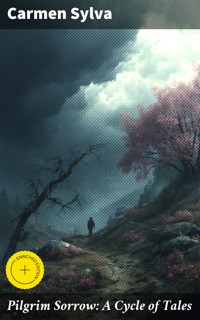
In "Pilgrim Sorrow: A Cycle of Tales", Carmen Sylva intricately weaves a collection of poignant narratives that delve into the complexities of human experience, spirituality, and the often harsh realities of life. Her literary style is characterized by lyrical prose and a deep emotional resonance, echoing the Romantic literary context in which she writes. These tales, rich with symbolism and vivid imagery, reflect on universal themes such as love, loss, and redemption, inviting readers to explore the profound depths of their own souls while navigating the landscape of personal and collective sorrow. Carmen Sylva, the pen name of Queen Elisabeth of Romania, was not only a monarch but also a prolific writer, poet, and advocate for social issues. Her multifaceted background, combining the responsibilities of royalty with a passion for literature, provided her with a unique lens through which to observe the human condition. Influenced by her deep empathy and diverse cultural experiences, Sylva crafts her narratives with authenticity and introspection, drawing on her own life and the struggles of those around her. This collection is a must-read for any admirer of literary introspection and emotional depth. Sylva's ability to articulate the fragility of the human spirit invites readers to reflect on their own journeys of sorrow and hope. Discover the beauty within the pain as you embark on a transformative literary pilgrimage through her exquisite tales. In this enriched edition, we have carefully created added value for your reading experience: - A comprehensive Introduction outlines these selected works' unifying features, themes, or stylistic evolutions. - A Historical Context section situates the works in their broader era—social currents, cultural trends, and key events that underpin their creation. - A concise Synopsis (Selection) offers an accessible overview of the included texts, helping readers navigate plotlines and main ideas without revealing critical twists. - A unified Analysis examines recurring motifs and stylistic hallmarks across the collection, tying the stories together while spotlighting the different work's strengths. - Reflection questions inspire deeper contemplation of the author's overarching message, inviting readers to draw connections among different texts and relate them to modern contexts. - Lastly, our hand‐picked Memorable Quotes distill pivotal lines and turning points, serving as touchstones for the collection's central themes.
Das E-Book können Sie in Legimi-Apps oder einer beliebigen App lesen, die das folgende Format unterstützen:
Veröffentlichungsjahr: 2019
Ähnliche













Pilgrim Sorrow: A Cycle of Tales
Table of Contents
Introduction
This single-author collection, Pilgrim Sorrow: A Cycle of Tales, gathers a suite of short prose pieces by Carmen Sylva into a deliberately shaped whole. Rather than presenting a complete novels or plays compendium, the volume offers a cohesive sequence whose parts echo and amplify one another. The presence of an introductory piece, followed by a procession of titled tales, signals a designed arc: a pilgrimage through states of feeling and insight. Read together, these works frame sorrow not as an end but as a companion on the way, inviting readers to consider how affliction, endurance, and compassion form a shared human journey.
Within these covers the texts are predominantly brief narratives—tales, sketches, and parable-like episodes—composed in prose and often marked by lyrical cadence. They are not dramatic scripts, epistolary exchanges, or formal essays; nor are they expansive novels. Some pieces verge on the prose poem in concentration and image, while others adopt the clarity of fable to set a moral or spiritual problem in motion. The sequence introduces varied narrative situations without elaborate plotting, privileging mood, symbol, and reflection. Together they exemplify a compact storytelling mode that balances accessibility with suggestive depth, encouraging contemplation rather than suspense-driven reading.
Unifying themes declare themselves in the titles that chart the cycle’s arc: aspiration and radiance in The Child of the Sun; the presence and education of grief in Sorrow; the promise of consolation in The Realm of Peace; the friction with constraint in Earthly Powers; the confrontation with necessity in The Inexorable. Further stations—Willi, The Hermit, Lotty, Medusa, Heavenly Gifts, The Treasure Seekers, A Life—gesture toward individual destiny, solitude and community, perilous enchantment, grace, longing, and the shaping course of existence. Throughout, the collection turns to the ethical and spiritual dimensions of suffering, asking how pain might be borne, transformed, and shared.
Stylistically, the tales favor lucidity over ornament, yet their simplicity is musical and suggestive. Carmen Sylva often builds scenes around emblematic images—light, stone, gifts, a path—and lets them accrue meaning across the cycle. The prose is attentive to inward states and to the moral weight of small choices, producing aphoristic turns without abandoning narrative movement. Allegory and realism intermingle: abstract forces may be named, while concrete settings and figures keep the stories grounded. This fusion allows the pieces to speak both as intimate confidences and as universal parables, inviting readers to inhabit them on several levels at once.
The significance of Pilgrim Sorrow as a whole lies in its sustained attention to shared vulnerabilities and its compassionate tone. Carmen Sylva—pen name of Elisabeth, Queen of Romania—was a widely read nineteenth-century author, and the voice heard here reflects a cultivated European sensibility concerned with duty, mercy, and consolation. Yet the collection’s reach is not dependent on historical setting. By distilling experience into emblematic moments, it keeps its focus on feelings and choices recognizable across times and places. The result is a body of work that can accompany readers through private trials without presuming to resolve them in facile ways.
The cycle’s design encourages a cumulative reading. The introductory piece prepares the tone; subsequent tales unfold like stations on a road, each capable of standing alone yet more resonant in sequence. Titles such as The Treasure Seekers and Heavenly Gifts juxtapose human longing with unexpected grace; The Hermit and Earthly Powers counterpose withdrawal and constraint; Medusa names a mythic danger to the living heart. Without relying on complicated plots, the sequence gathers force through recurrence of image and idea. Readers may notice motifs migrating from one tale to the next, creating quiet cross-references that deepen the cycle’s meditation on endurance and hope.
Approached as a whole, Pilgrim Sorrow invites a slow, reflective pace. The tales benefit from pauses, from returning to an image, from considering how one piece answers another. This introduction proposes no single key: rather, it frames the collection as a companionable guide through the weather of the soul. Sorrow, in these pages, is not a spectacle but a teacher; peace is not escape but a realm gained by attention and care. In gathering these works, the volume offers continuity without repetition, variety without dispersion, and a lasting reminder that narrative can console by naming, shaping, and sharing experience.
Historical Context
“Carmen Sylva” is the literary pseudonym of Queen Elisabeth of Romania (born Princess Elisabeth of Wied, 1843–1916), a German-born sovereign whose writing career matured after her arrival in Bucharest in 1869 as the consort of Prince, later King, Carol I. Educated along the Rhine and versed in music, languages, and history, she fashioned a cosmopolitan voice that moved easily between courtly Europe and the Carpathian borderlands. Pilgrim Sorrow: A Cycle of Tales belongs to the late nineteenth-century phase when she published steadily in German and in translation, shaping moral fictions and parables that reflect the spiritual restlessness, social anxieties, and idealism of a continent entering the fin-de-siècle.
The political horizon of these tales is Romania’s nation-building arc. The United Principalities of Wallachia and Moldavia formed in 1859; in 1866 the Hohenzollern-Sigmaringen prince Karl (Carol I) ascended the throne, and in 1877–1878 Romania fought for independence from Ottoman suzerainty, recognized at the Congress of Berlin in 1878. In 1881 the kingdom was proclaimed. Bucharest pursued rapid modernization while Peleș Castle rose at Sinaia (1873–1914) as a royal and artistic center near the monastery that shaped Carmen Sylva’s religious sensibility. The cycle’s meditations on authority, exile, duty, and mercy echo the transformation of a young state under a constitutional monarch.
Private loss profoundly marked the author’s ethics and aesthetics. The death of her only child, Princess Maria (1870–1874), turned Elisabeth toward a literature of consolation and toward public charity. During the Russo‑Turkish War of 1877–1878 she organized nursing, visited field hospitals, and later served as patron of the Romanian Red Cross, a role that connected courtly prestige with practical relief. Across the cycle the recurrence of children, pilgrims, angels, and supplicants resonates with Orthodox and Catholic devotions she encountered at Curtea de Argeș and Sinaia. Sorrow is not merely a theme but a social vocation, entwining mourning with civic mercy and royal responsibility.
Carmen Sylva wrote at a crossroads of romantic survivals, emergent realism, and a renewed interest in folklore. She absorbed the German novella tradition while collecting and reworking Romanian ballads and legends, often with her lady‑in‑waiting and collaborator Mite Kremnitz; together they sometimes signed “Dito und Idem.” The national poetry of Vasile Alecsandri, debates led by Titu Maiorescu’s Junimea circle, and the modern lyricism of Mihai Eminescu formed the ambient literary climate that validated vernacular sources yet demanded stylistic discipline. In this context the cycle’s emblematic figures—the hermit, treasure seeker, or inexorable fate—mediate between peasant mythologies and cosmopolitan narrative craft.
Multilingual composition and transnational circulation shaped both tone and reception. Although German remained her primary medium, the author cultivated French and English audiences through salons in Bucharest and Sinaia and through publishers in Leipzig, Berlin, and London during the 1880s and 1890s. Translation smoothed local color into universally legible parable, enabling the same moral architecture to address readers from the Rhine to the Danube. The court’s cultural diplomacy—concerts, exhibitions, and charity fêtes—positioned literature as soft power for a small kingdom seeking Western recognition. That climate clarifies the cycle’s ethical didacticism, its polished austerity, and its careful balance between exotic landscape and European form.
The social ground beneath these tales was unsettled. Romania’s agrarian majority lived under chronic indebtedness to landlords and middlemen, tensions that erupted in the Peasants’ Revolt of 1907. Railroad building, new commercial codes, and an expanding bureaucracy refashioned time and authority, while emigration and education opened narrow village horizons. Carmen Sylva’s royal vantage gave her access to both court and cottage, and her cycle often frames moral conflict in terms of “earthly powers” confronting conscience, fate, or grace. The stories’ stern judgments and consolations stage a dialogue between modernization’s impersonal forces and the older solidarities of kin, parish, and customary right.
Fin‑de‑siècle Europe also fostered a revival of mysticism and a renewed fascination with antiquity alongside scientific confidence. Archaeology from Schliemann’s Troy to new museums in Berlin and Vienna popularized classical myths, while spiritualism, sainthood biographies, and symbolist art reanimated questions of vision and destiny. In this atmosphere the cycle’s allegorical titles and the presence of figures like Medusa converse with Christian hermits, angels, and penitents, binding Hellenic and Christian imaginaries. The author’s aphoristic style, fond of parable and sententia, reflects a broader European taste for brief moral forms used in newspapers, albums, and charity volumes that circulated across borders.
Court crises left their mark on the late career that frames the cycle’s maturity. The Elena Văcărescu affair (1891–1892), when Crown Prince Ferdinand’s love for the poet‑lady‑in‑waiting forced Elisabeth’s temporary exile to Neuwied, sharpened her sense of renunciation and duty. The Balkan Wars (1912–1913) and the outbreak of the First World War intensified her humanitarian emphasis. Carol I died in 1914; Elisabeth died in 1916 at Curtea de Argeș, the royal necropolis. Read against these events, Pilgrim Sorrow gathers a lifetime’s negotiation between personal bereavement, national service, and European modernity, offering a unified context for its varied parables of loss and hope.
Synopsis (Selection)
Pilgrim Sorrow (Framing Piece)
A brief proem that personifies Sorrow as a wandering pilgrim, setting a contemplative frame for the cycle’s stations of human suffering, compassion, and endurance.
Introduction
An orienting note that outlines the cycle’s moral and emotional aims, inviting readers to find meaning in ordinary lives and trials.
The Child of the Sun
A parable about an extraordinary child whose radiance reshapes the destinies of all who draw near. It balances wonder with the costs and perils of exceptional gifts.
Sorrow
A close study of grief entering a household and testing the bonds within it. The tale traces mourning’s slow transformations without surrendering to despair.
The Realm of Peace
A vision of a true inner refuge discovered beyond noise, pride, and agitation. Characters learn to distinguish outward quiet from the deeper work of peace.
Earthly Powers
A contrast between wealth, status, or intellect and their limits before conscience and mortality. A figure of influence confronts what power cannot command.
The Inexorable
An unavoidable decree—fate, time, or death—narrows a life’s choices. The story follows the movement from resistance to recognition and dignity.
Willi
A portrait of a boy whose innocence collides with harsh circumstance, sending ripples through a close community. Compassion and neglect stand in quiet opposition.
The Hermit
A recluse seeks purity in solitude and finds his ideals tested by human need. Chance encounters force a reckoning between separation and sympathy.
Lotty
The story of a young woman navigating love, reputation, and constraint. Small decisions accumulate into a destiny she must own.
Medusa
A reimagining that uses the Medusa figure to examine beauty, fear, and punishment. It probes how the gaze can turn blessing into curse.
Heavenly Gifts
A meditation on talents or blessings and the duty they impose. Gifts uplift or burden according to the heart that bears them.
The Treasure Seekers
Adventurers pursue material wealth and face moral trials along the way. The chase reveals the emptiness of greed beside loyalty and integrity.
A Life
A compressed arc of an ordinary existence from early hope through hardship to earned quiet meaning. It closes the cycle by revealing the grandeur in a single, fully lived life.




