


Erhalten Sie Zugang zu diesem und mehr als 300000 Büchern ab EUR 5,99 monatlich.
- Herausgeber: Editions de l'Université de Bruxelles
- Kategorie: Geisteswissenschaft
- Sprache: Englisch
Europe is going through a period of major political change. Governments are taking unusually long to form, elections are becoming more unpredictable, political systems are increasingly fragmented, the radical right is gaining strength, and trust in politics is eroding across large parts of society. This book examines how these trends have played out in Belgium by taking a long-term view from 1830 to today. While Belgium's political system and its main actors have changed significantly over time, some underlying patterns have remained.
By looking at shifts in political life, institutions, and key players since independence while using the major cleavages that have shaped political debate, the author identifies six key phases in Belgium's political history: 1830–1893, 1894–1918, 1919–1945, 1946–1965, 1965–1999, and the early 21st century.
Each of these periods is explored in detail. As with any timeline, the boundaries between the phases are not rigid. Still, it is essential to adopt a dynamic approach that recognises continuity and the turning points that have shaped Belgian politics.
ABOUT THE AUTHOR
Pascal Delwit is a professor of political science at the Université libre de Bruxelles (ULB), where he conducts his research at the Centre for the Study of Political Life (Cevipol). His work mainly focuses on political parties as well as political and electoral life in Belgium and Europe. He is the author of "Gauches radicales en Europe. XIXe-XXIe siècles" (2016) and " La Vie politique en Belgique de 1830 à nos jours" (2022), both published by the Editions of the Université de Bruxelles.
Sie lesen das E-Book in den Legimi-Apps auf:
Seitenzahl: 988
Veröffentlichungsjahr: 2025
Das E-Book (TTS) können Sie hören im Abo „Legimi Premium” in Legimi-Apps auf:
Ähnliche


















The “Science politique/Political Science” series at the Éditions de l’Université de Bruxelles publishes works in internal political science, sociology of politics, and comparative politics. Without being exclusive, its field of publication can be subdivided into three main general areas. The aim is to bring to the public’s attention work relating to political and public life in three complementary dimensions: the actors, the acts, and the (public) action.Actors. By ‘actors’ we mean the institutions of contemporary political regimes and the organizations that work therein: political parties, trade unions, associations, and pressure groups.Acts. This axis covers all studies relating to political participation in a broad sense: the electoral phenomenon and the recomposition of political and social landscapes. Other forms of political and social participation are also analysed: spontaneous mobilisations, organised militancy, social movements, forms of action, their symbolic dimensions, their effects, as well as the attitudes that are situated at the root of these modes of political and social participation.Public action. This third axis covers publications related to decision-making processes and public policy formation: political agenda-setting, stakeholder mobilization, negotiation and decision-making processes, implementation and evaluation. The ambition here is to deepen knowledge on the political actors, representations and behaviours of the two previous axes with an analysis of institutional facts, their evolution, and their influence on political life.Series edited by Pascal Delwit
Pascal Delwit
Éditions de l’Université de Bruxelles
In the same seriesIntroduction à la science politique, Pascal Delwit et Caroline Close, 4e édition, 2023
Marges et marginalités au Brésil. Espaces, pouvoir et société, Frédéric Louault, Margaux De Barros et Kevin Kermoal (dir.), 2022
Les partis politiques en Belgique, Pascal Delwit et Émilie van Haute (dir.), 2021
Le football en Russie. Anatomie d’une passion politique, Ekaterina Gloriozova, 2021
La fabrique de l’OTAN. Contre-terrorisme et organisation transnationale de la violence, Julien Pomarède, 2020
La dépendance au parti, Laure Squarcioni, 2020
Islams de Belgique. Enjeux et perspectives, Corinne Torrekens, 2020
Méthodes d’enquêtes de terrain en sciences sociales, édité par Luca Tomini et Sophie Wintgens, 2020
Quand on n’a que l’austérité. Abolition et permanence du politique dans les discours de crise en Italie et en Espagne (2010-2013), Arthur Borriello, 2018
Introduction à la science politique, Pascal Delwit, 3e édition revue et augmentée, 2018
Du Parti libéral au MR. 170 ans de libéralisme en Belgique, édité par Pascal Delwit, 2017
Les partis politiques, ateliers de la démocratie, édité par Dominique Andolfatto et Alexandra Goujon, 2016
Les tentatives de banalisation de l’extrême droite en Europe, édité par Nicolas Guillet et Nada Afiouni, 2016
Soutenir l’équipe nationale de football. Enjeux politiques et identitaires, édité par Jean-Michel De Waele et Frédéric Louault, 2016
Political Science in Motion, edited by Ramona Coman and Jean-Frédéric Morin, 2016
Introduction à la science politique, Pascal Delwit, 2e édition, 2015
Qu’est-ce que l’Europe ? Essais sur la sociologie historique de Stein Rokkan, Daniel-Louis Seiler, 2014
Nationalisme et pouvoir en République de Moldavie, Julien Danero Iglesias, 2014
L’électeur local. Le comportement électoral au scrutin communal de 2012, édité par Jean-Benoit Pilet, Ruth Dassonneville, Marc Hooghe et Sofie Marien, 2014
Les partis politiques en France, édité par Pascal Delwit, 2014
Le cumul des mandats en France : causes et conséquences, édité par Abel François et Julien Navarro, 2013
Les entités fédérées belges et l’intégration des immigrés. Politiques publiques comparées, Ilke Adam, 2013
Culture et eurorégions. La coopération culturelle entre régions européennes, Thomas Perrin, 2013
L’état de la démocratie en Italie, édité par Mario Telò, Giulia Sandri et Luca Tomini, 2013
Le Front national. Mutations de l’extrême droite française, édité par Pascal Delwit, 2012
Les partis politiques en Belgique, édité par Pascal Delwit, Jean-Benoit Pilet et Émilie van Haute, 2011
Party Membership in Europe: Exploration into the anthills of party politics, edited by Émilie van Haute, 2011
Clivages et familles politiques en Europe, Daniel-Louis Seiler, 2011
Revendiquer le « mariage gay ». Belgique, France, Espagne, David Paternotte, 2011
La biodiversité sous influence ? Les lobbies industriels face aux politiques internationales d’environnement, Amandine Orsini, 2010
Ordres et désordres au Caucase, édité par Aude Merlin et Silvia Serrano, 2010
Les voix du peuple. Le comportement électoral au scrutin du 10 juin 2009, édité par Kris Deschouwer, Pascal Delwit, Marc Hooghe et Stefaan Walgrave, 2010
L’islam à Bruxelles, Corinne Torrekens, 2009
Adhérer à un parti. Aux sources de la participation politique, Émilie van Haute, 2009
This book has been peer reviewed. Selection and editorial matter @Pascal Delwit This book is published under licence CC-BY-NC-ND 4.0
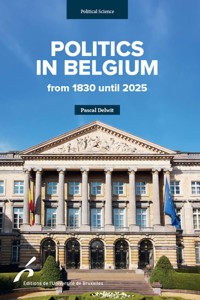
The license allows you to share, copy, distribute, and transmit the work for personal and non-commercial use providing author and publisher attribution is clearly stated : Pascal Delwit, Politics in Belgium from 1830 until 2025, Brussels, Éditions de l’Université de Bruxelles, 2025 (CC-BY-NC-ND 4.0).Cover photography © Ralitza PhotographyISBN 978-2-8004-1923-7eISBN 978-2-8004-1924-4ISSN 1378-6571 D2025/0171/14 © 2025, Éditions de l’Université de Bruxelles Avenue Paul Héger 26 1000 Brussels (Belgium)[email protected]
About the author
Pascal Delwit is a professor of Political Science at the Université libre de Bruxelles (ULB), where he conducts research at the Centre d’étude de la vie politique. He is the author of Le Socialisme en Belgique (1885-2024). Origines, acteurs, développements (Éditions de l’Université de Bruxelles, 2024).
About the book
Europe is going through a period of major political change. Governments are taking unusually long to form, elections are becoming more unpredictable, political systems are increasingly fragmented, the radical right is gaining strength, and trust in politics is eroding across large parts of society. This book examines how these trends have played out in Belgium by taking a long-term view from 1830 to today. While Belgium’s political system and its main actors have changed significantly over time, some underlying patterns have remained. By looking at shifts in political life, institutions, and key players since independence while using the major cleavages that have shaped political debate, the author identifies six key phases in Belgium’s political history: 1830–1893, 1894–1918, 1919–1945, 1946–1965, 1965–1999, and the early 21st century. Each of these periods is explored in detail. As with any timeline, the boundaries between the phases are not rigid. Still, it is essential to adopt a dynamic approach that recognises continuity and the turning points that have shaped Belgian politics.
This eBook can be cited
This edition of the eBook can be cited. To enable this we have marked the start and end of a page. In cases where a word straddles a page break, the marker is placed inside the word at exactly the same position as in the physical book. This means that occasionally a word might be bifurcated by this marker.
Contents
Introduction
Chapter I
The Beginnings of the Belgian State
A territory under trusteeship
The union of the Northern and Southern provinces
The advent of Belgium
Chapter II
1830-1893: From Unionism to Bipartisan Confrontation, Liberals vs Catholics
Unionism
A striking industrial and economic development
Asymmetrical unionism
Catholics vs Liberals
Liberal crystallisation
Building the Catholic Party
The language issue: the beginnings of the centre-periphery cleavage
Chapter III
1893-1918: The Birth of a Multi-Party System
The crystallisation of the socio-economic cleavage
The rise of the socialist world: the Belgian Workers’ Party (Parti ouvrier belge-Belgische Werkliedenpartij, POB-BWP)
Opening up the political system: the advent of universal male suffrage with plural voting
1894: a political turning point
The advent of proportional representation
The beginnings of pillarisation in Belgium
Changing the world: the socialist pillar
At the service of God and His people: the Catholic pillar
Shattering the absolute majority: the final convulsions of Catholic dominance
Belgium, a colonial power
The 1914-1918 war and its consequences
Chapter IV
1919-1946: The Fall of the Catholic Party Hegemony and the Rise of a New Kind of Multiparty System
Belgium’s evolving status in post-World War I international relations
Redefining industrial relations
Towards linguistic equality?
Changes in political life
The development of the socialist pillar
A new challenger: the Communist Party of Belgium (PCB-KPB)
Farewell to Catholic hegemony
The rise of the Flemish political movement: from the Frontpartij to the Vlaams Nationaal Verbond (VNV)
Rediscovering Christ the King? The brief rise of Rex
The new status of Belgian liberalism: a ‘support’ party for Catholics
Pre-war turmoil
Chapter V
1944-1961: Fifteen Years of a Two-and-Half-Party System
Is change always pursued for its intrinsic value?
Changes in the social security system
From the Catholic Bloc to the Parti social-chrétien-Christelijke Volkspartij (Social Christian Party)
The aborted experiment of the Belgian Democratic Union
From the Workers’ Party to the Belgian Socialist Party
The Communist Party’s short-lived heyday
The Liberal Party’s new role
A long history of philosophical polarisation: from the Royal Question to the school wars
The Royal Question
Ruthless school wars
The end of a colonial power
Chapter VI
The New Openness of the Party System
The new salience of the socio-economic and linguistic cleavages
From the winter strike of 1960-1961 to Flemish socio-economic predominance
Two main languages, two countries?
Liberal realignment: building a conservative party
A delicate transition for the socialist movement
The emergence of regional parties in Belgium: the Volksunie, the FDF, and the Rassemblement wallon
From the Vlaamse Concentratie to the Volksunie
From the PWT to the Rassemblement wallon
Building the FDF
Further broadening of the party system
Communist schism and new demands
Challenging a traditional pattern
The ‘Leuven Affair’, or the breakup of the PSC-CVP
The implosion of the Liberal Family
The new socialist path: uniting progressives?
The first state reform
Dissolution of the Rassemblement wallon
From the failure of the Egmont Pact to the laws of August 1980
The Volksunie is in turmoil
Surfing the neoliberal wave
Liberal comeback in the spotlight
A Social Christian family under stress
Further decentralisation: the long labour of the third reform of the state
Socialist reorientation
New cleavages, newcomers
The short-lived UDRT-RAD
The upsurge of green parties: Ecolo and Agalev
Belgium through the prism of the new Radical Right
Farewell to the Communist Party
The existential questions of the Volksunie
Repositioning the FDF
The advent of federalism and the painful 1990s in Belgium
Chapter VII
Extreme Fragmentation, Extreme Governing Difficulty
1999: a new rupture-election
From missed opportunity to divine surprise: the evolution of the Flemish liberalism in the 1990s
The foundations of a long-anticipated new era: the Francophone liberals
An affected Social Christian world
From heaven to hell? Socialists facing challenges
The greens in government at last
Major advances in new generation rights
A fifth state reform
Tribulations of Flemish political nationalism
Mirage of bipolarism, explosion of multipartyism
Farewell to Flemish political Catholicism?
A sixth state reform by force
The rise of a national, ethnocentric, and conservative party: the N-VA
The false promise of Spirit
The failure of the liberal sorpasso
Vlaams Belang, like a phoenix
The brief Dedecker phenomenon
From sp.a to Vooruit: in search of lost socialism
Flemish greens hit the glass ceiling: from Agalev to Groen
Parti socialiste: farewell to dominance
Ecolo: off the rollercoaster
MR: the quest for the top spot
DéFI: in search of an identity
Failing of the French-speaking Radical Right
The elusive horizon of the Parti populaire
The uncertain future of the Centre démocrate humaniste and the surge of Les Engagés
Radical Left resurgence: PTB-PVDA back in the game
Chapter VIII
Contemporary Changes in the Regime and Political System
The fragmentation of the political system in Belgium
Changes in electoral behaviour
Institutional constraints
The law on the state funding of political parties
Repeated changes in electoral law
The road to parity and diversity
The federal state, changes in parliamentary representation, and the impact on parties
A stalled negotiation process
Party leaders, more and less powerful
A new type of party: organisational changes in the world of political parties
Changes in institutional constraints
Personalisation and acceleration of communication time
The diminishing role of monarchy
Bibliography
Introduction
Europe’s foray into the 21st century reveals noteworthy political and electoral dynamics. Without delving into excessive detail, we begin with a substantial rise in voter abstention, particularly in the most critical first-order elections. The decline in voter turnout for these elections ranges from 10 to 15 percentage points (Delwit, 2013).
This increase in abstention is even more apparent in second-order elections, as conceptualised by political scientists Karlheinz Reif and Hermann Schmitt. These elections, deemed less decisive and central in the public imagination, demonstrate lower voter turnout, a propensity to abandon government parties, and a “vote with the heart” associated with less strategic electoral behaviour (Reif & Schmitt, 1980; Reif, 1985).
Another notable trend is the sharp increase in electoral volatility (Mainwaring, Gervasoni & Espana-Najera, 2017), indicating a diminishing constancy in voters’ electoral behaviour. From one election to the next, the number of people changing their choices is on the rise. Additionally, there is a significant surge in political and electoral fragmentation across many European Union countries, marked by the decline or collapse of major historical Centre-Right and Centre-Left parties1. This diversification of political landscapes has led to prolonged and complex government formations, thereby intensifying citizens’ distrust of public authorities (OECD, 2013).
The evolution of the fragmentation index, devised by political scientist Douglas Rae (1968), attests to this trend. Calculated by summing the squared proportion of votes for each party, the index equals 1 minus this proportion. The closer the number is to 1, the more fragmented the system; conversely, the closer it is to 0, the less fragmented. Notable increases in this index are evident in various countries, such as Germany’s rise from 0.76 in 1953 to 0.85 in 2021, Norway’s increase from 0.74 in 1949 to 0.84 in 2021, and the Netherlands’ ascent from 0.80 in 1948 to 0.89 in 2021. Consequently, the establishment of governments has become both increasingly challenging and time-consuming.
Belgium, not exempt from these observations, provides a pertinent case study, except for a decline in voter turnout when voting is compulsory. Some Belgian governments faced prolonged establishment processes throughout the 20th century, a trend continuing into the 21st century. The extended formation of the Leterme I government in March 2008 served as a watershed moment, setting a precedent for subsequent elections and resulting in protracted government formations.
For example, 541 days were required to establish a parliamentary majority after the 2010 legislative election, followed by 139 days after the 2014 election and 493 days after the 2019 election. This prolonged process has led to extended periods of caretaker governments, with the federal government in Belgium spending 1,246 days in such a state from January 1, 2007, to December 31, 2021.
However, this scenario is not entirely novel, as Belgian political history has witnessed periodic polarisations along major societal cleavages. The term “cleavages” was theorised by political scientists Stein Rokkan and Seymour Martin Lipset in the 1960s (Delwit, 2021a). They posited that these cleavages stemmed from the chain of two revolutions – the national and industrial revolutions – that unfolded in the 19th century, giving rise to conflicts along territorial-cultural and functional axes.
On the territorial-cultural axis, the national revolution led to a cleavage between proponents of the “central culture of national construction” and advocates of the “growing resistance of the dominated populations of the provinces and peripheries” (Lipset & Rokkan, 1967: 14). This divide often mirrors differences in language, nationality, ethnicity, or religion, and thus emphasises power distribution between the Centre and Periphery.
The functional axis highlights a divide between defenders of the Catholic Church’s corporatist privileges and proponents of a “centralising, standardising, and mobilising nation-State” (Lipset & Rokkan, 1967: 15). Referred to as the secular-clerical divide or the State-Church divide, this convictional schism underscores differing views on the role of religion in governance.
In the context of the Industrial Revolution, the territorial-cultural axis further manifested as an urban-rural divide or a primary-secondary divide, pitting agrarian interests against the emerging class of industrial entrepreneurs. On the functional axis, a divide emerged between “owners and employers” and “tenants, farm workers, and laborers” (Lipset & Rokkan, 1967: 21).
According to Lipset and Rokkan, these are the four primary cleavages shaping European party systems. Stefano Bartolini (2004) concurs that class conflict played a pivotal role in standardising party systems across Europe in the 20th century, making it the predominant social conflict politically mobilised in every European country.
The Rokkanian framework has four cleavages and eight sides or poles. Lipset and Rokkan ultimately introduce the concept of a third revolution, the international revolution. This would concern only the property-labour divide and, i.e. the workers’ side.
With the October Revolution of 1917, an internal cleavage emerged within this side. It entailed a confrontation between proponents of a so-called reformist path to socialism and adherents of a revolutionary path. The former posited that a gradual transition to socialism was achievable within the parameters of representative democracy. Post-war, they found representation in the Social Democratic political family.
The latter remained anchored in a perspective of rupture and formed the communist movement and its successive dissident organisations, particularly Trotskyism and Maoism.
This significant theoretical contribution has engendered numerous debates within the academic literature, raising various questions. One of the primary inquiries revolves around the precise definition of the term “cleavage.” Curiously, Lipset and Rokkan do not extensively deliberate on this matter.
A cleavage, fundamentally, manifests as a conflict that expresses itself as opposition within national politics through partisan struggles and, more expansively, within the realm of confrontation between social organisations.
The cleavage, as articulated in Bartolini’s analysis, represents a distinctive form of division, signifying a robust social demarcation within a delimited context, specifically the nation-State. It presupposes an assertion of identity and community, entwined with a dichotomy of ‘them’ and ‘us,’ delineating one ‘side’ in opposition to the ‘other.’ In the outlined circumstances, this pronounced social demarcation crystallises institutionally, in particular within the spheres of political and social competition (Bartolini, 2005: 13). Pierre Bréchon (1999) underscores two fundamental characteristics: firstly, the concept of a fundamental conflict, and secondly, its pacified dimension, manifesting within the framework of representative democracy.
Belgium has undergone extensive scrutiny within the framework of cleavage theory. According to numerous historians and political scientists, three out of the four highlighted cleavages have assumed a pivotal role in structuring and shaping the political landscape and system: the philosophical cleavage, the owner-worker cleavage, and the centre-periphery cleavage. In the Belgian context, the latter cleavage has been manifested through the lens of the language question, occasionally denoted as the community divide, thereby accentuating the contrast between linguistic communities.
Be it the enduring philosophical divide, extending until the enactment of the school pact in 1958 and its ratification in 1959, the socio-economic cleavage, or the disputes arising from community and linguistic differences, instances of tension among sectors of public opinion and political and social actors have, at times, been marked by acrimony and severity. Periodically, these tensions have given rise to challenging political impasses. As we shall explain in greater detail, the cleavages have not merely cumulatively influenced but have intricately interwoven to shape the political landscape.
In the past four decades, the scrutiny of these three cleavages, and more broadly, the four initial cleavages proposed by Lipset and Rokkan, has undergone intense questioning and debate through transformations in the political landscape involving both parties and citizens. Some political parties have seen substantial growth, while others have experienced a pronounced decline. How can cleavage theory adapt to these changes? Numerous proposals have been posited.
As early as the 1970s, Ronald Inglehart (1977) introduced the concept of a new revolution – the silent revolution – as titled in his seminal work. He heralded a paradigm shift linked to generational phenomena in this discourse, instigating a cultural revolution. The values embraced by a substantial portion of the younger generation were anticipated to be less fixed on material themes. This cultural revolution is thought to be correlated with the fading significance of World War II as a reference point for behaviour. Furthermore, it is associated with the heightened accessibility of higher education for young individuals. Many among them also champion and propagate post-materialist values, encompassing aspects like well-being, quality of life, ethics, environmental protection, and the promotion of gender equality (Mair, 1999).
Expanding upon Inglehart’s research, a cohort of scholars establishes a connection between the rise of post-materialism and the evolution of ecological parties in European nations. These parties are depicted as “the closest reflection of the new post-industrial alignment of political values” and, organisationally, as the entities most attuned to the “demands for participation from a new generation of politically competent citizens with a high level of educational capital.” Inglehart’s contributions also give rise to another dimension for consideration within the cleavage theory: their structural aspect.
The expanding accessibility to higher education and the proliferation of diverse information sources have the potential to disengage many citizens from unconditional and communitarian approaches and interpretations. This dynamic has implications for the necessity of confinement for a cleavage to achieve full operational status.
Additionally, the ascent of several Extreme Right-wing parties, succeeded by the surge of the Radical Right, prompts inquiry into the interconnections between cleavages.
Various authors posit the hypothesis of a cultural or values divide. In the 1990s, Pietro Ignazi (1992) foresaw a silent counter-revolution, alluding to a reaction against the themes and values championed by the 1968 student movement. This hypothesis also encompasses a socio-economic upheaval tied to the new international division of labour and the deepening globalisation in terms of both the production and transport of goods, as well as the movement of people and workers (Kriesi, Grande, Lachat, Dolezal, Bornschier & Frey, 2008). A discernible schism would emerge between the beneficiaries of modernisation (politically, economically, and culturally) and those who bear the brunt of the same modernisation.
Aligned with Inglehart’s framework, the demarcation, especially among newer generations, is posited to revolve around cultural capital, gauged by the level of educational qualifications attained. Within this divide, Radical Right-wing parties are positioned on the disadvantaged side of modernisation, elucidating their adeptness in attracting an electorate that is proportionately younger and less educated than the average. Moreover, the downside of modernisation impacts a subset of the working class, subject to competition from both upper and lower echelons.
Amidst deindustrialisation, status destabilisation, and the erosion of symbolic prestige, the working class is facing competition from both the burgeoning salaried middle classes and immigrant workers. This dynamic also elucidates the ethnocentric positioning inherent in the ethnocentric-versus-universalist dichotomy. Following the analysis of Hooghe, Marks, and Wilson (2002), a substantive divide has materialised between proponents of a green, alternative and libertarian approach (GAL, Green / Alternative / Libertarian) and proponents of a conventional, authoritarian, and nationalist conception (TAN, Traditional / Authoritarian / Nationalist).
In the context of this data, we scrutinise the profound political transformations characterising the contemporary period, with Belgium serving as no exception – as expounded in this text. Nevertheless, certain idiosyncrasies merit attention, with the primary one revolving around the fate of the State. The prospects of “post-Belgium” or “confederalism” are now openly deliberated. In July 2020, Paul Magnette, President of the Socialist Party, and Bart De Wever, President of the N-VA, sought to spearhead a significant State reform, a move not explicitly outlined in their electoral programs. While the endeavour proved unsuccessful, it underscores the pervasive existential questioning that has become a constant feature. Furthermore, this sequence has been anticipated, if not entirely conceptualised and planned, for 2024, precluding any elucidation as to the rationale behind this focus and timetable even before election results were known.
While it is accurate to assert that Belgium does not comprise two distinct democracies, as Bart De Wever (2020) often – albeit inaccurately – contends, there undeniably exist two distinct societies where the formation of opinions and cognitive patterns markedly diverge. However, it is crucial to point out that the linguistic divide is not an exclusive one. Quite the contrary even, as various other cleavages are prominent and have significantly influenced Belgian political and institutional life since the nation’s independence in 1830. These cleavages play a pivotal role in comprehending the profound transformations occurring within the Belgian political system.
The objective of this book is to conduct an analysis of contemporary events from a more comprehensive standpoint that extends beyond the short term. The current configuration of the Belgian political system and its stakeholders has undergone significant changes, yet certain constants persist. This work unfolds a historical narrative through the lens of the transformations impacting the Belgian political system, institutional framework, and political parties. Undertaking such an endeavour is inherently intricate, involving the challenging task of imbuing meaning and coherence into history by emphasising pivotal junctures, key moments, and major events. In our analysis of the evolutions in the Belgian political system since the nation’s independence, we delineate six major phases. These developments are intricately tied to the successive configurations unveiled by the Belgian political system.
The initial phase spans from the aftermath of independence to 1893. Throughout this period, Belgian political life was predominantly focused on a clash between two political entities, or, more precisely, two political sensibilities: Liberals and Catholics, engaged in a vehement struggle over philosophical differences. Liberals championed the principle of a distinct separation between the new parliamentary State and the Catholic Church. They affirmed the primacy or precedence of public authorities in tasks that the Church and Catholic organisations aspired to undertake and control: education, limited social assistance, and healthcare. Conversely, the latter relied on constitutional freedom to reject the right of public authorities to intervene in these and other domains. The issue of schooling and, more significantly, the conflict over education, vividly exemplify the divergent viewpoints and the intensity of opposition between the two factions. With suffrage grounded cens-based2 qualification for voting and a majoritarian voting system, this opposition led to a perfectly articulated two-party system, fully manifested with the gradual dissolution of unionism in the late 1830s.
The second period spans from 1894 to 1918. During this timeframe, new fault lines emerged in Belgian society, particularly driven by socio-economic conflicts and the gradual solidification of the linguistic divide. The manifestation of these cleavages gave rise to the formation and growth of new political parties. The Parti ouvrier belge-Belgische Werkliedenpartij (Belgian Workers’ Party, POB-BWP), a precursor to the Socialist Party and Vooruit, was established in 1885. It firmly embedded itself in the social fabric by investing in institutions. The POB-BWP swiftly prioritised the expansion of the right to vote as a primary goal. It partially achieved this goal in 1893 through the implementation of universal male suffrage and the introduction of plural voting. This transformation proved pivotal, reshaping the political and electoral landscape and propelling Belgium into a dynamic of multiparty politics.
The establishment of the multi-party system was solidified with the introduction of proportional representation in 1899. This transformative shift prevented the parliamentary extinction of the Liberal Party. During this period, the Catholic Party maintained the dominance it had secured in the 1884 elections. Despite collaborative efforts by the Liberals and Socialists, particularly in 1912, to challenge its supremacy, the Catholic Party retained an absolute majority of seats throughout this era.
The third period commenced in the aftermath of World War I. While plural suffrage was abandoned, the legislature refused to extend voting rights to women, except at the local level. The 1919 election marked significant changes: the Catholic Party lost its absolute majority, and the Workers’ Party rose to prominence. Subsequently, almost all governments formed coalitions. Until 1944, two primary coalition types emerged: an alliance between Catholics and Liberals, with the latter in a supporting role (1921-1925; 1927-1935), and a Catholic-Socialist-Liberal tripartite coalition (1919-1921; 1935-1944). Simultaneously, the political system further expanded following the dissolution of the plural vote. New parties emerged, including the Frontpartij (Front Party), which transformed into the Vlaams Nationaal Verbond (Flemish National Alliance, VNV) in the 1930s, the Parti communiste de Belgique-Kommunistische Partij van België (Communist Party of Belgium, PCB-KPB), and Rex.
The fourth period began after World War II. It was a time of transition until the 1965 election. It was first marked by the adoption of universal suffrage. Women were granted the right to vote at a national level and were able to do so for the first time in the 1949 elections. This stage of political life saw a spectacular exacerbation of the philosophical divide around the royal question until 1950 and the school question thereafter. The Christian Democrats and the Socialists were the two main vote-getters, while the Liberals played a pivotal role (Rémy, 1975), allying themselves with the Christian Democrats (1949-1950; 1959-1961) or the Socialists (1945-1947; 1954-1958). Following Jean Blondel (1968), this period can be described as a two-and-a-half-party system.
This transitional phase concluded with the Schools Pact (1958-1959). Politically, Belgium entered a new configuration during the spring elections of 1965. The Socialists and Christian Democrats faced a substantial defeat, whereas the Liberals, having relinquished their identity-based anti-clerical stance, made notable strides. In this fifth phase, the multi-party system underwent further consolidation due to the gradual decline of the Christian Democrats and the disintegration of the national parties, with the national political families fragmenting from 1968 onward. Concurrently, new parties emerged, initially in the form of regionalist parties often termed community parties: the Volksunie (People’s Union, VU), the Rassemblement wallon (Walloon Rally, RW), and the Front démocratique des francophones (Democratic Front of French-speaking people, FDF). Vlaams Blok (Flemish Bloc) was established in 1979, and the ecologists gained prominence in the early 1980s, with Ecolo in 1980 and Agalev in 1982. Throughout this period, the institutional landscape underwent profound changes, with four State reforms delineating the path towards the federal State in 1970, 1980, 1988, and 1993.
Finally, we are undoubtedly entering a new configuration with the 1999 elections, which revealed some spectacular upheavals. For the first time since the extension of suffrage in 1893, the Christian Democrats were overtaken in Flanders. For the first time since the end of the plural vote, the Socialists fell below the 30% threshold in Wallonia, and the Liberals became the leading political family in the country. These political convulsions anticipate the first part of the 21st century with no stable element in either the political landscape or the institutional structure of the State. As we noted in the preamble, the increase in electoral volatility (Schamp, 2014), the sinking, if not the collapse, of the historically dominant parties, the increase in political fragmentation, and the questioning of Belgium’s very destiny have dominated minds and political action for the last twenty years.
This book delves into these six phases in the history of the Belgian political system. Naturally, as is the case with any chronological segmentation, the demarcation lines between these distinct stages are permeable. It is crucial to approach these developments with a dynamic perspective by acknowledging that while not abundant, ruptures are nonetheless pivotal.
1For the Socialist family, we refer to our article (Delwit, 2021).
2The cens is a tax threshold that determines the right to vote.
Chapter I
The Beginnings of the Belgian State
A territory under trusteeship
“One fact is beyond doubt,” states historian Jean Stengers: the first territorial trace of what was to become Belgium can perceived in the 15th century. The conglomerate that somewhat anticipated the future Belgium was the one formed by Philip the Good, known as the Burgundian Netherlands, i.e. the XVII provinces. Heir to the crown of Spain and the territories under its guardianship, Charles V was at the same time German Emperor and Prince of the Netherlands, from which he traced his lineage.
Born in Ghent, he received his education in Mechelen and spent his youth in Brussels. In his ambition to establish a formidable empire of Christendom, he afforded considerable latitude and autonomy to the XVII provinces. Notably, they were exempt from Germanic laws and courts (Manhès, 2006: 59) during a phase of economic, cultural, and political development.
Upon inheriting the throne in 1555, Philip II, the eldest son of Charles V, adopted a divergent approach. He implemented centralised rule, reducing the freedoms traditionally enjoyed by the provinces. The resulting tensions between the King and the provinces precipitated a prolonged period of proto-civil war. Ultimately, this conflict reached its zenith in 1581 with the secession of the seven northern provinces, forming the United Independent Provinces. This secession unfolded against a backdrop of incessant conflict between Protestants and Catholics, prompting a substantial exodus of Protestants from the southern provinces to the newly formed United Provinces.
In Early modern history, current-day-Belgium was detached from the northern United Provinces. From then on, the future territory of Belgium came under different guardianships according to the marriages of monarchs and international treaties. These provinces were not very dynamic in socio-economic terms, especially compared with the northern provinces, which were booming.
However, in the 18th century, the situation underwent a transformation. Current-day-Belgium, which had frequently found itself at the crossroads of conflicts until then, experienced relative peace and embarked on a new phase of economic development (Denys & Paresys, 2016: 159). In what was effectively an Austrian trusteeship, the southern provinces flourished under the flexible and modernising rule of Maria Theresa, who ascended to the throne as Empress of Austria in 1740.
Upon her death in 1780, the provinces underwent a shift towards meticulous dirigisme under the governance of her eldest son, Joseph II. To foster the development of the territory and promote the growth of textile, mining, and steel industries, Joseph II sought to significantly diminish the influence of the Roman Catholic Church. He perceived the Church as resistant to modernity and a proponent of a retrograde vision. Consequently, the future Belgium experienced asymmetric growth. In the south, industrialisation gradually took root, while in Flanders and Limburg, a trend towards ruralisation and a certain form of backwardness deepened.
The emperor aimed to secularise society by fostering a plurality of religious beliefs and diminishing the Catholic Church’s influence (Bitsch, 2004: 53). The Edict of Toleration in 1781 ensured freedom of worship, and by June 1784, burials in churches were prohibited. Shortly thereafter, marriage was redefined as a civil contract.
In 1786, Joseph II further curtailed the activities and influence of the Catholic Church. On January 23, an edict subjected sermons to censorship. By February 11, the scheduling of all fairs was standardised for the same day (Lotin, 1990). On April 8, the various brotherhoods providing assistance to the poor were consolidated into a single entity, the so-called “Amour actif du prochain” (Active Love of Neighbour) while the administration of public assistance came under the control of public authorities (Desmette, 2002: 449). Most significantly, on October 16, the closure of episcopal seminaries was initiated simultaneously with the establishment of two State seminaries in Louvain and Luxembourg (Mabille, 2011: 27).
Josephist interventionism also extended to institutions. On January 1, 1787, an edict divided the Netherlands into nine administrative circles, each overseen by an intendant with full powers over local administrations (Denys & Paresys, 2016: 185). Another edict established sixty-three courts of first instance and two appeal councils, supplanting provincial justice councils, ecclesiastical courts, and seigneurial justice offices (Kisters, 1996: 762). This restructuring resulted in thousands of judicial officers and local administrators losing their positions.
These two edicts provoked the animosity of the supporters of Hendrik van der Noot and Jean-François Vonck (Van Kalken, 1926: 168). The former, referred to as statists or supporters of the States, advocated for the restoration of privileges and favoured a return to the old system of privileges and particularism. These statists were staunchly opposed to Josephism, which perceived the Catholic Church as a servant of the State. Their resistance to reforms, such as the abolition of contemplative convents and the closure of episcopal seminaries, became a defining stance (Manhès, 2016: 90).
In contrast, the Vonckists, partly influenced by the Enlightenment, aligned more with the progressive movement and advocated for the introduction of parliamentarianism. However, they also opposed some of Joseph II’s decisions, particularly the implementation of freedom of worship in a region where the Catholic religion held hegemony.
The hostility was intense, and Joseph II, confronted with what was termed a “patriotic party” in reports sent to Vienna (Dubois, 2005: 41), had to make concessions. Indeed, he yielded in the face of what is sometimes referred to as the “small revolution” in the State of Brabant in 1787. By summer, he abandoned his plans, and a fragile truce in the conflict between Joseph II and the States was reluctantly established. However, this respite proved short-lived.
Following the French Revolution of July 14, 1789, two revolutions rocked the future territory of Belgium. On August 18, 1789, the Prince-Bishop was overthrown in Liège. In the other provinces, the Brabant Revolution was fuelled by both a reactionary inclination and a “patriotic spirit” (Stengers, 2000: 129). In his Manifesto to the Brabant people on October 24, 1789, van der Noot echoed this sentiment:
It is our indispensable duty to exhort and recommend to all in general, and to each one in particular, to work together for the common welfare and salvation of the country; consequently, we must expressly forbid anyone to ally themselves with those of the government of the former Duke, or with the former Duke himself, on pain of being punished as enemies of the country. (Van der Noot, 1789)
On January 11, 1790, a Treaty of Union established a federative State known as the United Belgian States among the elevated provinces. This Treaty of Union drew inspiration from the United States’ “Articles of Confederation” from 1777 but also reflected the Belgian territories’ traditional communal and provincial particularism. The sovereignty of each province was guaranteed. However, within the insurgent camp, tensions escalated among different factions.
Liberals aligned with Vonck expressed concerns about the growing confusion of powers. They advocated for constitutional governance and the principle of the separation of powers. Representation, in their view, should be based on an “elective aristocracy” and voters paying the cens, who were expected to be “enlightened” (Van Kalken, 1926: 171).
The Cardinal Archbishop of Mechelen, Prince of Franckenberg, strongly condemned the Vonckists in his Lenten pastoral letter dated January 31, 1790:
Do not listen, do not listen to the pernicious advice of these turbulent and insidious people, who, under the guise of wanting to support your rights to a sovereignty that you could never exercise by yourselves, seek only to sow discord, and who inspire in you an unjust mistrust of the fathers of the fatherland only to bring about, by changes and innovations that are as impracticable as they are dangerous, a general confusion in public affairs. I dare say, therefore, that you regard as enemies of religion and of the State all those who, by reasonings as frivolous as they are subtle, influenced by the philosophy of this century, would like to disturb happiness which we are on the eve of enjoying. (Juste, 1884: 64-65)
A petition labelling anyone advocating “changes or novelties to either religion or the Constitution” as a traitor garnered numerous signatures. Demonstrations against Vonck’s supporters were organised from the spring onward, leading several leaders of the Vonckist movement to depart for France. These events also prompted some of them to radicalise their progressive positions. According to Mabille (2011: 39-40), it was from this time that “we can trace the emergence of genuine political anticlericalism.”
In the summer of 1790, van der Noot and his supporters were ousted from power. Troops from Britain, Prussia, and the United Provinces reinstated Habsburg authority under Leopold II, who succeeded his brother Joseph II upon his death on February 20. Leopold reversed Joseph’s centralising approach. In the South, the revolution was gaining momentum. However, external pressure played a pivotal role in altering the situation.
In the spring of 1792, France declared war on Austria and entered the Netherlands. Initially, the notion of establishing an independent republic was considered, but it was quickly discarded in favour of complete absorption. The argument for this was grounded in the concept of “natural borders.” Danton proclaimed in January 1793 that “We shall reach them from the four corners of the horizon, from the Rhine, from the Ocean, from the Pyrenees, from the Alps. This is where the boundaries of our Republic must end” (Denys & Paresys, 2016: 193).
The French invasion and occupation of the former territories of the Austrian Netherlands and the Principality of Liège concluded in September 1794. Luxembourg managed to escape French domination for a brief period, but it was eventually annexed on June 7, 1795. On October 1, the Convention formally decided to annex these territories.
The French annexation, spanning from 1794 to 1814-1815, was short-lived. However, the establishment of an administrative, political, and judicial structure on the territory of future Belgium left enduring imprints within a context of economic prosperity. This was also reflected in legal codes: a civil procedure code was published in 1806, a commercial code in 1807, a criminal instruction code in 1808, and a penal code in 1810.
The French presence in Belgian territory sparked vehement opposition from the Catholic Church, which strongly contested the abolition of convents, the sale of ecclesiastical property as national assets, the establishment of the separation of Church and State, and the introduction of new forms of religious organisation (Bitsch, 2004: 66).
The union of the Northern and Southern provinces
Napoleon’s defeat at Waterloo marked a pivotal moment, again reshaping the geopolitical landscape. In the early months of 1814, English, Swedish, Prussian, and Russian troops liberated the Belgian provinces from French control. In the aftermath, Belgium harboured aspirations for independence. However, despite this desire, a lack of internal mobilisation and external support prevented serious consideration of independence as a viable option.
Under the Treaty of Paris signed on May 30, 1814, the Belgian provinces were incorporated into the Kingdom of the Netherlands. The formal reunification of these provinces was later affirmed at the Congress of Vienna in 1815.
It becomes evident that even centuries after their initial separation, the reunification of the southern and northern provinces was essentially a geopolitical construct. The establishment of the Kingdom of the Netherlands was intricately tied to the balance of power among European nations. For the United Kingdom, the proponent of this solution, the newly formed State to the north of France served as a strategically significant counterweight to French ambitions, striking a delicate balance. The control of the mouths of the Rhine and the Scheldt by a friendly State capable “to resist the well-known French appetite for Belgium” (Hobsbawm, 1996: 101) was deemed crucial. The Kingdom proved to be a reliable ally for British diplomacy on the continent.
The incorporation of the Belgian provinces and the territory of Luxembourg into the Kingdom of the Netherlands brought about certain economic and commercial advantages. However, on Belgian soil, it stirred discontent among the Catholic elites, and the southern part of the country experienced financial difficulties. By August 2, 1815, Prince de Broglie, Bishop of Ghent, issued a pastoral instruction explicitly prohibiting Catholics from accepting the new Constitution. This created a profound dilemma for Catholic civil servants.
A breakthrough in this impasse came on May 18, 1817, through the ingenuity of Prince de Méan. His proposal allowed Catholics to accept the Constitution “while considering themselves obligated to protect all the religious communities of the State only from a civil standpoint and without having to endorse their doctrines” (Van Kalken, 1926: 177). Nevertheless, tensions persisted between the Catholic Church and King William. The Dutch monarch sought control over the Catholic Church and the education of clergy. In 1825, he revived a philosophical college in Leuven, a move deemed “prejudicial to Catholicism” by Pope Leo XII, further escalating the conflict between the King of the Netherlands and the Catholic Church (d’Alaux, 1845: 53).
On their part, the liberals perceived the system as a positive stride in terms of representation and freedom. Jean-François Gendebien (Gilissen, 1958: 77), a prominent liberal figure, expressed this sentiment by stating that “all things considered, the Basic Law of the Kingdom of the Netherlands offers the most liberal guarantees a people could wish for when they contract with a prince who makes a solemn commitment to reign as a good king should for the happiness, stability, and the greatest advantage of the State.”
However, despite these optimistic views, the Kingdom exhibited a striking linguistic dualism, along with pronounced cultural, religious, and political divisions. These complexities underscored the challenges inherent in reconciling diverse interests within the Kingdom.
In 1819, the Belgian provinces underwent a significant linguistic shift. Dutch was established as the official language in Flanders and, starting from 1822, in Brussels as well. The House of Orange viewed language as a crucial tool for promoting the unifying mission of the State (Witte, 2005: 28). This linguistic choice had profound implications for religious and educational policies.
The preference for Dutch as the official language had a noteworthy impact on religious dynamics. The Catholic Church was concerned about the potential dissemination of Calvinist ideas through the usage of Dutch. Moreover, the political elites in the southern provinces were predominantly French-speaking, which lead to staunch opposition. This resistance was intensified by the pronounced determination of William I to shape education policy. Between 1816 and 1817, he established seven Athénées and three State Universities in Ghent, Liège, and Louvain. Additionally, he mandated that every secondary school teacher hold a degree from a national university, further emphasising his commitment to educational reforms.
In the latter half of the 1820s, a wave of liberal opposition began to surface in Belgium. A younger generation grew increasingly critical of the House of Orange. Starting in 1824, influential figures like Paul Devaux, Charles Rogier, Joseph Lebeau, Firmin Rogier, and Félix Van Hulst voiced their opposition to the King’s authoritarianism through the newspaper Le Mathieu Laensbergh. They advocated for a return to the autonomy of the provincial States (Demoulin, 1989: 33). Sylvain Van de Weyer, writing in the Courrier des Pays-Bas, echoed similar sentiments. Within the States General, Charles and Henri de Brouckère openly criticised King William. The liberal currents of this period were primarily concerned with political issues, emphasising direct election of MPs, the principle of ministerial responsibility, and, most importantly, the preservation of freedom of the press. Various newspapers and journalists experienced censorship, and some faced legal condemnation. In November 1828, Charles de Brouckère introduced a proposal on freedom of the press in the Second Chamber of the States General. The discussion also delved into issues of ministerial responsibility, particularly in response to the arrest of certain journalists. The Liberal MP sternly rebuked the government, highlighting the growing tension between liberal ideals and the ruling authority:
Since when have those in power wanted to monopolise everything and, in their demands, deny responsibility for their actions? Fortunately, force and abuse have no hold on thought: on the contrary, never has more mistrust been shown in the nation against the measures of the Ministry, and never has mistrust been more legitimate. (Journal de la Belgique : pièces officielles et nouvelles des armées, 30 November 1828)
The debate was spirited and highlighted a significant divide among MPs from the North and South. In a concluding speech, Charles Le Hon expressed his surprise, stating, “I cannot hide the fact that I was somewhat taken aback by the pronounced difference of opinion between the North and the South on such a crucial issue” (Journal de la Belgique : pièces officielles et nouvelles des armées, 5 December 1828). The bill was ultimately rejected with a vote of 61 against and 44 in favour. Notably, all MPs from the northern provinces opposed the bill, while the majority of MPs from the southern provinces supported it. The centrifugal forces within the Kingdom of the Netherlands were hard to overlook. A new generation of Catholics aligned with the Liberals in championing freedoms, primarily advocating for freedom of education. Additionally, influenced by the ideas of liberal Catholicism of La Mennais, some also championed freedom of the press and freedom of association (Bitsch, 2004: 71).
Criticism from liberal circles and Catholic groups also targeted economic issues. William I’s statist voluntarism came at a cost: an increase in public debt, which became particularly evident in 1829, along with a corresponding rise in taxes. The southern provinces felt aggrieved. Despite their minimal involvement in accumulating the public debt and their willingness to contribute to its repayment, they were still required to shoulder half of the burden (Stengers, 2000: 172). The asymmetrical management of public affairs exacerbated this sense of injustice.
The northern, predominantly Dutch part of the country held a dominant position. Most senior officials, civil servants, and the Head of State were Dutch. In the States General, northern deputies frequently outvoted their southern counterparts, with northern representatives often forming a decisive majority against the southern provinces. This dynamic led to the emergence of a common opposition among the southern representatives.
In 1827, the young Paul Devaux advocated for it in Le Mathieu Laensbergh. The coalition against the shared adversary – the House of Orange – was gradually forming. Drawing upon the Fundamental Law, which they had rejected, Catholic parliamentarians pressed for freedom of education and other liberties. On December 13, 1825, Étienne de Gerlache objected to the decrees of June that subjected minor seminaries to State control, implicitly echoing the backing of some liberals:
Others argue, and perhaps these are the wisest, that the government should allow education to remain unfettered and maintain neutrality in religious matters. They express concerns, asserting that something more concerning than ultramontanism may arise. According to them, the current issue is not whether the spiritual power will prevail over the temporal power, but whether it can uphold its independence in the areas within its jurisdiction. (Nandrin, 2010)
Negotiations between kings and the Pope were no longer safeguarding the Church’s interests; instead, it was the embrace of constitutional freedoms! The youthful liberals willingly united in their resolve to confront common challenges. This seemingly impromptu coalition brought together factions with contrasting ideologies – Catholics and Liberals. And, even within these wings, divergent perspectives prevailed. Henceforth, the Catholics and Liberals ceased their contentious exchanges in the written press, redirecting their focus solely towards critiquing the political decisions of William I. This agreement was distinctly situational. The liberal newspaper Le Courrier des Pays-Bas expressed this metaphorically on January 24, 1830:
This monstrous union is forever cemented by the success it has achieved. And let it not be thought that any concessions have been made on either side; both parties retain their flags; they have united to fight the common enemy and that is all. Let us make a comparison. One night, thieves break into the home of one of the neighbours and rob half his house. He pretended to be asleep, listened to what they had to say and discovered that they intended to come back the next day to take what was left in his house, and then go to his neighbour’s house to rob him in the same way. As soon as it was light, the thief ran to his neighbour’s house: “The same danger is threatening us,” he said. “Let’s forget our quarrels; the thieves will come tonight, so let’s combine our defenses, arm our people, and repel them. With pleasure,” said the other. The thieves arrive and are put to flight. (Le Courrier des Pays-Bas, 24 January 1830)
Unionism was born, the precursor of a consociational approach, in the words of Arend Lijphart, to which we shall return:
Arguably, Lewis’s approach bears similarities to the strategies employed by ‘political engineers’ in crafting consociational arrangements. Notable instances included the ‘pacificatie’ (pacification agreements) in the Netherlands in 1917 and the national pact in Lebanon in 1943. Viewing the origins of consociational theory through this lens suggests that the credit for the initial formulation of consociational concepts may be owed to the pre-democratic architects of ‘unionism’ in Belgium during the 1830s or the English-French power-sharing in the United Provinces of Canada in the 1840s – well over a century before 1967! (Lijphart, 1997: 681)
The advent of Belgium
Against this backdrop, economic factors solidified opposition; the Netherlands grappled with an economic recession, exacerbated by unfavourable weather conditions leading to poor harvests. By the summer of 1830, the economic situation had reached its nadir. Politically and economically, the southern region of the country, the Belgian part, felt progressively marginalised and overlooked:
The King was Dutch, the majority of the rulers and senior civil servants were Dutch, and political measures criticised by the Belgians were passed by the Estates-General thanks to the massive support of the Dutch deputies.
In August, antagonistic demonstrations against the Dutch crown surged. On August 25, the staging of La Muette de Portici at the Théâtre de la Monnaie, a production that had been running for some time, sparked upheavals on an unprecedented scale. The event brought together students, intellectuals, and specific working-class segments, marking the revolution’s onset.
The troops dispatched from the northern provinces to reinforce the army found themselves unable to quell the rioters, who, despite lacking extensive training, were highly motivated and intimately familiar with the terrain. The clashes around the Parc de Bruxelles resulted in substantial casualties, with 600 deaths among the army and 400 among the ‘Belgians.’ On September 24, the initial organisational structure materialised with the establishment of the Provisional Administrative Commission. Just two days later, on the 26th, this Commission yielded its authority to a provisional government. Shortly thereafter, the government delegated a significant portion of its powers to a Central Committee entrusted with the “prompt execution of affairs.” This committee comprised individuals such as Félix de Merode, Louis De Potter, Charles Rogier, and Sylvain Van de Weyer. By October 10, Alexandre Gendebien joined to complete the team (Gilissen, 1981). Similar to embryonic ministries, six committees emerged, each focusing on specific domains such as Interior, War, Finance, Justice, Public Safety, and Diplomacy. A decree issued by the provisional government on October 4, 1830, proclaimed that “the provinces of Belgium violently detached from Holland will constitute an independent State.”
The pivotal question at this juncture was the stance adopted by the major powers. Would Great Britain and France endorse Belgian independence? The Central Committee was determined to secure their support, and remarkably, it succeeded in achieving this objective.
By the end of November, both France and the United Kingdom concurred in accepting the independence of the new State. In December, this newfound reality was officially ratified during a gathering of the powers in London. In January 1831, Belgium was formally declared an independent and perpetually neutral State (Le Belge, 31 January 1831). The five powers pledged to ensure the integrity and inviolability of Belgian territory, encompassing the Belgian provinces within their 1790 borders, except for Luxembourg, which retained its status as part of the German Confederation.
However, William rejected this agreement. In August 1831, he attempted to regain control of Belgium through military force. Faced with a lack of military organisation, Leopold, the King of the Belgians appealed to the major powers to guarantee Belgium’s independence. Although the House of Orange’s effort proved unsuccessful, the London Conference in November 1831 led to the creation of the Treaty of the XXIV Articles, which was less advantageous for the Belgian State. The hopes of incorporating Dutch Limburg and Luxembourg into Belgium were dashed. Interestingly, the Netherlands did not ratify the treaty, maintaining their belief that they could reclaim their former southern provinces. Consequently, Limburg and Luxembourg remained under Belgian control. This state of affairs was formalised in a subsequent Belgian Dutch armistice, the Convention of Zonhoven, signed in July 1833. The status quo persisted until… it underwent a change.
Chapter II
1830-1893: From Unionism to Bipartisan Confrontation, Liberals vs Catholics
Unionism
Even before Belgium secured international recognition, the emerging elite initiated the establishment of a new parliamentary regime. On October 11, 1830, the provisional government issued a decree outlining that the National Congress would consist of 200 directly elected deputies. Just sixteen days later, 46,099 voters were summoned, comprising 38,429 voters paying the cens and 7,670 qualified voters.
To qualify as a voter paying the cens, one had to be either an “indigenous voter” or a naturalised voter with six years of residence in Belgium, with a minimum age requirement of 25. The cens varied based on the place of residence but had to fall within the range of 13 to 150 guilders. Qualified voters included court councillors, court judges, justices of the peace, lawyers, solicitors, notaries, ministers of religion, officers above the rank of lieutenant, and individuals holding a doctorate (Code électoral, 1879: X).
The election occurred three weeks later, on November 3, 1830, with a notable high abstention rate: 35% of the electorate opted not to participate in the vote. The recently elected Parliament was a constituent one, and the responsibility of formulating an initial draft fell upon a Constitutional Committee. Initially comprised of Emmanuel Balliu, Charles de Brouckère, Paul Devaux, Hyacinthe Fabry, Étienne de Gerlache, Pierre-François Van Meenen, Jean-Baptiste Thorn, Jean-François Tielemans, and Charles Zoude, the committee underwent reshuffling after Fabry’s withdrawal (Journal de la Belgique : pièces officielles et nouvelles des armées, 6 October 1830), leading to the addition of Jean-Baptiste Nothomb, François Du Bus, Joseph Lebeau, and Charles Blargnies (Le Belge, 10 October 1830; Journal de la Belgique : pièces officielles et nouvelles des armées, 18 October 1830).
Deliberations and drafting of the initial proposal took place between October 12 and 16, 1830. Subsequently, the draft underwent examination in the sections and during plenary sessions from November 25 onwards. Following at times impassioned debates, the Constitution was officially adopted on February 7, with a voting result of 75 in favour and 26 against. In addition to shaping the Constitution, the Congress, presided over by Érasme-Louis Surlet de Chokier, played a crucial role in determining the regime and acted as a legislative body. The majority of Congress members represented two significant social groups. The first comprised individuals from the world of reflection and debate, primarily consisting of lawyers such as Lactance Allard, Charles Blargnies, and Jean-Baptiste Kockaert. Industrialists with a legal background, like Guillaume Dumont, also formed a part of this group. The second group in Congress represented the realm of significant landowners, constituting the predominant social class, as 61% of its members were either landowners or engaged in a liberal profession (Gaudin, 2021: 36). The composition of the Congress unmistakably reflects the influence wielded by the prevailing social categories, encompassing the aristocracy, prominently represented among the large landowners, a substantial presence of industrialists, and the realm of the noble and frequently conservative discipline par excellence – law. Observing the makeup of this assembly, it becomes challenging to conceptualise it as the outcome of a revolution.
One of the primary dilemmas faced by the fledgling State revolved around the fundamental nature of its political regime: would it adopt a monarchy or a republic? The majority preference within Congress was strongly tilted towards a representative constitutional monarchy led by a hereditary ruler, securing a decisive vote of 174 in favour and 13 against (Dumont, 1993: 62). The subsequent challenge involved determining the Head of State. This matter was delicate, given the intricate dynamics among the States responsible for Belgium’s creation and committed to ensuring its continuity. Initially, there was contemplation about the Prince of Orange (de Lichtervelde, 1945: 15). However, this notion was short-lived. A majority then rallied behind the Duc de Nemours, the second son of Louis-Philippe. He garnered 97 votes in favour, surpassing the Duke of Leuchtenberg with 75 votes. Nonetheless, he declined the nomination. Subsequently, Baron Surlet de Chokier was elected as the Regent of the Kingdom, holding the position until July 21, 1831, pending the appointment of an individual acceptable both domestically and to the external powers safeguarding Belgium’s independence.




