


Erhalten Sie Zugang zu diesem und mehr als 300000 Büchern ab EUR 5,99 monatlich.
- Herausgeber: Bookmundo.pt
- Kategorie: Religion und Spiritualität
- Sprache: Englisch
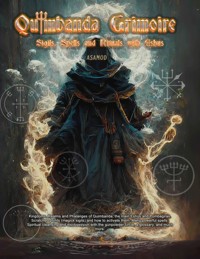
Grimoire entirely dedicated to the Afro-Brazilian Quimbanda. There are 143 pages of powerful content, including descriptions of the Kingdoms and phalanges of Quimbanda, the Chief Eshús and Pombagiras from each Realm. How to activate the sigils (points). There are scratched points (magickal sigils) of these entities, sung points (hymns), various spells for protection, and love bindings. Strong spells in graveyards. Glossary of terms, a powerful gunpowder spell for spiritual cleansing or disobsession. Translation and explanation of the meaning of the names of Eshús. It's the real Quimbanda with Nagô origins, not the fake westernized Quimbanda mixed with Jewish Goetia.
Sie lesen das E-Book in den Legimi-Apps auf:
Seitenzahl: 77
Veröffentlichungsjahr: 2023
Das E-Book (TTS) können Sie hören im Abo „Legimi Premium” in Legimi-Apps auf:
Ähnliche







Rights reserved
No part of this book may be reproduced by any mechanical, photographic, or electronic process, or in phonographic recording form, without the prior written permission of the author.
Pursuant to art. 12 of the Code of Copyright and Related Rights, copyright is recognized regardless of registration, deposit, or any other formality.
Registered with Copyrighted.com No. 3SA3Y1Dg6xGSZvpp
If you re-edit, transform, or reproduce this material, you may not distribute the modified material. If I detect a plagiarized eBook, I will ask Copyrighted to remove it.
© 2023 Asamod
Contents
Introduction
Quimbanda
Kingdoms
Kingdom of the Beach
Contact your personal Eshú
Scratched Points
Eshú Guardian of Seven Gates
(Guardião das Sete Porteiras)
Eshú Skull
Pombagira of the Beach
Gypsy Pombagira
(Pombagira Cigana)
Pombagira Guardian of the Beach
Eshú King
Eshú Lucifer
Eshú Marabó
Pombagira Mary Mulambo
Eshú Midnight
Pombagira Rose Skull
(Pombagira Rosa Caveira)
Eshú Tiriri
Eshú Streets Locker
(Exú Tranca Ruas)
Eshú Locks Everything
(Exú Tranca Tudo)
Eshú Door Trunk
(Exú Tronqueira)
Eshú Velvet
(Exú Veludo)
Eshú Tide
(Exú Maré)
Eshú King of the Seven Crossroads
(Exú Rei das Sete Encruzilhadas)
Eshú Bará
Eshú of Cemetery
Eshú of the Fire
(Exú do Fogo)
Eshú Run the World
(Exú Gira Mundo)
Eshú of the Woods
(Exú das Matas)
Eshú Bat
(Exú Morcego)
Eshú Tata Skull
(Exú Tata Caveira)
Eshú Black Stone
(Exú Pedra Negra)
Eshú Pemba
Eshú Pepper
(Exú Pimenta)
Eshú of the Rivers
(Exú dos Rios)
Eshú seven Shadows
(Exú sete Sombras)
Eshú of Sludge
(Exú do Lodo)
Eshú Seven Catacombs
(Exú Sete Catacumbas)
Eshú Seven Graves
(Exú Sete Covas)
Eshú Seven Keys
(Exú Sete Chaves)
Mary Padilha of the 7 Crosses of Calunga
(Maria Padilha dos 7 Cruzeiros da Calunga).
Eshú Joseph Thug
(Zé Pelintra)
Eshú Ember
(Exú Brasa)
Eshú Seven Dusts (Exú Sete Poeiras)
Eshú Seven Stones
(Exú Sete Pedras)
Eshú Ganga
Eshú Gererê
Spells / Works
Prayer to Eshú Skull
Mary Padilha of Souls spell
Sorcery to break a person
Destroy the enemy/ Spell in the graveyard
To separate two people
Crossroads spell against enemies
Eshú Seven Stabs (against enemies).
Spiritual cleansing /Disobsession
Quimbanda Glossary
Bibliography
Warning
Most Quimbanda rituals involve heavy black magic involving animal sacrifices, some of which are larger than others and have four legs (goats for example).
As much as possible, I have limited references to such rituals. I may have one or two spells, but only is sacrificed a black rooster or black hen (small bird) . This is because the book can be purchased by people of various classes, some without ritual experience, or teenagers, and I have no control over that. I don't want more "heavy and obscure" rituals to be practiced by people who are not well experienced.
Introduction
Scratched points, also known as kabbalistic points, are like sigils or energetic signatures of entities. In Afro-Brazilian religions such as Candomblé, Umbanda, Kimbanda is a sacred spelling that refers to hand-drawn diagrams such as angles, straight lines, arrows, representative symbols, etc. They represent the spiritual entity, its phalanx, lineage, etc. Drawings are usually made with a special consecrated chalk; the pemba. The term comes from the Portuguese "Scratched Point", which is actually a drawn sigil.
It may be accompanied by a kind of evocative or praise chant (sung point).
The symbol was illuminated with candles and some offerings near it.
I recommend reading my book "Black Magick Rituals", but I will include a brief introduction about Kimbanda for you to understand.
Some authors pour hundreds of sigils (scratched points) into the books without explanation. I wanted to avoid doing that, so I share the main "Scratched points" in large size for you to photograph or print, and a brief story about the entity and symbology of the points. I also explain how to activate them magically.
Points (sigils) can also be used as amulets, talismans, or meditation tools. The symbol can be printed on parchment and used in your wallet or pocket, or even tattooed on your body.
The sorcerers of Kimbanda (tatás) draw the points on objects of ritual ceremonies, candles, or objects made of silver, copper, gold or glass, which are considered to be of great magic power. Points are also drawn on the ground to summon and command the spirits.
Quimbanda
Quimbanda is a religious concept of Afro-Brazilian origin, which is distinct from Umbanda and Candomblé. It is a type of magick known as the "left hand path".
It can also be written as Kimbanda, which means “shaman” or “healer” in Bantu language. The word “mbanda” means "the beyond", “the spiritual realm”.
Its influences are not limited to the Bantu people, but also Nagô and Yoruba. This system brings together various knowledge from witchcraft and candomblé, spiritism, and even alchemy. When the Bantus went to Brazil, they shared their cult with the Tupi-Guarani Indians, and from there, the syncretism between rituals resulted in Quimbanda.
I should mention that in Candomblé, Eshú is regarded as an Nkinsi (Orishá), an entity that has always been spiritual (never having had a human existence). I write Eshú but in Portuguese we say:Exú.
In Quimbanda, the Eshús are eguns (ancestor souls, or belonging to the cult, and are also evolving). Eshú is sometimes called "compadre" (godparent).
The following are some indications of the entities for each purpose, they are not in order of preference.
The names were changed from Portuguese to English.
For defense, attack and security
Eshú Lucifer - Eshú King - Eshú King of the Seven Crossroads - Eshú King of the Cemetery - Eshú Panther - Eshú of Fire - Eshú Black Cape - Eshú Skull - Eshú Midnight - Eshú Streets Locker - Eshú Unlocks-Street - Eshú of Sludge - Eshú 7 Souls - Eshú 7 Tombs - Eshú Door Jamb - Eshú Omulú - Eshú Gale - Pombagira Mary Padilha -Pombagira Mary Mulambo - Pombagira of Souls - Pombagira Mary Quitéria -Pombagira Rose Skull
For movement, abundance, open paths, jobs and businesses
Eshú King of 7 Crossroads - Eshú Seven Lyre - Eshú Marabó - Eshú Turn World - Eshú Unlock-Streets - Eshú Maré - Eshú 7 Souls - Eshú Bigüim - Eshú 7 Crossroads - Eshú Tiriri - Eshú Toquinho or Bará Toquinho - Eshú Velvet - Eshú Zé Thug - Eshú Midnight - Eshú Mirim - Eshú Gale - Pombagira Queen of the Crossroads - Pombagira Queen of the Beach - Pombagira Girl - Pombagira Seven Skirts - Pombagira Lady of the Night - Pombagira of Beach - Pombagira of Streets - Pombagira Seven Crossroads.
For attack, cruelty, and malice
Eshú Lucifer - Eshú King of Cemetery - Eshú Turn World - Eshú of Fire - Eshú Black Cape - Eshú Skull - Eshú Leba - Eshú Street-Locker - Eshú Mulambo - Eshú Omulú - Eshú Seven Tombs - Eshú Snake - Pombagira Mary Padilha - Pombagira Queen of the Cemetery - Pombagira Mary Mulambo - Pombagira Camucanguê - Pombagira of Souls - Pombagira of Oven - Pombagira Mary Quitéria - Pombagira Rose Skull.
For health:
Eshú Seven of Lyre - Eshú Tide - Eshú Bat - Eshú Tiriri - Eshú Mirim - Pombagira Girl – Gypsy Pombagira - Pombagira of the Beach - Pombagira of Streets.
For love and sex:
Eshú Seven of Lyre - Eshú Tide - Eshú Seven Crossroads - Eshú Velvet - Eshú Gale - Eshú Joseph Thug - Eshú Midnight - Pombagira Mary Padilha - Pombagira Queen of the Crossroads - Pombagira Queen of the Beach - Pombagira Girl - Pombagira Seven Skirts -Pombagira Seven Crossroads - Pombagira Mary Quitéria - Pombagira Lady of the Night -Pombagira Rose Skull - Pombagira of the Beach - Pombagira of Streets.
Realms:
Note: although each entity has its own specific lineage and realm, nothing prevents it from responding to calls and rituals performed in other realms. The following are the most common cases in which the results do not change: Cemetery Eshús respond in the woods and vice-versa. Beach Eshús respond in cruise or forest, crossroads Eshús respond in the woods and vice-versa. There are seven main lineages, each has 7 phalanges (which has an Eshú chief phalanx).
Malei Line:
Malei comes from Malê, they were Muslims from Mali and Sudan (in Yoruba "imalê" means Muslim).
Boss: Eshú King. Heads of each phalanx: Eshú King of Seven Crossroads, Eshú Marabó, Eshú Hose Tree, Eshú Street Locker of Souls, Eshú Tiriri, Eshú Velvet, Eshú of Rivers. Feminine/passive polarity: Pombagira - Pombagira Queen of the Seven Crossroads.
Lineage of Souls:
Boss: Orisha Omulu.
Phalanx cheefs: Eshú Mirim, Eshú Pepper, Eshú 7 Mountains, Eshú Ganga, Eshú Malê, Eshú Quirombó. Passive polarity: Pombagira - Pombagira of Souls.
Cemetery or Skull Lineage:
Boss: Eshú Skull.
Phalanx chiefs: Eshú Tatá Skull, Eshú Gleed, Eshú Pemba, Eshú of Sludge, Eshú Carangola, Eshú Stump, Eshú Pagan. Passive polarity: Pombagira - Pombagira Queen of Cemeteries.
Nagô Lineage:
Boss: Boss - Eshú Gererê.
Eshú chiefs of phalanges: Eshú Fixer, Eshú 7 Crosses, Exú Turn World, Eshú of Cemeteries, Eshú Black Cape, Eshú Healer, Eshú Ganga. Passive polarity: Pombagira Mary Padilha.
Mossorubi Lineage:
Boss: Eshú Kaminaloá.
Phalanx chiefs: Eshú of the Winds, Eshú Bat, Eshú 7 Doors, Eshú Locks Everything, Eshú Marabá, Eshú 7 Shadows, Eshú Calunga. Passive polarity: Pombagira Mary Mulambo.
Caboclos Indigenous Lineage:
Boss: Eshú Black Panther.
Phalange Chiefs: Eshú 7 Waterfalls, Eshú Door Jamb, Eshú 7 Dusts, Eshú of the Forest, Eshú 7 Stones, Eshú of Smell, Eshú Dark Stone. Passive polarity: Pombagira of Fig Tree.
Mixed Lineage:
Boss: Eshú of the Rivers.
The spirits of this line are not Eshús but kiumbas (disembodied spirits). Passive Polarity: All Pombagiras can work in this line.




