


8,00 €
Mehr erfahren.
- Herausgeber: Bookmundo.pt
- Kategorie: Religion und Spiritualität
- Sprache: Englisch
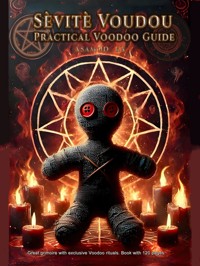
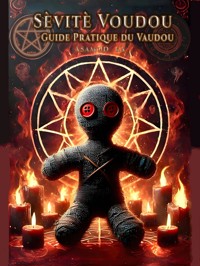
Great grimoire with exclusive Voodoo rituals. This book covers the loas and their offerings, corresponding days, colors, and candles. Powerful spells with voodoo dolls for love binding, health, counterattack, and destroying enemies. Original Haitian voodoo. Includes Voodoo self-initiation rite, as well as detailed recipes for crafting powders, oils, and essences. Learn to prepare an altar, invoke the ancestors, and use veves in rituals and invocations. Glossary of terms and much more, all within 120 pages.
Das E-Book können Sie in Legimi-Apps oder einer beliebigen App lesen, die das folgende Format unterstützen:
Seitenzahl: 116
Veröffentlichungsjahr: 2024
Ähnliche







All rights reserved
No part of this book may be reproduced by any mechanical, photographic or electronic process, or in the form of a phonographic recording, without the prior written permission of the author.
According to article 12 of the Copyright and Related Rights Code, copyright is recognized independently of registration, deposit or any other formality.
Registration number at copyrighted.com: RIMepaRTatYYnhhp
If you republish, transform or reproduce this material, you may not distribute the modified material.
I made the cover by myself and I own the rights to the pictures I bought from Graphic River. License code: e05c8196-4b00-4474-a092-d8ccec8dc6aa
© 2024 ∴ Asamod ka
Introduction
This book is my fifteenth published work, having already released titles on gypsy magic, chaos magic, quimbanda, santería, santa muerte, sumerian magic, vampire magic, and other esoteric systems. Twenty-five years of practice and study in the field of occultism have led me to investigate sources and compare them to ensure coherence and avoid contradictions.
I like my books to focus more on practical application, giving the reader tangible tools. This voodoo manual is not meant to be a guide to formal into voodoo, a process that takes more than seven years of practice and in-person guidance from a hougan or mambo. However, it will enable the reader to develop a connection with the loa, set up their own altar, and perform a variety of rituals.
Additionally, I present in this manual practical rituals for those who wish to follow the path of the sorcerer or bokor, as well as detailed recipes for powerful powders and oils for ritualistic use.
Ninety percent of my readers enjoy doing practical and powerful spells to destroy adversaries, ward off rivals, attract sex and love, and open paths. This book follows that approach.
There exist various styles of voodoo, including the traditional and orthodox voodoo of Haiti, the more practical and informal Deka voodoo, the American hoodoo of Louisiana, the Gnostic voodoo, a more contemporary form, and various other styles.
This book focuses on Haitian Vodou in a less orthodox form, known as Deka Vodou. Haitian Vodou has a distinct tradition called the Deka system, which is characterized by a more flexible practice and a greater emphasis on the autonomy of the practitioner. It gives the sèvitè a less institutionalized approach, offering them the freedom to practice independently and adapt to their circumstances. Therefore, you can practice it wherever you wish.
Deka voodoo doesn't have strict rules like orthodox voodoo. In this system, the reader will have greater freedom to perform rituals according to their personal and spiritual understanding, without the need to always resort to priests (hougans) or priestesses (mambos) to mediate the relationship with the loas.
The rituals in Deka Vodou are more casual and individualized, with a greater emphasis on individual wants and desires, and a greater emphasis on interacting directly with the loas without relying on a hierarchical structure.
Why did I choose the title "Sèvitè Voudou"?
Sèvitè Voudou can be translated more directly as "voodoo practitioner" or "voodoo devotee", but without being properly initiated, so it is, dear reader.
A true Vodou experience requires years of practice and direct guidance from a Hougan or Mambo. You can't learn about Vodou just by reading a book. However, the reader is certainly capable of becoming a practitioner by establishing a connection with the loas.
History of Voodoo
Voodoo is a traditional African religion of great complexity, with strong animist elements. Syncretism with Catholicism emerged later in Haiti, during the colonial period.
This religious system can be written as "vodu" or "vodun," with "vodun" being the form used in the Fon language spoken in the Niger-Congo region. The Jeje-Fon people of Benin are where it got its start, with over 7 million followers.
The traditional name for this religious practice in West Africa is "Vodun," while the forms "vodou" or "voodoo" refer to variations developed in Haiti and New Orleans. Haitian Vodou is also known as "Sèvis Gine", or "Guinea Service".
West African tribes shared similar fundamental beliefs, which made it easier for neighboring ethnic groups to adapt their religions. These beliefs form the basis of Haitian Voodoo. The Fon religion, which is over 6,000 years old, had the biggest impact on the development of Voodoo.
Aside from the Fon tradition, also known as the Dahomey tradition, which persists in Africa, variants of this faith emerged in the Americas during the period of the transatlantic slave trade (16th to 19th centuries). Among these variations, notable ones include Candomblé in Brazil, Tambor de Mina in Maranho, Haitian Vodou, Santeria in Cuba, and Louisiana Vodou in the United States. However, Santería in Cuba is a distinct cult, with "La Regla de Arará" being the tradition that has its origins in Voodoo. "La Regla Arará" is an Afro-Cuban religious practice with roots in the religions of the Arará people of West Africa, an ethnic group that includes groups from what is now Benin and Togo.
Although it is often misunderstood and portrayed in a sensationalist manner, voodoo is a rich, fluid and syncretic spiritual practice that seeks connection with the divine and harmony with the natural and ancestral world.
Voodoo played a major role in Haiti's independence.
The slaves used voodoo as a form of resistance against the French colonists, under the leadership of the priest Dutty Boukman, who conducted the famous Bwa Kayiman ceremony in 1791. During this ritual, a spiritual pact was sealed, invoking the loas to gain strength and start the Haitian Revolution, which began the fight for Haitian independence.
Still on the subject of syncretism, voodoo also included some Masonic symbols into the vevés (like the square and compass). At that time, there were several Masonic lodges in Haiti, and some loas were syncretized with Catholic saints and figures venerated by Freemasonry. For example, Ogou was associated with Saint James the Greater (Saint Jacques Majeur), a figure also relevant in the Masonic tradition. While Freemasons refer to God as the "Great Architect of the Universe" and the highest rank in Freemasonry is that of Grand Master, in voodoo, Bondyé (God) is referred to as "Grand Maître".
Freemasonry played a significant role during the Haitian Revolution. Some leaders of the Haitian Revolution, including Toussaint Louverture and Jean-Jacques Dessalines, were Freemasons.
Haitian Voodoo
Haitian voodoo is one of the most widely recognized expressions of this religion. It is the result of a fusion of West African traditions, particularly those of the Fon and Yoruba peoples, with elements of Catholicism introduced by French colonizers. Practitioners of Haitian voodoo believe in a supreme God, Bondyè (Good God), who delegates his responsibilities to intermediary spirits called loas. Rituals involve chanting, dancing, sacrifices, and the incorporation of loas, who guide devotees in various aspects of life. These spirits are also known as “mysteries” or “saints.”
It is believed that God, Le Gran Maître, is too exalted to care about worldly matters such as earthly life, but has left the loas as intermediaries between the divine and humans.
New Orleans Voodoo
Voodoo in New Orleans, Louisiana, developed in local Afro-descendant communities, resulting in a fusion of African, indigenous, and Christian practices. Although it shares similarities with Haitian Voodoo, such as belief in spirits and the use of ritual objects, it is distinguished by its syncretism with French and Spanish traditions, as well as the strong influence of legendary figures such as the famous voodoo queen Marie Laveau. In New Orleans, there is a strong focus on the use of amulets known as gris-gris and the practice of individual magic.
Voodoo in the Caribbean
Difference Between Voodoo and Hoodoo
It is important to distinguish voodoo from hoodoo, which is a magical practice based on African traditions, but without the religious structure of voodoo. Hoodoo is more focused on folk magic and witchcraft practices, often for purposes of protection, healing, or luck. Voodoo is a religion with ceremonies, priests, and an elaborate spiritual cosmology.
Sigils scratched, Veves.
Veves are important symbols in Haitian voodoo, similar to the scratched points in Kimbanda. Each vevê represents a specific loa and is drawn on the ground during ceremonies to invoke or honor those spirits. Created with materials such as flour, ash or dust, vevés function as portals that connect the spiritual world to the physical, facilitating communication and the presence of loas in rituals. For loas of the Rada line (white line), vevés are drawn with white corn flour. For loas of the Petro line (black line), they are typically drawn with charcoal or salt mixed with dark ash. Sometimes, a red powder made from chili peppers or powdered brick, or even red pemba, or even red pemba, is used.
Syncretism
Syncretism in Voodoo was due to the dominance of Catholicism during the colonial period when Haiti was a French colony. This process allowed Voodoo to survive and continue to be practiced, even under strong social and religious pressure. This process allowed Voodoo to adapt to the cultural environment without losing its spiritual essence. This strategy helped the Voodoo religion integrate into Christian societies, like Haiti and North America.
Within the context of slavery, where the practice of African religions was often prohibited or repressed, slaves found a way to preserve their spiritual traditions by associating the loas with Catholic saints. In this manner, they continued to venerate their traditional deities, hiding them under the iconography and names of Catholic saints.
Examples:
Bondyè, the supreme deity in Haitian voodoo, is commonly associated with the Christian God.
The loa Ogoun, the spirit of war and iron, was syncretized with Saint George, known for his connection with battle, or even with Saint James (“The Greater”).
Erzulie Freda, the spirit of love, is associated with Our Lady of the Conception. Erzulie Dantor syncretized with “Our Lady of Mount Carmel” or “Virgin Mary”.
Damballah is identified with Saint Peter or Saint Patrick.
Voodoo in the USA
In the United States, particularly in New Orleans, voodoo underwent a syncretism with Catholicism as a result of the French and Spanish influence in the region. Over time, the religion evolved into what we know as New Orleans voodoo, incorporating elements of Christianity but keeping its African roots intact.
Voodoo gained great popularity through movies, especially for the depiction of dolls used to curse people and the creation of human zombies. However, the original purpose of the dolls was quite different — they served as symbolic replicas of patients and were used in healing rituals.
As for zombies, there is a more rational explanation: it is believed that they were people drugged with a powder containing hallucinogenic toxins, such as tetrodotoxin, extracted from fish such as fugu, which induced a state similar to death.
Voodoo can be used for both beneficial and harmful purposes, just like any spiritual tradition. As Kabbalah has a dark side and Umbanda has an equivalent in the left-hand path (Kimbanda), voodoo can also be applied to evil.
During the decline of colonial rule, Voodoo underwent an evolution that consolidated it as the national religion of Haiti, although Catholicism remained officially predominant. Voodoo became an essential symbol of the culture and unique identity of the rural Haitian population, reflecting their traditions and cultural traits.
Pantheon of Deities
In voodoo, particularly Haitian voodoo, deities are referred to as loas (or lwas). These spirits act as intermediaries between the supreme God and humanity, and are responsible for various areas of life. Although there is no strict and universally established hierarchy, some deities are considered more important or widely revered. Below is a basic hierarchy, organized by the most relevant deities:
Bondyè:
Bondyè is the supreme God and the creator of the universe, akin to the God of the Christian tradition. The name comes from "Bon Dieu" (good God). Bondyè is considered transcendent and distant, but it is not directly accessible to humans. For this reason, voodoo practitioners communicate with him through the loas, who act as spiritual intermediaries.
Papa Legba:




