


18,99 €
Mehr erfahren.
- Herausgeber: John Wiley & Sons
- Kategorie: Geisteswissenschaft
- Sprache: Englisch
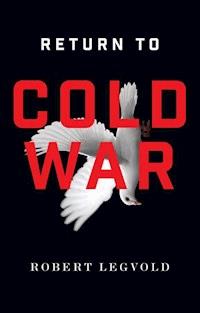
The 2014 crisis in Ukraine sent a tottering U.S.-Russian relationship over a cliff - a dangerous descent into deep mistrust, severed ties, and potential confrontation reminiscent of the Cold War period.
In this incisive new analysis, leading expert on Soviet and Russian foreign policy, Robert Legvold, explores in detail this qualitatively new phase in a relationship that has alternated between hope and disappointment for much of the past two decades. Tracing the long and tortured path leading to this critical juncture, he contends that the recent deterioration of Russia-U.S. relations deserves to be understood as a return to cold war with great and lasting consequences. In drawing out the commonalities between the original cold war and the current confrontation, Return to Cold War brings a fresh perspective to what is happening between the two countries, its broader significance beyond the immediate issues of the day, and how political leaders in both countries might adjust their approaches in order, as the author urges, to make this new cold war "as short and shallow as possible."
Sie lesen das E-Book in den Legimi-Apps auf:
Seitenzahl: 295
Veröffentlichungsjahr: 2016
Ähnliche




















Contents
Cover
Title Page
Copyright
Acknowledgments
Introduction
1 Dueling Concepts
Cold War to the Rescue
The New Cold War
Why it Cannot Be a Cold War
Why Care?
Notes
2 The Cold War
Perceiving the Cold War
Conceiving the Cold War
Assessing the Cold War
The Cold War’s Legacy
Notes
3 The Descent
Stages
The Ukrainian Crisis
Notes
4 Where To?
The Stakes
The Path Not Taken
A Path Forward
Reconciling Current Imperatives with Longer-Term Goals
Policy Here and Now
Notes
References
Index
End User License Agreement
Guide
Cover
Table of Contents
Begin Reading
Pages
ii
iii
iv
vi
1
2
3
4
5
6
7
8
9
10
11
12
13
14
15
16
17
18
19
20
21
22
23
24
25
26
27
28
29
30
31
32
33
34
35
36
37
38
39
40
41
42
43
44
45
46
47
48
49
50
51
52
53
54
55
56
57
58
59
60
61
62
63
64
65
66
67
68
69
70
71
72
73
74
75
76
77
78
79
80
81
82
83
84
85
86
87
88
89
90
91
92
93
94
95
96
97
98
99
100
101
102
103
104
105
106
107
108
109
110
111
112
113
114
115
116
117
118
119
120
121
122
123
124
125
126
127
128
129
130
131
132
133
134
135
136
137
138
139
140
141
142
143
144
145
146
147
148
149
150
151
152
153
154
155
156
157
158
159
160
161
162
163
164
171
172
173
174
175
176
177
178
179
180
181
182
183
184
185
186
187
To Gloria for everything
Return to Cold War
Robert Legvold
polity
Copyright © Robert Legvold 2016
The right of Robert Legvold to be identified as Author of this Work has been asserted in accordance with the UK Copyright, Designs and Patents Act 1988.
First published in 2016 by Polity Press
Polity Press65 Bridge StreetCambridge CB2 1UR, UK
Polity Press350 Main StreetMalden, MA 02148, USA
All rights reserved. Except for the quotation of short passages for the purpose of criticism and review, no part of this publication may be reproduced, stored in a retrieval system, or transmitted, in any form or by any means, electronic, mechanical, photocopying, recording or otherwise, without the prior permission of the publisher.
ISBN-13: 978-1-5095-0192-2
A catalogue record for this book is available from the British Library.
Names: Legvold, Robert, author.Title: Return to Cold War / Robert Legvold.Description: First edition. | Malden, MA : Polity, 2016. | Includes bibliographical references and index.Identifiers: LCCN 2015035827| ISBN 9781509501885 (hardback) | ISBN 1509501886 (hardcover) | ISBN 9781509501892 (paperback)Subjects: LCSH: United States--Foreign relations--Russia (Federation) | Russia (Federation)--Foreign relations--United States. | United States--Foreign relations--1989- | Cold War. | Security, Interntional--21st century. | BISAC: POLITICAL SCIENCE / International Relations / General.Classification: LCC E183.8.R9 L395 2016 | DDC 327.73047--dc23 LC record available at http://lccn.loc.gov/2015035827
The publisher has used its best endeavours to ensure that the URLs for external websites referred to in this book are correct and active at the time of going to press. However, the publisher has no responsibility for the websites and can make no guarantee that a site will remain live or that the content is or will remain appropriate.
Every effort has been made to trace all copyright holders, but if any have been inadvertently overlooked the publisher will be pleased to include any necessary credits in any subsequent reprint or edition.
For further information on Polity, visit our website: politybooks.com
Acknowledgements
Usually those who bring a book to print get thanked last, but this book would not be in print were it not for Louise Knight, Polity Press senior acquisitions editor. Prompted by a piece of mine in Foreign Affairs on what I called the new Cold War, she got in touch and challenged me to justify myself at book length. She and her assistant Nekane Tanaka Galdos cheer their authors on in a way that makes working with Polity Press a pleasure. The rest of the team at the press is also remarkably efficient and effective – none more than Caroline Richmond, who copyedited the manuscript. Other authors will know what it means to have an editor who with small, deft changes tightens a manuscript without altering the author’s voice. Caroline has that skill down to an art. To the anonymous outside reader who came to the manuscript skeptical of its theme, but with an open mind and willing to be persuaded – at least partially – I am grateful for the advice, even that which I did not take.
Were I to thank all those in the United States, Europe, and Russia whose writings and conversation over the years, particularly the last two, have shaped my thinking the list would be very long. Because none – with one exception – has had a chance to look at and try to rescue the manuscript, I will spare them. They will know who they are from my many intrusions on their workday and the pleasant lunches and dinners we have had together. I am deeply grateful for the time they have given me, the insights they have shared, and the friends they are.
Introduction
Five years ago – even two years ago – I could never have imagined writing this book. Talk of a new US–Russian Cold War, already in the air, seemed to me wildly exaggerated. Sure, tensions existed, and the relationship had been up and down for years. The two countries were feuding over US plans to put a missile defense system in Europe, the war in Syria, and the refuge Russia had given Edward Snowden. Vladimir Putin had run much of his 2012 re-election campaign on a crude theme of anti-Americanism. And President Obama had grown so frustrated over Russia’s lack of cooperation on a number of key issues that he called off the summit of the two leaders planned for September 2013.
But that the bottom would fall out, and the two countries would careen into a swirl of vituperation, hostility, and confrontation with no end in sight, caught me, and I think most observers, by surprise. True, one or two commentators had for some time insisted that a Putinled Russia was from the beginning in a new Cold War with the West. But most observers thought that either misrepresented the problem in Russia–West relations or misunderstood the concept of cold war. Now, however, suddenly the relationship had crossed a threshold and entered an unexpected but qualitatively different phase. The useful ambiguity of previous years, when neither side was quite sure whether the other was friend or foe (but, left to hope, mostly friend) had vanished. As the angry recriminations of spokesmen on both sides made plain, they were now adversaries, convinced the other side meant to do as much harm to their country as the former’s scheming would allow. Thoughts of cooperating on issues where failure to cooperate bordered on the insane, such as limiting the spread of nuclear weapons, banding together to deal with terrorism, and doing something about climate change, still echoed faintly on both sides. But anything approximating genuine cooperation on the hard issues of the day, such as coping with a Middle East in flames, ensuring that the development of the Arctic’s vast oil and gas reserves remained peaceful, getting a handle on the rising perils in a world of multiple nuclear powers, encouraging mutual energy security in place of increased energy competition, and responding to the rise of China and other new powers, had died – at least until that awful Friday night in November in Paris.
Lesen Sie weiter in der vollständigen Ausgabe!
Lesen Sie weiter in der vollständigen Ausgabe!
Lesen Sie weiter in der vollständigen Ausgabe!
Lesen Sie weiter in der vollständigen Ausgabe!
Lesen Sie weiter in der vollständigen Ausgabe!
Lesen Sie weiter in der vollständigen Ausgabe!
Lesen Sie weiter in der vollständigen Ausgabe!




