


55,99 €
Mehr erfahren.
- Herausgeber: John Wiley & Sons
- Kategorie: Fachliteratur
- Serie: Wiley Finance Editions
- Sprache: Englisch
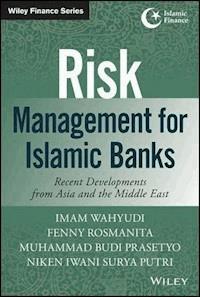
Gain insight into the unique risk management challenges within the Islamic banking system Risk Management for Islamic Banks: Recent Developments from Asia and the Middle East analyzes risk management strategies in Islamic banking, presented from the perspectives of different banking institutions. Using comprehensive global case studies, the book details the risks involving various banking institutions in Indonesia, Malaysia, UAE, Bahrain, Pakistan, and Saudi Arabia, pointing out the different management strategies that arise as a result of Islamic banking practices. Readers gain insight into risk management as a comprehensive system, and a process of interlinked continuous cycles that integrate into every business activity within Islamic banks. The unique processes inherent in Islamic banking bring about complex risks not experienced by traditional banks. From Shariah compliance, to equity participation contracts, to complicated sale contracts, Islamic banks face unique market risks. Risk Management for Islamic Banks covers the creation of an appropriate risk management environment, as well as a stage-based implementation strategy that includes risk identification, measurement, mitigation, monitoring, controlling, and reporting. The book begins with a discussion of the philosophy of risk management, then delves deeper into the issue with topics like: * Risk management as an integrated system * The history, framework, and process of risk management in Islamic banking * Financing, operational, investment, and market risk * Shariah compliance and associated risk The book also discusses the future potential and challenges of Islamic banking, and outlines the risk management pathway. As an examination of the wisdom, knowledge, and ideal practice of Islamic banking, Risk Management for Islamic Banks contains valuable insights for those active in the Islamic market.
Sie lesen das E-Book in den Legimi-Apps auf:
Seitenzahl: 784
Veröffentlichungsjahr: 2015
Ähnliche



















Table of Contents
Advance Praise
Title Page
Copyright
Dedication
Preface
Acknowledgments
About the Authors
List of Acronyms
Part One: Introduction
Chapter 1: Principles of the Islamic Financial System
Islamic Financial Contracts: The
li-tabarru'
Contract versus
li-tijari
Contract
Principles of Islamic Finance
Interest-Based Return versus Profit–Loss Sharing
Chapter 2: The Islamic Bank and Risk Management
Differences between an Islamic Bank and a Conventional Bank
History of the Islamic Bank
Global Islamic Banking Entities
Risk as an Integral Part of Islamic Bank
Stages in Risk Management
Risk and Return Trade-Off
Various Approaches on Risk Identification
The Importance of Risk Management for an Islamic Bank
Part Two: Risk Management Framework in Islamic Banking
Chapter 3: History of Risk Management in Islamic Banking
Basel I and Its History
Basel II and its History
Basel III and Its History
The AAOIFI and Its Role
The IFSB and Its Role
Chapter 4: The Risk Management Process in Islamic Banking
Risk Management Model in Islamic Banks
Risk Identification Process in Islamic Banking
Risk Matrix
Risk Mitigation Process
Risk Review Process
Infrastructure and Facilities
Calculation of Minimum Capital Requirements
Chapter 5: Financial Reporting and Analysis in Islamic Banking
The Importance of Financial Statements in Risk Analysis
Scope of Financial Statement in Islamic Banks
Basic Contracts and Instruments in the Islamic Bank
Structure of the Balance Sheet
Analysis of Income Statement
Persistence Analysis
Tools of Financial Statement Analysis
Core Business Activity in Islamic Banks
Off-Balance Sheet Activity in Islamic Banks
Part Three: Risk Management in Islamic Banking
Chapter 6: Financing Risk in Islamic Banking
Urgency of Financing Risk Management in Islamic Banking
Characteristics of Islamic Financing Contracts
Financing Risk: Definitions and Its Scope
Role of
Rahn
and
Kafalah
Defining Determinant Factors of Financing Risk
Urgency of the Independent Rating Agency
Rating and Financing Risk Provisions
Risk-Based Financing Limit
Concentration Risk in Financing Portfolio
Financing Portfolio Management
Measuring Financing Risk in the Islamic Bank
Chapter 7: Operational Risk in Islamic Banking
Urgency of Risk Awareness
Operational Risk Coverage in Islamic Banks
Identification of Operational Risk Factors
Operational Risk in Islamic Financial Contracts
Measurement of Islamic Operational Risk
Developing an Operational Risk Management System
Chapter 8: Syari'ah Compliance Risk
Basic Principles of Islamic Economics and Financial System
Syari'ah
as Principle and Spirit in Business
Various Prohibitions in
Mu'amalah
Why Should Islamic Banking Comply with Islamic Principles?
Integrating
Syari'ah
Compliance in the Islamic Bank
Evolution of
Syari'ah
Governance in Islamic Financial System
Syari'ah
Advisory Board and
Syari'ah
Compliance Audit as a Framework
Identification Process of
Syari'ah
Compliance Risk
Risk Management and Mitigation of
Syari'ah
Compliance Risk
Models of
Syari'ah
Governance in Several Countries
Chapter 9: Strategic Risk
Definition and Scope of Strategic Risk in Islamic Banking
Determinants of Strategic Risk and Its Mitigation
Issues Related to Strategic Risk
Chapter 10: Investment Risk in Islamic Banking
Syirkah
as a Distinct Trait of Islamic Banks
Basic Concept of Investment Risk
Forms of Risk and Their Mitigation
Regulations on Profit Distribution Management
Chapter 11: Market Risk in Islamic Banking
Urgency of Market Risk
Scope of Market Risk in Islamic Banks
Identification of Market Risk Profile
Market Risk Measurement in Islamic Banks
Market Risk Mitigations in Islamic Banking
Implementation of Market Risk Mitigation
Chapter 12: Liquidity Risk in Islamic Banking
Urgency of Liquidity Risk
Credit Multiplier, Financial Stability and Liquidity Crises
Definition and Coverage of Liquidity Risk
Islamic Bank's Assets and Liabilities
Liquidity Risk Management in Islamic Banks
Part four: Future Prospects and Challenges in Islamic Banking
Chapter 13: Development of the Islamic Financial Market
Islamic Capital Market
Derivative Islamic Market
Regulation and Supervisory in Islamic Financial Market
Institutional-Based Development Framework
Stability in Islamic Financial System: Lesson from Global Financial Risk
Chapter 14: Development of a Pricing Model in Islamic Banking
Fundamentals in Islamic Pricing Model
Time Value of Money in Pricing Model
Current Islamic Pricing Model
Urgency of Pricing Mechanism in Islamic Banks
Chapter 15: Pathways of Risk Management in Islamic Banks
Islamic Banks as Real Implementation of Risk Management
Challenges of Islamic Banking in the World
Blueprint for Islamic Banking Regulation
Prospects and Challenges of Islamic Banking Development
Strategic Issues in the Implementation of Islamic Risk Management
Chapter 16: Future Agenda
Landscape of Integrated Islamic Risk Management
Synergy and Integration among Islamic Financial Institutions
Competency and Competitiveness of Islamic Banking
Regulatory Agenda in the Future
Anticipating the Potential Systemic Risks
Part Five: Conclusion
Chapter 17: Summary and Conclusion
Glossary
Bibliography
Index
End User License Agreement
Pages
i
ii
iv
vi
vii
xv
xvi
xvii
xviii
xix
xx
xxi
xxii
xxiii
xxiv
xxv
xxvi
xxvii
1
3
4
5
6
7
8
9
10
11
12
13
14
15
16
17
18
19
20
21
22
23
24
25
26
27
28
29
31
33
34
35
36
37
38
39
40
41
42
43
44
45
46
47
48
49
49
50
51
52
53
54
55
56
57
58
59
60
61
62
63
64
65
66
67
68
69
70
71
72
73
74
75
76
77
78
79
80
81
82
83
84
85
86
87
88
89
90
91
92
93
94
95
96
97
98
99
100
101
102
103
104
105
107
108
109
110
111
112
113
114
115
116
117
118
119
120
121
122
123
124
125
126
127
128
129
130
131
132
133
134
135
136
137
138
139
140
141
142
143
144
145
146
147
148
149
150
151
152
153
154
155
156
157
158
159
160
161
162
163
164
165
166
167
168
169
170
171
172
173
174
175
176
177
178
179
180
181
182
183
184
185
186
187
188
189
190
191
192
193
194
194
195
196
197
198
199
200
201
202
203
204
205
206
207
208
209
210
211
212
213
214
215
216
217
218
219
220
221
222
223
224
225
226
227
228
229
230
231
232
233
234
235
236
237
238
239
240
241
242
243
244
245
246
247
248
249
250
251
252
253
254
255
256
257
258
259
260
261
262
263
264
265
266
267
268
269
270
271
272
273
274
275
276
277
278
279
280
281
283
285
286
287
288
289
290
291
292
293
294
295
296
297
298
299
300
301
302
303
304
305
306
307
308
309
310
311
312
313
314
315
316
317
318
319
320
321
322
323
324
325
326
327
328
329
330
331
332
333
334
335
336
337
338
339
340
341
343
345
346
347
348
349
351
352
353
354
355
356
357
358
359
360
361
362
363
364
365
366
367
368
369
370
371
372
373
374
375
376
377
378
379
380
381
383
384
385
386
387
388
389
390
391
392
393
394
395
396
397
398
399
400
401
402
403
404
Guide
Cover
Table of Contents
Preface
Part One: Introduction
Begin Reading
List of Illustrations
Chapter 2: The Islamic Bank and Risk Management
Figure 2.1 The Evolution of Islamic Risk Management
Figure 2.2 Top-Down and Bottom-Up Approaches
Figure 2.3 Risk Mapping Based on Business Line and Unit Function
Chapter 3: History of Risk Management in Islamic Banking
Figure 3.1 Basel II Framework
Figure 3.2 Milestones of Basel Regulations
Chapter 4: The Risk Management Process in Islamic Banking
Figure 4.1 Evolution of Risk Management
Figure 4.2 Risk Management Framework
Figure 4.3 Risk Management Process Flow
Figure 4.4 Illustration of Risk Appetite
Figure 4.5 Illustration of a Risk Register
Figure 4.6 Illustration of a Risk Matrix
Figure 4.7 Illustration of a Composite Risk Matrix
Chapter 5: Financial Reporting and Analysis in Islamic Banking
Figure 5.1 Composition of Third-Party Funds and Financing Contracts
Figure 5.2 Strategy for the Development of a Competitive Advantage for an Islamic Bank
Chapter 6: Financing Risk in Islamic Banking
Figure 6.1 The Business Process of an Islamic Bank's Financing
Figure 6.2
Qardhul Hasan
Scheme Illustration
Figure 6.3 Illustration of the MPO Contract
Figure 6.4 Illustration of the
Salam
Contract
Figure 6.5 An Illustration of the Scheme of an
Istishna
' Contract
Figure 6.6 Illustration of the Operating Lease Scheme
Figure 6.7 Illustration of an IMBT Contract Scheme
Figure 6.8 Risk Contribution and Risk Distribution
Figure 6.9 Managing Cycle in a Financing Portfolio
Chapter 7: Operational Risk in Islamic Banking
Figure 7.1 Identification of Operational Risk
Figure 7.2 Coverage of Operational Risk
Figure 7.3 Frequency and Severity of Operational Risk
Figure 7.4 The Taxonomy of Operational Risk
Figure 7.5 Operational Risk Based on the Frequency and Effects of Its Occurrence
Figure 7.6 Loss Distribution for AMA According to Basel II
Chapter 8: Syari'ah Compliance Risk
Figure 8.1 The Evolution of
Syari'ah
Governance
Figure 8.2
Syari'ah
Governance Framework for IFI in Malaysia
Chapter 9: Strategic Risk
Figure 9.1 Taxonomy of Strategic Risk
Chapter 10: Investment Risk in Islamic Banking
Figure 10.1 An Illustration of a
Mudharabah
Contract as Financing
Chapter 11: Market Risk in Islamic Banking
Figure 11.1 Market Risk in Islamic Banking Activities
Figure 11.2 Capitalization Required by Basel II and Basel III
Figure 11.3 Flow of Market Risk Measurement
Figure 11.4 The Loss Distribution and RAROC Calculation
Figure 11.5 Business Cycle and Market Risk Exposure
Figure 11.6 Market Risk in a
Murabahah
Scheme
Figure 11.7 The Effect of Parallel Contracts in
Salam
Chapter 12: Liquidity Risk in Islamic Banking
Figure 12.1 Liquidity Risk Management Process
Chapter 14: Development of a Pricing Model in Islamic Banking
Figure 14.1 Pricing Wage in an Islamic Economy
Figure 14.2 Determinants of Profit Share in
Mudharabah
Figure 14.3 Determining Profit Sharing in
Musyarakah
Chapter 16: Future Agenda
Figure 16.1 Synergy between Financial Services Institutions
List of Tables
Chapter 2: The Islamic Bank and Risk Management
Table 2.1 Constructing the Risk Matrix
Chapter 4: The Risk Management Process in Islamic Banking
Table 4.1 Risk Categories in Conventional and Islamic Banks
Table 4.2 Capital Conservation Ratio
Chapter 5: Financial Reporting and Analysis in Islamic Banking
Table 5.1 Islamic Bank's Balance Sheet Based on Liquidity Profile
Table 5.2 Islamic Bank's Balance Sheet Based on Functionality
Table 5.3 Matching Fund Sources to Fund Usage in Islamic Banks
Table 5.4 Financial Ratios in Islamic Banking
Chapter 6: Financing Risk in Islamic Banking
Table 6.1 Default Risk Factors in
Qardhul Hasan
and Their Mitigation Methods
Table 6.2 Default Risk Factors in MPO and Their Mitigation Methods
Table 6.3 Default Risk Factors in
Salam
Contracts and Their Mitigation Methods
Table 6.4 Default Risk Factors in
Istishna
' and Their Mitigation Methods
Table 6.5 The Differences between Capital Lease and IMBT
Table 6.6 Default Risk Factors in
Ijarah
Contracts and Their Mitigation Methods
Table 6.7 Asset Classification Based on Collectability Quality
Table 6.8 Risk-Weighted Individual Assets Based on External Rating Assessment
Table 6.9 Standard Supervisory Haircut for Islamic Banks
Table 6.10 Risk Weight for Past-Due Receivables
Table 6.11 Credit Conversion Factor for Off-Balance Sheet Items
Chapter 7: Operational Risk in Islamic Banking
Table 7.1 Direct Loss Types in Operational Risk
Table 7.2 Risk Factor of Business Lines
Chapter 8: Syari'ah Compliance Risk
Table 8.1 The Comparison of
Syari'ah
Governance in Several Countries
Chapter 9: Strategic Risk
Table 9.1 Risk of Changes in Business Competition and Its Risk Mitigation Methods
Table 9.2 Incorrect Strategy Formulation Risk and Its Risk Mitigation Methods
Table 9.3 Innovation Challenges Risk and Its Risk Mitigation Methods
Chapter 10: Investment Risk in Islamic Banking
Table 10.1 The Source and Use of Funds in an Islamic Bank and a Conventional Bank
Table 10.2 Investment Risks and Their Mitigations
Chapter 12: Liquidity Risk in Islamic Banking
Table 12.1 An Islamic Bank's Theoretical Balance Sheet
Chapter 13: Development of the Islamic Financial Market
Table 13.1 Comparison between Stock, Asset-Backed Securities, and Asset-Linked Securities
Advance Praise
“The importance of risk management for Islamic financial institutions cannot be understated. As many would believe, a rather sluggish integration of Islamic finance into the global-mainstream financial industry is due to a lack of globally accepted risk management standards that provide a solid and sustainable foundation. In filling such a gap, I therefore commend the authors for eloquently demonstrating a comprehensive overview of risk management theory and practices in Islamic financial institutions. The publication of this book, hence, is both timely and a reminder that sound risk management is fundamental to good business management – be it conventional or Islamic – and will subsequently lead to an advantageous business environment.”
– Hylmun Izhar, Economist, Islamic Research and Training Institute, Islamic Development Bank Group
“Prudent risk management of Islamic Banks is a primary requirement in maintaining Islamic banking as a highly competitive, sound, robust and profitable industry. This will also facilitate the supervisory duties of the Indonesian Financial Services Authority and create an Islamic banking industry that is healthy on the micro and macro scale. The application of comprehensive risk management is expected to effectively protect the industry as well as the customers from the various possible bank deviations. The presence of this book is part of the important efforts to enrich the repository of knowledge on risk management of Islamic banks.”
– Muliaman D. Hadad, Chairman, Board of Commissioners, Financial Services Authority of Indonesia
“Advancement of information technology and the increasingly rapid and unexpected changes in the financial world contribute to the development of a more complex and risky Islamic banking industry. The need for comprehensive risk management in Islamic banks cannot be denied. Therefore, all the stakeholders in the Islamic bank business should have good understanding and awareness of the risks involved and how to manage them. This book approaches Islamic banking from the perspective of literature study, regulation assessment, and analysis of the practices in the field. It is a worthy reference, and a worthy contribution to Islamic banking.”
– Iggi H. Achsien, Independent Commissioner, PT Bank Muamalat Indonesia Tbk
The Wiley Finance series contains books written specifically for finance and investment professionals, as well as sophisticated individual investors and their financial advisors. Book topics range from portfolio management to e-commerce, risk management, financial engineering, valuation and financial instrument analysis, as well as much more. For a list of available titles, visit our website at www.WileyFinance.com.
Founded in 1807, JohnWiley & Sons is the oldest independent publishing company in the United States. With offices in North America, Europe, Australia, and Asia, Wiley is globally committed to developing and marketing print and electronic products and services for our customers' professional and personal knowledge and understanding.
Risk Management for Islamic Banks
Recent Developments from Asia and the Middle East
IMAM WAHYUDI
FENNY ROSMANITA
MUHAMMAD BUDI PRASETYO
NIKEN IWANI SURYA PUTRI
Copyright © 2015 by John Wiley & Sons Singapore Pte. Ltd.
Published by John Wiley & Sons Singapore Pte. Ltd.
1 Fusionopolis Walk, #07-01, Solaris South Tower, Singapore 138628
All rights reserved.
No part of this publication may be reproduced, stored in a retrieval system, or transmitted in any form or by any means, electronic, mechanical, photocopying, recording, scanning, or otherwise, except as expressly permitted by law, without either the prior written permission of the Publisher, or authorization through payment of the appropriate photocopy fee to the Copyright Clearance Center. Requests for permission should be addressed to the Publisher, John Wiley & Sons Singapore Pte. Ltd., 1 Fusionopolis Walk, #07-01, Solaris South Tower, Singapore 138628, tel: 65-6643-8000, fax: 65-6643-8008, e-mail: [email protected].
Limit of Liability/Disclaimer of Warranty: While the publisher and author have used their best efforts in preparing this book, they make no representations or warranties with respect to the accuracy or completeness of the contents of this book and specifically disclaim any implied warranties of merchantability or fitness for a particular purpose. No warranty may be created or extended by sales representatives or written sales materials. The advice and strategies contained herein may not be suitable for your situation. You should consult with a professional where appropriate. Neither the publisher nor the author shall be liable for any damages arising herefrom.
Other Wiley Editorial Offices
John Wiley & Sons, 111 River Street, Hoboken, NJ 07030, USA
John Wiley & Sons, The Atrium, Southern Gate, Chichester, West Sussex, P019 8SQ, United Kingdom
John Wiley & Sons (Canada) Ltd., 5353 Dundas Street West, Suite 400, Toronto, Ontario, M9B 6HB, Canada
John Wiley & Sons Australia Ltd., 42 McDougall Street, Milton, Queensland 4064, Australia
Wiley-VCH, Boschstrasse 12, D-69469 Weinheim, Germany
Library of Congress Cataloging-in-Publication Data
Wahyudi, Imam, 1981–
Risk management for Islamic banks : recent developments from Asia and the Middle East / Imam Wahyudi, Fenny Rosmanita, Muhammad Budi Prasetyo, Niken Iwani Surya Putri.
pages cm. – (The Wiley finance series)
Includes bibliographical references and index.
ISBN 978-1-118-73442-1 (cloth) – ISBN 978-1-118-73443-8 (epdf) – ISBN 978-1-118-73445-2 (epub) 1. Banks and banking–Religious aspects–Islam. 2. Banks and banking–Risk management–Islamic countries. I. Title.
HG3368.A6W34 2016
332.1068′1 – dc23
2015019100
Cover Design: Wiley
Cover Image: © iStock.com/javarman3
In the Name of Allah, the Most Merciful, the Most Beneficent. I dedicate this book to:
My beloved mother—Siti Choirotun hafidhahallahu
My father—Imam Munajat hafidhahullahu
Our teacher—Bambang Hermanto rahimahullahu
Both of my siblings—Yusuf Karomaini, Anita Citra Sari
My family—Dian Amalia, Rini Rohimah, Asiyah, Ibrahim, Yahya, Musa
—Imam Wahyudi
Preface
The Islamic bank is a financial institution that is established and managed under the principles of Islamic syari'ah and is universal in its practices in improving welfare for mankind. Right now, the Islamic bank is growing and developing rapidly. Even so, as time passes, the risk and challenges faced by the Islamic bank will become more complex and extensive; thus, the future of the Islamic bank is highly reliant on its abilities to anticipate changes in the financial world; such as the effects of globalization, the chain reaction of effects that can take place when a crisis occurs, and the rapid development of information technology. The financial sector is also more dynamic, competitive, and complex; and often creates a new risk in the financial system, such as the too-connected-to-fail risk or the displaced commercial risk. In performing various financial functions and services, the Islamic bank will certainly face various risks, both financial as well as nonfinancial. The bank should be able to manage various risks faced well, without reducing or sacrificing performance, service quality, operational ease, or targets set by the bank's owners. If the bank is able to manage risk appropriately, then not only will the bank avoid the more obvious risks, but the Islamic bank can also change that risk into a business opportunity that can generate profit for the bank.
The rapid development of Islamic banks has been followed by other Islamic financial institutions, such as Islamic insurance, Islamic leasing companies, Islamic venture capital, Islamic capital market, Islamic money market, Islamic microfinance institutions, and the like. These institutions often interact with one another, both directly and indirectly. Interconnection occurs through financial institutions between them, both on the asset side (financing or fund placement in other institutions); while indirect interconnection occurs through indirect investment activities (or issuing securities) in the financial market. Other than the interconnection between financial institutions, the product and operating activities of the Islamic bank are also developing into more complex and sophisticated forms, making it necessary to develop risk management and analysis that is also more comprehensive.
Like the sides of a coin, the rate-of-return and risk will always be attached to each other in a business. Islam admits the presence of profit the same way it admits the presence of risk. In a fiqh principle, it is stated, “al ghunmu bil ghurmi” and “al kharaju bidh dhamani,” also known under the modern financial term of “risk-return trade-off.” The application of reliable risk management is just as important as the application of various business strategies to optimize rate-of-return. A bank's birth is similar to that of a baby with permanent and inconveniencing disabilities; the bank will always exist in a state of permanent mismatch liquidity, and bears the risk from it. Even if the Islamic bank is able to reduce and even eliminate its financial risks, such as default risk, market risk, operational risk, rate-of-return risk, investment risk, and various other nonfinancial risks such as reputation risk, syari'ah-compliance risk, strategic risk, and other business risk, the Islamic bank will still face liquidity risk. This means that the bank's failure in managing various risks, other than liquidity risk, will worsen the bank's already-present “flaw.” Under extreme conditions, the bank will be paralyzed and unable to perform its role as financial intermediary.
A well-designed risk management approach, accommodating the distinct products and operating activities of an Islamic bank and performed with utmost prudence, is the prerequisite of maintaining the existence of the Islamic bank as a highly competitive institution: prudent, profitable and able to generate loyalty in its customers. Apart from that, a well-managed risk will also ease the regulator in performing its duties in monitoring the Islamic bank's risks and ensuring the banking industry's health, both on a micro as well as macro level. This is in line with the authority of regulators in every country related to the supervision and management of the banking industry and ensures that prudential principles are followed in a bank's business activities. These activities include risk management, bank governance, and the principle of knowing your customer; prevention against money-laundering and terrorism and criminal enterprise financing; and bank checks. The application of comprehensive risk management in the Islamic bank is expected to be able to protect the banking industry and depositors from various possible aberrations that can occur, as well as mismanagement.
The coverage of risk is very wide and is as extensive as the business process run by the bank itself. In principle, risk is attached to every business activity. To understand the framework of risk management comprehensively and holistically, the Islamic bank's business processes will first need to be understood in detail: the innovation process and development of banking products, the creation of contracts and their different maturities, the methods the bank uses to place itself in the customer's perspective as well as its stakeholders, and so on. Various questions on the bank's existence and survival need to be asked and answered to build a reliable risk management system for the bank. Related to that issue, various existing literature tend to choose one of two approaches: The first approach explains the risk management framework from the approach of risk measurement. In the first approach, each risk has a distinct characteristic, philosophy, and trait. For that, we often find one book that specializes in discussing various methodologies, methods, and market risk measurements. Other books specialize in discussing the measurement of credit risk, while yet others cover operating risk and the like. The second approach is the book or literature that discusses how risk management is built in part as a system, as in the application of enterprise risk management (ERM). In this book, it usually explains how a bank or another institution integrates risk management into the entire element of the business unit. Risk management is not treated as a separate business function, but is integrated with vision, mission, planning, and performance measurement. Whether the bank's goals are achieved or not is not only determined by the fulfilment of the bank's return target, but also by the risk measure applied.
The two approaches require a basic understanding of an Islamic bank's business process and also of the characteristic, philosophy, and distinct trait of each risk faced. Up until now, we have yet to encounter a single book or literature that tries to clearly explain the two prerequisites. As such, we endeavor to analyze various business processes present in Islamic banking. We try to identify the existence of risk and its type, as well as understand the characteristics, philosophy, and distinct character of each risk. All these we have tried to write in this book. This book does not begin from a case study of any particular Islamic bank, but discusses the common traits of Islamic banking around the world. The approach that we use is a combination of regulation analysis, literature study and analysis of field practices on several Islamic banking institutions. Various findings and analyses of field practice are used as a basis to draw general conclusions on the character and practice of the Islamic banking industry.
This book consists of five parts. Part I is the introduction and consists of two chapters: Chapter 1 discusses the basic philosophy of the Islamic financial system, including the banks. Specifically, this chapter will discuss the characteristics of Islamic finance and the concept of usury that is prohibited in Islam. Chapter 2 will explain Islamic banks and risk management, various global institutions related with an Islamic bank's activities (e.g., the Islamic Financial Services Board [IFSB], the Basel Committee on Banking Supervision [BCBS], and the Accounting and Auditing Organization for Islamic Financial Institutions [AAOIFI]), as well as best practices of bank governance. The chapter also discusses the philosophy of risk management, especially related to the meaning and concept of risk, the understanding that risk is inseparable from the Islamic bank, the stages of risk management practices, the relevance of risk and rate-of-return, Islamic perspective on risk, risks faced by the Islamic bank, various approaches to recognizing risk and the benefits that can be reaped by the Islamic bank from good risk management.
Part II discusses the risk management framework in the Islamic bank. This part consists of three chapters: Chapter 3 discusses the history of risk management development in Islamic banks. It begins by discussing why the bank will need to be managed and supervised, why various regulations emerged, and why it is necessary to create an agreement on operating ground rules in the global financial system, then continues with discussions of Basel I, Basel II, and Basel III. The framework and coverage of these three frameworks are discussed to understand the reason for various amendments and revisions. Then, Chapter 3 specifically discusses Islamic bank accounting standards. This discussion is important considering various measurements, methods, and risk models are based on accounting systems and reporting. The end of Chapter 3 discusses the risk management framework in the IFSB as a community of global Islamic financial institutions, and various regulations that are specifically issued by Bank Indonesia as Indonesia's banking regulator. In Chapter 4, this book discusses the risk management process in an Islamic bank. Specifically, the chapter explains the philosophy that risk management is a continuous process, then enters the topic of risk management models in an Islamic bank along with the risk identification process, the development of the risk matrix, the risk mitigation process, and the risk review process. The final part of Chapter 4 will discuss various facilities and infrastructure necessary for the construction of a reliable risk management system. Chapter 5 covers the Islamic bank's financial statements and related analyses. In this chapter, we will explore the details related to the structure of financial statements (on balance sheet, income statement, off balance sheet, etc.), the philosophy of financial statement construction, the available financial statement analysis tools, and how to integrate financial statement analysis into the risk management framework.
Part III will specifically discuss the characteristic, profile, philosophy, coverage and distinct character of all the risks faced by the Islamic bank. Apart from that, there will also be an explanation of the identification process of “key risk factors” of the business process of each product and the bank's business activities, how the tools and policies of risk mitigation are constructed, and various issues related to those risks in the framework of developing the Islamic banking institution. This part consists of seven chapters. Chapter 6 discusses financing risk in an Islamic bank, including the function of the Islamic bank, the urgency of financing risk management in an Islamic bank, the Islamic bank's financing risk profile, the definition and scope of financing risk, the role of rahn (asset collateral) and kafalah (third party guarantee), and various other factors that determine financing risk. Afterward, the urgent need for an independent rating agency is also discussed, as are the role of financing risk provision, financing limit strategies based on risk profile, concentrated financing portfolio risks, the management of financing portfolios, and how to construct the best practice of financing risk management by optimizing the synergic relationship between interrelated institutions. Chapter 7 discusses the Islamic bank's operational risk; it covers the concept and definition of operational risk, the relation between operational risk and Islamic bank's business, the importance of building consciousness on the presence of risks when operating the business, the definition and scope of operational risk, identification of the various determining factors of operational risk, how to measure operational risk in an Islamic bank, and how to build a reliable operational risk management in an Islamic bank.
Chapter 8 discusses syari'ah-compliance risk. This risk needs to be covered in higher detail, considering many Islamic banks carry the mission of manifesting the principles of Islamic syari'ah in the Islamic bank's business practices. In this chapter, the basic principles of Islamic financial system and economy are discussed; the basic philosophy that syari'ah is the principle and spirit in business, as well as the various prohibitions in mu'amalah. Why the Islamic bank should be syari'ah-compliant in its business is also discussed, as well as the ways that syari'ah-compliance should be an integral part of policies and management processes at all levels of the Islamic bank, the urgency for the national syari'ah council and the existence of a syari'ah supervisory board in an Islamic bank, and the relationship between the syari'ah supervisory board and the syari'ah-compliance audit as part of a framework. The final part of this chapter discusses the syari'ah-compliance risk identification process and how to build risk management and mitigation for syari'ah-compliance in an Islamic bank.
Chapter 9 covers an Islamic bank's strategic risks. This chapter specifically discusses the concept of strategic risk for the Islamic bank, the scope and definition of strategic risk, the determinants of strategic risk, and how to mitigate it, as well as the issues relevant to strategic risk. Chapter 10 discusses investment risk in an Islamic bank. This chapter covers syirkah as a distinct characteristic of Islamic banks, the basic concept of investment risk, the forms of investment risk and its mitigation, as well as covering several issues related to investment risk in an Islamic bank, such as the basis of determining profit-sharing ratios, the policy of profit equalization reserve (PER), investment risk reserve (IRR), and investment risk (IR) support in reducing fraud and moral hazard in a profit-loss-sharing-based contract.
Chapter 11 discusses an Islamic bank's market risk. The beginning of the chapter will touch on the basic differences between the market risk of a conventional bank and those of an Islamic bank. Then, we will discuss the identification process and measurement of market risk in an Islamic bank, the mitigation method that is appropriate to the Islamic bank's character, and the application of risk mitigation methods in an Islamic bank. Chapter 12 discusses liquidity risk in an Islamic bank. This chapter specifically discuss the definition, basic concept, and philosophy of liquidity risk for a bank, as well as the definition and scope of liquidity risk, asset, and liability management in an Islamic bank. Last, liquidity risk management for Islamic banks will also be discussed.
Part IVdiscusses the potential and challenges of the Islamic bank in the future. This part consists of four chapters. Chapter 13 covers the development of the Islamic financial market, both from the institutional side as well as from the financial products traded. Chapter 14 discusses the development of pricing methods in the Islamic bank. It discusses the urgency for Islamic banks to develop their own pricing systems independent from a usurious reference rate, such as the market interest rate. Various approaches are discussed, such as the microeconomic of banking approach, the real sector's rate-of-return, the productivity-based pricing model, and the like. Specifically, we provide an illustration of pricing construction on a salam product; from this, the pricing method for other Islamic financial products can consequently be developed. Chapter 15 covers the pathways of risk management in an Islamic bank and various related issues, beginning from correcting any possible misapprehension on the Islamic bank, and how the Islamic bank itself is an actual implementation of risk management. The Islamic bank is an alternative and practical solution compared to the weakness of the current conventional financial system. After this, we will discuss sequentially the challenges faced by Islamic banking in Indonesia as well as the blueprint for Islamic banking. Other important issues are the potential for moral hazard and the lack of a global super-body institution, such as an international arbitrage and mediation institution for Islamic banks, an international syari'ah judicial institution, or a global regulator. This chapter also discusses the development potential of Islamic banks and their challenges, the strategic issues of risk management application in an Islamic bank, as well the form of Islamic banking risk management in the future. The pros and cons of syari'ah-based products and syari'ah-compliant products will be discussed, as well as the risks behind the usage of profit-loss-sharing scheme, the implications of mudharabah mutlaqah versus mudharabah muqayyadah, and how the Islamic bank answers the challenge of creating a syari'ah-compliant product. Then, Chapter 16 discusses the future agenda of Islamic bank's risk management development, the potential for synergy between Islamic financial institutions, the requirements and competencies that must be built and prepared for, and the direction of regulation in the future. To build Islamic banking risk management in the future, continuous development of the risk management system and an integrated risk management landscape development. Finally, Part V is the conclusion of this book.
Imam WahyudiFenny RosmanitaMuhammad Budi PrasetyoNiken Iwani Surya PutriDepok, March 2015
Acknowledgments
Alhamdulillahi Rabbil ‘alamiin, all praises belong only to Allah Ta'ala. With His blessings and favors, this book can be finished.
It is true what is advised by Imam Muhammad bin Idris asy-Syafii al-Quraisy rahimahullahu Ta'ala:
O my brother … knowledge is not gained unless through six things that I will tell in detail: intelligence, passion, earnestness, sufficiency (of capital), befriend (study from) a teacher, and it requires a long time (patience).
The same can be said of the construction of this book. Without passion, earnestness, and patience, it would not have been possible for us to finish it. This book is the result of further research on our first book, Manajemen Risiko Bank Islam [Risk Management in Islamic Bank], which uses cases in the Islamic banking industry in Indonesia. The first research was done with the funding and data support related to the real practises of Bank Mu'amalat Indonesian and Muamalat Institute. For that, we express our gratitude—“jazakumullahu khairan” (may Allah reward you all with kindness)—to Bank Muamalat Indonesia dan Muamalat Institute, especially for Mr. Andi Bukhari, Ms. Etien Syafitri and Mr. Yudi Susworo. We also do not forget to express our thanks to our colleagues, Mr. Ardiansyah and Mr. Alfiansyah from the Syari'ah Compliance Division and the Risk Management Division of Bank Muamalat Indonesia. The discussions we've had with them contribute to a maturing understanding over the application of risk management in Islamic banking. We also express our gratitude to our teachers and colleagues, Mr. Irwan Adi Eka Putra, Mr. Adi Zakaria Afif, Mr. Musthafa Edwin Nasution, Mr. Jossy Prananta Moeis, Mr. Ruslan Prijadi, Mr. Zaafry A. Husodo, and Mr. Buddi Wibowo.
May we always receive the blessing and pleasure of Allah Ta'ala over every process of our search for knowledge, its practice, and the teaching of that knowledge, both in class as well as in the community. Finally, we do not forget to thank our assistants, Rizky Nugrahani and Nur Dhani, who had helped us in the construction of this book, as well as our comrade-in-arms in the Syari'ah Economics and Business Centre—Faculty of Economics and Business, University of Indonesia, Yusuf Wibisono, Banu M. Haidir, Rahmatina A. Kasri, Miranti Kartika Dewi, Muhammad S. Nur Zaman, Tika Arundina, and Wisam Rohilina.
Imam WahyudiFenny RosmanitaMuhammad Budi PrasetyoNiken Iwani Surya Putri
About the Authors
Imam Wahyudi
is a lecturer at the Faculty of Economics and Business, University of Indonesia (FEB-UI). As an assistant professor, he is currently teaching Islamic finance, risk management, mathematics of finance, and corporate finance. He is also a senior researcher at the Centre of Islamic Economics and Business, with research interest on Islamic finance and institutions, risk management in Islamic banking and capital markets, market microstructure, and corporate finance. After earning his master's of management degree at FEB-UI, he has published numerous papers and publications in national and international journals, and was involved in various projects with Bank Indonesia, Ministry of Finance, and the Indonesia Financial Services Authority.
Fenny Rosmanita
is a lecturer at FEB-UI. She is currently teaching statistics for economic and business, mathematics for economics and business, Islamic economics, macroeconomics, Islamic banking funding, Islamic banking, and business operations. She is also a researcher in the Centre of Islamic Economics and Business Centre at FEB-UI, with research interest on the area of Islamic finance and accounting, as well as
zakah
and
awqaf
management. In addition, she is a researcher at the Centre of Islamic Economics and Business Centre at FEB-UI, with research interests in the areas of Islamic finance, Islamic philanthropy, and Islamic management. She obtained her bachelor's degree in economics from the Department of Economics at FEB-UI and her master's of management on Islamic business and finance from the University of Paramadina, Jakarta.
Muhammad Budi Prasetyo
is a lecturer and a junior researcher in the Department of Management at FEB-UI. His research areas are finance and banking, especially Islamic banking. He attained his bachelor's degree from the Department of Management at FEB-UI in 2007, and gained his master of science in management with specialization in finance and banking from the graduate program in management science (2011).
Niken Iwani Surya Putri
is a lecturer at FEB-UI. She is currently teaching risk management, corporate finance, entrepreneurship and management studies. She is also a junior researcher at the Centre of Islamic Economics and Business. Her research interests are in the area of Islamic microfinance, Islamic nonprofit institutions, consumer behavior, and entrepreneurship. She obtained her master's degree in economics and business at Erasmus University in Rotterdam.
List of Acronyms
5C
character, capacity, capital, collateral, conditions
Lesen Sie weiter in der vollständigen Ausgabe!
Lesen Sie weiter in der vollständigen Ausgabe!
Lesen Sie weiter in der vollständigen Ausgabe!
Lesen Sie weiter in der vollständigen Ausgabe!
Lesen Sie weiter in der vollständigen Ausgabe!
Lesen Sie weiter in der vollständigen Ausgabe!
Lesen Sie weiter in der vollständigen Ausgabe!
Lesen Sie weiter in der vollständigen Ausgabe!
Lesen Sie weiter in der vollständigen Ausgabe!
Lesen Sie weiter in der vollständigen Ausgabe!
Lesen Sie weiter in der vollständigen Ausgabe!
Lesen Sie weiter in der vollständigen Ausgabe!
Lesen Sie weiter in der vollständigen Ausgabe!
Lesen Sie weiter in der vollständigen Ausgabe!
Lesen Sie weiter in der vollständigen Ausgabe!
Lesen Sie weiter in der vollständigen Ausgabe!
Lesen Sie weiter in der vollständigen Ausgabe!
Lesen Sie weiter in der vollständigen Ausgabe!
Lesen Sie weiter in der vollständigen Ausgabe!
Lesen Sie weiter in der vollständigen Ausgabe!
Lesen Sie weiter in der vollständigen Ausgabe!
Lesen Sie weiter in der vollständigen Ausgabe!
Lesen Sie weiter in der vollständigen Ausgabe!
Lesen Sie weiter in der vollständigen Ausgabe!
Lesen Sie weiter in der vollständigen Ausgabe!
Lesen Sie weiter in der vollständigen Ausgabe!




