


24,99 €
Mehr erfahren.
- Herausgeber: John Wiley & Sons
- Kategorie: Fachliteratur
- Sprache: Englisch
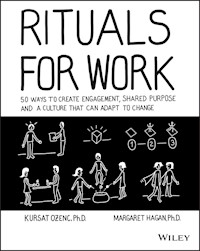
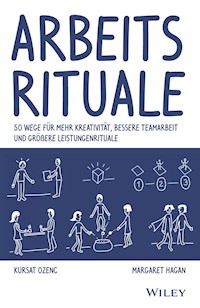
Experience the transformative power of creative rituals in the workplace Rituals for Work shows us how creative rituals can make our personal and business lives more meaningful and rewarding. Rituals are powerful tools: they reinforce good habits, motivate personal and professional achievement, create a common bond between co-workers and build shared values; they can transform an organization's culture and provide a foundation to achieve common goals. Focusing on real-world examples, this book takes a practical approach to the power and benefits of workplace rituals. This insightful guide presents 50 creative rituals, from business and management to design and personal development. Specific case studies highlight the use of rituals and their positive impact to real-world organizations, while vivid visuals allow us to feel their energy and emotion. A ritual is only effective when its purpose is clearly defined. This book goes beyond simple analysis to provide actual recipes for individual rituals designed to promote specific habits, change negative behaviors, and instill values. Each ritual can be adapted to achieve a multitude of goals and tailored to fit your organization or team's specific needs. * Change behaviors, form positive habits, and assign meaning to shared goals * Build shared values, foster innovation, and encourage strong teamwork * Deal with conflicts effectively and engage others to work on resolutions * Learn the fundamental concepts of ritual-building and share your knowledge with your team An informative and inspirational resource for executives, managers, team leaders, and employees of every level, Rituals for Work provides a blueprint for building a culture of engagement, innovation, and shared purpose for organizations of all sizes, across industries.
Sie lesen das E-Book in den Legimi-Apps auf:
Seitenzahl: 200
Veröffentlichungsjahr: 2019
Ähnliche

















Cover image and design: Kursat Ozenc
Copyright © 2019 by John Wiley & Sons, Inc. All rights reserved.
Published by John Wiley & Sons, Inc., Hoboken, New Jersey.
Published simultaneously in Canada.
No part of this publication may be reproduced, stored in a retrieval system, or transmitted in any form or by any means, electronic, mechanical, photocopying, recording, scanning, or otherwise, except as permitted under Section 107 or 108 of the 1976 United States Copyright Act, without either the prior written permission of the Publisher, or authorization through payment of the appropriate per-copy fee to the Copyright Clearance Center, Inc., 222 Rosewood Drive, Danvers, MA 01923, (978) 750-8400, fax (978) 646-8600, or on the Web at www.copyright.com. Requests to the Publisher for permission should be addressed to the Permissions Department, John Wiley & Sons, Inc., 111 River Street, Hoboken, NJ 07030, (201) 748-6011, fax (201) 748-6008, or online at http://www.wiley.com/go/permissions.
Limit of Liability/Disclaimer of Warranty: While the publisher and author have used their best efforts in preparing this book, they make no representations or warranties with respect to the accuracy or completeness of the contents of this book and specifically disclaim any implied warranties of merchantability or fitness for a particular purpose. No warranty may be created or extended by sales representatives or written sales materials. The advice and strategies contained herein may not be suitable for your situation. You should consult with a professional where appropriate. Neither the publisher nor author shall be liable for any loss of profit or any other commercial damages, including but not limited to special, incidental, consequential, or other damages.
For general information on our other products and services or for technical support, please contact our Customer Care Department within the United States at (800) 762-2974, outside the United States at (317) 572-3993 or fax (317) 572-4002.
Wiley publishes in a variety of print and electronic formats and by print-on-demand. Some material included with standard print versions of this book may not be included in e-books or in print-on-demand. If this book refers to media such as a CD or DVD that is not included in the version you purchased, you may download this material at http://booksupport.wiley.com. For more information about Wiley products, visit www.wiley.com.
ISBN 9781119530787 (Hardcover)
ISBN 9781119530695 (ePDF)
ISBN 9781119530756 (ePub)
We dedicate this book to our families, and in particularAliye, Mehmet, and Selcen.
Contents
Cover
Ritual Index
Profiles
Introduction
PART ONE The Power of Rituals
1 Rituals for Better Work
The Power of Rituals
The Principles of Rituals
Five Types of Workplace Rituals
2 How to Bring Rituals into Your Work, Team, and Org
PART TWO 50 Rituals for Work
3 Creativity and Innovation Rituals
When Would You Use a Creativity Ritual?
10 Creativity and Innovation Rituals
4 Performance and Flow Rituals
When Would You Use a Performance Ritual?
10 Performance and Flow Rituals
5 Conflict and Resilience Rituals
When Would You Use a Conflict & Resilience Ritual?
10 Conflict and Resilience Rituals
6 Community and Team Building Rituals
When Would You Use a Community and Team Building Ritual?
10 Community and Team Building Rituals
7 Org Change and Transition Rituals
When Would You Use an Org Change and Transition Ritual?
What Can a Transition Ritual Bring?
10 Org Change and Transition Rituals
PART THREE Designing Rituals with and for Your Teams
8 A Short Guide to Designing Rituals
Endnotes
Acknowledgments
Authors
Index
End User License Agreement
Guide
Cover
Table of Contents
Part
Pages
iii
iv
v
viii
ix
x
xi
xii
xiii
xiv
xv
xvi
xvii
xviii
xix
xx
xxi
xxii
xxiii
xxiv
xxv
xxvi
xxvii
xxviii
xxix
xxx
1
2
3
4
5
6
7
8
9
10
11
12
13
14
15
16
17
18
19
20
21
22
23
24
25
26
27
28
29
30
31
32
33
34
35
36
37
38
39
40
41
42
43
44
45
46
47
48
49
50
51
52
53
54
55
56
57
58
59
60
61
62
63
64
65
66
67
68
69
70
71
72
73
74
75
76
77
78
79
80
81
82
83
84
85
86
87
88
89
90
91
92
93
94
95
96
97
98
99
100
101
102
103
104
105
106
107
108
109
110
111
112
113
114
115
116
117
118
119
120
121
122
123
124
125
126
127
128
129
130
131
132
133
134
135
136
137
138
139
140
141
142
143
144
145
146
147
148
149
150
151
152
153
154
155
156
157
158
159
160
161
162
163
164
165
166
167
168
169
170
171
172
173
174
175
176
177
178
179
180
181
182
183
184
185
186
187
188
189
190
191
192
193
194
195
196
197
198
199
200
201
202
203
204
205
206
207
208
209
210
211
212
213
214
215
216
217
218
219
220
221
222
223
224
225
226
227
228
229
230
231
232
233
234
235
236
237
238
239
240
241
E1
What Kindsof Ritual Do YouNeed?
Individual
+ Fire up the right brain
+ Bring dead projects to life
+ Start building things quickly
+ Make your focus tangible
+ Eliminate distractions for deep work
+ Manage your emotions in a high stakes situation
+ Create a sense of control and boost confidence
+ Encourage team members to avoid clashes
+ Decrease anxiety before feedback sessions
+ Repair deteriorating relationships
+ Create an identity to foster a sense of belonging
+ Increase empathy among team members
+ Share personal histories to increase bonding
+ Welcome a new hire into the organization
+ Celebrate the start of “real” work
+ Deal with career changes
Team
Org
+ Encourage lateral thinking
+ Giving license to risk and fail
+ Inspire the team with idea building
+ Meet people where they are struggling
+ Develop solutions for recurring issues
+ Create a culture of ideation and controlled risk-taking
+ Encourage everyone to share their skills
+ Rescue the team from distractions
+ Move stalled projects forward
+ Recognize the purpose at the heart of the team's work
+ Remove distractions that are hampering performance
+ Keep and maintain meaning in everyday work
+ Pair employees to have them hold each other accountable
+ Nurture radical transparency
+ Take a pause from a heated discussion
+ Resolve a conflict by releasing emotions
+ Prevent conflicts by making trade-offs clear
+ Nurture a culture of candor to have honest, difficult conversations
+ Build psychological safety within the team
+ Address team health with a neutral party
+ Hold more engaging meetings
+ Celebrate holidays across geographies
+ Create bonds among virtual teams, and across different offices
+ Sync up and explore with teammates
+ Create shared memories to solidify the organization's identity
+ Celebrate civic outreach and impact stories
+ Break down silos between teams
+ Achieve closure after a departure
+ Welcome new hires with the company values
+ Create an identity for a temporary team
+ Make orientations engaging
+ Have stability through mergers, acquisitions, and leadership changes
+ Get closure for departments or programs that are closing
+ Manage your org's changing direction
Ritual Index
1. The Daily Drawing
2. The Zombie Garden
3. The Idea Party
4. The Fixathon
5. Design Mad Libs
6. The Failure Wake Party
7. The Surprise Ride Along
8. The Surrealist Portraits
9. The Gift Making Exchange
10. The Skill-Share Fest
11. The Focus Rock
12. Amp Up Rituals
13. The Moment of Reverence
14. Blind Writing
15. Touch Here for Special Powers.
16. The Airplane Mode Afternoon
17. Six Daily Questions
18. The To-Do Compost
19. Silent Disco Thursdays
20. The Partner Bonds
21. The Doctor Is In
22. Community Conversations
23. Robot Walkout
24. The Anxiety Wall
25. Burn the Argument
26. Elephant, Dead Fish, Vomit
27. My First Failure Book
28. No Rehash Rule
29. Trade-off Sliders
30. The Small Moments Jar
31. The Pinning Ceremony
32. The Remote Holiday Party
33. The Global Mixtape
34. Check-in Rounds
35. Three-Second Share Day
36. Walking Meetings
37. The Backstory Dinner
38. Our Year in Pictures
39. Citizenship Stories
40. The Bake-off Tournament
41. A Cupcake Welcome
42. The Onboarding Graduation
43. Crash the Desk
44. Smashing the Old Ways
45. Funeral for the Bygone
46. Mourning the Recently Left
47. Wedding of the Orgs
48. The Name Seeker
49. The Welcome Piñata
50. The Treasure Hunt Onboarding
Profiles
Nick Hobson
Ph.D., Social Psychologist,University of Toronto
Cipriano Lopez
CEO,Haceb
Laura Miner
Designer, Founder,BuddyBuddy Studio
Ayse Birsel
Designer, Artist, AuthorBirsel+Seck Studio
Dr. MarshallGoldsmith
Ph.D., Educator, Coach
Dom Price
Work futurist Atlassian
Anima LaVoy
Social Impact Experiences Lead Airbnb
Lillian Tong
Designer, Cofounder Matter-Mind Studio
Isabel Behncke
Ph.D., Primatologist, evolutionary and behavioral scientist
Annette Ferrara
Experience Director IDEO Chicago
A Welcome Note
This book offers rituals that can be used to bring new energy and community into your everyday work. Our focus is on bottom-up changes to how we work. Rather than relying on top-down, formal efforts to make work better, rituals can help you create smaller-scale, participatory ways to help people more satisfied, productive, and connected.
Beyond bottom-up rituals, we also present rituals that help your team communicate better. There are also rituals to help organizations make changes and deal with difficulties.
Over the past years, we have taught courses on Ritual Design at Stanford's d.school, with corporate and public service partners, to identify ways to respond to problems around disengagement at work. We began to collect other organizations' and people's rituals to show our students, and to inspire them as they created new rituals for work.
In this book, we showcase a mixture of these rituals—those from well-established companies that have whole teams devoted to culture and community-building, as well as more experimental ones that have emerged from design workshops and sprints. At the end of the book we present the basics of how we run our own ritual design practice. There you'll also find a process to design your own custom rituals.
Throughout the book, we have profiled people who are making new rituals and who are creating better organizational cultures. We feature them, to show examples of how people are experimenting with new ways of working, being creative, and building great relationships.
This book is a practical one, which you can browse and skip through, to find what might be relevant to the challenges you are facing. On page viii-xi, there are 2 overviews of themes and rituals to guide you.
Why Bring Rituals into Work?
We spend so much of our lives at work—whether in a big company, a small startup, or on our own projects. But how much do we invest in making our work lives better, when it comes to our relationships, our creativity, our focus, our life transitions, and the ups-and-downs of our organizations?
Rituals can be one powerful strategy to improve our work lives—and help us act more like we aspire to be. They are practices that can bond people together, help us move through conflicts, amp us up to better performances, and assist us in adapting to change.
Companies and people face big challenges at work today. There are low levels of employee engagement, high levels of stress and fear, inhuman environments, and failed reorganizations.1 These problems at work require a multi-faceted set of strategies to make more human-centered, values-driven, and creative workplaces. Rituals are one of these strategies, that leaders and individuals can employ to address their big problems.
Sports fans likely are already familiar with rituals for work. Rafael Nadal has an extensive sequence of rituals for his tennis game performance.He takes a cold shower forty-five minutes before every game. This is his work ritual, to regulate his emotions and get into a focused performance and a state of flow.2
Zipcar created a ritual to lead their company through a big organizational shift. When they decided to redirect towards a mobile-first company, they brought the company together for a ritual smashing of desktop computers.3 (See more in Chapter 7.) It was a collective ceremony to mark the end of the old way of working and move to the new.
This book presents the research into why rituals improve work, as well as many more examples to inspire you.
Our goal in this book is to show ways to experiment with more intentional, connected, and meaningful work culture. Using the rituals in this book can be one way to experiment with making your work better.
We know that rituals are not the only solution to tackling the big challenges of work, but they are a distinct and effective strategy to help you put your values, ethics, and goals into practice.
The Meaning of Ritual
We use the term “ritual” to capture practices that have a special power to make a meaningful moment. They have unique factors that elevate them above normal experiences.
A ritual is an action done following a similar pattern and script, in a particular situation. Most rituals follow a script, with a set path that people will follow and repeat.
They are done with an intent and awareness. Unlike a routine, rituals are not mindless. They are done with people recognizing that something special is happening, that they are tuned into.
They involve some physical movement. There is usually a patterned rhythm of people moving, that activates a sense of something special going on. There are symbols at work. They could be props, words, or actions that represent something bigger—usually a higher value. These symbols invoke a sense of the extraordinary, that transforms the average into the special.
A good ritual tells a story, which often helps a person make sense of something that is going on, figure out what it means in a bigger picture, and deal with it.
They have a je ne sais quoi factor that elevates an average moment into a memorable, charged one. From the outside, a ritual could look irrational or nonfunctional, because it does not always make logical sense.
Rituals at Different Levels
Rituals don't have to be grand or spiritual. They are on a continuum of intensity and frequency.
Some rituals are short and happen often, like daily stand-up meetings in a development team. These may be low intensity, but still carry the benefits of building shared purpose and a sense of community.
Other rituals are dramatic and infrequent, like a graduation ceremony. It has more elaborate scripts, formal actions to take, and a once-in-a-lifetime quality. This can also mean it carries a bigger sense of meaning and connection.
Rituals may seem like a “soft” strategy to make meaningful change, because they do not operate with a direct, transactional logic. But they have value in making abstract organizational identities, goals, and principles concrete. And they produce intangible benefits of shared purpose, a sense of meaning, and community bonds.
Who Can UseRituals for Work?
Rituals are about creating meaning: how do we make our lives, our teams, and our products more meaningful? Rituals can help you intentionally create better culture at your work—at the level of a whole organization, a team, or your own practice.
This book is for people who are interested in experimenting with building better work cultures.
It could be a person who wants to make their everyday work routines more productive, more in line with their ethics and goals, or more memorable.
Or it could be a team member or manager who knows their work-life could be more in line with their values, and wants to bring more collaboration, humor, and creativity into their organization.
Or it could be a leader at the helm of an organization who wants to nurture a large-scale culture, that manifests the values and norms of the organization's mission statement, guiding principles, and ethical obligations.
Or it could be a designer or an engineer who is working on an entirely new innovation. They may want to find ways to be more creative, or to roll out the new thing they are making. They may want to experiment with making a culture shift that would help their new innovation succeed.
Culture Map, adapted from James Heskett’s Culture Cycle4
In particular, people who are interested in their work community and culture can use rituals. This might be managers or leaders—or even new hires who care about how their organization is run.
Often, the culture of an organization is set by talking in the abstract. This could be through writing down a manifesto, core principles, or a constitution. Rituals are ways to bring these big, abstract ideas into daily practice. By default, they involve physical actions and concrete behaviors. A good ritual will take the underlying values and intangible beliefs of a company—all these valuable, invisible things—and make them visible, interactive, and lively real-world practices throughout the organization.
Can you be an architect of your work life? Even if you are not the manager of your company or your team, you can use lightweight strategies—like rituals—to make work be more like you wish it could be.
This means bringing a sense of practical creativity to work life. What are small experiments and new practices you can try out, to see how you can address the problems you face. It also means being more thoughtful about what powers you have and what type of work you want to do.
PART ONEThe Power of Rituals
1Rituals for Better Work
The Power of Rituals
Our interest in rituals grew out of our work as designers, as we noticed that some of our most successful projects came when we thought about framing a new product or initiative as a “ritual.” Whether it was in promoting adherence to diabetes regimens, helping people prepare for fighting their traffic tickets, or helping new managers oversee their teams more effectively.5 The frame of ritual worked to make new products more attractive and engaging.6
We observed that when we created things using the patterns of a ritual—even if we didn't call our new thing a “ritual”—it became more likely that people would want to use it, and continue to use it. A ritual sets up a clear path for people to follow, and it calls up a sense of meaning and connection—which drew people in.
Rituals have special power to bond people together and to make sense of their world. As we began experimenting with rituals as a means for individual growth and organizational change at work, we learned that in a very short time and with minimal budget, rituals can bring liveliness, lightness, and a sense of community to a group.
Many scholars in anthropology, psychology, neuroscience, and organizational behavior have developed a strong body of research into how rituals work, and what powers they have. This scholarship can help us understand what the origins of rituals are, in evolution and in history. It also describes how rituals operate, and why they matter so much to humans. This research provides empirical support to the many practical, anecdotal examples in this book.
Rituals give order and meaning.
Foundational studies of rituals emerged out of the work of sociologist Emile Durkheim. When he studied religion, he discovered rituals as a central backbone to how belief systems operate. Rituals make beliefs concrete and graspable for people.7 People gravitate toward the function and structured behavior that rituals offer. This structure brings people a sense of things being in their control and with a sense of meaning.
Rituals give people a safe space to experiment.
Anthropologist Clifford Geertz found that when people act out rituals, they can jump from what the “real” world is to another one, that is more ideal.8 Rituals let people imagine other ways of behaving and living, taking a break from their everyday rules and routines. They give people safe, structured zones to build better ways of living.
With more empirical study of rituals, psychologists have discovered that their power derives from their ability to link the physical with the psychological and the emotional—all with the benefit of “regulation.”
A recent review of scholarship on rituals found that the actions of physically going through rituals help people feel satisfied and in control.9 The ritual actions regulate people's emotions, keeping them calm. Rituals also regulate people's performance, helping them to act in a steadier and more focused way. Finally, rituals regulate people's sense of belonging, giving them a stable feeling of social connection.
The Power of Rituals: How and Why They Work
How can we understand if a ritual works, and how it works?
Researchers in social science, business, neuroscience, behavioral science, psychology, and other fields have begun to study rituals' power more empirically. In one track of studies, researchers are measuring the experience and outcomes of rituals through straightforward, objective measurements. On another track, researchers consider more subjective outcomes and experiences, with investigation into people's perceived effectiveness of the rituals, and on physiological changes that result from them.
Increasingly, research teams use controlled trials to measure the power of rituals on various aspects of people's experiences and performance.10 They gave a treatment group a ritual to perform, and a control group no ritual. Then they measured whether and how the ritual treatment affected the group's performance on a given task, and their psychological and physiological measures.
Rituals increase performance by decreasing anxiety.
Examining pre-performance rituals, Alison Wood Brooks and her colleagues found that rituals increase performance by decreasing the anxiety before a public presentation—a singing contest.11 The ritual that they created is as follows: Draw a picture of how you are feeling right now. Sprinkle salt on your drawing. Count up to five out loud. Crumple up your paper. Throw your paper in the trash.




