


19,99 €
Mehr erfahren.
- Herausgeber: Prestel Verlag
- Kategorie: Geisteswissenschaft
- Sprache: Englisch
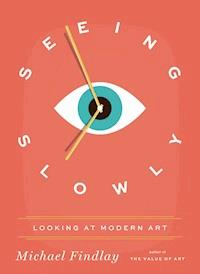
When it comes to viewing art, living in the information age is not necessarily a benefit. So argues Michael Findlay in this book that encourages a new way of looking at art. Much of this thinking involves stripping away what we have been taught and instead trusting our own instincts, opinions, and reactions. Including reproductions of works by Mark Rothko, Paul Klee, Joan Miró, Jacob Lawrence, and other modern and contemporary masters, this book takes readers on a journey through modern art. Chapters such as “What Is a Work of Art?”, “Can We Look and See at the Same Time?”, and “Real Connoisseurs Are Not Snobs,” not only give readers the confidence to form their own opinions, but also encourages them to make connections that spark curiosity, intellect, and imagination. “The most important thing for us to grasp,” writes Findlay, “is that the essence of a great work of art is inert until it is seen. Our engagement with the work of art liberates its essence.” After reading this book, even the most intimidated art viewer will enter a museum or gallery feeling more confident and leave it feeling enriched and inspired.
Das E-Book können Sie in Legimi-Apps oder einer beliebigen App lesen, die das folgende Format unterstützen:
Seitenzahl: 382
Veröffentlichungsjahr: 2017
Ähnliche


















V
eteran art dealer Michael Findlay has been at the center of the art world for over fifty years. His bestselling The Value of Art opened many eyes to the mysteries, pleasures, and rewards of collecting. Now Findlay focuses his uniquely experienced gaze on the art of seeing.
How do you approach a work of modern art? How do you react to it? How do you learn to trust your taste in art? Findlay believes the answers to these questions depend not on information but engaging your feelings. But first you must shut out all the noise. Bucking current trends in the museum-going experience, Findlay advocates ignoring wall labels, refusing audio guides, and ditching museum tours.
Through personal anecdotes and beautifully reproduced artworks by popular artists such as Mark Rothko, Jacob Lawrence, and Bridget Riley, Findlay imparts his personal vision of experiencing modern art so that first-time museumgoers as well as longtime collectors are empowered to develop their own personal connection to art, rather than blindly following the dictates of fashionable opinion and market value.
Findlay explores questions such as what makes a work of art, the difference between looking and really seeing, and how to be your own connoisseur. Seeing Slowly not only gives readers the confidence to form their own opinions, but also encourages them to make links that spark curiosity, intellect, and imagination.
Opinionated, challenging, and revelatory, Seeing Slowly will completely alter your relationship to art, ensuring you will never wander through a museum the same way again.
PRAISE FOR SEEING SLOWLY
“Thank you to Michael Findlay, who has given courage to those novice art lovers—like me!—to step back inside our museums and galleries and declare for ourselves what it is we think and feel about the art we see. This book is not just a must read for anyone who cares about the past, present, and future of true art appreciation, it is also a primer on how to live more deeply in our increasingly automated world. .”
SAÏD SAYRAFIEZADEH, author of When Skateboards Will Be Free
“Seeing Slowly encourages us to feel the work on our most immediate and felt perceptions: Michael Findlay asks that we sense a work of art, not intellectualize it. Findlay’s brilliant book opens us to ourselves and to the profoundly nourishing beauty of art.”
FREDERIC TUTEN, author of Self Portraits: Fictions andTintin in the New World
“Writing in a highly accessible manner, Michael Findlay demystifies the experience of looking at art, explaining that there is no right or wrong way, and urging us to not be afraid of art.”
JENS HOFFMANN, Director of Exhibitions and Public Programs, Jewish Museum, New York
“Michael Findlay liberates us from the heavy baggage that usually comes with art appreciation. His book re-affirms that true engagement with art means discovering what the work of art means to us as individuals. This is, for me, the essential point that I will take away.”
VÉRONIQUE CHAGNON-BURKE, Director, Christie’s Education
MICHAEL FINDLAY, an internationally renowned art dealer, is a Director of Acquavella Galleries in New York, known for major exhibitions of nineteenth- and twentieth-century masters including Pablo Picasso, Joan Miró, Lucian Freud, and Wayne Thiebaud. Born in Scotland, Findlay began his career in New York in 1964, where he was a pioneer of SoHo’s legendary gallery scene and presented important solo exhibitions of then-unknown artists such as John Baldessari, Stephen Mueller, Sean Scully, and Hannah Wilke. In 1984 he joined Christie’s as its Head of Impressionist and Modern Paintings and later was named International Director of Fine Arts while serving on the Board of Directors until 2000. His first book, The Value of Art, was published by Prestel in 2012. Findlay is married with two children.
Jacket design by Mark Melnick
Author photograph by Victoria Findlay Wolfe
•CONTENTS•
Acknowledgments
Introduction
Narcissus
Chapter One: Peeling the Onion
The Uses of Art
The Essential Value of Art
Chapter Two: Baggage Handling
Prior Agreements
Open Mind Required
Chapter Three: What Is a Work of Art?
Skill
Materials
Color
Imagery and Scale
So What Makes It Art?
Chapter Four: Can We Look and See at the Same Time?
Art and Technology
Art and Language
Art and the Brain
The Difference Between Looking and Seeing
Can Art Be Heard?
Can Art Be Read?
Can Art Be in a Hurry?
Chapter Five: The Art of Being Present
Prescriptions
Ain’t Nothing Like the Real Thing
Fresh Air Art
Ignorance Is Knowledge?
Intimacy
Achieving Contact: A Dialogue
The Work of Art Needs To Be Seen
Make It Real (Reprise)
Don’t Curb Your Enthusiasm—Share!
Chapter Six: Real Connoisseurs Are Not Snobs
The Qualities of Art
The Connoisseur as Detective
The Connoisseur as Critic
The Connoisseur as Moneybags
Me? A Connoisseur?
But It’s In a Museum, So It Must Be Good!
Trusting Your Eye
The Artist Speaks: Should We Listen?
How Do I Know If What I Like Is Any Good?
Familiarity Breeds Good Judgment
Should I Learn Artspeak?
Comparisons Are Not Always Invidious
Chapter Seven: Getting Personal
Learning Backward
Spotting New Talent, Then and Now
Best of the Best
Further Reading
Notes
Index
Illustration Credits
•ACKNOWLEDGMENTS•
Seeing Slowly was two decades in the making. In 1995, Sandra Joys, the founding director of Christie’s Education in New York, recklessly delivered her students to me for a daylong seminar I called “Trusting Your Eye.” We looked at modern art together and discussed what we saw but deliberately avoided the use of identifiers such as the names of artists and movements. I thank Sandra, and give much gratitude to her dynamic successor, Véronique Chagnon-Burke, who has allowed me to refine and continue these occasional dialogues.
My greatest debt is to the countless curators, collectors, and fellow art dealers who throughout my fifty-plus years in the business brought me to hundreds of thousands of works of art in museums, private collections, and galleries. This ongoing daily pleasure has been, and continues to be, my education.
I am very grateful and fortunate that my wife, the talented contemporary quilt artist Victoria Findlay Wolfe, shares with me the enthusiasms and working insights of her practice. I thank our daughter, Beatrice, for her cameo in Chapter Five, as well as my son, Bob, and granddaughter, Nikita, for the very happy hours we have spent together in museums.
I am indebted to my first reader and editor, Christopher Lyon, who patiently guided me to clarify, shuffle, trim, and discard. John Long admirably managed all my illustrations and Efren Olivares compiled the endnotes. Celine Cunha provided invaluable research assistance, as did my gallery colleagues Emily Crowley, Jean Edmonson, and Maeve Lawler.
Thanks indeed go to Michael Steger, my friend and agent at Janklow & Nesbit Associates; the good team at Prestel, including my editor Holly La Due and Stephen Hulburt; copy editor John Son; and designer Mark Melnick.
For my wife, Victoria; daughter, Beatrice; son, Bob;
and granddaughter, Nikita
•
INTRODUCTION
And still deeper the meaning of that story of Narcissus, who because he could not grasp the tormenting, mild image he saw in the fountain, plunged into it and was drowned.But that same image, we ourselves see in all rivers and oceans. It is the image of the ungraspable phantom of life, and this is the key to it all.
HERMAN MELVILLE
Narcissus
Until the camera took over the job in the late nineteenth century, artists were mostly preoccupied by people, places, and things. Modern art has vastly expanded the artist’s mandate, and today virtually any creation, action, or even proposition is accepted as art so long as we encounter it in a context we regard as suitably credentialed, such as a museum or art gallery. Does this mean that “anything goes”? And if so, how are we to judge or understand it? How many lectures must we attend? How many books must we read?
My belief is that great art, ancient or modern, reaches out to us and has the capacity to move us so profoundly that we are, for a moment or a lifetime, changed. This will only happen if we are prepared to engage with it on an emotional level with an active mind. Art is sensational; interacting with it to the fullest requires in the first place the practice of our senses and an open mind. Only if our senses have been fully engaged can we enjoy the secondary benefit that is the education of our intellect.
Jackson PollockOne: Number 31, 1950, 1950Oil and enamel paint on canvas106 ⅛ × 209 in.(269.5 × 530.8 cm)Installation view,The Museum of Modern Art, New York (2017)The Museum of Modern Art, New York. Sidney andHarriet Janis Collection Fund (by exchange)
Art is that which enables us to reach for Herman Melville’s “ungraspable phantom of life,” and regardless of what form it takes, or even when it is seemingly formless, we can accept and enjoy it, or find it uninteresting and reject it, to the extent that our feelings are affected by what we experience. For you, it might be the passion of Jackson Pollock’s One: Number 31, 1950 (1950). For me, it is Salvador Dalí’s fantastic vision of Narcissus himself.
Salvador DalíMetamorphosis of Narcissus, 1937Oil on canvas20 ⅛ × 30 ¾ in.(51.1 × 78.1 cm)Tate, London.Purchased 1979
Some approach modern art asking, “Is it art?” That is beside the point. The question we must ask is, “Does it work for me?” By “work,” I mean “act on your senses and engage your mind,” not “test your knowledge of art history.”
Aided by the media, ever ready to exploit the celebrity of a small group of artists and sensationalize high prices, modern art provides hooks on which those with the means to collect can attach their social identities to wealth and prestige. In my book The Value of Art, I examine three motives for collecting art: investment potential, social reward, and what I call the “essential” value—art for its own sake. This book is about how we can engage that “essential” value for our own sake, leaving the investment potential and social rewards safely in the hands of the great art world lions and their attendant lionizers.
You and I are interested in art, and so when we encounter it, we do not turn away but look at it, right? But do we really see it? For me, there is a difference between “looking” and “seeing,” which is that the former is passive.
If my eyes are open, I look where I am going, but most of the time I am simply navigating. I am not seeing what is all around me, whether it is the people on the Lexington Avenue 6 train in New York or the leaves on the Japanese maple tree in my garden. This book is about seeing with all your senses and with an open and inquiring mind. Such seeing does not require any knowledge of facts about works of art. Sufficiently moved by a work of art that you are truly seeing, you will inevitably become curious about those facts, which is when your intellect comes into play.
This book is for everyone willing to join me on a journey to unlock the full power of that essential value of modern art. This book is for those of us who think we cannot possibly comprehend any of the exciting movements in modern art that have taken place in the last hundred years or so without lessons, lectures, and audio guides.
I am going to ask you to ignore a lot of what you may already know and everything you may think you need to learn. I will introduce concepts like mindfulness and intimacy that are possibly more apt for a self-help book than an introduction to seeing art, but a self-help book is exactly what you are holding in your hands. Together we will aim, at the very least, to achieve a moment or two of genuine engagement with works of modern art—of your choice, not mine.
While the possibilities of total enthrallment may stop short of the sudden enlightenment that Zen adepts call satori, we will have stepped off the information highway and allowed ourselves to enjoy a wide variety of authentic responses to modern art. The “Aha!” moments that await may include, but are by no means limited to, a peaceful moment, a fleeting smile, a taste of mellow sadness, even a frisson of shock and agitation.
Modern art comes in many mediums and sizes, among them painting, sculpture, drawing, print, video, and installation art. Engaging with it requires neither reading nor listening, whether before, during, or after we see a work. We can find out who made it and when it was made so that we may refer to it, and we can enjoy agreeing or disagreeing with what other people may say or write about it, but reading about the artist’s sex life in a popular biography or what a critic, or what someone with a doctorate in art history thinks the work of art means, is not as important as your experience of the work; in fact, the less you know about the work, the easier it may be for you to really enjoy it.
I will lose my stripes and be drummed out of the art world for saying this, but modern art is not about secret ingredients or puzzle solving. There are no codes to crack. This book is for people who enjoy music and novels and theater and movies. Those require no inside information or special training, and neither does modern art.
To get to the starting line, we may have to remove layers of misinformation. These will be replaced by what you bring to the table, not what I say. Famous or obscure, the work of art that you allow to grab your attention will deliver stronger sensation and greater pleasure than the work of art you are directed to by your audio-guided tour. It may be the smallest painting in the room or the biggest or the darkest or even (apparently) the ugliest. Let your eyes choose.
Great artists take great risks, and risk is a key ingredient of modern art. From Paul Cézanne to Barnett Newman to Andy Warhol, artists who are now heralded as pioneers broke the rules. We must do the same. If the rules of engaging with modern art today consist of knowing how art critics (or curators or dealers) label art, what they say about it, or, God forbid, what a work is worth in dollars, then I am asking you to break those rules and take the risk of seeing only the art, and making up your own mind.
Our destination is an encounter with a specific work of art, a very real painting or sculpture or installation, or even a performance event, in which all our senses are operational and we are fully engaged, offering the promise of an emotional response that can make that object part of your life. The goal of this process is restoring the integrity of the object, an integrity increasingly eroded by our culture, in which an artwork often becomes a mere prop, standing in for anything and everything, from investment asset to high fashion accessory.
The journey I urge you to take in this book has been and continues to be the voyage of my life as an art lover, one full of wonders and surprises. For most of us this costs little more than museum admission (art galleries are free), so let’s get to the starting line.
CHAPTER ONE
PEELING THE ONION
For art comes to you proposing frankly to give nothing but the highest quality to your moments as they pass, and simply for those moments’ sake.
WALTER PATER
For most journeys in life, internal or external, we must learn things. Learned information is often equated with wisdom, but sadly, wisdom and information are not the same. Information is valuable only if tempered by wisdom, and wisdom comes from experience, not learning.
Our systems of education stress the accumulation of information, often at the expense of experience. You may believe that you know a lot, some, or a little, about modern art, but our journey begins with jettisoning what you think you know. This is what I mean by peeling the onion. If you know nothing at all, you may have nothing to peel. This is unlikely because most of us approach adulthood with set attitudes and opinions about art, mostly not based on experience.
On this journey I will ask you to discard all manner of theories, learned behaviors, preconceptions, and props, which manifest themselves as ways to access, understand, and enjoy art, but which instead serve the opposite end, increasing our repertoire of ideas and language while decreasing our engagement with art. Part of what we are going to do is examine those attitudes and opinions and remove them, layer by layer, until we reach a place of clarity, receptivity, and honest judgment. Only in that place can true connoisseurship be practiced; only in that place can judgments of quality have meaning.
I am speaking from my experiences as an art dealer. I cannot make a client like a work of art, let alone fall in love with it. All I can do is display the painting, drawing, or sculpture and create the optimum conditions for my client to experience it. Because my living depends on some people liking a work of art well enough to buy it, I need to be able to answer questions about its authorship, history, physical condition, and commercial value. The client’s decision about whether or not to buy a work may be influenced by my answers, but a positive or negative response to the work of art can only be decided by his or her engagement with the piece itself.
I could tell her why I like it or tell him what other people have said or written about it—but would that make them like it? Surely you have experienced being told by a knowledgeable friend about a book or a movie that you simply must read or see. Everyone is raving about it! And then you read the book or see the movie and say to yourself, “What? I didn’t think much of that!”
There is nothing wrong with listening to advice so long as, diplomacy aside, your conclusive opinion is genuinely your own.
Others may lead us to new cultural experiences. Sometimes a client will ask me to locate a work of art by an artist whose work is perhaps not my favorite. I do find a piece by him, and when I show it to them, their excitement and enthusiasm may be so palpable that, even without much conversation, I begin seeing it more clearly than I would have otherwise. This is not so much being influenced by their opinion as being impressed by their level of engagement.
This book encourages you to see a broad array of works of modern art and be receptive to those that reach into the core of your being. There is no reason why you should not be able to see a work of art as if you were its first viewer, in the artist’s studio, the day it was finished.
I am asking you to abandon the multitude of distractions, which our culture places between us and the objects of our experience, and engage works of art with a naked eye and mind. Only then can we meet the art on its own terms, and only after that has happened can we trust our taste, have confidence in our judgments, and, if we wish, add information to our insights.
I am a baby boomer. We are fast approaching our past-due dates. When young, some of us engaged in a search for spiritual enlightenment or transformation, and I am perplexed by the extent to which many of us now approach old age seemingly afraid of spiritual elevation. I am not talking about pleasure or happiness but about experiences that shift our soul slightly upward, for a minute or two, or sometimes even for life.
If we spent so much effort in the 1960s getting high, why are we so earthbound now (we and the generations that followed us)? Outside of spiritual communities, society seems to consider discussion of transcendence as impolite as the mention of money used to be among the English upper classes. Why are we afraid of opening ourselves up to the possibility of experiencing the spiritual and emotional elevation that can happen, easily and harmlessly (and inexpensively), if we know how to see art?
One of the clichés of our culture is that men suppress their feelings while women more freely accept them. In fact, men may talk less about their feelings, but both genders have the same capacity for experiencing states of emotion. Since I am advocating seeing art, not gushing about it, however, my male readers may still keep upper lips stiff and jaws clenched when they are in public museums and galleries.
In the final chapter, I detail three transformative encounters I have had with art objects. These occurred decades apart (the first when I was twenty-two, the most recent when I was sixty-two), but the impact of each created within me the same sense of breathtaking awe, combined with the piercing sensation of being in a state of extra-reality. Whatever your spiritual beliefs and practices (or lack of them), I assure you that if you follow my path you will experience similar moments.
The Uses of Art
It is the most important function of art and science to awaken this [cosmic religious] feeling and keep it alive.
— ALBERT EINSTEIN
“Why is it art?” Gerald asked, shocked, resentful.“It conveys a complete truth,” said Birkin. “It contains the whole truth of that state, whatever you feel about it.”
— D.H. LAWRENCE, WOMEN IN LOVE
The impulse to make marks as a basic declaration of existence predates virtually every other known aspect of human culture. In 2008, tools and ochre pigment, dating from between one hundred thousand and seventy thousand years before the present, were found in the Blombos Cave in South Africa. A number of pieces of ochre are incised with seemingly abstract patterns. These predate comparable objects found in Europe by at least thirty thousand years. After the need for food and shelter, making forms is a basic instinct, and many believe it emerged long before spoken language, although for obvious reasons it is unlikely the birthday of the latter will ever be determined.
In my previous book, The Value of Art, I argued that today art possesses three values: potentially maintaining or increasing its commercial value; enhancing social interaction, for example, in the company of fellow art lovers; and providing the opportunity for private contemplation of, and engagement with, the object. The value of art seventy thousand years ago was unlikely to have been monetary, but it was most certainly social, though possibly never entirely private. Susan Sontag aptly described prehistoric art as “incantatory, magical . . . an instrument of ritual.”1
Great art may be inspired by divinities, but all art is made, used, and abused by imperfect humans. The history of art, from the beginning of recorded history to today’s screaming headlines, is replete with tales of squalor, theft, forgery, fraud, and riches beyond imagining. The cast includes evil potentates, acquisitive prelates, robber barons, and hedge-fund billionaires, and it is salted liberally with mad starving geniuses. Every age has put art to a great variety of both good and bad uses.
American culture, which is despised and emulated (often simultaneously) in many other countries, is highly goal oriented. Regardless of how many generations of immigrants have brought with them diverse beliefs, the Protestant ethic still rules. The purpose of our children’s education is to get a job, build a career, and move on up the ladder of success. To enjoy this success we have to stay alive. To stay alive as long as possible we have to eat right and get plenty of exercise.
But to attain what goal are fifty million people per year visiting American museums, hunting for visual excitement? Many are tourists, domestic or international; others are supporting their local institutions. One way or another, they may simply enjoy art—and some might admit it makes them feel better.
The real issue is that because we are a profoundly goal-oriented society, most of us need practical reasons for studying art: to teach (recycling information), to get a job (as artist or art businessperson), to collect (invest?), or even to further the eternal quest for self-improvement (be more socially desirable).
This “outcome orientation,” as Harvard University professor of psychology Ellen Langer has called it (more about her further on), is one of our most fundamental mind-sets. Among the difficulties generated by this pervasive goal orientation is an inability to engage in a process of seeing art for its own sake; the child thinks he or she must learn something, must have an “answer.”
Art is no panacea. It cannot cure disease, feed the hungry, or eliminate war. In every culture, however, there is a reverence for images and objects, which seem to have no purpose except to be experienced, and which can take us to a better place or make us aware of the better part of the place where we exist.
Sadly, when fine art is part of the discussion in our culture (public or private), its function as a spiritual elevator plays second fiddle to its roles as:
Financial Instrument (Wealth)
Iconic Object (Entertainment)
Social Identifier (Prestige)
Information Provider (Education)
It is important to see how ubiquitous these roles are and how they skew our thinking and cloud our vision.
Art as Money
Among the things we pay the most for, art does the least for us in terms of sustaining our lives. The price of an artwork, as I point out in The Value of Art, is based on collective intentionality, a consensus among artists, dealers, and collectors. Since most art is portable, and depending on the time and place, can be sold or exchanged at an agreed upon value, it has been used through the ages for investment and the transfer of assets. In some countries, its import or export is taxed, in others (the United States, for example), it can be given to public institutions in lieu of taxes and is subject to no tariffs other than sales tax.
During most of the twentieth century, the commercial value of art was of small concern except to collectors, museums that bought (and sold) art, and the dealers who helped them do so. Art was discussed on high-, middle-, and low-brow levels in popular magazines, newspapers, and journals, including ones devoted solely to art, with virtually no mention of what the works of art being discussed might be worth. The Impressionists were admired and the modernists mocked with no need of dollar signs.
The opposite is true today. It is difficult indeed to find discussions of artworks in the popular media that fail to mention their commercial value. When and how did this come about? In most parts of the world, the concept of fine art is intertwined with the ideas of monetary value and its corollary, investment potential. One of the things even children learn about art is that it costs money, sometimes at amounts that beggar the imagination. This “value” may be what they want to “see” when taken to a museum and shown a painting by Vincent van Gogh, Pablo Picasso, or Andy Warhol.
While there are some who think all art should be free and that artists should be supported by the state, as an art dealer I know that it is healthy for collectors to be driven to some degree by the possibility that what they are buying will rise in value. This is one of the principles of patronage.
I said “to some degree” because we are now in a culture so monetized in every respect that in judgments of everything from Old Master paintings to the products of Yale University MFA students, the only criteria seem to have become, how much today and how much tomorrow?
The auction houses work overtime to make sure the public does not lose sight of the money factor, although their targets are really the handful of individuals who might consign to their next auction. In 2012 Sotheby’s snagged a version of Edvard Munch’s The Scream, and scream their press office did when it sold for just under $120 million.
Three years later it was Christie’s turn to own a screaming headline in the New York Times celebrating not a work of art but a sum of money: “Christie’s Has Art World’s First $1 Billion Week.” With paintings by Lucian Freud and Andy Warhol selling for more than $70 million combined, one would imagine the sale was noisy and suspenseful, but it was in fact a dull, matter-of-fact affair despite the simultaneously unctuous and patronizing exhortations of the auctioneer.
At the end of one sales marathon, New York Times art reviewer Roberta Smith weighed in with an article headlined “Art Is Hard to See through the Clutter of Dollar Signs,” in which, with no apparent irony, she wrote: “These events are painful to watch yet impossible to ignore [my italics] and deeply alienating if you actually love art for its own sake.” Not to be outdone, another New York Times reviewer filed a lengthy cri de coeur, “Lost in the Gallery-Industrial Complex,” a two-thousand-word blast at the power of money in the art world. It has shades of Captain Renault in the film Casablanca claiming, “I’m shocked, shocked to find that gambling is going on in here!”
The average evening auction of the kind of art that receives front-page attention is attended by about 750 people, of which perhaps thirty-five actually bid. Possibly another thirty-five people may be bidding by phone. With around sixty lots in the auction, the number of sellers is likely to be about forty, since some will be selling more than one item. Auction staff directly involved in the sale perhaps number twenty, so in reality the auction is ninety minutes of brokered transactions involving, at most, a total of 150 people (sellers, buyers, and staff). This commercial event, covered exhaustively by the press, takes place twice a year in both London and New York, before a ticketed audience, in exactly the same ritualistic fashion. Although the art sold is usually (not always) different, the participants rarely change. The magic ingredient is the avalanche of auction house marketing, the constant emphasis in breathless emails and press releases on “the market” persuading the media that this whole semiannual circus actually matters to you, the reader, or you, the art lover. Money is so much easier to write about than art because everyone knows the meaning of a dollar.
The media discusses art when one or more of the following factors, all having to do with money, can be “reported” to suggest newsworthiness: commercial value, investment history and potential, theft, forgery, or celebrity ownership. When news breaks that there has been a theft from a museum or a suspected forgery, the first calls I get the next morning are from reporters asking my opinion of the value of what has been stolen or faked. I am never asked about the works themselves. On September 12, 2001, still in shock from having watched the destruction of the Twin Towers in New York and losing a close friend, I was appalled to get a call from a reporter asking me for the value of the works of art in the buildings. How would I know? Why would anyone care?
Most sales of works of art at every level occur as private transactions in galleries around the world. Far higher prices for better paintings are paid privately than at auction and escape the news cycle simply because they are not public transactions—no more than the last time you bought a new pair of socks.
Tethered as our culture still seems to be to the Protestant work ethic, and determined as it is to make capitalism work for everyone, America celebrates the cost of everything and anything above and beyond other values. Financial considerations may be most appropriate when it comes to agriculture, manufacturing, import and export, even international aid, but money also has become the primary means of evaluating literature (top selling), film (top grossing), theater (longest running), and art (highest price for a living/dead/American/Pop/Impressionist artist).
Like it or not, in a museum we gravitate toward the works of those artists who we know have had their reputations burnished by high prices, and it is not easy, standing in front of those works, to ignore this. Just remember, the market is not history, the market is not a judge of quality. The market reflects fashion, trends, and current availability. While I agree absolutely that great art deserves to command high prices, I dispute that just because two people compete to pay millions of dollars for a work of art it must be great.
One of the most celebrated Victorian painters was Lawrence Alma-Tadema, whose superbly painted, coyly erotic, yet to our eyes saccharine pictures, wowed not only the high and mighty of his time, but also the general populace. His paintings sold for upwards of £5,000 (in today’s dollars a fortune; a carpenter then earned £100 per year). It is not so different perhaps than a work of art that sells today for $25 million, which is five hundred times a yearly salary of $50,000. Alma-Tadema’s plunge (together with many of his fellow Victorian painters) from great fame and fortune to virtual obscurity was swift and sure. It can happen again.
In 1983 thirty-one-year-old American artist David Salle painted Tennyson; six years later it was sold at Christie’s for $550,000. At the time, he and a few fellow artists like Julian Schnabel and Eric Fischl occupied pedestals in the art world formerly reserved for older, more established figures. When the art market took a tumble in 1991, the cultural winds changed and the accolades diminished. This does not mean that Salle is permanently barred from the pantheon of great artists, but it does mean that more people paid attention to his work when it was breaking auction records. Great art deserves to be expensive, I firmly believe, but expensive art doesn’t deserve to be called great. Jeff Koons’s work drew more than three hundred thousand people into the artist’s 2014 retrospective exhibition at the Whitney Museum of American Art in New York, and many of them came to see themselves reflected in the shiny stainless steel surface of his giant replica of a balloon dog (such as clowns make for children), another version of which Christie’s proclaimed the most expensive work sold by a living artist when the auction hammer came down at more than $58 million in 2013. The event received worldwide news coverage, almost none of which discussed the quality of the object as a work of art. Reporters generally take the position that if a work of art “wins” at auction, then it must be the best (unlike prizefighters who can win in the ring and still receive stinging reviews).
Noise about money drowns out the art itself. I spend my working days buying and selling art and too much of my free time talking about buying and selling art. This is why I make an effort to eliminate commercial considerations (“I wonder what I could sell that for?”) when I have the opportunity to spend time in museums. The purpose of the art on the walls is not for me to value it. Nor, in fact, is it there to encourage my speculation about the love life of the artist or the person who gave it to the museum, nor even to make me wonder what the artist said about why or how she made it. It is there for me to really see (not just look at)—to let in, absorb, ponder, enjoy (or not), accept, dismiss, criticize, appreciate, and in some cases, inspire me to find more like it.
Art as Entertainment
Neither is art simply entertainment, although aspects of the contemporary art business today appear to be an unholy alliance between celebrity culture and the luxury goods industry. Don’t be fooled by artists, dealers, collectors, or curators who are boldfaced names in the gossip columns—that does not make the art associated with them great or good or even interesting, just expensive.
The idea that art must have a function besides experiencing it is deeply embedded in the way most museums are managed. Whether for profit or not, museums compete with (other) entertainment centers for the public’s time and money. Most charge admission fees as well as fees for special exhibitions, and almost all rely on income from their shops and restaurants. Their goal thus becomes attracting as many visitors as possible, and this is accomplished by marketing. All forms of mass entertainment promise to deliver a special type of experience to their audiences, whether it is enjoying a hit Broadway musical or cheering on downhill skiers at the Olympics. They promise to deliver excitement. The aim of art as entertainment is no different.
With the advertising slogan “It’s Time We Met,” New York’s Metropolitan Museum of Art sought to create a sense of anticipation, using photographs taken by visitors of themselves in the galleries—thus cleverly harnessing the epidemic of “selfies,” self-objectification usually by smartphone, which is no longer confined to those under thirty. Naturally, many images were of people in front of (not seeing) works of art, and many images were of nice-looking couples, to suggest that the Met is a neat place to take your partner (or find one). I cannot argue with that, but perhaps great works of art should be in the foreground, not the background, of museum advertising.
We collect experiences rather than engage in them, as demonstrated by our widespread use of cameras in museums and galleries. We glance at a work of art, tell ourselves that it is so compelling that we want to remember it, and immediately capture its image digitally. Ironically, what we experience is capturing the image, not actually seeing the work, and often the experience of taking the picture is all we remember.
The more electronic assists museums give us, the less likely we are to truly experience or remember what we are seeing. A very inventive gadget can be found in a Japanese museum that houses top-notch paintings by Claude Monet, Picasso, and others. By hitting keys on a panel set in front of one wall, the viewer can adjust the lighting for particular paintings, creating variations claimed to be the equivalent of:
Winter morning glow: Normandy
Summer dusk: Paris
Spring afternoon: South of France
After playing with this, I couldn’t help but wonder how many people remember the paintings as well as they remember the toy.
Rapid advances in technology literally diminish our need to focus. We can, and many do, wave our smartphones at an interesting object in a museum and click to capture it as our eyes are sweeping the rest of the room. Further, because we now have its image in our possession, we move on to the next work without really having seen the one we found so interesting. To make the experience even more collectible, we might take a photograph of ourselves or a friend (or ourselves and our friend) standing in front of the interesting work of art, thus relegating it to (partially obscured) souvenir status. Since visitors have been allowed to take photographs of works in the Galleria dell’Accademia in Florence, including Michelangelo’s sculpture David, one tour guide described the daily scene as “a nightmare . . . People now swarm the paintings, step on anyone to get to them, push, shove, snap a photo, and move quickly on without looking at the painting.”2
Some museums competing for maximum attendance now fear for the safety of what they are pledged to protect for the ages. The Hermitage Museum in St. Petersburg hosted 3.1 million visitors in 2013 and has no cap on attendance other than the physical limitations of the space, “or the number of coat hangers in the coatroom during the winter.”3 The head of visitor services told the New York Times:
Such a colossal number of simultaneous viewers isn’t good for the art, and it can be uncomfortable and overwhelming for those who come to see the art. Thankfully nothing bad has happened, and God has saved us from mishaps.4
Museums that don’t have extensive collections rely mainly on borrowing works for exhibitions that they organize. They understand that in order to maximize attendance, branding is essential. Top brands include names like Rembrandt, Leonardo da Vinci, Monet, Picasso, and Warhol.
As with scoring tickets for a sold-out Broadway hit, attending a branded exhibition at a museum offers the opportunity to score social points, especially for out-of-towners, by being able to say they have seen the show. In 1992 New York’s Museum of Modern Art held a magnificent retrospective exhibition of work by Henri Matisse. A few weeks after it opened, I attended a dinner party at the home of a prominent collector in Dallas. There were about twenty invited guests, and when the hostess opened the conversation by saying she had just returned from seeing the Matisse exhibition, a social chasm opened up between the people who had seen it and those who had not. Apart from vague generalities, the artworks themselves were not discussed. It was enough to have been there.
As museum marketing becomes more and more successful and lines form around the block, many museums become less egalitarian than their founders might have wished. Crowds descended on the Solomon R. Guggenheim Museum in New York in 2013 to view a triumphantly beautiful exhibition by James Turrell, a contemporary artist using light as his medium. The artist had taken great care to create an environment conducive to quiet contemplation and the gradual revelation of the effects of subtly changing light and color. My first visit was on a weekday morning. The museum was packed, making it impossible for anyone to contemplate the art, let alone meditate. The noise level from excited chatter in many languages was increased by the repeated command, “No photos!” barked simultaneously by several guards attempting to keep order.
However, like airlines that now charge a premium for what used to be a free service (a meal, checked baggage), museums offer a better class of experience if one pays an annual membership fee. I am a member of the Guggenheim, so a few days later my wife, Victoria, and I enjoyed an exclusive evening visit to the Turrell exhibition in the company of about thirty like-minded, semi-affluent New Yorkers, and we had a magical experience: quiet, peaceful, and regenerative, and we even managed to take a couple of photographs.
As a result of aggressive marketing and touting numbers of visitors as the measure of their success, museums are hoisted by their own petard. Today, visits to successful exhibitions, whether with “timed ticketing” or not, are often exercises in straining to glimpse the art through dense crowds, particularly those works that have been preselected by the management as worthy of audio commentary.
Despite the proliferation of audio guides, I still often see groups of adults trooping from painting to painting, led by a museum staffer or possibly a volunteer docent. In the Kunstmuseum Basel in Switzerland not long ago, I was in a spacious Impressionist gallery with quite a few visitors, including a group of about ten people being addressed loudly by a French-speaking guide. When my companion and I started to chat quietly about a painting by Georges Braque, the guide yelled from across the room at us to keep quiet!
Visual distraction is equally a problem. The principal villain for me is the wall label. It demands attention, reminding us that a work of art is “by” somebody and “about” something. Even if we ignore it, it remains on the periphery of our vision as we view a work. (Yes, I am fairly fanatical on this topic!) On a recent visit to the Nelson-Atkins Museum of Art in Kansas City, Missouri, I was delighted to see a wonderful painting by Mark Rothko.
All great works of art deserve to be seen unsullied, but the power and resonance of the form and color of a painting by Rothko, an artist whose vision is especially pure and subtle, only fully function when the work is “naked” on the wall. Sadly, I found it almost impossible to concentrate on this work in Kansas City. I might manage (from long practice) to tune out the large wall label less than ten inches from the right side of the painting (the work’s less than engaging title is Untitled No. 11, 1963 [1963]), but I could not overcome the distraction of the white steel cage about two feet high that projected from the wall and surrounded the work.
Illustration of MarkRothko’s Untitled No. 11,1963 (1963) installed at theNelson-Atkins Museumof Art, Kansas City, Missouri
Curiously, in another gallery I was able to sit (there were no benches in the gallery with the Rothko) and stare at my leisure (about ten minutes) at a magnificent late painting of water lilies by Monet, which, although 6 ½ feet high by 14 feet wide, sported no railing, and while I was enjoy-ing it, a young couple photographed themselves with their backs no more than an inch from the delicate surface of the work. Collectors who lend their works to a museum often demand stringent security measures, but both the Rothko and the Monet are in the permanent collection of the Nelson-Atkins, so it intrigues me that one should be so much more visibly accessible than the other.
I fully appreciate the need for security and to keep art enthusiasts of all ages from closing in on works of art, but surely that is why museums employ guards? In fact, on that same visit to the Nelson-Atkins, I was approached twice by visitors with questions, which puzzled me until I realized that most of the guards were male, about my age, and, like me, wearing blazers and ties. I was happy to oblige, although one couple asked me if they could take pictures and, although I knew the answer was “Yes,” I was tempted to say, “No, use your eyes.”




