


9,99 €
Mehr erfahren.
- Herausgeber: tredition
- Kategorie: Geisteswissenschaft
- Sprache: Englisch
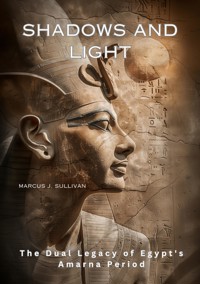
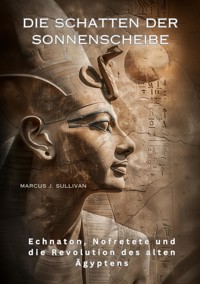
Dive into the enigmatic world of Ancient Egypt with Marcus J. Sullivan's captivating exploration, "Shadows and Light: The Dual Legacy of Egypt's Amarna Period." Journey back to an era of unprecedented change, where religion and art intersected under the reign of the revolutionary pharaoh Akhenaten. Discover a period marked by the bold attempt to shift an entire civilization towards monotheism, through the worship of the sun disk, Aten. Sullivan masterfully unravels the complexities of this transformative era, shedding light on its lasting impacts on both the cultural and political landscapes of ancient Egypt. "Shadows and Light" offers an unparalleled glimpse into the ambition, beauty, and challenges of the Amarna Period, making it an essential read for anyone fascinated by Egypt's storied past.
Das E-Book können Sie in Legimi-Apps oder einer beliebigen App lesen, die das folgende Format unterstützen:
Veröffentlichungsjahr: 2024
Ähnliche



















Marcus J. Sullivan
Shadows and Light
The Dual Legacy of Egypt's Amarna Period
I. The Rise of the Amarna Period
Historical and Cultural Context
As the sun rises over the Nile, casting its golden rays upon the desert sands, a new era dawns in ancient Egypt. It is a time of great change and innovation, of political upheaval and artistic revolution. In the shadow of the mighty pyramids and temples, the stage is set for the rise of a new ruler whose beliefs will shake the foundations of Egyptian society. Join us on a journey through the tumultuous waters of the Amarna Period, where the winds of change blow fiercely and the gods themselves seem to hold their breath. From the early rulers who laid the groundwork for this momentous era to the dramatic reign of Akhenaten and the establishment of the city of Akhetaten, we will explore the intricate tapestry of history, culture, and belief that shaped this pivotal time in ancient Egypt. Welcome to the land of the pharaohs, where the past whispers its secrets and the future waits to be written.
Overview of Egypt’s New Kingdom period
The New Kingdom period marked a significant era in ancient Egypt’s history, commencing with the overthrow of the Hyksos by Ahmose I and the establishment of the 18th Dynasty. Key early rulers such as Hatshepsut, Thutmose III, and Amenhotep III played pivotal roles. Hatshepsut, a remarkable female pharaoh, focused on trade expeditions to the Land of Punt and the construction of awe-inspiring monuments like her mortuary temple at Deir el-Bahri. Thutmose III, known as the “Napoleon of Egypt,” expanded the empire through military campaigns and is renowned for the riches and territories he acquired. Amenhotep III’s rule was marked by prosperity, monumental building projects such as the Colossi of Memnon, and diplomatic relations with foreign powers.
Innovations in the New Kingdom included grand architectural achievements such as the Karnak and Luxor temples, indicating the wealth and power of Egypt. The Valley of the Kings became a significant burial ground for pharaohs, boasting intricate tombs adorned with elaborate funerary goods. These advancements reflected Egyptian beliefs in the afterlife and the importance of preserving the pharaoh’s legacy.
Egypt’s foreign policy during the New Kingdom involved military campaigns to expand territories into the Levant and Nubia and forge diplomatic ties with neighboring regions. Trade flourished, particularly with the Near East, enhancing Egypt’s economic prosperity.
Religious practices before the Amarna Period were polytheistic, with deities like Amun and Ra holding central positions in the pantheon. The priesthood wielded considerable influence, and rituals and offerings were crucial components of religious observance.
The circumstances leading to the Amarna Period were multifaceted. Akhenaten’s ascendancy to the throne marked a shift towards monotheism and the exclusive worship of the Aten, challenging traditional religious beliefs. This transformation disrupted societal norms and sparked a period of radical change in art, culture, and politics.
Factors leading to the beginning of the Amarna Period
The Amarna Period in ancient Egypt unfolded against the backdrop of a complex political and social landscape that had been gradually evolving. The era leading up to Akhenaten’s reign saw Egypt navigating various religious transformations and power dynamics. The emergence and dissemination of the Aten cult played a crucial role in reshaping traditional Egyptian beliefs and practices. This burgeoning monotheistic movement set the stage for Akhenaten’s ascendancy to power and his distinct religious convictions.
Akhenaten’s rise marked a departure from conventional polytheism, with the introduction of a monotheistic focus on the Aten, the sun disc, as the supreme deity. This shift in religious ideology not only challenged established theological norms but also had far-reaching implications for Egyptian society and governance. By centralizing authority away from traditional power centers, Akhenaten sought to consolidate control under the banner of the Aten cult, fundamentally altering the dynamics of Egyptian political and religious structures.
The artistic realm also experienced a profound revolution during the Amarna Period, with a departure from traditional artistic conventions towards a more naturalistic style that captured individual characteristics. This artistic renaissance reflected the cultural and religious fervor of the time, emphasizing the uniqueness and vitality of the human form in a departure from established artistic norms.
The establishment of the new capital city, Akhetaten (modern-day Amarna), held deep symbolic and strategic significance. Positioned as the epicenter of Aten worship and royal power, Akhetaten served as a physical manifestation of Akhenaten’s religious vision and a departure from traditional power centers like Thebes. This strategic relocation underscored Akhenaten’s commitment to establishing a new religious and political order, further solidifying the profound changes that characterized the Amarna Period.
Influence of previous pharaohs on the era
During the reign of Amenhotep III, the Aten, although not yet the central focus of worship as it would become under Akhenaten, began to gain significance. This period marked a transition towards the god’s increased prominence, setting the stage for the reforms that followed. Amenhotep III’s rule was characterized by a duality of secular governance and spiritual pursuits, with magnificent construction projects and diplomatic successes juxtaposed with a reverence for traditional Egyptian deities.
Thutmose IV’s Dream Stele, a significant monument recounting the pharaoh’s divine encounter and subsequent rise to power, had profound ideological and religious influences on Egyptian society. This stele reinforced the belief in divine favor and the pharaoh’s role as a chosen intermediary between the gods and the people.
Under Thutmose IV and Amenhotep III, there were noticeable shifts in artistic representation, with a move towards more naturalistic depictions of rulers and deities. This transition in artistry laid the groundwork for the unique and revolutionary artistic style that would emerge during the reign of Akhenaten.
Amenhotep II’s military campaigns, particularly his engagements in Nubia and Syria, played a crucial role in securing Egypt’s borders and expanding its influence in the region. These campaigns had lasting effects on Egyptian geopolitical relations, reshaping power dynamics and emphasizing the military prowess of the pharaoh.
Impact of foreign relations on Egyptian society
During the Amarna Period in ancient Egypt, foreign relations played a pivotal role in shaping the broader geopolitical context of the era. Diplomacy between Egypt and foreign powers influenced not only political alliances but also had a significant impact on art and iconography. Egyptian rulers, such as Akhenaten, recognized the importance of projecting a positive image to their international counterparts through artistic representations, which often depicted scenes of diplomacy and exchange of gifts.
Akhenaten’s radical religious reforms, particularly in promoting the Aten cult, were also influenced by his interactions with foreign powers. The pharaoh utilized diplomatic ties to further his religious agenda, promoting the worship of the sun disc as the supreme deity. This shift in religious ideology had ripple effects on Egyptian society and culture, as traditional beliefs and practices were supplanted by the Aten cult.
Furthermore, international alliances during the Amarna Period impacted Amarna’s economy through trade and commerce. The influx of foreign goods and commodities influenced local markets and fostered economic growth in the capital city and its surroundings. Additionally, the exchange of cultural ideas and practices between Egypt and its allies contributed to the evolution of societal norms and customs, fostering a rich tapestry of diversity within Egyptian society.
In essence, Egypt’s foreign relations during the Amarna Period were multidimensional, influencing not only political dynamics but also art, religion, economy, and cultural development. This interconnected web of diplomatic interactions underscores the significance of international affairs in shaping the course of ancient Egyptian history.
Key Events and Rulers
As the sands of time shift and the golden age of the late 18th Dynasty unfolds, we delve into the intriguing reigns of Pharaohs Thutmose IV, Amenhotep III, and the enigmatic figure of Akhenaten. From the majestic Dream Stele of Thutmose IV to the revolutionary religious policies of Amenhotep III, we witness the dynamic contributions of these pharaohs to the legacy of ancient Egypt. As we transition into Akhenaten’s reign and the dawn of a new era with the Aten cult, we uncover the early life and influences that shaped this controversial ruler. Journey with us as we unravel the mysteries surrounding Smenkhkare’s brief reign, his ties to Akhenaten, and the events that paved the way for Tutankhamun’s ascension to power and the restoration of traditional religious practices. Explore the intricate tapestry of history as we uncover the secrets of these extraordinary rulers and their impact on the ancient world.




