


4,99 €
Niedrigster Preis in 30 Tagen: 4,99 €
Niedrigster Preis in 30 Tagen: 4,99 €
Mehr erfahren.
- Herausgeber: via tolino media
- Kategorie: Lebensstil
- Sprache: Englisch
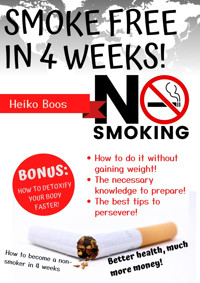
Many people who smoke follow the steps of their parents or grandparents. Some others went their own way - during the teenage years, when you might still think it was cool, hip or trendy to smoke. Teenagers of the rebellious kind took to it because they took it as a sign of their own independence from their parents. Whatever your smoking history, and however long you've been at it, rest assured that you're not the only one with this vice - and that you too can make it from the Try to get loose! And if you want to become a non-smoker again, you will receive valuable tips and recommendations here! Smoke free in 4 weeks: • How to do it without gaining weight! • The necessary knowledge to prepare! • The best tips to persevere! • Improve their health! • Protect your wallet! Become a non-smoker in 4 weeks! BONUS: How to detoxify your body faster!
Das E-Book können Sie in Legimi-Apps oder einer beliebigen App lesen, die das folgende Format unterstützen:
Veröffentlichungsjahr: 2022
Ähnliche


















Inhaltsverzeichnis
Impressum
Content
So you smoke?
Why should you stop doing this?
Break your bad habit
Standard tools to quit smoking
Why good diet and exercise matter
Other solutions to quit smoking
Take and give – help
Conclusion: all the effort is worth it!
foreword
Hello!
I congratulate you on your decision to quit smoking. I sincerely wish to be able to help and support you with this e-book. I started smoking myself at the age of 13 and finally managed to quit at the age of 32.
The first two attempts were with the Willpower method, and these failed miserably...
Here are some more great ways to quit smoking!
I wish you the best of luck and I'll keep my fingers crossed that you too will manage to quit smoking!
SO YOU SMOKE?
OK, you are a smoker...
Did your parents smoke? What about your grandparents?
Did you start it when you were a teenager, or did you develop this vice much later?
Many people who smoke follow in the footsteps of their parents and/or grandparents. Some others went their own way - during the teenage years, when you might still think it was cool, hip or trendy to smoke. Teenagers of the rebellious kind took to it because they took it as a sign of their own independence from their parents.
Whatever your smoking history, and however long you've been at it, rest assured you're not the only one experiencing this vice. And whatever you may think, smoking is certainly not an entirely new phenomenon. It was not invented by the Americans, nor by the Europeans. It is true that the advent of cinema and television made this practice really popular, but in reality tobacco smoking has been around for centuries. This includes not only rolling the tobacco and other products in paper, but of course using pipes to inhale the smoke.
With all the information we have these days about the dangers of smoking, one would think that people would get smarter and not start smoking in the first place. But still so many people start it every year. Yes, everything is a risk these days: you can slip in the bath or be in a car accident with serious consequences, but these are necessary activities with a calculated risk. Smoking isn't necessary and the risks are numerous and serious - so why start?
If you know the history of smoking, you might understand why it is such a common thing, even though people are aware of the health risks and also the high costs. Some habits and customs become part of a person, their culture and lifestyle and are therefore difficult to let go of. Just ask yourself how easily you would give up Christmas or Easter (or any other holiday). These things are undoubtedly part of the spirit of life, and when you've grown up with them, it's only natural that you'd celebrate these holidays yourself. It's the same with smoking. Others did and do it, it's shown in movies, they think it's cool and so on.
When you understand why this practice of smoking has become so entrenched in our culture, you can understand why it is so difficult to quit.
THE HISTORY OF SMOKING
Tobacco is only really native to the North American continent. However, this does not mean that North America is the only area where there is a history of smoking. Already 4000 BC It was smoked in India and parts of Asia in one form or another. Smoking was seen not just as a hobby, but often had religious or medicinal significance as well – just think of burning incense as part of a religious ritual. So it's not surprising that many then went one step further and started inhaling the smoke. No doubt it evolved from a religious ritual into something done to relax and enjoy. Because many plants and leaves have hallucinogenic effects when smoked, more and more people have wanted to try it to achieve these effects.
Fire was also of great importance in ancient times, especially because it was known how important it was for survival. These days you just turn on the stove or the heater when you're cold. And if you want to cook, you put something in the oven or in the microwave. In the past, however, fire was needed for both: both to prepare food and to keep warm. This importance and sacredness of fire contributed to the use of fire to light plants and leaves and to inhale the smoke.
And since there was so much joy in the act of smoking, it didn't take long for it to become a social ritual or something you did just for fun.
From the late 15th century it was not uncommon for many different cultures to burn leaves or plants as a sign of hospitality or to celebrate various festivals. Aztec records say that leaves were often smoked during banquets and passed around for all to enjoy after the meal. In the Middle East, cannabis and marijuana was commonly smoked in restaurants by the patrons - in a sort of communal or hookah pipe. This is still practiced to some extent today.
As new trade routes were opened up between nations, tobacco was also brought to Europe - along with coffee and even opium. By the 17th century, smoking had spread to almost every country on earth.
Unfortunately, smoking was also considered to have medicinal uses, since it brought pleasure to the smoker, those with little medical knowledge thought it had healing abilities. Marijuana in particular brought these feelings of happiness and calm, so that even doctors at the time assumed these positive feelings arose because the drug was working to heal the body. But alas, the opposite was true, as we have now been able to ascertain with our advanced knowledge of anatomy. We now understand what happens when a person smokes.
Of course, it took a while for us to understand this because until the mid-20th century it was dismissed as a harmless pastime and it was perfectly normal for people to smoke. Many films from back then showed people smoking without giving a thought to the consequences. It was just 'cool' to smoke, as demonstrated by film icons of the time like James Dean, Marlene Dietrich and Marlon Brando, all of whom were seldom photographed without a fag in their mouth or fingers. It was decades before the true extent of the harm caused by tobacco was known and it was then realized just how deadly smoking was.
THE SMOKING TODAY
Even today, smoking is still common and a "hobby" no matter where the smoker is from, or what their culture or background is. Even with all the warnings about the health risks (for smokers and passive smokers, that is, the people around them) that are now even being put right on the packets, smoking is still big business.
Unfortunately, you can't just ignore the income generated by tobacco - it's a billion-dollar industry. Think about the following:
There are over 124,000 tobacco farms in 23 states in the US - making tobacco the seventh largest income producing crop.
Annually, the tobacco harvested is worth US$2.5 billion, which accounts for approximately 3% of the income from all crops in the US.
There are approximately 43,000 people employed in the tobacco industry in the US alone.
The annual tax revenue from tobacco is around 15 billion.
Tobacco exports bring in an additional US$51.5 billion - approximately 650,000 people are involved in tobacco exports each year.
If you take a close look at these numbers, you will understand why tobacco does not simply disappear, even if many would like it to. Many thousands of jobs depend directly or indirectly on the production of tobacco and the profits are enormous, so that neither the tobacco industry nor the state want to take them away. When you think about so many jobs and billions of dollars, it becomes difficult to prevail against these powerful corporations.
And, of course, many people feel they want the choice to smoke or not, even though it can be dangerous and deadly. Because people often do much more dangerous things in their free time...
For example, those who do skydiving or bungee jumping, those who swim with sharks or fight alligators, but also boxers and martial artists often have to put themselves in great danger. All these things are dangerous and can even be deadly, and yet everyone has the right to choose whether or not to do them.
QUIT SMOKING
However, you are of course looking at how to quit smoking, not how to find reasons to continue. Quitting smoking is easier said than done, as you probably already know best. In fact, many people trying to quit smoking try multiple times before actually succeeding.
In many ways, quitting smoking is like losing weight. And then there is the difficulty of getting rid of the excess weight in the long run. Many people can lose a few pounds, or sometimes a lot of weight, but getting rid of it permanently is a completely different story. Their resolution lasts for a few weeks, maybe even months, but then they go back to the old eating habits because they miss the old goodies so much. Or they may be in a particular situation where they don't know how to get through it without overeating - a wedding, holidays, something stressful, all of which can drive someone right back to the buffet table or to the pastry shop for their cravings To finally let sweets run free again.
Often, when someone throws their good intentions out of whack, they give up completely and revert to their old patterns of behavior—both in terms of eating and extra exercise. Afterwards you decide that you can use your time better than "torturing yourself pointlessly in the gym". And in no time at all the extra pounds are back and often even more than you had before - who doesn't know the yo-yo effect?
Does any of this sound like the same behavioral pattern that people go through when trying to quit smoking? They might make it for a day or two, but then give up on that resolution. Or they're faced with a stressful situation and they reach for the fags like they always have. Some then think that because they didn't manage to keep it up, they can smoke the whole pack right away.
Many people who try to quit smoking have a period of weakness and smoke a cigarette when they didn't want to and then return to their old smoking habits. One cigarette was enough to convince them that they wouldn't make it anyway and that they might as well smoke again the way they used to. They get discouraged and keep trying but just can't make it.
This does not mean that quitting smoking is impossible. Many have become ex-smokers and have persisted for many years - some for a lifetime. You may know someone in your life who was a heavy smoker and quit. He will be able to confirm that it was a difficult process, but somehow he managed not to relapse.
It's possible to quit smoking - it may not always be easy, but it's not as hard as some say, either. In fact, there are some mistakes people make when trying to quit smoking. Often they do it completely without help and do a "cold turkey" - overnight. And then they wonder why it only takes hours before they have that insatiable craving for a cigarette again and become completely nervous and jittery.
However, some have also found that they can quickly and relatively easily get rid of this cigarette craving. You may not realize it, but these people are probably doing the things necessary to be free of nicotine and other harmful and addictive additives in cigarettes.
If you're curious about what these things are and what steps to take, what mistakes to avoid so that the process doesn't unnecessarily prolong, then don't despair. That's where we come in.
In this e-book we will show you:
Some surprising reasons why you should quit smoking - including some you probably haven't thought of yet that will motivate you when times get tough.
How to tackle this smoking habit, both the mental and emotional aspect it has in your life, and how to finally break it.
Ways to satisfy the craving.
How to get nicotine and other toxins out of your body faster, which not only makes it easier to quit, but also allows the damage done by smoking to your system to heal faster.
How your doctor can best help you and which products from your pharmacy can support you.
Fact versus fiction when it comes to things like meditation and acupuncture to quit smoking.
No matter how long you've been smoking and no matter how much you smoke, you can quit! We have helped hundreds and even thousands of people just like you to quit smoking. And now we are ready to help you too.
So if you're ready to quit smoking, let's get started!
WHY SHOULD YOU STOP?
You probably already know a bit about why you should quit smoking... You've probably heard of lung cancer and shortness of breath and other harms associated with smoking. And of course you also know how quickly the costs for all the cigarette packs add up.
But even with all the information we have available today when it comes to the dangers of smoking, there are still many who still don't know exactly what dangers are associated with tobacco use and even the dangers of passive smoking do not take them seriously, which also endangers others. Let's take a closer look.
COMPOSITION OF CIGARETTES
Right now, go to the place where you keep your cleaning supplies. Take a container of detergent that contains ammonia. Open the lid and smell it. Does that smell good? Of course not; even breathing hurts. There may even be a warning on the bottle to wear a protective mask when using it, as the fumes can attack the nasal cavities. And most of the time when you come into contact with it, your nose will pinch and your eyes will water as your body tries to move away from the situation.
And yet, ammonia is a common ingredient in cigarettes. Let's see what other elements we discover in it... How would you feel about drinking nail polish remover? Obviously that would be a bad idea and of course it's something you absolutely shouldn't do, but nonetheless the acetone that's also found in cigarettes is found in cigarettes. Is this idea of inhaling the acetone a better idea than drinking it? I do not think so!
When was the last time you watched road construction and inhaled the smell of hot tar? Tar is a tough, sticky mass that sticks very easily and is not that easy to remove. And exactly this tar can also be found in cigarettes. Someone who smokes a whole pack of cigarettes a day inhales a full gram of tar every day. Calculate that over the year!
What do you know about arsenic? You may know that it is a poison and that it is the main ingredient in rat poison and some other substances. Yes, arsenic is also in cigarettes! The body has a certain tolerance for arsenic, but it is what is known as a "slow" poison. This means it builds up in the body and kills slowly, over time. And not only does man slowly perish from it; all cells in the body are also killed – even those in the brain.
Another poison found in cigarettes is called naphthalene - it's also found in mothballs. Many find the smell of mothballs disgusting, and that foul odor is a signal of this toxic substance.
That was just a small sample of the components in cigarettes that are dangerous. Also included are:
Aconitic acid
Ammonium bicarbonate
Ammonium hydroxide
Ammonium Sulfide
Benzoic acid
Butanol
Acetic acid
Ethyl acetate
Guar Gum
Cadmium
Potassium Sorbate
Carbon Dioxide
Menthol
Lactic acid
Sodium chloride
Octanal
phenol
Toluene
Pulp fibers
Lemon oil
Citric acid
It has been found that there are around 600 different ingredients in cigarettes. And when these burn, they enter into a chemical reaction, which creates and releases many other toxic substances. All in all, a smoker exposes themselves (and others) to around 4,000 different toxins!
THE COSTS
There are certainly things in life that are more important than money, but these costs really aren't negligible - especially in the tough economic times we're living in right now. Therefore, this aspect should also play a major role.
Another reason to also think about costs is that people don't tend to add up costs. They only see the cost of one pack and consider that not a lot of money. However, when you add up the costs over weeks, months, years and often even decades, they can become astronomical. Many older, heavy smokers could probably have bought a house with the money they smoked!
Let's take a look at the numbers. The average price of a pack of cigarettes with a filter in Germany is around 7 euros (and, according to the latest reports, will soon rise again!).
If a smoker smokes a pack every day, that's around €2,520 a year! You can double that amount if you smoke 2 packs a day. But let's stick to one pack a day. That's at least €210 a month, and that's way more than most pay for electricity and phone combined!
What else could you do with that extra €210 a month? All you had to do was stop for a few months and you could be buying a great new TV or computer. For most, the amount represents about half of the car installment payment. You could afford a smaller second car (e.g. with leasing). The annual expenditure is sufficient for most families for a regular annual vacation or a cruise. You might as well use it to pay off your mortgage, saving you large sums in interest.
You could also just spend it on the gym and eating healthier, doing something FOR your health instead of against it!
Additional costs:
While these numbers can be very sobering when you add them up, that doesn't include the additional money you would lose from smoking, such as the money you spend on dry cleaning or white paint to get all that ugly nicotine yellow back to get off the walls.
Health and life insurance tend to be much more expensive for smokers. Even home and household insurance can be more expensive because insurance companies know there is a risk of a smoker burning down their own house, for example because he or she falls asleep in bed with a cigarette!
Health care costs for smokers are also astronomical, although it is difficult to trace them back to each individual. Some get very sick from smoking and have breathing problems and other ailments, and other smokers have no problems at all for years. In most cases, however, the consequences of smoking are very bad, although some are more fortunate.
HEALTH RISKS
What are the major health risks of smoking? You may immediately think of lung cancer and that is certainly right, but let's see which other systems in the body are also stressed and damaged by it.
Lung diseases and medical conditions.
Of course, because cigarette smoke is inhaled, the lungs and respiratory system are the most affected. The poison from the smoke literally burns away the cells and tissues of the bronchi and lungs. This leads to bronchitis, emphysema, pneumonia, and other breathing problems. Someone who is prone to asthma will definitely find their condition worsening when they smoke.
Most smokers have constant breathing difficulties and, above all, fear the threat of lung cancer. The drying properties of smoke damage lung tissue, which needs to be moist to function well. You may know how difficult it is to breathe in very cold weather. This is because the cellular tissues of the lungs, bronchi, and throat become very dry, preventing the lungs from expanding and contracting as necessary. The same thing happens with smoking, causing it to become difficult to breathe.
Types of cancer.
Most people only associate smoking with lung cancer, but in reality there are many different types of cancer caused by smoking. This is because the poisons and toxins enter the bloodstream and thus invade every cell in the body. Therefore, the poison is not only delivered to the lungs, but to every single cell in the body!
These are the types of cancer typically associated with smoking:
Kidney cancer
Throat cancer
Cancer of the head and neck
Breast cancer
Liver cancer
Cervical cancer
Mouth and throat cancer
To put it bluntly, no part of the body is safe from cancer when someone smokes.




