


22,99 €
Mehr erfahren.
- Herausgeber: John Wiley & Sons
- Kategorie: Fachliteratur
- Sprache: Englisch
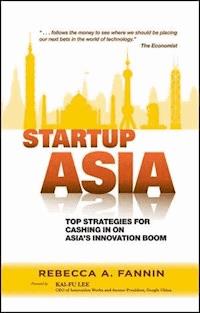
Find out where the new innovation hot spots are, what the next consumer waves will be, and where to catch them Asia's innovation hot spots are fast emerging as first-choice destinations for bright, young entrepreneurs. From Taiwan to Singapore, technology center hubs are forming to rival the original Silicon Valley. Startup Asia gives you a close-up view into the key growth trends shaping entrepreneurship in China and India, plus the new frontier market of Vietnam. Showing how entrepreneurs and investors can start up in Asia and go global, the book provides a first-hand, on-the-ground tour of the new technology centers that are gaining momentum all over Asia. Interviews with the most successful venture capitalists and entrepreneurs reveal their winning strategies and show how a new generation of entrepreneurs in China and India are no longer looking to the West for their cues--but are instead crafting their own local business models and success strategies. * Shows entrepreneurs and investors how they can pursue their dreams of launching successful start-ups in Asia * Reveals that many of the same venture investors that first funded young businesses in Silicon Valley moved into China, then India, and are now finding their way to Vietnam * Addresses the risks of doing business in Asia's developing markets, including lack of intellectual property protection, political and regulatory shifts, bribery, and corruption From high-profile Forbes contributor Rebecca Fannin, Startup Asia is the essential guide for anyone looking to trek into this new frontier.
Sie lesen das E-Book in den Legimi-Apps auf:
Seitenzahl: 376
Veröffentlichungsjahr: 2011
Ähnliche



















Contents
Foreword
Introduction
Part I: Asia’s Hotspots of Innovation
Chapter 1: China’s Next Generation Tech Stars
China: The New Assertiveness
From Drought to Flood
Sea Turtle or Pancake Turtle?
The Giants of China’s Web
Larger Sand Castles
Destined to Innovation Fame
Ebbs and Flows
Riding the RMB Wave
Let’s Go Chongqing!
Chapter 2: India Emerges to Narrow the Gap
Proud India Displays Its Gems
Delhi Delights and Mumbai Moves
Back in the Valley
Made It in India
Pearson Swoops In
Chapter 3: Vietnam: The Next Frontier
Coffee Bean Community
From Rice to Chips
Squirrel Climbs the Tree
eBay Bites into Local e-Commerce Site
Vietnam’s Tencent + Shanda
Part II: Road Map to Hot Sectors
Chapter 4: Catch the Mobile Boom
Why inMobi isn’t in China: Madhouse
Chapter 5: Get In on the Cleantech Boom
Burning Gold
Delightful Solar Journey
Revved Up Reva
Chapter 6: Ride the Consumer Wave
A Smooth Ride in Shanghai
India: Fast-Food Nation?
Chapter 7: Create a Niche in a Proven Sector: Outsourcing
China’s Melting Pot for Outsourcing
MindTree: From Roots to Branches
Part III: Toolbox for Success Strategies
Chapter 8: Tap into Government Incubators
Ignite the Fuse
NUS Enterprise
From Tencube to McAfee’s
Roll It with Rotimatic
Chapter 9: Become the Next Twitter, LinkedIn, or Groupon for Asia
China’s LinkedIn: Ushi
China’s Wikipedia
Chapter 10: Originate a Breakthrough Discovery
Bubble Talk in Motion
Chapter 11: Take Your Startup Public on the NYSE or NASDAQ
MakeMyTrip: A Long Passage
China or U.S. Exchange?
Shenzhen and Shanghai Exchanges
Flowers Wilting
Chapter 12: Go Global from Asia
India’s iYogi Stretches
Afterword
Acknowledgments
About the Author
Index
More Praise for Startup Asia
“With the Pacific Century well underway, Startup Asia is required reading for anyone serious about the next wave of technology entrepreneurship. Rebecca Fannin elegantly weaves impressive facts, stunning anecdotes, and insightful visions of the future to paint a highly engaging portrait of this amazing region and its new class of leaders. She has written another gem!”
—David Lam, Managing Director, WestSummit Capital, and Board President, Asia America MultiTechnology Association
“Rebecca Fannin manages to take a still picture of a scenario that is almost too fast-moving to photograph. Dip into her book on entrepreneurial Asia, and adventure will grab you by the throat.”
—Peter Rupert Lighte, banker and sinologist
“Once again, the author of Silicon Dragon has written a book based on original research and firsthand insight. Startup Asia offers a unique overview of promising startups from Asia’s emerging entrepreneurs. Rebecca Fannin includes personal profiles of the individuals behind each venture, which makes the book an enjoyable read and gives it a girl-next-door perspective. Her detailed snapshot of Asian innovation amply demonstrates why the world’s most dynamic continent will continue its ascent in the global economy.”
—Dan Schwartz, Chairman Emeritus, AVCJ, and author of The Future of Finance
“Rebecca Fannin is quickly establishing herself as the ultimate expert on Asia and its countless budding entrepreneurs. Fannin profiles up-and-comers in China, India, and Vietnam; delves into the hottest market sectors; and details strategies for startup success. A must-read about Asia’s burgeoning startups.”
—William H. Draper III, General Partner, Draper Richards and Draper International, and author of The Startup Game
“While there are books galore about the innovation model in the West, rarely are books written on what’s happening about innovation in Asia. Rebecca offers a fascinating view of how innovation is developing in the world’s fastest-growing region. Startup Asia is highly recommended for business leaders, policy makers, students, and entrepreneurs alike.”
—Stanley Kwong, Managing Director/Professor, Greater China Programs, School of Management, University of San Francisco
“This is a critical time for making the right decisions in a very complex and at times baffling Asian market. Rebecca’s ability to get to the real players in the market and get them to talk about what they are really thinking and planning is fascinating. The stories and strategies are insightful and at times enlightening. Startup Asia should be on the reading list of everyone who wants to understand Asian thinking and investing. I believe this will be a classic in its time, too, like her previous book, Silicon Dragon.”
—Egidio Zarrella, Clients and Innovation Partner in Charge, KPMG China
“There have been many attempts to replicate Silicon Valley’s successes, and to date all other regions have failed to challenge the Valley’s dominant position. Startup Asia makes a compelling case that for the first time in venture capital history, a region has the potential to challenge the Valley’s dominance.”
—Kevin Fong, Special Advisor, GSR Ventures
“Rebecca Fannin’s newest book, Startup Asia, makes an important contribution to the discussion of China’s rise and deepens our understanding of how and why. Startup Asia helps us formulate our own views of what the world will look like in the coming years. So, get ready: The probability that your son or daughter, or possibly you yourself, will be spending time in Asia, perhaps learning Chinese, is higher than ever before. Asia’s rise, and China’s with it, cannot be ignored. This book helps us understand and evaluate what it all means for us in the twenty-first century.”
—Ken Wilcox, Chairman, Silicon Valley Bank
Copyright © 2012 by Rebecca A. Fannin.
Published by John Wiley & Sons (Asia) Pte. Ltd.
1 Fusionopolis Walk, #07-01, Solaris South Tower, Singapore 138628
All rights reserved.
No part of this publication may be reproduced, stored in a retrieval system, or transmitted in any form or by any means, electronic, mechanical, photocopying, recording, scanning, or otherwise, except as expressly permitted by law, without either the prior written permission of the Publisher, or authorization through payment of the appropriate photocopy fee to the Copyright Clearance Center. Requests for permission should be addressed to the Publisher, John Wiley & Sons (Asia) Pte. Ltd., 1 Fusionopolis Walk, #07-01, Solaris South Tower, Singapore 138628, tel: 65–6643–8000, fax: 65–6643–8008, e-mail: [email protected].
This publication is designed to provide accurate and authoritative information in regard to the subject matter covered. It is sold with the understanding that the Publisher is not engaged in rendering professional services. If professional advice or other expert assistance is required, the services of a competent professional person should be sought. Neither the author nor the Publisher is liable for any actions prompted or caused by the information presented in this book. Any views expressed herein are those of the author and do not represent the views of the organizations she works for.
Other Wiley Editorial Offices
John Wiley & Sons, 111 River Street, Hoboken, NJ 07030, USA
John Wiley & Sons, The Atrium, Southern Gate, Chichester, West Sussex, P019 8SQ, United Kingdom
John Wiley & Sons (Canada) Ltd., 5353 Dundas Street West, Suite 400, Toronto, Ontario, M9B 6HB, Canada
John Wiley & Sons Australia Ltd., 42 McDougall Street, Milton, Queensland 4064, Australia
Wiley-VCH, Boschstrasse 12, D-69469 Weinheim, Germany
Library of Congress Cataloging-in-Publication Data
ISBN 978-0-470-82990-5 (Hardcover)
ISBN 978-0-478-82992-9 (ePDF)
ISBN 978-0-470-82991-2 (Mobi)
ISBN 978-0-470-82993-6 (ePub)
To my family—John, Mom, Deborah, Tom, Kyle, and Kelly—for hanging in there with me throughout the journey
Foreword
There are amazing opportunities in the Chinese Internet space.
Powerful American companies such as AOL, MSN, eBay, Amazon, MySpace, Google, Yahoo!, YouTube, Facebook, and Twitter all had a hard time in China for various reasons, such as short-term profit focus, powerless local teams, and a lack of attention to tailoring products to the Chinese culture.
Their lack of traction has created an opportunity for Chinese companies in the Internet space to scale. The first wave of Chinese companies was largely content-oriented, such as Sina, Sohu, and Netease. The second wave of Chinese companies was mostly entertainment-oriented, such as Tencent, Shanda, Giant Interactive, and Perfect World. Of course, Baidu and Alibaba were two notable exceptions.
We believe that we are now witnessing an explosive third wave led by startups in the mobile Internet, e-commerce, social network, online gaming, and cloud computing.
This was why I left Google to found Innovation Works, an incubator and captive fund dedicated to opportunities in the Chinese Internet.
So I am pleased to see Rebecca Fannin’s new book about this same topic.
Rebecca has reported on my career for several years, since she first interviewed me at Google China in Beijing in 2006, to when I set up Innovation Works in 2009, and still today as we enter our second year. Her book Silicon Dragon played a role in documenting the changes in the tech scene in China. She has followed several startups from zero to IPO, and many of the characters she has profiled later become tech celebrities and well-known names.
Her new book, Startup Asia, builds on Silicon Dragon and takes the technology innovation theme to new frontiers. It shows the parallels with China in mobile, gaming, e-commerce, and the Internet, and puts China in the lead, followed by India.
She deserves credit for being one of the few Western journalists to cover China’s growing tech economy from a close-up perspective with regular firsthand interviews over the past decade. Now, she has taken the time to interview entrepreneurs and venture investors in Asia’s emerging markets and document their own path. Rebecca has not stood on the sidelines but has been an active participant in and chronicler of the tech scene in Silicon Valley and China. With her outreach, she is helping to build an East-to-West bridge in the tech community.
Her ambitious and comprehensive book Startup Asia shows us through case studies and narratives that entrepreneurs in Asia are beginning to set the pace and the standards for innovation.
Kai-Fu Lee
Chairman and CEO of Innovation Works, Beijing
Introduction
James Vuong first introduced the concept of VIC to me. We were eating Vietnamese pho beef noodle soup at an outdoor food court in Hanoi. When I wondered if it were another dish I hadn’t sampled yet, he gave me a little triumphant grin and explained that VIC stands for Vietnam, India, and China. It takes some getting used to, after the all hype about BRIC—Brazil, Russia, India, China—as the next economic frontier.
But Vuong, a young venture capitalist in Vietnam, may be on to something. The firm that Vuong works for in Vietnam, Pat McGovern’s Boston-based IDG Ventures, invests hundreds of millions of dollars in tech startups in Vietnam, India, and China and has made tons of money. China is the gold mine, India is the land of promise, and Vietnam is the frontier. IDG is a pioneer with this strategy. This odd-seeming group of nations belongs together because of a growing number of overlapping trends. Of all the dragon and tiger emerging economies in the East, the VIC countries best represent the entrepreneurial spirit and venture capital rush of Startup Asia.
Peacesoft founder Nguyen Hoa Binh with IDG investor James Vuong in Hanoi
Multiple Silicon Valleys have sprung up in Beijing, Shanghai, and Bangalore, and even Hanoi and Ho Chi Minh City could get on the tech map soon. From John Doerr’s Kleiner Perkins to Jim Breyer’s Accel Partners, all the Sand Hill Road shops are parked in Asia’s boomtowns. Entrepreneurs and college graduates have landed in Asia’s tech hubs, too, and haven’t looked back. Alice Wang grew up in San Diego, California, and left Yale University during the spring semester of her junior year to move to Beijing and take a job as a sales director at Groupon China. She knew it was risky and challenging, but the lure of this tantalizing opportunity to join China’s tech race was irresistible. Wang spent her first few weeks working past midnight to meet incredible sales quotas and described it as chaotic but “very exhilarating.” This self-assured dynamo still found time to host a dinner for me in Beijing with a dozen 30-and-under members of a global entrepreneur network, Sandbox, she spearheads in China. There’s a good chance your daughter, too, and certainly hundreds of the followers and friends Wang has on Twitter and Facebook will land in Beijing and stay for a startup career. Who isn’t studying Mandarin today to get ahead? Even Facebook founder Mark Zuckerberg, who has a Chinese American girlfriend, is learning the language and checking out China as his next move.
Lesen Sie weiter in der vollständigen Ausgabe!
Lesen Sie weiter in der vollständigen Ausgabe!
Lesen Sie weiter in der vollständigen Ausgabe!
Lesen Sie weiter in der vollständigen Ausgabe!
Lesen Sie weiter in der vollständigen Ausgabe!
Lesen Sie weiter in der vollständigen Ausgabe!
Lesen Sie weiter in der vollständigen Ausgabe!
Lesen Sie weiter in der vollständigen Ausgabe!
Lesen Sie weiter in der vollständigen Ausgabe!
Lesen Sie weiter in der vollständigen Ausgabe!
Lesen Sie weiter in der vollständigen Ausgabe!
Lesen Sie weiter in der vollständigen Ausgabe!
Lesen Sie weiter in der vollständigen Ausgabe!
Lesen Sie weiter in der vollständigen Ausgabe!
Lesen Sie weiter in der vollständigen Ausgabe!
Lesen Sie weiter in der vollständigen Ausgabe!
Lesen Sie weiter in der vollständigen Ausgabe!
Lesen Sie weiter in der vollständigen Ausgabe!
Lesen Sie weiter in der vollständigen Ausgabe!




