


119,99 €
Mehr erfahren.
- Herausgeber: John Wiley & Sons
- Kategorie: Geisteswissenschaft
- Sprache: Englisch
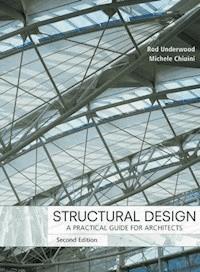
Written for the practicing architect, Structural Design addresses the process on both a conceptual and a mathematical level. Most importantly, it helps architects work with structural consultants and understand all the necessary considerations when designing structural systems. Using a minimum of simple math, this book shows you how to make correct design calculations for structures made from steel, wood, concrete, and masonry. What?s more, this edition has been completely updated to reflect the latest design methods and codes, including LRFD for steel design. The book was also re-designed for easy navigation. Essential principles, as well as structural solutions, are visually reinforced with hundreds of drawings, photographs, and other illustrations--making this book truly architect-friendly.
Sie lesen das E-Book in den Legimi-Apps auf:
Seitenzahl: 935
Veröffentlichungsjahr: 2011
Ähnliche




















This book is printed on acid-free paper.
Copyright © 2007 by John Wiley & Sons, Inc. All rights reserved.
Published by John Wiley & Sons, Inc., Hoboken, New Jersey
Published simultaneously in Canada
Wiley Bicentennial Logo: Richard J. Pacifico
No part of this publication may be reproduced, stored in a retrieval system, or transmitted in any form or by any means, electronic, mechanical, photocopying, recording, scanning, or otherwise, except as permitted under Section 107 or 108 of the 1976 United States Copyright Act, without either the prior written permission of the Publisher, or authorization through payment of the appropriate per-copy fee to the Copyright Clearance Center, 222 Rosewood Drive, Danvers, MA 01923, (978) 750-8400, fax (978) 646-8600, or on the web at www.copyright.com. Requests to the Publisher for permission should be addressed to the Permissions Department, John Wiley & Sons, Inc., 111 River Street, Hoboken, NJ 07030, (201) 748-6011, fax (201) 748-6008.
Limit of Liability/Disclaimer of Warranty: While the Publisher and the author have used their best efforts in preparing this book, they make no representations or warranties with respect to the accuracy or completeness of the contents of this book and specifically disclaim any implied warranties of merchantability or fitness for a particular purpose. No warranty may be created or extended by sales representatives or written sales materials. The advice and strategies contained herein may not be suitable for your situation. You should consult with a professional where appropriate. Neither the Publisher nor the author shall be liable for any loss of profit or any other commercial damages, including but not limited to special, incidental, consequential, or other damages.
For general information about our other products and services, please contact our Customer Care Department within the United States at (800) 762-2974, outside the United States at (317) 572-3993 or fax (317) 572-4002.
Wiley also publishes its books in a variety of electronic formats. Some content that appears in print may not be available in electronic books. For more information about Wiley products, visit our web site at www.wiley.com.
Library of Congress Cataloging-in-Publication Data:
Underwood, James R.
Structural design : a practical guide for architects / James R. Underwood and Michele
Chiuini. — 2nd ed.
p. cm.
Includes bibliographical references and index.
ISBN 978-0-471-78904-8 (cloth)
1. Structural design. 2. Architectural design. I. Chiuini, Michele. II. Title.
TA658.U53 2007
624.1'771—dc22 2007013718
Table of Contents
Title Page
Copyright
Preface
In the Beginning: The Premise
Chapter 1: Introduction: Understanding Loads
1.1 Loads
1.2 Tributary Areas
1.3 Lateral Loads-Wind and Earthquakes
1.4 Lateral Loads: Wind
1.5 Lateral Loads: Earthquake
1.6 Loading Conditions
Chapter 2: Load and Resistance Factor Design
2.1 Load Combinations
2.2 Resistance Factors
2.3 Working Stress Versus LRFD Design
2.4 Elastic Section Modulus and Plastic Section Modulus
2.5 Shape Factor
Part One: Steel
Chapter 3: Materials and Properties
3.1 Structural Properties of Steel
3.2 Allowable Stress
3.3 Yield Stress
3.4 Standard Shapes
3.5 Fire Considerations
3.6 Surface Finishes
Chapter 4: Structural Elements and Systems
4.1 Member Types
4.2 System Selection
4.3 Low-rise Frame Systems
4.4 Mediumand High-rise Systems
4.5 Architectural Considerations
Section 1: Steel Bending Systems
Chapter 5: Preengineered Systems
5.1 Open-Web Steel Joist
5.2 Steel Decks
Chapter 6: Steel Beams
6.1 Beam Theory
6.2 Beams in Structural Systems
Chapter 7: Lateral Stability of Beams
7.1 Conditions of Stability
Chapter 8: Supports
8.1 Bearing Plates for Beams and Columns
8.2 Design of Bearing Plates
8.3 Column Base Plate
8.4 Design of Column Base Plates
Chapter 9: Web Yielding and Crippling
9.1 Localized Failure of Components
Chapter 10: Built-Up Beams
10.1 Built-Up Sections
10.2 Connection and Length of Cover Plates
10.3 Holes in the Web and in the Flanges
Section 2: Steel Axially Loaded Systems
Chapter 11: Columns
11.1 Column Theory
11.2 Built-Up Columns
11.3 Columns with Unequal Unbraced Lengths
Chapter 12: Tension Members
12.1 Types of Tension Members
12.2 Basic Design
12.3 Connection of Tension Members
12.4 Suspension Structures
Section 3: Steel Combined Systems
Chapter 13: Combined Axial Loading and Bending
13.1 Basic Considerations and Procedure
13.2 Sloping Beams
Chapter 14: Trusses
14.1 General Comments
14.2 Design Considerations
14.3 Truss Analysis
Section 4: Steel Connections
Chapter 15: Bolted Connections
15.1 Engineering Principles
15.2 Types of Bolted Connections
15.3 Bolts
15.4 Design of Connections
Chapter 16: Welded Connections
16.1 Welding and Types of Welded Joints
16.2 Stresses In Welds
16.3 Minimum and Maximum Weld Considerations
16.4 Framed Beam Connections
Part Two: Wood
Chapter 17: Materials and Properties
17.1 Physical Properties
17.2 Density and Weight of Wood
17.3 Protection from Decay and Fire
17.4 Design Values
17.5 Size Classifications
17.6 Adjustment Factors
17.7 Engineered Wood Products
Chapter 18: Wood Structures in Architecture
18.1 Construction and Architectural Philosophies
18.2 The Architect's Responsibility in Structural Wood Design
18.3 Selection and Configuration of Wood Systems
18.4 Framing Systems
18.5 Long-Span Systems
18.6 Bracing
Section 1: Wood Bending Systems
Chapter 19: Bending Members: Floor and Roof Systems
19.1 Floor Framing
19.2 Joist Design
19.3 Adjustment Factors
19.4 Engineered Joists
19.5 Subfloors
19.6 Fire Protection and Sound Insulation
19.7 Roof Construction
19.8 Bearing and Stress Concentration
19.9 Notched Bending Members
Chapter 20: Sheathing and Diaphragm Design
20.1 Diaphragm Construction
20.2 Shear Walls
20.3 Composite Bending Members
20.4 Plywood Structural Properties
20.5 Box Beam Design
Chapter 21: Timber and Laminated Timber Beams
21.1 Timber Beams
21.2 Built-Up Beams
21.3 Laminated Timber Beams
21.4 Design of Laminated Timber Beams
21.5 Types of Structures Using Glulam
Section 2: Wood Axially Loaded Systems
Chapter 22: Compression and Tension Members
22.1 Types of Compression and Tension Members
22.2 Design Procedure for Solid Columns
22.3 Built-Up and Spaced Column Design
22.4 Tension Members
22.5 Axial Compression and Bending
22.6 Axial Tension and Bending
Section 3: Wood Combined Systems
Chapter 23: Timber Truss Design
23.1 Truss Types
23.2 Deflection and Camber
23.3 General Design Procedure
Chapter 24: Arches, Vaults, and Domes
24.1 Two and Three-Hinged Arches
24.2 Preliminary Design of Laminated Timber Arches
24.3 Construction of Timber Arches
24.4 Domes and Vaulted Roofs
Section 4: Wood Connections
Chapter 25: Connections
25.1 Connecting Wood Members
25.2 Nails and Spikes
25.3 Adhesives
25.4 Glue Line Stresses: Rolling Shear
25.5 Bolts
25.6 Lag Screws
25.7 Wood Screws
25.8 Split Ring and Shear Plate Connectors
25.9 Design of Shear Plate and Split Ring Connections
Section 5: Wood Special Systems
Chapter 26: Permanent Wood Foundations
26.1 Types of Wood Foundations
26.2 Permanent Wood Foundation
26.3 Design of Footing Foundations
26.4 Basement Walls
Part Three: Reinforced Concrete (R/C)
Chapter 27: Materials and Properties
27.1 Structural Concrete Materials
27.2 Structural Concrete Properties
27.3 Reinforcing Steel
27.4 Fiber-Reinforced Concrete
27.5 Placement of Concrete
Chapter 28: Reinforced Concrete in Architecture
28.1 Structural Forms
28.2 Structural Design Issues
28.3 System Selection
Section 1: R/C Bending Members
Chapter 29: Beam Strength Theory
29.1 Stress and Strain in Flexure Members
29.2 Beam Design Formula
Chapter 30: Beam Design
30.1 Design for Bending Moment
30.2 Development of Reinforcement
Chapter 31: Shear in Beams
31.1 Shear Strength of Concrete
31.2 Design of Shear Reinforcement
Chapter 32: Slabs
32.1 Flat Spanning Systems
32.2 Flat Slab Design
32.3 Slab on Grade
32.4 Composite Sections
Chapter 33: Deflection
33.1 Creep and Deflection
33.2 Deflection Computations
Chapter 34: Footings
34.1 Foundation Design Criteria
34.2 Footings
34.3 Design Procedure for Footings
34.4 Peripheral Shear
34.5 Rectangular Footings
34.6 Simple Wall Footings
Section 2: R/C Axially Loaded Members
Chapter 35: Columns
35.1 Construction of R/C Columns
35.2 Design Method
Chapter 36: Walls
36.1 Concrete Wall Types
36.2 Design Requirements for Vertical Loads
36.3 Walls Designed as Compression Members
36.4 Horizontal Forces on Walls Below Grade
36.5 Retaining Walls
36.6 Shear Walls
Section 3: R/C Connections
Chapter 37: Connections
37.1 Connections of Footings and Vertical Structure
37.2 Anchors
37.3 Bearing Pressures
37.4 Concrete Supports
Section 4: R/C Special Systems
Chapter 38: Prestressed and Precast Concrete
38.1 Prestressed Concrete
38.2 Construction Techniques
38.3 Precast Concrete Shapes
Part Four: Masonry
Chapter 39: Materials and Properties
39.1 Masonry Units
39.2 Mortar and Grout
39.3 Mortar Strength
39.4 Construction
39.5 Design Requirements
39.6 Expansion/Control Joints and Reinforcing
39.7 Flashing
Chapter 40: Structural Systems
40.1 Masonry Construction
40.2 System Selection
40.3 Masonry Systems
Section 1: Masonry Axially Loaded Members
Chapter 41: Empirical Design of Walls
41.1 Limitations of Empirical Design
41.2 Working Stress
41.3 Lateral Stability and Shear Walls
41.4 Unsupported Height
41.5 Wall Thickness
Chapter 42: Allowable Stress Method
42.1 Unreinforced Masonry
42.2 Bearing and Concentrated Loads
42.3 Design of Shear Walls
42.4 Reinforced Walls
42.5 Column and Pilaster Construction
42.6 Column Design
Appendix A: Commonly Used Tables and Constants
Appendix B: Conversion Factors from U.S. Customary Units to SI Metric Units
Bibliography
References
Illustration and Table Credits
Index
Preface
The Three Issues Prompting the Creation of this second edition are the adoption or impending adoption of the International Building Code (IBC) as the standard for the United States and the almost exclusive use of load and resistance factor design (LRFD) for steel design. As one might expect, a number of other material-specific code changes have occurred since publication of the first edition, and these changes are also included.
We had hoped to include the relevant shape information and load tables that you would need, but this was not possible. The AISC offers a complimentary membership to students who are enrolled in university programs that will allow them to purchase the AISC Manual for Steel Construction at a 50% discount. Students need to initiate this membership early, since it can take a few weeks to obtain. With that membership, the manual can be purchased at the discounted price from their web site: www.aisc.org. Complimentary-membership application forms are available at that location as well. Students will also need the National Design Specification for Wood Construction, published by American Wood Council (2005 edition). This specification has been simplified into two basic manuals that are best used in their original form.
Wood and masonry design procedures are just beginning to make the change to LRFD procedures, and the codes are acknowledging these changes by creating adjustment factors in lieu of full-fledged revisions. For this reason, we are maintaining working stress or allowable stress design (ASD) procedures for these materials. We realize that this switching between different systems can be confusing, but in our opinion the alternative is even more confusing.
The IBC procedures for earthquake and wind loading are significantly more complicated than the previous versions. For this reason, we have included the Uniform Building Code (UBC) procedures for wind loading so that architects will have the option of using the much simpler UBC procedures at least for preliminary design. The IBC equivalents are included on our web site for those of you who have a morbid interest.
Some changes have occurred in concrete design to bring it more in line with the IBC load criteria, and better understanding of the material in context has created some relevant changes in the strength reduction or capacity reduction factors—Φ.
We have greatly expanded the explanations of example problems so that the logic may be more easily followed.
There has been significant progress in the introduction of metric tables in the AISC manual for those of you who are interested; however, we do not have complete reference material for all of the tables. To mitigate that deficiency, we have worked the problems in metric and for the final answers have converted those answers to SI units so that you can use the included tables as much as possible. It is also worth noting that many of the metric conversions are not “hard” conversions of actual sizes. We've generally included the “soft” conversions; that is, 2X4's are internationally known as 38X89, and 12, 16, and 24 in. spacings are 300, 400, and 600 mm. This may be confusing, but it is generally accepted practice outside the United States.
The Web offers the unique opportunity to present additional information as well as constant updates. We are introducing a web site www.wiley.com/go/ structuraldesign that will have additional instructor and student areas with information relative to teaching, solved example problems, and more complex information regarding rigid frames and statically indeterminate structures.
We also recommend that students refer to building construction manuals, such as the Architectural Graphic Standards and The Architect's Studio Companion, for types of structural systems, construction details, and graphic conventions. Other useful references that can complement this text are the IBC and trade organizations listed in the References with their web addresses.
Chapter 1
Introduction: Understanding Loads
1.1 Loads
In statics, loads are forces acting on structural components and are represented as uniform or varying forces or points. In practice, they represent the weights of the building materials used to construct the building (Fig. 1.1), the weights of the people and equipment which will occupy the building, and the forces of nature that the building will be exposed to during its life.
Figs. 1.1a, 1.1b Structural loading diagram of an architectural condition
Material weights are gravity loads which act down (surprise!). People and equipment are primarily gravity loads, but in some instances they may cause forces which act in some other direction. An example is a piece of horizontally moving equipment which suddenly comes to a stop, such as a gantry crane, causing a horizontal force to be induced in the structure. Highway bridges are constantly subjected to this loading condition.
Wind forces are primarily horizontal but can induce vertical forces when blowing over surfaces. Note that wind passing over an airplane wing causes the upward lift that keeps the plane in the air. Similar conditions can be induced in the roof structure of a building.
Earthquakes, by contrast, are wave-like forces which have both horizontal and vertical components; however, the horizontal force component is typically the more destructive of the two, since most structures are designed to be primarily vertical load-carrying systems. Both wind and earthquake loads are discussed in more detail later in this chapter.
The effect of these forces is to induce states of stress and deformation or deflection in the structure. Deflections are often the governing factors in the design of a structural system. Obviously, a structure fails when it collapses; however, excessive deflection which damages finishes or other building components without causing collapse is also defined as a structural failure.
Building codes categorize these loads into two classifications: dead loads and live loads. Dead loads are the permanent loads generated by the constructional system. Live loads are the nonpermanent loads applied to the structure after it is completed. Some loads may be in either category, depending upon their time of application. It is essential to understand the construction sequence of the building, and to design for deflection caused by live loads introduced after the construction is complete. For example, a typically permanent (dead) load such as an HVAC (heating, ventilating, air conditioning) unit should be considered a live load if installed after ceiling finishes are in place, since it would cause deflection of the ceiling/ floor components similar to that created by snow on a roof or human occupancy of a level above. This may occur even if a building component is assumed to be in place prior to finishes. A manufacturing delay, a labor dispute, a delivery problem, or even a design change may be responsible for an out-ofsequence installation which could have serious deflection implications.
An objective of the building codes is to limit the deflection of structural members to the extent that they do not damage the connected nonstructural components or affect the functionality of the building. In the 2003 International Building Code (IBC), as in previous codes, limitations are imposed on deflections due to both dead and live loads (Table 1.1).
Table 1.1 Maximum Allowable Deflection for Structural Membersa
This shouldn't suggest that dead loads don't cause deflection. The dead load deflection of the structure isn't considered in some cases since it is compensated for during the construction process. For example, the ceiling finish, which is (obviously) installed after the horizontal framing is enclosed, is installed “level.” Any dead load deflection which exists in the framing will be hidden by adjusting the finish. The possible exception involves roof construction; consequently, care This shouldn't suggest that dead loads don't cause deflection. The dead load deflection of the structure must be taken to ensure that “flat” roof systems have no water retention areas-ponding-mentioned earlier.
Lesen Sie weiter in der vollständigen Ausgabe!
Lesen Sie weiter in der vollständigen Ausgabe!
Lesen Sie weiter in der vollständigen Ausgabe!
Lesen Sie weiter in der vollständigen Ausgabe!
Lesen Sie weiter in der vollständigen Ausgabe!
Lesen Sie weiter in der vollständigen Ausgabe!
Lesen Sie weiter in der vollständigen Ausgabe!
Lesen Sie weiter in der vollständigen Ausgabe!
Lesen Sie weiter in der vollständigen Ausgabe!
Lesen Sie weiter in der vollständigen Ausgabe!
Lesen Sie weiter in der vollständigen Ausgabe!
Lesen Sie weiter in der vollständigen Ausgabe!
Lesen Sie weiter in der vollständigen Ausgabe!
Lesen Sie weiter in der vollständigen Ausgabe!
Lesen Sie weiter in der vollständigen Ausgabe!
Lesen Sie weiter in der vollständigen Ausgabe!
Lesen Sie weiter in der vollständigen Ausgabe!
Lesen Sie weiter in der vollständigen Ausgabe!
Lesen Sie weiter in der vollständigen Ausgabe!
Lesen Sie weiter in der vollständigen Ausgabe!
Lesen Sie weiter in der vollständigen Ausgabe!
Lesen Sie weiter in der vollständigen Ausgabe!
Lesen Sie weiter in der vollständigen Ausgabe!
Lesen Sie weiter in der vollständigen Ausgabe!
Lesen Sie weiter in der vollständigen Ausgabe!
Lesen Sie weiter in der vollständigen Ausgabe!
Lesen Sie weiter in der vollständigen Ausgabe!
Lesen Sie weiter in der vollständigen Ausgabe!
Lesen Sie weiter in der vollständigen Ausgabe!
Lesen Sie weiter in der vollständigen Ausgabe!
Lesen Sie weiter in der vollständigen Ausgabe!
Lesen Sie weiter in der vollständigen Ausgabe!
Lesen Sie weiter in der vollständigen Ausgabe!
Lesen Sie weiter in der vollständigen Ausgabe!
Lesen Sie weiter in der vollständigen Ausgabe!
Lesen Sie weiter in der vollständigen Ausgabe!
Lesen Sie weiter in der vollständigen Ausgabe!
Lesen Sie weiter in der vollständigen Ausgabe!
Lesen Sie weiter in der vollständigen Ausgabe!
Lesen Sie weiter in der vollständigen Ausgabe!
Lesen Sie weiter in der vollständigen Ausgabe!
Lesen Sie weiter in der vollständigen Ausgabe!
Lesen Sie weiter in der vollständigen Ausgabe!
Lesen Sie weiter in der vollständigen Ausgabe!
Lesen Sie weiter in der vollständigen Ausgabe!
Lesen Sie weiter in der vollständigen Ausgabe!
Lesen Sie weiter in der vollständigen Ausgabe!
Lesen Sie weiter in der vollständigen Ausgabe!
Lesen Sie weiter in der vollständigen Ausgabe!
Lesen Sie weiter in der vollständigen Ausgabe!
Lesen Sie weiter in der vollständigen Ausgabe!
Lesen Sie weiter in der vollständigen Ausgabe!
Lesen Sie weiter in der vollständigen Ausgabe!
Lesen Sie weiter in der vollständigen Ausgabe!
Lesen Sie weiter in der vollständigen Ausgabe!
Lesen Sie weiter in der vollständigen Ausgabe!
Lesen Sie weiter in der vollständigen Ausgabe!
Lesen Sie weiter in der vollständigen Ausgabe!
Lesen Sie weiter in der vollständigen Ausgabe!
Lesen Sie weiter in der vollständigen Ausgabe!
Lesen Sie weiter in der vollständigen Ausgabe!
Lesen Sie weiter in der vollständigen Ausgabe!
Lesen Sie weiter in der vollständigen Ausgabe!
Lesen Sie weiter in der vollständigen Ausgabe!
Lesen Sie weiter in der vollständigen Ausgabe!




