


9,99 €
Mehr erfahren.
- Herausgeber: Political Book Summaries
- Kategorie: Geisteswissenschaft
- Sprache: Englisch
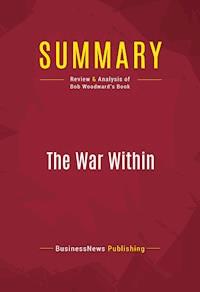
The must-read summary of Bob Woodward's book: “The War Within: A Secret White House History 2006-2008”.
This complete summary of "The War Within" by Bob Woodward, a renowned American investigative journalist, outlines his account of the workings of the Bush administration from 2006 to 2008 and he addresses questions of leadership, war, governance, and unwarranted secrecy.
Added-value of this summary:
• Save time
• Understand the Bush administration and its controversies
• Expand your knowledge of American politics and history
To learn more, read "The War Within" and discover the secrets behind Bush's leadership and the actions of his administration.
Das E-Book können Sie in Legimi-Apps oder einer beliebigen App lesen, die das folgende Format unterstützen:
Seitenzahl: 20
Veröffentlichungsjahr: 2017
Ähnliche
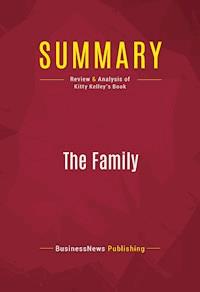










Book Presentation: The War Within by Bob Woodward
Book Abstract
In The War Within, Woodward takes an exclusive look at the inner workings of the Bush administration from 2006 to 2008. Woodward interviewed key players, examined dozens of never-before-published documents, and had nearly three hours of exclusive interviews with President Bush. The result is an exhaustive firsthand history of the years from mid-2006, when the White House realizes the Iraq strategy is not working, through the decision to surge another 30,000 U.S. troops in 2007, and into mid-2008, when the war becomes a fault line in the presidential election.
The War Within addresses head-on questions of leadership, not just in war, but in how we are governed and the dangers of unwarranted secrecy.
About the Author
Bob Woodward is a Pulitzer Prize winning journalist. His coverage of the Watergate scandal for the Washington Post helped bring down the Nixon administration. Woodward has authored or co-authored eleven No. 1 best-selling non-fiction books, including a quartet of books on the Bush administration. He lives in Washington, D.C. where he remains an associate editor at the Washington Post.
Summary of The War Within (Bob Woodward)
Introduction
In 2006, as violence in Iraq spiraled out of control, a secret war was brewing within the Bush administration over the course of the Iraq conflict. Publicly, President Bush maintained that commanders on the ground would decide battlefield strategy and troop levels, but behind the scenes, the White House initiated a strategy review that circumvented the military. The commander in Iraq, General George Casey, was convinced President Bush did not understand the war. It was clear, however, that Bush and other top administration officials had lost confidence in General Casey.
The White House strategy review, led by Bush’s National Security Advisor Stephen J. Hadley, was conducted under the radar “because the electoral season is too hot.” In other words, the Bush administration was saying, ‘stay the course’ publicly, but privately they were laying the ground for a comprehensive shift, the counterinsurgency strategy that would ultimately take the form of a troop surge led by General Petraeus.




