


11,49 €
Mehr erfahren.
- Herausgeber: Atlantic Books
- Kategorie: Geisteswissenschaft
- Sprache: Englisch
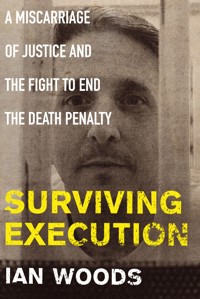
"Compelling... This is a captivating account of Glossip's fight for truth." -- Sir Richard Branson A tense mix of Dead Man Walking and Making a Murderer, Surviving Execution combines the very best in true-crime writing with a searching exploration of our most barbaric punishment. Imagine being condemned to death for murder, when even the prosecutors admit that you didn't actually kill anyone. This is what happened to Richard Glossip, a death-row inmate who was found guilty of murdering motel owner, Barry van Treese. Despite being convicted on the word of the actual self-confessed killer, the state of Oklahoma is still intent on executing him, raising international outcry and controversy. Ian Woods, a reporter for Sky News in the UK, came across the case one quiet afternoon, and has tirelessly campaigned ever since to bring the injustices Glossip has faced to the world's attention. He even served as an invited witness to Glossip's three scheduled executions - all of which were stayed at the last possible moment. This is the gripping true story of the case, and their turbulent friendship, written by a man with unparalleled first-hand knowledge and access.
Das E-Book können Sie in Legimi-Apps oder einer beliebigen App lesen, die das folgende Format unterstützen:
Veröffentlichungsjahr: 2018
Ähnliche




















For my son, Oscar
CONTENTS
List of Illustrations
Who’s Who
Prologue
1 The Murder
2 The Worst of the Worst
3 The Interrogations
4 Selling a Story
5 Trial and Errors
6 A Weak Defence
7 Two Sides of America
8 From Birth to Death Row
9 Different Jury, Same Verdict
10 No Mercy
11 Hello or Goodbye
12 Supreme Indifference
13 My Friend the Prisoner
14 A Helping Hand from Hollywood
15 The Executioner
16 Preparing for the End
17 Coffee, Cookies and an Appointment with Death
18 Inspiration and Indecision
19 Witness to an Execution
20 Another Year to Live
21 Careless, Reckless, Guilty
22 Trumped
Epilogue
About the Sources
Acknowledgments
Index
Illustrations
List of Illustrations
Barry Van Treese, the owner of the motel, the Best Budget Inn, in Oklahoma City. He was murdered on 7 January 1997. (Oklahoma state evidence files)
The Best Budget Inn on the night of the murder. (Oklahoma state evidence files)
Justin Sneed after his arrest, with bruising around his eye following the scuffle with Barry Van Treese. (Oklahoma state evidence files)
Detectives Bob Bemo and Bill Cook prepare to interrogate Justin Sneed, who would change his account of events several times. The video was never shown to jurors. (Oklahoma state evidence files)
A Richard Glossip mugshot in 2004. (Oklahoma Department of Corrections)
The media are given a tour of the death chamber in Oklahoma State Penitentiary, October 2014. It was refurbished following the Clayton Lockett execution controversy, in which the death-row prisoner was given an untested mixture of drugs. (Sky News)
Richard Glossip speaks to death-penalty campaigner Sister Helen Prejean, January 2015. (José Vazquez)
Kim Van Atta, the pen pal who became Glossip’s best friend. (Sky News)
Media interest in the Glossip case after the US Supreme Court hearing in April 2015. (Sky News)
Oklahoma Attorney General Scott Pruitt defends the death penalty, April 2015. He later became a member of President Donald Trump’s cabinet. (Sky News)
Attorney Don Knight’s first news conference after being brought onto the case by Sister Helen Prejean, July 2015 (Sky News)
Ian Woods talks to Richard Glossip on 15 September 2015, the eve of his second scheduled execution date. (Sky News)
Advert placed in Oklahoma newspaper by Virgin boss Sir Richard Branson on 16 September 2015, the day of the second scheduled execution. (Sky News)
Fox reporter, Phil Cross, Sister Helen Prejean and Ian Woods outside the prison following the stay of execution on 16 September. (Sky News)
Ian Woods and other witnesses arrive at Oklahoma State Penitentiary for Glossip’s third scheduled execution on 30 September 2015. (Sky News)
Relatives of Richard Glossip celebrate his unexpected reprieve. (Sky News)
WHO’S WHO
Oklahoma 2015–16
Richard Glossip: death-row inmate
Justin Sneed: convicted killer
Kim Van Atta: friend of Glossip
Don Knight: Glossip’s attorney
Sister Helen Prejean: anti-death-penalty campaigner
Anita Trammell: warden, Oklahoma State Penitentiary
Mary Fallin: Governor of Oklahoma
Alex Weintz: Governor’s spokesman
Scott Pruitt: Oklahoma Attorney General
David Prater: District Attorney, Oklahoma County
Robert Patton: Director, Oklahoma Department of Corrections
Terri Watkins: Communications Director, Department of Corrections
Phil Cross: Fox 25 reporter
Ralph Shortey: Oklahoma state senator
Mark Henricksen: Glossip attorney
Kathleen Lord: Glossip attorney
Dale Baich: death-penalty attorney
Bud Welch: father of Oklahoma bombing victim
Randall Workman: former prison warden
Donna Van Treese: widow of murder victim
Billie Jo Boyiddle: Glossip’s niece
Christina Glossip-Hodge: daughter
Ericka Glossip-Hodge: daughter
Crystal Martinez: friend of Glossip
Susan Sarandon: actress and campaigner
Kim Bellware: reporter, Huffington Post
Cary Aspinwall: reporter, The Frontier
Ziva Branstetter: reporter, The Frontier
Graham Lee Brewer: reporter, The Oklahoman
Marc Dreyer: Pardon and Parole Board chairman
Robert Dunham: Death Penalty Information Center
Oklahoma 1997–8
Barry Van Treese: motel owner and murder victim
D-Anna Wood: Glossip’s girlfriend
Cliff Everhart: part-time security man at motel
Billye Hooper: motel receptionist
Bob Bemo: detective, Oklahoma City Police
Bill Cook: detective, Oklahoma City Police
Tim Brown: patrol officer, Oklahoma City Police
Fern Smith: Assistant District Attorney
Wayne Fournerat: defence attorney
Richard Freeman: judge
David McKenzie: attorney
Oklahoma 2004
Lynn Burch: Glossip’s attorney
Connie Smothermon: Assistant District Attorney
Silas Lyman: Glossip’s attorney
Wayne Woodyard: Glossip’s attorney
Twyla Mason Gray: judge
Kenneth Van Treese: brother of murder victim
Prologue
30 September 2015
The banging on doors began just before 3 p.m., the time the condemned man was due to die. More than forty inmates on death row joined the noisy protest as they imagined one of their own being strapped to the gurney, an intravenous tube ready to carry the deadly chemicals into his vein. The din echoed around Unit H of Oklahoma State Penitentiary and into Cell LL adjacent to the death chamber.
Richard Glossip was sitting on his solid concrete bunk, naked apart from his boxer shorts, with a thin blanket around his shoulders to keep him warm. He’d been like this for more than an hour, waiting to be taken on what should have been a short walk to his death.
He ought to have been dead by now. Or at least being prepped for death. His fellow inmates thought he was taking his final breaths, and believed they were giving him a fitting send-off. But the banging subsided and Richard Glossip was still alive.
He wanted to know what was happening, but he also longed to be taken outside. Glossip had spent fifty straight days in the isolation cells close to the death chamber. All that time he had been deprived of privacy. The light was kept on twenty-four hours a day, so that a guard could watch his every move. It was deemed necessary in case the prisoner tried to harm himself, or, worse, take his own life before the state had the chance to kill him.
Even for a man who had spent the last eighteen years behind bars, the isolation cell was a particular form of torture. All luxuries had been taken away when he was moved here, depriving him of the music he loved to listen to on his MP3 player. He’d already been here longer than the prison authorities had intended.
Two weeks earlier, he had been woken before dawn and taken for a medical examination. He had bantered with the prison staff about the efforts they were making to ensure he was fit to be executed. But three hours before his appointed time, he was granted a reprieve: a fourteen-day stay of execution while an appeal court examined newly submitted evidence about his case.
Two weeks for his lawyers to fight for his life. Two more weeks for Richard Glossip to endure the permanent illumination of his concrete cell. Two more weeks to contemplate what it would be like when the curtains were drawn back and the witnesses to his execution stared at him from behind the glass windows.
I was due to be one of those witnesses, one of six people he had chosen to be with him at the end. On 30 September, we were waiting in another room in the prison, as we had been two weeks earlier. This time it seemed certain the execution was going to proceed. Word had come from Washington DC that the US Supreme Court had refused to intervene. With all appeals exhausted, it could go ahead as planned.
I had accepted the invitation to be a witness months earlier, as a way of telling Richard Glossip’s story – that of a man being put to death for a murder committed by someone else. My selection had led to arguments; another witness challenged my right to be there, and at one point I thought Glossip would withdraw the invitation. But he kept me on his list. Why did he want a British journalist to watch him die? I had asked him several times if he was sure; there were precious few choices he could make freely. Choosing who should be present at his death was one. I promised to be there, but only if he thought it would help, only if he wanted me there.
As I watched the clock tick ever closer to the time of his death, I was regretting my decision. But it was too late to walk away. This was a story unlike anything I had experienced in more than three decades as a reporter.
And it wasn’t over yet.
CHAPTER 1
The Murder
January 1997
The murder victim was found face down, wearing a T-shirt with the slogan Jesus Carried the Cross For Us. Barry Van Treese died in room 102 of the motel he owned, the Best Budget Inn, in Oklahoma City. He had been beaten to death. The murder weapon was never recovered, but his car was found abandoned a short distance away, with tens of thousands of dollars inside.
Television cameramen arrived in time to capture the flashbulbs going off inside the room as the police photographer took pictures of the crime scene. Detectives began to question motel staff and some of the guests. The body had been lying there for around eighteen hours, covered by bedlinen, and the evidence suggested the victim had put up a fight. There was blood all over the floor, walls and door handle, and a bloody handprint on the mattress. The window had been smashed, but there were clear signs of an effort to tidy up. The broken glass had been stacked neatly in a chair, and a shower curtain had been taped over the window so the body could not be seen from outside.
Barry Van Treese was fifty-four years old and owned two motels in Oklahoma City and Tulsa. He lived in Lawton, ninety miles south-west of the state capital, with his wife Donna and their five children aged between five and sixteen. He also had two grown-up children from an earlier marriage. His wife described him as a real-life Santa Claus, whose children loved his bushy white beard and were upset on the one occasion he had shaved it off. He could be gruff, and had a temper, but friends considered him generous.
Van Treese had been a banker for twenty years. He’d completed a master’s degree in banking and finance at Southern Methodist University in Dallas, and his last job was as a vice president of Boulder Bank in Tulsa, where he had more than forty staff. In 1979 he decided to set up his own business, and began to purchase motels in the state. At one point he owned and ran nine of them.
He hired managers to look after the businesses, but would visit regularly to collect the money and receipts. If he decided to stay the night in Oklahoma City, he would usually choose room 102 because it was one of the best furnished in an otherwise run-down motel, where rooms cost a little over $20 a night. Room 102 had a water bed. The motel, on the western outskirts of the city, attracted hookers and drug dealers, but it also had some long-term guests. It was busy, except in the winter months, and it made a decent profit. The manager usually picked up a monthly bonus of several hundred dollars on top of his salary.
Richard Glossip had been manager of the Best Budget Inn for almost two years. He was thirty-three years old and lived in an apartment next to the motel reception with his girlfriend, D-Anna Wood, who was in her early twenties. Glossip had never been in trouble with the police. He had no previous convictions. But within a few days of the murder of his boss, he would be in jail accused of plotting to kill him, and the following year he would be found guilty and sentenced to death. He was convicted even though everyone involved in the case agreed he did not physically kill Barry Van Treese.
There are conflicting stories about much of what happened in the twenty-four-hour period around the murder on 7 January 1997. But one key detail is not in dispute. Barry Van Treese was murdered by a nineteen-year-old drifter called Justin Sneed, who lived for free at the motel in exchange for helping with maintenance work. Sneed had gone into room 102 in the middle of the night, and repeatedly bashed the owner on the head with a baseball bat.
The police had Richard Glossip in their sights long before they extracted a confession from Sneed. His behaviour after Van Treese went missing had seemed suspicious. Officers were convinced he had played a part in the murder. At his trial, detectives and state attorneys would describe how and why they believed Richard Glossip had plotted to murder his boss.
The previous year had been a difficult one for the Van Treese family. Two bereavements within a short period of time had hit them hard, and for a while they didn’t give the businesses their full attention. The motel managers in Tulsa and Oklahoma City were trusted to deal with any problems. But later in the year, when Donna Van Treese was going through the books of the Best Budget Inn, she became concerned that around six thousand dollars seemed to be missing. The prosecution would allege that Barry Van Treese intended to raise the discrepancy with Richard Glossip, who was already anxious that his boss would discover that many of the motel rooms had fallen into a state of disrepair.
Van Treese had arrived at the Best Budget Inn at around 5.30 p.m. on 6 January. He’d been seen by and spoken to the desk clerk, Billye Hooper, who was waiting for his arrival so she could get paid. She would recall that Barry had an abrupt manner but was not necessarily rude; he just got on with what he needed to do. He picked up the motel receipts and said he was going to his other motel in Tulsa, which was around a two-hour drive away.
When he got there, Van Treese told the manager of the Tulsa motel that he was unhappy about the way Glossip had been running things, and said he planned to fire him. He then drove back to the Best Budget Inn, arriving at around 2 a.m., and went to sleep in room 102.
The state’s evidence for what happened next comes from the killer. Justin Sneed was said to be totally reliant on Richard Glossip for providing him with a room to stay in and food to eat. According to Sneed, Glossip came to his room at 3 a.m. and said he was worried that they were both about to lose their jobs and be forced to leave the motel. He asked Sneed to murder Van Treese, and promised to pay him several thousand dollars.
Sneed picked up a baseball bat he kept in his room and went to room 102. He opened the door using a master key he’d been given by Glossip. Van Treese woke up, but Sneed hit him with the bat. Even so, the owner tried to fight back, and in the struggle, the bat smashed a window and Sneed received a black eye. But the teenager continued to hit Van Treese more than a dozen times until he stopped moving. He claimed that he then went to the motel office and told Glossip what he’d done. They both went to room 102 to check their boss was dead. Sneed said he was told to take car keys from Van Treese’s pocket, to collect money that was in the vehicle and then drive the car away from the motel to a nearby parking lot.
Sneed said he found four thousand dollars in the car, and returned to Glossip, who divided the money between them. Sneed tidied up the broken glass and taped a shower curtain over the window. He claimed Glossip told him that if anyone asked, he should say that two drunks got into a fight and smashed the window. He was told that when it was daylight he should buy Plexiglas to repair the window, and a hacksaw and trash bags to dispose of the body.
When Billye Hooper arrived for work, she was surprised to see Glossip awake so early. She noticed that Van Treese’s car wasn’t there and she said Glossip told her that the owner had gone to get some supplies for redecorating the rooms. A few hours later, Glossip and his girlfriend, D-Anna, went shopping.
After lunch, Hooper took a phone call from a neighbouring business to say that Barry Van Treese’s car had been abandoned in their parking lot. The police were notified, as was Donna Van Treese, who was concerned that she hadn’t heard from her husband. Hooper also called Cliff Everhart, an ex-cop who looked after security at the motel and who claimed to own a small stake in the business. When Glossip and his girlfriend returned from shopping, they drove around the neighbourhood with Everhart looking for any sign of Van Treese.
Justin Sneed had been seen around the motel for much of the day, and had been asked by Hooper and Everhart to search the motel rooms. By mid afternoon he had disappeared, and Sergeant Tim Brown, a local patrol officer who knew both Glossip and Everhart, was getting suspicious about what appeared to be conflicting details in Glossip’s story.
Eventually, at around 10 p.m., Brown and Everhart decided to check room 102 themselves. They’d been told earlier that the window had been broken by drunks so hadn’t connected it to Van Treese’s disappearance. They forced open the door and found the body on the floor.
Glossip and D-Anna Wood were taken to the police station, but after being interrogated, they were allowed to leave. The following day, Glossip began selling some of his possessions and appeared to be getting ready to quit his job. After going to see a local lawyer, he was arrested, interrogated and then charged with being an accessory to murder.
A week later, after Justin Sneed was arrested and questioned, both men were charged with murder in the first degree. It was a charge that carried the death penalty, but only one of them would face execution. Justin Sneed agreed to testify against his co-accused and in return would be given a sentence of life in jail without the possibility of parole. Richard Glossip was offered a similar deal if he pleaded guilty to murder. He refused, even though he was putting his life in the hands of a jury. If convicted, he would join more than two thousand men and women whom American courts had decided were the worst of the worst and deserved to die.
CHAPTER 2
The Worst of the Worst
December 2014
The execution business in America was facing a crisis. A decline in public support, a fall in the number of sentences being imposed and carried out, and a series of mishaps in death chambers had led to predictions that capital punishment was doomed. But killing convicts has always been controversial.
On 6 August 1890, a new invention made its debut in New York that was supposed to replace hanging and bring the execution business into the modern world. William Kemmler became the first person to die in the electric chair, but many of those who witnessed his death were horrified. The New York Times report, under the headline ‘FAR WORSE THAN HANGING’, described it as an ‘awful spectacle’ and a ‘disgrace to civilisation’.
Kemmler, who had killed his common-law wife with an axe, seemed amenable to taking his place in the history books. ‘Gentlemen, I wish you all good luck. I believe I am going to a good place, and I am ready to go.’ He sat down on the chair and allowed the electrodes to be attached to his body. ‘Now take your time and do it all right, warden. There is no rush. I don’t want to take any chances on this thing you know.’
But the first burst of electricity, which lasted seventeen seconds, did not kill Kemmler, and a second attempt was made. This time the current was left on for more than a minute. A reporter fainted and the District Attorney groaned and rushed out of the room. The New York Times reported that ‘the stench was unbearable’. The reporter speculated that it was likely to be the first and last such execution.
However, the electric chair soon became established as America’s primary method of capital punishment, and was used for more than a century. All executions in America were temporarily halted for a decade until the US Supreme Court upheld its use in 1976. A database maintained by the Washington-based Death Penalty Information Center records 158 executions by electrocution since then. The most recent was in Virginia in 2013. Convicted killer Robert Gleason had requested the electric chair. The Herald Courier reported how he died:
One man turned a key in a wall to activate the system and another man in an adjacent room started the electrocution. Gleason’s body spasmed with each series of jolts, smoke rising from the mask. The jolts were administered at 9:03, and after five long minutes of silence a doctor in a white coat entered from a side room, put a stethoscope to his tattooed chest and then nodded that he was dead.
Lesen Sie weiter in der vollständigen Ausgabe!
Lesen Sie weiter in der vollständigen Ausgabe!
Lesen Sie weiter in der vollständigen Ausgabe!
Lesen Sie weiter in der vollständigen Ausgabe!
Lesen Sie weiter in der vollständigen Ausgabe!
Lesen Sie weiter in der vollständigen Ausgabe!
Lesen Sie weiter in der vollständigen Ausgabe!
Lesen Sie weiter in der vollständigen Ausgabe!
Lesen Sie weiter in der vollständigen Ausgabe!
Lesen Sie weiter in der vollständigen Ausgabe!
Lesen Sie weiter in der vollständigen Ausgabe!
Lesen Sie weiter in der vollständigen Ausgabe!
Lesen Sie weiter in der vollständigen Ausgabe!
Lesen Sie weiter in der vollständigen Ausgabe!
Lesen Sie weiter in der vollständigen Ausgabe!
Lesen Sie weiter in der vollständigen Ausgabe!
Lesen Sie weiter in der vollständigen Ausgabe!
Lesen Sie weiter in der vollständigen Ausgabe!
Lesen Sie weiter in der vollständigen Ausgabe!
Lesen Sie weiter in der vollständigen Ausgabe!
Lesen Sie weiter in der vollständigen Ausgabe!
Lesen Sie weiter in der vollständigen Ausgabe!
Lesen Sie weiter in der vollständigen Ausgabe!
Lesen Sie weiter in der vollständigen Ausgabe!
Lesen Sie weiter in der vollständigen Ausgabe!
Lesen Sie weiter in der vollständigen Ausgabe!
Lesen Sie weiter in der vollständigen Ausgabe!




