96,29 €
Mehr erfahren.
- Herausgeber: Springer International Publishing
- Kategorie: Geisteswissenschaft
- Serie: Studies in Brain and Mind
- Sprache: Englisch
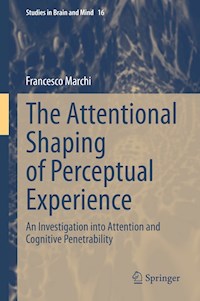
This monograph presents a clear account of when and how attentional processes can shape perceptual experience. This argument is based on the prediction-error minimization model of the mind. The author believes that the topic of attention should take a more central role in the debate about the influence of cognition on perception. Inside, he shows how this can be possible.
The hypothesis that cognition may shape perceptual experience has been traditionally labeled as the cognitive penetrability of perceptual experience. Cognitive penetrability is relevant for several debates in philosophy and cognitive science. It tackles the possibility of gathering genuine knowledge on the basis of perceptual information about the world delivered by sensory channels. The problem, the author notes, is that if our previously acquired belief can shape current perceptual experiences, such experiences cannot serve as an adequate source of justification in retaining those beliefs or evenforming new ones. He argues that cognitive penetration may sometimes happen through attentional processes, but that its occurrence need not undermine perceptual justification.
The book provides an overview of the cognitive penetrability debate. The author discusses evidence that supports the occurrence of this phenomenon. Overall, this investigation offers readers a philosophical discussion of attention based on the biased-competition theory. It argues that attention is a property of mental representations that emerges from a metacognitive competition process.
Das E-Book können Sie in einer beliebigen App lesen, die das folgende Format unterstützt:
Veröffentlichungsjahr: 2020