


11,49 €
Mehr erfahren.
- Herausgeber: Titan Books
- Kategorie: Abenteuer, Thriller, Horror
- Sprache: Englisch
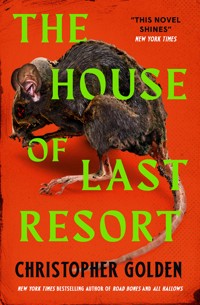
A horror-filled tale of crumbling catacombs and the darkest family secrets, set in the picturesque hills of Sicily, from the acclaimed author of Road of Bones and All Hallows. Across Italy there are many half-empty towns, nearly abandoned by those who migrate to the coast or to cities. The beautiful, crumbling hilltop town of Becchina is among them, but its mayor has taken drastic measures to rebuild―selling abandoned homes to anyone in the world for a single Euro, as long as the buyer promises to live there for at least five years. It's a no-brainer for American couple Tommy and Kate Puglisi. Both work remotely, and Becchina is the home of Tommy's grandparents, his closest living relatives. It feels like a romantic adventure, an opportunity the young couple would be crazy not to seize. But from the moment they move in, they both feel a shadow has fallen on them. Tommy's grandmother is furious, even a little frightened, when she realizes which house they've bought. There are rooms in an annex at the back of the house that they didn't know were there. The place makes strange noises at night, locked doors are suddenly open, and when they go to a family gathering, they're certain people are whispering about them, and about their house, which one neighbor refers to as The House of Last Resort. Soon, they learn that the home was owned for generations by the Church, but the real secret, and the true dread, is unlocked when they finally learn what the priests were doing in this house for all those long years…and how many people died in the strange chapel inside. While down in the catacombs beneath Becchina…something stirs.
Das E-Book können Sie in Legimi-Apps oder einer beliebigen App lesen, die das folgende Format unterstützen:
Veröffentlichungsjahr: 2024
Ähnliche


















CONTENTS
Cover
Title Page
Leave us a Review
Copyright
Dedication
Book One September Above
1
2
3
4
5
6
7
8
9
10
11
12
13
14
15
16
Book Two October Below
1
2
3
4
5
6
7
8
9
10
11
12
13
14
15
16
17
18
19
20
21
Acknowledgments
About the Author
Praise for The House of Last Resort
“This novel shines. Golden’s frenzied tale of demons and exorcisms is fast-paced, his portrayal of the insidiousness of possession is unsettling and it all comes together in a thrilling closing act.”
New York Times
“Christopher Golden’s The House of Last Resort runs deep, shining a light on the closely held self-deceptions that drive us, and then going farther still, into the catacombs beneath La Chiesa San Domenico, where something inhuman stirs among the dead. An expert work of suspense from an author who keeps getting better and better.”
Owen King, New York Times-bestselling author of The Curator
“Dark, eerie and full of dread, each page exudes menace—I couldn’t put it down. Part of me remains in The House of Last Resort long after I closed the book.”
Catriona Ward, author of Looking Glass Sound
“Terror begins at home in this creepy, slow burn novel that cautions perhaps some secrets should stay buried, where they belong.”
Christina Henry, author of Near The Bone and Alice
“The king of horror thrillers does it again. With this thoroughly modern exorcism story, Golden will make you believe in the existence of true evil.”
Alma Katsu, author of The Fervor
“An absolute ripper of a fire-and-brimstone, capital-H Horror novel. I tore through it so fast my fingertips bled. Which probably summoned the book’s demons.”
Daniel Kraus, author of Whalefall
Also by Christopher Golden and available from Titan Books
Road of Bones
All Hallows
Alien: River of Pain
Aliens: Bug Hunt
Marvel Classic Novels—X-Men: Mutant Empire
Predator: The Official Movie Novelization
Sons of Anarchy: Bratva
Uncharted: The Fourth Labyrinth
Anthologies including Christopher Golden available from Titan Books
Christmas and Other Horrors
Cursed: An Anthology
Dark Cities
Hex Life: Wicked New Tales of Witchery
LEAVE US A REVIEW
We hope you enjoy this book – if you did we would really appreciate it if you can write a short review. Your ratings really make a difference for the authors, helping the books you love reach more people.
You can rate this book, or leave a short review here:
Amazon.co.uk,
Waterstones,
or your preferred retailer.
The House of Last Resort
Print edition ISBN: 9781803369495
E-book edition ISBN: 9781803369501
Published by Titan Books
A division of Titan Publishing Group Ltd
144 Southwark Street, London SE1 0UP
www.titanbooks.com
First edition: September 2024
1 3 5 7 9 10 8 6 4 2
This is a work of fiction. Names, characters, places, and incidents either are the product of the author’s imagination or are used fictitiously, and any resemblance to actual persons, living or dead (except for satirical purposes), is entirely coincidental. The publisher does not have control over and does not assume any responsibility for author or third-party websites or their content.
Christopher Golden asserts the moral right to be identified as the author of this work.
Copyright © 2024 Christopher Golden. All rights reserved.
No part of this publication may be reproduced, stored in a retrieval system, or transmitted, in any form or by any means without the prior written permission of the publisher, nor be otherwise circulated in any form of binding or cover other than that in which it is published and without a similar condition being imposed on the subsequent purchaser.
A CIP catalogue record for this title is available from the British Library.
For Nicholas and Danielle
Only you and your darkness know who you are.
Amber Tamblyn
BOOK ONE
SEPTEMBER ABOVE
1
The rats are like fingers.
No. That’s not right. Fingers can reach out, can grasp and extend. The rats are not like fingers at all. They are periscopes, like those on submarines, each able to give its captain only a limited view of the world above. From their place below, among the dead, the lost ones can see only as far as the rats can see. But they are patient, and so they wait. And they let the rats run.
2
Tommy fought the urge to jump from the car and run all the way home. Kate would murder him, of course, and his grandparents—who awaited their arrival—would be less than pleased. The fact that he’d sold his childhood home and given up the apartment he and Kate had shared in Boston would also be a problem. They’d put the Mediterranean Sea and thousands of miles of Atlantic Ocean between themselves and everything they knew to start this new adventure together in Sicily.
This was home now.
The tiny Fiat wound its way up through the narrow streets of Becchina. The engine whined in protest at having to pull the small trailer up the twisty road that was the heart of this hill town.
“Hey,” Kate said, reaching over to put a hand on his thigh. “It’s going to be perfect.”
“Your Tommy-sense kicking in again?”
“I don’t need superpowers. You think I can’t just look at you and see how tense you are?” Kate took his right hand off the wheel and kissed his knuckles. “I told you. It’s going to be perfect. Trust me.”
She squeezed his hand to ground him, let him know she was with him all the way.
Tommy pulled back his hand. “I need both to steer. Last thing I want to do is crash into one of these old buildings. Not the first impression I want to make on the locals.”
Kate scoffed. “It wouldn’t exactly be your first impression. You’re like royalty around here.”
“That’s a slight exaggeration.”
“Is it, though?”
She was overstating a bit, but it was true he wasn’t exactly a stranger to Becchina. The population had dwindled over the past few decades, but many of the people had met him before. He had been here five times in his twenty-eight years, visiting his grandparents first with his mom and dad, and later just with his mother. Then, four months ago, he had come to Becchina with Kate, and that had changed everything.
In many ways, it had become a ghost town. There were many of them in Sicily—places too distant from the island’s coast or from the few business hubs, places abandoned by the young in favor of Palermo, or more likely Rome or Milan on the mainland. The more adventurous departed for other European nations or for the United States. Some of the hill towns in the vast island’s interior managed to use tourism to keep their communities alive, if not exactly vibrant, but Becchina didn’t have the castles of Erice, or the cathedral of Monreale. It didn’t have fifth-century temples with a view of the Mediterranean like Agrigento.
Becchina did have a few things going for it. An ancient set of stone steps wove down through the town—two hundred twenty-seven steps, more than the famous stairs in Ragusa. The town also boasted a church with a blue neoclassical dome older than the one on the basilica in Ragusa, but church and dome were both in desperate need of restoration. The town had breathtaking views of the valley and quiet streets that were clean and colorful. Yet somehow it had never made it onto the radar of the travel sites.
A forty-minute drive from the volcanic Mount Etna, Becchina should have been alive.
Instead, it was the corpse of a town that didn’t even realize it was already dead.
The mayor, Fausto Brancati, had seen other towns take drastic measures and had followed their lead. Becchina needed new blood, and it no longer mattered where that blood originated. At Mayor Brancati’s instruction, the town seized abandoned homes and offered them for sale for a single euro, with certain strings attached. The buyer had to live in the home for at least five years and had to spend a minimum of fifty thousand euros on renovations. They were trying to lure people with a sense of adventure and romance, people who might stay beyond the five years, who might have children in Becchina and raise them here, although in his heart, Brancati had to know that most of those children would leave when they were old enough.
That’s a long way off, Tommy thought. He wasn’t even sure he and Kate would stay the five years needed to solidify their ownership of their new house. But he wasn’t going to tell her that.
“I still have no idea how the movers’ truck is going to get to the house,” Kate said as the Fiat juddered through a series of potholes.
“Magic?” Tommy said. “Maybe they use a hot air balloon.”
She poked him in the side.
“Hey! Don’t poke the driver!”
“Hot air balloon, my butt.”
Tommy snickered. “So many jokes. Brain overloading.”
“I would punch you so hard, but I’m glad to see you smiling. This is supposed to be a happy day. Literally the happiest day that isn’t our wedding day. It’s like a dream. Look around you, Tom.”
“I’m trying not to crash.”
“I may punch you again if you don’t look around.”
He looked around.
Kate was not always right, but Tommy would admit she often showed a lot more common sense than he did. Only a year his senior, somehow she’d acquired far more wisdom than he’d managed.
Spring flowers bloomed in window boxes along the road into town. Most of the buildings were bleached by the sun, the color of sand, some so pale they looked like the ghosts of houses that must once have been full of life and laughter. A pair of elderly women walked up the steep road, arms linked, each cradling a bag of groceries with her free hand. A work crew crawled like ants over a row house with a wine shop on the first floor, new owners in the midst of having the place renovated. It made Tommy feel better to see them, a reminder that they weren’t alone in starting fresh in Becchina.
The Fiat bumped through a pothole. Kate let out a little yelp as Tommy twisted to look behind them, worried as he had been every mile about the little trailer they pulled. They had bought the used Fiat partly for its price tag, but mostly for its size. The streets were narrow here, and they wanted to be able to maneuver. They had rented this trailer for the same reason. The moving truck would bring most of the things they had shipped across the ocean—a few items of furniture that meant something to him, or to Kate, and some books and artwork they could not easily replace in Sicily. The trailer behind the Fiat carried their suitcases, their laptops, and a few items of furniture they had just bought in Catania. Also in the trailer, taking up very little room, were two plastic crates of family photos and other things Tommy had rescued from the house after his mother died. They were all that was left of her now.
Everything else would be sourced locally, from merchants or artisans, or—morelikely—passed down by his grandparents or their many friends and neighbors in town. Tommaso Puglisi was a ninety-six-year-old stonemason who still told stories of outrunning bombs during World War II. His wife, Raffaella—Raffi to her friends—was thirteen years younger, still spry, and knew everyone in Becchina, not to mention many of their secrets. Sicilians were notorious gossips, and his nonna was no exception. He remembered his nonno as a man who frowned in disapproval at the gossip even as he joined in, but when Tommy and Kate had visited four months earlier, Nonno had seemed less engaged, his focus drifting. He hadn’t forgotten anyone’s name yet, but his short-term memory had begun to deteriorate.
Age-related dementia, his googling had suggested. Entirely normal for someone who had managed to live so long. But still hard to watch.
Now, according to Nonna, the old man barely got up from his chair except to use the bathroom. His knees hurt him terribly, and he had decided it wasn’t worth it to go out and socialize with their friends. Tommy knew it had to feel like a prison sentence to his grandmother, who had always been such a social woman. What had given Tommy the clearest picture of his grandfather’s condition was when Nonna told him that he didn’t watch much television anymore. Tommy thought that meant he had lost interest, but Nonna said it was because he had trouble understanding the stories unfolding on the screen. His mind had become so cloudy that he could not follow the plot.
Tommy was glad to be in Becchina for many reasons, but chief among them was the opportunity to spend time with his grandparents. As far as he knew, they had never visited the United States. His entire experience of them had been during the times he had spent in Sicily. When he and his parents had come here as a family, his father had been withdrawn to the point of coldness, which had always made him sad, especially because his grandparents had been so welcoming, so full of love and good humor. Nonno’s eyes had twinkled with mischief, and Nonna had always behaved as if feeding her grandson was the greatest happiness she had ever known. The one time Tommy had asked his father why he was so unhappy in Sicily, all he would say was that he had left for a reason and that someday Tommy would understand.
His father had died young, dropped by a heart attack before Tommy was old enough to really connect with him as a person. After his father’s death, Tommy had grown up in the shadow of a mother who gave as much love as her narcissism would allow, but whose delusional self-interest hurt everyone eventually. She had insisted that his father’s heart attack had been triggered by stress from his relationship with his parents. Tommy secretly thought that if stress had killed his father, it had come from closer to home, but he never said that to his mother.
As rarely as he had seen them, his grandparents had been the best example of kindness and generosity in his life, until he met Kate.
Kate was his world.
“We’re good,” he said, as much to himself as to his wife. He meant the Fiat and the trailer, but he could have been referring to so many things.
She bent forward and looked out the windshield, craning her neck to look up at the tops of buildings, the street signs, and the sky.
“Next left, I think,” she said.
Tommy nodded. “Then two rights.”
“I see the church dome.” Kate pointed, though Tommy didn’t dare to look. The buildings were so close on either side that if they’d been in a car any wider than the Fiat, he would have tucked in the mirrors to avoid the risk of shattering them.
When they turned left, they were on centuries-old cobblestones. The Fiat and the trailer rattled, and Tommy’s knuckles tightened on the steering wheel. He would get used to it, he knew, but it made his teeth hurt.
They passed a market and a butcher’s, a gelato stand, and a little hardware store. But his eyes were drawn to empty storefronts that had once been a dress shop, a bookstore café, and a restaurant, as well as others whose previous lives were more difficult to discern. Tommy knew what Kate would say—she would tell him those empty spaces were opportunities, and he would convince himself she was right, because he so wanted her to be. Needed her to be.
They had tried to convince many of their friends to take this leap with them, to leave behind all the absurd demands and debilitating stresses of late-stage capitalism and to start over in a place where they could afford to try to build a dream. Some were intrigued, but nobody had been willing to make the jump just yet. Kate was convinced that if they could make a life here, some of those friends would follow. People who didn’t need to work in an office or who had entrepreneurial or artistic dreams. Tommy wanted that to be true.
He turned right. Saw the faded and patched dome of the church, and then he turned right again at the next block. The homes, row houses, were all connected here, the walls of one kissing the walls of the next. Their new place was an exception. It stood at the top of a dead-end street with an eighty-foot drop-off at the edge of the property and a breathtaking view of the valley. A waist-high split rail fence was all that separated their property from the edge of the cliff. That, and an old bench with peeling green paint. On a clear day, when Mount Etna was angry, they would be able to see the smoke of the volcano from their front stoop.
The address was 17 Via Dionisio, and the house—God, the house was even more beautiful than Tommy remembered. Bougainvillea climbed the walls, its purple flowers vivid in the sunshine, vines filling cracks and winding around the gutters. Along the side of the house that faced the cliff were lantana shrubs with their flowers growing wild, as well as bushes of prickly pear and white caper blossoms waving in the wind that blew up over the edge.
Tommy pulled the Fiat to the curb in front of the house and killed the engine.
Kate practically leaped from the car, but she paused and leaned on the roof, smiling up at their new home.
“Look at it.”
Tommy climbed out of the driver’s seat and glanced up. “I’m looking.”
Beautiful as it was, the old stone building needed a lot of love. The entrance had heavy wooden double doors, ten feet high, so weathered and dried that it reminded him of driftwood, its paint worn away in broad swaths. The arched transom window above the door had leaded glass panes that were barely transparent. Time had taken a toll on the ornately carved stone of the lintel. In the United States, only the oldest and most elegant buildings might have such details, but in Italy they were almost ordinary.
What Tommy liked best about the house’s façade was the trio of balconies jutting from the second floor, one above the front doors, the others to either side. The balconies were just as ornate as the lintel. The wrought iron railings were rusted, and some of the glass panes in the balconies’ french doors had been smashed and then boarded up instead of being replaced, but any house would begin to decay once it stood devoid of life. Without people to live there, to give it voice and a heartbeat, the house had fallen into disrepair.
Tommy and Kate would breathe new life into it.
“It’s like fate,” he said. “I can’t believe we almost bought the other one.”
Kate shut her car door and came around to join him, taking a moment to admire the house and languish in the moment of their new beginning. “The house on Via Dogali would have been fine, but this one feels like a real adventure.”
They had been in the midst of arranging to buy the other place—a crumbling stone row house, sun-bleached, just another blank and ordinary residence in this forgotten town—when their real estate broker had mentioned this one. It hadn’t even been listed among the homes available for the one-euro-incentive deal, but Franca had assured them that 17 Via Dionisio could be theirs for the same price, under the same terms. By the time they had completed their walk-through, both of them knew their plans had changed.
Four months later, here they were.
At their front door.
Tommy turned to Kate. He brushed a wild lock of golden curls away from her face and tucked it behind her ear. “How did I get so lucky?”
She answered that question the way she always did. “You caught me in a moment of weakness.”
He kissed her softly, then brushed his lips against her forehead. They rested in each other’s arms for a few moments.
“We’re really doing this,” Kate said.
“You’re just figuring that out?”
“It’s different when it’s real.”
Tommy studied the dreamy look on his wife’s face. “Are you thinking we made a mistake?”
“Not at all.” Her eyes were alight with mischief. “I feel like we’re free. Like we found this secret that nobody else knows.”
“Like we’re getting away with something.”
“Exactly. And don’t forget, your family might have roots here, but I’m the one who pushed for this. I can’t wait to get started.”
He kissed her again, for much longer this time. The breeze gusted over the edge of the cliff, the air scented with the wildflowers of their new home.
In the midst of that kiss, the ground began to shake.
Tommy didn’t notice at first. In the back of his mind, he connected the rumbling in the road beneath his feet to the passage of a massive truck, but there were no trucks on Via Dionisio just then. A pair of goldfinches took flight from the main balcony overhead. The bougainvillea on the front of the house waved and swayed.
“My God,” Kate managed. And then the whole world shook.
In his head, Tommy held the word earthquake, but he wasn’t sure it found its way to his lips. The tremor felt deep, and it traveled from down in the earth up into his bones. Somewhere nearby, dogs began barking in unison, as if a maestro had tapped his baton and the chorus had kicked off as one. Car alarms blared from the next street. Tommy and Kate clutched each other’s hands, frozen. Neither of them had ever experienced an earthquake before and didn’t know how to rank this one. A tremor, a full-on quake? Enough to bring Becchina down around them? Tommy remembered a news report from when he was a kid, a crumbling old hill town somewhere in Italy, sun-bleached and ancient, turned entirely to rubble by an earthquake. Part of him wanted to stay frozen, to just hold Kate, and hope.
But the house remained standing. It shook, but it stood, and he knew doorways were supposed to be safe. True or not, that was just about all he’d ever learned about quakes. For tornadoes, it was cellars or bathtubs; for floods, you kept an axe in the attic in case you had to hack your way onto the roof; and for earthquakes—
“The house!” he barked, only realizing as he grabbed Kate’s hand and yanked her toward their front doors that he was shouting to be heard over the grinding roar of the earth.
Kate had the keys in the little cross-body bag strapped across her chest. She staggered and nearly went sprawling, but she managed to dig the key out. Tommy could only watch as she propped one hand against the door and scraped the key around the lock. He felt drunk, or as if she were, the way her hand wavered, but it was the ground moving, the world trying to shake off its humans like a dog shaking off fleas. He held his breath. The end, he thought. Just those two words. This was supposed to be the beginning, but the end kept echoing in his head.
The door popped open. He wasn’t even sure she’d turned the key. It swung inward without a push, and Kate spilled into the dusty foyer. Just before he crossed the threshold, Tommy saw the front of his new house shrug upward. Two panes in the fanlight window over the doors cracked, and a single shard of glass came loose and fell onto the floor inside. He grabbed Kate and pulled her back so that the two of them were together beneath that ornate lintel. Is this smart? Is this right? Standing under hundreds of pounds of marble or granite didn’t seem very clever to him.
Kate hugged him tightly. Tommy held on to her, his life preserver.
“Shit, shit, shit, shit,” she chanted, squeezing him, one word over and over, but that was one word more than he could muster.
Still afraid that standing on the threshold must be a mistake, an even bigger risk, Tommy glanced into the house, scanning the arched entrances to the rooms on the left and right, the staircase, and the hall that went back to the kitchen. Dust filled the air. Plaster sifted from the ceiling and floated down like ash from an eruption. Something moved at the top of the stairs. He caught just a glimpse of it through the cloud of ash and plaster, as if through a fog. The figure flitted through the dark obscurity up there and was gone. Someone was inside their house.
“Tommy, what did we do?” Kate asked, voice muffled because her face was buried in his chest.
He looked down at her, held on.
And it was over.
3
The first thing Kate did when the world stopped shaking was step outside and make sure the rest of the town was still there. A laugh bubbled in her chest, but somehow her lips would not release it. Heart still thumping, she looked down the road, startled to see no chasms in the pavement. None of the old, bleached buildings had crumbled. The flowers were still vivid with color, and the street still looked lonely and a little sad, despite the blue sky and the birds that wheeled overhead. It was as if nothing had happened, but she couldn’t convince her body of that. Her pulse raced, anxiety rattling in her skull.
Three doors down from their dead-end manse, on the other side of the road, an old woman poked her head out. She wore a floral cotton housecoat and had curlers in her dark, dyed hair, as if Sicily had never emerged from the 1950s. Curious, she looked to the left and then the right. When she spotted Kate, they locked eyes for a moment. Birdlike, the old woman cocked her head and studied the new arrival, but instead of waving or even offering a nod of acknowledgment, she withdrew into her home and shut the door loudly enough for the sound to echo along the street.
Aside from Signora Housecoat, none of the neighbors made an appearance.
“You okay?” Tommy asked. He stepped up behind her and put a hand on her shoulder.
Kate managed a dry laugh. “Hell no.”
“We said we were going to share a lot of firsts when we moved to Sicily.”
She turned and punched his arm. “First earthquake was not what I had in mind.”
His smile remained, but she saw the gray pallor of his skin and knew it was forced. They were both still in shock. Whatever Kate had expected for a welcome, it wasn’t this.
“It’s so bizarre,” she said. “From the way it felt, I expected worse. But I don’t see any damage. And only one old lady came outside to investigate, like it’s just an ordinary Tuesday for them. How often do they have earthquakes here, Tommy? Please tell me this isn’t something you knew about and didn’t bother to mention, because I might be willing to go to prison in Sicily if it means I get to murder you for keeping that from me.”
“Wait . . . you’d murder me?”
She smirked. “In Sicily, I said. I figure the prison food must be a hell of a lot better here than in Massachusetts.”
Tommy pondered that. “Okay. Fair enough. But you won’t need to murder me yet. I mean, give it time—I’m sure I’ll do something stupid enough to make you homicidal. Husbands usually do, if pop culture has taught me anything. But no. If earthquakes are a common occurrence, that is not a thing I knew.”
Kate reminded him that she had lived her entire life in Massachusetts without experiencing a single noticeable quake, but even as she spoke, she found herself calming down. Being with Tommy always put her at ease.
Their first date had been nothing special—midafternoon coffee at a little café in Portsmouth, followed by a bit of window-shopping, then down to the harbor to watch the boats head out to sea. She had laughed so much with him, had felt so peaceful, not in spite of the way he liked to verbally spar with her but because of it. So many guys used humor as a way to create distance, to hide emotion or depth, or lack thereof. But Tommy’s humor flowed from a real place within him, which meant that when a moment turned serious or somber, he remained open and honest. He didn’t realize how rare that was, and she cherished him for it. The peace he always gave her—that was the reason she had fallen in love with him. The reason she had married him.
So when that openness withdrew, of course she noticed.
“What aren’t you saying?” she asked.
“I’m fine. Do you want to sit for a minute, or should we unpack the trailer?” Tommy smiled, but she had seen that particular smile before.
Kate tapped his chest with one finger, hard. “What aren’t you saying, Tom?”
He exhaled. Rolled his eyes a little. At himself, she knew—not at her. “It’s ridiculous.”
“Nothing I love more than ‘ridiculous.’”
Kate had never been the kind of woman who retreated in conversation. Tommy knew that.
“Okay, look, don’t freak out, but when we were standing in the doorway, I looked up the stairs and I thought I saw someone up there.”
Kate cocked her head. “You saw someone, or you thought you saw someone? It could be the real estate broker. Franca. Or a nosy neighbor or someone squatting in the house.”
“I caught a glimpse, just for a second, and then it wasn’t there. So either I’m imagining things or we have a ghost.”
Kate arched an eyebrow. “Okay. Let’s hope it’s a ghost. We can do our own reality show, like a mix of ghost hunting, European travel, and old-house restoration.”
“I’m in,” Tommy said. “But before we make our millions on that, maybe we should unpack. I do have to get the trailer back to Catania tomorrow.”
She kissed him, and they spent a few moments lost in that kiss. The breeze came over the edge of the cliff, and the bougainvillea rustled where it wound across the face of the house. As the scent of the flowers filled her thoughts, the trepidation the quake had caused began to melt away at last.
Kate smiled when she thought of her mother, who had assumed something had gone wrong in their marriage, because they were so excited about making a new start in a foreign country. To her generation, it was the sort of thing people only did for a good job or if they were running away from something. Kate had sought kind ways to explain that her and Tommy’s generation didn’t want to be anything like earlier generations. Kate and Tommy wanted a better life, simpler, where they could put their happiness and the quality of their life above work. Her mom had assumed that one of them had been unfaithful or something like that, but this was the opposite of marital trouble. It was a shared striving for the future. The world seemed to be unraveling every day. American culture seemed to be rotting from the inside out, manipulated by an amoral oligarchy whose worst enemy was young people who didn’t want to play their game, and Kate and Tommy were happy to be counted in that category. The irony had not been lost on them, that the nineteenth and twentieth centuries had been defined by people leaving the so-called Old World to seek their fortunes in the New World, and now she and Tommy were doing the opposite, seeking new life in the Old World. But they both believed that earlier generations had it right—a slower life, a smaller circle, a focus on home.
Now here they were.
Home.
Tommy unlocked the back of the trailer. Each of them hefted a box, and they crossed the threshold of their new home a second time, this one more slowly and contentedly. As they stepped into the foyer, Kate glanced at the top of the stairs. She didn’t believe in ghosts, but they were in the Old World now, and things like that seemed so much more possible here. Fortunately, she saw only dust and gloom, and both of those could be taken care of with a little time and effort.
“All right, woman,” Tommy said, “let’s see those muscles in action.”
Kate flexed and put on her meanest weight-lifting face. She stayed in the pose while Tommy kissed her forehead and ran his hands appreciatively along her arms. The tan and the tank top helped, but mostly it was deadlifting and boxing that gave her the definition he admired.
“You’re cute,” she said, “but don’t think that means I won’t lean on archaic stereotypes to make you carry the heaviest stuff.”
With a flourish of his hand, Tommy gave a small bow. “After you, my love.”
And the unloading began.
When they had made the decision to move across the ocean, Kate had worried about the cost involved in taking their belongings with them. Like most people, she had become accustomed to the habit of attributing importance to the ownership of things, but once they had begun debating over pieces of furniture and looking into the cost of shipping, the conversation changed. Tommy would say they needed to bring the small antique kitchen set that had been in his own kitchen when he was growing up, and Kate would ask why. Kate would say she wanted to ship the rocking chair she had acquired from her grandmother’s house after the lovely old Irish woman’s death, and Tommy would ask why. The answers were always sentimental rather than practical, and fairly quickly, they realized that some of those pieces could be given to other relatives or friends. Knowing they were still in the hands of someone who would appreciate them was almost as good as holding on to them. Other objects could be sold or discarded or donated.
Clothes went the same way. Both of them had closets full of things they’d held on to because they still fit, or might one day fit, but hadn’t worn in a long time. They were starting a new life, and the last thing they needed was to carry the clutter of the old one along with them. That left four big duffel bags, two fat suitcases, and three carry-ons. Most of their shoes—mostly Kate’s, if they were being honest—had been shipped over and would arrive with the cherry sleigh bed that had been a wedding gift from Kate’s parents, along with a few other antiques and several paintings, things that their hearts could not leave behind.
That would be just the beginning of the long process of furnishing their new home’s fifteen rooms. Kate still could not quite wrap her head around the size of the rambling old house. Some rooms were already furnished, but she was in no rush to get the place completely decorated. The process would be part of the pleasure of this new life. They had each taken a month’s sabbatical from their jobs, with three weeks still to go, and that would be time enough to make a decent start of it.




