


Erhalten Sie Zugang zu diesem und mehr als 300000 Büchern ab EUR 5,99 monatlich.
- Herausgeber: THP Ireland
- Kategorie: Sachliteratur, Reportagen, Biografien
- Serie: Little Book of
- Sprache: Englisch
The Little Book of Stillorgan is a compendium of fascinating, obscure, strange and entertaining facts about this vibrant suburb of Dublin. This book takes the reader on a journey through Stillorgan and its vibrant past. Here you will discover Stillorgan's rural past, its famous sons and daughters, its churches, pubs, shops and schools, its industries and sporting heritage and its natural history. You will also glimpse a darker side to Stillorgan with a look at crime and unrest in the district. A reliable reference book and a quirky guide, this can be dipped into time and time again to reveal something new about the people, the heritage and the secrets of this south Dublin suburb.
Sie lesen das E-Book in den Legimi-Apps auf:
Seitenzahl: 178
Veröffentlichungsjahr: 2017
Das E-Book (TTS) können Sie hören im Abo „Legimi Premium” in Legimi-Apps auf:
Ähnliche















THE
LITTLE
BOOK
OF
STILLORGAN
HUGH ORAM
First published 2017
The History Press Ireland
50 City Quay
Dublin 2
Ireland
www.thehistorypress.ie
The History Press Ireland is a member of Publishing Ireland, the Irish book publishers’ association.
© Hugh Oram, 2017
The right of Hugh Oram to be identified as the Author of this work has been asserted in accordance with the Copyrights, Designs and Patents Act 1988.
All rights reserved. No part of this book may be reprinted or reproduced or utilised in any form or by any electronic, mechanical or other means, now known or hereafter invented, including photocopying and recording, or in any information storage or retrieval system, without the permission in writing from the Publishers.
British Library Cataloguing in Publication Data.
A catalogue record for this book is available from the British Library.
ISBN 978 0 7509 8353 2
Typesetting by Geethik Technologies, origination by The History Press
Printed and bound by TJ International
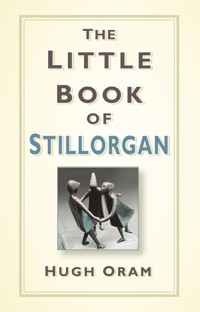
Front cover image: ‘The Fiddler of Dooney’ statue by Imogen Stuart has been a highlight of Stillorgan’s shopping centre since it opened in 1966.(Author’s collection)
eBook converted by Geethik Technologies
CONTENTS
Acknowledgements
Introduction
1. Timeline
2. Buildings
3. Churches and Religious Places
4. Crime and Mayhem
5. Modern Houses
6. Health
7. Natural History
8. Pubs, Restaurants and Leisure
9. Remarkable People
10. Schools
11. Shopping
12. Sport
13. Transport
14. Work
Further Reading
ACKNOWLEDGEMENTS
I should first of all like to thank my dear wife Bernadette for all her loving support during the nearly forty years I have been writing books, as well as six true and steadfast friends, for all their encouragement during the production of this book: Aisling Curley, Dublin; Maria Gillen, Athlone; Caroline Henry, Dublin; Ellen Monnelly, Dublin, Thelma Byrne, Dublin and Mary J. Murphy, Caherlistrane, Co. Galway.
I’d also like to give special thanks to Bryan MacMahon of the Kilmacud Stillorgan Local History Society, for all his and their help. The Pembroke Library in Dublin 4, Stillorgan Library, the Dún Laoghaire–Rathdown County Library Service (Geraldine McHugh) and the National Library of Ireland, Dublin, also gave me much assistance. Hacketts of Lower Baggot Street, Dublin, gave me lots of help, very courteously and efficiently, with reprographics for the book. I much appreciate the technical assistance given by Dean Lochner of the Bondi Group, Ballsbridge, Dublin.
A significant contribution to the book comes from artist Nick Fegan who has done the line drawings. I should also like to thank Olivia Hayes for her permission to reproduce two watercolours of Stillorgan.
The following people and firms are also thanked for all their help, in alphabetical order: Baumanns, Stillorgan; Sarah Bell (The Childrens’ House School); Rachel Bewley-Bateman; Éamonn de Búrca (de Búrca Rare Books); Sinead Butler (Irish League of Credit Unions); Ray Byrne (Byrne’s pub, Galloping Green); Aoife Clarke (Lidl Ireland); Ray Coary (Stillorgan Village Shopping Centre); Rev. Patrick Comerford; Julie Cox (Beaufield Mews); Communications Office, Dún Laoghaire–Rathdown County Council; Desmond Croasdell; Alan Crowley (cellar master); Gillian Daly (Licensed Vintners Association); DID Electrical; independent councillor Deirdre Donnelly; Dave Downes (Dublin Book Browsers); Jennifer Finegan (South Dublin Credit Union); Gunn’s Cameras, Wexford Street, Dublin; Emer Halpenny (Emer Halpenny School of Drama); Olivia Hayes, artist; Richard Holfeld, (H.R. Holfeld Group); John Holohan (Ballsbridge, Donnybrook and Sandymount Local History Society); Isaac Jackman; Joan Kavanagh (hon. sec., Dublin Painting and Sketching Club); Ossie Kilkenny; Dominic Lee (photographer); John Lowe (the ‘Money Doctor’); Kate McCallion (St John of God Hospital, Stillorgan); Peter McCann; Catherine McDonald (Anne Sullivan Centre); Philip Mulligan (Glenalbyn tennis club); Anne O’ Connor; Clive O’Connor (Kilmacud Stillorgan Local History Society); Conor O’ Dwyer (Stillorgan Orchard pub); Peter Pearson, Co. Wexford (Between the Mountains and the Sea); Karen D’Alton; Sorcha Ní Riada (RTÉ); Peadar Ó Riada; St Brigid’s National School; Katherine Staunton (Nimble Fingers) and Pat Staunton.
INTRODUCTION
In the eighteenth and nineteenth centuries, Stillorgan was little more than a small, rustic village, the proud possessor of several village pumps, with one main street, which is today The Hill in Stillorgan. The oldest building is St Brigid’s church (Church of Ireland), which was built over 300 years ago. Especially in the nineteenth century, many fine mansions were constructed close to the village of Stillorgan, as it became a desirable place to live for wealthier people. Many of those mansions were subsequently demolished to make way for housing estates; those that survived were taken over by various institutions. Stillorgan Castle, also known as Mount Eagle, was taken over in 1882 by St John of God and has been a hospital ever since. Such was the scale of land ownership in those far-off days that in 1870, one man living in Stillorgan, the Hon. George F. Colley, owned no less than 4,216 acres (280ha) of land around the country.
However, one remarkable early eighteenth-century construction still survives, the Obelisk, which these days is surrounded by housing estates.
Even by the late 1930s, Stillorgan’s population was remarkably static, at around 2,000 residents. By the early 1960s, places on the fringes of Stillorgan, like Galloping Green, were still in open country, essentially rural in character.
The first development in Stillorgan came in 1963 when the Stillorgan Bowl was opened; it too has long gone, superseded by the Leisureplex complex. The next major change came in 1966, when Ireland’s first shopping centre was opened at Stillorgan. It started a wave of shopping-centre construction across the country that only ended when the great economic collapse began in 2008. In recent years, the shopping centre in Stillorgan has got new owners, who are completing a major refurbishment and upgrade of what is now the Stillorgan Village shopping centre, harking back to the times when Stillorgan really was a delightfully rural country village.
Some businesses in the vicinity of the shopping centre have had remarkable longevity, such as the Beaufield Mews Restaurant, started in 1950, making it the oldest restaurant in the Dublin area. Baumanns, on the old Dublin Road, began in 1947 and for many years was primarily a hardware store, although it has since diversified into other areas of retailing. Nimble Fingers, going back to the 1960s, has a fine reputation for educational toys for children. John Lowe, known nationwide as the ‘Money Doctor’, has been trading as a financial adviser in Stillorgan for close on twenty years. Éamonn de Búrca has been running his rare-books business in Stillorgan for thirty years, while Dave Downes, another long-time purveyor of books, lives and works in Stillorgan.
Besides being a substantial residential suburb, present-day Stillorgan is also noted for its many first-class educational establishments. Moreover, Stillorgan has fine sporting traditions, most notably that of Kilmacud Crokes GAA Club, but also that of others clubs, such as Glenalbyn’s swimming club and its tennis club. But the redevelopment of a local swimming pool is still awaited, as is construction on sites that have lain derelict for years, such as the old Blake’s restaurant/Ping’s restaurant location and the site of the old Esmonde Motors.
Stillorgan is also noted for its various health institutions, the most notable of which is St John of God, which has been treating people since it was first established in Stillorgan in 1882, 135 years ago.
Residents of note in the Stillorgan area have included Sir William Orpen, the distinguished society portrait painter, who is destined to get his own statue in Stillorgan; Dr T.K. Whitaker, who died in early 2017 at the age of 100, and who was responsible for planning Ireland’s transition into a modern consumer society in the 1960s, and T.P. Hardiman, a former director-general of RTÉ. Jarlath Hayes, long regarded as one of Ireland’s finest book designers, lived and worked in Stillorgan, while German-born Peter Jankowsky, the owner of the most distinctive voice ever to broadcast on Sunday Miscellany, also lived in Stillorgan for many years.
It’s hardly surprising, given Stillorgan’s strong historical provenance, that the Kilmacud Stillorgan Local History Society attracts such vital support. One of its achievements, for over ten years now, has been the production of Obelisk, its annual publication. Some industries in Stillorgan have long since vanished, such as Darley’s Brewery, in which the Guinness family was closely involved, but all these bygone aspects of Stillorgan’s history are lovingly documented by Stillorgan’s historians.
1
TIMELINE
900 The area of Stillorgan is given the name Tig Lorcáin; the present name is an anglicisation
1649 Stillorgan Village has eighteen houses, with twenty-five Irish inhabitants and thirteen English
1695 The Allen family builds Stillorgan Park Castle, which is where Stillorgan House (Rehab Ireland) is today. The arrival of the Allens is considered to be the starting point of Stillorgan Village proper
1727 The Stillorgan Obelisk is built
1805 Stillorgan has much small industry, brewing as well as cloth mills and cotton mills
1810 The penny post comes to Stillorgan
1834 Stillorgan’s first post office opens, with Mrs Anne Carty as postmistress
1859 The Harcourt Street to Bray railway line is opened, including the station at Stillorgan
1863 Death of Archbishop Whately
1869 Twenty-four charitable homes are built by Charles Shiels
1878 Sir William Orpen, distinguished society portrait painter, is born in Stillorgan
1882 St John of God Order moves to Mount Eagle (Stillorgan Castle)
1886 The population of Stillorgan is 1,558, of whom 562 live in the village
1901 The death of Queen Victoria is marked by a service in St Brigid’s church
1902 St Brigid’s church commemorates the coronation of King Edward VII
1903 Redesdale becomes St Kevin’s Park
1908 A major fire destroys Stillorgan Castle, belonging to St John of God, as well as the church
1915 Major flooding in the village, including at St Brigid’s
1916 The house at St Kevin’s Park becomes St Kevin’s Training School of Domestic Economy
1918 William Orpen, the Stillorgan-born portrait painter, is knighted
1920 Population of Stillorgan area still 1,558
1922 Michael Collins escapes an ambush at Pim’s Gate, Stillorgan; five men attacked his car, firing up to thirty shots and throwing a bomb at it
1923 Canon E.H. Lewis-Crosby becomes the rector of St Brigid’s
1924 The Sunshine Home is built, across the road from its present site
1927 The parish school becomes St Brigid’s National School
1938 Population of Stillorgan: 2,000; Beaufield Park is completed
1945 St Kevin’s is renamed St Anne’s Industrial School
1946 There are 350 houses in Stillorgan
1949 Kilmacud House and its lands are sold by Col. Dwyer to the Sisters of Our Lady of Charity; eventually, St Lawrence’s church is built here
1950 Beaufield Mews, the oldest restaurant in Dublin, opens in Stillorgan, which still has a population of 2,000
1951 Dale Drive is completed
1954 The Ormonde opens as a single-screen cinema; today, the Odeon is on the site. Highridge Green and St Laurence’s Park are completed
1954 More heavy flooding; the main road, now the N11, is impassable
1955 Oatlands College opens
1957 There are 1,200 houses in Stillorgan
1959 Stillorgan railway station, on the Harcourt Street to Bray line, closes down
1960 Tigh Lorcáin Hall is sold to the developers of the Bowling Alley, which opens at the end of 1963
1965 Hazel Villas completed
Between the Mountains and the Sea by Peter Pearson.
1966 Stillorgan shopping centre opens
1967 Stillorgan Credit Union opens
1969 By this date, virtually all the agricultural land in the Kilmacud and Stillorgan area has been used for housing development
1973 Stillorgan swimming pool is built
1979 Stillorgan dual-carriageway bypass opens; it replaces the dual carriageway built at Galloping Green in the 1950s
1982 There are 3,000 houses in Stillorgan
2004 Stillorgan Luas station opens
2012/13 St Brigid’s celebrates 300 years of the church building
2016 Bowling Alley site, by now Leisureplex, is sold to Kennedy Wilson, who also owns the Stillorgan Village shopping centre
2016 The revamp of the shopping centre is started by its new owners, an American firm, Kennedy Wilson Europe. The centre is renamed Stillorgan Village shopping centre. By 2017, the revamp is well on the way to completion
2
BUILDINGS
BURTON HALL
Today commemorated by a road on the Sandyford Industrial Estate, this big house was built by Samuel Burton in about 1730. The great house had many distinguished owners, including the Guinness family. One of them, Henry Guinness, who played a prominent role in running the family’s Dublin brewery, was born at Burton Hall in 1829 and continued to live there for many more years. He died in 1893, aged 64, his wife Emelina died in 1906, aged 77, and their eldest son, Henry Seymore Guinness, died in 1945, aged 86.
During the Civil War, in March 1923, republican anti-Treaty elements tried to burn down Burton Hall, fortunately without success. Then in 1939, Agnes Ryan bought the house. She and her husband Séamus, who had died young, in 1933, had started the Monument Creamery chain of shops in 1919. The first outlet was in Parnell Street and the company was named after the nearby Parnell monument on Upper O’ Connell Street. Soon, their shops were well known in many parts of Dublin for their fresh food, including dairy and bakery products. Agnes herself died comparatively young, at the age of 63, in 1985.
Subsequently, Burton Hall was taken over by the St John of God Hospitaller group.
ESSO IRELAND
One of Stillorgan’s old mansions, called The Grange, was demolished to make way for the new headquarters of Esso Ireland in the early 1960s. These new offices were close to where Brewery Road joins the main N11 road. The Esso company was one of the first in the country to install a computer, in 1962, as part of its new office development. Esso Ireland’s headquarters stood on 5 acres (2 hectares) of land and the firm, which is now part of Topaz, lasted in Stillorgan for the best part of forty years, before vacating the premises in 2001. The whole site was sold in 2000 to developers for IR£25 million. Before long, planning permission was given for 168 two- and three-bedroom apartments, 19 houses and extensive office spaces. The apartments were to be built in nine blocks. Local residents’ associations were strongly opposed to the development, but today what was once home to Esso Ireland has a vast array of apartment blocks.
FERNEY
This house, off the Stillorgan Road and close to the St John of God Hospital and Granada, has long been known as ‘the deaf boys’ school’. The original house was built at the end of the eighteenth century and nearly a century later, in 1880, the house was sold to John Darley, of the family that owned Darley’s brewery, which once stood at the end of Brewery Road, close to the present-day dual carriageway.
The house itself is unusual, despite its small size, with cylindrical walls rising to conical roofs. John Darley died in 1935, but his wife continued to live in the house for two years, until it was sold to the Cullen family in 1937. They renamed it Beechpark. In 1956, the house was sold to the Daughters of the Cross, who opened the Mary Immaculate School for the Hearing Impaired there.
GRANADA
This fine house, part of St John of God, can be easily seen from the main N11 road. The house was built in around 1778 and, for many years subsequently, was known as Ravensdale. In the early twentieth century, it was occupied by one of the Bewley family, Mrs Harriet Bewley, who bought it in 1926 and lived there until 1948. It was then bought by William Ahern from Ballsbridge, who, six years later, sold it to the St John of God Brothers. They were keen to acquire the property, as it was so near to their own establishment.
The renovation of the house was entrusted to Brother Stanislaus Phillips, who completely changed the architectural style of the property, making it very Spanish in appearance. It was also renamed Granada, in homage to the origins of the St John of God Order in Spain in the sixteenth century. The interior of the house has exquisitely designed rooms, staircases, flooring and and stained glass and it is still in use as part of the St John of God facility.
LEISUREPLEX
This sports complex replaced the old Stillorgan Bowl and, in recent years, various plans have been put forward for its redevelopment. Back in 2005, the then owners of Leisureplex, developers Ciarán and Colum Butler, wanted to replace the bowling and games complex with 314 apartments, a library, a gym, commercial and retail space and a new Leisureplex in fifteen blocks, incorporating a fifteen-storey tower. These plans were approved by Dún Laoghaire–Rathdown County Council but rejected by An Bord Pleanála. Then, the following year, the Leisureplex site was sold for €65 million.
Leisureplex came up for sale again in 2016, having been owned by Treasury Holdings, and was bought for €15 million by Kennedy Wilson, owners of the Stillorgan Village shopping centre. At the time of writing, the Leisureplex buildings, constructed in the 1960s, are still standing. Kennedy Wilson is discussing with Dún Laoghaire–Rathdown County Council the redevelopment of the site and how it can be linked to the shopping centre across the road. It’s understood that part of those plans may involve moving the Stillorgan Library from its present site in the St Laurence’s Park area, adjacent to Leisureplex.
LINDEN CASTLE
This once fine mansion dated back to the earlier nineteenth century but, by the end of the 1850s, it had been unoccupied for a number of years. In 1862, Francis Kiernan, from Westmoreland Street in Dublin city centre, bought the unexpired term of the 150-year lease for £1,210. Two years later, the castle was put to good use. St Vincent’s Hospital, then at St Stephen’s Green, wanted to create a convalescent home for recovering patients. The Sisters of Charity, who ran the hospital, had been given a large sum of money by a benefactor for this very purpose and, in 1864, they bought Linden Castle for £2,000. In time, the facility was developed into the Linden Convalescent Home and was run as such for many years subsequently. The grounds were renowned for their linden trees.
It was at Linden that former Taoiseach and President Éamon de Valera died on 29 August 1975, aged 92. The building no longer exists; the Sisters of Charity sold the house and its 3.5ha of land in 1997 for IR£8 million. The old castle was demolished and the first apartments on the site were offered for sale in 1999.
MOUNT MERRION HOUSE
This fine stately home was built on land where the present Talbot Hotel stands on the main N11 road in Stillorgan. The original house was built in the early nineteenth century, and later that century it was improved with the addition of gabled wings and a fine portico in granite. The end result was a stately Victorian mansion with magnificent gardens. The interior of the house had gilded plasterwork, fine woodwork and stained-glass windows, as well as a private oratory and a library.
By the 1970s, close to the old house, there were a number of businesses familiar to people in the Stillorgan area, including the Texaco petrol station and garage owned by the O’Gorman family, O’Shea’s chemists, a sweet shop run by the Bull family, Lennon’s shoe-repairing shop and a drapery shop run by a Mrs Tew.
After Mount Merrion House was demolished in 1986, big changes came to this part of Stillorgan. A new hotel called the South County was built on part of the Mount Merrion site. Opening in 1961, the South County comprised twenty-six bedrooms. It was built by a well-known hotelier P.V. Doyle, who modelled it on his Montrose Hotel, close to Stillorgan, which has now been converted into student accommodation. In time, the South County was renamed as the Stillorgan Park Hotel. In 2015, €10 million was put into the expansion of facilities and accommodation at this hotel. Today, the hotel is known as the Talbot Hotel, one of six in the Wexford-based Talbot Hotel group.
OATLANDS HOUSE
This extensive mansion dated from the eighteenth century and stood on 5ha of land. It was a spacious Georgian house with ten rooms and its own observatory, complete with a powerful telescope. Part of the land at the back of the house formed a kitchen garden, which provided plenty of fruit and vegetables.
The house was owned by the Pollock family from 1840 until 1910, when it came into the possession of the Darley family of Stillorgan brewery fame. After the then owner, Lady Jane O’Connell, died in 1949, the fine telescope was acquired by Dunsink Observatory, but in a disastrous fire at Dunsink in 1977 it was destroyed. In May 1950, the house was acquired by the Christian Brothers, who turned it into a secondary school, which opened in September 1951. The house lasted until 1968, when it was demolished to make way for the present Oatlands College buildings.
OBELISK
In many ways, this is the symbol of Stillorgan and it’s also the oldest constructed edifice in the area, together with St Brigid’s church. The Obelisk was built in 1727 for Lord Allen, to help create employment in the district, and it’s also thought that he had it built to commemorate his wife, Lady Allen, although she wasn’t buried there. The monument, made from granite, stands over 30m tall.




