


18,99 €
Mehr erfahren.
- Herausgeber: John Wiley & Sons
- Kategorie: Geisteswissenschaft
- Serie: CPC - Contemporary Political Communication
- Sprache: Englisch
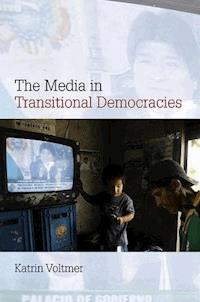
The last quarter of a century has seen an unprecedented wave of democratization around the globe. In these transitions from authoritarian rule to a more democratic order, the media have played a key role both by facilitating, but frequently also inhibiting, democratic practices to take root. This book provides an accessible and systematic introduction to the media in transitional democracies. It analyses the problems that occur when transforming the media into independent institutions that are able to inform citizens and hold governments to account. The book covers the following topics:
- normative conceptions of media and democracy;
- the role of the past in the transition process;
- the internet as a new space for democratic change;
- the persistence of political interference in emerging democracies;
- the interlocking power of media markets and political ownership;
- the challenges to journalistic professionalism in post-authoritarian contexts;
- the role of the media in divided societies;
Sie lesen das E-Book in den Legimi-Apps auf:
Seitenzahl: 516
Veröffentlichungsjahr: 2013
Ähnliche




















Table of Contents
Cover
Contemporary Political Communication
Title page
Copyright page
Introduction
About the book
Part I: What Democracy? What Media?
1 Democracy and Democratization: One Idea, Many Roads
Lost in definitions: democracy and democratization
Democratic paradoxes
Exporting democracy
2 Democratic Media: A Question of Means and Ends
Means and ends
Independence
Diversity
Part II: The Media and Political Change Across Time and Space
3 Communication Technologies and Journalistic Agency: Mass Media and Political Change
Structure and agency
The contingent power of the media
4 Complex Transitions and Uncertain Outcomes: The Media and Democratization Over Time
Stages of democratization: always moving forward?
Before regime change: pushing the boundaries of control
Collapse and new beginning: the drama of regime change
Consolidation after regime change: a rocky journey with uncertain outcomes
5 Emerging Media Systems and the Legacies of the Past
Pathways of democratization
Authoritarian regime types and media transformation
Part III: Transforming the Media
6 Media and the State
Between two evils: dominant state and weak state
Cornerstones of an ‘enabling environment’ for media independence
Focus: Transformation of state broadcasting to public service broadcasting in Eastern Europe
7 Media Markets
The political economy of the media
Democratization and media markets
Focus: Media, money and power
8 Political Parallelism
Parallelism, partisanship and political engagement
Parallelism and the dark side of partisanship
Focus: Rebuilding public communication in post-conflict societies
9 Journalistic Professionalism
Journalism as a profession
The global divergence of journalism
Democratizing journalism in a time of crisis
Focus: Brown, red and other envelopes: the hidden story of paid journalism
Conclusion
References
Index
Contemporary Political Communication
Robert M. Entman, Scandal and Silence
Max McCombs, R. Lance Holbert, Spiro Kiousis and Wayne Wanta, The News and Public Opinion
Craig Allen Smith, Presidential Campaign Communication
James Stanyer, Intimate Politics
Katrin Voltmer, The Media in Transitional Democracies
Copyright © Katrin Voltmer 2013
The right of Katrin Voltmer to be identified as Author of this Work has been asserted in accordance with the UK Copyright, Designs and Patents Act 1988.
First published in 2013 by Polity Press
Polity Press
65 Bridge Street
Cambridge CB2 1UR, UK
Polity Press
350 Main Street
Malden, MA 02148, USA
All rights reserved. Except for the quotation of short passages for the purpose of criticism and review, no part of this publication may be reproduced, stored in a retrieval system, or transmitted, in any form or by any means, electronic, mechanical, photocopying, recording or otherwise, without the prior permission of the publisher.
ISBN-13: 978-0-7456-4458-5
ISBN-13: 978-0-7456-4459-2(pb)
ISBN-13: 978-0-7456-5654-0 (Multi-user ebook)
ISBN-13: 978-0-7456-5655-7 (Single-user ebook)
A catalogue record for this book is available from the British Library.
The publisher has used its best endeavours to ensure that the URLs for external websites referred to in this book are correct and active at the time of going to press. However, the publisher has no responsibility for the websites and can make no guarantee that a site will remain live or that the content is or will remain appropriate.
Every effort has been made to trace all copyright holders, but if any have been inadvertently overlooked the publisher will be pleased to include any necessary credits in any subsequent reprint or edition.
For further information on Polity, visit our website: www.politybooks.com
Introduction
There you have it – reforms on unprepared ground, and copied from foreign institutions as well – nothing but harm!
Dostoevsky, The Brothers Karamazov
The collapse of authoritarian regimes and the rise of democracy around the world over the past decades add up to one of the most significant developments in global politics which has changed the lives of millions of people. In all these transitions the media have played a pivotal role, not only by disseminating the images of change to a global audience, but also by becoming a force of change in their own right. When in 1989 the Berlin Wall came down, I was living in Berlin (the part of the city which was then called West Berlin). For months, since the first demonstrations took place in various cities of the then GDR, everybody in the city, and indeed around the world, was glued to the television screen, following the events as they unfolded at breathtaking speed across Central and Eastern Europe. Thirty years later, the uprisings in the Middle East that became known as the ‘Arab Spring’ captured the attention and imagination of people everywhere in the world like no other of the many transitions that had taken place since 1989. While I was working on the last chapters of this book, my postgraduate students were constantly searching the web, tweeting and chatting to stay abreast of the events in Tunisia, Egypt, Syria and elsewhere in the region. Some of these students were themselves from Arab countries, and while they probably felt that they were in the wrong place at this important moment in the history of their country, they were still able to take part in the uprisings as virtual participants thanks to the opportunities opened up by new media technologies.
People climbing over the Berlin Wall, the ‘tank man’ on Tiananmen Square, Colonel Gaddafi begging for his life: all are iconic images that will signify the joy, heroism and horrors of democratization for the years to come. Anti-regime protest and regime change have become global media events, forging a close link between democratization and modern mass communication. As a result of the crucial role that international broadcast media played during the events of 1989, the collapse of communism in Eastern Europe has been dubbed the first ‘TV revolution’ in history. And Egypt’s struggle for democracy became known as the first ‘Facebook revolution’. However, the assertion that the media have played a central role in the democratic transitions of the past couple of decades does not imply that they determined the success or failure of the many struggles for democracy, or even that they were responsible for their occurrence in the first place. But it is safe to say that in a media environment that offers fewer opportunities for mass mobilization and global information flows, all these events would have taken place in a different way and would probably have yielded different outcomes. It is this difference which this book sets out to explore.
The active involvement of the media and their strategic use by those fighting for (or against) democratic transition distinguish the transitions that have taken place since the late 1980s from earlier regime changes of the so-called ‘third wave’ of democratization (Huntington 1991) – for example, those in Southern Europe and Latin America in the mid-1970s. Since then, economic and technological advances of the media industry have fundamentally changed the dynamics of democratic transitions. News has become a global, highly competitive business driven by a constant hunger for breaking headlines and dramatic images. Satellite transmission and 24-hour news channels have accelerated the global flow of news. With regime change high on the agenda of Western foreign politics, political protests and upheavals have gained a high level of news value, which immediately catapults the events to the top of the international news agenda, thus expanding the scope of the event to global significance.
Yet the role of the media in transition processes is not confined to providing iconic images for the consumption of global audience spectators. They also affect the course of the events in various ways. The fact that the whole world is watching shapes the behaviour of the actors involved in the process and thus the dynamics and the eventual outcome of uprisings against authoritarian regimes. The availability of ever more sophisticated communication technologies has expanded the repertoire of strategic choices for both democracy activists and the ruling elites, who are trying to preserve their grip on power. Activists have quickly learned how to utilize, sometimes even manipulate, the media for their own purposes. And political leaders and governments have followed suit. At the beginning of the twenty-first century, the internet and mobile communication technologies have complemented traditional channels of mass communication and are about to reconfigure the strategic arena of political change yet again. In particular, the new ways of interaction, networking and information-sharing opened up by Web 2.0 have added a fresh dynamic to the interplay between democratic change and the media.
Furthermore, the importance of the media in transitions to democracy does not stop with the overthrow of the old regime. Even more important are the years that follow. Are the media able to take on a role that supports a viable democratic political process? or do they impede the consolidation of the emerging democracy? The fact that the media often play the role of midwife during regime change does not necessarily mean that they automatically slip into a democratic role once the old regime has ceased to exist. In fact, the recent wave of democratization not only witnessed the first TV and Facebook revolutions, but also the first attempts in history to build and consolidate democratic institutions in a media-saturated environment. In the established democracies of the West, the structures and methods of operation of key institutions, such as parliaments, elections and political parties, were developed before the media became a pervasive force in everyday and political life. In contrast, the new democracies of the late twentieth and early twenty-first century immediately leapfrog into what has been labelled ‘media democracy’ (Meyer 2002) – a notion that denotes a state of affairs where the media’s rules of the game shape, to some extent even determine, the functioning (and dysfunctioning) of political institutions. Nowadays, professional media management and public relations have become an integral part of the political process and a precondition for political success, be it in elections, in intra-elite power struggles or in implementing policies and regulations. In the established democracies of the West, the increasing adaptation to the imperatives of the media has raised widespread concerns about the possible impact of media-centred politics on the quality and viability of democracy (for a political science perspective, see Patterson 1993; for a journalistic view, see Lloyd 2004). These concerns apply even more to young democracies. The complexities of modern ‘media democracy’ have caught most of the newly elected political leaders in transitional democracies largely unprepared, including those who spent years in opposition fighting for press freedom and freedom of expression. In modern ‘media democracy’ multi-channel competition, global news flows and the internet all create a highly unpredictable environment for political action. Moreover, once released from direct state control, the media in new democracies become part of a commercialized global market in which news decisions are largely governed more by profit rates and less by considerations about their possible consequences for the viability of the young democratic institutions.
It is against this backdrop that the transformation of the institutions of mass communication has become one of the most contested arenas of the transition process. Even though most journalists have been eager to take on a more professional and adversary role vis-à-vis political powerholders, the democratization of the media often remains incomplete and deficient – with far-reaching consequences for the democratization process as a whole. Many new democracies have seen fierce confrontations between governments and the media, quite tellingly dubbed ‘media wars’. Most of these disputes revolve around recurrent disagreements over the degree to which elected political officials can claim privileged access to the media agenda, the principles and institutions of media regulation, the accepted norms and practices of journalism in a democratic society and the question whether – and if so in what way – the media should play an active part in the political, economic and social development of the country. With few exceptions, it took years for post-authoritarian governments to agree on new, or at least revised, media legislation, and in many cases the media are still operating in an insecure regulatory environment. Indeed, the democratization of the media seems to be a magnifying glass through which the achievements and drawbacks of democratization can be understood.
Experiences from many new democracies show that consolidating the new political order, including the media, is much more difficult than initially anticipated. Norms are more ambiguous than textbook knowledge would imply, changes take a long time to have any effect and frequently yield unintended consequences, and the situational constraints of domestic and international constellations often leave little room for implementing the ideals and hopes of the early years of the transition. Taking stock of what has been achieved so far, it becomes evident that different trajectories of transition from authoritarian to democratic rule have created a wide spectrum of shades of grey, making it difficult to judge how democratic the new democracies of the ‘third wave’ actually are. Some of them seem to be stuck in transition – no longer there, but not yet here. Indeed, there is growing scepticism among students of democratization and practitioners alike over the future prospect of many of the democratic newcomers. Some have even declared the end of the transition paradigm. For example, Carothers (2002) argues that we have to abandon the teleological thinking that has guided democratization research for the past decades. Like Dostoevsky, whose quote from The Brothers Karamazov heads this Introduction, these scholars doubt whether Western institutions and practices can work properly when implanted into a different political and cultural environment. We might even have to accept that some of the ‘third wave’ democracies are not heading towards the liberal model of the developed West. Instead, new hybrid forms of democracy, and with them hybrid forms of journalism, are emerging, the structures and processes of which we are only just beginning to understand (Voltmer 2012).
Evidently, neither the Western model of democracy nor the liberal model of independent media can be easily exported to other parts of the world, even though for many journalists, policymakers and citizens alike these models remain an ideal towards which to strive. In fact, the more that non-Western countries are adopting democratic forms of governance, the larger the divergence between the ‘original product’ and its local implementation becomes. At the same time, there is also growing scepticism among democracy activists in non-Western countries about the desirability of becoming like the West. In many countries of the developing world, in particular Africa and Asia, the implementation of democracy and media freedom is couched in a context of postcolonial sentiments. As societies struggle to free themselves from Western dominance, they also aim to find their own way into a democratic future. In a complex process of ‘domestication’, the norms and practices of democracy and democratic journalism are reinterpreted in the light of local cultures and experiences and adjusted to the needs and constraints of everyday life, which often differs dramatically from the relatively secure and wealthy circumstances in advanced Western democracies. To be sure, in many cases the call for ‘going local’ is nothing more than a justification of the persistence of authoritarian practices. But the experiences of the last two decades or so, when radical neoliberal economic reforms, premature elections and uncurbed media liberalization have frequently resulted in more inequality, violent intergroup conflicts and political polarization, are calling for a greater sensibility for the specific conditions under which transitions are taking place outside the Western world.
Following these observations, this book adopts Whitehead’s notion of democracy and democratic journalism as ‘floating, but anchored’ concepts (2002: 6). The argument of the book is based on the assumption that the media have a role to play in the consolidation of emerging democracies that is not just a by-product of market activities, but an intentional objective of journalistic activities. Following from this, the norms of independent and diverse media serve as an anchor in the analysis of the interaction between mass communication and democratization. But these norms have to be contextualized within the cultural interpretations, historical trajectories and political and economic constraints of the particular situation in which they are put into practice.
Given the importance of the media in the transition process and the sharp conflicts surrounding their transformation between political actors and journalists, democratization scholars have paid surprisingly little attention to this crucial part of regime change from authoritarian to democratic rule. Since the beginning of the ‘third wave’ in the 1970s, an impressive body of literature has emerged that has helped to understand and explain the dynamics and prospects of new democracies. But in most of the standard works of the field one even does not find the media or mass communication listed in the index, not to mention dealt with systematically as part of the investigation. The few examples that incorporate the media in the analysis of the transition process include Haerpfer et al.’s (2009) textbook Democratization and a volume by Gunther and Mughan (2000) that compares the role of the media in established and new democracies. Most authors who do refer to the media usually do so from a general normative perspective that deals with them as part of the democratic principles of pluralism and liberal rights. The main point of reference here is Dahl’s (1989) theory of procedural democracy, arguably the most influential conceptualization of liberal democracy, which incorporates freedom of the press, specified as institutional guarantees for ‘freedom of expression’ and ‘alternative sources of information’, into a set of criteria that together constitute democracy (ibid.: 220–2). Empirical democratization literature which is concerned with developing measurements of democracy and democratization frequently includes ‘press freedom’ and ‘pluralism of the media’ as indicators for the degree to which a country has adopted democratic institutions and procedures (for an overview, see Bernhagen 2009a). But there is no further analysis of the processes by which these standards are implemented in the course of institutional reforms, the relationship of the media with post-authoritarian elites, or the way in which the media actually perform their new democratic roles as watchdogs and forums for political debate.
Meanwhile, communication research has produced a growing body of knowledge about media in non-Western societies, many of which are emerging democracies. A heightened interest in what is going on in Asia, most notably China, and other parts of the developing world has led to a demand to ‘de-Westernize’ the theoretical and empirical concepts underpinning this research (see Curran and Park 2000b). Most of the research on media and communication focuses on particular geographical areas or individual countries with an emphasis on issues of media regulation and media industries (for Eastern Europe, see Dobek-Ostrowska and Glowacki 2011; Paletz and Jakubowicz 2003; for Latin America, see Fox and Waisbord 2002; Skidmore 2001; for Asia, see McCargo 2003; Willnat and Aw 2008; and for Africa, see Hyden et al. 2003; Nyamnjoh 2005). Thus, even though these studies have provided in-depth knowledge, they offer only few entry points for a more global, comparative perspective on the link between the media and democratic transitions.
About the book
This book aims to fill the gaps in the existing literature in three ways. First, it provides a synopsis of a large range of regional and case-specific research on media in transitional democracies, thereby enabling a comparative understanding of the similarities and differences in the relationship between media and democratization in different parts of the world. Second, by bringing together the divergent strands of political science democratization research and communication studies, the book offers new interdisciplinary perspectives on issues of political communication in processes of democratic transitions. And third, the book suggests a theoretical framework that allows us to explore the media–politics nexus in emerging democracies across time and across different national and cultural contexts. This differentiated view makes it possible to understand better the multitude of contextual opportunities and constraints that shape the way in which the media affect democratic change and the conflicts and problems that accompany the transformation of media institutions and journalism in the aftermath of regime change.
To this end the book is organized in three main parts. Part I outlines the normative foundations of democracy, democratization and the media. A central argument of the chapters of this section is that democracy and press freedom are both contested concepts that are socially constructed through public discourse. Chapter 1 is mainly concerned with the concept of democracy and democracy’s various paradoxes of mutually dependent, but potentially contradicting, values. As a consequence, depending on the preferences of a given society at a given point in time, democratic institutions and practices can take on different forms, thus defying the notion of liberal democracy, as it has been established in the West, as a universally applicable manifestation of democracy. Chapter 2 turns to normative media theories and identifies independence and diversity as the two main dimensions of democratic media. Alternative forms of implementing these principles are discussed as are how cultural preferences and situational factors might together shape the understanding of the boundaries of press freedom.
Part II explores whether the media act as a force that promotes or inhibits transitions to democracy. Together the chapters of this section provide different perspectives on the media’s role across time and specific pathways from authoritarianism to democracy. In a first step, Chapter 3 distinguishes two dimensions of the media – technologies and editorial content – to understand how the media can affect democratic change. Communication technologies provide structural conditions of distributing messages and building organizational ties that can be used by democracy activists, state agencies and individual citizens to pursue their goals. At the same time, the media actively take part in the political process by making editorial decisions that affect the knowledge that is publicly available and thus shapes the perceptions and decisions of both individual and collective actors. Chapter 4 then explores the impact of communication technologies and journalistic news decisions on democratization processes across time. Using the distinction between liberalization, transition and consolidation, the chapter shows that the role of the media in democratization takes on different forms depending on the particular stage of the process. Finally, Chapter 5 argues that the outcomes of media transformations differ depending on the role the media have played in the previous authoritarian regime. The path dependency of media democratization is exemplified with regard to four ideal-typical authoritarian regimes that precede current transitional democracies.
In Part III the focus of the analysis turns to the question of how the media themselves are affected by the transition process and how their institutions and practices are transformed in the course of rebuilding the political regime. In other words, besides being a force for change or stability the media are also subjected to transformation as the political, economic and social environment changes. Building on Hallin and Mancini’s (2004) conceptual framework of comparative media systems, this part of the book focuses on four arenas of media transformation: the relationship between the media and the state (Chapter 6), media markets, commercialization and ownership (Chapter 7), political and societal parallelism (Chapter 8), and journalistic professionalism (Chapter 9). For each of these arenas selected issues are covered in ‘Focus’ sections to discuss specific problems involved in transforming the media into institutions that contribute to the viability and endurance of new democracies: the attempt to establish public service broadcasting in Central Eastern Europe illustrates how the persisting interferences of the state hamper the editorial autonomy of the broadcasters; the issue of political ownership, in particular in Russia and Latin America, highlights the fact that privatization and commercialization are not a guarantee for media independence as liberal theory would suggest; the problem of advocacy media in post-conflict societies serves to address issues of legitimate restrictions on press freedom; and finally, some light is shed on the ‘dark side’ of journalism – i.e., paid coverage and corruption in journalism.
The Conclusion brings together the main findings and the conclusions that can be drawn with regard to the media’s role in democratic transitions.
As a final point, some explanations are needed about the terminology used throughout this book. As the title of the book implies, this study is concerned with ‘transitional democracies’. This somewhat dubious species is also captured by terms such as ‘new’, ‘young’ or ‘emerging’ democracies. But what is ‘new’ and what is ‘democracy’? As regards the former, I remember a conversation at a conference in Budapest in 2009 when a colleague from Poland exclaimed with a sigh of frustration: ‘For how long are you going to call us “new”? We are now 20 years old and by any standard have reached adulthood.’ This frustration is quite understandable, even though the growing literature on consolidation would not be able to answer this colleague’s question. In this book, all countries that have turned away from authoritarian forms of government since the onset of the ‘third wave’ in the mid-1970s are regarded as ‘new’ or ‘transitional’ and thus fall into the realm of interest of this analysis. Many of them, like Portugal, Spain and Greece that marked the beginning of the ‘third wave’, are now regarded as consolidated democracies. Others, especially those that embarked on democratic politics during the 1990s, are still struggling with establishing sustainable democratic institutions and free media, and in some cases it is even questionable whether they will eventually succeed.
The term ‘transition’ is used throughout the book interchangeably with terms like ‘democratization’ or ‘democratic transformation’. Thus, it is not confined to the short period immediately following the breakdown of the old regime, as suggested by O’Donnell and Schmitter (1986). Further, while Linz (2000) reserves the term ‘authoritarian’ for a particular non-democratic regime type as distinct from ‘totalitarian’ regimes, this book uses terms like ‘authoritarian’ or ‘autocratic’ in a general way to refer to any form of non-democratic regime regardless of its specific power structure.
Neither does the book subscribe to one particular definition of ‘democracy’. Readers who want to learn more about the controversies surrounding different notions of democracy – from minimalist to maximalist positions – are referred to introductions to democratization (see, among others, Grugel 2002; Haerpfer et al. 2009; Morlino 2012; Potter et al. 1997). Instead, this investigation is mainly interested in the process rather than the outcome; that is to say, the focus of the analysis is on democratization rather than on ‘democracy’. If we understand democratization as a process leading towards more participation and a more open public sphere, then democratization is open-ended with regard to both its beginning and its end point. Ultimately, democratization is an endeavour in which both new and old democracies are engaged. For even if a democracy is firmly established, its qualities are never securely owned. New events and developments – like, for example, the so-called ‘war on terror’ – can undermine democratic norms of transparency and even the rule of law, while the changing notions of citizenship demand a renewed relationship between the rulers and the ruled. In this respect, both old and new democracies are on the same journey. In fact, the global protests of the year 2011 – from Tunisia to Greece, from Russia to Syria, and from New York to Chile – made it all too clear that citizens around the world are striving for similar ideals of self-determination, free expression, human dignity and accountability of those in power, notwithstanding whether their country calls itself a democracy or not.
Part IWhat Democracy? What Media?
The first part of this book is devoted to the values and norms that constitute our understanding of a ‘good’ democracy and the role the media are playing in democratic life. For many democracy activists struggling against an authoritarian regime, democracy is primarily defined by all those things which it is not: state violence and fear, restrictions on individuals’ autonomy to lead the life they want to live, manipulative state propaganda, restrictions on free speech and, in many cases, economic decline. But once the dictator and his (rarely her) clique have been removed and crude censorship is abolished, a clearer vision of what democracy and free media actually mean is needed to build the new order.
The recent wave of democratization, which has brought democracy to more countries of the world than ever before, has revitalized scholarly debates about the standards of ‘good’ democracy and democratic media. Yet, at the same time, there seems to be a widening gap between the political and journalistic practices in the newly emerging democracies, on the one hand, and the sophistication of academic debate, on the other. Evidently, democracy on the ground is a fuzzy and contested concept that defies clear-cut definitions. A key argument of the two chapters that make up Part I of this book is therefore that the norms of democracy and free media have to be contextualized in the light of the specific historical, cultural and political circumstances in which a particular new democracy emerges. Alongside a core of indispensable principles, democratic practice has, as will be discussed in Chapter 1, to navigate through numerous normative paradoxes that cannot be resolved in a uniform, one-size-fits-all manner. It is therefore important to develop a better understanding of the particular cultural values and contextual constraints in which political actors and journalists in new democracies operate.
Chapter 2 engages in a more detailed discussion of two key principles of democratic media: independence and diversity. Like other democratic norms, these principles allow for a wide range of interpretations and practices. Not only emerging democracies, established democracies too have to address fundamental questions like: ‘How free is a “free media”?’ and ‘What are the best ways of practising and fostering diversity?’ These are difficult questions, and different circumstances will require different answers.
Following the reasoning of the philosopher Onora O’Neill, Chapter 2 argues that freedom of the press involves not only the rights of the speaker – i.e., the media and all those who seek to communicate their views through the media – but the communication process as a whole. Press freedom therefore comes with the responsibility to consider the consequences of journalistic outputs on the listeners. From this more holistic perspective, the ultimate goal of press freedom is to enable a robust and inclusive public debate, which is at the heart of a healthy and sustainable democracy. In new democracies, achieving this goal is a particular challenge. The volatility of the transition process, fragile institutions and the centrifugal forces frequently unleashed by the breakdown of dictatorial rule make it an extremely difficult task to find the right balance between freedom and openness, on the one hand, and responsibility and restraint, on the other.
The discussion of the diversity norm focuses on two different modes of representing different opinions, interests and identities that exist in society: internal and external diversity. While internal diversity, with its principle of neutral and balanced reporting, has become the standard of professional journalism, widely taught in journalistic textbooks and codified in codes of practice, it is argued that both forms of media diversity have their specific strengths and drawbacks. A particular point is made to emphasize the role that partisan and advocacy media can play in building political identities and mobilizing the citizens of new democracies to participate in public life. However, there is also the risk of external diversity being a source of destructive divisions and intolerance.
1
Democracy and Democratization: One Idea, Many Roads
There are probably few words in contemporary political public discourse that bear as much hope and aspiration as ‘democracy’. Equally, there are probably few words that are as much overused. As democracy is becoming ‘the only story in town’ – to paraphrase Linz and Stepan’s (1996: 5) famous definition of a consolidated democracy being ‘the only game in town’ – the boundaries of what it actually means are becoming increasingly blurred. The pervasiveness of a democracy discourse that was unleashed after the end of the Cold War and is constantly reinforced by global media has made it ever more difficult to distinguish between democratic and non-democratic politics. Under the cloak of democracy, political leaders have suppressed opposition and ‘managed’ election results to legitimize their power. Meanwhile, the 1993 invasion of Iraq by Western troops under the command of the US has equally been justified by its purportedly democratic mission: to end dictatorship and to bring democracy to the country. However, for many people, the Iraq War has given democracy a bad taste as something that is used as a Trojan horse to promote the neo-imperialist interests of the West.
With the unprecedented spread of democracy around the world in recent decades, the meaning of the term has become increasingly contested not only among scholars, but also amongst political factions and various groups of democracy activists. Is Russia a democracy? Is Turkey democratic enough to be allowed into the European Union? And is Britain becoming less democratic with the introduction of new security laws to fight terrorism? Depending on one’s understanding of what democracy is, the answers will be different. In fact, the many struggles and popular protests that swept across the globe in 2011 were driven by an urge for democracy that encompassed citizens in established and emerging democracies as well as in dictatorships: protesters in the Arab world demanding freedom, justice and respect; the ‘Occupy’ movement in the US, Britain and many other Western democracies demonstrating against the unchecked power of financial markets; and Greek demonstrators defending their right to a decent living standard and their country’s independence from external dictates.
Lesen Sie weiter in der vollständigen Ausgabe!
Lesen Sie weiter in der vollständigen Ausgabe!
Lesen Sie weiter in der vollständigen Ausgabe!
Lesen Sie weiter in der vollständigen Ausgabe!
Lesen Sie weiter in der vollständigen Ausgabe!
Lesen Sie weiter in der vollständigen Ausgabe!
Lesen Sie weiter in der vollständigen Ausgabe!
Lesen Sie weiter in der vollständigen Ausgabe!
Lesen Sie weiter in der vollständigen Ausgabe!
Lesen Sie weiter in der vollständigen Ausgabe!
Lesen Sie weiter in der vollständigen Ausgabe!
Lesen Sie weiter in der vollständigen Ausgabe!
Lesen Sie weiter in der vollständigen Ausgabe!




