


8,49 €
Mehr erfahren.
- Herausgeber: Atlantic Books
- Kategorie: Geisteswissenschaft
- Sprache: Englisch
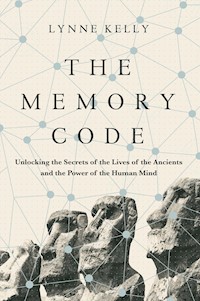
In ancient, pre-literate cultures across the globe, tribal elders had encyclopedic memories. They could name all the animals and plants across a landscape, identify the stars in the sky and recite the history of their people. Yet today, most of us struggle to memorize more than a short poem. Using traditional Aboriginal Australian song lines as a starting point, Lynne Kelly has since identified the powerful memory technique used by our ancestors and indigenous people around the world. In turn, she has then discovered that this ancient memory technique is the secret purpose behind the great prehistoric monuments like Stonehenge, which have puzzled archaeologists for so long. The stone circles across Britain and northern Europe, the elaborate stone houses of New Mexico, huge animal shapes in Peru, the statues of Easter Island - these all serve as the most effective memory system ever invented by humans. They allowed people in non-literate cultures to memorize the vast amounts of information they needed to survive. But how? For the first time, Lynne Kelly reveals the purpose of these monuments and their uses as 'memory places', and shows how we can use this ancient technique to train our minds.
Das E-Book können Sie in Legimi-Apps oder einer beliebigen App lesen, die das folgende Format unterstützen:
Veröffentlichungsjahr: 2017
Ähnliche



















Praise for The Memory Code
‘As we rediscover the extraordinary endurance of the oral memories of people who do not depend on writing, and as we begin to rediscover that many of those memories include knowledge of distant times, Lynne Kelly has explored how vast, non-written memory systems can work. She explores the notion that memories were or are encoded in spaces that can be marked by natural or built elements and applies that exploration to some of the remarkable physical monuments of the last ten thousand years. She takes the reader on a fascinating journey into the past and around the world and into the minds of people who would not need to publish a book like this. They already knew it. An engaging and exciting read.’
Iain Davidson, Emeritus Professor, University of New England
‘Dr Kelly has developed an intriguing and highly original account of the purpose of Stonehenge, Avebury and other stone monuments. The depth and breadth of her research, and the experimental experience she has brought to her study, command respect and invite serious attention.’
Dr Rosamund Cleal, Museum Curator, Alexander Keiller Museum, Avebury, and co-author of Stonehenge in its Landscape
‘An astonishing journey into the memory of the world.’
Associate Professor Grace Karskens, University of NSW, author of The Colony
‘In this insightful book, Kelly takes us on a tour of major archaeological sites and gives us fresh eyes to see how non-literate societies used the landscape, monuments, buildings, spatial arrangements, artefacts, and even sounds as “memory spaces” to encode and transmit detailed information.’
William Lipe, Professor Emeritus, Washington State University
‘Dr Lynne Kelly provides an elegant, rational and compelling thesis on memory as a pre-historic survival tool.’
Dominic O’Brien, eight times World Memory Champion
‘Lynne Kelly takes us on a journey to famous archaeological sites around the world, from Stonehenge to Easter Island, to reveal her groundbreaking ideas about how ancient oral cultures encoded knowledge in stone monuments and sacred spaces.’
Dr Duane W. Hamacher, Senior DECRA Fellow in Indigenous Astronomy, Monash Indigenous Centre
‘Lynne Kelly has struck upon a unique approach by which to evaluate the transmission of complex information in non-literate societies and cultures around the world. The Memory Code is a landmark treatise.’
Larry Baker, archaeologist and Executive Director, Salmon Ruins, New Mexico
‘Lynne Kelly’s remarkable insight into how ancient peoples retained their vast repositories of knowledge by encoding information in the very world around them is matched by her infectious enthusiasm for the subject and a gift for storytelling.’
Dr Tim Dean, Science and Technology Editor at The Conversation
‘This is a timeless masterpiece in ancient oralities, it is a must-read for anyone interested in information technologies, ancient or modern.’
Associate Professor Sarina Chen, Department of Communication Studies, University of Northern Iowa
For Damian Kelly,Leah, Abigail and Rebecca Heitbaum
Other books by Lynne Kelly
Knowledge and Power in Prehistoric Societies
Spiders: Learning to love them
Crocodile: Evolution’s greatest survivor
The Skeptic’s Guide to the Paranormal
Co-authored
Exploring Chaos and Fractals
CONTENTS
Preface
Chapter 1 Encyclopaedic memories of the elders
Indigenous knowledge of animals
Indigenous knowledge of plants
Performed and restricted knowledge
Songlines
Memory spaces and ancient Greeks
Ceremonies serve a multiplicity of purposes
Longevity of stories
Integrated knowledge systems
Chapter 2 Memory spaces, large and small
Skyscapes of memory
Miniature memory spaces
Strings: twisted, turned and knotted
Bundles of non-utilitarian objects
Representation of mythological ancestors
Pueblo corn stories: mythology and science
Genealogies and totems
Chapter 3 Memory spaces in a modern world
The landscape as a memory space
Skyscapes as a memory space
Decks of cards as memory spaces
Miniature memory spaces
A myriad memory spaces
Chapter 4 A journey through time
The first modern humans
Monumental memory spaces
Chapter 5 The ever-changing memory spaces at Stonehenge
A mind game of transition to settlement
Stonehenge and the British Neolithic
First stage: 3000–2920 BCE (Middle Neolithic)
Henge ditches
Stonehenge: the theories
Second stage: 2620–2480 BCE (Late Neolithic)
Third stage: 2480–2280 BCE (Copper Age)
Fourth stage: 2280–2020 BCE (Early Bronze Age)
Fifth stage: 1680–1520 BCE (Middle Bronze Age)
Portable objects
Memory spaces, mines and moving on
Chapter 6 The megalithic complexes of Avebury and Orkney
Avebury
Windmill Hill
West Kennet Long Barrow
Avebury henge
The Sanctuary
Silbury Hill
Orkney
Skara Brae
Carved stone balls
Stones of Stenness
Chambered cairns
Maeshowe
The Ring of Brodgar
Chapter 7 Newgrange and the passage cairns of Ireland
County Meath passage cairns
Neolithic art
The purpose of the passage cairns
Circles of timber and stone
Decorated stones
Smaller passage cairns across County Meath
Individual burials
Chapter 8 The tall stones and endless rows of Carnac
The Carnac Mounds and the Tumulus de Saint-Michel
The Middle Neolithic passage cairns
The stone rows of Carnac
Gallery and lateral entrance graves
Chapter 9 The unparalleled architecture of Chaco Canyon
Pueblo Bonito
Learning from contemporary Pueblo
The Ancestral Puebloans at Chaco Canyon
Great houses
Enigmatic decorated objects
Buying knowledge at Chaco Canyon
Chapter 10 Giant drawings on the desert floor at Nasca
Astronomy
Making the lines
The animal glyphs
Trapezoids, squares and rectangles
Straight lines dominate the pampa
Time and change on the pampa
Chapter 11 Memory spaces across the Americas
The hunter-gatherers of Watson Brake and Poverty Point
Memory spaces grow more complex
Writing represents sound in Mesoamerica
The earthworks of North America gain complexity
The literate Aztecs and non-literate Inca
Chapter 12 Polynesian navigators create a unique world on Easter Island
The original settlers
The amazing skill of the Pacific navigators
Arriving on Easter Island
Settling another small Polynesian island: Rarotonga
Adapting to a different environment: New Zealand
Knowledge structured by genealogy
A memory space beyond the shoreline
The collapse of a culture
The Birdman cult
Art in many forms
Epilogue
Acknowledgements
About the author
Notes
Index
Picture section
List of Illustrations
PLATE 1.1 Uluru, in Central Australia, from the air. Every notch and crevice around the perimeter of the rock is used as a location by Indigenous Australians to memorise information. (IAN ROWLAND)
PLATE 2.1 A Mbudye ‘man of memory’ points to features of a lukasa memory board as he narrates Luba histories or other stories. (MARY NOOTER ROBERTS)
PLATE 2.2 A lukasa created by the Luba people, Zaire, now the Democratic Republic of the Congo. The memory boards were used by the secretive Bumbudye society until well into the twentieth century. (THOMAS Q. REEFE)
PLATE 2.3 An Australian Aboriginal coolamon. The underside has abstract carvings used as a memory aid. (DAMIAN KELLY)
PLATE 2.4 Lone Dog’s winter count records 70 years of memorable events for the Nakota Sioux. (MUSEUM OF NATIVE AMERICAN HISTORY, BENTONVILLE, ARKANSAS)
PLATE 2.5 Kachina dolls as displayed at the Peabody Museum of Archaeology and Ethnography. Left: Saliko mana (Salako Maiden, Hopi) stands at over 50 cm. Right: Kwewu (Wolf, Hopi) is just over 20 cm tall. (LYNNE KELLY)
PLATE 3.1 The author’s memory board in the style of the Luba lukasa, made from wood, beads and shells. (LYNNE KELLY)
PLATE 4.1The Doves, an artwork in the Oenpelli style by Indigenous artist, Andrew Munakali (1940–1988). This artwork is representative of the longest continual art tradition in the world. Aboriginal art serves as a memory aid to the knowledge system. (DAMIAN KELLY)
PLATE 5.1 An artist’s depiction of the Whitehawk Neolithic Causewayed Enclosure, Brighton. (IAN DENNIS, CARDIFF UNIVERSITY, WALES)
PLATE 5.2 The stone circle at Boscawen-Un in Cornwall. (DAMIAN KELLY)
PLATE 5.3 Stonehenge. One of the smaller bluestones can be seen in the centre. In the foreground are the remains of the ditch. (DAMIAN KELLY)
PLATE 5.4 Carved chalk plaques from near Stonehenge. (COURTESY OF SALISBURY MUSEUM)
PLATE 5.5 A Grooved Ware pot from Durrington Walls, reconstructed by Dr Rosamund Cleal at the Alexander Keiller Museum, Avebury. (DAMIAN KELLY)
PLATE 6.1 The arrangement of timber posts at Stanton Drew in Somerset was revealed by English Heritage’s 1997 magnetometer survey. (REPRODUCED FROM STANDING WITH STONES BY RUPERT SOSKIN, THAMES & HUDSON LTD, LONDON, 2009)
PLATE 6.2 The West Kennet Long Barrow. Left: The forecourt facade. Right: The passage. (DAMIAN KELLY)
PLATE 6.3Left: Part of the circle and ditch at Avebury. (DAMIAN KELLY) Right: An artist’s impression of the Avebury ditch as it may have looked in the Neolithic.(PETER ROBERTS,WWW.AVEBURY-WEB.CO.UK)
PLATE 6.4 Silbury Hill today; the truck and car give an idea of the size of this Neolithic construction. (DAMIAN KELLY)
PLATE 6.5 An aerial view of the 2015 excavations on the Ness of Brodgar, Orkney; the Stones of Stenness are visible in the far background. (HUGO ANDERSON-WHYMARK)
PLATE 6.6 Rock art from the Ness of Brodgar excavations. (LYNNE KELLY)
PLATE 6.7 One of the houses in Skara Brae after excavation. (DAMIAN KELLY)
PLATE 6.8 A six-knobbed carved stone ball, a many-knobbed carved stone ball, and the elaborate Towie carved stone ball (all photographed at the Museum of Scotland). (DAMIAN KELLY)
PLATE 6.9 Inside Unstan Chambered Cairn. Left: The chamber photographed from one end. Right: The passage which enters in the middle of one side of the chamber. (LYNNE KELLY)
PLATE 6.10 The Dwarfie Stane on the island of Hoy, Orkney, with the inset showing the recess carved into the middle of the hard stone. (DAMIAN KELLY)
PLATE 6.11 Part of the Ring of Brodgar with the Ness of Brodgar in the background and the Loch of Harray to the left. The Loch of Stenness is to the right. (DAMIAN KELLY)
PLATE 7.1 Approaching Newgrange in County Meath, Ireland. (DAMIAN KELLY)
PLATE 7.2 One of the 97 kerbstones surrounding Newgrange. (DAMIAN KELLY)
PLATE 7.3 Entrance stone to Newgrange, with the roof-box above. (DAMIAN KELLY)
PLATE 7.4 At Cairn-T, the rising sun on the mornings around the equinox illuminates the passage, chamber and highly decorated stone at the back. This photograph was taken on the 22 September 2011 equinox. (COURTESY MICHAEL FOX, BOYNEVALLEYTOURS.COM)
PLATE 8.1 The stone rows at Carnac, France. (DAMIAN KELLY)
PLATE 8.2 The Tumulus de Saint-Michel, France, dates from around 4700 BCE. The chapel was first built on top in 1663. (DAMIAN KELLY)
PLATE 8.3 The passage cairn of Gavrinis from the boat on the Gulf of Morbihan, France. (DAMIAN KELLY)
PLATE 8.4 A cast of the stone showing the ‘breasts’ from Les Pierres Plates. (LYNNE KELLY)
PLATE 9.1 The lower rooms in the great house, Pueblo Bonito, Chaco Canyon, New Mexico. (LYNNE KELLY)
PLATE 9.2 An artist’s digital reconstruction of Pueblo Bonito, Chaco Canyon. (NIC CHANCELLOR)
PLATE 9.3 The great kiva at Chetro Ketl, New Mexico, showing central hearth, post holes for roof supports, and what are thought to have been storage vats or foot drums. The regular niches around the walls are found in all great kivas. (LYNNE KELLY)
PLATE 9.4 Mimbres bowl with depiction of Townsend’s big-eared bat, c. 1050–1150 CE. Mimbres Bowl, earthenware with slip and pigments (10.8 cm x 25.7 cm). (COLLECTION OF THE FREDERICK R. WEISMAN ART MUSEUM AT THE UNIVERSITY OF MINNESOTA, MINNEAPOLIS. TRANSFER FROM THE DEPARTMENT OF ANTHROPOLOGY. 1992.22.1154)
PLATE 9.5 One of the oddly positioned exterior windows at Pueblo Bonito; this one aligns with the winter solstice. (LYNNE KELLY)
PLATE 9.6 The natural twin peaks at Chimney Rock, a Chacoan outlier, offer a lunar standstill alignment when viewed from the great house. (LYNNE KELLY)
PLATE 9.7 Fajada Butte, showing the location of the sun dagger. (LYNNE KELLY)
PLATE 10.1 The Nasca hummingbird glyph. (MATYAS REHAK)
PLATE 10.2 The Nasca monkey glyph. The spiral tail indicates a spider monkey, which is not indigenous to the area. (CHRISTIAN VINCES)
PLATE 11.1 Miniature decorated Poverty Point Objects on display in the Poverty Point Visitors’ Centre. (LYNNE KELLY)
PLATE 11.2 A facsimile of the pre-Columbian Codex Zouche-Nuttall from the Mixtec culture, probably dating from the 14th century, on display in the British Museum. (LYNNE KELLY)
PLATE 11.3Top: The west and north faces of the Pyramid of Kukulkan at Chichén Itzá. The serpent head at the base of the nearside balustrade of the western stairway is the one that connects with the moving shadow on the spring and autumn equinoxes. Bottom: The serpent head at the base of the balustrade. (RUDI HEITBAUM)
PLATE 11.4 An artist’s impression of Cahokia, 1100–1200 CE, with Woodhenge in the foreground. (CAHOKIA MOUNDS STATE HISTORIC SITE, PAINTING BY LLOYD K. TOWNSEND)
PLATE 11.5 The Bighorn Medicine Wheel in Wyoming. (US FOREST SERVICE)
PLATE 11.6 The Incan khipu I examined at the Peabody Museum; it became the basis for my own khipu. (© PRESIDENT AND FELLOWS OF HARVARD COLLEGE, PEABODY MUSEUM OF ARCHAEOLOGY AND ETHNOGRAPHY, PM # 42-28-30/4532 (DIGITAL FILE # 60743280))
PLATE 12.1 The Great Ahu of Tongariki on Easter Island. (IAN ROWLAND)
PLATE 12.2 Moai on the mountainside. (IAN ROWLAND)
PREFACE
I had no idea that indigenous animal stories from around the world would lead me to a new theory for Stonehenge. I had a PhD scholarship as a science writer and was looking forward to three years of gentle research leading to a natural history book about animal behaviour and indigenous stories. Eight tumultuous years later and that book is now in your hands, bearing only scant resemblance to the confident outline that started my journey.
It was only weeks into the PhD in the English program at La Trobe University that I glimpsed the complexity of Australian Aboriginal elders’ knowledge, the first group of cultures I explored in depth. They memorised a vast amount of information about animals, their identification and behaviour, habitats and uses. A huge number of species of birds, mammals, reptiles and invertebrates were accurately described in stories, even when they had no apparent practical use. I realised that the elders could identify all the animals across a wide landscape, when I was struggling with just the birds in my local area. I had a field guide; they had only memory.
I started asking the question which soon became an obsession: how could they remember so much stuff?
At our second meeting, my PhD supervisor, Professor Sue Martin, named a list of suggested resources, casually adding ‘and it might be worth looking at Ong on morality’. I dutifully wrote down ‘Ong’ and ‘morality’, wondering if it was something about my ethics that was giving her concern. I found Ong’s book in the library. The title was Orality and Literacy.
Orality, I soon discovered, was about making knowledge memorable. It was about using song, story, dance and mythology to help retain vast stores of factual information when the culture had no recourse to writing. It was the first step to understanding how they could remember so much stuff. The definition of ‘stuff’ was growing rapidly to include not only the animal knowledge I was researching, but also the names and uses of plants; resource access and land management; laws and ethics; geology and astronomy; genealogies, to ensure they knew their rights and relatives; navigation, to ensure they could travel long distances when there were no roads or maps; ideas about where they had come from; and, of course, what they believed. Indigenous cultures memorised everything on which their survival—physically and culturally—depended.
I wasn’t far into my research when I began to understand that songlines were key to the way Indigenous Australians organised this vast store of information so that it would not be forgotten. Songlines are sung narratives of the landscape, singing tracks that weave across the country and enable every significant place to be known. At each location, rituals are performed that enact the knowledge associated with that specific place. In this context, rituals are repeated acts and no more should be implied by that word. The degree to which they are religious ceremonies depends entirely on the specific ritual. One elder explained to me how singing the names of the sacred sites along the songlines created a set of subheadings to the entire knowledge base, a place for knowing about every animal, plant and person. The songlines could be sung when moving through the space in reality or in imagination.
By repeating the stories of the mythological beings through songs and dances at sacred landscape sites, information could be memorised, even if it was not used for tens, hundreds or thousands of years. Songs are far more memorable than prose. Dances can depict animal behaviour and tactics for the hunt in a way no words can do. Mythological characters can act out a vivid set of stories that are unforgettable.
I recognised that Aboriginal elders were using their songlines in a similar way to the ancient Greek orators who mentally walked through their buildings and streetscapes from location to location to help them memorise their speeches. They called it ‘the method of loci’. Modern memory champions memorise shuffled decks of cards using the same method, walking through their homes or churches, grand buildings or public spaces in their imaginations as they recall each card. They call them memory palaces.
A few months later, I travelled to England with my husband, Damian. He had also returned to university, in his case to study archaeology. My goal was to spend time at museums looking for representations of animals among indigenous collections to frame my book. Damian was off to visit archaeological sites. The downpour on the day he’d planned to go to Stonehenge was so intense that he decided not to stop on his journey to Cornwall. On a fine day, he wanted to try again. I just wanted to get to Bath and indulge in Jane Austen. Dutifully, I walked around Stonehenge, tourist earphones providing commentary. At that early stage of my newly acquired obsession, I was so immersed in my subject that I naively expected orality and memory to be the focus of every commentary. The disembodied voice with the perfect English accent told me about the various theories but didn’t mention orality or memory or anything about the builders’ system of knowledge. There was a great deal of very important information, but I was immune to it, listening only for my pet topic.
Stonehenge was initially a simple stone circle built at the very start of the transition from a mobile hunting and gathering lifestyle to settling and farming. What would happen, I asked myself on Salisbury Plain that day, to the knowledge that these people had acquired over thousands of years and embedded in the landscape? Farming doesn’t happen rapidly. The transition takes time. How would the settlers avoid forgetting all their songs and stories and knowledge of the animals and plants if they were no longer visiting the memory locations their ancestors had spread across the broad countryside? How clever of them, I decided. They’ve replicated a series of landscape sacred places in their local environment. What could be more perfect than a circle of stones, each stone representing a former sacred location, each stone acting as a memory aid? I didn’t realise that this had never been suggested before.
As we were funnelled out through the gift shop, I started checking the indexes of books for ‘orality’, having by this stage forgotten that I’d never heard the term until a few months before. I searched every book for any mention of ‘orality’ or ‘memory’ and found nothing. I bought the most recent book I could find written by a bona fide archaeologist. Flicking through it, the word ‘illiterate’ caught my attention. In the field of orality, the word ‘illiterate’ is used for those who cannot read or write within a literate culture, while those with no contact at all with writing are referred to as ‘non-literate’ or ‘oral’. Was it possible that the body of sociological research on the way oral cultures memorise information had not crossed into the archaeological interpretation of monuments built by oral cultures? Could I be so lucky?
I was online as soon as I could and found only one reference linking Stonehenge to orality. An American sociologist, Carl Couch, had written a paper titled ‘Oral technologies: Cornerstones of ancient civilisations?’ It was an obscure paper and I was unable to access it until I returned home. I could find nothing else. I became wildly excited. Maybe no one had actually suggested this before. Maybe I had an original theory for the purpose of Stonehenge. Surely not.
A few days later I was a guest at a small dinner. I started enthusing about my theory. The first of my fellow diners to respond told me it sounded like rubbish but he was willing to be convinced if I could provide the evidence. It took me five years to convince him. The second response was that it sounded like rubbish, and ‘What on earth would they need to memorise anyway?’ That question had to be answered before there was any point in going on. It takes the first chapter of this book. A third guest asked how I would know if I was not self-deluded? Wasn’t I just seeing my beloved orality and memory everywhere I looked? That question became a profoundly difficult one.
I was soon back at university, half-jokingly telling Sue Martin that I thought I had solved the mystery of Stonehenge. Any normal supervisor would have pointed out that I had a PhD scholarship for my original topic and a publisher interested in publishing it. To abandon all that to chase some wild idea when I didn’t even have a background in archaeology was clearly foolhardy. Sue Martin, however, was not a normal supervisor. She wanted the idea evaluated so I would not be constantly distracted by my latest enthusiasm. We talked about how I could know that I was not self-deluded, just seeing orality and memory everywhere I looked. We decided it required external checking by somebody quite dispassionate about my research. Being so early in the PhD process, she suggested that I run my two themes parallel—keep reading on animals in indigenous stories and take six months to see whether there was any validity to my claims about Stonehenge.
The librarian attached to our faculty, Lisa Donnelly, did numerous convoluted searches, the sort that only academic librarians know how to do. She constantly checked my sources and searched for anything which could indicate that the theory had been proposed before and been rejected for fairly obvious archaeological reasons. At the end of six months she reported that the theory appeared to be totally original and all my sources sound.
I approached three archaeologists at the university, only to be dismissed by each of them. I could understand. For an archaeologist, someone from the English program with a new theory for Stonehenge must represent a stereotypical nightmare. Sue asked me to outline the theory in writing. She sent the dozen or so pages to the archaeology department explaining that we were perfectly happy for this to be dismissed, but could we please have the reasons why. It was only then that I would be able to get back on track with my gentle PhD topic.
The response was rapid. In essence it said the archaeology appeared sound, the theory appeared original, and the anonymous archaeologist wanted nothing to do with me. I was devastated. I needed help. I needed to sit down and talk about my ideas with somebody who would be able to guide me in the archaeology. Over the next few months, we approached two other members of the faculty, to no avail.
The question posed by the third guest at the dinner party haunted me. I was starting to believe that I was self-deluded in seeing my theory everywhere. Logic told me that if these ideas explained Stonehenge and all the stone circles of the British Neolithic, then I should be able to see similar patterns in any archaeological site in the world that represented the early stages of settlement. The list of archaeological sites matching the pattern was growing daily. Two in particular had attracted my attention: Chaco Canyon in New Mexico and Poverty Point in Louisiana. I gained a university travel grant to visit these sites, which included funding for two days to hire American archaeologist Larry Baker to take me to Chaco Canyon and the surrounding Ancestral Puebloan sites. I had a captive archaeologist at last; he was stuck in a car with me for two whole days. He loved the theory.
I submitted articles to journals. An archaeology journal said it was too much anthropology for them. An anthropological journal said it was much more about archaeology. An interdisciplinary journal rejected it within twelve hours. The niggling voice in my head started to yell that there was no way someone as ordinary as me should be trying to solve one of the world’s great mysteries.
By 2010, I was becoming more and more stressed keeping two PhD topics running. I just needed to pinpoint exactly what was wrong with the Stonehenge theory so I could return to my straightforward thesis about animal behaviour and indigenous stories. I was struggling to sleep and my health was deteriorating.
Damian announced that psychiatric bills would be far more expensive than a trip to England and he was booking flights. I was to make contact with a British Neolithic archaeologist, gain time for an interview, and then we would fly there and settle the matter. Dr Rosamund Cleal is lead editor and contributing author of English Heritage’s seminal book Stonehenge in its Landscape. I imagined that she would do all she could to avoid yet another Stonehenge theory. She offered an hour. It stretched to four, followed by an invitation to return the next day. A few more hours’ discussion finished with Dr Cleal stating that I could quote her publicly saying ‘This theory is well worth pursuing.’ After that encouragement, nothing was going to stop me.
It was to be another three years before the thesis was formally assessed by archaeologists and passed. After further review, it was published as a book for Cambridge University Press.
During those years I started implementing in my everyday life the memory methods that I had learnt from indigenous cultures. I was creating songlines in my own neighbourhood and linking to them vast amounts of information about every country in the world, about all of prehistory and history. At the same time, I was copying an African memory board to encode the more than four hundred birds found in my state, and assigning the hundred native mammals to a wooden post. As somebody who struggled to remember what others would consider general knowledge, I was rapidly gaining an encyclopaedic knowledge base beyond anything I could have imagined possible.
With the doctorate finished, I invested more and more time into these memory experiments, adding knowledge daily as I walked the dog. It was fun, and nothing like the stressful memory work required for exams in the past. Why hadn’t I been taught these methods at school? After a year or so, I was starting to see patterns in the information even though I was not actively searching for them. I found my stories starting to take on the form of the indigenous stories I’d read from all over the world. I was seeing familiar knowledge in a different way—vivid, visual and emotional. I gained insight and pleasure from the process.
This book is about indigenous memory, about Stonehenge and archaeological sites all over the world, and about a journey I took from the moment I stumbled across a simple idea standing on Salisbury Plain. Stonehenge was a memory space. The world is full of ancient memory spaces. My world is now full of contemporary memory spaces and so much the richer for it.
CHAPTER 1
Encyclopaedic memories of the elders
It is only recently that the depth and complexity of oral traditions has been acknowledged. Archaeologists have long recognised that the Neolithic Britons had the same brains and the same intellectual potential as you and me. Modern humans have been around for tens of thousands of years. Yet for far too long, indigenous cultures were seen as intellectually inferior and primitive. It is only a hundred years ago that the hugely influential Sigmund Freud wrote: ‘I shall select as the basis of this comparison the tribes which have been described by anthropologists as the most backward and miserable of savages, the aborigines of Australia.’
Lesen Sie weiter in der vollständigen Ausgabe!
Lesen Sie weiter in der vollständigen Ausgabe!
Lesen Sie weiter in der vollständigen Ausgabe!
Lesen Sie weiter in der vollständigen Ausgabe!
Lesen Sie weiter in der vollständigen Ausgabe!
Lesen Sie weiter in der vollständigen Ausgabe!
Lesen Sie weiter in der vollständigen Ausgabe!
Lesen Sie weiter in der vollständigen Ausgabe!
Lesen Sie weiter in der vollständigen Ausgabe!
Lesen Sie weiter in der vollständigen Ausgabe!
Lesen Sie weiter in der vollständigen Ausgabe!
Lesen Sie weiter in der vollständigen Ausgabe!
Lesen Sie weiter in der vollständigen Ausgabe!
Lesen Sie weiter in der vollständigen Ausgabe!
Lesen Sie weiter in der vollständigen Ausgabe!
Lesen Sie weiter in der vollständigen Ausgabe!
Lesen Sie weiter in der vollständigen Ausgabe!
Lesen Sie weiter in der vollständigen Ausgabe!




