


41,99 €
Mehr erfahren.
- Herausgeber: John Wiley & Sons
- Kategorie: Geisteswissenschaft
- Sprache: Englisch
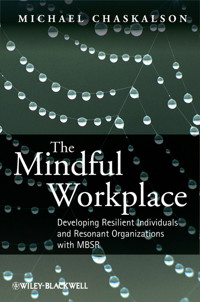
This book offers a practical and theoretical guide to the benefits of Mindfulness-Based Stress Reduction (MBSR) in the workplace, describing the latest neuroscience research into the effects of mindfulness training and detailing an eight-week mindfulness training course.
- Provides techniques which allow people in organizations to listen more attentively, communicate more clearly, manage stress and foster strong relationships
- Includes a complete eight-week mindfulness training course, specifically customized for workplace settings, along with further reading and training resources
- Written by a mindfulness expert and leading corporate trainer
Sie lesen das E-Book in den Legimi-Apps auf:
Seitenzahl: 261
Veröffentlichungsjahr: 2011
Ähnliche




















Table of Contents
Cover
Title page
Copyright page
Dedication
Foreword
Preface
Introduction
1 What Is Mindfulness?
2 What Is Mindfulness Practice?
Mindful Movement
Mindful Walking
Mindfulness of Routine Activities
3 Positive and Negative Stress
The Yerkes–Dodson Curve
4 Approach and Avoidance
5 Metacognition
6 Respond
7 Mindfulness and Emotional Intelligence
8 Mindfulness for Leaders
9 Mindfulness in Coaching
10 Living Mindfully
11 Putting on an Eight-Week Mindfulness Course in a Workplace Setting
What Outcomes Are You Looking For?
Who Would the Course Be For?
Will Attendance Be Voluntary or Not?
How Will You Recruit Participants?
Which Format Is Best Suited to the Client Group in Question?
Where and When Is a Course Best Run?
How Much Time Can You Reasonably Ask Participants to Devote to Home Practice?
Who Will Lead the Course?
An Eight-Week Course Outline
Appendix 1
Appendix 2
Appendix 3
Appendix 4
Index
This edition first published 2011
© 2011 John Wiley & Sons, Ltd.
Wiley-Blackwell is an imprint of John Wiley & Sons, formed by the merger of Wiley’s global Scientific, Technical and Medical business with Blackwell Publishing.
Registered Office
John Wiley & Sons Ltd, The Atrium, Southern Gate, Chichester, West Sussex, PO19 8SQ, UK
Editorial Offices
The Atrium, Southern Gate, Chichester, West Sussex, PO19 8SQ, UK
350 Main Street, Malden, MA 02148-5020, USA
9600 Garsington Road, Oxford, OX4 2DQ, UK
For details of our global editorial offices, for customer services, and for information about how to apply for permission to reuse the copyright material in this book please see our website at www.wiley.com/wiley-blackwell.
The right of Michael Chaskalson to be identified as the author of this work has been asserted in accordance with the UK Copyright, Designs and Patents Act 1988.
All rights reserved. No part of this publication may be reproduced, stored in a retrieval system or transmitted, in any form or by any means, electronic, mechanical, photocopying, recording or otherwise, except as permitted by the UK Copyright, Designs and Patents Act 1988, without the prior permission of the publisher.
Wiley also publishes its books in a variety of electronic formats. Some content that appears in print may not be available in electronic books.
Designations used by companies to distinguish their products are often claimed as trademarks. All brand names and product names used in this book are trade names, service marks, trademarks or registered trademarks of their respective owners. The publisher is not associated with any product or vendor mentioned in this book. This publication is designed to provide accurate and authoritative information in regard to the subject matter covered. It is sold on the understanding that the publisher is not engaged in rendering professional services. If professional advice or other expert assistance is required, the services of a competent professional should be sought.
Library of Congress Cataloging-in-Publication Data
Chaskalson, Michael.
The mindful workplace : developing resilient individuals and resonant organizations with MBSR / Michael Chaskalson.
p. cm.
Includes index.
ISBN 978-0-470-66158-1 (cloth) – ISBN 978-0-470-66159-8 (pbk.)
1. Meditation–Therapeutic use. 2. Mindfulness-based cognitive therapy. 3. Stress management. 4. Job stress–Prevention. I. Title.
RC489.M55C43 2011
615.8'52–dc22
2011009383
A catalogue record for this book is available from the British Library.
This book is published in the following electronic formats: ePDFs 9781119976981; Wiley Online Library 9781119976974; ePub 9781119976912; eMobi 9781119976929
To John Teasdale, Becca Crane and Ciaran Saunders (Ruchiraketu) for all the stimulating conversations on mindfulness and related themes. And to Annette (Dhirangama) for her love, kindness and constant support.
Thanks to Darren Reed, my editor at Wiley-Blackwell, for proposing this book and for steering it through the processes of publication with consummate grace. And to Leah Morin, for her wonderfully tactful, accurate and kindly copy-editing. It’s been a delight to work with them both.
Foreword
We are entering a world of work where the combination of ever increasing globalization and technological advances are breaking our work up into ever smaller fragments. Faced with a continuous barrage of emails, constantly ringing phones, ever more demanding Twitter feeds and insistent Facebook updates, it’s easy to let the instant, the pressing and the immediate overwhelm the important and the longer term. We are becoming overwhelmed by the sheer size of connectivity: over five billion people will soon potentially be connected to each other.
It’s no surprise that, for many of us, three minutes is about as long as we can concentrate before being interrupted, and our relationships are becoming increasingly virtual and alienated. The results can be devastating. Skills become denuded as less time is spent in precious concentration, anxiety rises as the immediate overwhelms any sense of boundaries between us and our work, and loneliness becomes the central motif of much of our working lives. Faced with the sheer volume of stimulation, we are living our working lives on automatic pilot.
Yet, faced with the challenge of fragmentation and loneliness, what we need is not yet more careful time-management skills to eke out every last second; it is not the future promise of cognitive assistants capable of managing our inboxes; it is not even another programme to network and influence people. No: what we need is a way of thinking more mindfully about ourselves, our work and our companies. This message of mindfulness becomes ever more insistent when we consider the potential joy that longevity will bring to our working lives. The 50 years that many of us can expect to work could be a period of great meaning and satisfaction. But it also has the possibility of simply elongating what is already an energy-draining activity. Our working lives are rapidly shifting from a race to a marathon. Burnout for peak performance may have worked for a race – but it does not provide the resilience that a marathon takes.
The forces of technology, globalization, connectivity and demography together are creating an increasingly urgent need to shift the way we think about work and the skills and competencies we develop to build resilience. These mindful habits, skills and techniques will be crucial to navigating the road ahead.
It is these habits of mindfulness, the skills of self-awareness and the practices of meditation that Michael describes with so much wisdom and clarity. When we understand ourselves more profoundly, accept ourselves more fully and give ourselves an opportunity to reflect, then we build resilience for the path ahead.
The simplicity of Michael’s message is underpinned by profound thought, insight and wisdom. Resilient lives are not made from grand gestures and the construction of grandiose theories. Resilience is built through the everyday, every-minute habits and exercises that punctuate our daily lives. When we consciously and mindfully choose to change the way we work and live, and consciously and mindfully build the habits of meaning into our lives, then we have the chance – the promise – of working with the forces that will shape our lives, rather than working against them.
Lynda Gratton
Professor of Management Practice
London Business School
Author of The Shift: The Future of Work Is Already Here
Preface
Mindfulness is a way of paying attention, in the present moment, to yourself, others and the world around you. It is a skill that you can train in, using techniques like meditation and yoga. As we’ll see, research shows that people who do that are more aware of their thoughts and feelings and better able to manage them. Mindfulness training boosts your attention and concentration, raises your level of emotional intelligence, increases your resilience and improves your relationships.
This book makes the case for mindfulness training in the workplace. Put simply, its hypothesis is that people who are better at working with their minds and mental states will be more productive than those who are less skilled in these areas. Based on the emerging research evidence around the value of mindfulness training, the book discusses the relevance of that research to the world of work. It also tells the story of how mindfulness emerged from the Buddhist monasteries in which it was cloistered for 2500 years and is now being adopted as a mainstream health-care intervention. Recommended as a frontline treatment by the UK National Institute for Health and Clinical Excellence (NICE), mindfulness is now also being used as a means of increasing resilience and enhancing emotional intelligence and overall effectiveness in a wide range of organizations: banks, media companies, industry, law and accountancy firms, the police, government and the military.
When I first began to practise mindfulness and meditation in 1975, sitting in patched jeans in draughty meditation rooms with my scruffy, enthusiastic companions, I never dreamed that I’d one day be wearing a suit and teaching it in corporate meeting rooms to senior partners in a global law firm. Nor could I ever have imagined that an organization like the US Marine Corps would adopt mindfulness training. But they have. A study conducted in the Corps found mindfulness training to be an effective means of helping combatants resist the various functional impairments associated with high-stress challenges. Marines who completed an eight-week Mindfulness-Based Stress Reduction (MBSR) course showed raised levels of cognitive control, increased self-awareness, more situational awareness and improved emotional regulation.
Studies like that were unthinkable in 1975. At best, it was a kind of fantasy. Wouldn’t it be wonderful, my companions and I dreamed, if society at large could share in the benefits we were finding in our own mindfulness practice?
There are two key factors that seem to be driving the wider adoption of mindfulness. The first is its secularization. Thanks largely to the pioneering efforts of Jon Kabat-Zinn and his colleagues at the University of Massachusetts Medical School (of whom more later), mindfulness, which for thousands of years had been preserved almost exclusively in Buddhist contexts, is increasingly being offered as a purely secular form of mental training. Today you don’t have to be a Buddhist to practise it and it is freely available to people from any religious background and to those with none.
Then, there is the science. When I first began to study mindfulness academically around 2003, there were a handful of respectable academic papers to refer to. Most of us in the field had read these and could refer to them easily. Now, that is impossible. There are thousands of papers out there and the volume of publications is increasing exponentially. From what we now know, based on published studies, mindfulness appears to be effective in reducing levels of stress and increasing levels of resilience and emotional intelligence. It raises the level of self-awareness and awareness of others; it increases interpersonal sensitivity and communication skills. It lowers rates of health-related absenteeism, leads to increased concentration and extends one’s attention span. It reduces impulsivity and improves one’s capacity to hold and manipulate information. It lowers levels of psychological distress and raises levels of well-being and overall work and life satisfaction. More and more of this kind of evidence is coming out each month.
But perhaps the most dramatic illustrations of the beneficial changes brought about by mindfulness training come from the field of neuroscience. Taking just one example, a study recently published1 investigated pre- and post-changes in brain grey-matter concentration attributable to participation in an MBSR programme. It showed that after just eight weeks of mindfulness training there were significant increases in grey-matter concentration in brain regions involved in learning and memory processes, emotion regulation, self-referential processing and perspective-taking.
Evidence showing the clear benefits of mindfulness training increases every day and the uptake of mindfulness practices across the board in our culture is growing steadily. This book aims to show the relevance of this evidence and this training to today’s rapidly changing, uncertain and often stressful workplace. I hope it will play its own small part in helping to make these remarkable techniques more widely available.
Reference
1 Hölzel, B.K., Carmody, J., Vangel, M., et al. (2011) Mindfulness practice leads to increases in regional brain gray matter density. Psychiatry Research: Neuroimaging, 191 (1), 36–43.
Introduction
The Business Case for Mindfulness Training
In a conference room on the edge of London 15 employees of one of the world’s largest online retailers sit in a circle. The room is normally used for PowerPoint presentations of strategy options or market-research data, but today is different. One of the company’s legal counsellors is here, as are the managers of various divisions. There are strategists present, HR people and a small cluster of people concerned with new-business development. It’s not been an easy time for the firm. They have had their world more or less to themselves for almost a decade, but rival companies have recently been eating away at their market share. A series of high-profile litigation cases have begun to affect crucial public perceptions of a company once thought of as hip, radical and somehow friendly. Some think their approach is beginning to look a little tired. And the market is beginning to turn – it seems we may be on the brink of a deep recession.
Lesen Sie weiter in der vollständigen Ausgabe!
Lesen Sie weiter in der vollständigen Ausgabe!
Lesen Sie weiter in der vollständigen Ausgabe!
Lesen Sie weiter in der vollständigen Ausgabe!
Lesen Sie weiter in der vollständigen Ausgabe!
Lesen Sie weiter in der vollständigen Ausgabe!
Lesen Sie weiter in der vollständigen Ausgabe!
Lesen Sie weiter in der vollständigen Ausgabe!
Lesen Sie weiter in der vollständigen Ausgabe!
Lesen Sie weiter in der vollständigen Ausgabe!
Lesen Sie weiter in der vollständigen Ausgabe!
Lesen Sie weiter in der vollständigen Ausgabe!
Lesen Sie weiter in der vollständigen Ausgabe!
Lesen Sie weiter in der vollständigen Ausgabe!
Lesen Sie weiter in der vollständigen Ausgabe!
Lesen Sie weiter in der vollständigen Ausgabe!




