


Erhalten Sie Zugang zu diesem und mehr als 300000 Büchern ab EUR 5,99 monatlich.
- Herausgeber: The History Press
- Kategorie: Sachliteratur, Reportagen, Biografien
- Sprache: Englisch
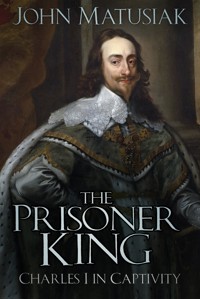
Much has been written about Charles I's reign, about the brutal civil war into which his pursuit of unfettered power plunged the realm, and about the Commonwealth regime that followed his defeat and execution. His reign is one that shaped the future of the British monarchy, and his legacy still remains with us today. The Prisoner King provides an examination of the crucial period encompassing Charles I's captivity after his surrender to the Scots at Newark in May 1646. Not only were the subsequent months before his trial a time when the human dimension of the king's predicament assumed intensity, they were also a critical watershed when the entire nation stood at the most fateful of crossroads. For Charles himself – as subterfuge, espionage and assassination rumours escalated on all fronts, escape attempts foundered, and tensions with his absent wife mounted agonisingly – the test was supreme. Yet, in a painful passage involving both stubborn impenitence and uncommon fortitude in the face of 'barbarous usage' by his captors, the 'Man of Blood' would ultimately come to merit his unique place in history as England's 'martyr king'.
Sie lesen das E-Book in den Legimi-Apps auf:
Seitenzahl: 644
Veröffentlichungsjahr: 2017
Das E-Book (TTS) können Sie hören im Abo „Legimi Premium” in Legimi-Apps auf:
Ähnliche













About the Author
JOHN MATUSIAK studied at the universities of London and Sussex before embarking upon a teaching career that eventually spanned more than thirty years. His written works include biographies of Henry VIII, Thomas Wolsey and James I, as well as The Tudors in 100 Objects and Europe in Flames.
For Bella and Genevieve
First published 2017
This paperback edition first published 2025
The History Press
97 St George’s Place, Cheltenham,
Gloucestershire, GL50 3QB
www.thehistorypress.co.uk
© John Matusiak, 2017, 2025
The right of John Matusiak to be identified as the Author of this work has been asserted in accordance with the Copyright, Designs and Patents Act 1988.
All rights reserved. No part of this book may be reprinted or reproduced or utilised in any form or by any electronic, mechanical or other means, now known or hereafter invented, including photocopying and recording, or in any information storage or retrieval system, without the permission in writing from the Publishers.
British Library Cataloguing in Publication Data.
A catalogue record for this book is available from the British Library.
ISBN 978 0 75098 504 8
eBook converted by Geethik Technologies
Typesetting and origination by The History Press
Printed and bound in Great Britain by TJ Books, Padstow, Cornwall
The History Press proudly supports
www.treesforlife.org.uk
EU Authorised Representative: Easy Access System Europe
Mustamäe tee 50, 10621 Tallinn, Estonia
God sees ’tis fit to deprive me of Wife, Children, Army, Friends and Freedom, that I may be wholly his, who alone is all.
Eikon Basilike
Contents
1Last Liberty and Refuge
2Flight to Captivity
3Marriage or Conscience?
4To English Hands
5More Congenial Custody
6‘To Seek My Safety’
7‘Made Safe From Stirring’
8‘Miserable Distracted Kingdom’
9‘Extraordinary Incidents’ and ‘Guileless Stratagems’
10‘Sweet Jane Whorwood’
11‘A Business of Action & Not of Words’
12‘Neither Peace Nor Honour’
13Mischief, Blood, Abduction, Defeat
Epilogue
1
Last Liberty and Refuge
‘Another city Lost! Alas poor king!
Still future griefs from former griefs do spring!’
Alexander Brome, 1620–66, Royalist poet
As the nearby clock of St Peter’s struck three mournful chimes in the early morning stillness of Monday, 27 April 1646, Oxford’s East Gate was cautiously opened by the city’s governor, Sir Thomas Glemham, to release three cloaked fugitives into the night. Among them was Dr Michael Hudson, most trusted of all the king’s chaplains, and the long-serving courtier, John Ashburnham, who had previously represented Hastings in the Long Parliament, only to be ‘discharged and disabled’ for remaining staunchly faithful to the Royalist cause when the time of reckoning duly arrived. The third, however, was an altogether more intriguing individual, whom Glemham self-consciously hailed as ‘Harry’ as he bade his farewell, locked the gate once more and left the travellers to the darkly looming world beyond the city walls. Earlier that evening, in the presence of his cousin the Duke of Richmond, the locks and beard of this same ‘Harry’ had been crudely lopped by his close friend Ashburnham, who, in response to the gravity of the occasion, had no doubt abandoned his familiar lively air. For ‘Harry’ was none other than the sovereign master whom the courtier had served for eighteen years as Groom of the Bedchamber, and more latterly as Treasurer to the vanquished royal army, which now lay in tatters under the grinding onslaught of its enemies. Reduced to anonymity and finally taking his leave of Oxford in the guise of a Roundhead serving man, King Charles I – ruler ‘by the grace of God of England, Scotland, France and Ireland’ and ‘Defender of the Faith’ – thus rode over Magdalen Bridge, up Headington Hill and away from the previously safe haven that had succoured him as capital, headquarters and refuge since the early days of the English Civil War.
Only four years earlier, England’s second Stuart ruler had entered the same city to a hearty welcome, fresh from the field of battle at Edgehill, proudly accompanied by his three beloved sons and brandishing before him some sixty or seventy colours seized from his Parliamentary foes. At that time, Edward Hyde, Earl of Clarendon, described Oxford as the only city in England which the king held ‘entirely at his devotion’, but the broader enmity of the outside world appeared of little consequence as the mayor presented him with a bag containing £250, and the university’s deputy orator rendered praise and thanksgiving for his safe deliverance in suitably reverential tones. Taking up residence in Christ Church, as his foot soldiers found billets round about, King Charles could, it seemed, look forward to the future with not a little self-confidence as his budding military base and newly established Court steadily took shape. Before long, his cavalry headquarters was securely installed at Abingdon, the best and most trusted of his generals, Prince Rupert, was comfortably lodged at St John’s, and his privy council, too, was at business in Postmaster’s Hall opposite Merton College, where the Warden’s lodgings were being carefully prepared for his French queen. Nine months later, moreover, when the indomitable Henrietta Maria finally arrived at her husband’s side, flowers were strewn before her and she too was treated, amid ‘loud acclamation’, to a purse of gold from the city’s mayor at the spot called Penniless Bench.
The queen’s arrival after a long and painful parting could not, indeed, have been anticipated more eagerly by her husband. For in August 1642, when the English Civil War finally erupted, she had found herself stranded at The Hague, fund-raising on the security of the royal jewels and attempting to persuade the Prince of Orange and King of Denmark to plumb their coffers liberally. For much of that time she had been unwell – from toothache, migraines, coughs and colds – and her negotiations had been anything but easy. The larger pieces of jewellery, in particular, were not only too expensive to be sold easily, but carried the additional liability for any potential buyer that they might later be reclaimed by England’s Parliament. In the event, the queen proved only partially successful, not only with items like ‘the great collar’ – which she believed carried some malediction, since no one would touch it – but even the smaller pieces like Charles’ precious pearl buttons. ‘You may judge,’ she wrote bitterly, ‘now that they know we want money, how they keep their foot upon our throat. I could not get for them more than half of what they are worth.’ And, as if to seal the queen’s frustration, her existing unpopularity as a Catholic had been compounded by further accusations in news-sheets and pulpits alike that ‘the popish brat of France’ was busy mortgaging the crown jewels to foreigners for no other reason than to buy guns for a religious conflict of her own design. ‘If I do not turn mad,’ she had complained to her husband, ‘I shall be a great miracle.’
Nor had Henrietta Maria hesitated to harangue the king more personally when occasion demanded. She had come to England in 1625 at the age of 15, ignorant of the language and institutions of her new country, undermined by her greedy French entourage, blocked by the resplendent and seemingly almighty Duke of Buckingham and weighed down by instructions from the Pope to protect the Catholics of England. But by now, as her husband well appreciated, she was a force to be reckoned with. The town of Hull, she told him in her letters, ‘must absolutely be had’, since it was vital to have an east-coast port to which money, military supplies and letters could safely be sent. She pressed him, too, about the security of the code in which the couple were obliged to communicate: ‘Take good care I beg you, and put in nothing which is not in my cipher. Once again I remind you to take good care of your pocket, and not let our cipher be stolen.’ And when news reached her of a possible ‘accommodation’ with Parliament, she had reacted with the kind of vehemence that appeared to reduce her husband to shambling inconsequence. ‘For the honour of God, trust not yourself to these people,’ she insisted. ‘If you consent to this, you are lost.’
Yet the queen’s conviction that she alone could stiffen her husband’s backbone – ‘for you are no longer capable of protecting any one, not even yourself’ – had done nothing to quell his ardour or curb, for that matter, his ongoing indulgence of her whims. ‘When I shall have done my part,’ Charles assured her, ‘I confess that I shall come short of what thou deservest of me.’ And when, on another occasion, there had been nothing from her in the ‘weekly dispatch’, he confided sadly how ‘I would rather have thee chide me than be silent’. Plainly, the king’s unconditional love manifested itself all too often in what appeared to be a fawning self-deprecation, and in the process merely served to reinforce on his spouse’s part that unbending faith in the superiority of her judgement that might, in the words of the Venetian ambassador, do ‘considerable mischief in the successful conduct of affairs’. During her five-month return journey she had, after all, faced storms of unprecedented ferocity off the Dutch coast, and sustained her terrified ladies by assuring them that Queens of England were never drowned. Ultimately, indeed, it had taken three attempts before she landed at Bridlington in February 1643, and even then her trials were not over, for the small house in which she initially prepared to spend the night became the target of Parliamentarian ships, and she was compelled – dressed ‘just as it happened’ – to take shelter in outlying fields and hedges for two hours while cannonballs, as she herself put it, ‘were singing round us in fine style, and a serjeant was killed twenty paces from me’. Thereafter, she returned to her lodgings, ‘not choosing that they should have the vanity to say they made me quit the village’, and calmly consumed her supper – ‘having taken nothing today but three eggs’.
This, then, was manifestly not a woman to be taken lightly. Indeed, for all her 4ft 10in, the little queen immortalised by Van Dyck as hardly more than a doll-like ornament, had proved herself more than capable of striking hard-nosed bargains with artful diplomats and money-grubbing arms dealers alike. When, moreover, the queen and the others on board the Princess Royal were carried ashore at Scheveningen in varying degrees of prostration after her first unsuccessful attempt at crossing the heaving North Sea to her waiting husband, she had remained undaunted. Though her clothes and those of her ladies – stiff and sodden with sea water, vomit and excrement – had to be peeled off and burnt, she ignored all advice to postpone her next journey until spring ‘when the strange conjunction of planets’ was likely to have corrected itself. And by the time she was eventually met at Stratford by her husband’s nephew, Prince Rupert, on 11 July, her journey had become nothing less than a triumphant march in its own right. Eagerly assailed by new volunteers for the king’s cause and laden with munitions she had brought across the storm-tossed waves from Holland, the queen was accompanied by 2,000 well-armed infantry, 1,000 horse, six artillery pieces and 150 baggage wagons, crammed with supplies in case of attack. The Earl of Newcastle was her escort and the dashing Sir Henry Jermyn her commander-in-chief, while she herself, as she wrote exultantly to the king, stood out as her very own ‘generalissima’ over all – an impression that was more than fortified by the ‘magnificent’ reception awaiting her at Oxford after she had first met her husband, appropriately enough, at Kineton Vale below Edgehill.
Throughout her arduous journey, as she was later to tell Madame de Motteville, she had put herself at the head of her troops – always on horseback, ‘sans nulle délicatesse de femme’ – and lived among them as she imagined the great Alexander must have done before her. She had supped in their company on boggy roads and byways, employing no ceremony, and treated them like brothers-in-arms, for which she had gained their firm devotion. At her journey’s end, the streets of her husband’s new capital were lined with soldiers, and its houses packed with spectators as trumpets sounded and heralds rode before her. At Carfax, Timothy Carter, the town clerk, intoned the obligatory eulogy, while at Christ Church, the Vice-Chancellor and Heads of Houses welcomed her in their scarlet gowns. Students read verses in Latin and English, and in addition to her purse of gold from the city authorities, she also received the university’s traditional gift of gloves. To crown all, there was further joyous news before the month was out when Bristol fell to Prince Rupert, consolidating her husband’s control of the south-west and compounding the annihilation of Sir William Waller’s Parliamentarian army at Roundway Down, just north of Devizes, on 13 July.
The queen’s return brought with it, too, an influx of fashionable visitors, as she and her attendants, ‘half-dressed like angels’, amused themselves with music and dancing, staged gay little supper parties, and teased and scandalised elderly dons like Dr Fell, who declared to Lady Anne Fanshawe that though he had ‘bred up here’ her father and grandfather and was loath to ‘say you are a whore’, she was nonetheless behaving like one. Before long, indeed, Oxford had become a veritable home from home for all the royal family’s adherents – a bustling loyalist microcosm where the king could weave his dreams of ultimate victory and comfortably plan his return to the true capital from which he had been so rudely ejected. Jesus College, on the one hand, was soon accommodating ‘persons of quality’ from Wales, while the French ambassador took up lodgings at St John’s, to confirm the impression of carefree continuity. By June 1643, the limited space at Pembroke College was also crammed with no less than seventy-nine men, twenty-three women and five children, as Prince Rupert prudently deigned to relocate from St John’s to take up residence with his brother Prince Maurice at the town clerk’s house, which probably lay at numbers 10 to 12 of the modern High Street. Sir Anthony Wood’s family, meanwhile, moved out of their house in Merton Street to make way for Lord Culpepper, Master of the Rolls, as the more prestigious Royalists chose to gobble up the remainder of the best houses on offer. Noblemen, knights and gentlemen settled snugly into the parishes of All Saints, St Mary’s and St Peter-in-the-East, and St Aldate’s alone was soon housing a total of three earls and three barons, besides several baronets and knights. Somewhat less ostentatiously, smaller dwellings too became the nesting places of humbler Royalist fry, including the king’s barber, tailor and seamstress, his surgeon, Michael Andrewes, his apothecary, Johann Wolfgang Rumler, and a variety of more menial servants who took up residence mostly in St Ebbe’s.
As the second winter of war set in, then, life at the king’s new home had assumed a cosily deceptive air of normality, as Charles himself played with Prince Rupert at ‘Mr Edwards’ tennis court’, hunted as far away as Woodstock and even did his best to celebrate the marriage of his dear ‘Jack’ Ashburnham to the reigning beauty of the exiled court. A beagle pack, it seems, had also been smuggled through the enemy blockade for his amusement, and while fashionably dressed ladies strolled in college gardens or watched the new recruits marching down the High Street and out to the New Parks for military training, the king strove as best he could in other ways to maintain the splendour of what had once been the most formal court in Europe. The Master of the Revels organised elaborate entertainments, William D’Avenant continued to write verse and William Dobson, ‘the most excellent painter that England hath yet seen’, went on painting court portraits. Even humdrum domestic issues served to distract the king from the tightening net around him. Prince Charles, his heir, fell victim to the measles, while Prince Maurice was stricken rather more seriously by an attack of the stone, which appears to have worried his mother more than the war itself. For his own part, the king lacked stockings and other small necessaries, and sent to Whitehall for their delivery, leaving MPs to determine by a gracious vote of twenty-six to eighteen that a servant should indeed be allowed to carry them to Oxford.
But if warfare might, for one brief season at least, remain on comparatively genial hold, neither the king’s daily routines nor the familiar faces round about could mask a deeper, more troubling reality. For while a stream of orders – raising money, appointing captains, sequestering brimstone and saltpetre, dispatching ordnance to Monmouth, confiscating rebel lands in Somerset – flowed steadily from the royal pen, and Charles continued to inspect Oxford’s defences with such regularity that an enemy sniper could have set his watch by it, there was also rivalry, dissent and brooding gossip among his own followers, all too much of which centred upon the queen. There were many, after all, who resented her determination to re-establish herself as her husband’s confidante and mentor, and those who had enjoyed unrestricted access to the king during her absence did not now wish ‘to see the court as it had been, or the Queen herself possessed of so absolute a power as she had been formerly’. Lord Digby, one of her favourites, was at odds with Prince Rupert, while Henry Rich, Earl of Holland, who had begun the war on the other side, now spent far too long in her elegant drawing room at Merton – frequently in the afternoons when Charles himself was visiting. Refusing to countenance his previous disloyalty, the king would not restore him to favour, in spite of his wife’s wishes, and the earl was duly forced to return to London, leaving Henrietta Maria, it seems, to nurse a residing sense of grievance. In particular, she resented Prince Rupert, whom she considered too young and ‘self-willed’, and suspected of conspiring to ‘lessen her interest’ with the king, though her bullying of her husband seems to have remained undiminished right up to the time of her eventual departure from Oxford in the spring of 1644 when another burdensome pregnancy at the age of 34 finally sapped her of any will to remain. ‘If a person speaks to you boldly, you refuse nothing,’ she had told Charles not long before her sad little party set out with him through the city’s East Gate towards Abingdon, at which point the king and his two eldest sons returned to Oxford while she made her way to the West Country alongside Henry Jermyn on a journey that parted her from her husband forever.
By that time, however, even domestic pangs of this more painful kind were taking second place to other pressing matters, as the distant rumblings of war and the political strife that generated them began to assail the king more and more insistently. On Maundy Thursday 1643, Henrietta Maria’s chapel in Somerset House had been ransacked, leaving the peerless Rubens altarpiece and image of Christ crucified in ruins. Two months earlier, preparations for the renewal of conflict had been stepped up markedly in Oxford itself as metal-working shops were commandeered, and the citizenry’s brass kitchenware was collected and melted down for ordnance. By then, twenty-seven cannon were parked in Magdalen Grove and grain was being stockpiled in the Law and Logic schools, whilst New College was storing fodder for the king’s cavalry and Christ Church’s quadrangle had been rudely converted into a stockyard for 300 sheep. No less incongruously, New College’s tower and cloisters now housed teams of armourers and local gunsmiths, supplied by foundries cited both at Christ Church and Frewin Hall, and even Oxford’s Music and Astronomy schools were being put to good military use, serving as factories where cloth was duly cut for soldiers’ coats before being carried by packhorse to nearby villages for stitching by country seamstresses.
And while craftsmen and women geared for war, Oxford’s steady fortification also served as one more grim reminder that the king’s long-term freedom was now increasingly at a premium. Together, the Thames and the Cherwell surrounded the city on all sides except the north, and the king had high hopes, too, that communications with Reading, which the Royalists held, might be kept open by garrisons at Wallingford and Abingdon. But at East Bridge, the High Street was nevertheless blocked by logs and a timber gate, and a bulwark constructed between it and the Physic Garden wall to support two pieces of ordnance. Likewise, loads of stone were manhandled up Magdalen Tower to fling down upon the advancing enemy, and plans were also laid for the digging of trenches at vulnerable points between St John’s College and the New Park, as well as Christ Church Meadow, though only twelve of the 122 townsmen ordered to work on the defences north of St Giles actually did so, leaving the king with little choice but to address the citizens personally and order that everyone over the age of 16 and under 60 should labour on the foundations for one day a week or pay the sum of 12d in default.
And this was not the only sign that even hardy Oxford might eventually come to wilt under the strain of war. For while the soldiers’ daily allowance of 1lb of bread and ½lb of cheese seems to have been maintained, bad food for the general populace eventually spawned the ‘morbus campestris’ which infected the city in 1643, and when the king first asked for money in January of the same year, he was told in no uncertain terms that only £300 was available. Even so, the order went forward in February that Oxford’s citizens should provide £450 a month, and in June the king asked for a further £2,000, causing bitter acrimony over apportionment. Worse still, at the end of May 1644, Parliamentarian forces under the Earl of Essex and William Waller began a determined effort to trap the king, and on 6 October 1644, much of the western part of the city was burnt in a fire.
As increasing numbers of soldiers became concentrated in the city from 1645 onwards, moreover, tension between troops and townsfolk mounted. On 18 March 1643, a ‘common soldier’ had been hanged at the Carfax gibbet ‘for killing in a desperate passion, a poor woman dwelling in the town’, and more minor disorders, mainly involving duelling and drunkenness, had continued to rankle. Prince Rupert himself, it seems, had at one time forcibly parted two of his officers with a poleaxe after a heated dispute over a horse, and on another occasion an inebriated trooper appears to have run amok in Trinity College, breaking an hourglass belonging to a certain Dr Kettle. Many of the latest newcomers were Welsh, and the language problem now became an additional cause for concern. Pillaging, too, became increasingly common, caused mainly by the wives of Irish and Welsh soldiers, who were more greatly feared, it seems, than their husbands. As conditions deteriorated by the day, Charles ordered that his men should attend church regularly and be fined a shilling for each obscenity uttered. Yet the effort was unavailing, and in February 1646 there was finally no choice but to impose a general curfew.
Nor, of course, was the steady influx of Royalist soldiers prior to this time coincidental, for, as the war went steadily from bad to worse, so the king’s armies had been falling back on all fronts. The splendid gold coin produced at the Oxford mint by its master, Thomas Rawlins, to celebrate the ‘victory’ at Edgehill had in fact masked a deeper truth, for even Charles, as he confessed to the Venetian ambassador who visited him at Christ Church, was aware of the engagement’s limitations. If the cavalry had not overcharged and thereby returned to the field too late to do further battle, he admitted, it would have been a great victory. In the broader scheme of things, however, the Royalists themselves had lost some 1,500 men in all, and as the physician William Harvey recorded, the figure would have been higher still if the frost had not congealed the blood of the wounded who lay untended on the battlefield overnight. In the wake of the fray, moreover, Charles had failed to exploit his opportunity while the Earl of Essex was moving off to Warwick and the way to London lay open. When, indeed, Prince Rupert had proposed to the Council of War that a flying column of 3,000 horse and foot should immediately march on Westminster to take the capital by surprise, he had found his king, already ‘exceedingly and deeply grieved’ at the loss of life so far, unwilling for a further confrontation. Instead, he marched to Banbury and captured Broughton Castle, where he procured supplies of food and clothing for his men, but thereby afforded the Earl of Essex a leisurely escape.
In doing so, Charles had perhaps already lost the war before it had truly begun. A single unconvincing attempt to march on London had been made in the wake of Edgehill when Rupert, on 11 November, had taken and briefly held a Parliamentary outpost at Brentford. But the London trained bands, 24,000 strong, had streamed out to protect their city at Turnham Green. ‘Remember the cause is for God and for the defence of yourself and your children,’ their general, Philip Skippon, reminded them, with the admonition to ‘Pray hearty and fight hard’, which they duly did, outnumbering the king by two to one and forcing his withdrawal. Whereupon, though he might have crossed into Kent and Kingston and enlisted support, Charles’ campaigning season was effectively over and Oxford proved the more attractive option. Thereafter, though it would take at least two years and more before the full scale of his predicament became clear, the king was on borrowed time: tightly confined by cast-iron circumstances, partly of his own making, and increasingly firmly caged by the military, political and, above all, economic bars being steadily erected around him by his enemies.
In the country at large, just as at Oxford, there had initially been grounds for hope of a kind. At the end of 1642, a majority of the House of Lords and some 40 per cent of the Commons supported the Royalist cause – a figure considerably higher than the behaviour of either House had indicated in the rumbustious early days of the Long Parliament. Indeed, most of the 236 or so Royalist MPs had joined him at Oxford, leaving only 302 at Westminster. Though the industrial towns – especially the clothing centres of Lancashire – were firmly for Parliament and Puritanism, the surrounding areas, which contained many Catholics, remained loyal by and large to their sovereign. Not without justification, Charles laid great faith in the North, while in Cornwall, the Marquis of Hertford and Ralph, Lord Hopton, were in virtually complete control. If Parliament retained what would ultimately prove to be the decisive advantage of London, Kent nevertheless remained largely his, as did Wales and significant pockets of the Midlands.
In the event, it remained a matter of some puzzlement to Charles that his enemies wished to fight at all. Had not Edward Hyde, for instance, often told him that the majority of his subjects remained indifferent – a view echoed, albeit somewhat more cynically, by Thomas Hobbes, who was convinced that most would have taken either side for pay or plunder? The constitutional government that the Long Parliament craved had, in any case, been secured in the summer of 1641, and the long list of past ‘abuses’ addressed: the forced loans, the monopolies, the lack of preferment at Court or in office, the enclosure and forest fines, the knighthood fees, the tonnage and poundage, and the Ship Money that had financed the navy now in Parliament’s hands. Why, then, at this stage did the king’s enemies not accept that their calls for control of the militia and abandonment of the episcopacy could never be tolerated by any right-minded ruler? And were they sufficiently deluded to believe that he really was so lukewarm in religion, or so heavily influenced by his wife as to consider conversion to the Church of Rome? Did they, for that matter, genuinely consider for one moment that his relations with Spain were anything but opportunist, or that he had actively encouraged the Irish rising in 1641? And did they not appreciate, above all, that government by the king was no more expensive than government without him? For when John Pym met with a poor response from the City in 1642 in response to Parliament’s calls for money, he had already talked of ‘compelling’ Londoners to lend – a move which resulted at once in the erection of street barricades. Certainly, declared Sir Simonds D’Ewes, ‘if the least fear of this should grow, that men should be compelled to lend, all men will conceal their ready money, and lend nothing to us voluntarily’.
Many people, indeed, continued to believe that the only long-term outcome of continuing the quarrel with the king was the harrowing prospect of outright anarchy. The Venetian ambassador, for instance, was acutely aware of general apprehension lest an attenuation of royal authority ‘might not augment licence among the people with manifest danger that after shaking off the yoke of monarchy they might afterwards apply themselves to abase the nobility also and reduce the government of this realm to a complete democracy’. Nor was it without significance that Sir John Hotham had explained his reversion to the king’s cause after the fighting had started by citing his fear that ‘the necessitous people’ of the kingdom would rise ‘in mighty numbers, and whatsoever they pretend for at first, within a while they will set up for themselves to the utter ruin of all the Nobility and Gentry for the kingdom’. It was this spectre of anarchy, too, as Sir Edmund Waller pointed out, that served as the prime justification for maintaining the episcopacy, which acted as a ‘counterscarp, or network, which, if it be taken by this assault of the people … we may, in the next place, have as hard a task to defend our property as we have lately had to defend it from the Prerogative’.
It was not only the king’s perspective, therefore, that government of any kind was necessarily oppressive in some degree, and that a well-intentioned ruler was best able to moderate its harshness – as, indeed, an incident of October 1642 had already illustrated all too graphically. For when a lawyer named Fountain had appealed to the Petition of Right upon refusing a ‘gift’ to Parliament and was told in no uncertain terms by Henry Marten that the Petition was intended to restrain kings rather than Parliament itself, he was subsequently consigned to prison. Yet the broader constitutional implications of the war in progress continued to elude not only most MPs but, more importantly still perhaps, the serried ranks of humbler folk left behind by economic developments and thirsting inevitably for an improvement in their lot. Try as Charles might, therefore, to fortify himself with the morality of his cause and immure himself at Oxford, a reckoning could not be postponed indefinitely – all of which rendered events in Scotland and Ireland absolutely critical.
Even before Charles had raised his standard in August 1642, his worsening relations with Parliament had greatly alarmed the Scots, who sought to protect their Presbyterian Kirk and hopefully avoid further embroilment in war with England – notwithstanding the fact that their soldiers were already occupying the kingdom’s most northerly counties and charging Englishmen a grand total of £860 a day for doing so. When Scottish offers of mediation were forthcoming in February 1643, meanwhile, they were curtly brushed aside on the grounds that ‘the differences between his majesty and the Houses of Parliament had not the least relation to peace between the two kingdoms’. But regal bravado was no substitute for hard policy, and the ensuing months had demonstrated that the neutrality of Scotland’s Presbyterian ‘Covenanters’ could not be guaranteed in the longer term. Indeed, by 25 September 1643, the Scots had duly signed the Solemn League and Covenant with Parliament, committing MPs, or so the Scots believed, to the establishment of Presbyterianism in England in return for military assistance.
Ten days earlier, however, the news from Ireland had at least appeared to provide consolation of sorts for the king. Under fears of impending invasion by the Long Parliament and Scots, the Irish Catholic gentry had already attempted to seize control of the English administration in October 1641. Yet Charles had continued to harbour hopes that the Irish rebels might supply much-needed military support for the Royalist cause, and a truce was accordingly agreed on 10 September – albeit much to the chagrin of his main agent in Ireland, the Marquis of Ormonde, who fully appreciated the damage that an accommodation with Catholic rebels would wreak upon the king’s reputation at home. For while Parliament’s alliance with the Scots, as Charles fully appreciated, was likely to founder upon mutual recrimination and distrust, the Presbyterian Scots were neither so feared nor distrusted as their Catholic Irish counterparts. Nor, for that matter, were they nearly so valueless in practical terms, since Parliament controlled the navy and hence the seas by which any Irish aid would have to arrive. If Charles believed, therefore, that God would truly punish the ‘undutiful thoughts’ of ‘our most malicious enemies’ who had chosen to lie down with Scottish invaders, he would prove sorely mistaken.
Ultimately, it would take four years of fighting and the destruction of some 300,000 persons – or around 6 per cent of the English population – before this painful truth sank home. But by the time of his return to Oxford from a second season’s campaigning on 23 November 1644, the king’s military options, along with his army, which was at that point less than 10,000 strong, were already contracting steadily. There had, it is true, been notable victories earlier that year – not least of all at Cropredy Bridge and Lostwithiel, where Charles had exercised personal command – but Marston Moor had seriously dented Royalist hopes. When he returned to a dank and cheerless Oxford that winter, with the leaves falling from the trees and the mists rising from the meadows, the contrast with the triumphant scene two years earlier could hardly have been starker. By now the Court had shrunk, the courtiers’ gossip was more muted and the students had departed. Merton College, too, was quiet once more, and no one trod the private way from the queen’s lodging to Charles’ own. For his wife was now in Paris – the guest of her sister-in-law, who had become Queen Regent during the minority of the 6-year-old Louis XIV – and once more preoccupied with fund-raising for her husband after another decline in her health earlier in the year when she had suffered breathless panic attacks, described as ‘fits of the mother’, and ‘a violent consumptive cough’, which left Charles pleading abjectly with his physician. ‘Mayerne,’ he had implored, ‘if you love me, go to my wife.’
Yet for all his woes, the king remained resolute. At the beginning of 1645, his old friend Archbishop Laud had finally experienced the fleeting hospitality of the gallows after a trial lasting some ten months, during which his accusers had casually wandered in and out of court, rarely caring to devote their afternoons to hearing the elderly prisoner’s case as he laboured in vain to save himself under the blast of William Prynne’s hateful invective. But Laud’s fate had, if anything, only reinforced the king’s determination to fight on, and the Uxbridge peace proposals presented by Parliament thereafter were met with every appearance of steely single-mindedness. He had been asked both to accept the establishment of Presbyterianism and to subscribe to the Covenant itself, and when Parliament’s commissioners read out the list of Royalists to be excluded from pardon, the names had included both Prince Rupert and his brother Maurice. But the king’s unyielding response was bold enough, it seems, to banish once and for all any residing doubts about his obduracy in defeat. ‘There are three things I will not part with,’ he declared decisively, ‘the Church, my crown and my friends; and you will have much ado to get them from me.’
Nor, on this occasion at least, did his stridency spring merely from wounded pride. For while Parliament continued its plans for remodelling its army, the first fruits of which appeared in the New Model Ordnance of January 1645, the Catholic Irish appeared at last to be primed for action. Until now, Charles’ foreign contacts had been failing one by one. His uncle, the King of Denmark, had remained inactive, and the French in their turn made no response to the importuning of his wife. In the meantime, the Prince of Wales had been offered as husband to the daughter of William III, though the marriage no longer seemed worth the expense. William, indeed, had informed the ubiquitous Henry Jermyn that the best course for his king would be to make peace with his subjects at any price. But now Charles was deep in intrigue with the Catholic Earl of Glamorgan to offer the Irish a mitigation of the recusancy laws – to be followed later by their total repeal – in return for 10,000 troops, who would land in North Wales, and a further 10,000, who were to be joined in South Wales by loyal Welshmen. At the same time, French soldiers, endorsed by the Pope, were to land in England’s eastern counties.
That Glamorgan would ultimately disobey Charles’ orders and lay down terms with the Irish rebels independently of the Marquis of Ormonde’s own negotiations would prove a costly error. But the further victories of the Earl of Montrose in Scotland bolstered the king, and by 11 May, he had managed to avoid the troops of Oliver Cromwell, who were harrying the country around Oxford, in order to meet with a Council of War at Stow at the head of 11,000 men. The resulting plan was for General George Goring to march westward to confront Sir Thomas Fairfax, while Charles and Rupert would head north – at a leisurely enough pace, it seems, for young Richard Symonds, a trooper in Charles’ lifeguard, to record the journey for posterity. Like so many of his generation, a member of a divided family after his brother had enlisted with Parliament, Symonds duly proceeded to fill his notebooks with picturesque details of the countryside through which the Royalist army now passed. The black earth which people cut into the earth above Uttoxeter, curiously wrought alabaster statues in a local church, ‘a flowery cross’, ‘a private sweet village’ still untouched by the ravages of war: all were carefully and innocently documented.
But the harmless jottings of a Royalist trooper enjoying the early stirrings of summer belied the much more ominous truth. For on 7 June, Charles learned that his opponents, like him, were heading for a fateful engagement at Naseby, where 14,000 Parliamentarians would face a Royalist force barely half that size – with all too predictable consequences. Seized by the kind of lethargic belief that all was well, or would ultimately become so, which sometimes overcame him in times of stress, Charles duly reviewed his men from one of the serrated edges of higher ground, separated by broken land of furze and scrub, which would prove the scene of carnage. His army, we are told, was a splendid sight: the regiments in the colours of their individual commanders, banners fluttering, horses groomed to a peak of perfection. As Charles drew his sword and paraded before them in full armour in the early morning sunlight of 14 June, swollen with pride and a very picture of martial prowess, he showed no inkling of the prospect before him – duly taking his place at the front of the reserve of horse and foot stationed immediately behind Sir Jacob Astley’s infantry. For across the field of battle lay Oliver Cromwell, his nemesis, who, upon seeing the enemy army, uttered involuntary words of admiration at its grandeur.
Before the day was done, however, this same admirer had become the Lord’s chosen instrument of destruction, for that evening 1,000 Royalist soldiers lay dead and 5,000 captive, including 500 officers. Covering an area of 4 square miles, the corpses lay thickest upon the little hill where Charles himself had commanded. The royal standard was taken, along with the queen’s colours and the Duke of York’s, and the banners of every regiment of Charles’ infantry, which had suddenly ceased to exist as a fighting force, were with the enemy. To compound the disaster, the king’s artillery train, powder, arms, baggage and wagons – including his own coach, in which he kept copies of his correspondence and private papers – had also fallen to the enemy. In consequence, some thirty-five letters, including one to the Duke of Buckingham about his wife’s ‘Monsieurs’ and many of personal endearment to her, were now in the hands of his enemies and ready for publication. Even more disastrously, the same letters also revealed the plans for military assistance that Charles had been discussing with his wife: the intended landing of French troops at Selsey or thereabouts; the planned rising in Wales to coincide with the arrival of Irish troops; the schemes of the Earl of Glamorgan; the royal offer to suspend, and ultimately repeal, the penal laws against Catholics.
Yet despite the calamitous outcome of Charles’ ‘battle of all for all’, still he refused to countenance any talk of peace – even from his most trusted counsellors. ‘There is such a universal weariness of the war,’ wrote Lord George Digby to Henry Jermyn in Paris in the aftermath of Naseby, that ‘I do not know four persons living … that have not already given clear demonstrations that they will purchase their own and, as they flatter themselves, the kingdom’s quiet at any price to the king.’ Even so staunch a proponent of war to the limit as Prince Rupert was now advising his uncle to swallow the bitterest pill of all. ‘His Majesty hath no way left to preserve his posterity, kingdom and nobility but by a treaty,’ wrote Rupert from Bristol, which he was now holding against heavy odds for the dwindling Royalist cause. ‘I believe it a more prudent way to retain something than to lose all,’ he urged his uncle. But, as the king retreated to Raglan Castle during July to recover from his disappointments, in the company of the Marquis of Worcester – playing bowls, attending church and enjoying conversations about poetry – he remained both adamant and blind. ‘I have such good hope of my Welsh levies,’ he wrote, ‘that I doubt not (by the grace of God) to be in the head of a greater Army within this two month than I have seen this year.’ Though Rupert had also made clear that the king’s further hopes for an alliance between Montrose and the Covenanters against Parliament were utterly hollow, Charles’ mind remained closed. ‘Speaking as a mere soldier or statesman,’ he replied, ‘I must say that there is no probability but of my ruin; yet as a Christian, I must tell you that God will not suffer rebels or traitors to prosper.’ Therefore, he urged, ‘I earnestly desire you no way to hanker after treaties’, and proceeded to stake all upon the relief of Bristol.
The surrender of England’s second city to Sir Thomas Fairfax’s besieging army was not, however, long in coming. Outnumbered seven to one, with Fort Prior, a key bastion, lost and its garrison massacred, Prince Rupert duly accepted favourable terms from his opponents on 10 September, and in doing so shattered his uncle’s congenial optimism at a stroke. He had promised to hold at any cost, only to commit what the king would construe as the ultimate act of treachery. Indeed, for three days after what he termed the ‘monstrous intelligence’ of Bristol’s fall, Charles could do nothing but turn in upon himself to try to explain his most trusted general’s ‘strange and inexcusable behaviour’. The news of Bristol’s loss, he wrote, ‘hath given me more grief than any misfortune since this damnable Rebellion’, and the fact that the deed had been done by the prince ‘who is so near to me in both blood and friendship’ rendered the blow all the more grievous. When Rupert’s father, the Elector Palatine Frederick, died suddenly at the age of 36 in 1632, Charles had promised that he would ‘now occupy the place of the deceased’ and went on faithfully to send his sister money for the upbringing of her family. By the time that Rupert had eventually matured into a master military tactician and administrator, moreover, the king’s reliance on him was unmatched. ‘I must observe,’ Charles told him in 1644, ‘that the chief hope of my resource is, under God, from you.’
But now, in the words of the Cavalier Henry Varney, Charles had been left ‘in a most low and despicable condition’, and his orders that Rupert should at once resign his commission reflected his desolation. ‘Tell my son,’ he declared to his secretary Sir Edward Nicholas, who was on his way to Oxford to arrest Rupert’s friend Sir William Legge for alleged treason, ‘that I shall less grieve to hear that he is knocked on the head than that he should do so mean an action as is the rendering of Bristol castle and fort upon the terms it was.’ In the wake of Naseby, furthermore, there had been other crushing reverses – defeat at Langport, the surrender of Leicester, the mutiny at Newark, the rout at Philiphaugh, the loss of the Highlands – and in the process Charles had been stretched to the limit of both his physical and psychological resources.
The king, after all, had now been on the move, almost incessantly, for six months, either on horseback or on foot, covering more than 1,200 miles of difficult country in long marches, sometimes from dawn until midnight, whose rigour can be judged from his men’s descriptions: ‘a cruel day’, ‘a long march over the mountains’, ‘dinner in the field’, ‘no dinner’. His longest stay in one place was for eighteen days at Newark, where he had witnessed the court martial of Prince Rupert – who was unanimously deemed ‘not guilty of any the least want of courage and fidelity’ – and found himself entangled in an ugly scene involving the prince’s close friend, Sir Richard Willis, and some thirty Cavaliers who burst in upon him at supper and refused to leave when ordered. In the Welsh mountains, meanwhile, where for long stretches, as Trooper Symonds recorded, the soldiers ‘saw never a house or church’ and 10 miles felt like 20, Charles was even obliged on one occasion to share his cheese with fellow-travellers at a local inn. Far worse still, at Rowton Heath on 24 September, he had watched from the city walls as the leader of his Lifeguard, young Bernard Stuart, whom he had recently created Lord Lichfield, sallied forth to be slain amid fearful carnage. The king, wrote one admirer, ‘was very fearless in his person’, and his physical strength and fitness had so far stood him in great stead, for he was never ill ‘throughout all the fatigues of the war’. But Oxford now had finally become his only recourse and refuge – and a temporary one at that. For when Charles finally decided to head back to his war-weary Royalist ‘capital’, Parliament’s forces were already mopping up any remaining fragments of resistance in the West and Midlands.
To escape detection, a small party therefore left Newark at 10 p.m. on 3 November, reaching Belvoir at 3 a.m. on the 4th and pushing on throughout the day. By then, the king was so weary that he was compelled to sleep for the space of four hours in the village of Codsbury, a few miles north of Northampton, though at 10 p.m. he and a handful of close associates renewed their journey and before daybreak were past Daventry, reaching Banbury shortly before noon on 5 November, at which point a party of horse from Oxford escorted them to the city. It was nearly a year since the king’s last return, and this time there were no victories of any kind to cheer him. Indeed, the city was now greyer, sadder and more still than ever. There remained, it is true, around 2,000 dragoons in the city, according to Parliament’s own estimates, and the king was in no immediate danger. But the force at Charles’ disposal remained nothing more than a broken remnant. ‘There were yet some garrisons,’ as the Earl of Clarendon observed, ‘which remained in his obedience, and which were like, during the winter season, to be preserved from any attempt of the enemy.’ They lay in the South-West, Wales, the West Midlands and in particular Worcester. ‘But,’ Clarendon reflected ominously, ‘upon the approach of the spring, if the King should be without an army in the field, the fate of those few places was easy to be discerned.’
Almost every messenger, in fact, who somehow managed to slip through the enemy lines into Oxford brought further bad tidings. The Cornish militia would not leave their county, and as a result Prince Charles had arrested their leader, Sir Richard Grenville, for insubordination. Goring, meanwhile, had failed to take Plymouth and was constantly drunk. Even loyal Wales, for that matter, was denuded of recruits, and Archbishop Williams could not hold Conway castle much longer. Carmarthen, Chepstow and Monmouth had all fallen, while Beeston castle – down to its last slice of turkey pie and uneaten peacock – was finally starved into submission. From the West Country, Buckinghamshire and Bedfordshire came news of further ‘troubles and dangers of these times’, as so-called ‘Clubmen’, who wanted both sides to leave them alone to live their lives as best they could, became an emerging force. ‘If you offer to plunder or take our cattle,’ threatened one of their banners, ‘be assured we will give you battle.’
In the event, the last gasp of the Royalist cause was to be rendered in hand-to-hand fighting in the streets of Stow-on-the-Wold on 21 March 1646, as 67-year-old Sir Jacob Astley staged a characteristically bold last stand for a hopelessly lost cause. Intercepted by Roundhead troops on his way to Oxford at the head of a ragbag force, Astley drew up the last Royalist army to deploy in battle array on a hill to the north-west of Stow, straddling the modern-day A424 highway, at around 6 a.m. But though the king’s men ‘stood stoutly to it’ and initially repulsed the enemy’s infantry, an attack by Colonel Thomas Morgan’s 400 horse and 200 firelocks proved decisive. Falling back on the nearby town in a fighting retreat, Astley’s men had nevertheless been ‘totally routed’ and cut down by opposing cavalry before the battered remnant was hopelessly surrounded in the marketplace. Ultimately, the battle had cost the Royalists about 100 dead, with sixty-seven officers and 1,630 men taken prisoner.
‘His Majesty hath no army at all,’ wrote Sir Edward Nicholas in the aftermath. Hereafter, it seems, the king himself recognised as much. ‘Our condition,’ he told the Marquis of Ormonde on 26 March, ‘is now very low and sad … by the defeat given to the Lord Astley and the forces he was to bring from Worcester to join with such as we have in these parts, so as we have no face of an army left.’ Accordingly, just over one month later, on May Day 1646, the all-conquering cavalry of the New Model Army was sighted in the hills east of Oxford, ready to begin the final conclusive siege. With typical bravado, Prince Rupert, in the company of nearly 100 cavalrymen, had nevertheless chosen ‘to take the air’ outside the city and was wounded in the right shoulder for his trouble, though the shot, we are told, ‘pierced no bone’. Not long afterwards, the first warning cannon shot of the besiegers fell harmlessly in Christ Church meadow as Sir Thomas Glemham prepared a typically heroic last stand on his absent master’s behalf.
For by that time, of course, the king was already long departed and gone forever – to the Scots at Newark, to whom he had finally turned after his desperate flight from Oxford on the critical night of 27 April. Faced with the certainty that he had ‘neither force enough to resist, nor sufficient to escape to any secure place’, and that ‘mere necessity’ was now his only master, he had eventually staked all on a perilous escape to the Scottish Covenanters as the lesser of evils after his wife had opened talks with their envoy in Paris, and by the spring of 1646 was pursuing a treaty ‘with all diligence … very confident it will succeed’. Certainly, the French government favoured such a solution, fearing the power of any newly established English republic just as much as the Scots themselves, and if desperate times required desperate measures, there had never been a more appropriate juncture to grasp the nettle.
In the meantime, however, Oxford would at least be spared the final sacrifice. For on 18 May, some three weeks after his departure, Charles’ Parliamentarian enemies finally intercepted the following note that the king had dispatched to Glemham not long before:
Trusty and well-beloved we greet you well. Being desirous to stop the effusion of blood of our subjects, and yet respecting the faithful services of all in that City of Oxford which hath faithfully served us and hazarded their lives for us, we have thought it good to command you to quit that City, and disband the forces under your charge there, you receiving honourable conditions for you and them.
In effect, it was a long-overdue gesture of realism from a king whose stubborn resistance to harsh realities and unpalatable truths had emptied his enemies of all respect for him. But it heralded too, in its way, the starting point of something altogether more profound: nothing less, in fact, than what was to become by turns a remarkable odyssey of self-discovery involving both a nation and a fallen ruler who had already, though he did not yet appreciate it, lost his liberty forever.
2
Flight to Captivity
‘From Newcastle by Letters that came this day we are informed that the King is brought thither, neither Drum, nor Trumpet, nor guns, nor Bels, nor shoots of people once heard, but brought in far more like a prisoner.’
Kingdomes Weekly Intelligencer, No. 149, May 1647
In the wake of his defeat at Stow-on-the-Wold, Sir Jacob Astley had accepted the inevitable philosophically. ‘Being somewhat wearied from the fight’, we are told, he was given a drum to sit upon by his captors, before sharing a wistful observation with them. ‘You have done your work, boys, and may go play,’ he reflected, ‘unless … you should fall out among yourselves.’ Though uttered in full knowledge of the final collapse of the cause for which he had fought so tenaciously, the weary old general’s proviso was nevertheless both telling and deeply prophetic. For Parliament and its army, not to mention their uneasy Scottish allies, would soon be painfully at odds, as would Presbyterians and so-called ‘Independents’ within the opposition ranks. It was this, above all else, upon which King Charles himself was counting as he headed into the night from Oxford in the company of Dr Michael Hudson and Jack Ashburnham in April 1646. Soldiers and civilians, religious independents and sectaries too, mostly of the poorer sections of society who had not received the benefits from the war that they had anticipated, were already becoming daily more restive. Successive years of conflict had increased taxation and disrupted trade, and many who had turned away from the king’s Anglicanism were now finding in Parliament’s Presbyterianism an equally rigid and intolerant form of ecclesiastical authority. Troops were unpaid, the press muzzled more tightly than ever and, for those who dared demur, there was summary justice – not from the Star Chamber or the High Commission, but from the very parliamentary committees that had replaced them.
Well before the king’s flight, in fact, opposition to Parliament had been hardening and increasing numbers of men and women were responding to the calls for liberty from men like John Lilburne. On 7 January 1645, Lilburne had addressed a letter to William Prynne attacking the intolerance of the Presbyterians and claiming freedom of conscience and freedom of speech for the Independents, who balked at any form of state religious control. In October, moreover, Lilburne published from a secret press England’s Birthright Justified, in which he continued not only to defend religious liberty but the more general ‘freeborn rights’ of every human being. True to these same principles, Lilburne had already refused in April to swear to the Solemn League and Covenant, on the grounds that those who were forced to do so, and in particular those dissenting members of the Parliamentary army, were being deprived of their freedom of conscience. It was not long either before ‘Freeborn John’ and some of the leading Independent leaders were indicating that, in return for religious toleration, they might be prepared, with the support of the army, to yield a greater control of government to the king than any terms yet proposed by his other opponents.
But on the eve of his escape from Oxford, Charles was still as yet unprepared to sup with this particular devil, and had already chosen on 5 December to request safe conducts from Parliament for the Duke of Richmond, the Earl of Southampton, Jack Ashburnham and Jeffrey Palmer, so that peace talks might be initiated at Westminster. Even so, by mid-January, MPs had rejected not only this but four other similar communiqués, and convinced Charles in the process that ‘nothing will satisfy them but the ruin, not only of us, our Posterity, and friends, but even the monarchy itself’. In the words of one contemporary, he had offered terms ‘as low as he can go with preserving of his conscience and honour’, and in an attempt to sway public opinion, he had also published A Collection of His Majesties Most Generous Messages for Peace. Yet well-grounded fears that he was playing his favoured game of divide and rule left his enemies wholly unconvinced of his intentions. ‘Cajole the Independents and Scots,’ he secretly advised the Duke of Richmond, and had expressed similar feelings to his wife. ‘Knowing assuredly the great animosity which is between the Independents and Presbyterians,’ he informed Henrietta Maria on 18 January 1646, ‘I have great reason to hope that one of the factions would so address themselves to me that I might without great difficulty obtain my just ends.’ As a result, his last-ditch attempts to stir up fears that Presbyterian MPs would stamp out all radical sects as readily as they would Anglicans continued to fall on deaf ears, as did his other overtures to the enemy army. For they too remained reluctant at present to accept that the man whose intransigence had spawned four long years of gruelling bloodshed could be trusted to offer any better alternative to their faltering parliamentary paymasters.




