


2,99 €
Mehr erfahren.
- Herausgeber: tredition
- Kategorie: Geisteswissenschaft
- Sprache: Englisch
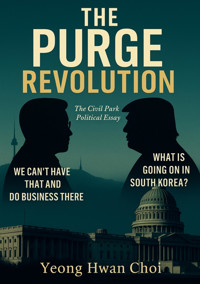
On the Ground Where Ethics Were Trampled, How Does Humanity Survive? We live in an age when morality has become the language of power.The Purge Revolution: The Civil Park is a record of staying human in a world where ethics have been stripped of meaning.As a witness to the corpse of morality, I couldn’t just watch it rot. While people planned their holidays, the purge began.Property soared beyond reason. Police turned inquisitor.Special prosecutors served the throne and sent innocents to their deaths.The young gasped under taxes and spending, paying for promises that were never theirs.Corporations fled; jobs vanished; and in the void, the beasts fed.Even aboard a plane to Tokyo, the purge did not rest.The architects of a new constitution said, “The people will decide,” yet their tone echoed old dictatorships.The law changed color like a chameleon to match the ruler, and judges matched it. Chinese money seeped into markets, dressed as local produce.In the alleys of Phnom Penh, Koreans were kidnapped while their government bowed to Beijing.Military drills were cut back, yet the same leaders shouted “sovereign defense.”Political soldiers licked boots and were decorated for it.The press, too, played its part: when northern troops crossed the border, cameras turned away and new villains were minted—“extremists,” “haters,” “the far-right.” I watched morality die, day by day.China grew bolder; Korean leaders knelt lower; citizens, losing freedom, bowed deeper.New fronts opened across the world. BRICS pressed the West, and Europe shifted again.The wind changed twice: Eastern Europe, once buried under communism, regained a kind of reason, while Western Europe drifted toward a soft socialism that numbs the mind.In South America, politics swung between rebellion and dependence, unsure which master to serve. When law falls into the hands of beasts, how long can human speech survive?That question runs through every page.The beasts wear the masks of nations and go on trampling what is left of conscience.At what point did we choose survival over what is right? The Purge Revolution takes the form of a political diary—a record of those who refused to become beasts.Its language is raw; it dissects the collapse of ethics without apology or despair.Yet beneath the cold sentences, one question will not die: What is a human being? How fragile is conscience? Can morality return to life? It does not console; it exposes.It walks over the remains of ethics and holds the last warmth left in man. When morality falls into the hands of power, the beasts wear the mask of man.Some still tried to tear that mask away.They were the last humans who refused to kneel.
Das E-Book können Sie in Legimi-Apps oder einer beliebigen App lesen, die das folgende Format unterstützen:
Seitenzahl: 226
Veröffentlichungsjahr: 2025
Ähnliche
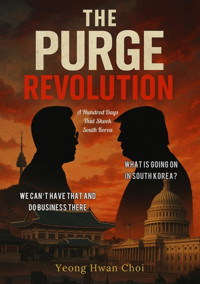











The Purge
Revolution
Published| October 28, 2025
Author| Yeong Hwan Choi
This book is written in the form of a personal diary,
interweaving reflections on politics in Korea, the United States,
and parts of Europe.
It does not claim to be a comprehensive analysis,
but rather an individual’s attempt to record the fragments of an era.
Copyright © 2025 Yeong Hwan Choi
All rights reserved. No part of this publication may be reproduced, stored in a retrieval system, or transmitted in any form or by any means—electronic, mechanical, photocopying, recording, or otherwise—without the prior written permission of the author.
Table of Contents
Title Page
Copyright Page
The Purge Revolution: The Civil Park
When a crowd claims the right to define virtue, | morality is already dead.
On the Eve of the Long Holiday
Men Inside the System
A Talk with Old Classmates
Just Before Leaving for Japan
The Smell of Fresh Ink
The Weight of a Green Onion
The Country of Crooked Ironing
Capital Without Capital
At Last, Trust Rests on Water
Seoul, the City of Permitted Dreams
The Grain of the Wind Changed Twice
The Sky’s Domain
The Map of a Draft Dodger
The Man Who Changes the Lightbulb
The Calculating State
Who Teaches the Truth
The Time We Lived In
Youth in an Aging Nation
The Public Security That Plays Above the Law
In a City Where Work Has Stopped
When Shame Begins to Speak
On the Ethics Trampled by Beasts
The Civil Park
Yeong Hwan Choi
When a crowd claims the right to define virtue,
morality is already dead.
––––––––
The conduct of South Korea’s left-wing activists no longer earns the respect of the young. They cry out, “For the people! By the people! For workers and sexual minorities!” yet to most eyes their words sound hollow. There is no trace of sincerity, no conscience, not even the will to keep a fragment of moral integrity.
Politics has become a marketplace where principles are traded for advantage. Many who linger near the edges of power are ex-convicts, now skilled only in converting morality into authority. They proclaim, “Humanity first. Every life is precious,” but in truth, only the lives that serve their cause are counted as precious. When tragedy strikes, their compassion divides neatly by allegiance: some deaths are mourned, others ignored.
So the political soldier is decorated, while police and prosecutors act as the enforcers of those in power. They speak of democracy. Yet the world they build repeats the habits of central rule. Freedom is their banner, control their trade.
The beasts now roam the streets without restraint. They bark at power and tear at one another’s throats for their share of meat. The places meant to lead society, to frame its laws and guide its conscience, have begun to stink. When one looks at this spectacle, certain nations come to mind.
China, carrying the relics of communism on its back, is a society where the group outweighs the individual and morality serves only as an instrument of authority. There lies the irony: a country claiming the vanguard of the Left has built its faith upon material gain.
India, though shaped by a different system, bears a strange resemblance. Under Prime Minister Modi, the world’s most populous nation seems hazy in its sense of public order, and few feel guilt when their actions harm others. Of course, this is a generalization. Yet in both countries, wealth stands before virtue, and profit before justice.
––––––––
BRICS, when seen plain, is not a union of belief but a market of interests. The slogans hide the trade. Beneath the slogans, China, India, and Russia remain at odds; their border quarrels and mutual distrust never truly fade.
I found myself wondering. Does “good” truly exist? And by whose measure do we call something “evil”? These two words, impossible to define with any certainty, have shifted endlessly with the age, the land, and the hand that holds power.
South Korea’s left-wing politicians like to say that the younger generation has grown too accustomed to Western culture—by which they mean the rule of law—and that this has made them stray from Asia’s traditional morality. If so, what exactly is the morality they speak of?
Can the moral code born of China’s system of control, or of India’s caste-bound society, claim to hold the essence of our humanity? I do not mean to suggest that the Western rule of law is flawless. Yet it never placed morality beneath the heel of authority. Europe has changed much. It has often used morality for its own ends, yet there was a time when it tried, however briefly, to keep politics from corrupting the meaning of good and evil.
I was not speaking of Confucianism. That creed, for centuries, has served more to harden hierarchies than to free the human spirit. It has marched hand in hand with formality and pretense, a doctrine of obedience disguised as virtue. I despise it. It is a show of rank, nothing more.
The morality I mean is something else. It is the awareness that one’s actions might trouble another. It is the imagination to know that a careless word can wound. Such small, private doubts are what make a conscience. They are quicker than law, finer and more beautiful than any system. They ask not, “What is right?” but, “Am I doing wrong?”
––––––––
These unnamed virtues, found in no scripture or code, are being trampled by the beasts that now rule. Even those who cheer for their leader have begun to look like beasts themselves. To resist becoming one of them, I had to write. I had to ask, again and again, until something like a conscience might be born. And then I met another question.
––––––––
India and China alone account for roughly thirty-six percent of the world’s population. One in every three human beings lives within their borders. But does sheer number make a nation the master of the world? Or does possession of rare earths and other resources grant that right? Perhaps the power to turn smaller neighbors into economic dependents through capital and scale?
––––––––
These were the questions that lingered. Could they truly overturn the order led by the United States?
––––––––
The world system, once solid and unshaken, has begun to show cracks.
The world is now ruled by two powers moving toward collision. Between China and the United States, smaller nations are caught in the middle, forced to choose sides or be crushed by both. Migration rises, economies strain, and diplomacy becomes a narrow bridge over chaos. The war in Ukraine has weakened Europe’s dependence on Russian gas, and Japan has tried to ease its reliance on China’s rare earths. Yet most nations still depend on Chinese and Russian resources. Within the West itself, tension remains—between America and Europe, and in Asia, where South Korea’s pro-China government drifts further from Washington.
Even among the Five Eyes, China’s reach extends deep into Australia and Canada. In South America the pattern is confused: governments turn against the United States, then return when it suits them. The unity that once seemed firm now breaks apart. The balance of the world is shifting. And then the questions reached a wall. Why can China never become a true hegemon? Why must the grand idea of Sino-centrism end in failure? Why will BRICS never match the values that the West once built and still pretends to uphold?
Russia is another case, but the truth is the same. Their idea of morality convinces no one. Forced unity breeds defiance, and the virtue China proclaims is only a tool of control. This is not about race or culture. No code of morals born under a party’s rule can speak for all mankind. Where power becomes a faith, morality must break against it.
––––––––
The press is controlled, freedom has vanished, and the cruelty of class stands in plain sight. These things alone keep China from leading the world.
––––––––
Civilization is not made of numbers or wealth. It depends on the moral ground of its people—their capacity for sympathy, their sense of how to live together. Without that, any empire will rot from the inside.
––––––––
The question remains: what kind of world can still call itself human?
––––––––
When freedom is gone, power has no compass. A nation without freedom cannot invent. Trust turns into ritual, and every act of creation waits for approval. A rule built on fear may last for years, but it will never earn respect.
––––––––
Power endures only through its story—the story that makes others wish to belong.
––––––––
America rose in the late twentieth century. Not by weapons, but by an idea. Democracy, the market, the rights of man—often challenged, yet strong enough to move the world. People believed they were freer under that system, and belief itself was power.
––––––––
So when the old left claim that the young too easily accept the Western order, they mistake the cause. It was not surrender but persuasion. The China they admire has never said what America once did: join us, and you will be freer, and your life will prosper. No such promise exists in Chinese.
––––––––
That is why even the nations tied to BRICS make use of China but never trust it. They depend on it, yet they do not follow.
––––––––
The world’s order remains much the same.
America is weaker, yet still a home people wish to enter.
China is stronger, yet still a power people fear to resist.
––––––––
At last, a nation that has lost its sense of right and wrong may hold power, but it can never claim the right to rule. Strength can command obedience for a season, but only morality makes that obedience willing. This is why the men now governing South Korea will leave nothing of worth to those who come after them. They are the kind who pretend to be just, yet think of morality not as a voice within the self, but as a tool of statecraft.
“The welfare of the people” becomes their reason to control. “Peace and development” are used to bind weaker neighbors to their trade. “Human rights” are raised like a shield to block criticism whenever dissent is silenced.
When people call the Chinese Communist Party immoral, they are not wrong, but they miss the heart of it. The Party does not speak the language of conscience at all. To grasp its nature, one must learn the grammar of its morality.
I did not seek it in the rites of Confucius or in the doctrines of socialism. The thread that binds their thinking runs through three names: Han Fei, Confucius, and Mao. They lived in different times and spoke in different tongues, yet all three meet in a single idea: Righteousness descends from above.
In the writings of Han Fei, order was not a moral aim but a technique of rule. Law was never meant to protect the common man; it was a stick held in the ruler’s hand. Reward and punishment were applied like surgical tools, precise and cold. Virtue was measured not by conscience but by calculation.
Confucius wore a different mask. He spoke of ritual and virtue, of harmony and duty. Yet even that harmony rested on hierarchy—father and son, ruler and subject, each bound to a place and a voice. Virtue, though noble in itself, gave way to propriety; roles came before the individual. Judgment leaned toward relationship rather than principle, duty rather than universality. The bones of hierarchy stood firm, dressed in the flesh of virtue.
Then came Mao, and morality was rewritten. Revolution and the will of the state became the measure of good and evil. Once the goal was declared sacred, loyalty became righteousness, and usefulness became virtue. From that moment, language itself changed. Justice came to mean the Party, goodness came to mean obedience. When these three traditions—Han Fei, Confucius, Mao—are laid one atop another, today’s China takes shape. Its single commandment is simple: Does it serve the system?
––––––––
Trust does not grow from the consistency of institutions but from the ties of dependence. Bad news seldom rises upward. Forced unity returns as fracture. Without freedom of will, even resilience dries up.
The West built its morality on process and on rights. It tried to turn words into institutions. From that effort came contracts, and from contracts came trust—the quiet habit that allowed invention and alliance to grow on schedule. At times, too much faith in the individual tore the fabric of the common good, yet the structure held. Power was tied down by law, and from that restraint came order.
In Japan and Korea, where Western ideas mingled with Confucian ones, morality took a different shape. Japan placed virtue in the act of keeping the rule itself. Korea lived in a tangle of warmth and righteousness—kindness toward others clashing with a fierce sense of justice. In South America, the rhythm swung between the solidarity of Catholic teaching and the fire of radical reform. When institutions weakened, people fell back on the ethics of personal bonds, a passion that often slipped into populism.
Across Africa runs the spirit of ubuntu: I am because we are. It values reconciliation and the mending of wounds, yet it does not always join smoothly with the machinery of the modern state. In Oceania, the rule of fair procedure stands beside the older code of care for the land and its people.
––––––––
Each world defines morality in its own way and carries its own frailties. But the lesson they share is plain enough: once morality becomes a servant of power, a system loses the language to persuade anyone beyond its borders. Machiavelli wrote that fear may win obedience but never loyalty; Han Fei’s logic, clever as it was, could rule for a season but not forever. The costs of watching and mistrust will always break the hand that holds them. In the end, a power without morality destroys itself.
––––––––
Classical liberalism secured cooperation not through fear, but through legitimacy, predictability, and the protection of rights. Freedom gave rise to invention; invention built trust; and trust, in turn, bound alliances by choice rather than coercion.
––––––––
Each time I read the world’s news, I see the same old scene repeating itself: a hand tightening its grip, wielding rare earths like a weapon, cutting off another’s breath. It speaks of law and ethics, yet the message beneath is simple—submit to our order. Such power can win time through threat, but never respect. It may grow in scale, but not in spirit. Numbers multiply, yet no story grows with them.
As the posts on Truth Social suggested, the Chinese Communist Party moved first, tightening its grip on rare earth exports in the weeks before the APEC summit in October. China controls most of the mining, refining, and processing that feed the world’s supply. By restricting it, they hold the spine of the chain in their hands. On paper it is an economic measure, a technical decision. In truth, it is a threat: bend to our standard, or we will cut your industry off.
––––––––
That is what power looks like when it turns violent.
––––––––
Trump struck back almost at once. He announced a one-hundred percent tariff on Chinese imports beginning November first, and warned that key software exports to China would soon be restricted. It was a counterblow, a show that America still had weapons of its own. He called China’s export ban “without precedent in world trade,” and, more sharply, “a moral disgrace.”
––––––––
There was something more in those words. It was not trade he was talking about, but moral legitimacy. China spoke in the name of national security, yet without the language of universal ethics its claim could not persuade the world. Its voice said not “join us,” but “obey.”
––––––––
So when America raised tariffs in reply, it was more than an act of policy. It was a moral answer to a power that no longer believed it needed morality at all. Even more telling, this habit of threat may yet prove China’s own undoing. The country refines more than eighty percent of the world’s rare earths—metals that keep the modern age running. Semiconductors, batteries, weapons, clean energy: all depend on them. And where are those industries found? In the United States, Japan, Korea, and Europe. By cutting off those markets, China wounds the very customers that feed it.
At first, the move may lift prices and make the West appear to suffer. But what follows is always the same: the world begins to turn away. Reports already speak of new supply lines forming in Australia, Canada, Vietnam, Indonesia, even parts of Africa. The refining skills once thought to be China’s alone are being rebuilt elsewhere. Western firms are investing, quietly but steadily, and the age of cheap labor and loose regulation—the age that made China’s monopoly possible—is drawing to a close.
China’s true weakness is trust. No one trades freely with a hand that turns its tools into weapons. Companies have begun to list “China risk” among their financial notes. Governments, too, are reworking their supply chains, erasing China one link at a time.
––––––––
––––––––
The first to act was the Netherlands. It moved quickly to place a company called Nexperia under direct state control. Nexperia is a Dutch semiconductor manufacturer, but its owner is Wingtech, a corporation listed in China. In other words, the company’s capital—and its command—lay in Chinese hands.
When Beijing sent out letters announcing new limits on rare earth exports, The Hague invoked the Goods Availability Act, a law rarely used in peacetime. It allows the government to take over key industries when national security or technological sovereignty is at risk. “We will not allow Europe’s technology to flow into China,” the Ministry of Economic Affairs declared. It warned, too, that “the continuity and safety of essential technical knowledge and capabilities within European territory are under threat.”
Wingtech, for its part, was already on the United States’ entity list—a roster of firms under export control. American companies could not deal with it without special permission, and such permission was seldom granted. The Dutch decision, then, was more than a domestic move; it marked the moment the Netherlands stepped into Washington’s wider effort to contain China’s reach.
“If you block the resources, we will close the market.”
That was how it began—the war of supply chains. And it already looked like a move that might turn against its maker.
A day later, another message appeared from President Trump. It opened with the line, “Something very strange is happening in China!” and ended with, “The whole world has been taken hostage.” He claimed that Beijing was sending letters promising to “control” even the goods it did not produce itself. The tone was disbelief, but beneath it ran anger.
I tried to picture the scene in my mind: great factories falling silent, the world holding its breath. And behind it, the face of the Chinese Communist Party—tight, uncertain, afraid. This was the sound of anxiety bursting through the mask. The economy was slowing under deflation, youth unemployment was rising, exports were losing pace. The only card left to play was “resources.”
Trump called it “a move they had planned for years, but one that came suddenly, a strike against the free world.” And he added that there was now no reason to meet Xi Jinping at the APEC summit two weeks away.
––––––––
“Power without morality always breaks the weapon it holds.”
Trump called China’s move to control rare earths “the timing of God.” The phrase sounds absurd, yet somehow it fits. His remarks ran longer, but their meaning was clear enough:
This began with magnets and other materials that China has quietly stockpiled for years. It is a dark and hostile act, no doubt. Yet the United States holds monopolies of its own—stronger, broader, and far more stable. We never used them because we never needed to. That has changed. The moment has come.
He said the letter from Beijing ran several pages, listing one by one the elements that would no longer be supplied to other nations. What was once ordinary trade is no longer ordinary.
I have not spoken with President Xi. There was no reason to. And it is worth noting that this letter was sent on the very day peace was said to have come to the Middle East for the first time in three thousand years. Was that a coincidence? As President of the United States, I will impose financial sanctions.
The words had the rhythm of anger, but beneath them lay something else—a warning that power, when stripped of any moral restraint, begins to destroy itself first.
For all that, South Korea bows. Beijing shuts its gates and shakes the world; Seoul lowers its eyes and waits. It feels like a faint echo of the old tributary days under the Ming—heads lowered, eyes watching for the emperor’s mood.
Politicians speak of “economic cooperation” as they open the gates to Party-linked and overseas Chinese capital. The judges’ gavels, too, seem to swing with an awareness of that current. What is almost comic, if it were not so sad, is how deeply Chinese money has already sunk into the country—into land, bonds, and shares.
The press is quiet. The government says nothing. No one asks where the money comes from, or what intention travels with it.
––––––––
Before long, South Korea began to move in cautious rhythm with China’s system, behaving like a small satellite that orbits without question. I am reminded of the confusion that followed the THAAD deployment years ago. The left called their hesitation diplomacy, and the voices that once spoke of sovereignty fell silent. Perhaps the habit of obedience began then.
Capital always moves faster than politics, and politicians, chasing its trail, soon lose their direction. Bowing may look like a choice made for survival, but once repeated, it becomes a reflex. And when the reflex hardens, a nation’s moral spine begins to crumble.
––––––––
You who once called America an empire—look now. What do you make of the conduct of those communist states so near to socialism that they can no longer tell power from virtue?
For years you have called America an empire—the world’s policeman, the invader of nations. Yet toward China you have spoken softly, dressing fear as diplomacy, calling it an Eastern order or a balance of powers.
And now, once again, China has broken its promises to the world and used its resources as weapons against its own allies. No Western nation has shown such a cold and deliberate kind of imperialism. In the face of that, who, I ask, is the true empire?
––––––––
This is not a quarrel between anti-American and pro-Chinese camps. It is a question of who still defends the common morality, the freedom of human beings, and the fragile order of trust among nations. Power builds order, but only principle keeps it. China has drawn its sword. One day, it will cut its own hand. When that day comes, people will ask:
––––––––
Who was it that dreamed of power without conscience?
––––––––
Once again, the mind must return to morality—to the quiet space where a man asks what his words and actions awaken in others, where he imagines the discomfort or shame they might cause.
––––––––
From such small acts of awareness, the great machinery of ethics begins to move.
––––––––
Empire does not stand on warships or factories alone. It endures only through the feeling that others wish to belong within it—through freedom that allows choice, through order that restrains power, through respect that keeps both alive.
––––––––
It is these small and unseen things that decide how long a nation lasts.
On the Eve of the Long Holiday
The holiday begins on the third. The air has turned cool. The wind feels lighter now. The sky keeps changing its mood through the day. When it’s clear and empty, autumn feels close enough to touch. But when grey clouds roll in from over the Yellow Sea, everything slows and grows damp. I keep looking at the sky whenever a holiday comes near. Maybe the sky and the human heart share something. When families gather, I always hope the sky will stay blue and open.
––––––––
Now, in my mid-thirties, the holidays no longer feel the way they used to. As a child, I was happy just because there was no school. The smell of pancakes frying in my grandmother’s yard, the pocket money my uncle slipped into my hand — that was the whole world of a holiday. But now there’s nowhere I have to be, nothing to wait for. My grandparents are gone. My parents no longer insist on visiting our hometown. When the duty of reunion disappeared, the paths that once brought the family together slowly faded away.
In Korea today, holidays have become days of dispersal rather than reunion. Airports are crowded, resorts booked out within minutes, and people hurry in every direction. Yet it hardly matters who they travel with. The holiday is no longer a time to gather, but to get away.
This change began when the shape of the population started to shift. Japan entered the age of hyper-aging first, and now we are following the same road—only faster. The young are fewer each year. The birth rate hovers around 0.7, numbers that speak of a generation fading from sight. The family, too, has begun to lose its old form. Words like kangaroo tribe—for those who cannot leave their parents’ homes—and hikikomori—for those who shut themselves away—float through conversation with uneasy ease. In Seoul, reports say that half of those born in the 1980s still live with their parents. Beyond them are others: men and women who have withdrawn from the world, living behind closed doors. Once called a youth problem, this retreat now spreads quietly through the middle-aged as well.
Even marriage offers no real escape. The work of raising children falls on the grandparents, while the parents rush to earn their keep. These are not scattered habits but signs of a new order taking hold inside society itself.
To live in one’s parents’ house because independence is impossible, to seal oneself in silence, to hand one’s children to the old to be raised—each of these shows how little freedom remains in what we still call “family.” We speak of being together, yet most find it easier to remain apart. And even under one roof, warmth is no longer guaranteed.
––––––––
If the Koreans of the past rose on the spirit of ppalli-ppalli—that restless cry to do everything faster—then the Koreans of today are growing old by the same command. Growth came too quickly; perhaps decline must follow at the same pace.




