


7,19 €
Mehr erfahren.
- Herausgeber: Unicorn
- Kategorie: Geisteswissenschaft
- Sprache: Englisch
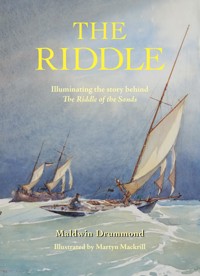
A new edition of the definitive study of the background to the writing of The Riddle of the Sands by Erskine Childers, now beautifully illustrated by Martyn Mackrill. It includes details of Childers' own sailing experiences and also a detailed account of the reception afforded the book in official circles and Childers involvement in this. Maldwin Drummond OBE, JP, DL has long made a study of Childers and his book, having become fascinated with its two themes which make an unlikely pair: the problems and ways of the Victorian small boat sailor and the politics and defence issues prior to the First World War. In The Riddle, Maldwin Drummond begins by looking at the wanderings of the yacht Dulcibella as her crew search for an answer to the strange happenings among the sands behind the German Frisian islands. The author highlights the urgent message from Childers that Germany was preparing to invade England and that the British were not aware of any such plan. This detective work by Drummond within the text of The Riddle of the Sands, from British and German archives and numerous other sources, yields some surprising results as Erskine Childers' predictions became a real possibility with the onset of the war.
Das E-Book können Sie in Legimi-Apps oder einer beliebigen App lesen, die das folgende Format unterstützen:
Veröffentlichungsjahr: 2017
Ähnliche




















PUBLICATIONS:
Conflicts in an Estuary (1973)
Tall Ships (1976)
Salt Water Palaces (1979)
Yachtsman’s Naturalist (with Paul Rodhouse, 1980)
The New Forest (with Philip Allison, 1980)
The Riddle (1985, first edition)
West Highland Shores (1990)
(Ed) Lord Bute (1996)
The Book of the Solent (with Robin MacInnes, 2001)
After You Mr Lear (2007)
Roving Commissions (editor)
THERIDDLE
Illuminating the story behindThe Riddle of the Sands
Preface by Robert Childers Illustrated by Martyn Mackrill
Maldwin Drummond
To Aldred
CONTENTS
ACKNOWLEDGEMENTS
I am particularly grateful to Robert and Christobel Childers for unfailing kindness and support throughout my efforts to discover more about Erskine and also for writing the Foreword. This book would not have been possible without their help.
I have also benefited from the encouragement and the papers of Hugh Popham and his late wife, Robin. If any stimulation or ideas were required, they were readily given by David Cobb, the celebrated marine artist, a lineby-line student of The Riddle of the Sands. He shares this devotion with Frank Carr, one-time Director of the National Maritime Museum and now Chairman of the World Ship Trust. I am indebted to them both.
Walter Childers gave me a private view of the life of his father, Henry Childers, Erskine’s brother. Lord Runciman helped me with his family history and Dr Paul Kennedy, with his specialised knowledge of naval history and Anglo-German relations, clarified a number of points. My thanks to them all.
The Childers Papers are held in the libraries of Trinity College, University of Dublin, and Trinity College, Cambridge. Dr Bernard Meehan and Mr Trevor Kaye were unstinting in their help, as was the Imperial War Museum which looks after Erskine Childers’ war records. John Hawkesworth also lent me his papers and the correspondence he had with Molly Childers while writing the screenplay for a film of The Riddle. I am most grateful to him too.
I followed Vixen’s course in a variety of small boats, including Vivette whose owner, Roderick James, took a particular interest in the research.
Thank you to Charles Hanrott who allowed me to reproduce the ‘Childers Charts’.
Cyril Ray, Ted Watson, Group Captains Frank Tredrey and Frank Griffiths, and many others in the list below sent snippets of information and photographs which were enormously useful in my detective work.
The following people and organisations have provided invaluable help in bringing to light much that is new: the late John Atkins; Doug Baverstock; James Bayes; Vice-Admiral Sir Patrick Bayly, Director, Maritime Trust; Commander Richard Beach RN; Bill Beavis of Yachting Monthly; A. S. Bell, Assistant Keeper, National Library of Scotland; Jules Van Beylen, Director, National Sheepvaart Museum, Antwerp; Howard Biggs; R. M. Bowker; Lieutenant-Colonel Dr Donald F. Bittner, Military Historian, US Marine Corps; Mrs Christina Boyle, The British Newspaper Library; Alistair Brown; David Brown, Naval Historical Branch, Ministry of Defence; Commander and Mrs Vernon Bullin; Miss K. Byrne, Charity Commission; Peter Cameron, Regional Controller, HM Coastguard, Brixham; Commander R.J. Cardale RN, Coastguard Training School, Brixham; Mrs Ian Carr; Mrs Gill Coleridge; Adlard Coles; R. M. Coppock, Naval History Branch, Ministry of Defence; Jack Coote; Dr Edwin Course, University of Southampton; Colonel V. F. Craig; Mrs Carainn Davies RNE; Dawe Central Library, Folkestone; Captain Henry Denham RN; Deutsche Bundesbahn; Deutsches Hydrographisches Institut; Donal Dunne; D. T. Elliot, Chief Librarian, London Borough of Tower Hamlets; Mr and Mrs Seymour England; the late Grahame Farr; Major James Forsythe, Hon. Secretary, World Ship Trust; John Francis; Colonel R. C. Gardiner-Hill; Dr Michael Gilkes, Hon. Librarian, Royal Cruising Club; Mrs Elizabeth M. Gordon; Mrs Seton Gordon; Sir Peter Green, Chairman of Lloyds; Maurice Griffiths; Fred Harnack; Mrs Kathleen Harrison, Isle of Wight County Council; Graham Harvey-Evers; C. G. Harris, Bodleian Library, Oxford; Mr and Mrs Eric Hiscock; Maurice Hochschild; W. H. Honey, Maritime and Local History Museum, Deal; Humber Yawl Club; J. A. Hunter-Rioch, Marketing Director, Valor Heating (owners of Rippingille); Mr and Mrs Colin Mudie; Ralph Hammond Innes; L. Jenkins; Bruce Jones; Lord Kennet; the Curator, Kodak Museum, Harrow; Professor I. Lambi, University of Saskatchewan; David Lyon, Department of Ships, National Maritime Museum; Mrs Mandy McBeath; W. R. McKay, Committee Office, House of Commons; Mrs Margaret Mann; Bryan Matthews, Records Office, Uppingham School; Phoebe Mason, Stanford Maritime Ltd; David Messum; Meteorological Office; Lord Montagu of Beaulieu; Professor H. R. Moon, Sangamon State University; Mrs Francesca Morgan; Mrs Virginia Murray of John Murray (Publishers); Colonel G. A. Murray-Smith; Mrs Joan and the late George Naish, National Register of Archives; Susanna Nockolds; Stadtdirektor, Stadt Norderney; Lord O’Neill of the Maine; William O’Sullivan, Trinity College Library, University of Dublin; T. R. Padfield, Public Record Office; J. C. Parker, Royal Commission Historical Monuments; Captain R. H. Parsons RN, Director, Royal Naval Museum, Portsmouth; Miss M. J. Perry, Curator, Hydrographic Department, Taunton; the Editor, Portsmouth Evening News; Sir David Price MP; David V. Proctor, Head of Printed Books and Manuscripts Department, National Maritime Museum; A. A. Raines; Adrian Rance, Director, Department of Leisure Services, City of Southampton; Registrar of British Ships, HM Customs and Excise, Southampton; M. Reid; Colonel John Richards; Stephen M. Riley, Research Assistant, Department of Ships, National Maritime Museum; Royal Cruising Club; the Director, Royal Marines Museum; Royal National Lifeboat Institution; D. F. Saunders, Curator, Hydrographic Department, Ministry of Defence, Taunton; David Scurrell; Sidney Searle; Lieutenant-Commander Derry Seaton RN; Bill Smith; Major Ewen Southby-Tailyour RM; the Editor, Southern Evening Echo; D. S. Stonham, Historic Photographs Section, National Maritime Museum; Dick Stower; R. W. A. Suddaby, Imperial War Museum; Hardo Sziedat, Commercial Director, Esens-Bensersiel; Dr Christopher Thacker; Mrs Imogen Thomas, Assistant Librarian, Haileybury College; Dick Tizard; R. G. Todd, Historic Photographs Section, National Maritime Museum; Richard Tubb, Ministry of Defence Library; Commander F. C. Van Oosten, Historical Department, Naval Staff, Ministerie van Defensie, Amsterdam; Mr and Mrs L. E. Wainwright; Neal T. Walker, Secretary, Slocum Society; Korvettenkapitän Dr Walle, Militärgeschichtliches Forschungsamt, Freiburg im Breisgau; Rear-Admiral John Warsop, Port Admiral, Rosyth; Ted Watson; Jack Whitehead; Stadt Wilhelmshaven; Burke Wilkinson; W. T. Wilson, Imray Laurie Norie and Wilson Ltd; John Wyllie; WZ Bilddienst; the Editor, Yachting Monthly; the Editor, Yachting World; Elizabeth Yeo, Assistant Keeper, National Library of Scotland; Jim Young; J. Zwaan, Rijksinstituut voor Oorlogsdocumentatie, Amsterdam.
Finally I would like to thank both my wife, Gilly, for her lively encouragement and Rosalie Hendey who typed the manuscript and, with her usual skill, saw that all went well.
I am most grateful to Martyn Mackrill, the artist, who has done the admirable sketches for the new edition and to Lord Stratchcarron, Chairman of Unicorn Publishing Group who produced this edition.
FOREWORD
When Maldwin Drummond first started to work on this book, it didn’t seem possible that he could unearth any more appreciable or significant information about Erskine Childers than had already appeared in previous biographies. As I got to know him and his wife Gilly better, however, I realised that they are both perfectionists in their own fields and that any task to which Maldwin set his hand would be exhaustively studied and researched.
The Riddle is really two books, each with a different focal point, but closely entwined. One is a comprehensive study of The Riddle of the Sands, from the original cruise in Vixen, through the years that covered the writing of the novel, and going on to describe in a fully documented manner its effect on public policy in Great Britain during the years leading up to the First World War. The other is a delightful biography of Erskine Childers through his early years, bringing to the reader a wealth of quite fresh knowledge about his work, his interests, his sailing and, perhaps most importantly, about the close friends who clearly played such a significant role in his life.
That this abundance of new information about a way of life that has long since vanished could be collected some eighty to ninety years later is a truly remarkable achievement which I would not have believed possible.
A son must necessarily be the last person fitted to comment on a book about his own father, but that doesn’t prevent me from expressing my very warm thanks to Maldwin for the endearing picture he has produced for us.
Robert Childers
Glendalough House
Annamoe
Co. Wicklow
September 1984
THE LIFE AND TIMES OF ROBERT ERSKINE CHILDERS (R.E.C.)
PART ONE
Pages From The Past
Dollman aboard Medusa shouted to Dulcibella, ‘Follow me …’
Chapter 1
A VOYAGE TO FRANCE
‘There were reasons,’ I read, ‘there are reasons still – which well make it a tangled business.’ The words came from a book with a yellow cover. An iron cross half obscured by an Imperial German eagle with a gaff cutter sailing through the bird’s reflected image gave some idea of the contents. I stood by the bookcase in my study and thumbed idly through the pages in an attempt to recapture the story, the rolling descriptions of a small boat at sea, the pages of detection and chase, the amalgam that had so encouraged my first cautious efforts at cruising under sail.
The book was the early Edwardian adventure tale, The Riddle of the Sands. The plot came flooding back, much like the tide repossessing the sands of Frisia where the tale is set. I remembered how I had been gripped before, how a cocoon had surrounded and supported, relaxed and transplanted me into the Childers’ world of a small, black yacht worked by two opposites, Davies and Carruthers, who had stumbled across a scheme of invasion aimed by the Kaiser’s Germany against England’s then unprotected flank. ‘A tangled business.’ I had certainly been entangled in the story as soon as I opened the book in the saloon of It must have been the summer of 1953, for I had become the owner of the five-ton sloop just after my twenty-first birthday. My brother Bend’or and I were ‘going foreign’ for the first time.
Lesen Sie weiter in der vollständigen Ausgabe!
Lesen Sie weiter in der vollständigen Ausgabe!
Lesen Sie weiter in der vollständigen Ausgabe!
Lesen Sie weiter in der vollständigen Ausgabe!
Lesen Sie weiter in der vollständigen Ausgabe!
Lesen Sie weiter in der vollständigen Ausgabe!
Lesen Sie weiter in der vollständigen Ausgabe!
Lesen Sie weiter in der vollständigen Ausgabe!
Lesen Sie weiter in der vollständigen Ausgabe!
Lesen Sie weiter in der vollständigen Ausgabe!
Lesen Sie weiter in der vollständigen Ausgabe!
Lesen Sie weiter in der vollständigen Ausgabe!
Lesen Sie weiter in der vollständigen Ausgabe!
Lesen Sie weiter in der vollständigen Ausgabe!
Lesen Sie weiter in der vollständigen Ausgabe!
Lesen Sie weiter in der vollständigen Ausgabe!
Lesen Sie weiter in der vollständigen Ausgabe!
Lesen Sie weiter in der vollständigen Ausgabe!
Lesen Sie weiter in der vollständigen Ausgabe!
Lesen Sie weiter in der vollständigen Ausgabe!
Lesen Sie weiter in der vollständigen Ausgabe!
Lesen Sie weiter in der vollständigen Ausgabe!
Lesen Sie weiter in der vollständigen Ausgabe!
Lesen Sie weiter in der vollständigen Ausgabe!
Lesen Sie weiter in der vollständigen Ausgabe!
Lesen Sie weiter in der vollständigen Ausgabe!
Lesen Sie weiter in der vollständigen Ausgabe!
Lesen Sie weiter in der vollständigen Ausgabe!
Lesen Sie weiter in der vollständigen Ausgabe!
Lesen Sie weiter in der vollständigen Ausgabe!
Lesen Sie weiter in der vollständigen Ausgabe!
Lesen Sie weiter in der vollständigen Ausgabe!
Lesen Sie weiter in der vollständigen Ausgabe!
Lesen Sie weiter in der vollständigen Ausgabe!
Lesen Sie weiter in der vollständigen Ausgabe!
Lesen Sie weiter in der vollständigen Ausgabe!
Lesen Sie weiter in der vollständigen Ausgabe!
Lesen Sie weiter in der vollständigen Ausgabe!
Lesen Sie weiter in der vollständigen Ausgabe!




