


Erhalten Sie Zugang zu diesem und mehr als 300000 Büchern ab EUR 5,99 monatlich.
- Herausgeber: The History Press
- Kategorie: Sachliteratur, Reportagen, Biografien
- Sprache: Englisch
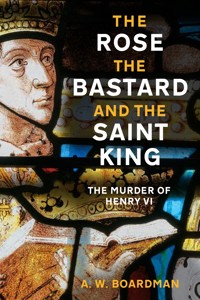
'A.W. Boardman's latest book is another triumph of careful research, insight and feel for his subject. It''s also very readable. For me, this is the best book currently available on the period.' – John Simpson, BBC News The Siege of London on 12–14 May 1471 is a largely forgotten episode in the Wars of the Roses, but its implications were so far-reaching that the fate of the Lancastrian dynasty was sealed forever. Edward IV's gamble to reclaim the throne for the House of York was a triumph against the odds, yet even after winning two crucial battles against the Lancastrians, his position was far from assured. He might have been confident of total victory if not for Thomas Neville, the Bastard of Fauconberg, who, along with thousands of ordinary people, stormed London in a desperate attempt to free Henry VI from captivity. In The Rose, the Bastard and the Saint King, the first ever full-length study of the siege of London and its aftermath, A.W. Boardman uses contemporary evidence to uncover the truth behind the rebellion of 1471 and the death of the last Lancastrian King of England. He also reveals answers to long-awaited questions such as where the battles for London took place? Who was the Bastard of Fauconberg? Why did Henry VI continue to be revered as a saint long after his death? And was the future Richard III actually responsible for Henry's murder?
Sie lesen das E-Book in den Legimi-Apps auf:
Seitenzahl: 456
Veröffentlichungsjahr: 2024
Das E-Book (TTS) können Sie hören im Abo „Legimi Premium” in Legimi-Apps auf:
Ähnliche















First published 2024
The History Press
97 St George’s Place, Cheltenham,
Gloucestershire, Gl50 3GB
www.thehistorypress.co.uk
© A.W. Boardman, 2024
Maps © A.W. Boardman
The right of A.W. Boardman to be identified as the Author of this work has been asserted in accordance with the Copyright, Designs and Patents Act 1988.
All rights reserved. No part of this book may be reprinted or reproduced or utilised in any form or by any electronic, mechanical or other means, now known or hereafter invented, including photocopying and recording, or in any information storage or retrieval system, without the permission in writing from the Publishers.
British Library Cataloguing in Publication Data.
A catalogue record for this book is available from the British Library.
ISBN 978 1 80399 709 4
eBook converted by Geethik Technologies
Typesetting and origination by The History Press
Printed and bound in Great Britain by TJ Books Limited, Padstow, Cornwall.
Then stood the realm in great jeopardy a long while, and every lord that was mighty of men made him strong, and many wanted to be king.
Sir Thomas Malory,Le Morte D’Arthur, c.1470
Contents
Foreword by Matthew Lewis
Acknowledgements
Maps
Introduction
1 Crown of Thorns
Henry VI and the Wars of the Roses
2 The Rose
Edward IV, the Earl of Warwick and the invasion of England
3 The Bastard
Thomas Fauconberg, his family and his career
4 Bloody Fields
The battles of Barnet and Tewkesbury
5 All the King’s Men
Medieval London, the city fathers and the Yorkist lords
6 Evil Willers
The culture of rebellion in Kent and the insurgents
7 Bridges of London
The attack on London Bridge and the march to Kingston
8 Bombardment
The siege of London and the second attack on London Bridge
9 The Greatest Jeopardy
The rebel assault on the city gates and Fauconberg’s retreat
10 Crushing the Seed
The arrival of Edward IV in London and the death of Henry VI
11 The King’s Right Arm
The Duke of Gloucester and the betrayal of Fauconberg
12 The Saint King
The miracles of Henry VI and the aftermath of the siege
Epilogue
Select Bibliography
Notes
Foreword
by Matthew Lewis
Readeption is an odd word for an equally unusual moment in England’s medieval history. The term might require a second look, which may do little to illuminate its meaning. The reason for this is that it was made up in 1470 to describe an unprecedented moment. The first Yorkist king, Edward IV, was driven from his kingdom by his first cousin, Richard Neville, Earl of Warwick. Helping Edward to his throne nine years earlier and installing his replacement earned Warwick the epithet of ‘the Kingmaker’. Warwick restored King Henry VI, the third Lancastrian king, who had reigned from the age of nine months in 1422 until his deposition in 1461, amid a litany of examples of poor rule and failure to reconcile increasingly bitter factions at his court. Readeption was the word created to describe the return to the throne of a king who had ruled before but been deposed.
Amidst the complications of the Wars of the Roses and the frantic politics and battles of the Readeption, one moment can become overshadowed. Hindsight marks it as of little long-term or dynastic importance, but those living through it did not have the benefit of hindsight. Huge numbers had marched out of Kent and Essex. London was laid under siege. The men of power within were forced to weigh their loyalties in the balance once again. They were required to judge how any action might impact the Crown, but also the effect it could have on them and the connection they hoped to maintain between head and neck. What of those outside, though? What drove them to take a risk that so frequently resulted in death?
Within these pages, the siege of London by the Bastard of Fauconberg, an illegitimate cousin of the Earl of Warwick, is drawn into the spotlight from which it has been frequently displaced. The episode offers fresh insights into the actions of key actors, from King Edward IV to his little brother Richard, Duke of Gloucester, still more than a decade from becoming King Richard III. We can see something of the blinding allure of the Earl of Warwick that allowed his plans and his orders to survive his own death at the battle of Barnet. The position in late medieval society of an illegitimate son of an earl, and his desire to alter it, are revealed. Perhaps more compelling is the view of the motivations of counties in south-east England left disillusioned and perennially primed for a leader to drive them into fresh rebellion.
This book restores the siege of London to the position of importance that it occupied in the minds of those living through it, on both sides, in 1471. The Wars of the Roses is a complex jigsaw in which this story is a vital piece, not least in understanding the controversial fate of a King of England. These were days filled with all of the terror and uncertainty of war, of making decisions that cost lives, of risking all for what is believed to be right. Or at least in one’s own best interests. Will you man the walls, or storm them? Perhaps you will decide to stay at home and keep out of it. The story that follows will throw you back into those febrile days of tension and fear and offer a new conclusion to the period of the Readeption.
Matthew LewisChair of the Richard III Society andco-host of the Gone Medieval podcast
Acknowledgements
First and foremost, I would like to dedicate this work to my wife, Sheree, to whom I am indebted for helping me fight battles of a different kind while I was writing this book. I cannot express how much her love and support continues to help me find new perspectives in life.
As always, the writing process also provides a welcome antidote to all the anxieties of the modern world, and occasionally disappearing into the fifteenth century has its cathartic merits. However, apart from this, and the unwavering support from my family, I would like to acknowledge the help of certain authors, librarians, professionals and friends who have all contributed to this book in one way or another. I would have been lost for words and images without their expertise, encouragement and kindness in all things medieval.
Of these contributors, Geoff Wheeler has been an inexhaustible well of Wars of the Roses ephemera over the years, and in this book he kindly supplied a host of images when his health was not up to scratch. Special thanks also go out to medieval author and podcaster Matt Lewis for reading the finished manuscript and writing such an insightful foreword to the book. At the Royal Armouries in Leeds I would like to thank Stuart Ivinson, Phillip Abbot and Keith Dowen for helping me sift through their extensive library or just chat, not to mention sharing their knowledge of arms and armour with such enthusiasm.
Toby Huitson and the staff at Canterbury Cathedral Archives and Sally Bevan at the City of London Metropolitan Archives were indispensable when it came to rooting out various contemporary manuscripts, letters and images relating to Fauconberg’s rebellion. Among other friends, valued individuals and societies, I would also like to thank Simon Stanley for sharing his practical expertise on the warbow, Rebecca for all her support, the veteran BBC World correspondent and journalist John Simpson CBE for reading and endorsing the book so generously, and all at The Battlefields Trust, Military History Now and the Richard III Society for providing such accessible historical archives and media support.
Last but not least, I would like to thank Claire, Jezz and all the staff at The History Press for making this book possible and for being so accommodating with their deadlines in a year that has been challenging to say the least.
Finally, most writing is generally done in isolation, and much more time is spent researching – or just occasionally staring out of the window. As my favourite Leeds writer, Alan Bennett, once suggested, writers are two people. One is the person who does the writing, and the other is the one everyone interacts with daily. In my experience, one personality blends into another. Therefore, I would like to apologise for any mistakes I may have made in the book (which are all my own doing) although I could easily blame my alter ego if I so wished.
Introduction
Therefore, no more but this: Henry, your sovereign,
Is prisoner to the foe, his state usurped,
His realm a slaughterhouse, his subjects slain,
His statutes cancelled, and his treasure spent,
And yonder is the wolf that makes this spoil.1
In Shakespeare’s Henry VI, Queen Margaret of Anjou encourages her followers to renew the fight against Edward IV (the wolf), who has usurped the English throne. As might be expected, her rousing speech paints a grim portrait of a kingdom divided and in crisis, scarred by civil war, inclined to lawlessness and facing bankruptcy. But how true was Shakespeare’s description of England in 1471, a year of battles, rebellion and contending kings? Had the kingdom really entered a new dark age reminiscent of Arthur’s Britain? And what about ordinary people, who historians say were largely untouched by Shakespeare’s carnage? What was their collective response to civil war, local anarchy and a leaderless country?
Doubtless, the spring of 1471 was a defining moment in British history. The conflict, known today as the Wars of the Roses, was still unresolved, and with another serious bout of civil war looming large on the horizon, most contemporaries agreed only more bloodshed would decide the issue. After being forced to flee England by the discontented and politically astute Richard, Earl of Warwick in October 1470, Edward IV returned from exile to recover his throne, fighting two major battles in the process. However, another lesser-known conflict fought in May 1471 proved equally dangerous to King Edward, not to mention his imprisoned rival Henry VI, and this is the central theme of this book.
Although Barnet and Tewkesbury are the most famous battles of 1471, the siege of London has been largely neglected by historians. The conflict is often portrayed as an aftermath (or side issue) of Edward IV’s much publicised Arrivall in England.2 Indeed, some modern writers hardly mention the siege in context, which is hardly surprising considering who Edward’s enemies were in 1471. Warwick ‘the Kingmaker’ and Queen Margaret’s armies may have tested the king’s military competence to the limit, but Edward did not foresee the intervention of Thomas Neville, the Bastard of Fauconberg, who singlehandedly raised a large-scale rebellion in the south-east of England and masterminded the only assault on a walled town or city in the Wars of the Roses.
Fauconberg and his so-called ‘lewd company’ of commoners, tradesmen and mariners terrorised London suburbs for days before attacking the city defences in a daring attempt to free Henry VI from the Tower.3 With Henry restored to the throne, backed by thousands of rebels eagerly seeking reform, Edward IV would have been forced into fighting yet again for the Crown. Threatened by Fauconberg’s forces in London, his fleet of ships moored in the Thames, his artillery ready for action and the icon of King Henry as a figurehead, contemporaries suggested Edward might have been deposed for a third time in so many years, such was the seriousness of the rebellion.
As for foreign commentators, the Italian writer Polydore Vergil of Urbino was equally certain it was a ‘close-run thing’ for Edward IV in May 1471. He concluded in his Anglica Historia that the Bastard of Fauconberg’s ‘star, little though it were, yet if it had been raised before, no doubt it would have brought King Edward’s affairs great hazard’.4 That Fauconberg’s rebellion was a severe threat to the Yorkist regime is seen by how fiercely both sides fought against each other, knowing that time was running out. Indeed, the struggle for London was much more military-orientated than Jack Cade’s popular rebellion of 1450, which preceded the Wars of the Roses – a consideration that has been ignored by writers even though it had far-reaching dynastic consequences.
The reason why the Bastard of Fauconberg raised a rebellion in the south-east has never been fully explained by historians and, as a result, Henry VI’s tragic death has remained a mystery for centuries. It seems the link between the insurgency and Henry’s demise has been forgotten or misinterpreted by writers. Had Fauconberg’s rebellion succeeded, it would have been one of the greatest upsets in medieval history. And as for the leading personalities caught up in the rebellion, historians have failed to associate them with another popular rising in 1470 that made the 1471 siege of London possible.
Only vague outlines of Fauconberg’s accomplices and adversaries are recorded in most books dealing with the period. The intentions of the key figures are clear but not expanded upon. And there has been no satisfactory answer as to why Fauconberg, a man of insignificant rank and legitimacy, could command an army of thousands. Therefore, this book aims to clarify the rebellion of 1471 by uncovering some of the little-known facts about the participants, using primary and local sources. I will also explain how London was bombarded with artillery and how its defences were attacked by at least two large rebel forces led by determined and well-equipped captains – not by a band of ruffians without a plan. I will trace how popular rebellion had bubbled under the surface in Kent for many centuries and why disgruntled bands of partisans, egged on by obscure leaders, had hurled themselves at London in the past. Fauconberg’s call to arms urged ordinary people to march on the capital in their thousands. Therefore, I explore how rebel grievances and impulsiveness were sparked by ancient precedent, how the Lord Mayor of London, his council and relatively few Yorkist lords defended themselves against the insurgency, and what happened to Thomas Fauconberg and his followers once the rebellion ended.
This book also explains the wider events of 1471, their place in British history and the story of two kings of England whose lives were influenced by the bastard son of Edward IV’s most valued veteran captain of the 1460s. More than anything, the year 1471 is a story of split-second decisions, devious betrayals and heroic last stands; of determined and brutal campaigning, pitched battles, unrest in the shires and terror on the streets of London. The intentions of the main protagonists could not have been more dissimilar, and the aims of Edward IV, along with his younger brothers, the dukes of Clarence and Gloucester, paint a fascinating picture of family upheaval and political ambition in a dysfunctional royal household.
Primary sources (some never published before) point our way back in time. However, I am also indebted to other historians whose opinions about the Wars of the Roses helped provide a framework to some of the events described here.5 Since publication, segments of their work have been paraphrased (and often omitted) by others when describing the siege of London, and a single analysis of Fauconberg’s rebellion has never been fully fleshed out until now. The resulting study is an exercise in historical cause and effect, and although there are some bolted doors to our knowledge of the period, the main aim of this book is to document the forgotten third battle of 1471 and show how it brought about a sudden and murderous dynastic change in England that may not have been envisaged otherwise.
By reconsidering the contemporary evidence, local topography, and military conventions of the period, several crucial facts about the 1471 campaigns can be redefined. It is possible to enlarge upon how gunpowder weapons and medieval ships played a vital part in Fauconberg’s strategy and explain how unforeseen circumstances and chance governed warfare. Using primary sources, we can uncover what kind of logistical problems commanders faced during medieval campaigns, how the chief protagonists adapted to battlefield conditions and siege warfare and what role religious observance played in Wars of the Roses armies. Moreover, we can also revisit the mystery of Henry VI’s death in the Tower with a fresh eye, showing how the king’s fate was directly linked to circumstance and not affected by personal drama.
My findings will undoubtedly cause further debate about this crucial period in British history, but that is the point of research. Whatever the reader concludes, it is hoped this book bridges a critical gap in the Wars of the Roses that otherwise would have remained unexplored. What Edward intended to do in 1471 was clear enough, but he had many hurdles to cross before securing the throne. Given the simultaneous nature of his campaigns, I also document why rebellions occurred so often in Kent and explain what motivated the Bastard of Fauconberg to commit treason. More than anything, the story of 1471 is an account of ordinary people who saw the Wars of the Roses as a crucial backdrop to their everyday lives. High-level politics and personal military feuding were beyond the scope of commoners. But contrary to the established idea that the civil wars hardly affected the population, I prove that Fauconberg’s rebellion (and others like it) touched thousands of men and women who had simple values. Indeed, we may wonder how their revolutionary zeal was aroused time and time again. Undoubtedly, justice and fair treatment for all were sought-after ideals. However, wholesale pillaging was equally important for some, and we may wonder how Fauconberg could trust an army of malcontents, not to mention a king who had been such a problem to England in the past.
Even today, most writers blame Henry VI’s inept leadership for the irreparable divisions in England during the Wars of the Roses, not to mention a north–south divide that made the conflict so merciless among the nobility. Most contemporaries described King Henry as a model of religious virtue. He was over-generous towards some of his nobles, devoid of personal extravagance and tolerant of those who failed him. Other chroniclers claimed Henry VI was the ‘true’ anointed king, a humble and plain servant of God, yet unsuited to the mantle of medieval kingship in an age of desperate men embroiled in political feuding.6 As King of England, he ruled intermittently across a period of almost fifty years through bouts of civil war and aristocratic violence not witnessed on such a dramatic scale before in the kingdom. Therefore, if Henry was the cause of the Wars of the Roses, why was he not removed sooner? And why was he later hailed as a miracle worker by those who deposed him and succeeded to the throne?
As will be seen, all these considerations are directly linked to the siege of London in 1471, and the escalation before it explains why so many Englishmen, including Sir Thomas Malory, the famous knight-prisoner and writer of the period, feared for the kingdom’s safety. No wonder he concluded in his Morte D’Arthur that England ‘stood in great jeopardy a long while, and every lord that was mighty of men made him strong, and many wanted to be king’.7 Shakespeare echoed Malory’s concerns in his history plays a century later and concluded that at least three men sought to control the realm in 1471.8 And as for the Bastard of Fauconberg, he was caught up in one of the most intriguing and complex periods in British history, which confirms how quickly civil disorder can erupt in any age when an embittered population has had enough.
A.W. Boardman2024
1
Crown of Thorns
Kingdoms are but cares,
State is devoid of stay,
Riches are ready snares,
And hasten to decay.1
Historians have always regarded King Henry VI as a much-maligned monarch. When his famous warrior father, Henry V, died at Vincennes in 1422, there is little doubt most of his subjects hoped young Henry would be just as formidable when he reached full age. However, when the king shook off his minority in 1437, aged 16, this perfect dream of sovereignty and warlike ability completely eluded him, and he was later regarded as a man unsuited to his role.2 Henry VI had been governed from birth by his uncles, and despite being tutored by the best civil and military minds in the land, the king’s many failings as a leader proved fatal for England. In adulthood, Henry became uninterested in the real world and later suffered from a debilitating mental illness. In short, Henry V’s son was a king in name only, spending most of his reign on his knees at prayer, in the shadows of delirium or watching his dominions in France fall apart one by one.
However, in his early reign, Henry’s strange ways and abject holiness were largely tolerated, even in an age of powerful men with feral ambitions. England’s belligerent ruling class survived by obtaining key positions at court, and because the king was unable to arbitrate fairly between them, this allowed over-mighty nobles to undermine Henry’s authority. More at home in a church rather than in a suit of armour, the king’s tragic reign is, therefore, a story of exploitation by others. Those who knew him best realised this and considered him easy prey. Even his advocates regarded Henry as a king who shunned his royal responsibilities, and one later foreign observer measured these failings against his many virtues:
King Henry was a man of mild and plain-dealing disposition who preferred peace before wars, quietness before troubles, honesty before utility and leisure before business; and to be short, there was not in this world a more pure, more honest and holy creature.3
Although the above flattering lines were written after Henry’s death, this description of the king, if true, was not one to be admired in the turbulent fifteenth century. Through gross negligence and the unchecked interference of devious ministers, Henry’s reign saw the loss of all his father’s military conquests abroad except Calais, deep divisions among the English nobility and the makings of a volatile catalyst for intermittent civil war. However, Henry VI was not wholly to blame for these calamities. His many years of personal rule were plagued by crisis after crisis, and powerful nobles who aimed to control, even usurp the throne, thought him poorly served by his councillors and inner circle. Misrule generally translates into rebellion or war in society, and because of this, some people openly described Henry VI as a natural fool. Yet this ‘silly weak king’4 ruled independently from his protectors for almost twenty-five years before being deposed in 1461, and soon after his death, ten years later, thousands of pilgrims visited his shrine at Chertsey Abbey and attested to miracles there. Therefore, we may ask ourselves, who was the real Henry VI, and why did his critics tolerate him for so long?
Unlike Edward II and Richard II, who were removed by ambitious courtiers, Henry enjoyed almost saintly status well beyond the reign of his enemies. Even after the death of Richard III, who allegedly stabbed him to death in the Tower of London in 1471, Henry’s fame rivalled that of St Thomas Becket in Canterbury. However, while he lived, the king’s careless attitude to leadership remains wholly evident, despite successive efforts by Tudor writers to rehabilitate his profile and blame others for mismanaging the kingdom. Indeed, most historians today still conclude that King Henry was no more than a pawn in the hands of others, and the fact that he was allowed to live for so long reveals just how docile and out of touch he was.5
In 1459, one contemporary chronicler was particularly scathing about Henry’s neglect, and although this viewpoint may seem a personal tirade, there is no smoke without fire:
[And] at this same time, the realm of England was out of all good governance, as it had been many days before, for the king was simple and led by covetous counsel and owed more than he was worth. His debts increased daily, but payment there was none. All the possessions and lordships that pertained to the crown the king had given away, some to lords and some to other simple persons, so he had almost nought to live on. For these misgovernances, and for many others, the hearts of the people were turned away from them that had the land in governance and their blessing was turned into cursing.6
During his reign, there is no doubt Henry VI placed too much trust in unscrupulous nobles, who were driven by power in an age of chivalry and bastard feudalism.7 According to his chaplain, John Blacman, the king thought governing England was both tiresome and inconvenient compared to his religious pursuits. It is recorded that he admonished government officials when they disturbed him at work, he did not act nor dress in a regal manner as befitting a king, and because of his lack of interest and judgement, factionalism divided English nobles due to indifference or misplaced favouritism.8 According to one sympathetic writer in 1457, Henry was simplex et probus (honest and upright).9 But this much-quoted and sometimes misunderstood description of the king must be weighed against a host of other royal attributes Henry did not possess. Apart from following a pious and puritanical existence, which prevented him from dealing with state affairs, the king could be wholly self-centred.10 Even worse, although totally inescapable, in 1453, his mental health became so seriously impaired that others had to govern the realm for him. During the bloody dynastic struggles of the 1460s, Henry was regarded as a political puppet by both Yorkist and Lancastrian factions to the point of absurdity. Indeed, it is the measured opinion of most modern historians that Henry was unfit to rule England and that the foundations of Eton College and King’s College, Cambridge, were the only positive endowments of his tragic reign.
So, what are we to make of the king who became the extreme focus of the Bastard of Fauconberg’s rebellion in 1471? From Henry’s point of view, imprisoned in the Tower of London, he may not have known or cared about the insurgency raging beyond his guarded apartments. On the other hand, knowing this may have contributed to his already fragile disposition. Therefore, tracing Henry’s life briefly during the Wars of the Roses is worthwhile to see how each crisis affected his reign and his reasoning. Only then can we understand how a man so ahead of his time (yet so unsuited to medieval kingship) could be such a powerful force for change even though he led a solitary life of religious observance and mental suffering.
See how they disturb me
When his minority officially ended in 1437, Henry VI had been King of England and France since birth. Under his uncles – Cardinal Beaufort, Humphrey, Duke of Gloucester and John, Duke of Bedford – he had enjoyed a largely trouble-free reign and was potentially on the verge of greater things. However, in the 1450s, English military failure in France and localised rebellion at home helped produce a political power vacuum that enabled various factions to emerge that the king was unable or unwilling to control. In short, Henry was unlike his ruthless ancestors, and he set aside problems for others to solve. The popular Kentish rebellion led by Jack Cade in 1450 added to the king’s many woes, and it was the first of its kind to present a well-worded manifesto of grievances against Henry’s corrupt ministers. The rebels were careful to stay loyal to the king, although this attitude changed when they requested the punishment of those officials who had offended their county. Executions followed when the rebels gained access to London and, as will be explained later, it was not the last rebellion to be put down without a brutal cull of all those responsible.11
The idea that rebels had managed to force their way into London was unforgivable, and the blame fell on the king and his ministers, who had lost control of the situation. To add to this crisis at home, the gradual loss of English territories in France added pressure to the king’s mounting list of domestic and international problems. Each aristocratic clique sought to influence Henry’s decision-making, but a general lack of finance hamstrung the government. The king shifted the blame for the military disasters in France onto other nobles like the Duke of Suffolk, who paid with their lives. Everyone other than Henry was guilty, and this situation aggravated the rivalries of powerful English nobles tasked with winning the war abroad, especially two men who typified the political family feuding of the late fifteenth century.
The most dangerous internal rivalry during the 1450s was the one pursued by Richard, Duke of York and Edmund, Duke of Somerset. York was Henry’s heir presumptive while the king remained childless, but even though he was the king’s primary beneficiary, his greatest fear was Somerset’s royal lineage. If Somerset could validate his own Beaufort claim to the throne, he could also succeed Henry if he died without an heir. Displaced of his command in France, politically humiliated at home on several occasions and owed vast sums of money by the Crown, York’s protestations regarding Somerset’s incompetence proved wholly ineffective.12 Even York’s armed incursion against his rival at Dartford in 1452 failed to bring about political reform, and this led him into direct conflict with another adversary, whose machinations were wholly backed by King Henry: his French queen, Margaret of Anjou.
Henry had married Margaret in 1445, and she soon proved to be the main driving force behind the throne and later a champion of Lancastrian solidarity. The growing hostility she held for the Duke of York (and later his sons) directly resulted from her experience in France, torn apart by political infighting. But Margaret’s main preoccupation in the 1450s was the more critical issue of the succession and how King Henry could be coaxed into fathering a child. Even the Duke of Somerset was earmarked as a willing teacher, according to rumour, which was further amplified in 1459, when biased Yorkist comments about Queen Margaret’s ‘overmighty’ leadership led to questions about the paternity of the Prince of Wales, who had been born six years earlier:
The queen, with such as were of her affinity, ruled the realm as she liked gathering riches innumerable. She was defamed and slandered that he [who] was called prince was not her son, but a bastard gotten in adultery. Wherefore she, dreading that he might not succeed his father to the crown of England, allied unto her all the knights and squires of Chestershire for to have their benevolence, and held open household among them.13
The result of the queen’s determined, and by fifteenth-century standards, masculine approach to the succession would later cause deep aristocratic division in England. However, the role and financial acumen of Margaret of Anjou was blown out of all proportion by Yorkist propaganda. The queen was hardly rich, according to royal documents. She had married Henry with a small dowry, and the king owed vast sums of money because of the war with France.14 Taxes were not forthcoming, and England was heading for a deep recession. In 1459, the various slights aimed at Queen Margaret’s methods were bad enough, but disaster had already struck England more shockingly in 1453. The birth of Henry’s son, Prince Edward, should have been a joyous occasion for the royal family, but the king’s complete mental and physical breakdown at Clarendon Palace in August of that year was a catastrophe of epic proportions that threw England into turmoil.
Henry’s condition, in the form of chronic inertia or inherited porphyria,15 was caused, it is said, by news of the English defeat at the battle of Castillon in France on 17 July 1453. But it is possible that this and the birth of the Prince of Wales were related, causing King Henry’s total mental paralysis due to the shock. Also, a kingdom fraught with financial problems and division was probably more than the king’s frail disposition could stand – a fact that Henry’s nobles, ministers and physicians appreciated when they visited him the same year:
They could get no answer nor sign [from the king], no prayer nor desire, lamentable cheer nor exhortation, nor anything that they or any of them could do or say, to their great sorrow and discomfort. And when [the king] gave no answer, the queen came in and took the Prince [Edward] in her arms and presented him in like form as the duke [of Buckingham] had done, desiring that the king should bless him. But all their labour was in vain, for they departed thence without any answer or countenance, saving only that once the king looked on the prince and cast down his eyes.16
King Henry remained unresponsive and in a catatonic state until Christmas 1454, and during his illness, Queen Margaret tried to lay claim to the throne, but failed to gain support among the king’s ministers. It was a crisis of epic proportions and soon, almost as a last resort, the Duke of York (Henry’s closest adult heir) was voted in as Lord Protector when it became clear the king’s disability could not be tolerated any longer and might even be permanent.
However, York’s appointment to this high office provided no antidote to England’s problems. And to add to the mounting pressure on the government, private family feuding had once again broken out in several parts of England because of local lawlessness. Dangerous alliances threatened to undermine the kingdom. Controlled by a strong monarchy, feudalism was a stable and constructive way to retain law and order, raise armies for foreign war and control land tenure. But during the late fifteenth century, the system changed somewhat, creating a lucrative breeding ground for paid retaining to flourish. Leading gentry became a law unto themselves, and their tenants closed ranks around their lord, not the king. A noble’s affinity was essentially a private army, and men received protection and rewards in return for service. They came to rely on their lord’s influence in local and national politics, and the agricultural crisis of the Late Middle Ages also influenced the way landed families sought to gain territorial advantage over their neighbours. Thus, local division became commonplace in some parts of the kingdom and family rivalry took hold.17
Even the Duke of York, as Lord Protector, found it difficult to control the nobility despite the imprisonment of his rival, the Duke of Somerset. But when King Henry eventually regained his sanity at Christmas 1454 and recognised his newly born son, York’s resignation of power heralded a return to abject normality. York wrongly suspected that Queen Margaret was behind his fall from grace, when all the facts suggest that the protectorship was automatically dissolved when the king recovered. However, when Somerset was released from the Tower of London, the Duke of York’s position became increasingly isolated. In short, York feared for his life. After acquiring northern military support from his in-laws, the powerful Neville family, whom he had favoured during his protectorate, his next move was to remove Somerset by force.
The non-battle at Dartford in 1452 had been a complete embarrassment to York, and with this in mind, King Henry (no doubt egged on by his ministers) arranged a similar plan at Leicester to deal with the duke’s grievances. Henry’s new lease of sanity showed how not to treat nobles, who only knew one way to settle an argument. On 22 May 1455, the king and his entourage were intercepted by York and his Neville allies embattled outside St Albans. Henry may have considered reconciling the differences between his leading nobles amicably, but this attitude soon changed when lengthy negotiations failed to prevent violence. Henry’s men, under the Duke of Buckingham, barricaded St Albans marketplace, and after a confused and bloody street battle, the Duke of Somerset was brutally assassinated along with other leading members of the nobility:
[And] at this same time were hurt lords of name: the king our Sovereign Lord in the neck with an arrow; the Duke of Buckingham with an arrow in the visage; the Lord of Stafford in the hand with an arrow; the Lord of Dorset [Somerset’s son] sore hurt that he might not [walk] but was carried home in a cart; and Wenlock, knight, likewise [conveyed] in a cart with other divers knights and esquires.18
Despite the king’s presence, the Yorkist archers seem to have been given leave to shoot at anything that moved in St Albans marketplace, and even the injured king must have been shocked by how easily York had managed to dispose of his rival Somerset in the battle. As a result, Henry had no alternative but to accept York’s renewed oaths of loyalty to avoid further bloodshed. Peace at any price was his priority, and later, he willingly assented to a general pardon arranged in parliament for all those Yorkists who had rebelled against him.19
Local violence and rivalry had escalated into civil war, and with it, a dangerous family feud had been born out of cold-blooded murder and the failure to curb it by a king who was still far removed from reality. However, four uneasy years of peace followed the (first) battle of St Albans, even though some nobles privately refused to let York’s treason go unpunished. To his credit, in 1458, King Henry tried again to bring some accord between the rival factions. In a ceremonial pageant known as ‘Love Day’, each party walked arm in arm to St Paul’s to outwardly show their amity. But the divisions between leading nobles were so apparent that it became a precursor to more violence. The peace-loving king had failed again to manage the situation, and Queen Margaret, no doubt frustrated by his actions, rapidly allied herself with those nobles who had been bereaved at St Albans.
Forsooth ye be to blame
In 1459, using Henry’s powers of attainder, Margaret mustered an army in the king’s name to crush the Yorkists with charges of high treason. It was a desperate gamble by her, although she knew that York’s allies, the Nevilles, were widely scattered in Calais and northern England. However, it was a risk that paid off when the Yorkists attempted to concentrate their forces at Ludlow. Fearful of their recent indictments, the Earl of Warwick and part of the Calais garrison successfully crossed the Channel. They linked up with the Duke of York as planned, but Warwick’s father, the Earl of Salisbury, blundered into Lancastrian forces near Blore Heath in Staffordshire as he tried to march south. Henry VI’s act of attainder after the battle recorded the rebellious intentions of Salisbury and the Yorkist lords:
And there [at Blore Heath] in the accomplishment of their false and treacherous purpose [the Yorkists] slew James Lord Audley and many other knights and squires and other of your liege people, and many of their throats [were] cut who were sent thither by your commandment to resist the false and treacherous purpose of the Earl of Salisbury.20
The battle of Blore Heath marked the beginning of a new and sustained phase of violence and civil war, although it is evident that no one living in England during the fifteenth century ever saw the Wars of the Roses as a continuous conflict. Some propagandists abroad disagreed for political reasons, but the wars between York and Lancaster must be viewed as intermittent rather than an all-out conflict on the scale of the British civil wars of the seventeenth century. Some compliant Tudor writers vilified the Wars of the Roses, claiming they were unremitting and tore England apart.21 Even in Shakespearian drama, the wars were used as propaganda to portray a fictional period in English history when armies sporting red and white roses fought bloody battles for no apparent reason. Contemporary chroniclers knew better. Understanding the wars were fought in response to isolated bouts of insurgency, political feuding and dynastic ambition shows that the battles chroniclers described in their histories fail to conform to the accepted model of a country and people divided. Witnesses realised that, aside from the collateral damage incurred in battles and rebellions, ordinary people went about their business as usual. Once conflicts were over, it was extremely difficult to avoid the dispersal of soldiers and, essentially, it was only the tenants of leading nobles who returned to fight another day. Such retainers and ‘well-willers’ controlled by bastard feudalism formed the nucleus of contingents and large armies that were in no way standing or permanent. In short, England was not equipped to sustain an unremitting civil war, and instead, the military campaigns between 1455 and 1487 are best explained as bouts of cyclic violence, not constant campaigning.22
In 1459, the stubborn success of Salisbury’s contingents at the battle of Blore Heath reconfirmed that old rivalries were alive and well even after four years of guarded peace. However, the Duke of York was still politically isolated, and when internal treachery by Warwick’s Calais garrison forced the Yorkists to capitulate at Ludford Bridge, threats of attainder accompanied their flight into exile. In the eyes of King Henry and the law, York and his Neville allies had rebelled yet again, and their lands were instantly forfeit to the Crown. In retrospect, the Yorkists could expect little else from the embattled king, even though Queen Margaret and her adherents likely influenced him to act forcefully.
Meanwhile, York and his followers had no alternative but to flee the country and plan their next move in exile. The survival of their land and titles was at risk, and in medieval England, a concerted response could only mean boots on the ground. Ireland and Calais were relatively safe havens for the Yorkists to organise a successful return to England, and Calais provided the main springboard from which an invasion was launched in 1460. The Earl of Warwick and York’s eldest son, the Earl of March (later Edward IV), along with William Lord Fauconberg and others, successfully raided the south coast of England; and, with Kentish support, their forces soon reached London unopposed. As for King Henry, he and his court were based at Coventry, and when he and his nobles rapidly advanced to Northampton, they were forced into fortifying a camp beside the River Nene. The Lancastrians were undoubtedly confident of victory, but due to treachery and the notorious English weather, the Yorkists overran their position, capturing Henry VI in the process.23 It was the last time mediators and churchmen were used before battles commenced, and from then on, the dynastic crisis became wholly personal.
All now eagerly awaited the return of the Duke of York to England. But his rash bid to claim the throne from King Henry was a typical oversight on his part. York was an impetuous man, and his attempted usurpation caused a great deal of consternation among his followers, not to mention ignited a complicated dynastic crisis that forced the compliant Henry VI to disinherit his only son, the Prince of Wales. As a result, the so-called Act of Accord, specifically drawn up by the Yorkists to succeed Henry if he should die, spurred the queen into re-mustering her forces in the north hoping to reclaim her son’s lost inheritance. York, ‘the rebel’ and now ‘the usurper’, had to be removed in Margaret’s eyes, and it was also an opportunity for the new Duke of Somerset and other Lancastrian lords to avenge their fathers’ deaths at St Albans in 1455.
Backed by other prominent families in Yorkshire, the Duke of Somerset soon lured his rival into a clever trap, and his combined forces successfully disposed of York and many of his supporters near Wakefield in a brief battle below Sandal Castle in late December 1460.24 The duke, his son the Earl of Rutland, and other Yorkist lords were slain after rashly attacking what appeared to be a much smaller Lancastrian force than anticipated. It is clear the queen’s troops were in no mood for mercy or ransom, and the Wars of the Roses entered a new and bloody phase of violence that saw the final demise of chivalry in a flurry of executions without trial:
The next day the Bastard of Exeter slew the Earl of Salisbury at Pontefract where, by the council of the lords, they [the Lancastrians] beheaded the dead bodies of the Duke of York, the Earls of Salisbury and Rutland, Thomas Neville, Edward Bourchier, Thomas Harrington, Thomas Parr, James Pickering and John Harrow, mercer, and set their heads upon diverse parts of York.25
It was the beginning of a sustained campaign of attrition and regional division when, for a few winter months in 1461, armies seemed to be mustering and marching continually throughout the kingdom. Between December 1460 and the end of March 1461, the recruiting of nobles’ retinues and town militias, not to mention the employment of two commissions of array by rival kings, resulted in an impressive show of manpower that was never again equalled in medieval England.
The killing of the Duke of York, along with some of his chief captains at Wakefield, gave the Lancastrians a clear advantage to consolidate the throne, and if not for York’s eldest son, Edward, Earl of March, the civil wars might have ended in the fields below Sandal Castle. However, personal vengeance dictated that the wars would continue, aided and abetted by ambitious nobles and their tenants who wished to capitalise on the carnage. The fight to bring about a dynastic revolution in England escalated the conflict to a new level of adversity, and in 1461, two significant battles were fought at Mortimer’s Cross and St Albans, with varying degrees of success and failure.
The queen’s bid to free King Henry from Yorkist control at the (second) battle of St Albans ended in a resounding victory against an overstretched Warwick, who had conveyed the pliant Henry to the battlefield. After the fighting ended, the king was found abandoned by his keepers in a state of confusion. Forced out of London and into another stressful situation, he was spotted alone singing psalms under a tree. But due to the fear of northern hoards pillaging London, the victorious Lancastrians and the king were forced by the city fathers to withdraw into Yorkshire to regroup.26 The queen’s campaign was vilified by Yorkist commentators, and as for King Henry, he must have wondered whose side he was on, now he was a refugee in his own country.
Meanwhile, Edward of March was in no mood to let King Henry or his ambitious French queen rule England and capitalise on his father and brother’s merciless deaths at Wakefield. After soundly beating the Welsh Lancastrians near Mortimer’s Cross in February 1461, he joined forces with the Earl of Warwick, who acclaimed Edward IV king in London amid a widespread propaganda campaign and massive recruiting drive. The outcome of this dynastic challenge against Lancaster was inevitably brutal and bloody, the Yorkists winning decisive victories at Ferrybridge, Dintingdale and Towton, as the State Papers of Milan record:
The number of commoners killed on the [queen’s] side was 28,000, while on King Edward’s side, only one lord was killed, Lord Fitzwalter, and 800 men of the commons. The late king, the queen and the prince, with the dukes of Somerset and Exeter, took flight, and King Edward was received into the City of York with honour and great dread. And he sent a great number of men-at-arms in pursuit of the fugitives so that not one might escape when taken.27
Despite the ‘apparent’ death toll recorded by various heralds at Towton on 29 March 1461, the Earl of Warwick was left in command of 20,000 Yorkist soldiers with orders to root out further Lancastrian resistance in the north. It seemed the queen’s army had been crushed beyond repair, and Edward was soon crowned king at Westminster in June 1461. His new government attainted all those who had fought against him in the north, and looking back at his reign, Henry VI must have thought the late Duke of York had sired the worst kind of enemy. Edward, it seemed, would stop at nothing to erase the Lancastrian bloodline. However, Henry was wrong about the new king, who would be forced into granting mercy to many Lancastrian nobles still on the run. There is no doubt that Edward IV’s orders of ‘no quarter’ before the battle of Towton prove the point that many refugees had to wait years to be pardoned by the new king. But most Lancastrian soldiers were eventually forgiven, in the hope that Edward could rule England effectively without opposition.28
As for the mood of the country, privately many northern nobles and commoners would never forgive Edward for his cull at Towton, and his usurpation of Henry’s throne had only put his rival in the shadows, not dug his grave. Lancastrian resistance was forced further north and was weakened in a protracted fight to control the Northumbrian castles. Bamburgh (under Lord Grey) was the only stronghold to withstand a siege by artillery, and most castles fell due to misplaced alliances or trickery. Two more pitched battles at Hedgeley Moor and Hexham in 1464 removed further opposition to Edward’s rule, not to mention leading English nobles like the Duke of Somerset, whom Edward had previously pardoned for his crimes. For the time being, the new king directed operations in the north from London, using Warwick and his brother Lord Montagu to effectively neutralise the Lancastrian threat.29 But when Henry was finally captured wandering the countryside in 1465 and the queen was forced to flee to France with her son, the rebellion lost all credibility. Margaret’s only recourse was to live in exile until 1471, from where she would try again to recapture her husband, whom Edward had shut away in the Tower out of sight, but not out of mind.
Ye do foully to smite a king anointed so
By 1465, it may have seemed the civil wars were over in England. But it was not long before those dissatisfied with Edward IV’s rule sought to free King Henry from captivity. Edward’s main ally, Richard, Earl of Warwick, proved to be central to this insurgency, and over the next few years, he became a persistent thorn in Edward’s side. The breakdown in their previous ‘loving’ relationship stemmed from the king’s secret marriage to Elizabeth Woodville in 1464 while Warwick was striving for a more lucrative match abroad. The Woodville family, who had been staunch Lancastrian courtiers, were of ‘low birth’ according to royal precedent, and therefore, their rapid rise to power threatened Warwick’s position and political acumen. However, the earl’s embarrassment soon turned to bitterness when the queen’s large family came to be preferred above his own at court. Edward’s preference for an alliance with Burgundy rather than France and his reluctance to allow Warwick’s daughters to marry into the royal family compounded the great earl’s dissatisfaction, the result being that ‘the Kingmaker’ formed a secret alliance with King Edward’s ambitious younger brother George, Duke of Clarence, whom he planned to marry to his eldest daughter, Isabel Neville, and then set on the throne.30
Fearing Warwick’s aptitude for political manipulation, aside from his secret treason, Edward disapproved of the Neville marriage. Still, the determination of his former advisor and comrade in arms knew no bounds, and Warwick’s aim to secretly depose Edward with his prospective son-in-law, Clarence, soon became apparent. The means and political climate for this strategy failed to materialise in 1467, even though unrest and unpopularity had begun to threaten Edward’s rule. However, the king’s victories in northern England and his promises to end Henry VI’s mismanagement of the kingdom had not been forgotten by his subjects, and soon large pockets of former Lancastrians and rebels secretly associated themselves with Warwick to topple the Yorkist regime.
Two of these rebel leaders went under the name of Robin, and although the first rising by Robin of Holderness was soon put down by Warwick’s brother John, Lord Montagu (the new Earl of Northumberland), the second revolt, captained by Robin of Redesdale, was more aggressive. In fact, it caused Edward IV to eschew his frivolous pursuits, march north in person and call upon Welsh support to put down the rebellion. The Earl of Pembroke and others answered the king’s commission, but he and his army were intercepted at Edgecote in July 1469, where he was decisively beaten when some of Warwick’s troops, under Sir Geoffrey Gate, appeared on the battlefield.31 This event exposed Warwick and Clarence as true rebels, and the king uncharacteristically fell into their trap. Caught without sufficient forces to take on Warwick’s army, Edward was captured when his contingents deserted him near Olney, and England soon found itself without a king.
Warwick and Clarence now aimed to rule the kingdom in Edward’s name, despite the coolness of Lord Montagu, who remained loyal to the king despite his Neville roots. As for Warwick, he soon found out that it was impossible to rule effectively with Edward imprisoned. England needed a monarch in the traditional sense, and in the end, the king’s ‘release’ was driven more by political necessity than desire. As a result, Warwick soon lost control of the government, which caused a resurgence of his former discontentment when he secretly backed yet another northern rebellion in 1470 led by Sir Robert Welles. Domestic unpopularity threatened to engulf England once more, but this time King Edward was not caught off guard. After raising an army and taking Robert’s father, Lord Welles, hostage, Edward brought the rebels to battle near Empingham in the Midlands. An anonymous Yorkist chronicler described what happened on 12 March in full view of the rebel army:
Wherefore his highness [Edward] in the field under his banner displayed commanded the said Lord Welles and Sir Thomas Dymock to be executed. And so forthwith proceeding against the rebels, and by the help of Almighty God, [he] achieved the victory … where it is to be remembered that at such time as the battles were towards joining, the king with [his] host setting upon [them] they cried out, A Clarence! A Clarence! A Warwick! That time being in the field divers persons in the Duke of Clarence’s livery and especially Sir Robert Welles himself.32
The brief battle of Empingham was later called Losecote Field because the rebels, fearing capture, cast off their livery jackets as they fled.33 It was a rout that settled many personal doubts in Edward’s mind, and as for Sir Robert Welles, he later wrote a confession (most likely forced) revealing that Warwick had tried to supplant the king with his brother Clarence. Both men were behind the uprisings that had almost cost the Yorkist king his throne, and Edward was never to trust Warwick again, although his chivalrous nature still offered mercy if the earl and Clarence submitted to his will.




