


Erhalten Sie Zugang zu diesem und mehr als 300000 Büchern ab EUR 5,99 monatlich.
- Herausgeber: The History Press
- Kategorie: Geisteswissenschaft
- Sprache: Englisch
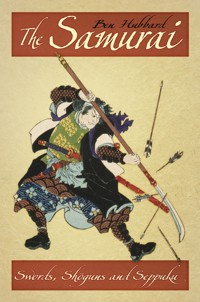
The true nature of the Japanese samurai warrior is an elusive and endlessly fascinating enigma for those in the West. From their inauspicious beginnings as barbarian-subduing soldiers, the samurai lived according to a code known as bushido - or 'way of the warrior'. Bushido- advocated loyalty, honour, pride and fearlessness in combat. Those who broke the code were expected to perform seppuku, or suicide through stomach-cutting. By its very design, seppuku aimed to restore honour to disgraced warriors by ensuring the most painful of deaths. However, the bushido- virtues of loyalty and honour fell into question as the samurai grew powerful enough to wrest control from the emperor himself. Accompanied by vivid colour illustrations, The Samurai offers a complete, concise account of samurai history and culture. It tells the story of the rise of the samurai as a martial elite, the warriors' centuries long struggle for power and their long slide into obsolescence.
Sie lesen das E-Book in den Legimi-Apps auf:
Seitenzahl: 242
Veröffentlichungsjahr: 2014
Das E-Book (TTS) können Sie hören im Abo „Legimi Premium” in Legimi-Apps auf:
Ähnliche


















For Mum
Contents
Title
Dedication
Introduction
1 The Way of the Warrior
2 Seppuku
3 The Heian Period
4 The Genpei War
5 Medieval Japan
6 Samurai Battles
7 The Warriors
8 Popular Culture
Conclusion
Bibliography
Plates
Copyright
Introduction
Samurai were the ancient fighting class of Japan; a martial elite which ruled the country for over 700 years. From their early beginnings as barbarian-subduing soldiers, the samurai would rise to prominence as large warrior clans, powerful enough to wrest control from the very emperor they were charged with protecting. The samurai would go on to become an aristocratic caste and lived according to a strict code of honour called bushidō, or ‘way of the warrior’. Bushidō advocated honour, loyalty, pride and fearlessness in combat, and those who broke the code were expected to kill themselves.
A samurai would showcase his bushidō virtues on the battlefield, seeking out a worthy enemy warrior to engage in one-to-one combat. To find a suitable opponent of equal rank and social standing, a samurai would call out his own name, position and accomplishments. When a response came, the warrior, adorned with flags and family crests, would once again yell out his name and charge into the fray.
The warriors would first engage each other in a mounted archery duel. This required a great amount of skill and training, as a rider had to release the reins to fire arrows while maintaining control of his horse. If neither party was victorious with the bow, they would dismount and continue fighting on the ground with swords, daggers and bare hands if necessary. This was a fight to the death, and contests between two famous samurai often created a pause in the fighting as soldiers from both sides watched. A samurai’s achievements in war were of paramount importance: the victorious fighter would chop off his opponent’s head and add it to his tally to be inspected later by his lord, shōgun or emperor.
Samurai would rather die than be defeated and those not killed on the battlefield would be expected to perform seppuku, more commonly known today as hara-kiri (‘cutting the stomach’). The ritual still provides a grisly source of fascination for Westerners, even centuries after the tradition was outlawed in Japan. Seppuku was always committed as a display of honour: it prevented the dishonour of capture and decapitation by the enemy; it helped to restore honour to a disgraced samurai; and, when used as a form of capital punishment, it allowed a condemned warrior to die an honourable death. Seppuku is considered to be one of the most painful ways for a human to die, and the bravest samurai were considered to be those who created the largest gaping wound or, better still, left viscera hanging from it.
The bloodiest period of samurai history undoubtedly took place during Japan’s medieval age (1185–c.1600), when bitter inter-clan conflicts and civil war wracked the country. It is ironic, then, that instances of seppuku actually increased in the seventeenth century, during an enforced period of peace. While the country prospered during this time, the ruling samurai class, which was paid a national dividend to stand battle-ready, became slowly defunct. Without wars to fight, warriors found themselves doing the unthinkable – taking employment as teachers, bureaucrats and umbrella makers. Other samurai became rōnin – masterless warriors destined to roam aimlessly around Japan, searching for work as hired hands and fighting with one another. Seppuku became a wholly common occurrence in the seventeenth century, used as both a form of capital punishment and a deterrent to keep bored samurai in check.
The bar for obligatory seppuku at this time was set painfully low – insulting a superior, harbouring Christians and brawling all received the same sentence of death by suicide. As a further hindrance to bad behaviour, a law was passed that made both parties in a violent argument equally responsible, regardless of what the dispute was about or who caused it. As the use of seppuku as capital punishment increased, so did the protocol for the elaborate ceremonies that surrounded it. For those about to die, white robes, final meals and paper for death poems were provided, as well as a nominated ‘second’ to perform decapitation before the pain became too great.
Instead of indulging in street scuffles and bar brawls, samurai were encouraged to turn their attention to more intellectual and spiritual pursuits – calligraphy, poetry, tea ceremonies and the teachings of Buddha. Numerous texts on bushidō were produced during this period, many of them reflective and highly philosophical. This literature mainly concentrated on what it meant to be a samurai warrior, rather than providing practical military applications of how to perform as one. The heroic exploits of great samurai were also recounted with wistful and romanticised flourishes; the most celebrated warriors were unshakably loyal, educated in the arts of war, indomitable on the battlefield and, oddly, often fated to lose. Fidelity until death was considered the most important bushidō virtue, and there was a particular appeal in the blindly obsequious samurai who had been betrayed and forced to become an outlaw.
Accounts of legendary samurai often crossed over into myth and fantasy, where warriors would battle supernatural creatures and even flee the shores of Japan for heroic exploits in foreign lands. Much of the information about the samurai stems from this peaceful period, where literature, woodblock prints and theatre provide tales often sentimentally told. In modern times, television, movies and video games have contributed to the view of the samurai as stoic and pure-hearted, able to cut down whole armies single-handedly. This anachronistic image is often perpetrated by Hollywood, whose portrayal of the pious, philosophical warrior in The Last Samurai was described by one Japanese reviewer as ‘setting his teeth on edge’.
While movie-makers of the West grapple with complex alien cultures, it is the samurai’s foreignness which gives their history such allure and exotic appeal. On the small islands of Japan, with little outside influence and centuries of isolation, one of the great martial orders of the world rose and fell. This is their history.
1
TheWay of the Warrior
THE LEGENDARY SAMURAI
Perhaps the greatest samurai who ever lived was Miyamoto Musashi. He was something of an eccentric – he paid little attention to his appearance, was often described as ‘unwashed’ and was frequently late to his duelling bouts. Musashi was cultivated and accomplished in calligraphy, painting and sculpture, and had killed many men before he had left his teens. He was a swordfighting strategist and dispatched more warriors in duels than any other known samurai, often fighting with sticks, branches and even the oar from a boat. However, his skill with a samurai blade was such that he could split a grain of rice on a man’s forehead without drawing blood.
Musashi recorded his accomplishments in The Book of Five Rings, a manual on swordfighting strategy:
I went from province to province duelling with strategists of various schools, and not once failed to win, even though I had as many as sixty encounters. This was between the ages of thirteen and twenty-eight or twenty-nine.1
Shinmen Musashi no Kami Fujiwara no Genshin was born in 1584, although he later took the name Miyamoto Musashi after his mother’s clan. By the time he was 7 years old, both of his parents had died and Musashi went to be raised and educated by his uncle, Dorin. Musashi’s first duel was against a travelling samurai called Arima Kihei, who had posted a public notice seeking opponents. Musashi wrote down his name and the challenge was accepted. Dorin was horrified by the news and tried to call off the duel by explaining to Kihei that his nephew was only 13 years old, but Kihei insisted that, for his honour to remain intact, the duel would have to proceed unless Musashi showed up at the scheduled time to prostrate himself. Instead, on the morning of the duel, Dorin arrived to apologise on Musashi’s behalf. As this was happening, Musashi strode into the hall, grabbed a quarterstaff and charged at Kihei, killing him instantly.
Two years later, the 15-year-old Musashi embarked on a warrior pilgrimage of the country, and it did not take long for his reputation to reach mythological proportions – the young samurai had won more duels than anyone in the history of Japan. Musashi also seemed able to turn virtually any object into a lethal weapon, often favouring the wooden bokken over a steel sword.
At the age of 21 Musashi arrived in Kyoto, where he set about challenging the masters of the nearby Yoshioka school. He had soon killed every one of them, leaving only 12-year-old Matashichiro as head of the Yoshioka family. Despite the school’s dwindling numbers, a challenge was issued to Musashi for a final duel at the Ichijoji Temple on Kyoto’s outskirts, but instead of meeting another samurai warrior, Musashi was to be ambushed by the remaining Yoshioka clan, armed with bows and arrows, swords and arquebuses.
Up until that point, Musashi had been late for every one of the Yoshioka duels, much to the disgust of his opponents. On the day of the final duel, however, he arrived some hours early, suspecting he had pushed the Yoshioka family into a surprise act of retribution. Musashi hid himself and lay in wait. Soon afterwards, a number of armed warriors arrived to make preparations for their ambush. Musashi then leapt from his hiding place and slaughtered a path through the Yoshioka samurai to Matashichiro himself, whom he killed before escaping unharmed. The battle left the Yoshioka school without a leader, students or family – and certainly without a reputation.
At the age of 28, Musashi fought his most legendary duel against his deadliest opponent yet – samurai master Sasaki Kojirō, who was known for his skill with a long straight sword, or nodachi, which he called ‘the laundry drying pole’. Kojirō taught swordplay at his school, where students would learn his signature stroke – the ‘swallow cut’. This consisted of a horizontal slashing movement that was so fast and precise that it looked like a swallow’s tail in flight. Kojirō was known to have killed many foes with this stroke.
The duel had been scheduled for the morning of 3 April 1612 on Funajima Island. Musashi was running late as usual, and there was no sign of him or his boat as Kojirō paced the island’s shore. Musashi had overslept and, when finally roused, he only had time to run to the boat which was waiting to row him to the island. However, as soon as the boat set off, Musashi realised that he was only carrying his short wakizashi sword and had left his main katana sword behind. Instead of turning back, the samurai set about carving himself a bokken from a spare oar as the boat continued across the water.
Kojirō’s fury at his opponent’s late arrival quickly turned to mirth when he saw Musashi’s crudely fashioned weapon, but Musashi did not appear ruffled by Kojirō’s taunts and simply held his weapon forward as a sign to let battle commence. The bout was as short as it was decisive. Kojirō made the first move, charging at Musashi and unleashing his swallow cut, which came so close to Musashi’s head that it sliced off his topknot. At the same moment, Musashi delivered a fatal blow with his oar. Kojirō fell forward onto his knees and then slumped backwards, his skull cracked open.
The episode represented the zenith of Musashi’s duelling career, which he gave up, aged 30, for a quieter life of reflection:
When I reached thirty I looked back on my past. The previous victories were not due to my having mastered strategy. Perhaps it was natural ability, or the order of heaven, or that other schools’ strategy was inferior. After that I studied morning and evening searching for the principle, and came to realise the ‘Way of Strategy’ when I was fifty.2
Musashi retired to live in a cave at the age of 60, and it is here that he wrote The Book of Five Rings. He died in 1645 – his body found sitting bolt upright with his wakizashi at the ready in his belt.
Musashi has been the subject of countless plays, poems, movies and books, not just because of his duelling prowess, but because he was the paragon of the samurai ethos. His books on strategy swordplay and the philosophy of the ‘way of the warrior’ are still studied today.
BUSHIDŌ
Bushidō or the ‘way of the warrior’ was the code of ethics that every samurai was encouraged to live and die by. It advocated a martial spirit of courage and fearlessness, alongside the virtues of loyalty, honour, rectitude, respect, benevolence, obedience, honesty, duty, filial piety (duty to one’s family and ancestors) and self-sacrifice. These ideals were heavily influenced by the belief systems of Buddhism, Zen, Confucianism and Shintō. Buddhism taught a warrior not to be scared of death, as he would be reincarnated in the next life. Zen helped a warrior ‘empty his mind’ and maintain clarity in battle. Confucianism encouraged morality and self-sacrifice. Finally, Shintō advocated loyalty, patriotism and ancestor-worship.
The ideology behind bushidō began its development from the ninth century onwards, when a warrior’s most valued attributes were his military skills and fortitude in war. Nevertheless, it was not long before the samurai were expected to be more than just good fighters. The best warriors were eulogised in a twelfth-century war chronicle, the Heike Monogatari (Tale of the Heike), as self-sacrificing, dutiful, respectful and utterly devoted to their clan. By the fourteenth century, chivalric virtues began to make an appearance in Japanese texts and, from then on, samurai were encouraged to couple their courage and military prowess with kindness, frugality, honesty and rectitude. These principles became an integral part of the samurai code, which from the fifteenth century was known as bushidō.
This ‘way’ was often laid out for samurai in a simple set of rules and regulations, such as the following sixteenth-century Precepts of Katō Kiyomasa:
Codes which all samurai should follow, regardless of rank:
One should not be negligent in the way of the retainer. One should rise at four in the morning, practise sword technique, eat one’s meal, and train with the bow, the gun, and the horse. A well-developed retainer should become even more so.
If one should want diversions, he should make them outdoor pastimes such as falconry, deer-hunting and wrestling.
For clothing, anything between cotton and natural silk will do. A man who squanders money for clothing and brings his household finances into disorder is fit for punishment. Generally one should concern oneself with armour appropriate for his social position and use his money for martial affairs.
When associating with one’s ordinary companions, one should limit the meeting to one guest and one host, and the meal should consist of plain brown rice. When practising the martial arts, however, one may meet with many people.
As for decorum at the time of a campaign, one must be mindful that he is a samurai. A person who loves beautification where it is unnecessary is fit for punishment.
The practice of Noh Drama is absolutely forbidden. When one unsheathes his sword, he has cutting a person down on his mind. Thus, as all things are born from being placed in one’s heart, a samurai who practises dancing, which is outside of the martial arts, should be ordered to commit seppuku.
One should put forth great effort in matters of learning. One should read books concerning military matters, and direct his attention exclusively to the virtues of loyalty and filial piety. Reading Chinese poetry, linked verse, and waka [Japanese poetry] is forbidden. One will surely become womanised if he gives his heart knowledge of such elegant and delicate refinements. Having been born into the house of a warrior, one’s intentions should be to grasp the long and the short swords and to die.
If a man does not investigate the matter of bushidō daily, it will be difficult for him to die a brave and manly death. Thus it is essential to engrave this business of the warrior into one’s mind well.
The above conditions should be adhered to night and day. If there is anyone who finds these conditions difficult to fulfil, he should be dismissed, an investigation should be quickly carried out, it should be signed and sealed that he was unable to mature in the Way of Manhood, and he should be driven out. On this, there can be no doubt.3
In the seventeenth century, notions about what it meant to be a samurai would once again change. During this time, known as the Edo Period, Shōgun Tokugawa Ieyasu declared there would be ‘no more wars’ and hundreds of thousands of samurai became unemployed as a result. For centuries the samurai had been either fighting battles or on standby waiting for another to start. Many of these warriors now became rōnin – masterless samurai who wandered aimlessly around the Japanese provinces looking for work and getting into trouble. Samurai brawls and street fighting became a common occurrence and laws were passed to make such offences punishable by death. Seppuku was the standard form of capital punishment in such cases, which at least allowed a disgraced samurai the chance to die an honourable death.
Instead of causing a public nuisance, samurai were encouraged to fill their time with artistic and intellectual interests – calligraphy, poetry, tea ceremonies and the teachings of Buddha among them. The texts published on bushidō during this period included special emphasis on samurai conducting themselves as refined and cultivated warriors, with long sections on the new application of their martial principles in peacetime. These texts considered the samurai heroes of the past, and gave romanticised accounts of their ‘great deeds’ in an attempt to make warriors of the day behave more like their predecessors.
While many of the seventeenth-century bushidō texts were philosophical and theoretical, the most popular book of the period, Hagakure, proclaimed the ‘way of the warrior’ could only be found in death.
HAGAKURE
Hagakure (Fallen Leaves) was samurai Yamamoto Tsunetomo’s version of bushidō, published some years after his death. Hagakure was a favourite among Edo Period warriors, as it was at odds with contemporary bushidō texts that focused on chivalry and gentlemanly values. Instead, Hagakure argued that a warrior’s life should be devoted to one’s master and the preparation for death:
Although it stands to reason that a samurai should be mindful of the Way of the Samurai, it would seem we are all negligent. Consequently, if someone were to ask, ‘What is the true meaning of the Way of the Samurai?’ the person who would be able to answer promptly is rare. This is because it has not been established in one’s mind beforehand. From this, unmindfulness of the Way can be known … The Way of the Samurai is found in death. When it comes to either/or, there is only the choice of death. It is not particularly difficult. Be determined and advance. To say that dying without reaching one’s aim is to die a dog’s death is the frivolous way of sophisticates. When pressed with the choice of life or death, it is not necessary to gain one’s aim.4
KENDO
Another consequence of the Edo Period of peace was the formation of hundreds of fencing schools around Japan. These were intended to further enhance the Edo message of education and discipline, while offering a practical outlet for their theory. Ironically, the schools would also serve as a beacon for wandering swordsmen who wished to challenge the head to a duel. Being the head of a fencing school was a good source of income for an unemployed samurai, but it had every chance of ending in disgrace if he was challenged and defeated by a rōnin. Inside the schools, students fought with wooden bokken swords and learned kendo, the ‘way of the sword’. Like bushidō, kendo was a belief system that encouraged self-sacrifice and discipline, and it is still taught in many fencing schools around the world today.
A young samurai warrior would be brought up according to the ‘way of the sword’ and the ‘way of the warrior’, and from the age of 3 was given a wooden bokken to fight with. Training would begin at 5 years old, when the child warrior was presented with his first real blade. Then he would be instructed in basic combat by his father and brothers, before being sent away to the home of a fencing instructor. Trainee warriors would learn the military arts, including archery, horsemanship, swordfighting, unarmed combat and, from the sixteenth century onwards, how to handle firearms. In addition, the samurai would be versed in the theory of warfare and bushidō.
When a warrior turned 15 he was initiated into the samurai fold in the genpuku ceremony, where he was given an adult name, a sword and samurai armour. Every young warrior was expected to live a spartan existence to successfully become a samurai. As Hagakure states: ‘It is said that one should rise at four in the morning, bathe and arrange his hair daily, eat when the sun comes up and retire when it becomes dark.’ In addition to this mental preparation was the essential weapons training that would turn the samurai into a deadly fighting machine on the battlefield. To become truly accomplished, a samurai would need to be equally versed with the naginata, a polearm weapon, as with the bow, sword and arquebus. In TheBook of Five Rings, Miyamoto Musashi summarises the virtues of each weapon:
The bow is tactically strong at the commencement of battle, especially on a moor, as it is possible to shoot quickly from among the spearmen. However, it is unsatisfactory in sieges, or when the enemy is more than forty yards away … From inside fortifications, the gun has no equal among weapons. It is the supreme weapon on the field before the ranks clash, but once swords are crossed the gun becomes useless … The halberd [naginata] is inferior to the spear on the battlefield. With the spear you can take the initiative; the halberd is defensive … Because bows, guns, spears and halberds are all warriors’ equipment they are certainly part of strategy. To master the virtue of the long sword is to govern the world and oneself, thus the long sword is the basis of strategy. The principle is ‘strategy by means of the long sword’. If he attains the virtue of the long sword, one man can beat ten men. Just as one man can beat ten, so a hundred men can beat a thousand, and a thousand can beat ten thousand. In my strategy, one man is the same as ten thousand, so this strategy is the complete warrior’s craft.5
WEAPONS OF WAR
THE SWORD
The samurai sword was a warrior’s most prized possession and would only leave his sight in death. It was the badge and privilege of the samurai class to bear arms and each warrior carried two swords, one long (the tachi and, later, the katana) and one short (the wakizashi). The swords would be with the samurai at all times and never more than an arm’s length away during sleep. The wakizashi was not normally used for fighting, but instead to chop the heads off defeated warriors and to commit seppuku. The katana was made with a gentle curve and was perfectly balanced to enable a precise cutting action.
The forging of a new sword was considered a sacred art, and one which would take expert swordsmiths months to complete. Just to create the steel for a samurai sword was an arduous process, taking ten men over three days to smelt the carbon-rich steel pieces that would go on to be forged into a blade. To make the steel, iron-sand was poured into a 1,000°c charcoal furnace called a tatara. Over seventy-two hours the sand would form into pieces of crude steel, known as tamahagane. Once cooled, the best tamahagane pieces were sent to a swordsmith to begin the forging process.
A master swordsmith would make a new samurai blade over several weeks; his team would include smiths to forge the blade’s shape, assistant smiths to fold the metal with hammers, a polisher, a blade expert, and sheath and hilt artisans. Every man involved would dress in white ceremonial clothes and perform Shintō rituals throughout the highly ceremonial process. The samurai blade was created with two types of steel: a softer, lower carbon steel in its centre; and harder, high carbon steel on the outside. These different types of steel were forged in a furnace reaching 1,300°c and then folded up to sixteen times through hammering, which distributed the carbon content evenly throughout the blade. The inner steel was then wrapped in the outer steel and welded together to form a 60–80cm blade. This bi-metallic construction was the true genius of the samurai sword – a combination of soft, flexible steel running through its core, wrapped in a hard cutting shell. The result was a razor-sharp cutting blade that could also absorb shock. This reduced the chances of the sword bending or snapping in combat, and also enabled it to be used as a shield, which samurai warriors did not carry.
Swordfighting technique was called kenjutsu, or the ‘art of the sword’. A samurai would grasp the handle of his sword with both hands and train in the sixteen varieties of cut, most of which used a downward stroke. Young samurai practised their cuts on the bodies of criminals, either dead or alive, so they could experience slicing human flesh. Hours could be devoted to learning one move, such as the laido – a single, smooth movement that pulled the katana from its scabbard, struck down the opponent, wiped the blade clean of blood, and returned the sword to its sheath.
CUTS AND STROKES
It was considered important for a warrior to study the various swordfighting styles of different samurai masters, as each one practised their own methods and techniques. Miyamoto Musashi favoured a type of kenjutsu called nitōjutsu, or the ‘two sword’ method. In TheBook of Five Rings, Musashi suggests: ‘It is not difficult to wield a sword in one hand; the way to learn this is to train with two long swords, one in each hand. It will seem difficult at first, but everything is difficult at first.’ In his book, Musashi also gave instructions about specific cuts and moves to be used in combat:
To Hit the Enemy in One Timing
‘In One Timing’ means when you have closed with the enemy to hit him as quickly and directly as possible, without moving your body or settling your spirit, while you see that he is still undecided. The timing of hitting before the enemy decides to withdraw, break or hit, is this ‘In One Timing’.
Continuous Cut
When you attack and the enemy also attacks, and your swords spring together, in one action cut his head, hands and legs. When you cut several places with one sweep of the long sword, it is the ‘Continuous Cut’. You must practise this cut, it is often used. With detailed practice you should be able to understand it.
Cut and Slash
To cut and to slash are two different things. Cutting, whatever form of cutting it is, is decisive, with a resolute spirit. Slashing is nothing more than touching the enemy. Even if you slash strongly, and even if the enemy dies instantly, it is slashing. When you cut, your spirit is resolved. You must appreciate this. If you first slash the enemy’s hands or legs, you must then cut strongly. Slashing is in spirit the same as touching. When you realise this, they become indistinguishable. Learn this well.
Glue and Lacquer Emulsion Body
The spirit of ‘Glue and Lacquer Emulsion Body’ is to stick to the enemy and not separate from him. When you approach the enemy, stick firmly with your head, body and legs. People tend to advance their head and legs quickly, but their body lags behind. You should stick firmly so that there is not the slightest gap between the enemy’s body and your body. You must consider this carefully.
To Scold ‘Tut-TUT!’
Scold means that, when the enemy tries to counter-cut as you attack, you counter-cut again from below as if thrusting at him, trying to hold him down. With very quick timing you cut, scolding the enemy. Thrust up, ‘Tut!’, and cut ‘TUT!’ This timing is encountered time and time again in exchange of blows. The way to scold ‘Tut-TUT’ is to time the cut simultaneously with raising your long sword as if to thrust the enemy. You must learn this through repetitive practice.
The Flowing Water Cut
‘The Flowing Water Cut’ is used when you are struggling blade to blade with the enemy. When he breaks and quickly withdraws trying to spring with his long sword, expand your body and spirit and cut him as slowly as possible with your long sword, following your body like stagnant water. You can cut with certainty if you learn this. You must discern the enemy’s grade.
There Are Many Enemies




