


31,99 €
Mehr erfahren.
- Herausgeber: John Wiley & Sons
- Kategorie: Fachliteratur
- Sprache: Englisch
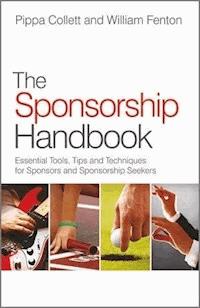
The Sponsorship Handbook is a practical guide to sponsorship aimed at practitioners both working for sponsoring companies and those searching for sponsorship.
Using the tools, techniques, advice and best practice advocated in this book both sponsors and sponsor seekers will benefit from better servicing and activation once a sponsorship is implemented, with metrics that enable data-based accountability rather than hearsay.
"Everyone in the sponsorship industry, from the biggest events and properties to the smallest, are benefitting from the increasing knowledge, data availability, metrics and professionalism in using sponsorship. The Sponsorship Handbook is a part of that process which we hope will bring future success and proven sound results to all in the complex and exciting world of sponsorship."
—Luis Vicente, Head of Partnerships, Manchester City Football Club
"An indispensable reference for any marketer who is keen to build his/her brand using sponsorship; the new ascending way to empower brands."
—Faisal Al-Dail, Saudi Post
Sie lesen das E-Book in den Legimi-Apps auf:
Seitenzahl: 305
Veröffentlichungsjahr: 2011
Ähnliche



















Table of Contents
Cover
Title page
Copyright page
Dedication
FOREWORD
PREFACE
ABOUT THE AUTHORS
ACKNOWLEDGEMENTS
Disclaimer
HOW TO USE THIS BOOK
CHAPTER 1 INTRODUCTION TO SPONSORSHIP
Overview
Sponsorship: what is it?
Industry development
The basic building blocks of sponsorship
Sponsorship assets
The process of sponsorship
The in-source/out-source debate
Key take-outs
Summary
Part I: Sponsors
CHAPTER 2 DEVELOPING SPONSORSHIP STRATEGY
Overview
The strategy development process
Conclusion
Summary
CHAPTER 3 PLANNING FOR SUCCESS
Overview
The planning process
Establishing the need for a new sponsorship
Agree selection criteria
Research properties
Sponsorship assessment methodologies
Negotiating the right deal
Contracting
Sponsorship selection errors and remedies
Key take-outs
Summary
CHAPTER 4 SPONSORSHIP IMPLEMENTATION
Overview
Sponsorship implementation
The key ingredients of successful sponsorship activation
Integration
Developing a common understanding
Preparing for competitor response
Execution planning tips
Execute creatively
Implementation challenges and solutions
Key take-outs
Summary
CHAPTER 5 SPONSORSHIP EVALUATION
Overview
Evaluation programme planning
Use SMART objectives
ROI v. ROO
Measurement methodologies
The wrong reasons for renewal
Key take-outs
Summary
Part II: Sponsorship Seekers
CHAPTER 6 DEVELOPING A SPONSORSHIP STRATEGY
Overview
What modern sponsors want
Making an historical review of sponsorship in your organization
Asset inventory
Resources review
Sponsorship strategy
Why bother with a sponsorship strategy?
Is sponsorship right for us?
Sponsors can give more than cash
Putting our organization in context: how do sponsors see us?
Modern sponsor needs and insights
“Money Can’t Buy” experiences
Key take-outs
Summary
CHAPTER 7 ESSENTIAL SALES PREPARATION
Overview
Look at yourself from the sponsor’s point of view
Organize your assets to appeal
How much should we ask for the sponsorship?
Setting the price
Creating a sponsor hierarchy
Key take-outs
Summary
CHAPTER 8 THE SALES PROCESS
Overview
Market realities
Sales strategies: think sectors not companies
How research helps you to beat the market
Why write a proposal?
Proposal summary
The full proposal: basic structure and checklist
Five questions every proposal writer should ask
Some sponsorship sales tips from Carlsberg
“What is it you want?” Prepare your elevator pitch
Put the price in or leave it out? Involve the sponsor in the package
Sales tips for closing
Key take-outs
Summary
CHAPTER 9 SERVICING AND RENEWAL
Overview
Different perspectives
Exploit sponsorship’s flexibility in order to look after your sponsors
How sponsors judge you
Return on investment and return on objectives
SMART Objectives
Five questions every sponsor should ask
Five questions every sponsor should ask
Q1. How visible was my sponsorship?
Q2. Did anyone notice the sponsorship?
Q3. Did it change perceptions of the brand?
Q4. How much more product did we sell as a result?
Q5. Should we renew the sponsorship?
Create extra value for your sponsors
More ideas to keep sponsors happy
Key take-outs
Part III: The Way Ahead
CHAPTER 10 SPONSORSHIP IN THE FUTURE
Overview
Impact of the recession
A catalyst for change
Industry development
Sponsors
Rights-holders
Summary
GLOSSARY
Index
This edition first published in 2011
Copyright © 2011 Pippa Collett and William Fenton
Under the Jossey-Bass imprint, Jossey-Bass, 989 Market Street, San Francisco CA 94103-1741, USA
www.jossey-bass.com
Registered office
John Wiley & Sons Ltd, The Atrium, Southern Gate, Chichester, West Sussex, PO19 8SQ, United Kingdom
For details of our global editorial offices, for customer services and for information about how to apply for permission to reuse the copyright material in this book please see our website at www.wiley.com
The right of the authors to be identified as the authors of this work has been asserted in accordance with the Copyright, Designs and Patents Act 1988.
All rights reserved. No part of this publication may be reproduced, stored in a retrieval system, or transmitted, in any form or by any means, electronic, mechanical, photocopying, recording or otherwise, except as permitted by the UK Copyright, Designs and Patents Act 1988, without the prior permission of the publisher.
Wiley also publishes its books in a variety of electronic formats. Some content that appears in print may not be available in electronic books.
Designations used by companies to distinguish their products are often claimed as trademarks. All brand names and product names used in this book are trade names, service marks, trademarks or registered trademarks of their respective owners. The publisher is not associated with any product or vendor mentioned in this book. This publication is designed to provide accurate and authoritative information in regard to the subject matter covered. It is sold on the understanding that the publisher is not engaged in rendering professional services. If professional advice or other expert assistance is required, the services of a competent professional should be sought.
Library of Congress Cataloging-in-Publication Data
Fenton, William (William Seaborne), 1957-
The Sponsorship Handbook : Essential Tools, Tips and Techniques for Sponsors and Sponsorship Seekers / William Fenton and Pippa Collett.
p. cm
Includes bibliographical references and index.
ISBN 978-0-470-97984-6
1. Corporate sponsorship. I. Collett, Pippa. II. Title.
HD59.35.F46 2011
659.2–dc22
2010050392
A catalogue record for this book is available from the British Library.
ISBN 978-0-470-97984-6 (hardback), ISBN 978-0-470-98002-6 (ebk),
ISBN 978-0-470-98000-2 (ebk), ISBN 978-0-470-98001-9 (ebk)
This book is dedicated to the pioneers of modern sponsorship,
the colleagues and companies that have enabled us to develop our
sponsorship competence and the patience and good humour
FOREWORD
The European Sponsorship Association’s mission is to improve the standards of professionalism in sponsorship practice and The Sponsorship Handbook makes a significant contribution to achieving this objective.
It is a practical guide to the key components of sponsorship with tools and checklists to prompt thinking and action. The many case studies drawn from sources all around the world help to illustrate key points and provide inspiration. The authors are sponsorship professionals with extensive, quality experience working both within and for leading sponsors and rights-holders.
As the sponsorship industry grows and new organizations enter the market. The Sponsorship Handbook will be a vital resource in educating new sponsors, rights-holders and other interested parties in sponsorship best practice.
Karen Earl
Chairman
European Sponsorship Association
PREFACE
As a relatively young marketing discipline, sponsorship lacks the body of knowledge required to ensure best practice and the implementation of policies and processes that result in satisfactory outcomes. As full time practitioners and part time lecturers, with more than 40 years sponsorship experience between us, we wanted to capture what we have learned, often through trial and error, to help newcomers to this exciting industry learn more quickly and less painfully than we did!
This book aims to create a baseline understanding of sponsorship by introducing anyone interested in developing their sponsorship competence to the principles and processes that will enable them to deliver robust results.
For further resources and information on sponsorship visit http://www.sponsorshipstore.com.
For updates on news, ideas and trends in sponsorship follow us on Twitter@Sponsorshiptips.
ABOUT THE AUTHORS
Pippa Collett
Pippa Collett is a leading sponsorship practitioner with an extensive client-side career with Shell, American Express and Rank Organization. Her global sponsorship experience includes Ferrari in Formula One motor racing and the Athens Olympics as well as arts and entertainment projects such as The Olivier Awards and Disneyland Paris. She joined Sponsorship Consulting as Managing Director in 2006 to work with blue-chip clients such as Siemens, Standard Chartered Bank and Cisco.
Achieving measurable returns on sponsorship investments is a particular interest, and her work in this area was recognized with a Hollis Award for Best Use of Research in Sponsorship in 2005. As Vice-Chair of The European Sponsorship Association, Pippa has led on key aspects of the developing sponsorship agenda, including authorship of ESA’s Sponsorship Assessment & Evaluation Guidelines and introducing the concept of Continuing Professional Development. More recently she has developed ESA’s Sponsorship Agency Selection Process and is currently focusing on developing the structure for the provision of qualifications within the sponsorship industry across Europe.
An occasional lecturer at the Institute of Direct Marketing and the Incorporated Society of British Advertisers, Pippa is a regular speaker at sponsorship conferences in the US, UK, Europe and the Middle East. Her work has been published in the Journal of Sponsorship, The International Journal of Sports Marketing & Sponsorship, and Argent, the journal of the Financial Services Forum. Her opinion on sponsorship issues is widely sought by the media, including the BBC, CNBC, The Times and the Wall Street Journal as well as the marketing trade press.
A Cranfield MBA, Founder Chartered Marketer, Fellow of the RSA and member of the Marketing Society, Pippa lives in London with her husband and two children and is a keen carriage driver.
William Fenton
William Fenton is a Director of Sponsorship Consulting in London and Brussels, looking after clients as diverse as The British Library, The Dubai International Film Festival, Epson, FedEx, The Olympic Business Club and The European Space Agency. His status as a sponsorship expert has been built through 19 years in sponsorship, working with IFM Sports Marketing Surveys and Sponsorship Research International/ISL on major sports events including the Olympics, FIFA World Cup and Formula One racing.
William is Editor of The World Sponsorship Monitor produced by IFM Sports Marketing Surveys and has been published in The International Journal of Sports Marketing & Sponsorship, The Journal of Sponsorship and SportBusiness International, as well as making appearances on CNBC television’s Money and Sport programme. He lectures at the Hogeschool-Universiteit and VUB University in Brussels, holds the Market Research Society Advanced Certificate in Market and Social Research Practice and is a founder member of the European Sponsorship Association’s Continuing Professional Development Accreditation programme.
Based in Brussels, married with three children and a keen rower since his time at Durham University, his earliest practical experience of securing and managing sponsorship goes back to the £2.5 million 1986 In The Footsteps of Scott Expedition. Reputed as the “last great 20th-century expedition”, three men were the first to successfully walk the 900 miles to the South Pole without support. Sponsors of Captain Scott’s original 1912 expedition returned 74 years later and a Jonathan Cape book and a contract with ITN News helped to secure the huge logistical budget. This included an aircraft and a ship, The Southern Quest, which sank spectacularly in Antarctic ice on the return journey without loss of life, and with William on board. The images were seen by viewers across the world.
ACKNOWLEDGEMENTS
Christine Hutton; Suzanne Millington; Graeme Davis (Sponsorship Consulting); David Lapish (O2); Michael Brockbank (Unilever); Jos Cleare (Accenture); Darren Marshall (Evolution); David Sleigh (Footbalance); Caroline Booth (Telecom New Zealand); Amy Lyddall Fell (Nelsons); Farina Jabbari (Nelsons); Guido Becchis (Youthstream); Annemie Vander Vorst (FedEx); Gwendolyn Da Silva (Morgan Stanley); Daragh Persee (Vodafone); Pia DeVitre (Deloitte); Jacob Vanluchene (Red Bull); Anne Keogh (Siemens); Claire Jarvis (Siemens); Leilani Yan (AirAdvertainment); Alastair Marks (McDonald’s); Gareth Roberts (Carlsberg); Shaun Whatling (Redmandarin); Lesa Ukman (IEG); Tony Ponturo (Ponturo Management Group); Fiona Seymour (Department of Transport); Nigel Geach (IFM Sports Marketing Surveys); Sandra Greer (IFM Sports Marketing Surveys); Jeff Eccleston (Sponsorship Research International – SRi); Ardi Kolah (Guru in a Bottle); Karen Earl (European Sponsorship Association); Jos Verschueren (Vrije Universiteit, Brussel Faculty of Physical Education and Physiotherapy Department of Sports Policy and Management); Jaclyn Neal (Beiersdorf UK Ltd); Nicola Seery (Beiersdorf UK Ltd); Zoe Stainsby (Cake); Simon Fry (FedEx); Faisal Dail (Saudi Post); Luis Vicente (Manchester City Football Club); Serena Hedley-Dent (Farrer & Co) and Ben Treadaway & Mark Cornish (Sponsorium).
Formula One is a trademark of Formula One Licensing B.V.
Disclaimer
Whilst every attempt has been made to credit third parties (where applicable) and all care has been taken to represent information accurately and in good faith, the authors shall not be responsible for any errors or omissions, factual or otherwise, and do not accept any liability arising out of any reliance placed on information contained within this publication. The authors would, however, welcome any correction to credits or of materials contained within this publication for future editions.
HOW TO USE THIS BOOK
The sections for sponsors and sponsorship seekers both inform each other as the key to good sponsorship is understanding the needs and different perspectives of both parties. Icons are used to guide the reader and make it easier to extract information quickly.
Overview
Case Study
Key Action
Key Questions
Key Learning Points
CHAPTER 1
INTRODUCTION TO SPONSORSHIP
Overview
Sponsorship, correctly conceived and creatively executed, has unparalleled power to build brands, engage stakeholders and present profitable commercial opportunities.
This chapter introduces the basic building blocks required to understand sponsorship and the environment in which it operates, including:
What sponsorship is, and is not, in the context of modern sponsorship practice.The size of the industry, and why it continues to see growth at a time when advertising spend is slowing.The key players and the range of sponsorship opportunities, target audiences and possible sponsorship objectives that should be taken into consideration.Tangible and intangible sponsorship assets and how some of these might be valued.Lesen Sie weiter in der vollständigen Ausgabe!
Lesen Sie weiter in der vollständigen Ausgabe!
Lesen Sie weiter in der vollständigen Ausgabe!
Lesen Sie weiter in der vollständigen Ausgabe!
Lesen Sie weiter in der vollständigen Ausgabe!
Lesen Sie weiter in der vollständigen Ausgabe!
Lesen Sie weiter in der vollständigen Ausgabe!
Lesen Sie weiter in der vollständigen Ausgabe!
Lesen Sie weiter in der vollständigen Ausgabe!
Lesen Sie weiter in der vollständigen Ausgabe!
Lesen Sie weiter in der vollständigen Ausgabe!




