


1,99 €
Mehr erfahren.
- Herausgeber: Quickie Classics
- Kategorie: Erotik
- Sprache: Englisch
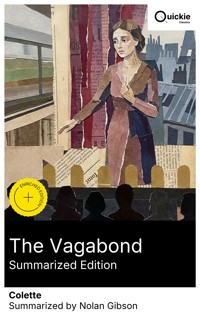
In The Vagabond (1910), Colette follows Renée Néré, a divorced music-hall performer, through Belle Époque Paris, recording the economics and erotic politics of a woman who works with her body yet refuses ownership. In supple first person, part diary and theater sketch, the novel marries sensuous detail to cool self-scrutiny as Renée weighs the comfort promised by a wealthy admirer against the hard-won clarity of solitude and work. Colette's tactile prose and modern psychological acuity probe performance, aging, and the gaze across trains, dressing rooms, and provincial stages. Colette's own trajectory animates this poise between art and autonomy. After ending her marriage to Willy, under whose name the Claudine books first appeared, she sustained herself on the music-hall stage. That apprenticeship supplies the novel's authority, and she later returned to Renée in The Shackle to extend the inquiry. Readers of feminist modernism, theater history, and intimate psychological fiction will find The Vagabond indispensable. It offers a lucid, unsentimental account of desire, work, and self-making, avoiding melodrama without surrendering lyricism. Come for Colette's style; stay for Renée's fierce, moving argument for freedom. Quickie Classics summarizes timeless works with precision, preserving the author's voice and keeping the prose clear, fast, and readable—distilled, never diluted. Enriched Edition extras: Introduction · Synopsis · Historical Context · Author Biography · Brief Analysis · 4 Reflection Q&As · Editorial Footnotes.
Das E-Book können Sie in Legimi-Apps oder einer beliebigen App lesen, die das folgende Format unterstützen:
Veröffentlichungsjahr: 2026
Ähnliche












The Vagabond (Summarized Edition)
Table of Contents
Introduction
In The Vagabond, Colette traces the perilous equilibrium between a woman’s hard-won independence and the seductive pull of attachment, following a performer whose body is both her instrument and her livelihood, as backstage camaraderie, the rhythm of touring trains, the sting of economic necessity, and the unexpected tenderness of courtship press upon her sense of self, transforming the act of choosing into a sustained performance of will, resilience, and vulnerability conducted beneath footlights, behind dressing-room mirrors, and within the quiet inner theater where art, survival, and longing confront one another without the safety of illusion or applause.
First published in 1910, The Vagabond is a French novel set largely in Paris and on the provincial variety circuit during the final years of the Belle Époque. Written by Colette, who had firsthand knowledge of the music hall, it blends psychological realism with a performer’s-eye view of work, travel, and routine. The book occupies the space between a backstage novel and an intimate personal drama, attentive to city streets, rented rooms, and theaters that shimmer with labor as much as glamour. Its historical moment, on the cusp of twentieth-century modernity, frames a study of female autonomy grounded in concrete, everyday detail.
The novel centers on Renée Néré, a divorced stage artist who supports herself by dancing and acting in short acts, shaping a professional life that depends on discipline, timing, and the control of one’s image. Her livelihood draws her across neighborhoods and towns, into theaters where she is celebrated and judged, and into friendships that are edged with rivalry and loyalty. An attentive admirer begins to challenge her self-sufficiency, not through grand melodrama but through steady presence, gifts, and invitations. The plot moves with measured, intimate stakes, keeping the focus on Renée’s choices, her craft, and the costs of independence.
Colette’s first-person voice is lucid, sensuous, and unsentimental, alive to textures of fabric, the fatigue of touring, and the precise gestures that turn labor into art. The prose lingers on tactile experience and sudden flashes of perception, then tightens into dry wit or self-scrutiny, so the reader feels both the public posture of a seasoned professional and the private weather of her reflections. Scenes shift between dressing rooms, cafés, train compartments, and quiet interiors, yielding an intimate tempo marked by pauses rather than plot shocks. The tone is thoughtful, sometimes playful, and often sharp, trusting nuance more than declaration.
At its core, the book examines autonomy as daily practice: the budgeting of money and energy, the setting of boundaries, and the ownership of one’s work and body. It explores how performance complicates identity, how love promises relief yet threatens freedom, and how social expectations shape what kinds of lives seem respectable or possible. Colette is attuned to labor—rehearsals, contracts, costumes—and to desire, which arrives with tenderness and pressure. The narrative also traces solitude as sustenance rather than deficiency, portraying privacy as a creative resource. Questions of age, reputation, and the gaze thread through the story without didacticism.
For contemporary readers, The Vagabond speaks to the ongoing negotiation between work and intimacy, especially for those whose vocations demand public exposure or irregular hours. Its portrait of economic vulnerability complicates romantic choice, reminding us that independence is sustained by income, craft, and the right to refuse. The novel’s attention to boundaries, consent, and self-definition resonates in discussions about creative labor and the pressures placed on women to reconcile ambition with availability. It also offers a counterpoint to narratives that equate fulfillment with pairing off, suggesting that integrity may require unconventional arrangements, pauses, or departures that cannot be externally scripted.
Approached as a study of craft and character, the novel endures because it refuses to simplify the trade-offs that accompany freedom. Colette’s clear-sighted attention to the textures of earning a living, the ruses and rituals of performance, and the private negotiations of desire creates a portrait that feels immediate rather than dated. Readers will find a narrative propelled by observation more than spectacle, where the suspense resides in self-knowledge rather than fate. The Vagabond remains a vital encounter with a voice testing the limits of choice, asking what kind of life can be made from talent, solitude, and care.
Synopsis
Colette’s The Vagabond, first published in 1910 under the French title La Vagabonde, introduces Renée Néré, a divorced music-hall artist making her living on the Paris stage. Narrated in the first person, the book blends scenes of theatrical labor with reflective notebooks about work, desire, and self-respect. Renée’s nightly routine, the isolation of furnished rooms, and the precise discipline of performance establish her as self-reliant yet marked by past hurt. The novel situates her independence not as a pose but as a practical stance in a society quick to judge women who leave marriage. From the start, art and survival appear inseparable.
Early chapters linger in backstage corridors and cramped dressing rooms, observing costuming, greasepaint, and the hidden athleticism behind a seemingly light act. The theater is portrayed as precarious employment, governed by contracts, the moods of managers, and the appetite of audiences. Renée counts every franc, tends to her body as to an instrument, and keeps social entanglements carefully managed. The professional world provides camaraderie as well as rivalry, and the novel measures the cost of visibility for a woman who trades on poise. Colette’s focus stays close to labor: rehearsals, tours under negotiation, and the daily discipline that makes applause possible.
Into this routine steps a prosperous admirer, Maxime Dufferein-Chautel, who begins as a courteous presence in the audience and becomes a persistent figure in Renée’s days. His attentions are ardent yet tentative, marked by gifts, visits, and a willingness to listen. He offers the promise of ease and protection beyond the theater’s hazards, but he also represents a world that scarcely understands the rigors of her trade. Renée senses both kindness and intrusion in his pursuit. The narrative registers her curiosity and alarm as she tests whether affection can coexist with the self-command that her hard-won independence demands.
The courtship unfolds in conversations that circle class, work, and trust. Max speaks the language of security; Renée answers with the language of craft and self-sufficiency. Their exchanges are punctuated by gossip among colleagues and by the calculated caution of a woman who has already endured a bruising marriage and its aftermath. She sets limits, asking time and distance while continuing to perform. The book tracks the rhythms of their approach and retreat, presenting desire as an argument conducted over weeks, where each gesture is measured against the memory of dependence and the reality of a public career.




