


Erhalten Sie Zugang zu diesem und mehr als 300000 Büchern ab EUR 5,99 monatlich.
- Herausgeber: Eye Press
- Kategorie: Geisteswissenschaft
- Sprache: Englisch
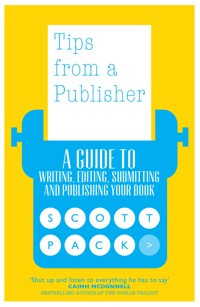
'Contains everything you need to know to get published' Adam Kay, author of the No1 bestseller This Is Going to Hurt From a handy introduction to how the publishing world works, and how authors fit into it, to practical tips on writing your book, strategies for editing and re-writing, Tips from a Publisher is an indispensable guide for authors. Helping you create the perfect submission and telling you the truth about what happens once you get published, it is crammed full of common-sense advice, and some trade secrets, that no aspiring writer should be without. From a handy introduction to how the publishing world works, and how authors fit into it, to practical tips on writing your book, strategies for editing and re-writing, Tips from a Publisher is an indispensable guide for authors. Helping you create the perfect submission and telling you the truth about what happens once you get published, it is crammed full of common-sense advice, and some trade secrets, that no aspiring writer should be without. 'Shut up and listen to everything he has to say' – Caimh McDonnell, bestselling author of The Dublin Trilogy 'Part instruction manual, part sat nav, part friendly arm round the shoulder: this is the book every aspiring writer needs to own' – John Mitchinson, co-founder, Unbound 'A book-shaped boot camp for emerging writers… essential reading' – Judith Heneghan, director, Winchester Writers' Festival 'Scott knows the publishing industry inside-out and whenever I work with him, I know my authors are in good hands' – Charlotte Seymour, literary agent 'I wouldn't trust anyone else to give me advice, he really knows his stuff!' – Valerie Brandes, founder, Jacaranda Books 'The best editor I've ever worked with' – Ray Robinson, author of The Mating Habits of Stags
Sie lesen das E-Book in den Legimi-Apps auf:
Seitenzahl: 307
Veröffentlichungsjahr: 2020
Das E-Book (TTS) können Sie hören im Abo „Legimi Premium” in Legimi-Apps auf:
Ähnliche




















‘Scott is the rarest of one-two punches, having a wonderful understanding of both the creative and business sides of the publishing industry. If I could give you one bit of advice, it’d be to shut up and listen to everything he has to say. If I could give you two bits of advice, it’d be that, plus: people getting punched in the groin is never not funny.’
Caimh McDonnell, bestselling author of The Dublin Trilogy
‘Scott has championed me from the very start of my self-published writing career. In 2011 he quoted that I was as good if not better than any traditionally published romcom author. As I sit at No 1 in the Kindle bestselling chart, I guess he knows what he’s talking about.’
Nicola May, No 1 bestselling author of The Corner Shop in Cockleberry Bay
‘Few people in the publishing world can claim to have such wide and varied knowledge and experience of so many aspects of the industry. As a publisher, bookseller, author and speaker (not necessarily in that order), Scott not only has the breadth and depth of experience to impart but he does so forthrightly and with great humour. I wouldn’t trust anyone else to give me advice, he really knows his stuff!’
Valerie Brandes, founder, Jacaranda Books
‘Scott has unrivalled experience as a book buyer, editor and publisher; he’s seen and done it all from across the business. If you want to know about any aspect of the book world, what he says really does matter and will make a huge difference.’
Michael Bhaskar, co-founder and publishing director, Canelo
‘Scott is a rare beast who combines pragmatic commerciality with creative flair and sensitivity, all wrapped in a no-BS, tell-it-how-it-is persona. His short cuts on how to win are invaluable guides not only on how to get published but also how to sell books. Unfortunately if he thinks your magnum opus is crap he will happily tell you so.’
David Roche, former Chief Executive, Borders UK & Ireland
‘Not only is Scott Pack the best editor I’ve worked with, but as a publisher, he’s erudite, passionate and creative – must-have qualities every successful publisher should combine.’
Ray Robinson, author of The Mating Habits of Stags
‘From being the key national bookseller at Waterstones to becoming a publisher and champion of digital publishing, the inveterate enthusiast Scott Pack has long been a highly regarded and influential figure in the book trade.’
Charley Viney, The Viney Shaw Agency
‘Scott is truly wise about all aspects of the publishing process and industry. He’s also a tiny bit irreverent, which means he will always tell it how it is.’
Abi Silver, author of the Burton & Lamb crime series
‘A book-shaped boot camp for emerging writers. Essential reading for creative writing students everywhere.’
Judith Heneghan, director, Winchester Writers’ Festival
‘Part instruction manual, part sat nav, part friendly arm round the shoulder: this is the book every aspiring writer needs to own.’
John Mitchinson, co-founder & Chief Publishing Officer, Unbound
‘Scott is known in the publishing industry for his straight-talking approach – he can be relied upon for sensible and honest advice.’
Angus Phillips, director, Oxford International Centre for Publishing
‘Scott is a damn fine editor.’
Paul Dodgson, author of On the Road Not Taken
‘I had the pleasure of working with Scott at HarperCollins and I learned a huge amount from him. As well as possessing a deep understanding of the business of publishing books, he is also forward-thinking and knows exactly how latest innovations can impact his work effectively. Scott brings a hell of a lot to the party.’
Sam Missingham, founder, Lounge Marketing
‘Scott knows the publishing industry inside-out and whenever I work with him, I know my authors are in good hands.’
Charlotte Seymour, literary agent
Published by Eye Books
29A Barrow Street
Much Wenlock
Shropshire
TF13 6EN
www.eye-books.com
First edition 2020
Copyright © Scott Pack 2020
Cover design by Ifan Bates
Copyedit and typesetting by Clio Mitchell
Proofreading by Alan Smithee
A version of ‘The Mathematics of Publishing’ chapter has previously appeared in The Writers’ and Artists’ Yearbook. A version of the ‘How to Perfect Your Submission’ chapter has previously been published as a separate ebook. Versions of many of the other chapters have appeared on screwed-up bits of paper in the bin next to Scott’s desk.
All rights reserved. Apart from brief extracts for the purpose of review, no part of this publication may be reproduced, stored in a retrieval system, projected onto public buildings, copied out by hand using invisible ink (but how would we know?) or transmitted in any form or by any means, electronic, mechanical, photocopying, semaphore, Morse code, recording or otherwise without permission of the publisher. Permission is more likely to be given if Tunnock’s Caramel Wafers are offered.
‘Scott Pack has asserted his right under the Copyright, Designs and Patents Act 1988 to be identified as author of this work,’ he said, assertively.
British Library Cataloguing in Publication Data
A catalogue record for this book is available from the British Library
Printed by CPI Group (UK) Ltd, Croydon CR0 4YY
ISBN 978-1-78563-145-0
This book is dedicated to every author who ever wrote a wonderful book that went unnoticed, or didn’t find a publisher, or did get published but didn’t sell nearly as well as it should have done, or went out of print, or was otherwise neglected.
And here’s to those books being rediscovered some day.
Contents
Foreword
An Introduction to the Publishing World
1. The Life-cycle of a Book
2. A Writer’s Guide to Publishing Models
3. The Mathematics of Publishing
Writing Your Book
4. Writing Strategies
5. Dialogue
6. Character
7. World-building
8. Plot
9. Show vs Tell
10. Classic Mistakes
Revising Your Book
11. The Art of Rewriting
12. Editing Your Book
13. How to Edit Your Own Work
Submitting and Publishing Your Book
14. How to Perfect Your Submission
15. Self-publishing
16. Life as an Author
Extras
17. FAQs
18. Resources
19. Recommended Reading
20. Contact Details
21. About the Author
22. Acknowledgements
Foreword
I have spent twenty years working in the book world – first as head of buying for the Waterstones book chain, then as a publisher, spending eight years at HarperCollins, and latterly as a freelance editor – and I think it is fair to say that they have been twenty of the most eventful years in the history of the industry.
We have seen the rise of Amazon and its resultant global domination as well as the – clearly linked – demise of many traditional book retailers, both big and small. There has been the development of ebooks as a popular reading format and the revolution in self-publishing that has come about as a result. Some of the biggest publishers in the world have merged or bought each other to become even bigger, and independent publishers have become more creative and imaginative to compete with them. Social media has changed the way readers share their love, or loathing, of books while traditional print media just about limps on, albeit with a vastly reduced level of influence, especially when it comes to book reviews.
Pretty much everything has changed, perhaps not quite beyond recognition but enough to give everyone in the world of publishing and bookselling a bloody good shake-up. However, one thing has remained constant, one thing that I don’t believe will ever really change, and that is the simple fact that the world is full of unpublished writers who want to be published. And despite the many and increased options available to them, the majority want to be published in the traditional fashion, with an agent representing them and a publisher producing their books and selling them in bookshops.
But here’s something that has always struck me as strange: the publishing world tends to keep authors at arm’s length as much as possible. Unpublished authors have to navigate, alone, the fraught world of the submissions process – often receiving nothing but standard, anonymous rejections for their trouble – before they can even get a whiff of publication. And once they do get a publishing deal, they are rarely, if ever, allowed anywhere near the many meetings and discussions – editorial, marketing, publicity, sales – that will decide their fate. Consequently, much of the industry is shrouded in mystery. It is inaccessible and hard to break into. It comes across as elitist and insular. Myths start to develop. Writers get obsessed with being part of the next trend. Unpublished authors, often desperate to get a deal, make myriad mistakes because they just don’t know how the whole thing works.
But it doesn’t have to be this way.
This book is designed to break down those barriers, smash those myths and open up the closed world of the book industry to writers at any stage in their careers, although I assume it will appeal most to aspiring authors, unpublished writers and those just venturing out on a literary career.
The book is split into five main sections, with lots of subsections in between, and can be read from start to finish – it will make chronological sense that way – or you can dip in and out depending on your areas of interest.
The first section, ‘An Introduction to the Publishing World’, does precisely what the title suggests. It explains how the book world works, looks at the processes that go into producing a printed book, the numbers that drive the industry – sales figures, costs, royalties etc. – and explains the various publishing models that are available to authors. It is my belief that the more a writer knows about what goes on behind the scenes in publishing, the easier it will be for them to break into it.
The second section, ‘Writing Your Book’, delves into the actual writing of a book and is packed full of the advice I give authors almost every day in my role as an editor. It is not intended as a comprehensive writing guide – this book covers too many areas to focus in detail on that – but I do look at elements of writing fiction, such as characterisation, dialogue, plot and world-building, as well as offering strategies for getting a book, whether fiction or non-fiction, written and completed.
This is followed by ‘Revising Your Book’, a look at the process of rewriting, re-drafting and editing your work, how to knock it into shape ready for submission and publication.
‘Submission & Publication’ is, conveniently enough, the next section. It explores what happens once your book is written, mainly focusing on the submissions process – how best to present your work to agents and publishers to give it the greatest chance of being picked up – but also delving into the world of self-publishing and some of the practicalities of life as an author.
We end up with a section I have called ‘Extras’ that contains all the stuff that didn’t quite fit in anywhere else, including templates, checklists, and resources covering all aspects of writing.
And sprinkled throughout the book are little asides, called ‘A Few Words About…’, which focus in on key aspects of writing and publishing that deserve a bit more attention or discussion.
I want this book to help you, the writer, become better equipped to explore, navigate and survive within the book world. I can’t be sure that your book is a work of genius, but I can ensure that it, and you, have the best possible chance of success. After all, if you want to know how publishing works, you might as well ask a publisher.
This opening section of the book is intended as a guided tour, albeit a whistle-stop one, of the world of publishing. I firmly believe that authors should understand how the industry works before they dive headfirst into it, or even just dip their toe in gingerly. Much of what I am about to tell you is rarely shared with authors, in fact some of it is actively hidden from them, but I want you to be as well prepared as possible for what lies ahead.
I will walk you through the life-cycle of a book from the point at which you type THE END to the day that your magnum opus appears on bookshop shelves, I shall explain the many different business models that operate within publishing, and I will share the numbers that drive the finances of our industry. It may not all make for comfortable reading, but it is essential information if you are going to be able to navigate the world of publishing.
1
The Life-cycle of a Book
Perhaps the best way to start our guided tour of the world of publishing is by examining the life-cycle of a book. What is the process that takes the words you have typed on your computer and turns them into a printed book, a book that will sit along other real, actual books on the shelves of a bookshop? What are the individual stages, how do they work, and how does the author fit in to the whole thing?
Manuscript
Every book begins its life as an idea inside a writer’s head but at some point, often after months or years of prevarication, or of life getting in the way, it makes its way onto the page. And no matter how you write your first draft – quill and ink, biro on paper, thumbs on a smartphone or tapping fingers on a computer keyboard – you will at some point end up with a computer file containing your manuscript.
Elsewhere in this book I explore the whole submissions process in great detail but, for now, let’s assume that you have already digested that splendid chapter, have perfected your submission, and your manuscript is out with a number of agents. And what is more, for the purposes of this illustration we are going to assume that they love it and want to sign you up.
Congratulations. Exciting, and occasionally confusing, times lie ahead.
The agent and the deal
Usually the first person to get to grips with a writer’s manuscript, other than the writer themselves, is an agent. Agents receive hundreds, if not thousands, of manuscripts every week and trawl through them to find the ones that appeal to them, that they think show great talent and potential and that they can sell to publishers and make money from. I look at how agents work and what they do in more detail in the next chapter of this book but for now the important thing to know is that an agent is someone who has contacts throughout the publishing world and will know which publishers and editors are most likely to want to publish your book. Their job is to get your manuscript in front of those people and persuade them to sign it up, and they are better placed to do this than most authors.
But before they do, they are highly likely to want to edit your manuscript, to help you knock it into shape. These days an agent is often an author’s first professional editor and you can expect some weeks, perhaps even months, of tweaks and new drafts before they feel the book is ready to send out. Once it is ready, they will begin their quest to find you a publisher.
Your manuscript will now be pinging its way into the email inboxes of a select band of editors at publishing houses, together with an encouraging email from your agent. The tone and content of the email will depend on the realistic expectations your agent has for the book. If they feel it is a guaranteed blockbuster and deserves a whopping advance then they will only have sent it out to a few high-flying editors with big chequebooks, perhaps with a strict deadline for offers. Of course, for most authors this is not the case and the agent will have sent the manuscript to a handful of editors they think, based on their tastes and track records, will a) like the book, and b) be prepared to publish it. Once sent, they will sit back and wait for a response.
And wait. And wait. Just like agents, editors receive an overwhelming amount of submissions and they can only read so much in any given day. As a result, agents may have to wait a few weeks, sometimes even a couple of months, for a response and that response may not be positive – but it is far too early in the book to have any negative thoughts so let’s assume your agent has found an eager publisher. You have moved one step closer to seeing your book in your local bookshop. Crack open the fizzy wine or, at the very least, treat yourself to a cup of tea and a slice of cake.
Editing
Despite what the job title suggests, editors at publishing houses don’t do anywhere near as much editing as you’d think. At least, many of them don’t. This isn’t meant as a slight on them in any way, it is just a realistic reflection of how the business works these days. An editor – by which I mean the person who works for a publisher acquiring books and nursing them through to print – is more of a project manager than someone with a big red pen painstakingly marking up every little problem in your manuscript. They will perform some sort of edit, almost certainly, but this is likely to be a broader, structural edit, or a detailed read with notes, perhaps fine-tuning some of the things you will have already worked on with your agent. They want to help you make the book as good as it can be but it is unlikely they will have acquired the book if they felt it needed loads of work to get it there.
However detailed or involved the editor’s work may be, and however many rewrites, new drafts or little fiddles this involves, at some point they will feel the manuscript is ready for the next stage, which is, I am sure you’ll be delighted to discover, another edit.
A copyedit comes next. This is where someone, often a freelancer employed by the publisher purely to copyedit manuscripts as and when needed, goes through the book and flags up anything that is just plain wrong. Copyeditors are usually wonderful pedants who enjoy fixing the incorrect use of grammar, pointing out where a semicolon would be better than a comma, or an en-dash is needed to replace a hyphen, and so on. They also tend to pick up on plot and character inconsistencies – she was wearing a green coat earlier in the chapter and now it is red, for example. And they will have no fear about getting stuck into an individual sentence if they feel that a bit of rejigging or hitting the delete button will improve the clarity of the text, or help with the reading flow. They may also comment on broader issues, hangovers from the structural edits that have already taken place, if they feel strongly about something, but essentially the copyedit is a wash and brush-up of the text so that it is fit for purpose and ready to be turned into a book. It is important to stress that the author gets to see all of these proposed changes and can make a case for not implementing some of them if there is a good reason not to.
Up till now, edits have been relatively easy, and cheap, to make – just a case of farting around with a Word document, really – but from this point on, and as your book gets closer to becoming a print edition, making changes is more difficult and costs more money to do. Which is why it is so important to have a good structural edit, followed by a thorough copyedit, to eradicate the need for too many alterations later on.
The length of time these two edits can take will differ from book to book, from editor to editor, and from author to author but, allowing for some back and forth and consultation, you can expect a structural edit to take two to three months, and a copyedit can usually be turned around in under a month.
Typesetting
Now that the manuscript is as close to perfect as can be, it needs to be turned into a book.
Although most word-processing software offers you lots of fancy fonts, and you can make all manner of layout changes, you will probably have noticed that the text in a book looks a bit different to the text on the last Word document you worked on. This is because a professional typesetter has, well, typeset it.
In olden times, this would actually involve a printer individually setting blocks of type on a printing press, ready to print the pages of the book. Hence the name: typesetting. These days, of course, it is all done on a computer, often with a piece of software called InDesign, but still with human input. The human will choose a font1, apply that across the whole manuscript and then muck about with it for a while to make sure it looks good.
When I say ‘muck about with it for a while’, what I actually mean is that they will check each line on each page to ensure the layout flows correctly. They are looking out for words that carry over from one line to another and have therefore been hyphenated (to avoid them if possible or, at least, make sure there aren’t too many of them), for paragraphs where the first line starts at the very bottom of a page or where the last line carries over to a new page (known as ‘widows’ and ‘orphans’) as these are seen as untidy. Such issues can rarely be eradicated completely but a typesetter will attempt to keep them to a minimum. They will also be aiming to keep to a certain page count – every additional page costing the publisher more money – and implementing any special design features the author or editor may have requested, such as the light-grey typewriters you see in the background of the opening page of each section in this book.
They achieve all this by subtle manipulation of the text, such as reducing the space between words, until everything looks hunky dory. And then we are nearly finished, but we’ll want to double-check everything first.
The typesetting process doesn’t usually take very long, and a publisher will typically receive a typeset manuscript within a week or so of sending it to the typesetter.
Proofreading
Although the typesetter has presumably done a damn fine job with your book, they won’t actually have read it. They are only interested in the layout of the words, not the story the words convey. It is also possible that while manipulating the text they may have introduced a few accidental typos or errors. So it is important that the whole thing gets one more read before any copies are printed.
The typesetter will have provided the publisher with a PDF of the manuscript, often known as ‘page proofs’, which is then passed on to a proofreader. In another example of a literal job title, a proofreader reads the proofs to look for errors. They study each word on each page to ensure it is spelt correctly, also looking out for errors in punctuation or layout, checking for anything that isn’t quite right.
Some proofreaders still print the manuscript onto paper and mark it up by hand, using a set of long-established proofing marks that look like a cross between Pitman’s shorthand and Egyptian hieroglyphs, but these days most do it all electronically, with the publisher receiving a tracked array of suggested corrections marked directly onto the document file.
It is fairly common practice for the author to also receive a copy of the typeset manuscript at some point, either at the same time as the proofreader or once the proofread has been completed. This will be the final chance for you to make any changes, although any major text changes at this stage are actively discouraged as they could affect the layout and pagination.
Although the time it takes for the proofread will depend on the length of the book, it is rarely more than a week or two at the most.
Once the publisher has confirmed all the corrections then the typesetter ensures they are all implemented and your book is more or less ready to go.
Cover
So far, everything we have explored in the life-cycle of a book has been a series of consecutive stages – agent finds editor, editor edits book, copyeditor fixes the text, the text is typeset, proofreader corrects any typos – but some parts of the process take place while others are happening, and creation of the book’s cover is one of them.
An editor will usually brief a designer on the sort of cover they want fairly soon after the contract is signed. Having a rough idea of how the finished book will look is hugely helpful when championing the book in-house to the sales and marketing teams and externally to booksellers and media.
It is also a good idea to get cracking on the cover pretty early because everyone and their dog will have an opinion on it and it can take weeks, sometimes months, of fiddling to get it right. And even then not everyone will like it.
The process of designing a cover usually starts with a written brief from the editor. This will outline to the designer, who may never actually read the book, how the editor wants the finished cover to look. Sometimes this will be very precise – there is an agreed photograph to use, a preferred font for the text, a particular colour template to follow – and at other times it may offer the designer room for interpretation. The sort of things a cover brief would ideally include are: a brief summary of the story, a list of key features such as location, era, character descriptions, the type of reader you are aiming to sell the book to and examples of similar covers in the same genre. It may also feature a mood board, a series of images that capture the mood and feel you are looking for and could help prompt the designer in their search for inspiration.
The designer will then go away, weave their magic, and come back with some rough ideas for a front cover. This might be just one design, if they are confident they have nailed the brief, or it could be a few different treatments. Either way, the options will be considered by the editor, as well as the sales and marketing teams, and feedback given to the designer – a list of suggested tweaks or changes. With most publishers it would be highly unlikely for the author to get to see any of the options at this stage.
Rather a lot of back and forth now tends to ensue, often depending on a) how good the brief was in the first place, and b) how annoying the editor’s sales and marketing colleagues are being2, but, eventually, a consensus will be reached. It is often only at this point that the author gets to see the cover. Sometimes (trade secret alert!), if the editor wants to be a bit sneaky, they will show the author the ‘final’ cover alongside a couple of the early rejected drafts. That way the preferred cover stands out as much better than the others and the theory is that the author will gravitate towards it, but it can be a risky strategy if the author falls head over heels in love with one of the others. More often, the author is shown the agreed cover along with a very excited pep talk from the editor explaining that everyone in-house loves it and why the sales team believes it will be a hit with retailers, etc. This is more of a friendly ‘dislike this at your peril’ strategy.
If the patron saint of editors is in a good mood that day, the author will be pleased with the proposed cover and may have a few minor suggestions (which won’t always include ‘Can my name be bigger?’ but often does) that are easy enough to accommodate. Things become more problematic when the author hates the idea or has pages of requested amendments. However, most publishing contracts have a specific clause when it comes to covers, stating that the publisher has final say. It is not unheard of for a book to hit bookshops with a cover the author hates, but usually the cover is something everyone involved has broad agreement over.
Once the thumbs up has been obtained, the designer goes away and turns the agreed front cover into a full cover, with spine, back cover complete with blurb, logos, barcode, price and so on.
Having read through this lengthy explanation it won’t surprise you to learn that the cover design process can take several months to complete, and that is why it tends to run alongside many of the other early stages of production. The crucial thing is that a final cover is in place by the time the sales team starts to sell the book to retailers.
Sales
It is all very well to produce a wonderful book and plonk a beautiful cover on the front but you also have to sell the bloody thing. Most medium- to large-sized publishers have a dedicated in-house sales team who are in regular contact with the big retailers and wholesalers, keeping them updated on forthcoming titles, as well as the performance of new and existing ones, and doing their best to get decent orders. Smaller publishers may only have one sales person, or may use an external sales agency to do a similar job. I look in more detail at the retail model later in the book so if you are a sales geek there will be fun to be had shortly.
The important thing to understand for now is that retailers like to know what books are coming many months ahead. In the UK this is typically three to six months before a book is published. In the US it can be as much as nine to twelve months. This is why publishers do their best to have a finished cover, and a close-to-final text, way ahead of publication. It is also one of the reasons that publishing and the book world can often seem a bit slow and old-fashioned. It is certainly why Amazon has been able to revolutionise self-publishing with its ability to help authors bring books to market within a few hours, rather than the several months it takes if you are tied to the traditional model: if the lead times bookshops insist upon are slowing things down, just remove bookshops from the equation.
But, for now, if you want to be published traditionally, you need to follow the traditional rules, and that means the sales team, or sales person, will have all the details of your book months ahead of publication and will present them to retailers in the hope of an order. Do bear in mind, though, that yours will usually be just one of several books being sold in, and the priority your book is given will be largely out of your hands. If a publisher has paid a massive advance for your book then they need to sell bucket-loads to make back their investment, so you can be sure that they’ll make it a top priority when selling to retailers, pushing for a decent order. If, however, your book was acquired for little or no advance, then they won’t be under the same sort of budgetary pressures, and you are reliant on a vociferous editor championing your book in-house to ensure it is given a fair crack.
Things are somewhat different with small and independent publishers, where your book may be the only one they are publishing that month. Wonderful stuff, you get 100% of their attention. The downside is that that one book from a solitary indie publisher is vying against all the other books the retailer has been presented from all the other publishers. So it is understandably hard to stand out from the crowd.
The sales team will be involved to some extent with many of the previous phases of the book, having a say in acquisition and cover design and blurb, but they really come into their own in that crucial retail window when bookshops are considering future titles. They will do their best to sell as many copies of your book as possible. And all of the above process takes place without any direct input from the author. In fact, the majority of published authors probably still don’t really know how the sales side of things works. You are now ahead of them on that score.
Marketing and publicity
Although marketing and publicity are two separate and distinct functions, most publishers keep them under one roof as parts of the same department. For small publishers both areas may be handled by just the one person.
There are many broad, as well as subtle, differences between the two, but to keep things simple here’s a rather basic explanation.
Marketing is promotional activity that costs money and is usually spent to tell the general public that a book is available to buy. Press advertising, posters at train stations or on the sides of buses, billboards – that sort of thing. It rarely involves the author at all.
Publicity is activity that costs more time than money and not only tells the public that a book is available to buy, but hopefully prompts some reaction to it and discussion about it. It can often involve the author directly. Press and radio interviews, appearances on TV show sofas (which obviously would need the author’s involvement), as well as newspaper reviews, blog reviews and the like, which don’t always need anything from the author.
Marketing costs money and, as such, tends to be reserved for established authors, big-name brands, and debuts for which the publisher has spent way too much on the advance. With all due respect to my lovely readers, you are not currently one of those authors so we can gloss over this and move on.
Publicity is a different matter, and nearly every book published will be subject to some level of publicity. Ideally, there will be a bespoke plan which identifies which television and radio shows might want to interview the author, which newspapers will review the book, which bloggers, Instagrammers, YouTubers and Tweeters might love it and want to shout about it, and early copies3 of the book will be sent to them, together with a publicity pack or press release, in the hope that they will feature it. A good publicity person will follow up all of these leads to make sure they have received the book and to politely hassle them to read it, and do so in a way that doesn’t elicit a ‘Will you please fuck off’ from the recipient. Recipients spend a fair bit of their time avoiding emails and calls from publicity people.
So far, so good, but now I want to throw in a bit of a reality check and also a rather clunky analogy for you. (No need to thank me.)
Imagine the publicity person who is handling your book is sitting in front of a conveyor belt. The conveyor belt is constantly in motion while they stay in a fixed position. On the conveyor belt, in chronological order of publication, are all the books that publisher has coming out in the year ahead. They join the conveyor belt when they are signed and drop off the end a few weeks after they arrive in bookshops.
Got that in your head? Good.
Now, because the publicity person is in a fixed position, only a certain number of books are in their eyeline at any one time. Books start to appear a few months before publication. At this point they can make tentative plans. As the book gets closer to publication, and within arm’s reach, they can send out advance reading copies and press releases. When the book is bang in front of them they can chase up reviews, get the author interviewed, chase all the publicity they can. But just a few weeks after publication the book drops off the end and they have to focus their attention on the books coming at them from the other side.
And, for most authors, that is pretty much it. You will get publicity support from your publisher for a couple of months around publication but, unless your book really takes off and is a massive hit deserving of further promotion, there simply are not the resources to keep going beyond that point. This comes as a surprise to many, but will no longer come as a surprise to you.
Although on one level this sort of makes sense – publishers cannot spend a year promoting each and every book, media are interested in new titles, not titles that are a few months old, resources are finite – it also ignores the way the world of readers has changed in recent years. Largely due to social media, word-of-mouth is now a far more powerful force in book sales, and it often doesn’t kick in until a book has been published for a while. To take one example, The Corner Shop in Cockleberry Bay




