


Erhalten Sie Zugang zu diesem und mehr als 300000 Büchern ab EUR 5,99 monatlich.
- Herausgeber: The History Press
- Kategorie: Geisteswissenschaft
- Sprache: Englisch
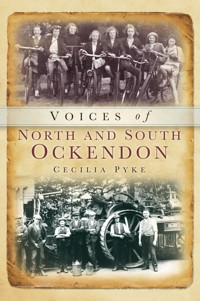
This warm and nostalgic collection of memories reveals the fascinating history of North and South Ockendon before, during and after the Second World War. The 1930s saw great change in South Ockendon as London Land Company, London County Council and Essex County Council began buying up land belonging to the Belhus estate and, after the Second World War, rehousing families from London whose homes had been destroyed by the Blitz. Life also changed for the inhabitants of North Ockendon, as the old ways of farming were replaced by modern machinery, with jobs disappearing and village life diminishing. Horses practically vanished from the area and rows of green vegetables were replaced by wheat, barley and rape. Those who live and have lived in the area reminisce about their childhoods, creating a valuable historical record of Ockendon heritage which will bring back poignant memories to all who have connections with the area.
Sie lesen das E-Book in den Legimi-Apps auf:
Seitenzahl: 182
Veröffentlichungsjahr: 2014
Das E-Book (TTS) können Sie hören im Abo „Legimi Premium” in Legimi-Apps auf:
Ähnliche




















ACKNOWLEDGEMENTS
I should like to thank everybody who helped me with the compilation of this book. Without your knowledge of the area, help in finding contacts, photographs and giving so generously of your time, it would never have been accomplished. Special thanks must go to John Litton, who tirelessly rummaged through his archives to find what I needed, to Pam Bonnett for introducing me to so many North Ockendon people, to Geoff Jones for his vast input and Jan Jones for supplying so many photographs.
I’ve loved getting to know you all, so please forgive any mistakes I might have made, and take my good wishes for the future.
I’ve based, where possible, all historical facts on the Victoria History of the County of Essex and every effort has been made to trace the origins of photographs, with acknowledgements where appropriate.
CONTENTS
Title
Acknowledgements
Introduction
One
Early Life and Schooldays
Two
Newcomers
Three
The Second World War
Four
Village Life
Five
At Leisure
Six
Farms and Farm Workers
Seven
Professions and Occupations
Eight
Places and People of Interest
Nine
Reflections
Copyright
INTRODUCTION
The road that passes through the villages of South and North Ockendon was established in the Middle Ages as the route between Grays and Brentwood. Little has changed, although the area within the south-west of South Ockendon has seen its road network altered due to building works.
Although Belhus mansion was in the postal district of Aveley, part of its grounds were in South Ockendon, so it would be appropriate to mention a little of its history. The London County Council and Essex County Council bought much of the Belhus estate and surrounding farmland in the 1930s. The Hon. J.D. Fitzgerald lived in the mansion for a short time but, during the Second World War, the army took over the house and park. When they left, the house fell into disrepair and then there was a fire, so it was demolished in 1957. All that is left of its existence is the old stench pipe which is near the Long Pond, but other artefacts can be found in various museums.
After the war, Essex County Council bought a considerable amount of the remaining land for the purpose of building a housing estate and, in the late 1950s, work began to create housing mainly for the overspill from London. We now have the well-established Belhus estate, which is separated by Belhus Park from the Kennington estate, which is in Aveley.
South Ockendon is an ancient parish. It was a community long before the Norman invasion and had its own church by 1085, with a recorded population of just sixty-six people. The place name Ockendon is said to originate from ‘Woccaduna’ (spelt various ways,) which is derived from the name of the Saxon chief, Wocca.
South Ockendon and a little of North Ockendon come under the auspices of Thurrock, while the remainder of North Ockendon is part of the London Borough of Havering. The villages have distinctly different characters. North Ockendon remains sleepy and composed whilst South Ockendon, although still retaining its central village charm, is more overt and densely populated.
In 1849 Richard Benyon de Beauvoir bought the manor of South Ockendon and its surroundings, and his heirs (also Richard Benyons) continued to be benefactors to both South and North Ockendon, with the schools and churches being the main recipients of their largesse.
In 1863 Richard Benyon built a new National School in West Road, opposite the village green. At that time truancy was a problem during harvesting season, as children were expected to help with pea picking and bird scaring. He also built the teacher’s house in 1896 and, in 1957, the school was taken over by the Education Committee and renamed Benyon School for Juniors and Infants.
The early 1900s saw the foundations laid of what was to become a big employer of local people in South Ockendon – the South Ockendon Hospital. Around the same time, Little Mollands farm was sold to West Ham Borough Council for use as a farm colony, where unemployed men could work for their dole money. German prisoners of war were housed there during the First World War and, in 1932, it became a colony for those in need of psychiatric care. It was established as the South Ockendon Hospital in 1948 and took many affected people under its wing. For many years it provided vital help for those unable to take care of themselves but, when attitudes towards mental health changed, it gradually moved its residents into the communities and finally closed its doors in 1994.
The hospital was destroyed and in its place Brandon Groves, a privately owned housing estate, was established. Naming the roads after those of the hospital wards ensures that the past is not forgotten. A small memorial garden was established on the site and the hospital’s old entertainment hall remains within Brandon Groves, where it still functions as a community centre.
North Ockendon has been a mainly arable farming community for centuries, and remains largely undisturbed. In 1066 it had a recorded population of just seventeen. Modernisation has changed some aspects with Baldwin’s, the oldest recorded farm in the area, ceasing to function as such, and some other farms having been integrated into larger units. There is no longer a village blacksmith; Puddledock Farm is now a popular haunt with fishermen and a few barns have been converted into homes.
St Mary’s Church of England School in Church Lane originated in 1842 when Richard Benyon de Beauvoir built a school and teacher’s house by subscription. He was then Lord of the Manor. The school was rebuilt by his successor – also named Richard Benyon – in 1902, when eighty children attended. It was damaged by bombs in late 1944 and, by 1947, when attendance had been reduced to thirty pupils, the council suggested it should be closed. It remained open nonetheless but finally closed its doors in 1980.
To pass through North Ockendon today is almost to step back in time, even with the busy M25 passing through it. The church is still very popular, with attendees from Upminster swelling the congregation.
Both North and South Ockendon have a rich history, far more than can be mentioned in this book, with some of the old buildings still standing. The Royal Oak public house is thought to be the oldest, apart from the churches, and we mustn’t forget Little Belhus House and Quince Tree Cottage. Sadly, the windmills no longer exist. The names of such dignitaries as Poyntz, Saltonstall, Capability Brown, William Coys, Littlejohn, and more recently Benyon, trip lightly from the lips of locals.
This book deals mainly with social history, and within its pages you will meet some of its residents – real people who remember the old times and repeat the stories told by those who came before them. They are the voices of the Ockendons, and it was my pleasure to record their stories.
One
EARLY LIFE AND SCHOOLDAYS
The Street
The village school in South Ockendon stood in The Street, the original name of West Road. The doctor’s house, named Pear Tree, was virtually next door and during my childhood Dr McFarlane lived there. The school bell would be rung by the caretaker every morning to tell us not to be late, but in my grandmother’s time there, the oldest girls did the ringing.
Ann Staff
Farmer Hoare
My family moved to South Ockendon in about November 1951 – our address was Daiglen Drive, Belhus Park, South Ockendon near Romford, Essex, and at that time we were part of the village.
Farmer Hoare had the farm on which Little Belhus House stands and there were barns near the house. There was a little farm labourer’s cottage nearby and the Carsons lived there with their daughter, Sylvie. Mr Carson worked for the Ham River Grit Company – he was the nightwatchman and had a lovely sheepdog. I know all this because I was their paper boy. The farm used to run along the Ham River site and there were no factories in the area then.
Denis Powell
School Dinners
I first went to school in the ‘huts’ near Dilkes Park, which were used as an overspill from local schools they were building. In the summer we’d take our tables outside and have lessons sitting in front of the Nissen huts in the sunshine. Later I went to Shaw in Daiglen Drive and I remember there was another school in the area called Somers Heath. There was the Catholic school called Holy Cross, and there was Culverhouse, which was a secondary school where boys and girls were educated separately. I think they eventually pulled the schools down and built houses on the site.
We had wonderful school dinners in those days with home-made pies, etc. I think the food was cooked at Culverhouse and brought over to our school – it was absolutely lovely. Back then they used the cane and I was the only boy in my class who’d not been caned in primary school. Although when I was caned in senior school, it was for something I’d not done.
My favourite sweets were Refreshers and I also liked Bazooka bubble gum because I could collect the cards in the packets. I was given pocket money and saved it to buy premium bonds, but because I was too young to have them in my name, they were put in the name of my mother. I forgot all about them and when she died I didn’t bother to cash them in, so saving them didn’t do me much good. That was fifty years ago and I still have them in a box somewhere.
Adrian Inglefield
The Miss Wards
I went to North Ockendon School when I was about five and it was run by two Miss Wards – one taught and one acted as housekeeper. We used to deliver their groceries and sometimes Dad would slip half a bottle of whiskey into their basket. Miss Cole used to teach there as well. We had little gardens at the back of the school where we grew vegetables, rhubarb and suchlike. When I was eleven I went on to Gaynes in Upminster.
I was in the Scouts and during the week we met in the Reading Room – there were about thirty of us and the group used to go camping in Somerset. I played the usual sports at school: football, rounders and stool-board. We’d keep all the gear in the rectory, where the Revd Lister was living at the time. He was also rector to The Colony and several of the inmates used to come up to do some sweeping and dusting. He was rector at Stifford too, where they had a borstal. Our church was St Mary Magdalene and he used to get the borstal boys to come to Sunday service. One Sunday they burgled the Old White Horse on their way.
St Mary Magdalene Church School.
North Ockendon Rectory, 1962.
The Reading Room played a large part in our lives back then – it was organised by the church but given to the village by Benyon. The Benyons were rich and benefactors to North Ockendon. Years later, my wife and I were to hold our wedding reception there. I was in the church choir and also used to pump the organ. Boys will be boys, so I’d read a comic in between times and received many a thump from Miss Cole. The vicarage has since been sold.
Peter Coe
Swimming Pool
I came to live in South Ockendon in 1972, when I was four years old. My first school was Mardyke primary, which was in Cruick Avenue. I can remember the names of some of the teachers: Mrs Kirby and Mrs Howels, among others. But my strongest memory is of the swimming pool, as it was unusual for a school to have one in those days and it was where I learnt to swim. The children would be given little stripes as they became able to do more lengths. Mr Osborne was my form teacher and I’m not sure why, but the school was knocked down at some point and houses were built on the site.
As a senior, I went to Culverhouse until my third year and remember that Mrs Levy and Mrs Thomas both taught science. Shortly after, I was transferred to a school in Aveley where Pat Rice taught geography. He later became a councillor.
Dacre Centre for the handicapped was on the opposite side of the road to the school and we used to chat with the residents when we came out of lessons.
Maria Proctor
Barretts
I started school at Barretts in South Ockendon and went on to attend South Ockendon Court School, where we wore blue uniforms. Another school was Lennards, where they wore green, and the pupils of Culverhouse wore brown.
Margaret Abboyi
St Thomas’s, Grays
As there was no Catholic school in South Ockendon when we came to live here, from the age of five I’d walk across the fields from Araglen Avenue to Ford Place. I’d get on the bus to Grays, where I went to St Thomas’s. When I was eleven I went to South Ockendon Court School.
Lessons for the first Catholic school in South Ockendon, which was called Holy Cross, were held in the church hall until the purpose-built school was ready – this was in the 1950s. It was run by Sister Dominic and Joe Graham. Mr Graham, who was a brilliant teacher, went on to become headmaster of St Peter’s in Dagenham.
Roz Hadley
Paddy the Park-keeper
Dilkes Park was where we children liked playing. There was a park-keeper in those days – his name was Paddy, so we knew him as Paddy the Park-keeper. He kept his tools in his shed and we liked to go in with him to chat – he was a lovely man and kind to us children. The park was always immaculate and there was a big paddling area made of stone so in the summer he’d fill it up for us so we could paddle. Sometimes he’d be sitting outside the shed in a deckchair and we’d sit on the grass chatting to him on the way home from school.
Maria Proctor
Earning Pocket Money
While I was at school I did several jobs. I worked for Casts the bakers on a Saturday. Pedalling their big old three-wheeler bike, I’d go down to Bulphan then to West Horndon with bread and rolls, then go over to the firm that did metal piping. After that I’d take two loads to The Colony and make another two trips to the army camp in Buckles Lane. I’d also work during the evenings and school holidays for Young’s the grocers, delivering groceries for them on their old trade bike. When I came out of school during the week I did a paper round at night time. I’d start off by the railway station, go right round to North Ockendon then do part of North Road on a bike. It was fairly easy to get a little job back then, although we earned peanuts really and used to spend the money on sweets.
Eric Jiggens
South Ockendon village scene, around the 1930s.
Clean Shoes
When I was four I started school at Benyon’s in South Ockendon and had to walk across the fields to get there. The Benyon family owned quite a lot of land in the area at that time. The headmaster was very strict about his pupils’ shoes being clean which would be a problem for us on wet days, but Dad cleaned our shoes every night. Luckily, Grandmother Scott lived in South Ockendon so I went to her for my midday meal; otherwise I’d have taken sandwiches. The headmaster’s house was near the school and sometimes we’d help with the gardening. He had a walled garden which was full of roses and other lovely flowers. When I was eleven I transferred to Gaynes School in Upminster and transport was laid on, but I still had to walk to South Ockendon to get the school coach.
Joy Scott
The Registrar
I first started school at Oglethorpe as at the time the only Catholic school I could have attended was St Thomas’s in Grays, but my parents thought it too far for me to travel. My father was registrar for marriages in Holy Cross on the Belhus estate. Holy Cross School was in Daiglen Drive.
Denis Powell
Benyon Primary School, 2013.
Garage on the A127
I was born in 1917 and spent my childhood in Basildon, which was still a lovely little village in those days. It had, and indeed still has, a beautiful church. My father had been brought up with cars and had worked for the White Steam Company. He was a mechanic and when horse-drawn vehicles were replaced, part of his job was to go round to the big houses to teach the grooms how to drive.
We came to Basildon from Hampstead and lived in a bungalow next door to the garage we had on the A127. At that time the road was a single carriageway but it was gradually widened and extended until, on 25 March 1925, it was officially opened by Prince Henry, who later became Duke of Gloucester. We had the first garage on the A127 from London to Southend and sold teas to customers from the front room of the bungalow. Unfortunately it was flooded in the 1950s so the family went to live in Billericay.
I went to a junior school in Basildon but later travelled to Brentwood County High School on a bus which was specially laid on for us. My elder brother was away at school – he was a boarder – while my little brother and my future husband went to school together in Grays. They were scholarship boys at the John Henry Burrows School at the top of Hathaway Road.
Evelyn Cressey
Hornchurch Baths
I went to the Barretts school and loved it. My teacher lived at the Upminster end of Hornchurch and we used to cycle over there at the weekend. We were ten or eleven at that time – imagine that – we had an awful lot of freedom in those days. We’d cycle to Hornchurch baths, and in the summer we went to Dagenham open-air swimming pool. Nothing was given to us – we had to work for our pocket money by washing up at night and cleaning our bedrooms on Saturdays. The boys also helped Dad if he needed it.
CaroleJones
Two
NEWCOMERS
Belhus Park
My parents were newcomers to South Ockendon and I was born in Daiglen Drive in 1953 but I left the Ockendon area in 1964, so my memories are of my early years.
I recall the fun I had in Belhus Park, where I used to play in those days. The park was in Garron Lane and there was a cattle grid at the entrance, as cows were grazing on the field where the golf course now stands.
There was a concrete strip in the park which was laid in sections, each strip being about five foot in length and twelve foot wide. My Dad taught me to ride my bicycle on it. We used to go for bike rides regularly and would sometimes pass the railway station with its coal depot and then go on into North Ockendon. We’d ride all over the place – Stifford, Grays and Purfleet, etc.
Sometimes we’d catch the train from South Ockendon to Grays and thence to Southend. They did a special trip on Saturdays and the train was always packed.
We’d take the bus into Grays and go to the cinema quite regularly. There were four picture houses – the Ritz, the Regal, the State and the Eagle. By the time we’d sat through the ‘A’ film, the ‘B’ film, trailers, adverts and the Pathé News, the trip would have taken half a day. The cinemas were well supported back then with a smart commissionaire on the door, usherettes and plush seating, etc.
I can remember the time when the housing estate which separates Daiglen Drive from Derwent Parade wasn’t there. The site was just a big field with some trees on it where lorries parked, and you could see right through to Derwent Parade shops.
A fair used to come to South Ockendon twice a year and they’d use the field to set up their rides and stalls, etc. I also remember the field being used for a fight between some mods and rockers – quite a serious one involving a good few hundred chaps.
The Eastern National Bus used to go from Tilbury Riverside through Grays and South Ockendon village and on to Brentwood. A Green Line bus ran from Grays along the A13 to Aldgate East. The 723A began at Rainham, down through Sandy Lane, through the village, down Foyle Drive, along Daiglen Drive then on to Grays. The 371 went from Grays, through South and North Ockendon and out to Brentwood.
Adrian Inglefield
No Shops
There were no shops when we moved to South Ockendon in 1950




