


Erhalten Sie Zugang zu diesem und mehr als 300000 Büchern ab EUR 5,99 monatlich.
- Herausgeber: Birlinn
- Kategorie: Geisteswissenschaft
- Sprache: Englisch
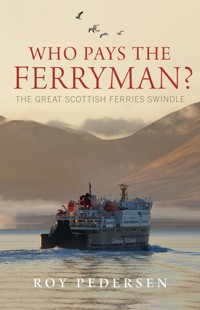
Who Pays the Ferryman? is an informative and critical analysis of Scotland's ferry services. It describes the 'glory days' of how, from modest beginnings, Scotland once led the world in maritime development. It contrasts the achievements of the past with the failures, waste and inadequacy of much of today's state-owned ferry provision. In addition to showing how a more equitable fares regime can be devised, Roy Pedersen also addresses sensitive issues such as CO2 and other emissions, state versus private ownership, the place of trade unions and, most importantly of all how, the lot of our island and peninsular communities can be bettered through provision of efficient cost effective ferry services. Drawing on best practice at home and overseas, it sets out how Scottish ferry services can be revolutionised to be, once again, among the best in the world.
Sie lesen das E-Book in den Legimi-Apps auf:
Seitenzahl: 313
Veröffentlichungsjahr: 2013
Das E-Book (TTS) können Sie hören im Abo „Legimi Premium” in Legimi-Apps auf:
Ähnliche


















WHO PAYS THE FERRYMAN?
Born of a maritime family, Roy Pedersen’s former career with development agencies Highlands and Islands Development Board and Highlands and Islands Enterprise, where he pioneered numerous innovative and successful ventures, has given him a matchless insight into world shipping trends and into the economic and social conditions of the Highlands and Islands. He is now an author and the proprietor of a cutting-edge consultancy.
OTHER BOOKS BY THE SAME AUTHOR
One Europe – A Hundred Nations
Loch Ness with Jacobite – A History of Cruising on Loch Ness
Pentland Hero – The Saga of the Orkney Short Sea Crossing
George Bellairs – The Littlejohn Casebook: The 1940s
Fiction
Dalmannoch – The Affair of Brother Richard
Sweetheart Murder
This eBook edition published in 2013 by Birlinn Limited West Newington House Newington Road Edinburgh EH9 1QSwww.birlinn.co.uk
Copyright © Roy Pedersen 2013 Foreword copyright © Professor Alfred Baird 2013
The moral right of Roy Pedersen to be identified as the author of this work has been asserted by him in accordance with the Copyright, Designs and Patents Act 1988
All rights reserved. No part of this publication may be reproduced, stored or transmitted in any form without the express written permission of the publisher.
ISBN: 978 1 78027 122 4 eBook ISBN: 978-0-85790-603-8
British Library Cataloguing-in-Publication Data
This book is dedicated to the memory of my father.
He opened my eyes to the world of shipping and boats.
His most precious gift: he taught me to think for myself.
CONTENTS
List of Illustrations
Foreword by Professor Alfred Baird
Preface
Acknowledgements
List of Abbreviations
Introduction
CHAPTER 1 – THE SCENE
The Regulatory System
The Operators
The Subsidy Mountain
CHAPTER 2 – EVOLUTION
Muscle and Wind
Steam
Internal Combustion
The Second World War and Its Aftermath
New Ideas
Roll-on/Roll-of
CHAPTER 3 – THE HIGH COST OF THE PUBLIC SECTOR
Ship Shapes
Fuming Ferries
Crewing Excesses
Short Crossing Theory
Fair Fares
Ferry Mafia
High Hopes Dashed
The Ferries Plan
CHAPTER 4 – SOME LESSONS FROM AROUND THE WORLD
The Norse Way
Beautiful British Columbia
Antipodean Catamarans
CHAPTER 5 – A BETTER FUTURE
Some Key Principles
Shortest Feasible Crossings
Efficient Vessel Procurement
Cost-Effective Operation
A Better Tendering System
Route Alternatives
A Way Forward
APPENDICES
Appendix 1: Ferry Crossings and Traffic 2010
Appendix 2: Fleet Lists 2013
Appendix 3: Caledonian MacBrayne Losses by Route 2006
Appendix 4: Subsidy Estimates Per Head of Population for Selected Islands
Appendix 5: Fixed Links
Bibliography
Index
LIST OF ILLUSTRATIONS
P&O Ferries’ 40-knot catamaran Express.
Western Ferries Sound of Shuna.
Highland Council’s MV Corran.
CalMac’s Clansman departing from Castlebay, Barra.
CalMac’s Loch Alainn at Eriskay slipway.
Daggri and the simple ‘lock-on’ Norwegian style link-span terminal.
Orkney Ferries’ North Isles ferry Varagen at Kirkwall.
NorthLink’s £30-million Hamnavoe at the £20-million Scrabster terminal.
Pentland Ferries’ £7-million Pentalina berthing at the £2-million Gills Bay terminal.
MacCallum Orme’s Dunara Castle in the Sound of Iona.
St Clair, the last steam ship built for the North of Scotland Orkney and Shetland SN Co.
Paddle steamer Waverley at Iona.
Derrick-loading motor vessel Locheil at West Loch Tarbert.
Firth of Clyde side-loading car ferry Arran.
Western Ferries’ revolutionary drive-through, Sound of Jura.
Glenachulish; Scotland’s last turntable ferry operating between Glenelg and Kylerhea (Skye).
The go-anywhere 16-metre catamaran, Orca III, operated by Atlantic Marine Services.
Moss–Horten shuttle: a typical Norwegian pendelferje.
SeaLink Kangaroo Island 16-knot, 378-passenger, 55-car catamaran ferry Sealion 2000.
Foveaux Express arriving at Oban, the tiny capital of New Zealand’s Stewart Island.
The first of ten new 49-metre Sea Transport Corporation 50-car ferries for the Philippines.
The Author and Professor Alf Baird being presented with best paper prize at the May 2012 STAR Conference.
FOREWORD
By Alfred Baird, Professor of Maritime Business, Edinburgh Napier University
This book is a wonderful mix of history, economics, commercial success and failure, the latter so often nowadays associated with public sector (mis)management. Roy Pedersen provides an invaluable contribution to the ongoing story of Scotland’s ferry industry. As a former officer with Highlands and Islands Enterprise and its predecessors, Roy has developed over the last 40 years and more an eye for what is good and what is bad about ferry services.
The historical perspective is provided for readers so that they might better understand how we have got to where we are today. We should not forget that Roy, as the inventor of Road Equivalent Tariff (RET), is well acquainted with the economics of ferry services. And here we see in full technicolor the interception of immense and ever-increasing subsidies for publicly run ferry operations in Scotland.
So, who intercepts these ‘economic rents’? Well, the evidence presented tells us that the ‘key stakeholders’, namely the public operators, trade union members, local authorities, port trusts, and other vested interests intercept most of the subsidy long before what is left reaches the user. This leaves little for the benefit of users in terms. A case in point is the immense subsidy paid to Serco NorthLink to run its Pentland Firth service, only for users to express surprise when they find out that lower rates and a quicker, more frequent, passage can be obtained by using the unsubsidised Pentland Ferries service.
Roy Pedersen illustrates very clearly the difference in the competence of private ferry operators, most notably Western Ferries and Pentland Ferries, compared with the extraordinary inefficiencies of state-managed ferry operations and assets. The tragic consequence of this gross mismanagement brings him back to his former role at HIE in helping island and remote communities improve their accessibility and through that to bring about a better chance to compete in whatever market. His identification of and preference for short ferry routes, where operators can offer higher levels of frequency at lower cost, and hence lower subsidy (or none), and ensure better accessibility, is compelling. The evidence on this from Western Ferries, Pentland Ferries and countless overseas operators is overwhelming. Yet the state, for the most part, continues to specify and is paying over the odds for the wrong routes and the wrong designs of ships and port facilities.
The cause is multi-facteted. Well-meaning civil servants ‘responsible’ for ferries start with limited knowledge of the sector, and take their advice from the vested interests. Ministers have even less knowledge, so take their advice from the officials. State-owned ferry entities are staffed by individuals who have limited commercial ferry expertise, or are from a military background where over-spending and over-specifying has been the norm.
If Roy Pedersen demonstrates anything, it is that the state should not be buying ferries, never mind operating them. The mistakes are endemic and long-term. A ship lasts 25 years or more, which implies that an expensive and inefficient ship will carry with it a significant financial burden for the same period.
The ongoing ferry fleet and port procurement activities sponsored by the state make the Edinburgh Tram debacle look like a very good deal indeed. And PFI is not dead; it lives on, not least in the newly ordered Stornoway ferry. And so long as a budget is made available for ferries, this tragedy will continue to be acted out, and vested interests will prevail.
Reform? How to do it? Roy Pedersen illustrates what can be done. The rather obvious solution is to shift to shorter routes, using less expensive vessels, which in turn allows for greater frequency, higher capacity and rising demand, and to leave ship procurement to people who at least understand what they are doing.
PREFACE
My parents met on a day cruise from Ardrossan to Rothesay on the old ex-Glasgow & South Western Railway turbine steamer Atalanta. In due course they married and I was born in an Ardrossan Harbour Board house as the Second World War was heading for Allied victory. I suppose I can attribute my existence to that Clyde steamer and the attractions of Rothesay.
One of my earliest memories, aged three, is a rough passage on Messrs Burns & Laird’s fast and famous daylight boat Lairds Isle from Ardrossan to Belfast to visit relations. Then when I was four the family moved to Aberdeen where my father took up the post of Harbour Works Superintendent. Aberdeen harbour and its ships became my year-round playground, but we returned every summer to the Clyde Coast where steamer trips were always top priority. For several years from the age of thirteen, while my parents toured the Continent, I was lodged with my indulgent Aunt Peggy and given an ‘Any Pier and Any Pier’ season ticket to lose myself on the – then still substantial – fleet of railway steamers that plied the Firth. I wonder how many parents today would abandon their thirteen-year-old son, alone, to the vagaries of the railway and steamer timetable. Anyway, I’m glad they did and it’s way too late now to call in the social services.
Distant Inveraray, Campbeltown, Arrochar and Tighnabruaich became as weel kent as the nearer joys of Brodick, Millport, Rothesay and Dunoon. So familiar were the ships, we boastful urchins of the Firth could identify them in seconds at two or three miles’ distance; such is a boy’s obsession. Happy days indeed.
Life and times moved on, but the fascination with matters maritime remained and, over the intervening years, I have been a keen observer and analyst of both the Scottish scene and comparators internationally. This book is in some small way a distillation of that experience.
ACKNOWLEDGEMENTS
The list of people who have contributed one way or another over many years to this work is a long one. Space does not permit mention of them all, but I am nonetheless grateful to everyone who has thrown light on the development of Scotland’s ferries.
There are a number, however, I have to mention by name. First among these is Professor Alfred Baird, Head of the Maritime Research Group of Napier University’s Transport Research Institute (TRI). His worldwide experience of shipping issues and his clear analytical mind have made an invaluable contribution.
I am grateful also to a wide range of ferry operators who have provided information at different periods on their vessels, and insights into their operational activities. Special thanks go to Gordon Ross, Managing Director of Western Ferries; Andrew and Susan Banks, owners of Pentland Ferries; Colin Manson, Resources Manager and Nina Croad, Ferry Services, Shetland Islands Council, Martin Gorringe, Marine Operations Manager at Argyll and Bute Council; Councillor John Laing, former chair of Highland Council TEC Services and Sam MacNaughton, Head of Transport and Infrastructure; Donald Ewen Darroch, Chairperson of the Overland Route Company Ltd; Stuart Ballantyne, CEO of Sea Transport Corporation; Craig Elder, Head of Strategy and Corporate Planning BC Ferries; Ian Munro, Managing Director of Stewart Island Marine Services; George Hudson, former Chairman of Fullers Ferries; Seumas Mackinnon, Misty Isle Boat Trips; Lyle White and Sunny Newitt of Brisbane CityFerries; Peter Wotherspoon of Jura Ferry; Duncan McEachran, Kerrera ferry; David Cannon and the late Colin Patterson, former CEO of Caledonian MacBrayne.
Among officials in public bodies who provided useful information, I must thank Guy Platten of CMAL; Dave Duthie and Ranald Robertson of HITRANS; Tony Usher, General Manager of Highland Council Harbours Authority; and Colin Grieve and Judith Ainslie in Transport Scotland. I would also like to thank Howie Firth for facilitating the CO2 presentation at the Orkney Science Festival and Ian Mathie of SESTRAN for information about the North Berwick – Anstruther ferry. Among the many other individuals who have provided advice, inspiration or data, thanks are due to Bill Banks; Arthur Blue; Councillor Jim Foubister; Catrina Howard, Marketing Coordinator, SeaLink – South Australia; Harold Jordan; James Knight; Bill Mowat; John Mowat; Hugh Raven; Uisdean Robertson; John Rose; Duncan Swinbanks; Captain Torgeir H. Røyset; Steven Watson; ‘Scotships’ correspondents; and my second cousin and naval architect Øyvind Wilhelmsen.
Numerous websites have been referred to – too many to be listed, had a list actually been kept. Three deserve special mention, however, for the comprehensiveness of information contained. These are www.shipsofcalmac.co.uk; www.shetland.gov.uk/ferries; and www.bcferries.com.
Finally I must once again thank Marie Kilbride who kindly agreed to proofread the text in the pursuit of accuracy. With regard to that aim, the final responsibility rests with me. If any errors are found, then the fault is mine alone.
Roy Pedersen, Inverness, May 2013
LIST OF ABBREVIATIONS
AB – able seaman
BC – British Columbia, Canada
BR – British Railways, later British Rail
BTC – British Transport Commission
CalMac – Caledonian MacBrayne
CMAL – Caledonian Marine Assets
CO2 – carbon dioxide
CPR – Canadian Pacific Railway
CSPCo – Caledonian Steam Packet Company
CV – commercial vehicle
DMG – David MacBrayne Group
GPK&A – Glasgow Paisley Kilmarnock & Ayr Railway
GSWR – Glasgow & South Western Railway
HFO – heavy fuel oil
HIDB – Highlands and Islands Development Board
HIE – Highlands and Islands Enterprise
HITRANS – Highlands and Islands Transport Partnership
IC – internal combustion (engine)
IMO – International Maritime Organisation
KIMO – Kommunenes Internasjonale Miljøorganisasjon or Local Authorities International Environmental Organisation
km/h – kilometres per hour
LMS – London Midland & Scottish Railway
LNER – London & North Eastern Railway
LNG – liquefied natural gas
MCA – Maritime and Coastguard Agency
mph – miles per hour
MRF – Møre og Romsdal Fylkesbåter
MSP – Member of the Scottish Parliament
OIC – Orkney Islands Council
Pax – passengers (numbers)
RET – road equivalent tariff
RIB – reinforced inflatable boat
RMT – National Union of Rail, Maritime and Transport Workers
RoPax – RO-RO vehicle and passenger (vessel)
RO-RO – roll-on/roll-off (ferry)
SEA – Strategic Environmental Assessment
SIC – Shetland Islands Council
SMT – Scottish Motor Traction Company
SNP – Scottish National Party
SOLAS – International Convention for Safety of Life at Sea
STAG – Scottish Transport Appraisal Guidance
STG – Scottish Transport Group
TEU – twenty-foot equivalent (container) unit (a measure of container ship capacity)
TUC – Trades Union Congress
WA – Washington State, USA
INTRODUCTION
When my book Pentland Hero was published in 2010, it caused something of a sensation. It told of how Andrew Banks, a quietly spoken Orkney farmer’s son and his tiny team of trusted colleagues, without a penny of public funds, started operating Pentland Ferries on a new frequent, cheap, short sea ferry crossing between Orkney and the Scottish mainland. The enterprise has been a huge success despite predatory competition from the heavily subsidised NorthLink, a misguided and wasteful national ferry policy and a sustained official campaign to undermine his efforts.
Then the announcement that the Scottish Government intended to undertake a ‘route and branch’ review of Scotland’s internal ferry operations was an occasion for celebration. It was hoped that the injustice with which Andrew and others had been treated would have been addressed and a more cost-effective national policy adopted. In the event, sadly, the plan that emerged was a disappointment. There were a few enhancements, but little attempt to tackle the underlying inefficiencies.
It is against that background that this book continues the theme of Scottish coastal maritime entrepreneurship on a Scotland-wide canvas. It describes the main players in the current provision of ferry and coastal passenger services. It highlights how half of Scotland’s ferry traffic is handled by efficient and innovative commercial operators while the other half is in the hands of a public sector that in some instances swallows up scandalous and world-beating amounts of public funds while providing an indifferent service.
How this came to pass was the result of changing economic, technological and political forces over not just decades, but centuries. The effects of these forces, good and bad, are examined, as are the growing environmental problems associated with the state-controlled ferry sector.
There are other countries where things are done differently in terms of better ferry services for less money. Norway, British Columbia, Australia and New Zealand in particular have cracked many of the issues that bedevil Scotland’s state-funded ferry operations. These exemplars are examined and lessons drawn.
Finally, as an antidote to the present inadequacies of Scotland’s national ferry policies, an analysis is set out as to how ferry operations could be organised and developed so as to provide much improved access to our island and peninsular communities, to aid their economic and social development, while actually reducing costs and environmental impact.
CHAPTER 1
THE SCENE
From our vantage point we take in the sweep of the bay sheltered behind the rocky headland. It is topped by some old fortification. On the horizon to seaward we can make out the blue-grey outline of distant hills. The scudding clouds throw moving shadows across a choppy sea. It’s a pleasing scene. The sun bursts through a widening gap in the clouds and suddenly shooting out from behind the headland appears a ferry brightly bathed in sunlight. She is heading purposefully into the bay, white feathers of spray rising from her bows and a creaming wake behind her.
Soon she is slowed, swung and berthed at the terminal. Cars, vans, cycles and passengers stream ashore. After a time, a fresh load of passengers and vehicles is taken onboard and she is off again to disappear behind the headland.
This is a ritual that can be witnessed daily in dozens of Scottish coastal and island locations. The ritual is part of the very fabric of island life; the means by which supplies are imported, local produce is exported, and business, social and leisure contacts are maintained. And, of course, the business of tourism generates wealth in many a community.
It was Sir Walter Scott who really sparked off Scotland’s tourist trade. He opened the minds of the world to the romance of Scotland’s story set against its dramatic backdrop – Caledonia stern and wild. And who can deny the allure of our coastal landscape? In fact, Scotland has the world’s second most indented coastline,1 featuring long sea lochs, firths and extended peninsulas. This, coupled with a rocky mountainous terrain and the ever-changing light and weather, accounts for the country’s magical and at times breathtaking scenery. This magical quality is further enhanced by the 790 or so islands and islets that lie off the Scottish coast. Of these 94 are populated, with just under 100,000 inhabitants in total. Four inhabited islands are found on inland freshwater lochs.
Most of the inhabited islands, a number of peninsulas and loch-side communities are linked to the mainland communication network by 145 public ferry connections, a number of which operate in summer only. Four run between Scottish ports and places outwith Scotland. Well over a hundred vessels make up this fleet. They vary in size from small open boats, as at Easdale, to very large multi-deck passenger- and vehicle-carrying roll-on/roll-off ships, as in the service between Cairnryan and Northern Ireland. Of the total number, 57 are vehicle ferry crossings. The fleet is run by no fewer than 46 separate concerns varying in size from the largest, Caledonian MacBrayne Ferries with 30 ships, to self-employed operators with a single small vessel.
A huge corpus of literature, both fact and fiction, exists on the subject of Scottish islands, much of which presents a romanticised view of island life. By the same token a romanticised view of Scottish ferries has been generated on the back of the written word. In fact a sizeable library could be filled with books on Scottish coastal shipping. Quite a number are works of real scholarship and careful research, read avidly by a surprisingly large following of enthusiasts. It is the ships themselves, their stations and their operating companies that are perhaps of primary interest for the majority of authors. The ships of the Clyde, its firth and the West Highlands and Islands dominate the corpus; those of Orkney and Shetland come next, with relatively little on the maritime heritage of the east coast and its firths.
In truth, there is romance in the tale, for the Scottish coastal passenger fleets of today are the culmination of a maritime heritage that stretches back almost to the end of the last ice age, some 10,000 years ago, when humans moved coastward into what is now Scotland. To help convey an understanding of how we got from then to now, I will say something later about the evolution of coastal shipping in the context of the political, economic and technological circumstances prevailing at different historical periods.
It is, however, the ferry in its modern manifestation and its social, political, economic, technological and environmental context that is the main focus of this book. Until about the 1970s the term ‘ferry’ was generally understood as a broad-beamed vessel shuttling to and fro across a river, loch or narrow coastal sound. Over the previous century and a half, a powered vessel undertaking any longer passage on a schedule was invariably referred to as a ‘steamer’, even if latterly propelled by internal combustion machinery rather than steam.
For the purposes of this book I have taken as a definition of a ferry: a vessel shipping and landing passengers, and in many cases vehicles, on a regular schedule between two or more ports. In most such cases where vehicles are carried, they are driven on and off the vessel at any state of the tide, at specially constructed terminals, equipped either with link-spans (hinged bridges connecting ferry to shore) or with inclined slipways. The system is known as ‘roll-on/roll-off’ or RO-RO for short. The designs of ferry and of terminal are many and varied.
There is another fleet operating with passengers in Scottish coastal and inland waters that is important to mention. This fleet offers pleasure cruises. These vary in scope from extended cruises by massive cruise liners to short non-landing excursions by local small boat operators. Each contributes in its own way to the Scottish tourism economy, and there is inevitably some overlap between the ferry and cruise business. While not the main subject of this book, cruising is worthy of some consideration as part of the overall context.
Before looking in more detail at Scotland’s ferry operations and how well or otherwise they perform their allotted tasks, one significant point should be borne in mind. In the nineteenth century Scotland led the world in ship design, in shipbuilding, marine engineering and ship owning. The twentieth century witnessed the gradual demise of that preeminence, until today Scotland barely reaches the ‘also ran’ category. That is not to deny there are some very innovative and efficient ferry operations to be found around Scotia’s shores. Sadly, these are countered by much that is highly inefficient, environmentally damaging, costly to the taxpayer and propped up by decades of wrong-headed public policy.
It is quite a tall order to describe and analyse, in this one small volume, the great range and variety of Scotland’s ferry services. To ease the task all routes are tabulated in Appendix 1. The list moves from south to north round the coast, starting in the south-west, indicating in each case the passage length in kilometres, the operator, the annual carryings of passengers, and vehicles conveyed annually on each route (where available). Appendix 2 is a fleet list by operator of ferry vessels engaged on regular service in Scottish waters with the routes on which they normally operate. The term ‘vehicle ferry’ as used in this book should generally be understood as one conveying passengers as well as vehicles. By the same token a ‘passenger ferry’ should be understood as not conveying vehicles other than perhaps cycles.
Scottish Vehicle Ferry Routes
The pages that follow will explore who is doing what in the world of Scottish ferries, how this all came about and what is good and what is bad. Drawing on good practice at home and overseas, suggestions will be advanced as to how a better, more cost-effective and sustainable arrangement for running Scottish ferries can be realised.
THE REGULATORY SYSTEM
The range of Scottish ferry operations is a varied one. Whether large or small, operators have to function within a legal and regulatory framework as administered by various bodies. These are:
The International Maritime Organization (IMO)
Shipping accounts for more than 90 per cent of world trade. There is a need, therefore, for international standards to regulate the industry. The first maritime treaties date from the nineteenth century, but it was the loss of the Titanic in 1912 that brought about the first international Safety of Life at Sea, or SOLAS, convention. This remains the most important treaty addressing maritime safety.
The IMO is a United Nations agency, established in 1948. Its main task has been to develop and maintain a regulatory framework for shipping and especially safety, environmental concerns, legal matters, technical cooperation, maritime security and the efficiency of shipping. The IMO is based in London and, among its many responsibilities, it lays out measures aimed at the prevention of accidents, including standards for ship design, construction, equipment, operation and manning. Prevention of pollution by ships is now a major focus. Inspection and monitoring of compliance, however, are the responsibility of member states.
The Maritime and Coastguard Agency (MCA)
At UK level, the MCA is the body responsible for maritime safety and standards under the framework of the IMO conventions. The MCA provides a search and rescue service, enforces ship safety, pollution prevention and seafarer well-being through registration and inspection.
All seagoing vessels registered in the UK are assigned to a specific class, which defines their permitted use, determines which certification they must hold and specifies the inspection and survey regime required. For many years, the classes of passenger ships engaged on various types of voyage have been:
Class I – Long international voyages
Class II – International voyages of less than 24 hours
Class II (A) – Domestic voyages, which are not ships of Classes III to VI(A)
Class III – Voyages not more than 70 miles by sea from their point of departure and not more than 18 miles from the coast of the UK and only in favourable weather and during restricted periods
Class IV – Vessels operating in partially smooth waters
Class V – Vessels operating in smooth waters
Class VI – Not more than 250 passengers on board, in favourable weather and during restricted periods, not more than 15 miles from the point of departure, nor more than 3 miles from land
Class VI (A) – Carrying not more than 50 passengers for a distance of not more than 6 miles. Voyages to or from isolated communities on the islands or coast of the UK and which do not proceed for a distance of more than 3 miles from land
These traditional classifications are now being replaced by European classifications. Vessels carrying twelve or fewer passengers do not require a passenger certificate, but must of course comply with other rules. Certification covers such matters as: minimum safe manning, passenger safety, dangerous goods, probable wave heights, air pollution and permitted areas of operation.
So long as operators comply with the requirements of the MCA and with any other legal obligations, ferry and cruise operators are free to ply their trade for hire and reward as and where they wish.
Tendering Ferry Services
Things get more complicated when public funds are used to subsidise ferry services. Under European state aid rules, public authorities are required to offer the routes proposed for subsidy to competitive tender. Some local authorities that run ferry services in their areas seem to have avoided tender services by testing the efficiency of services on a ‘best value’ basis. Other individual routes are simply put out to tender in the same manner as a bus contract. The winning contractor is paid an agreed annual sum to run the route for, usually, six years in accordance with the timetable, fares and other requirements set out in the contract.
When it comes to the Scottish Government, the process of tendering ferry services is infinitely more convoluted. There has been no overriding rationale as to which actual routes are to be supported by the Scottish Government other than historical accident. As will be illustrated in the following pages, the procedure in place for state funding of ferry services is deeply flawed and has over the years led to some astounding, inefficient, environmentally damaging and highly expensive outcomes. The main influencers of the process are:
1. The Scottish Government (politicians and officials), through Transport Scotland, which sets the policy for the government-supported routes, sets the specifications for the routes to be tendered and pays the subsidies
2. Local authorities (politicians and officials) and community groups, which seek to influence policy and specification on government-supported routes in their area
3. The state-owned operators of the David MacBrayne Group, namely Caledonian MacBrayne Ferries, Argyll Ferries and until recently NorthLink Ferries who are keen (some may say desperate) to hold on to the routes they operate and to influence policy to achieve that end
4. State-owned CMAL (Caledonian Maritime Assets Ltd) who own the ferries and many terminals for lease to the David MacBrayne Group
5. The unions, who favour the bloated status quo to ‘protect’ ferry jobs and unusually generous conditions
THE OPERATORS
Scottish ferry operators can be classified under two important headings: those who operate on a commercial basis without subsidy, and those who receive subsidy from the public purse.
Commercial Operators
In overall terms, Scotland’s commercial operators (excluding visiting cruise liners) account for about half the passengers and cars, and over two thirds of the freight, conveyed on Scotland’s ferries. All this is carried out without subvention from the taxpayer. This means that the tendering rules to not apply to commercial operators.
These cover a wide range. In the south-west Western Ferries’ single route between Hunter’s Quay (Cowal) and McInroy’s Point (Inverclyde) is Scotland’s busiest in terms of passengers and cars carried. Stena Line’s Cairnryan–Belfast service with Stena Superfast VII and Stena Superfast VIII employs the biggest ships and comes second in ranking after Western Ferries in terms of passengers and cars. P&O Ferries with their conventional ‘Superferries’ European Causeway and European Highlander running between Cairnryan and Larne top the bill in terms of numbers of commercial vehicles/trailers carried. In summer, P&O also operate Scotland’s fastest ferry, the 40-knot Incat catamaran, Express, alternately between Larne and Cairnryan or Troon.
Further north, Highland Council operates Scotland’s second busiest ferry in terms of cars, across the Corran narrows. Operating costs are fully met from farebox revenue. And Pentland Ferries’ catamaran Pentalina now carries the majority of cars across the Pentland Firth between Caithness and Orkney against heavily subsidised competition.
The east coast hosts two important freight operators. DFDS run thrice weekly between Rosyth and Zeebrugge; sadly, this route no longer caters for passengers and cars. Streamline Shipping, while not strictly speaking a ferry operation, provides a container service between Aberdeen and Orkney and Shetland.
Besides the major commercial vehicle ferry operators, there are a host of unsubsidised passenger and cruise operations varying from considerable fleets like Cruise Loch Lomond, Sweeny’s Cruises and Maid of the Forth, to local single boat owners. These collectively make a significant contribution to Scotland’s economy.
There is undoubtedly an overlap between the humdrum role of a public scheduled ferry and pleasure cruising. Indeed, many ferry trips are regarded as mini-cruises by travellers. Over and above the business of ferry operation, quite a number of the commercial operators, particularly those who operate the smaller class of vessel, also operate non-ferry cruises, hires or non-landing excursions which do not, of course, qualify, in the strict sense, as ferry runs.
Lest it be thought a frivolity to include so many small boat operators within the list of ‘big time’ operators, one example may serve to put things in perspective. The motor launches that undertake the ferry run between Elgol (Skye) and remote Loch Coruisk offer almost as much daily passenger capacity (1,080) in summer as on the NorthLink Aberdeen–Orkney–Shetland route (1,200). When it is borne in mind that the Loch Coruisk trips cost the taxpayer nothing, but do much to retain visitors in Skye, whereas the Aberdeen service costs the taxpayer some £350 per round-trip passenger, it gives pause for thought.
Space does not allow mention of the numerous boat trip operators to be found right around the Scottish coasts. They vary from increasingly popular wildlife-watching excursions, to fast RIB thrill-seeker forays, to more extended and sedate sleep-aboard cruises by operators like the Majestic Line’s 80-foot (24-metre) vessels Glen Massan and the Glen Tarsan with accommodation for up to 11 guests in 6 double cabins.
On a larger and more luxurious scale is Hebridean Princess; the former MacBrayne car ferry Columba, operated by Hebridean Island Cruises, carries up to 50 guests on cruises of between four and ten nights to the West Highlands and Islands, St Kilda, Orkney and Shetland. Another cruise ship catering for the luxury end of the market is the Lord of the Glens operated by the Magna Carta Steamship Company Ltd. She is designed both to fit the locks of the Caledonian Canal and to navigate the open sea.
Each of the above sleep-aboard vessels are of a size that can reach small, interesting and picturesque places inaccessible to larger cruise ships. In terms of annual clients catered for, however, they are tiny in scale when compared with the big international cruise liner business.
Indeed, as a cruise destination, Scotland is increasingly popular with an international clientele. Among the Scottish ports with frequent calls are Greenock, Oban, Fort William, Portree, Ullapool, Stornoway, Scrabster, Kirkwall, Lerwick, Invergordon, Peterhead, Aberdeen and Leith. It is a feature of the trade that, at times, large numbers of clients landed at some of the smaller communities from a big cruise liner can stretch local transport, heritage and retail facilities, but by and large the business is a welcome boost to local economies. Very often calls at Scottish ports are but part of wider itineraries covering other British and Irish ports, transatlantic repositioning, or combined with cruises to the Faeroe Islands, Iceland or the Norwegian fjords, the Baltic or continental Europe.
Visiting cruise liners brought in around £41 million to the Scottish economy in 2012. Aside from public investment in some shore facilities, the industry is wholly commercial and unsubsidised, generating international profile, local wealth, employment and tax revenues.
Subsidised Operators
The operators who are supported by subventions either by the Scottish Government or local authorities present a different and varied picture.
By far the largest, most heavily subsidised and perhaps best known operator is Caledonian MacBrayne Ferries, also known as CalMac, a subsidiary of the David MacBrayne Group (DMG). This state-owned operator runs a fleet of 30 ships on 24 routes on the Firth of Clyde and the West Highlands and Islands. The ships and a number of terminals at which the ships berth are owned by the separate state-owned entity Caledonian Maritime Assets Ltd, or CMAL, and leased to the operating company. With a few exceptions the ships are of two types, namely, 9 or 10 large, expensive-to-operate class IIA (that is to say rough water) RO-RO ferries varying in capacity from 50 to 120 cars and approximately 500 to 1,000 passengers; and a fleet of smaller more economical double-ended ‘Loch-class’ vessels varying in capacity from 12 to 36 cars, 150 to 250 passengers and designed to operate to slipways. Another subsidiary of the DMG is Argyll Ferries which operates two passenger-only ferries between Dunoon (Cowal) and Gourock (Inverclyde).
In 2011–12 the revenue from CalMac and Dunoon fares, catering, etc. was £58.7 million, to which was added an astonishing total net Scottish Government subsidy of £70.3 million, being £76 million grant less a claw-back of £5.7 million.
The next largest subsidy goes to NorthLink which runs vehicle ferries between Aberdeen and Kirkwall (Orkney) and Lerwick (Shetland) and also across the Pentland Firth between Scrabster (Caithness) and Stromness (Orkney). In 2012, Serco, the international service company, won the six-year Northern Isles contract. The Scottish Government annual subsidy is £40.5 million for the two routes.
A number of local authorities also use public money to fund ferry services. The biggest spender in this regard is Shetland Islands Council which has, after CalMac, numerically Scotland’s second largest ferry fleet of 12 vessels, operating from 16 terminals serving 8 islands. The council has a policy of early-till-late operating hours and very low fares. In the case of Bluemull Sound the service is free for all passengers, cars and light commercials. The total annual revenue receipts for Shetland’s internal ferries are £1.75 million, supplemented by a subsidy of £13.5 million.
Next in descending order of subsidy is Orkney Ferries, owned by Orkney Islands Council, running a fleet of nine inter-island ferries. The subsidy for 2010–11 was circa £6.2 million against revenue from fares, catering, etc. of £2.4 million.
Highland Council’s financial support for ferry services is modest. As already mentioned, the busy council-run Corran ferry is operated on a cost-recovery basis, and as such is not subsidised, Three other routes are tendered out to private operators, for which the total subsidy paid in 2012 was £278,000. This was broken down as follows: Camasnagaul at £80,000, Inverie at £158,000 and Cromarty at £40,000.
Argyll and Bute Council operate a vehicle ferry to the island of Luing and the Port Appin to Point (Lismore) passenger ferry. It also contracts the passenger ferry between Seil and Easdale; the vehicle ferry operation between Port Askaig (Islay) and Feolain (Jura); and in the short term, a fast 12-passenger RIB in summer between Craighouse (Jura) and Tayvallich (Knapdale).
Strathclyde Passenger Transport subsidy to the Gourock–Kilcreggan ferry route operated by Clydelink is approximately £190,000 per annum.




