


2,49 €
Mehr erfahren.
- Herausgeber: Michael Pronko
- Kategorie: Geisteswissenschaft
- Sprache: Englisch
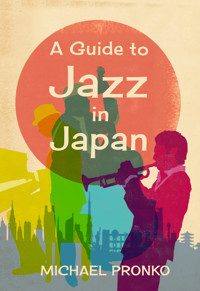
Whether you’re visiting Japan, living there, armchair traveling, or just love jazz, this guide points you toward the best of Japan’s vibrant jazz scene. With reviews of over 40+ clubs and 200+ musicians, this indispensable guide lets you know where to go, who to hear, and where to shop, jam, and hang out.
With bonus essays on Japan’s unique jazz history, culture, and community, A Guide to Jazz in Japan helps you explore and understand one of the largest and most vibrant jazz scenes in the world. From hip backstreet clubs to talented musicians, the practical information and informed suggestions help make your trip—or your life—in Japan more interesting, fun, informed—and jazzier.
Das E-Book können Sie in Legimi-Apps oder einer beliebigen App lesen, die das folgende Format unterstützen:
Seitenzahl: 352
Veröffentlichungsjahr: 2025
Ähnliche

















A GUIDE TOJAZZ IN JAPAN
ALSO AVAILABLE BY MICHAEL PRONKO
Memoirs on Tokyo Life
Beauty and Chaos (2014)
Tokyo’s Mystery Deepens (2014)
Motions and Moments(2015)
Tokyo Tempos (2024)
The Detective Hiroshi Series
The Last Train (2017)
The Moving Blade (2018)
Tokyo Traffic (2020)
Tokyo Zangyo (2021)
Azabu Getaway (2022)
Shitamachi Scam (2023)
A Guide to Jazz in Japan
By Michael Pronko
Copyright © 2025 Michael PronkoFormatting by BEAUTeBOOKCover Design © 2025 Andy Bridge
Raked Gravel Press
All rights reserved worldwide. This book may not be reproduced in any form, in whole or in part, without written permission from the author.
Follow Michael on Twitter:@pronkomichael
Michael’s Facebook page:www.facebook.com/pronkoauthor
A GUIDE TOJAZZ IN JAPAN
by Michael Pronko
Raked Gravel Press 2025
Introduction
Dedication
This book is dedicated to the musicians who’ve made my evenings a serious pleasure. Yes, I have my day job, friends, and family, but more than anything, it’s been jazz that made me feel at home in Japan. Kokoro kara, arigatou gozaimasu.
About this guide
This guide will introduce you to the small clubs, backstreet kissaten, vinyl stores, jam sessions, and big band contests that make up the vibrant jazz scene in the greater Tokyo metropolitan area. With nearly forty million people within train distance of the heart of the city, that means a lot of different clubs, innumerable musicians, and an incredible amount of great live music every night.
However, the sheer scale of Tokyo and Yokohama can also make it hard to find the best music. This guide points you towards the best places and best musicians. It is intended for people who live here as well as for visitors. It’s designed for anyone who likes jazz, is curious about it, or is just interested in a great night out in Tokyo.
The people and places in the Japanese jazz world are generally humble, but intensely devoted to the music. It’s not that the jazz world is closed off exactly, but rather those in the know are quiet about it, partly because the jazz scene is so huge, and partly because playing jazz is such an ambitious undertaking.
I’ve been covering the jazz scene in Japan since 1999 for a series of publications and for my website, Jazz in Japan (www.jazzinjapan.com). Some of the material in this guide overlaps with the website, but a book is a handy reference just the same. In putting this guide together, I feel like a band leader trying to decide which songs to play—there are too many choices.
The guide is not just about great music. It’s about culture too. The clubs, groups, and musicians have their own way of doing things, and like so many other “ways” in Japanese culture, jazz has its “way.” That an African-American subcultural art form could fill the basement clubs of a city far away is a fascinating phenomenon. It’s a story of cultural exchange, globalization, musical passion, and artistic exploration, and the story is far from finished. If anything, the jazz scene in Japan is livelier than ever.
I’ve divided the book into several sections. In the first part, there’s a guide to the jazz clubs. I haven’t covered every club in Tokyo and Yokohama, much less Japan, but I’ve picked a solid selection of the best. I have reviewed those (some are like a home away from home) to give you an idea of the kind of music, the performers, and the atmosphere at over forty clubs. I’ve organized those by atmosphere and style, but don’t take that as a hard and fast rule. On any given night, the music can be unpredictable. But this section will get you where you want to go (and maybe where you need to be).
Second, I’ve chosen the musicians I’ve seen and treasured over the years. I’ve organized them by instrument. That might not be ideal since musicians often play different styles and instruments. But musicians consider their instruments central to their musical identity, so I’ll take that as a cue for arranging. Check out the bands that musicians lead or play in, and the descriptions I’ve added too, for what kind of jazz they usually play. You can also check the Jazz in Japan website for past reviews. Links to their websites, usually with music samples or videos, will give you even more ways to find who you’d like to hear.
Next, I’ve added some pointers for jam sessions where musicians can meet and jam with other musicians. If you’re a musician at any level, bring your instrument and find a time and place to join.
I’ve chosen a few of the better-known jazz kissaten coffee shops, but be advised that there are many more out there, as with clubs and musicians. Jazz fans are enamored of vinyl records, and Japan has many stores where records are sold. Vinyl in Japan is always well cared for and priced accordingly. Jazz kissaten are a unique experience. They are discrete islands of jazz culture and libraries of musical history. This section gives you pointers toward those other aspects of jazz.
In the last part, I’ve included longer articles about jazz in Japan. Three of my academic works are reprinted from books and journals, and two new essays discuss the history and cultural factors surrounding jazz. They examine why jazz in Japan is so interesting, how it got to Japan, and why it’s continued to flourish. There’s plenty to think about there.
Take this guidebook as your genkan—that little area in every Japanese home just inside the door where you take off your shoes and step inside.
And then go on in.
Irrashaimase!
About the focus
“Writing about music is like dancing about architecture” is a quote attributed to many different musicians, writers, and critics. Reluctantly, I half agree.
In contrast, the essayist and critic Walter Pater said, “All art constantly aspires to the condition of music.” I pretty much agree with that.
This guidebook lies somewhere between those two. I feel it’s helpful to have writing that provides information and background. Writing can enhance the music by helping listeners go deeper into the work. Listening to jazz is not just an aural pleasure—it’s a creative experience. Music is all subjective at one level, maybe at the best levels, but having a guide can help in numerous ways.
This book is primarily a list of people and places I recommend because I’ve heard them, usually repeatedly, on CD, live, or both, and have found them compelling and meaningful. The clubs are places I’ve been to repeatedly over many years. One or two are almost like home. I sit in the same seat.
In this age of AI, it’s easy to vacuum up information and pass it off as experience. The information here is handcrafted, individually shaped, and personally obtained. I think that fits the nature of jazz itself. It’s about individual tone and self-expression. Part of the reason this guidebook is limited is because it’s filtered through one person. But I like the human touch with whatever I read, watch, listen to, or consume. I hope you do too.
Because the jazz world in Japan is so huge, I’ve necessarily had to leave out quite a few places and people. No guidebook can be, nor should it try to be, exhaustive. I have my likes and dislikes too, though overall, I like all kinds of jazz and all types of music—Latin, African, rock, blues, flamenco, Chinese opera, you name it. A broadly appreciative view of all different genres, approaches, and styles forms the framework here.
But if some important musician or club didn’t get a mention, that’s my bad. I’m not a large travel publication corporation. I’m just a jazz writer.
Likewise, I included “Japan” in the title, but almost all the clubs and musicians are based in Tokyo and Yokohama because that’s where I live. Not all are Japanese, either. Many foreign musicians have made Japan their home.
This guidebook is for anyone interested in jazz or in Japan. Sometime fans, short-term visitors, die-hard jazz lovers, long-time residents of Japan, and people just passing through will find recommendations and new possibilities.
Even people who can’t visit Japan will find much to consider here, with many links to follow up. The descriptions of the clubs and musicians are more than just a travel guide’s to-do list. Combined with the essays about history and culture, they offer insight into another world.
All the clubs and people in this guide are also on the Jazz in Japan site, www.jazzinjapan.com. Over the last twenty-some years, the site has grown into a trove of information about musicians, bands, CDs, backgrounds, ideas, and the jazz scene in Japan. Check the calendar for more on upcoming shows.
With this guidebook in hand, you have forty-some clubs and over two hundred musicians. That should be enough to help you navigate the vibrant musical scene, delve deeper into the music, and enjoy many evenings of great jazz. I hope it opens up a fascinating world of musical experience.
As Nietzche said, “Without music, life would be a mistake.” I couldn’t agree more with that.
About me
This guidebook is the product of nearly thirty years of listening and reporting on Japanese jazz. I started going to clubs in the 1980s, when it wasn’t easy to find jazz spots. Back then, it was word of mouth or sheer chance. I stumbled across spots while walking around the city or caught sight of “jazz” written on a sign from the train window. Friends and acquaintances told me about their favorite places and musicians, sometimes reluctantly, as some were well-kept secrets.
I picked up flyers, announcements, and handouts dangling from a string or clip for other clubs and shows at each club. Those led me into a vast world of live music. The network was there, but was hard to uncover. At that time, the online world was yet to take off, and though there were a few publications in Japanese, there was not much in English.
My first jazz writing gig was at the English-language online mag Tokyo Q, which didn’t mean much to musicians or club owners. Still, those musicians and club owners were welcoming, allowing me to take photos, chatting with me between sets, and, maybe most of all, remembering me. That wasn’t hard, as there were few other foreigners to remember. Their kindness led me to continue.
In 2001, The Japan Times invited me to cover the jazz scene. With that meishi name card in hand, doors opened more easily. I could ask a staff photographer, who always loved to go and certainly took better photos than my film camera and scanner could produce. The reach of the newspaper was greater, and the name respected. I had a regular column called “Jazznicity.” I still like that name.
Working there, I interviewed jazz greats from abroad, such as Herbie Hancock, Michael Brecker, McCoy Tyner, John McLaughlin, and Monty Alexander. I continued going out to hear the best Japanese jazz musicians, all listed in this guide, and writing about them. It was an honor to write about jazz. I was out several nights a week to hear jazz, even while working at my university job. In those days, the band often announced it was time for the last train, in case people wanted to get home, before they jumped into more music.
Way leads on to way, though, so I teamed up with Marco Mancini, who had started a bilingual print magazine called Jazznin, which translates roughly as “jazz people.” It was a beautiful magazine with great photos and good printing. However, at that time, getting an ISBN was highly restricted in Japan, and distribution was tightly controlled. We got out two years of issues before folding, but the articles I wrote there are now on the website.
Meanwhile, I’d started writing a “Tokyo Eye” column for Newsweek Japan, mostly about my bemused puzzlement about Tokyo life. Other gigs rolled in writing about art, architecture, and culture. I contributed editorials to The Japan Times too. As for jazz, I wrote for a Japanese online streaming service, an Italian jazz magazine, a car magazine, and a few other sites. It was all good.
Writing-wise, I’ve collected my nonfiction writing on Tokyo into four collections, the Tokyo Moments series. I also write a detective series, the Detective Hiroshi series, set in Tokyo. I’ve been honored to receive multiple awards and great professional reviews for both series. More on those writings can be found at www.michaelpronko.com.
Day job-wise, I taught American Literature and Culture at Meiji Gakuin University, publishing academic articles, giving papers, and launching a conference, Liberlit, on teaching literature. My students were serious about English, though, and I learned more every day. One homework assignment for an American Culture class was to review a live show. Many students had never been to hear live music before. I still teach courses on novels, film, art, and music—nothing like a lecture on Bessie Smith to put everyone in a good mood.
Around 2007, I put together the website Jazz in Japan, www.jazzinjapan.com, which is still running. A good friend did the technical work, and I rolled through Joomla, Wordpress, and Squarespace. Ugh. But it was worth it to keep writing a steady stream of live reviews, CD reviews, essays, and a calendar.
Somewhere along the line, a jazz researcher from the UK contacted me and dragged me into jazz studies. That’s pushed me to reframe my jazz reporting into an academic framework. I contributed a chapter on Japanese jazz to the Routledge Companion to Jazz Studies, among others. A selection of those writings is in this book.
Nowadays, information is not hard to come by—in fact, it’s hard to avoid. Every jazz musician has a dedicated homepage, Facebook page, and posts on X (Twitter) or Instagram. There are also lots of videos on YouTube. I encourage you to check them out. I am amazed.
With all that available, you could learn much about Japanese jazz from anywhere in the world—and you should! But much of what I know about jazz in Japan came from the pre-internet days of piecing things together, flyer by flyer, recommendation by recommendation, night by night. That experience runs through these pages, but to be honest, I like having easy access to information nowadays.
No matter how info is acquired, the excitement of heading down the stairs into a dark club on a backstreet of Tokyo for an intense, enjoyable evening of great live jazz hasn’t changed.
I wrote this guide because I was excited, fascinated, and pleased. I hope it resonates deeply.
Happy listening! The world is always larger than we think.
* * *
You are welcome to follow me at:
X: @pronkomichael
Instagram: @michaelpronko
Facebook: www.facebook.com/pronkoauthor
LinkedIn: https://www.linkedin.com/in/michaelpronko/
Personal website: https://www.michaelpronko.com/
Where to Go—Jazz Clubs
About the clubs
The larger Tokyo area is one of the largest urban areas in the world. Within train distance, over one hundred clubs (yes, not a math error), offer jazz nightly. From those hundred-some clubs, I’ve chosen the best I’ve been to over the past twenty-plus years.
Each listing has links, addresses, and reviews. For more on each club, visit the Jazz in Japan website: www.jazzinjapan.com. Enter the club’s name, and you can find reviews of live shows that took place there.
I organized the clubs into the types of music usually played there. But the emphasis is on “usually.” Any club could have a different kind of music on any given night. If in doubt, copy and paste the name of the group leader performing that night and check out one of their videos. Some clubs predictably offer one style every night, while others range along the continuum. I’ve noted that in the reviews.
The review includes a short set of directions, but Tokyo and, to a lesser extent, Yokohama can be difficult to navigate. By all means, save the address in your GPS app! Passersby will usually not know how to direct you, and signs are sometimes small and hard to see.
If you get stuck, look at the list of tenants in the building, look for a rolling sign on the sidewalk, or look up or down for the tiny sign in the basement or higher stories. Tokyo is challenging to navigate, both horizontally and vertically.
Unlike much of Japanese society, there are no strict rules in the jazz world. Nightlife is the time and place to throw off convention and custom and become looser, more human, and more natural.
That said, Japanese fans will strike most foreigners as a bit staid. Jazz clubs are different from izakaya or bars, where people go to drink, eat, shout, and argue. At most jazz clubs, it’s quiet except for the music and conversation before, after, and between sets.
Of course, jazz fans applaud, clap along, and even whoop with joy at points, but expressing emotion is generally not what’s done in public. Look instead for their feelings expressed in buying a CD and asking for an autograph. Watch how they concentrate and consider what they’re hearing. Or consider that they’re not spending their money in the thousands of other venues, restaurants, and activities nearby! They vote with their feet. For most Japanese, that’s expression enough.
Since Japanese jazz clubs are slightly different, here are a few pointers.
Japanese live shows often start early, at 7:30 or 8, and they start on time. However, starting times can differ on holidays and special occasions, so check closely. Before the Coronavirus pandemic, clubs often started and ran late, but this is no longer the case.
Except at the large corporate-owned clubs, you can stay for both sets, with some exceptions for well-known bands.
Also, some clubs are relatively small, so it’s awkward to get in once the music starts. In a couple of the smallest clubs, the pianist or bassist has to stand up and step out of the way for the door to open. In others, the door is kept tightly shut to contain the sound. In others, it’s hard to get past others to the empty seats. You get the idea.
Showing up early means getting two full sets and a better seat. If you’re a bit late, though, go on in. If the place is full, you might have to stand or wait for the next set. Making a reservation is advised; be sure to tell them when you’ll arrive. A reservation assures you of a better seat.
Reserving by email is probably best. Names are hard to catch across languages, but it’s OK by phone too. Recently, most clubs have someone who speaks enough English to take your name, phone number, and time of arrival. But not always. Be patient.
Some clubs have an online reservation form, though it’s often in Japanese. Music has no language barrier, and that’s the main point. But a reservation is practically helpful and a sign of good intentions and interest.
Japanese is a complicated language, and in Tokyo and Yokohama, there are pockets of English friendliness and others that remain steadfastly Japanese. Jazz clubs lie somewhere in the middle. So, for this guidebook, I’ve also included the Japanese for addresses, names, and other terms. Nowadays, though, most clubs can handle at least a minimal amount of English.
In any event, it’s best to double-check details like starting times and entrance fees for each evening. Shows might start at 7:30 one night and 8:00 the next. Also, be sure the show isn’t in the afternoon, as a few clubs run afternoon sessions.
Entrance fees vary depending on the size of the band and their fame. Check carefully. The price is usually stated clearly. If you’re visiting, the exchange rate can make a big difference in price, but I have listed the usual range of entrance fees for each club. Well-known musicians and larger bands charge more.
Most sets finish by 10:30 or 11:30 at the latest, so people won’t miss their last train home. Trains in Tokyo and Yokohama often finish before 1 a.m. If you miss the last train, it means an expensive taxi ride home, a cheap hotel, or an all-night coffee shop. There are plenty of all of those everywhere.
Jazz clubs are not for the claustrophobic. “Rub elbows” is not a metaphor in Tokyo. It’s the reality. A few places have ample legroom, but the Japanese are used to being packed into tight spaces. If you’re expecting Western-size roominess, be ready to adapt as best you can.
Reservations are advised and highly recommended at bigger clubs or for well-known bands, but it’s not always easy without speaking Japanese. Talking with musicians at some clubs in between or after the sets is common. Some musicians love that, and others do not. Many Japanese musicians speak English, but not all. That could be an embarrassment for them, as it is for almost every Japanese person.
During break times, most musicians are happy to chat if they can, but they also want to talk to long-time fans, old friends, students, or bandmates they haven’t seen in a while. So please respect the musicians’ time during breaks. They are at work, after all.
Jazz clubs differ considerably in terms of food and drink. Do you have to buy a drink or food order? Each club has its own rules, but it’s just polite—in that inimitable Japanese way—to follow the club’s rule.
Some places serve the bare minimum of nuts or bags of chips. Others might have a microwaved pizza or cheese plate, but others offer a full range of restaurant-quality food. It’s good to check ahead. I usually eat before I go in. The focus is on the music, not on Michelin stars.
Whiskey or coffee are the old-school beverages of choice, but wine and craft beer are increasingly common, as are cocktails and non-alcoholic drinks. A few clubs request a one-drink or one-order minimum, but most take it for granted that customers will order. If you’re on a budget or don’t want anything, at least ordering bottled water or coffee ensures the clubs make a little something.
Look for the lone guy or couple with an entire bottle of whiskey in front of them. Bottle “keeps” used to be common practice. The idea was that you bought the bottle, stored it there with your name on it, and purchased ice and mixers each time. That “bottle keep” system is almost a thing of the past.
The clubs run on tight margins, and none of the owners I’ve ever talked to is in it for the money. They’re in it for the music. Rents can be exorbitant in Japan, and owners and musicians operate at the edges of everyday accounting, so every little bit helps. Of course, there’s no tipping anywhere in Japan.
Most clubs are located in lively parts of town with plenty of food and drink options in the surrounding area. If there is nothing to eat near the club, the surrounding streets or the closest station will almost surely have places to eat before and after the show.
Smoking used to be a blight on jazz clubs, but it’s much better than it used to be. Smoking is banned in most of them, but there’s a soft approach to smokers at some clubs or in the hallway. If you are allergic to smoke or hate it, ask the wait staff to be seated away from smokers. Japanese are almost always polite and accommodating, even Japanese smokers.
Entrance fees can seem quite expensive compared to other countries, but be aware that rents in most Japanese cities are incredibly high. You may have a high price for one evening, but that helps keep the space open for up-and-coming and lesser-known musicians to play on other evenings.
In addition, entrance fees help clubs offer their space for jam sessions and recordings. Some have a night with no music charge and offer discounts to students. Full price supports the music in multiple ways. Having seen the evening’s pay divided among the band members after many shows, I can tell you it isn’t ever enough.
Musicians almost always sell their CDs at the club. Each musician also leads another group, so their CDs will likely be on sale too. So, if you like the music, pick up a copy. There’s usually a table stacked with CDs in the back or by the door. Musicians get a bit more if you buy from them directly, and it can be challenging to track down CDs through music stores or online. And if you get a CD, musicians will happily sign it for you! It’s such a common thing to ask that they’ll probably have a sign pen ready.
Also, check out the flyers and posters on a stand or hung on the wall. Over the years, I’ve picked up the best tips about jazz there.
A few of my favorite clubs have closed: Una Mas, Halftone, Hot House, Jazz Spot “J,” GH9, and STB139. Sayonara to them. However, many new clubs have opened. Some of them will be included in the next edition of this guidebook and are on my site.
Straight Ahead
Introduction
Straight-ahead and Serious.
Old-school clubs with the cream of the jazz world
The clubs in this section focus on straight-ahead jazz and have a serious atmosphere—they are as much a music hall as a club. Chairs often face the stage, and talking is discouraged during the performance. That doesn’t mean you can’t talk; it’s just that everyone is there to focus on the music, not on socializing.
These clubs are the best-known in Tokyo. They showcase the best musicians in the city and offer a variety. Some are better known for one style of jazz than another, but all of them give their stage to musicians you can count on to deliver great music. You might not like their particular style on any one night, but you can rest assured that the musicians are playing that style at the top of their game.
These clubs also have a history that extends back to the 1960s, when jazz was one of the city’s most popular music styles. During the Japanese economic bubble, all these clubs were booming. Still, they survived the lean years when corporate expense accounts shrank, and clubs started to attract more jazz lovers than salarymen entertaining clients.
Some of these clubs have a fifty-year history and an impressive list of Japanese and international artists who have played there. They are also dedicated to presenting the very best in jazz.
Alfie
六本木アルフィー
Top-level jazz in a cool space
Hama Roppongi Biru 5F, Roppongi 6-2-35, Minato-ku, Tokyo
(03)3479-2037
〒106-0032 東京都港区六本木6-2-35 ハマ六本木ビル5F
Roppongi Station (Tokyo Metro Hibiya Line, Toei Oedo Line)
Roppongi Station has many exits. But from the big Roppongi crossing, walk down Roppongi Dori towards Shibuya and Roppongi Hills. You will see the Azabu Police Station, and after 200 meters (long before Roppongi Hills), you can find the club. Look for a small sign on the left and a small entryway to the elevator.
4,950 to 6,600 yen. On weekdays and Saturdays, there are two sets from 19:15 to 20:45. The time and charge depend on the show. Jazz every night. (With some days off irregularly).
http://alfie.tokyo/index.html
https://www.jazzinjapan.com/clubs-and-venues/alfie
https://www.facebook.com/jazz.alfie
https://www.instagram.com/jazz_house_alfie/
https://x.com/jazzhouse_alfie
@jazzhouse_alfie
Alfie is Roppongi's best jazz and most elegant club, and one of the longest-lasting in a nightlife area that is constantly changing. A great space with great music and great food and drinks (did I mention it was great?), it is also a favorite with musicians, and for good reason. Owner Yoko Hino knows how to run a club, and while she hires great managers, she is there overseeing things almost every night. The atmosphere is laid-back, cool, and hip, which is what you want in a club, especially in Roppongi.
The musicians might all be termed elegant in some sense too, but accomplished and professional also apply. The audience is always there for the music, not just a night out—maybe a jazz night out. The musicians play both to themselves and the audience—again, in just the right measure. At Alfie, everything always seems to work just right.
The club features established musicians, often for their CD release parties. But Alfie also offers up-and-coming groups a special chance to get a solid gig (with some pay). The music is usually straight-ahead, but it also includes Latin, funk, fusion, or someone with amazing technique or a special charisma.
Every couple of months, a performer from overseas takes the stage, and sometimes, unique combinations of musicians dedicate themselves to a musician or kind of music for an anniversary or retrospective evening. Every night of the week, though, Alfie offers top-level jazz in an elegant environment.
They have a solid, top-shelf selection of drinks, with delicious wine and food good enough to entice customers from the hundreds of other restaurants in the area. It’s one of the premier jazz clubs in Tokyo.
B Flat
ビー・フラット
A big, glorious jazz space
Akasaka-Sakae Bldg., B1, Akasaka 6-6-4, Minato-ku, Tokyo
(03)5563-2563
〒107-0052東京都港区赤坂6-6-4 赤坂栄ビルB1
Akasaka Station (Tokyo Metro Chiyoda Line) and Tameike Sanno Station (Tokyo Metro Ginza Line and Nanboku Line)
From Akasaka Station, it's an easy 4-minute walk. With your back to the large ACT Theatre and TBS buildings, you go uphill, winding a little, and on the right-hand side, you will see a bright red door and sign. Alternately, from Tameike Sanno station, exit 12B onto Roppongi Dori. Turn right uphill on the narrow winding street that goes up and over and down to Akasaka.
3,800 - 7,700 yen, 2,000 -3,100 for students (sometimes more depending). About twice a month, they have no-charge night! The cover charge will rise for overseas acts, but you get two full sets. Sets are from 19:00 and 21:15.
https://bflat.yamano-music.co.jp/
https://www.jazzinjapan.com/clubs-and-venues/bflat?rq=b%20flat
https://www.facebook.com/bflatyamano/
https://x.com/JazzDiningBflat
https://www.instagram.com/jazzdiningb_flat/
B Flat is one of the premier jazz clubs in the city, showcasing the very best in Tokyo jazz every night. After moving from its previous spot in Harajuku (where it went by the name “Keynote”), and with the passing of Sugiya-san, a great human being and an excellent manager always in a bow tie, the club's future seemed in doubt. However, the next owner/manager, Suzuki-san, took on the challenge and ran the club for many years, maintaining a high quality of music, service, food, drink, and sound. When he passed away, the club was bought by Yamano Music. The previous owners will be missed. They were both wonderful people. But at least the club can continue.
History aside, the club's focus is music. Though Yamano is a corporation, it is a music corporation that appreciates the value and importance of music. It runs a student big band contest, offers music lessons, and still sells CDs, music scores, and instruments all over Tokyo, so it’s not unusual to run a jazz club too.
B Flat loads the dais with orchestras or big bands several nights a week. That makes for a huge sound, and the sound system handles it with crisp perfection. On other nights, everything from quartets to octets delivers straight-ahead jamming and tight, solid swing of every description. Musicians always like playing there. You can tell by the way they up their level a little. The names of famous performers written in pen on the brick wall attest to the outstanding musicians that have performed there over the years.
You can see well from most seats, but it pays to make a reservation and choose your table ahead of time if you can. B Flat is exceptionally good about reservations, but it is always wise to call or email ahead, even an hour or two. But if you can’t, there are standing tables too, for latecomers. Large pillars block a few seats, but hey, that's life. Sitting on the far sides of the stage is fine, though, and the sound is good from everywhere.
Yamano has made an effort to up the level of food and drink too. Drinks are reasonably priced (for Tokyo), but you can also splurge for pricey bottles of wine. The daily special plates are tasty if you don’t have time to check out the many eateries in the area. With shows starting at 19:00 most nights, eating there is often easier and worth it.
Body and Soul
ボディ&ソウル
A soulful hideaway with great music every night
Shibuya Homes B-15, Udagawa-cho 2-1, Shibuya-ku, Tokyo
(03)6455-0088
〒150-0042 渋谷区宇田川町2-1 渋谷ホームズB-15
Omotesando station (Tokyo Metro Chiyoda Line, Ginza Line, Hanzomon Line)
The club is about halfway between Shibuya Station and Harajuku Station on the large-ish Koen Dori Street. It’s accessible from either station by walking.
4,500 yen to 8,000 yen. Two sets from 19:30 and 21:00 on Monday-Saturday, 18:30 and 20:00, or a daytime show on Sunday and public holidays.
www.bodyandsoul.co.jp
https://www.jazzinjapan.com/clubs-and-venues/bodyandsoul
https://www.facebook.com/bodyandsoul.co.jp
https://www.instagram.com/bodyandsoul_jp/
One of Tokyo’s older and more respected clubs, Body and Soul, has been in the jazz business for fifty years and is run by the same woman. It’s an essential part of Tokyo’s jazz culture. After moving from its old location on the backstreets of Omotesando, the new location is calming, spacious, and welcoming. Body and Soul expresses true jazz spirit. The club acts as a jazz shrine, but with warmth rather than stuffy religiosity.
Because of its history, the club has the respect of musicians and listeners alike. The club's and the performers' straight-ahead approach ensures you will have a great night of jazz every night of the week. Most of the very top tier of Japan’s jazz musicians play here, some of them regularly. The musicians know they’ll have an appreciative audience there and tend to polish things up just a bit more. You can feel the devotion to the music as soon as you enter the door.
The food and drink are of high quality, much better than those of most clubs in the city. If the show starts early, eating there is a good choice. The service is always excellent. The sound system is extremely good, whether it’s a trio or a big band. It’s easy to hear well from anywhere in the club, which is good because some of the best musicians in Japan gravitate to the club to present their most polished groups and best performances.
It’s best to make a reservation on the website ahead of time. You’ll get a slightly better seat, but because the new space is much better designed and more spacious than the old one, there is almost always a good seat, even if you come at the last minute without a reservation. Body and Soul perfectly balances its namesake. Exciting and intimate, imbibing and listening, physical and corporal, all the opposites merge.
Keystone Club
キーストンクラブ東京
Stylish newcomer with a lot to offer
2F, JASMINE Bldg., 7-4-12 Roppongi, Minato-ku, Tokyo
(03)6721-1723
〒106-0032 東京都港区六本木7-4-12 ジャスミンビル2F
Roppongi Station (Tokyo Metro Hibiya Line, Toei Oedo Line)
Two minutes walk from Exit 8, Roppongi Station, Tokyo Oedo Line.
The cover charge is from 3,500 yen to 6,000 yen, plus a food and drink order. Shows from 19:00 or 19:30 every night. Times can change. Occasional afternoon shows.
https://keystoneclubtokyo.com/
https://www.jazzinjapan.com/clubs-and-venues/keystone
https://www.facebook.com/keystoneclubtokyo
https://www.youtube.com/channel/UCB7V8MLk5ZcwQjtgN8xCowA
@keystoneclubtokyo6484
https://www.instagram.com/keystoneclubtokyo/
A few blocks from the center of Roppongi, on a quieter street, Keystone Club is just the right-sized club. There are raised seats by the bar and tables close to the stage (shared when it gets crowded). Circular group seating to the side is a good choice to reserve if you go in a larger group. The club’s well designed, and it’s not cramped like some places are. It’s in Roppongi too, so everyone’s in their own bubble.
The food is Indian, which is unusual for a jazz club, and extremely good, in my Indian food-loving opinion. It could be a restaurant on its own without the jazz. Oddly enough, curry and jazz go together perfectly, as it turns out! If you don’t like Indian, though, there are several other choices equally good.
Drinks are well up to Roppongi standards, a fraction on the pricey side, but then again, so are rents in the area. There is a solid selection of high-end cocktails, whisky, wine, and beer. The service is prompt and attentive, so you don’t have to divide your attention from the music to get served.
And for those who love acoustics, the sound system is excellent. They feature jazz every night, but there are some closed evenings and Saturday afternoon shows, so check carefully.
When the club opened, I couldn’t get a fix on what music they were aiming at, but after a few years, it’s clear—top quality. This is one of the newer clubs in Tokyo, but they have worked hard to make an outstanding venue showcasing some of the best jazz in the city and to make an exceptional club. Jazz is generally straight-ahead, but there’s a range inside that category that Keystone covers well.
Naru
ナルお茶の水店
Elegant space for straight-ahead jazz
Kanda Surugadai 2-1, Chiyoda-ku, Tokyo
(03)3291-2321
〒101-0062 東京都千代田区神田駿河台2-1
Ochanomizu Station (Chuo Line, Sobu Line, Tokyo Metro Marunouchi Line)
From the west exit of JR Ochanomizu Station, go diagonally across the huge, crisscrossed intersection. You can see the club sign from the west exit—just a one-minute walk.
3,500 yen or more. Two sets at 19:00 and 20:30, depending on the night.
http://ocha-naru.com/
https://www.jazzinjapan.com/clubs-and-venues/naru
https://www.facebook.com/ochanomizu.naru
https://www.instagram.com/naru_jazz/
https://x.com/jazzNARU
@jazzNARU
(Naru has a second club in Yoyogi, almost exclusively dedicated to vocalists. Please don’t get them confused. If you like vocalists and want to hear established and up-and-coming singers, go to: www.yoyogi-naru.com)
Compact, tidy, and intimate, with no dust on its neat shelves of bottle keeps, Naru is a very comfortable place catering to students on expensive dates, salarymen chilling out, and jazz maniacs of all stripes. Many clubs try hard for "nice,” but Naru does it naturally. Food and drinks are several notches above any club in the city and are affordable. Why more clubs do not offer good wine, as Naru does, is a sad mystery to this jazz writer. Perhaps it's the experience that comes from two generations running the same club in the city’s center. Maybe it's respect for the sophistication of the music. Whatever the thought and care behind it, it's good.
Their selection of jazz players is excellent, chosen with obvious care and attention. The performers play with great intensity, reflecting their focused and professional sense. The music is typically straight-ahead, but without the feeling of being strangled into traditional patterns. The musicians here always have the artistry to dip into free jazz, clave rhythms, complex harmonies, or "out" soloing, but bring it back to a satisfying resolution. They push the edges here, but fold them back up too. Some nights, singers take the stage, and a slightly less edgy and more soulful feel takes over.
I always feel a respectful hush come over me when I head down the stairs past the musician photos heading into Naru's basement space. Somehow, the intimate setting of upholstered booths, smooth black lacquer, polished brass rails, and curved counter meandering around the piano feels calming and dreamy. Naru’s sound is superb, and the drums and sax do not even need to be miked. Always a complete and satisfying night out, Naru offers excellent music in a cool club.
Pit Inn
新宿ピットイン
Premiere jazz listening room for serious jazz
Accord Shinjuku Building B1, Shinjuku 2-12-4, Shinjuku-ku, Tokyo
(03)3354-2024
〒160-0022 東京都新宿区新宿2-12-4アコード新宿 B1
Shinjuku 3-Chome Station (Tokyo Metro Marunouchi Line), Shinjuku Station (JR Yamanote Line, Chuo Line, Sobu Line, Saikyo Line, Shonan Shinjuku Line, Tokyo Metro Marunouchi Line, Oedo Line, Toei Shinjuku Line, Odakyu Line, Keio Line, Narita Express, and more lines)
3,000 yen up to 7,000 yen for special shows. Two sets starting from 19:30. Afternoons from 14:00 to 16:30 pm, 1,300 yen.
http://pit-inn.com/e/
https://www.jazzinjapan.com/clubs-and-venues/pitinnhttps://x.com/pit_inn_
@pit_inn_
https://www.instagram.com/pitinn_shinjuku/
https://www.facebook.com/pages/PIT%20INN/158332544182091
More of an intimate listening room than a club, the Shinjuku Pit Inn has had decades of great jazz inside its Zen temple-like space. It’s become an institution. Afternoons are given over to promising bands working toward the evening slots or new configurations working out material. Stopping in for an afternoon of jazz by virtually unknown young players shows the depth of jazz talent in Tokyo. Playing the evening there means you have made it as a musician. Their anniversary concert line-ups are an annual who's who of jazz in Japan.
Inside, all the seats attentively face the stage, with plenty of room to stand at the back. Listeners are serious and focused, reading books and jazz magazines during sets and lining up after the show to get autographs on their just-purchased CDs. The Pit Inn is a large place that lets you settle into the music for a concentrated evening of musical meditation. Although it is primarily a beer and whiskey place, many customers stick with coffee too. The audience is there for the music.
The sound system here is always exacting. The right mix of instruments makes an incredible difference to the musical experience, and the Pit Inn offers excellent sound. For some shows, tickets are sold in numbered order, but you can usually line up early for the seat you like. There are no bad seats, though. There is no "scene" either. You can head in, sit down, space out, get lost in the music, and wander home.




