


5,95 €
Mehr erfahren.
- Herausgeber: Zombies Need Brains, LLC
- Kategorie: Fantasy und Science-Fiction
- Sprache: Englisch
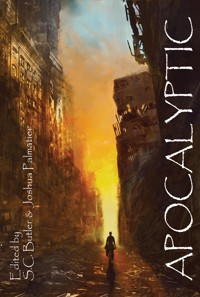
Who doesn't love a good apocalyptic story? They come in all kinds, from the nightmare terrors of superflus and zombie invasions to quieter, more reflective tales of loss and survival. Stories that feature people struggling through the end of the world or fighting to survive in what little bits of civilization still remain are always compelling. What better way for readers to safely explore the extremes of the human condition without actually having to fight off the ravening hordes themselves? Apocalyptic features stories from fourteen old and new favorite authors: Seanan McGuire, Aimee Picchi, Tanya Huff, Nancy Holzner, Stephen Blackmoore, Zakariah Johnson, Violette Malan, Eleftherios Keramidas, James Enge, Leah Ning, Thomas Vaughn, Marjorie King, Jason Palmatier, and Blake Jessop. Flee the Baboon King, die of thirst in the White Mountains, brew up a bubbling blob of nanotech road kill in the back of a garbage truck, or, worst of all, try to reintegrate yourself back into society as a former zombie. Then ask yourself, would you survive the Apocalypse? Would you even want to?
Sie lesen das E-Book in den Legimi-Apps auf:
Seitenzahl: 385
Veröffentlichungsjahr: 2020
Ähnliche

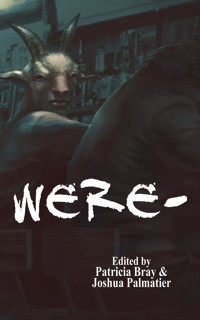
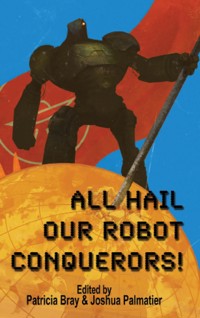












Table of Contents
Title Page
Other Anthologies Edited by:
APOCALYPTIC
COAFIELD’S CATALOG
SOLO COOKING FOR THE RECENTLY REVIVED
TO DUST WE SHALL RETURN
THE END OF ETERNITY
LITTLE ARMAGEDDONS
ALMOST LIKE SNOW
SHADOWS BEHIND
A TALE OF TWO APOCALYPSES
ZODIAC CHORUS
LAST LETTERS
GUT TRUCK
SASS AND SACRIFICE
THE BALLAD OF RORY MCDANIELS
Trust Fall
ABOUT THE AUTHORS
ABOUT THE EDITORS
ACKNOWLEDGMENTS
APOCALYPTIC
Other Anthologies Edited by:
Patricia Bray & Joshua Palmatier
After Hours: Tales from the Ur-bar
The Modern Fae’s Guide to Surviving Humanity
Temporally Out of Order
Alien Artifacts
Were-
All Hail Our Robot Conquerors!
Second Round: A Return to the Ur-bar
S.C. Butler & Joshua Palmatier
Submerged
Guilds & Glaives
Laura Anne Gilman & Kat Richardson
The Death of All Things
Troy Carrol Bucher & Joshua Palmatier
The Razor’s Edge
Patricia Bray & S.C. Butler
Portals
David B. Coe & Joshua Palmatier
Temporally Deactivated
Galactic Stew
Steven H Silver & Joshua Palmatier
Alternate Peace
Crystal Sarakas & Joshua Palmatier
My Battery Is Low and It Is Getting Dark
APOCALYPTIC
Edited by
S.C. Butler
&
Joshua Palmatier
Zombies Need Brains LLC
www.zombiesneedbrains.com
Copyright © 2020 S.C. Butler, Joshua Palmatier, and
Zombies Need Brains LLC
All Rights Reserved
Interior Design (ebook): ZNB Design
Interior Design (print): ZNB Design
Cover Design by ZNB Design
Cover Art “Apocalyptic” by Justin Adams
ZNB Book Collectors #18
All characters and events in this book are fictitious.
All resemblance to persons living or dead is coincidental.
The scanning, uploading, and distribution of this book via the Internet or any other means without the permission of the publisher is illegal and punishable by law. Please purchase only authorized electronic editions of this book, and do not participate or encourage electronic piracy of copyrighted material.
Kickstarter Edition Printing, June 2020
First Printing, July 2020
Print ISBN-13: 978-1940709338
Ebook ISBN-13: 978-1940709345
Printed in the U.S.A.
COPYRIGHTS
“Coafield’s Catalog of Available Apocalypse Events” copyright © 2020 by Seanan McGuire
“Solo Cooking for the Recently Revived” copyright © 2020 by Aimee Picchi
“To Dust We Shall Return” copyright © 2020 by Tanya Huff
“End of Eternity” copyright © 2020 by Nancy Holzner
“Little Armageddons” copyright © 2020 by Stephen Blackmoore
“Almost Like Snow” copyright © 2020 by Zakariah Johnson
“Shadows Behind” copyright © 2020 by Violette Malan
“A Tale of Two Apocalypses” copyright © 2020 by Eleftherios
Keramydas
“Zodiac Chorus” copyright © 2020 by James Enge
“Last Letters” copyright © 2020 by Leah Ning
“Gut Truck” copyright © 2020 by Thomas Vaughn
“Sass and Sacrifice” copyright © 2020 by Marjorie King
“The Ballad of Rory McDaniels” copyright © 2020 by Jason Palmatier
“Trust Fall” copyright © 2020 by Blake Jessop
COAFIELD’S CATALOG
OF AVAILABLE
APOCALYPSE EVENTS
Seanan McGuire
Hello and welcome to our humble store!
So you’ve decided to end the human race and possibly the world. That’s no small undertaking and we’re happy to assist you in your endeavors. Please select your favorite apocalypse from the following list and allow our team of trained individuals to assist you.
A is for ANTIBIOTIC RESISTANCE.
Largely touted as the magic bullet of medicine, the discovery of antibiotics changed everything. Surgery became commonplace, dental work became infinitely safer, and the rates of death from childbed fever plummeted virtually overnight. Antibiotics created a safer, more stable world in which humanity could thrive. It’s fitting, then, that abuse of those same antibiotics led to increasing resistance to their effects, until many became useless, and we faced a future devoid of any functional treatments for bacterial illness or infection.
With this apocalypse, you receive bonus pus, and the possibility of melting eyeballs as your vulnerable population begins to succumb to ailments unseen in over a hundred years. Easy, predictable, and once entirely avoidable, we file this option under “inevitable.”
B is for BOTANICAL.
Most people don’t think of plants as dangerous, but any botanist can tell you that the slowest of the biological kingdoms is by no means the weakest. Kudzu, poison, invasive species, the possibilities are nigh-endless. What’s more, careless management of monocultures means that this apocalypse can easily be slotted into almost any scenario, kicking off a wide variety of secondary calamities as food chains are disrupted and populations are poisoned, subjected to violent allergic attack, or otherwise destroyed.
C is for CHEMICAL.
A single spill and a mutagen in the water supply wipes out a major metropolitan area. If their drains lead to the ocean, this single event can also be used to decimate fisheries, pollute coastlines, and expand the reach of that initial event beyond all logical barriers. Chemical warfare respects no geologic or political boundaries.
Everything is chemicals and this apocalypse can be tailored to take many forms, allowing you to be a true captain of humanity’s fate.
D is for DINOSAURS.
Genetic engineering is a great tool of scientific advancement and, like all other tools of scientific advancement, is in the hands of human scientists, which means the question of it being used irresponsibly is not “if” but rather “when.” The time between an extinct animal first being successfully cloned and herds of dinosaurs thundering across North America is likely to be shorter than the gestation period of an African elephant. When this inevitable misuse of scientific power occurs, the only question will be whether you’re in front of the T. Rex, or behind it.
E is for EARTHQUAKE.
What better way to begin the end of days than by having the very ground reject humanity in all its forms and flavors? With a series of massive seismic events following all known faults—and a few unknown faults—we can bury mankind in the rubble of their own creations. Comes with the environmental benefit of not causing lasting damage to the water table or air (important if you want to retain mammalian life after eliminating the human race).
Associated risks include the compromising of nuclear waste storage facilities.
F is for FIRE.
We consider this option to be reasonably self-explanatory.
G is for GENETIC.
Oh, those wacky scientists. All it takes is one of them deciding to make some genetic “solution” airborne and the entire population wakes up with eight extra eyes, or starts belching spiders, or better! Mad science is a convenient, entertaining way to end the world and we are happy to supply a variety of mechanisms through which to make it happen.
H is for HURRICANE.
It’s difficult to use hurricanes to destroy all mankind, given their difficulty forming under many conditions, but we believe in you. If we didn’t, you wouldn’t be here.
I is for ICE.
Once everything burns, it’s time for everything to freeze. Superstorms and changing weather conditions could easily kick off another ice age, changing the face of the planet forever and making your dreams of an eternal snow day come true! Added benefit: you’ll be able to keep your drinks cold even without a refrigerator.
J is for JET STREAM FAILURE.
There’s no reason the jet stream can’t abruptly fail, disrupting atmospheric patterns worldwide and making modern transportation impossible. This is difficult, but far from impossible, to engineer for the world-destroyer with a flexible budget.
K is for KRILL.
It may seem counterintuitive, but taking out the base of the oceanic food chain would quickly result in the death of most sea life, damaging the ability of the seas to continue scrubbing carbon from the atmosphere and accelerating the speed of climate change. This one isn’t flashy and will require some patience on the part of the would-be evil overlord or apocalyptic engineer.
L is for LOCUSTS.
A bit biblical, yes, but with sufficient numbers, they could disrupt the food chain to a high enough degree to kill people in prodigious numbers. Issue: may not be able to kill the people living in sufficiently cold climates.
M is for METEOR.
With the sky increasingly compromised by careless satellite placement and no viable global defense net, it’s only a matter of time before a sufficiently large rock punches its way through the atmosphere and shatters the Earth’s crust. A comet was good enough for the dinosaurs; it’ll be good enough for us, too.
N is for NUCLEAR WAR.
Quick, easy, awful, over.
O is for OCCULT.
Would you like demons to crawl out of the electric sockets before ripping off the faces of your enemies? How about ghosts everywhere? No, we mean everywhere. Even there. Hell can walk the earth anew with this apocalyptic ending.
P is for PANDEMIC.
The nature of the disease doesn’t matter, only that it spreads quickly and completely, leaving bodies in its wake. Can easily incorporate a variety of other apocalypse options, especially those which begin with the misuse of science. This is the Swiss Army Knife of world-enders—efficient, impersonal, and everywhere.
Q is for QUANTUM.
Look, some letters are easier than others. And if you want an apocalypse that makes no sense under any other system of measure, just wave your hands and say “it’s quantum” before your unspeakable slime monsters start biting heads off. It’ll work.
Trust us.
R is for ROBOTS.
More misapplied science, yes, but this time it’s misapplied engineering, which is a fun change. Also fun: lasers and massive property damage. You’ll enjoy it! The rest of the population will not.
S is for SLIME.
The Blob is available to the aspiring destroyer of mankind, for a very reasonable down payment. All organic life will be consumed. All of it. Even the dogs. Know that before you let it out.
T is for TIME.
Destroy the fourth dimension and the first three will follow in…well, in no time at all.
U is for UNKNOWN.
Want something specific not offered by our list? Propose your own apocalypse and we’ll help you with individualized pricing plans, based on the complexity of what you’re hoping to achieve, the investment required on our part, and the amount of the planet estimated to still be useable after the apocalypse has run its course. End the world your way. Off-the-rack isn’t for everyone and we’re happy to help you with a bespoke plan that suits both your needs and your desires.
V is for VENGEANCE.
Let’s be honest, we assume this is why you’re here. But if you add the “vengeance” package to your apocalypse of choice, you’ll have the opportunity to gloat after your plans have been put into motion and at a point where no recovery is possible! Kill them all and get your evil laugh on.
W is for WATER.
The classics are classic for a reason. Ending the world in water has a certain beautiful poetry to it. Very damp, waterlogged poetry.
X is for XENOLOGICAL.
Let’s all face it: if the aliens put in the effort to come this far, they’re not doing it because they want to be friends. Any visitors from space will be colonists at best, conquerors at worst (assuming there’s any difference between the two). The end of humanity as we know it will be swift and conclusive, and as a bonus, you may get to see space when the invaders take you onto their ships.
Y is for YERSINIA PESTIS.
The bubonic plague has had its turn to kill people, and some would argue that this apocalypse is identical to antibiotic resistance, but in this case, we’re not asking for every possible infection, just the ones which arise from a horrifying new strain of Y. pestis. Some things become old standbys because they’re very good at their jobs and you can put your faith in the bacterial infection which wiped out half of Europe’s population from 1347 onward. Global panic is surely to accompany this option, which may or may not be the desired outcome.
Z is for ZOMBIES.
Difficult. Messy. Scientifically implausible. But oh, so much fun, which makes this one of our favorite offerings. When the dead rise, we all get down.
Thank you for considering us for your apocalypse needs. We look forward to helping you destroy all the many and varied works of man.
SOLO COOKING FOR THE RECENTLY REVIVED
Aimee Picchi
I hide my right hand behind my back when Jamie steps into the rehab center’s kitchen. Like all the rest of the reintegration counselors, he’s a Survivor. And Survivors always stare at our scars.
“Let’s start with our motto,” Jamie says.
The class intones: “Food is life.”
My friend Myra hitches her thumbs on her belt, cinched to the smallest hole, and rolls her eyes.
“And?” Jamie prods.
“To cook is human,” we finish.
Every time I say it I imagine the motto will fix me, erase my scars and everything else that happened in the last year. Get me one step closer to Carter. I once confided my belief to Myra and she laughed. That motto’s not for our benefit, sweetie, she had said. It’s so they can believe we’re still just like them.
Jamie gestures for me to join him at the front of the classroom, the home-ec lab inside a former middle school. About twenty of us are lined up at ovens and sinks and Formica countertops where students scratched blocky initials inside of hearts. I don’t want to think about what probably happened to the kids.
“Edda’s going to teach you a cake recipe.”
I clear my throat. “It’s called crazy cake because it doesn’t include eggs or butter. I’m told there might not be much of either ingredient when we get back home.”
Not that I ever baked this cake when I was a pastry chef—it’s not sophisticated enough to sell at a bakery—but Jamie had said it didn’t matter because the point is to help each other relearn basic life skills.
When I pass a photocopied recipe to Myra, she whispers, “What’s crazy is to think this is going to make a difference. Look at us, Edda.”
The kitchen is filled with a motley group of twisted limbs, faces calling out for reconstruction, missing feet and half-scalped heads. Myra’s scar runs from her temple to her jaw. Even though our wounds are all different, we’re all emaciated. Nothing more than bones covered with scar tissue.
“Broken things can be fixed,” I say.
Myra dumps a cup of sugar into a bowl. “If you can actually enjoy eating this cake, I’ll believe you.”
We spend the next hour mixing and pouring, my unbalanced hands fumbling with the spatula as I scrape the batter from the bowl.
After we put the cakes in the oven, Jamie lectures about staying hydrated and well-nourished. As he wipes sweat from his forehead, it occurs to me he might be nervous, standing up here in front of two dozen of the Revived. He’s avoided looking at Myra, who has a sly smile as she licks her lips every so often with the tip of her pink tongue.
Then the timers ding and the tension is broken as we gather near our ovens. “Smells great,” Jamie calls from across the kitchen.
I avoid the flick of Myra’s eyes. We can’t smell anything.
We stab our forks into warm slices of cake.
Heat coats the inside of my mouth and a burst of hope expands inside me that maybe I’ll taste something this time. My hope quickly fades as the cake cools on my tongue, leaving my mouth filled with a substance with the taste and texture of clay.
The cure flushed out the disease, but it also took away our appetites.
Around the kitchen, the other Revived struggle with the cake. After a half-hearted attempt to eat a few bites, Myra flips her plate into the garbage. She pivots to the fridge, cracking open the door and retrieving a can of En-Liven. She grins and places a finger up to her lips. We’re not supposed to drink the energy drink unless it’s an emergency, even though it’s the only sustenance we can stomach. It has no taste, but the drink’s mix of caffeine, sugar, and carnitine shoots a thrill through our bodies. She slams it down, then tosses the can in the trash before Jamie takes notice.
I shove another forkful of cake into my mouth and fight an impulse to toss my plate on top of Myra’s. I’m annoyed that she was right, but unwilling to give up just yet.
Jamie strolls over with his tablet, taking notes.
“You’ve come a long way in three months.” Then he says the words I’ve been hoping to hear since I woke up in the facility: “You’re both ready to be reintegrated into society. What are you going to do after you’re discharged?”
“I’m going to start fresh. Get a new job back in New York. Maybe in clean-up. You know, do my part in reconstructing the country,” Myra says smoothly. But it’s all a lie: she’s told me she’ll join the Revival, the traveling group of the Revived who subsist on En-Liven and shun Survivors.
Jamie nods, a relieved smile stretching across his damp face. “And you, Edda?”
“I’m going back home to Carter.” Giddiness travels down my arms and to the ends of my fingers at the thought of going home. If they could, my fingertips would shoot out confetti and sparklers, like a parade on the Fourth of July. “We’d been planning our wedding. I put a deposit on a wedding dress and we’d picked a venue.”
I push back the thought that the dress would be too large for me now, the hotel probably in ruins.
Jamie seems genuinely pleased as I rattle on. I’ve provided the correct answer; the government wants us to return to our former lives, even though the counselors have told us that the only jobs open to us will be in clean-up. Not many businesses from before the pandemic are still operating.
After he’s out of earshot, Myra snorts. “They’ll never see us as really human.”
I press my lips together, then exhale quickly. “You might as well say, ‘No use trying.’”
Myra turns away, hurt. The counselors have taught us to model our behavior on what we were like before the illness, and because I remember myself as a warm and kind person, I drape my right arm around Myra’s shoulders in a shoulder-hug. She returns the embrace, but won’t meet my eyes. It makes me want to throw the cake against the wall and admit that I often doubt whether I’m the same person. But I’m clinging to whatever hope I can find.
My arms tighten around her briefly. Then I toss the cake into the garbage.
* * *
A line has formed by the time I reach the only working phone in the center. Mobile phones are allowed, but very few of us have them. Lost in the weeks and months when we were sick, tossed under a bush or cracked underfoot as we ran in herds.
The others waiting to use the phone are adrift in their own thoughts. Me, I’m imagining Carter when I tell him the news. I can picture his slow smile, the one he wore when he proposed. The way his eyes squeeze at the outer corners when he’s happy.
When I get to the front of the line, I dial Carter’s mobile number and wait for him to pick up.
Carter doesn’t pick up.
I hang up and keep my hand on the receiver. Maybe he needs a minute to reach the phone.
“Only two tries, Edda,” Jamie warns. “Then it’s Tim’s turn.”
“You ain’t the only one getting out of here.” Tim’s a big man with most of his right calf missing. During the past few months, I’ve heard all about his husband and their small fishing boat in Portland, Maine. “Don’t hog the line.”
I punch each digit with deliberation. I imagine Carter running through our apartment, trying to find his mobile after missing my first try.
The phone rings.
Or maybe he’s working late. Maybe he’s on his bicycle and his phone is in his messenger bag and he can’t reach it—
“Um, hello?”
“Carter!” My voice sounds too high. “I’ve got some good news.”
A moment of silence. “Oh?”
“I’m getting discharged on Monday. I’ll take a bus to Burlington and should be back at the apartment by dinner at the latest.”
I hear the creak of his favorite chair. “Edda, whoa. What do you mean, discharged?”
I tell him about how we’re learning how to stay hydrated and take care of ourselves. My right hand is slick with sweat and my thumb and two fingers are clutching the phone receiver so tightly their joints ache.
Softly, he interrupts me. “Are you sure you’re ready? I thought the rehab process would take longer. I wouldn’t want you to rush it.”
“My counselor says I’m ready to leave.”
Carter goes silent again. I can hear his breathing. I could listen to it all day. “It’s a lot to take in, Edda.”
“We’ve got a lot to do. Planning the wedding and all that.”
Jamie is tapping his watch, signaling that I have to hang up.
“See you on Monday, okay?”
His voice is so faint that I almost can’t hear it. “Okay.”
I hang up and stare at the wall for a minute. It’s hard for me to know where to begin, how to think about what he was saying. Or wasn’t saying. I know it’s going to be hard—I have no doubts about that—but I’m ready to get back to a normal life.
Tim swings forward on his crutches. He leans against the wall and gives me a quizzical look. “Everything good, hon?”
I hide my crippled hand behind my back and smile. “Everything’s great, Tim. The phone’s all yours.”
* * *
On discharge day, Myra tosses a duffel bag onto her cot and starts throwing in socks, underwear, her two clean pairs of pants.
“Edda, promise me you’ll come to the Revival if things don’t work out for you.”
“Plenty of the Revived go back home,” I tell her. “Remember that documentary they showed us?”
Myra smooths her bedcover and screws up her face. “Mmm-hmmm,” she said. “Propaganda.”
“Cynic.”
“They want us to believe we can integrate. If we can’t, then the country’s in deep shit. They need us to come back and start driving trucks and working road crews and cleaning up all the garbage that’s left over.”
“I have to try.” I give her a quick hug and she stalks off in search of the bus heading to Woodstock, New York, where the Revival is camped out for the summer.
The other passengers on my bus are quiet, staring out the window. I try to strike up a conversation with my seatmate, but she pulls on headphones and closes her eyes.
Even though I’ve seen videos about the damage, I’m not prepared. Highway signs are riddled with bullets and buildings stand burned and desolate. Garbage, everywhere. Pieces of paper flying through the air; crumpled balls of clothing tossed in ditches.
I slump in my seat, pull my jacket around my ribs and avoid looking out the window for the rest of the trip.
By the time the bus reaches Burlington the sun is setting behind the Adirondacks, but there’s still enough light to make out the shattered glass walls of the bus depot. The LED display lights are on the fritz, blinking random numbers and towns.
“Good luck,” the bus driver says. The sincerity in his slurred voice causes me to turn around and take a closer look. Underneath his cap, his face is haunted by a missing eye and half a jaw. One of us. I give a brief nod and he closes the door and pulls out of the station.
The city looks like a scab: healing and bleeding, still itching and hurting. The streets are lined with broken-windowed homes and litter-covered lawns.
One of the few that has been cleaned up is the blue-turreted Victorian on the corner of my block. An older woman sits on a tattered lawn chair plunked in the center of its tidy front yard. Her white hair frizzles from her Red Sox baseball cap and her tie-died t-shirt features a blue heart bleeding into rings of green and yellow. Her legs are spread apart, feet akimbo, and she’s looking up and down the street, taking note of everything in her field of vision.
Her eyes narrow as I pass by. I feel her studying my emaciated frame and missing fingers.
“We shoulda killed you all,” she mutters.
I hurry to my apartment house, two doors down. My key slips from my shaking hands.
On my doorstep, the memory of the first days of the epidemic come flooding back. How Carter and I huddled in the apartment, arms wrapped around each other, as sirens screamed through our neighborhood. The silence that came afterwards was even worse.
But my memory is a blank from the day I grew feverish until I woke up in the facility.
My hands are shaking. I lean my head against the door and breathe deeply. This is where you are now. Not lost. Not sick. The crows call from the treetops. The smooth wood of the front door is reassuring, solid, an entrance that is still open to me. After a few seconds, my hands are steady enough to unlock the door.
I slip inside the apartment, calling Carter’s name.
No answer.
The apartment hasn’t changed. The Ikea bookshelves we bought in Montreal, the two paintings of red barns from the flea market. The hodgepodge brings back the excitement of decorating the apartment, our first together, and the plans we’d had for saving for a house after the wedding.
But the fridge shelves are almost empty, something that never happened before I got sick. All Carter’s managed to stock is a head of lettuce, some tofu, hot sauce, a few peppers, and some beer.
I imagine Carter’s surprise when he returns to the apartment, finding me there like nothing has changed. Dinner ready for him.
While I’m whisking the salad dressing and the stir-fry is steaming in the wok, a memory tugs at me: how Carter would avoid the apartment every time we got a visit from his brother, who struggled with addiction. Carter had harbored a grudge against him for what he put their parents through, but instead of just telling his brother how he felt when he visited, he’d vanish, making excuses about having to work or helping a friend.
The tug gives a yank and it’s like a million tons of rock are falling on my chest.
I can’t breathe. My legs feel as if they’ve lost muscle and bone.
Carter’s not here because he doesn’t want to be here.
How could I be so blind? I think back to our last conversation, how desperate I was not to hear his hesitation.
I find his note on the bedside table.
“Dear Edda,” it says. “I’m sorry. I can’t do this. I understand the Revived don’t remember what happened before they were cured. I don’t blame you, or anyone else. But the pandemic—it changed me. There were things I had to do, Edda. I printed out some of my journal entries from that time, to help you understand. Just believe me that I’ll never stop feeling guilty.”
I flip through the loose pages, my eyes glazing over the paragraphs. I pick out individual phrases and words: Edda’s sick, don’t know what to do, locked her in the bathroom, oh god, we fought, knife, I sliced her hands, pushed her out the window. Can’t believe she’d survive that fall, but she’s gone.
I glance at my missing fingers.
When the tofu stir-fry is ready, I force myself to eat. My mouth feels coated in sludge and my mind is running a loop of an old saying: “Tell me what you eat, and I’ll tell you what you are.”
I lift the fork to my mouth again and again, as if it will prove to myself that I’m no different than I was before.
A sudden rage sweeps over me, a red surge propelled by an arcane, unknowable force, and for a moment I’m able to push it away. I lean my head against the wall, feel its smooth coolness on my skin. Keep focused in the moment, as the reintegration counselors told us.
It works for a second.
Then the anger returns, even hotter.
I slam my fist into the wall.
Tears trickle down my cheeks and slip into my mouth. They’re tasteless and bland, not at all like how I remember when I was a kid and big, fat tears rolled into my mouth with briny sadness. I’m not the person I was before. Home isn’t the same, if I even have a home. I punch the wall again and again.
Life will never be normal again for any of us Revived.
* * *
On the bus to Woodstock, I keep my headphones on and stare at the seat in front of me.
My hand is throbbing and wrapped in gauze. No one on the bus is interested in talking and that suits me just fine.
The pulse of drums heralds the bus’s approach into Woodstock. The Revived gather along the road to welcome us, pounding on animal-skinned bongos and tablas with triumphant rhythms.
The bus pulls up to a small park in the center of town, where the Revived mill about the green. A few wear tattered brown robes, their bony hands stretching from their cuffs like a scarecrow’s twigs. En-Liven is everywhere: cans clutched in emaciated hands, empties thrown under bushes, in coolers resting under the trees.
Myra waves. Her eyes darken as she catches sight of my bandage.
“Reunion didn’t go the way you planned, huh?” She gives me a quick hug.
I don’t want to talk about Carter, so I shrug. “Looks like I found the Island of Misfit Toys.” My breathing relaxes, as if a steel band around my chest has been released. For once, I feel at ease. I don’t need to hide my missing fingers or skeletal frame.
The drums fade as we walk down a shady street. The homes are in better shape here, but everyone is as thin or thinner than me.
“Do any Survivors still live here?” I ask.
“If they do, they keep scarce.”
She leads me to a big white event tent. It’s the kind I had envisioned for our wedding. Glossy white on the top with peaks and valleys created by tent poles. Fluttering banners, fairy lights twinkling from the eaves.
“They won’t let you have any En-Liven until you’ve gone through orientation with Father Harold.” Myra shrugs. “It’s not so bad. Find me when you’re done and we’ll crack open some cold ones to celebrate.”
Worn oriental rugs line the tent’s interior and a few people I recognize from the bus are already sitting around in a semi-circle in folding chairs. An older man is talking in a voice that, despite its rough edges, is muted—the tip of his nose has been shorn off and he’s missing his ears.
They make space for me in the circle and I squeeze in. Harold is going through the basics of camp life: where to find En-Liven, the quiet hours, and what to do in case of a dispute with a neighbor.
“We operate on trust,” Harold says. “Trust is sacred for the Revived. How many of you weren’t trusted when you went home?”
A woman with short spiky dark hair and a missing arm leans forward. “They put me in the fucking garage. My own husband and kids. They said they needed to observe me before they’d let me out. Like I was some rabid dog.”
“Mine’s a doozy,” says a man with a Florida State t-shirt. His arms are crisscrossed with scars. “I got home and found my girlfriend had changed the locks. Oh, and she was also dating my best friend. He claimed he had kept her safe when I was sick. Like it was my fault. They wouldn’t even let me in the apartment to get my stuff.”
Everyone’s suddenly clamoring, talking over each other to tell their own stories, but I keep my mouth shut. It seems like a betrayal of Carter to complain about him, even though I’m tempted to chime in with my own grievances. I wrap my maimed hand in my sweater.
A hush comes over the circle as Harold speaks. He taps his knees with his index fingers with each word. “Each. Of. Us. Has. The. Same. Story.” He jerks his head toward the outside of the tent. “No matter what color or religion, age or ability, we’re not trusted out there.”
I raise my hand. “At the reintegration center, they said to give it time. ‘Wounds can’t heal overnight,’ they said.”
“Some never heal.” Harold gestures to his nose.
I nod and wrap my arms around my ribs.
He continues. “We were victimized, too. Which is why trust is so important at the Revival. Trust means relying on one another, always being there for one another, in health and sickness.”
The Florida State guy is leaning forward, his eyes gleaming with hope at Harold’s vision of a ready-made family, no conflicts or problems.
“Trust takes time to build.” I venture. It seems like an even bigger jump of faith to trust a community of strangers.
Harold’s veneer of benevolence doesn’t crack. “It’s facing up to the reality of a world that thinks we’re beyond repair.”
The woman with short hair is glaring at me, and the Florida State guy is staring at me with pitying look. Harold signals to assistants who have been waiting at the edges of the tent. They walk toward the circle, handing each of us a clipboard with a form.
The heading says “TRUST CONTRACT.” Underneath, it outlines the rules of the camp: no contact with Survivors, even family and friends; half of any income we earn will go to the Revival, which will pay our taxes and provide us with unlimited En-Liven.
“Now, I don’t expect you to sign this right now. Take it back to your tent and think it over. You’ll have one week to decide,” he says. But most of the people in the circle are already signing their names at the bottom, trying to prove they’re happy campers. His eyes flick toward me. “Sometimes, it’s hard for people to see the big picture.”
That night, when Myra and I are inside her tiny two-person tent, I ask her about the contract.
She zips up her sleeping bag. “You signed it, right? It’s kind of lame not to sign as soon as Father Harold gives it to you.”
“Guess I’m a loser, then.”
“Oh, Edda.”
“Don’t tell me you buy his garbage about creating a new family. It’s Cult 101.”
Myra’s silent for a moment. She closes her eyes and the lines from her forehead are erased. “Weren’t you the one who told me we have to believe in something?”
Soon her breathing slows. I listen to the hoots from a party somewhere in the encampment. A new family—maybe this is the only way to make sense of what happened.
The next few days pass in a swirl of En-Liven and camp work. I help Myra dig latrines on the camp’s outskirts—the one time I can remember feeling thankful we have no sense of smell—and walk around Woodstock, picking up garbage. At night we slug En-Liven and tell stories about the rehab centers. I learn Myra and I were lucky—some of the centers were little more than holding pens.
On my seventh day at the camp, Myra and I join a crew driving to Poughkeepsie to buy a new shipment of En-Liven. In the parking lot, Father Harold holds the keys to the vehicles, three pick-up trucks and two minivans, and Myra and I call dibs on one of the suburban monsters, a tan Odyssey.
As I climb into the passenger seat, Father Harold sidles up to me.
“If you don’t sign the contract today, you’ll have to leave in the morning.”
“Not contacting Survivors? Ever?”
His eyes harden. “Most of them want us dead. We’re better off on our own.”
Myra pulls away and we sit in silence until we pull up at the beverage warehouse.
Two beefy men and a woman in Carhartt pants stand quietly as we pull inside. Survivors. Their flesh is luxurious and sumptuous, their bodies the embodiment of three meals a day—veg, fruit, and meat. The Revived are like another race, thin flesh riding on our skeletons.
As soon as we pop the back hatch, the men start loading cases of En-Liven. They work with an economy of motion, moving the cases quickly and efficiently with muscular strength.
“Which one of you can come and sign off on the paperwork?” The woman waves a clipboard in the air. Myra shoves me forward and I follow the woman into her office.
Her computer monitor cycles through family photos. A man at a dock, an older couple on a boat. Everyone smiling and squinting into the sun.
As I sign the paperwork, she stares at the screen. “You’re lucky, you know.”
“How do you figure that?” I flip through the pages, looking for the places where a signature is needed.
“None of you remember what happened.” Her hands tremble as I hand the clipboard back to her.
The photos are flipping to Christmas scenes: kids under the tree, a dog in the snow. I swallow.
“I’m sorry.”
As I leave the office, she turns back to her computer, her hands motionless on her computer keyboard.
Throughout the day, the hardness I’ve felt toward Carter softens. I’m not sure the lady in the warehouse was right to call me lucky, but the Survivors certainly aren’t either.
The next morning, before Myra wakes, I leave a note for her on the contract.
“If you decide to leave the Revival, you’ll always have a home with me.” I jot down my home phone number, pack my bag, and head for the bus station.
* * *
The unfriendly neighbor is sitting outside her Victorian house, pulling on a cigarette. She’s wearing a tie-dyed shirt with red stars on a field of orange waves.
“You lot didn’t deserve to get cured,” she mutters.
“If only I had gotten my hands on you before I was Revived—” I lick my lips.
Her mouth opens in surprise, then shuts again. She narrows her eyes. The rumble starts in her chest and expands into her belly, until she’s leaning back in the chair, head tilted and stomach trembling in delight.
“Now you’re fucking with me,” she says, wiping her eyes. “I can respect that.”
I hoist my backpack and keep walking.
“Hey, what’s your name?” she calls after me.
“Edda,” I say.
“I’m Barb. You’re the first to come back to the block.”
I turn around. She points her cigarette at my hand. “Got banged up in the fight, eh? Oh, I’ve seen worse. Hell, back when the virus was raging, I done worse to you lot.”
A flush creeps over my skin, but she’s just stating a fact. Not threatening me. “It must have been terrible.”
She nods, taking a long drag on her cigarette. “Now, my Harold, that’s who I’m waiting for. I sit out here from dawn to dusk, in case he comes back. He got out of a facility three months ago. You didn’t happen to meet him, did you? Little man, with hair like a white Brillo pad, missing a nose and ears.”
I open my mouth, but hesitate.
“Yeah? You seen him? He called me when he was discharged and said he was heading for the Revival. Haven’t heard from him since. Makes me wish I had done him in when I had the chance.” There’s a hint of affection in her voice.
I shift my feet. “I wouldn’t count on him coming back.”
She exhales a long plume of smoke. “Asshole before the virus. Asshole after.”
“My fiancé left when he heard I was getting out of the facility. He said he couldn’t face me.”
“Coming back takes balls.” Barb opens up the cooler at her feet and hands me an En-Liven. “Been keeping these for Harold, but why waste them on him?”
I wrap my wounded hand around the can, two fingers and thumb, an uncertain grip. I pop the tab and take a long drink. It tastes like nothing. It tastes like everything.
When I’m done, I reach for another.
TO DUST WE SHALL RETURN
Tanya Huff
“Where’s Dr. Alison?” Nostril ridges clamped shut, Dirnir leaned out around Bogdan’s bulk and squinted toward the barely visible sled.
“She wouldn’t leave her lab.” Bogdan shrugged, large enough the movement made visible ripples in the blowing dust. “I had a choice: pick her up and carry her, or assume that as an adult she could make her own decisions.” He brushed his gloved hand over his filter, clearing away the layer of dirt. “Who knows, maybe she can find a way to stop the storms.”
The winds dropped and, just for an instant, Dirnir thought she could see a patch of blue. The high, dry plateau where the three colonies had been dropped had been chosen because of the ore but it hadn’t been a bad place to live. Not a great place perhaps, too few sizable trees for that, but not a bad place.
And then, 11.2 tendays in, the first storm had hit. It had lasted four days. Wind lifting dirt and pushing it into noses and machinery both.
Then the second hit.
Then the third.
The fourth storm had lasted two tendays. By the time it ended, they were nearly out of full-face filters – and they were mining colonies, they’d arrived with enough filters to keep the ore coming regardless of conditions underground. The constant abrasion had stripped gardens down to bare stalks. The local wildlife had disappeared.
When the fifth storm rolled in, Voice of the Company had finally admitted this was more than they could handle on their own and had sent a message back to headquarters.
Sixth.
Seventh.
The storms got longer and the time between them shorter.
Eighth.
“Dirnir?”
She started and shook her head, adjusting her grip on the cable they’d strung between the mine and the anchor so she could turn around. “Let’s get inside.”
“Any word from...”
“No.”
* * *
“I can see you’re broken up about the delay, Sarge.” Private First Class Miri Opizzi grinned up at Torin. “I bet you’ve been looking forward to those eight weeks in Ventris, all spiffy in your Class Cs, minding your manners and learning how to do a job you’re already doing.”
Torin glanced down. The shorter woman wore a black t-shirt, ancient combat trousers, and a pair of boots with a gouge across the right toe – RECON default. Minus the age and the gouge, Torin wore the same. Sergeant or not, Class Cs could wait for Ventris.
“I mean, it must suck, knowing you’re having to hang about with us poor grunts in RECON for one more...” Miri winked and fell silent as the briefing room door slid open.
Torin acknowledged Lieutenant Turrik, nodded at the four Marines already seated, pointed Opizzi toward a chair, and headed for her own. Lance Corporal Domini di’Naital and Corporal Bannon Lembede had, with Opizzi, been part of what she’d thought would be her final RECON outing. She should have remembered that plans rarely survived the reality of the Corps. PFC Phoela di’Kano and Wirekik were there to make up for the two lost off the previous team. Morrae had run out her contract and Servik... She touched her side where the cylinder of Servik’s remains had rested, tucked into a pocket of her vest.
Servik had found a use for the demo charges he’d brought along.
As this particular team held no specialists, she had to assume the powers-that-be had no idea of what they’d be heading into. SOP for RECON at least eighty percent of the time.
She’d barely settled into her seat when the hatch opened again.
“Asses down,” Captain di’Hirose snapped and continued as they sat. “We’ve got a three-anchor mining colony backed by the SSG consortium that’s dropped out of contact. Didn’t respond when the SSG checked in and then didn’t respond when the Department of Colonial Affairs followed up. There’s a signal from their satellite, but nothing from the ground.”
“If the ground signal needed boosting, they could – ”
“They didn’t.” The captain cut Bannon off, bronze hair flipping out to follow the arc of her hand. “Lieutenant.”
Lieutenant Turrik touched the edge of the table. “Welcome to Hurasu.”
“Is that the actual color?” Torin asked. The atmosphere of the planet rotating above the tabletop swirled with brown. Dark brown, light brown, pinkish in places – not colors the DCA looked for when placing colonies.




