


5,95 €
Mehr erfahren.
- Herausgeber: Zombies Need Brains, LLC
- Kategorie: Fantasy und Science-Fiction
- Sprache: Englisch
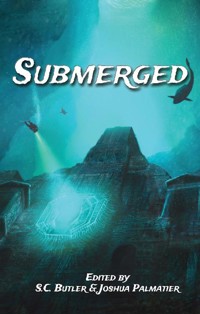
Everyone has their eyes set on the black depths of space…but what about the deep abysses of the ocean? What dark monsters swim unseen beneath the waves? What ancient wonders lie hidden, waiting to be discovered? What sirens call, either here on Earth or in the icy waters of a far off planet…or even at the bottom of a wine glass? So much remains to be explored below the surface, where light fades and the pressure kills. Here are seventeen stories from today's leading science fiction and fantasy authors that take us into those depths, whether we want to or not. Join Seanan McGuire, Michael Robertson, Esther Friesner, F. Brett Cox, Wendy Nikel, Marsheila Rockwell & Jeffrey J. Mariotte, Jody Lynn Nye, Bill Kte'pi, Jenna Rhodes, Susan Jett, James Van Pelt, J.D. Koch, Misty Massey, A. Merc Rustad, David Farland, Sara M. Harvey, and Nicky Drayden as they explore unfathomable trenches, underwater volcanoes, and abyssal plains. Take the plunge…into the Deep End!
Sie lesen das E-Book in den Legimi-Apps auf:
Seitenzahl: 489
Veröffentlichungsjahr: 2017
Ähnliche


















Other Anthologies Edited by:
Patricia Bray & Joshua Palmatier
After Hours: Tales from the Ur-Bar
The Modern Fae’s Guide to Surviving Humanity
Clockwork Universe: Steampunk vs Aliens
Temporally Out of Order
AlienArtifacts
Were-
All Hail Our Robot Conquerors!
Submerged
Edited by
S.C. Butler
Copyright © 2017S.C. Butler, Joshua Palmatier, and Zombies Need Brains LLC
AllRights Reserved
Interior Design (ebook): April Steenburgh
Interior Design (print): C.LennoxGraphics, LLC
Cover Design by C.LennoxGraphics, LLC
Cover Art “Submerged” by Justin Adams
ZNB Book Collectors #8
All characters and events in this book are fictitious.
All resemblance to persons living or dead is coincidental.
The scanning, uploading, and distribution of this book via the Internet or any other means without the permission of the publisher is illegal and punishable by law. Please purchase only authorized electronic editions of this book, and do not participate or encourage electronic piracy of copyrighted material.
Kickstarter Edition Printing, August 2017
First Printing, September 2017
Print ISBN-10:1940709121
Print ISBN-13:978-1940709123
Ebook ISBN-10:194070913X
Ebook ISBN-13:978-1940709130
Copyrights
Introduction copyright © 2017 by S.C. Butler
“Rust in Peace” copyright © 2017 by Seanan McGuire
“Another Dream to Europa” copyright © 2017by
Michael Robertson
“Go with the Flow”copyright © 2017by Esther Friesner
“The Deep End” copyright © 2017by F. Brett Cox
“Through Milkweed and Gloom” copyright © 2017by Wendy Nikel
“Son of Blob” copyright © 2017byMarsheila Rockwell &
Jeffrey J. Mariotte
“Under Pressure” copyright © 2017by Jody Lynn Nye
“The Last of the Real Good Days” copyright © 2017by Bill Kte’pi
“The Windlost” copyright © 2017by Rhondi Salsitz
“Tamatori” copyright © 2017by Susan Jett
“High Sulfur Hot Springs and Camping Park” copyright © 2017by James Van Pelt
“The City Under the Sea” copyright © 2017by Jeanne Cook
“Pen’s Bracer” copyright © 2017by Misty Massey
“Fathoms Deep and Fathoms Cold” copyright © 2017by
A. Merc Rustad
“River ofStars” copyright © 2017by DavidFarland
“The Byssus Woman” copyright © 2017bySara M. Harvey
“The Seven Nights of Squidmas” copyright © 2017by
Nicole Duson
Table of Contents
Introduction by S.C. Butler
“Rust in Peace” by Seanan McGuire
“Another Dream to Europa” by Michael Robertson
“Go With the Flow” by Esther Friesner
“The Deep End” by F. Brett Cox
“Through Milkweed and Gloom” by Wendy Nikel
“Son of Blob” by Marsheila Rockwell & Jeffrey J. Mariotte
“Under Pressure” by Jody Lynn Nye
“The Last of the Real Good Days” by Bill Kte’pi
“The Windlost” by Jenna Rhodes
“Tamatori” by Susan Jett
“High Sulfur Hot Springs and Camping Park” by James Van Pelt
“The City Under the Sea” by J.C. Koch
“Pen’s Bracer” by Misty Massey
“Fathoms Deep and Fathoms Cold” by A. Merc Rustad
”River of Stars” by David Farland
“The Byssus Woman” by Sara M. Harvey
INTRODUCTION
S.C. Butler
From Jonah to Jules Verne, the depths of the oceans have always intrigued us. Whether it’s the nightmares we can’t see—Kraken, Leviathan, Cthulu—or those we sometimes wish we could—Selkies, Mermen, Flipper—the unfathomable trenches and abyssal plains that lie buried beneath three-quarters of the surface of the earth are home to some of the most celebrated inhabitants of our imaginations. Fantasy and science fiction have explored the depths of space countless times, but those nearer unknowns that lie beneath the keels of our ocean liners and canoes, not so much.
Here, then, are seventeen tales of underwater mystery and adventure, from seventeen masters of horror, fantasy, and science fiction. Cringe in terror as you investigate the Love-craftian mysteries of the tenth planet.Laugh (and groan) through the seven days of Squid-mas.Savor sweet revenge from the bottom of your victim’s wineglass.High-five a giant squid, battle nautiluses with underwater magic cowboys, or experience first contact in the frigid depths of Europa.These adventures, and more, await your first plunge into the deep end of…SUBMERGED.
RUST IN PEACE
Seanan McGuire
The body of the ocean liner dominated the ocean floor, a great husk of rot and rust and broken glass. The color of her hull was no longer obvious, obscured by waving strands of opportunistic sea grass and the clinging bodies of the sea stars that had come to hunt and feed. Fish swam through the gashes in the ship’s side, bodies undulating with the current, untroubled by the slow approach of our submersible.
I had never seen anything more beautiful in my life.
“There she is, Dave,” I whispered, unable to keep the awe and delight—and yes, relief—from my voice. “Just where we knew she’d be. There sheis.”
Dave didn’t say anything. He’d always been a careful diver, more aware of his surroundings and the risks that attended them, than anyone else I’ve ever known. This was the man I would trust to ferry me into Hell, if that particular dive ever became necessary. He’d get me through the rivers of molten iron and lava in one piece.
He’d gotten me here.
“TheSendale Star,” I breathed. If Dave tended toward silence, I preferred sound. It was never quiet this far below the sea. The water had weight here, and with weight came a soft but constant susurration, like we were moving through the veins of some great, living beast. I often thought that all the people who scoffed at the idea of “Mother Earth” should be sealed in a fragile metal can and dropped to the bottom of the Pacific, where they could hear the heartbeat around them, the sound of current and tide and living sea.
Of course, they’d probably demand we pave the oceans if we did that to them. Someone who doesn’t want the planet to be alive certainly doesn’t want it to bebiggerthan them.
I put that line of thought brusquely aside. We weren’t here for the living, or for the political. We were here for the dead, and for the biggest infusion of cash our bank accounts would ever see.
“Get us in closer,” I said. Dave answered with a grunt, steering the submersible slowly toward the great rusting bulk of theStar.
Damn, but she was beautiful. Her lines were still as clean as the day she’d been finished, emphasized rather than obscured by the alterations her time in the living sea had made. The absence of paint and polish did nothing to lessen her beauty—if anything, they enhanced it, showing that she was the kind of lady who needed no effort, no artifice, to be beautiful beyond measure.
The hole in her side was a gaping, jagged wound that would never heal. Even after we finished wandering through her bones, learning everything we could, and notified the authorities of her location—earning ourselves a fat finder’s fee in the process, naturally—that hole would remain. She had historical value, not nautical. She’d go to a museum or a lab somewhere, and everything about her would be picked apart and analyzed before she was released to someone who would tear her apart for scrap.
She would sail again. Not as she was now, but reincarnated into a hundred new forms, part of the bones of a hundred new ships. If I thought of it that way, this didn’t feel as much like a betrayal. More like a rebirth. We were going to raise this fallen lady from her watery grave and set her on the waves when we were done, and while she might not be grateful, she would be gracious to the end. I could see it in the proudness of her prow.
“This is as close as I can get without disturbing the ship,” said Dave.
“It’s close enough.” I gazed longingly out the front window at the money, at the history, at the opportunity spread before us on the sea floor, and I smiled. “We come back tomorrow, ready to dive.”
* * *
TheSendale Starwas a luxury liner. Not in the same class as theTitanicor any of those other big, eye-catcher ships: she was smaller, faster, and equally, intensely expensive, even though she was only ever intended to make short hops along the Pacific Coast. She was beautiful, she was exclusive; everything about her screamed “class” to the status-hungry nouveau riche who had come to the golden, hardscrabble shores of California and the Pacific Northwest looking for a fortune and, upon finding it, found no path into the high society they so yearned to enter. To the East Coast, they were new money, little better than the poor.
But theStar…oh, theStardidn’t care about the age of their money, only the color, only the way it glimmered with power and potential when set against the price tag of the world. Better still, theStartook her bookings locally, which meant that if one of those fancy Easterners wanted to go for a ride through the most beautiful waters in the world, gazing out on miles of pristine, exploitable coast, they would have to travel to Vancouver or San Francisco, at no small expense, only to risk finding themselves in a third-class cabin, or worse yet, insteerage. This was something the West Coast’s wealthy could have that their unwilling peers could only dream of.
She sailed the coast four times, down and back, without incident. Maybe the bloom would have been off the rose before too much longer: novelty is in many ways the most expensive thing of all.
On her fifth voyage, a man—Mr. Matthew Alder, of Portland, Oregon—boarded with his family. This was, in and of itself, unremarkable: history would have forgotten him, if not for two things.
The ship was lost, with all hands, somewhere between the ports of Seattle and Vancouver. Despite being an increasingly trafficked stretch of sea, rich with cruise liners and Coast Guard vessels, theStar’s location would remain unknown for decades. The cruise line that had owned her and claimed her as their biggest asset went bankrupt in the aftermath of the disaster, and their records were seized by local authorities, not to be seen until an informant responded positively to the idea of bribery.That’s the first. The second…
When Mr. Alder’s sister came to clean out his home and claim his things, she found a note on the mantle, positioned so anyone who entered the home would be sure to see it. In her brother’s hand, it read only,I am so sorry for what is to follow. Be assured that the damage would have been greater had we not set out to sea.
To this day, no one has known what he meant…and to this day, treasure hunters have been seeking the fallenStar.
Until this day. When we finally found her. Untouched by anything save for the sea that became her grave, waiting for us to come and bring all her sweet and hidden secrets home.
Ours.
* * *
The nice thing about looking for a ship as famous as theStaris that it’s easy to know where not to look. Just go online and look up all the places people have written about going. Then dig a little deeper, and mine the social media of your competitors for references that tie them to a specific place, a specific time. While Dave had been applying his military research skills to going over maritime records and a hundred years of weather reports, I had been chewing on Facebook and Twitter and Reddit, filtering the noise, cross-referencing the “good spots” that people had been hoarding for years while they hunted for that eventual perfect payday.
Treasure hunters love to share our successes. We’re not always so happy to share our failures, reasoning that if we don’t tell the competition where we’ve already been, maybe they’ll waste their time going there just like we did. But then Dave found some current maps that had been adjusted with new data, and I confirmed that no one had yet been to our most likely site, in part because it seemed unrealistic for a ship as large as theStarto wind up in a region defined by little islands and shallow waters, and now here we were. Here we were, on the cusp of changing our lives forever.
My dive suit was skintight and comfortably confining.Some people find them claustrophobic, but I appreciate the way a well-fitted dive suit clings, keeping me from feeling like I’m alone in the open sea. Dave was fiddling with his equipment, checking the wireless feed that would keep my cameras streaming back to our ship. By presenting an unbroken chain of events from the moment we found theStaruntil we came up with the first of our many, many prizes, we could make it more difficult to challenge our claim to be the ones who had located theStar. Always important, especially with a find of this size.
Salvage law stated that, since theStarwas located within three miles of the United States coastline, everything on her belonged to the government. But the find—the prestige and importance of being the first ones to shout “tag, you’re it”—was still a pearl beyond price. We could collect rewards from the surviving relatives of several of the passengers, who had been waiting for decades to know for sure what had happened. We could write our own ticket with burgeoning treasure hunters, who would suddenly see us as the best the sea had to offer.
There is more to wealth than chests of gold and jewels. Although it would have been nice to keep a few of those, if I were being honest.
“All signals strong,” said Dave.
“Awesome,” I replied. “I have enough air on me for an hour, counting descent and ascent, so I’m going to get moving.” Once I was in the water, he would be able to speak to me, thanks to my waterproof ear bud, but I wouldn’t be able to respond. There are things technology has not yet managed to achieve.
Dave frowned.“I wish you weren’t going down there alone.”
“Can’t be helped.”My girlfriend and I had had a parting of the ways six months ago, when she decided that waiting around for me to make the big score was not as useful as moving to Montana and working for an accounting firm. Prior to that, she had been my spotter on dives. Dave was right: it was dangerous for me to go down alone. But by the time Cynthia had left us, we had been so close to theStarthat there hadn’t been time to find a replacement. We couldn’t trust anyone who’d want to join us.
I was good. I was accomplished. I would be fine.
Smiling at Dave, I slipped the mask down over my face and stepped off the deck, plunging into the water. A veil of bubbles accompanied me down, wrapping itself around me like a wedding gown. When it cleared, I turned on my light and began to swim.
Our small submersible was great for scouting runs: with it, we could travel miles along the bottom of the sea, recording and analyzing everything we saw. Sometimes we found things that were of clear scientific interest, and would set those aside until the meat of the dive was done and we were no longer concerned about leading the competition to our location. Most of the time, we saw lots of spectacular fish. That was enough. No one goes into a profession like ours unless they truly love the sea. Although the money, when it happens, doesn’t hurt.
Despite the submersible’s undeniable advantages, there are some things that have to be done by a single diver, alone against the sea. So I swam, the lights attached to my shoulders illuminating the water, until there she was: theStar,resting rusted and lovely on the bottom. I swallowed a sigh of relief and pleasure. Part of me had believed, despite all evidence to the contrary, that theStarwould be gone, or crawling with rival divers, when we came back. She disappeared once before, after all, without a whisper, without a trace. Even this spot…
We followed the weather reports and we followed the last known headings for her position and we followed the rumors and we followed the gossip, and the fact remains that we got here first—us, out of all the people in the world—because we were willing to take the long shot. We were five hundred miles away from where we should be. There was no logical way theStarshould be here, so far from where her course would have seen her go down.
But she was there, and she remained there as I swam toward her, my skin trembling within the confines of my suit. She remained there as I approached the gash in her side, my cameras rolling and my floodlights on, showing me her secrets.
The first secret was enough to make my breath catch in my throat—never a good idea when depending on canned air. The hole in her side was clearly what had taken her down to the depths. Historians had always assumed she hit something, since nothing else explained the disappearance of a ship of her size and status. They’d also assumed the hit had been sudden and catastrophic, since otherwise, she would have had the time to radio for help.
This hole was large enough to qualify as catastrophic, but it wasn’t a tear in her skin, and it wasn’t the punched-in pit of a hard impact. It was a blooming metal flower, the edges curled outward like petals, revealing a tempting glimpse at the secrets hidden within. TheStarhadn’t hit anything.
TheStarhad died of a self-inflicted wound.
The crawling in my skin intensified as I continued forward, careful to turn and give my camera a panoramic view of the scene. TheStarhad been a suicide, whether accidental or intentional. Had this been an act of terrorism? Or had some essential system overloaded and blown, taking her down before anyone could call for help? Neither theory explained how she’d come to rest here, so far from where she should have been, but one mystery had been solved, even if the solution raised a dozen more questions.
I paused at the opening, panning my light around, revealing layers of damaged steel and devastation. My ear piece crackled.
“I don’t think you should go in there,” said Dave’s voice. “It might not be structurally sound.”
I couldn’t answer him, so I held my hand up to the camera and signed, slowly but firmly, ‘No.’
“Come on, Angie. It doesn’t look safe. You need to get away from there. Come back, and we can start checking out the interior later.”
I didn’t bother signing this time. I simply pushed forward, out of the open sea and into the confines of theStar’s hold.The walls closed in around me as my light played across them, revealing their details for the first time in a century.
I swam forward, and all around me, theStarshone.
* * *
Dave met me at the rail when I returned to the ship, a scowl on his face and a towel in his hands. “When I tell you something isn’t safe, you’re supposed to listen,” he snapped. From him, that was a soliloquy worthy of the stage, and I felt a little bad for inspiring it.
Only a little, though. I held up my bag of small treasures, items taken from theStarto prove that we’d been the first to get there, and more, that she really was the vessel we believed her to be. “Sorry,” I said. “You know how I love to shop.”
Dave managed to hold his scowl for a few more seconds before it melted away, replaced by eager greed and a childlike awe. He was here for the score as much as I was. “Show,” he said.
“Aw, did you use up all your pronouns on that little speech?” I asked. I handed him the bag and took the towel. “Give me a minute to dry off, and we can go through the goodies.”
Dave nodded, silent again, and walked with the spoils toward the waiting table.
There are historians who hate people like us, and for good reason: we disrupt the sites we discover in the process of proving that we were the ones who discovered them. They hate the ones like me and Dave a little less, because at least we roll cameras and don’t make off with millions of dollars in gold and diamonds and other valuables, but they still hate us. I can live with that. I hold secrets and answers in my hands every time I do my job right, and that’s worth a little hatred.
Dave was sitting impatiently, his eyes locked on the bag, when I came back, now wearing warm, dry clothes. He looked up at me and grunted. I grinned.
“Good things come to those who wait,” I said, and sat down to begin pulling secrets out of my metaphorical treasure chest.
Historians might hate us, but we were always careful: we only removed the pieces that were unlikely to be damaged by the transitions, and we never broke into air-filled rooms if we had any choice in the matter. Because of the way big ships go down, some compartments can stay sealed for decades, even centuries, and those are the ones with the most historical relevance. I’ve known treasure hunters who traveled with crowbars and small explosives, who didn’t care how much they destroyed in their quest for relevance and riches. We never did that.
One by one, I produced a jar of jam, a few pieces of tarnished silverware, a bottle of wine miraculously unbroken by the blast, a small jewelry box, and—most precious of all—a green glass bottle with a wax stopper jammed firmly into its neck, trapping both air and what looked like a hand-written letter inside. The sea had never been able to break through the wax.
“Why write a letter in a bottle if you know your ship is going down?” I asked philo-sophically.
“Maybe somebody who wished they’d been alive in the age of cellphones.” Dave produced a knife, beginning to slowly run it around the edge of the wax seal. He was easing it open, giving the bottle time to adjust to every change of pressure and temperature.
I should probably have told him to stop, to save this last mystery for the historians who would eventually take this site from us. I did no such thing. My cameras were good enough to have picked up the bottle when I claimed it from the silt clogging theStar’s hall, but not good enough to have seen that it was still air-tight and perfectly sealed. We’d hand over the message and the bottle, and if we chose to be the ones who read it first, who could blame us?
While Dave was distracted with the message, I reached for the jewelry box. It was locked, but time and the sea had had their way with the findings: the lock didn’t give way. The hinges on the box itself did. I flipped the lipopen, peering greedily inside.Some of the pieces I’d seen dredged up from the bottom of the sea had been stunning. Even if the water had been able to rot fabric and thread, people used to sail with all manner of gold and jewels draped around their necks, as if their mere presence on the deck wasn’t enoughto scream that they had money.This box could hold a king’s ransom—
Or it could hold a small brown rock sphere with a long crack down one side, barely revealing the sparkling shapes of the crystals inside. The water had eaten the fabric around it, but left the rock untouched: I had no doubt this thing was as smooth and inexplicable as it had been on the day a rich woman decided arockwas a better accessory for an ocean voyage than all the pearls in Portland.
“What the hell?”I picked up the rock, and nearly dropped it as the skin on my fingertips tingled, suddenly warm despite the chill lingering in the air. I tightened my grip, holding the rock up to the light.It sparkled with microscopic motes of shimmering dust. Still nothing impressive enough to have deserved a place of pride in the jewelry box. “This is bizarre.”
“This is bad.”
I glanced to Dave.He was pale, holding a curled sheet of paper toward me.It was shaking.There wasn’t a wind, and it was shaking.
Hewas shaking.
Wordlessly, I took the papers from his hand with my free one. Our fingertips brushed and that tingle was back, inexplicable and almost hot this time, more intense than it had been before. I set the rock back in its resting place, and I read.
This is my apology to the world. I would that it had been unnecessary: that G_d Almighty, in His wisdom and grace, had not seen fit to place this trial before me. But I am only a man, and I have no influence over the divine, and my time—such as it now is—grows short.
For those who have found this note, if ever it is found: flee this cursed ship. Take nothing, touch nothing, and leave our bones consigned to the deep, where perhaps they can be allowed to rest.
For those whose families set sail with me and mine: I am so very sorry. This was the only way to be sure the foul taint was cleansed from our fair land, and while each death is set upon my shoulders, I assure you that so many more would have died if we had not boarded this vessel. It is as a pebble to a mountain. This may bring you cold comfort, but they did not die in vain.
I glanced up. “What the hell is this?”
“Keep reading,” said Dave, staring fixedly at his fingertips.
I kept reading.
The fallen star was found by my son, Matthew Jr., a day before we were to sail. It had come down on the beach, and he tracked its descent with the bright fierceness that is the sole domain of children. Nothing had ever shone so brightly in his eyes as that star.
I am grateful that it was found, that tragedy was hence averted for the city and country I love. But though the thought may be shameful, I wish it had been found by other hands. That this cruel sacrifice should be placed on other shoulders, and not on mine.
My son is already dead.
“What the fuck.”
“Keep reading.”
The first signs of illness had already appeared, in all of us, when time came to depart for theStar. I left what apologies I could; I bought an extra ticket for my wife’s maid, who thought the ocean air would cure what ailed her. She does not think so any longer, but sees the necessity of what I must do. She has family in Portland. She would keep them safe. Wewillkeep them safe.
The star, if such it is, carries with it more than a taste of the heavens: it carries sickness such as I have never known, sickness such as mortal flesh cannot bear. I have worn gloves to write this missive, and pray only that any who find our grave will find it before they find the star, which cannot be broken, not even with the crushing pistons of our ship’s engine, nor melted, nor destroyed in any earthly way. It is cracked, yes, but I believe that to be by some foul design, for the crack is where the evil escapes.
If you have already seen the star, it is too late for you. Please. I beg of you. Choose as I have chosen, and spare the ones you love by sacrificing yourself. No man is worth the world.
I only wish I could pretend we were.
Signed, in regret, your obedient servant, Matthew Alder.
I turned the letter over in my hand, looking for a postscript—some note on the back that would tell me this was all a joke played by a man on a sinking ship, looking for one last “gotcha” before the waves closed over his head.
There wasn’t one. But there was a purple teardrop sketched across my knuckles, like the flesh there had been somehow terribly bruised. I dropped the letter. Trying not to let my fingers tremble, I brushed them across the damaged skin.
There was no pain. Only a soft squishing sensation as the meat of my hand collapsed inward, revealing the structured scaffolding of the bones beneath.
I made a sound.
“Yeah,” said Dave bleakly. I raised my eyes. He showed me the fingertips of his left hand, where they had brushed against mine. They were the deep, blackened purple of a bruise, and the color was spreading, winding its way up his fingers like water soaking into dampened paper.
“He sank them.” He blew the boiler, or maybe he somehow had access to dynamite and smuggled it aboard. Anything to make sure the ship, once it left harbor, didn’t return. Anything to sink the star, and the plague it had carried, where no one would ever find it, because it was too contagious, and too terrible, and sometimes quarantine isn’t enough. Sometimes quarantine could never be enough.
There was still no pain in my hand. Whatever was eating my flesh was also deadening my nerves. A small blessing, in a day that didn’t contain very many.
“Yeah,” said Dave.
I looked toward the water. I looked at the box that contained the…meteorite? Asteroid? Weapon from beyond the stars? In the end, it didn’t really matter what it was. What mattered was that it had come here, it had fallenhere, and now we all had to live with the consequences.
“At least we solved one last mystery,” I whispered.
“Yeah,” said Dave, and we sat together, and waited to remember how to breathe.
* * *
So here we are. If you’re listening to this, if you’re investigating the latest great maritime disaster—the disappearance of two second-tier treasure hunters and all their very expensive tech—or if you’re investigating something that happened a hundred years ago, congratulations: you’ve found us, and with us, theSendale Star.
Now go away.
We have better than letters in a bottle these days.We have anchored probes and geo-locators, we have cloud storage and the ability to suspend messages until the right conditions are met. Until someone comes too close, more than once, which either means they’re looking for us, or that they’ve already found us. Scavengers always know our own.
Do not dive here. Do not search here. Leave it alone. Leaveusalone. Be a hero by doing nothing, and save the world one more time from a falling star that we were never meant to catch. This is the only wish we have left, and we’re making it on the star that Alder carried to condemn a ship, and we’re making it on theStar, who tried so hard to hide.
This is Angela Madison and David Cooper, of theCatch and Release, signing off and going down with the ship.
End transmission.
ANOTHER DREAM TO EUROPA
Michael Robertson
Do it for the money—that stopped working after the first couple of weeks. Money’s almost as good in saturation diving for the oil rigs.
My butt slides around with the skinsuit’s weird oily smoothness as I rock back and forth on the wooden bench.
Do it so they won’t think you’re scared.
That’s the one I’d been relying on. And it had worked for a good long while, shame giving me enough impulse to rise up off the bench, zip the skinsuit up, and push out that door.
Today the shame doesn’t bother me. Let them think I’m a coward. Maybe I am. Let them get linked up to the dive remote, see how brave they are. Let them stare down the borehole. Let them feel the alien ice crowding on all sides while the winch hums them lower, lower, lower…
I slap myself on both cheeks. Why suffer through it twice?
Do it for the mission? I try that on for size. Thinking of myself as the anchor leg of the relay. Hundreds of women and men spent decades on this. Guiding the payload to Europa. Shepherding the robots as they chewed a base below the surface. All to get the diving mech in place, above a borehole down to that new ocean.
There’s a gentle knock on the door.
“Monsieur Gregory?”
I squeeze my eyes shut. I could quit. They can’t make me get in the tank and uplink to the mech.
Only, I gave my word. Signed on the line. Told them I was their man.
Do it to keep my word.
I stand up. The tile floor feels dry and warm through the skinsuit.
“Coming,” I say, and step out of the door.
Laurent steps back and smiles at me. “Apologies, I do not mean to rush,” he says, and turns to go fiddle with his equipment.
Melanie gives me a small smile, only half-turning from the displays she’s watching.
The tank is a long, low tub with a curved lid. Fluorescent light washes a gleam over the stainless steel rim and refracts through the gel inside, deep blue like the liquid they used to use in diaper commercials to show how absorbent the diaper was.
I’ve avoided learning how any of it works. Like how Vikings didn’t like knowing how to swim. If I knew too much about how I could lie down here and then wake up in a mech on Europa, I’d spend the whole time wondering about what-ifs. What-ifs, and, of course, how-comes, like how come it feels exactly like I’m there even when I know I’m here?
They shave my head clean, slather it with that cold jelly, and fit the interface package over it like a hood. I take the breather mouthpiece in my mouth and bite down, quirk my cheeks around until it’s sitting just right.
My heart speeds up when they seal the envelope around my head, locking the breather and the interface package in place. It must look like a bad fake space helmet from a fifties comic, but I don’t care so long as it keeps me breathing while I float in my gelatinous coffin.
I shiver at that thought. Jeez. No need to make things even worse.
“Uplink is green,” Melanie says. “You may lie down.”
Laurent’s watching my vitals. Maybe that’s why he adds, “When you are ready.”
Melanie glances at him, then back to her displays.
The skinsuit keeps everything feeling warm and dry, so sinking into the gel is like being cradled in a nest of pillows.
Laurent’s blue face leans over above me. He waves his blue hand, then grasps the lid and swings it down. And then it’s dark.
Dreaming is what it’s most like. Once they close that lid I start to doze. A comfortable absence settles on my mind. I don’t think about anything in particular.
Like always, once I’m in, I’m cool. Jitters before? Sometimes. Sometimes even regrets after. Or nightmares. One time I was leading this tour around a shipwreck—I guess every diver works that patch of tropical tourist bullshit. So there I was in Bali taking sunburned old Midwesterners down to the good old shipwreckLiberty, pointing out the swirling jackfish and the anemones and keeping my eyes on all their lines to make sure they didn’t suffocate themselves trying to get good pictures, and this bumphead parrotfish shoots out from behind one of the rusted out sections of the hull, just coming right for my face. Who knows why. Big fish. I don’t react in the moment; they’re not dangerous fish, mostly. And just when it gets close to me, it turns, and I get this momentary flash of its eyeball and that weird, tall face, regarding me, snub beak mouth half open.
That was it. The fish swam off. I kept leading the tour. Surfaced, collected my tips.
But that bumphead followed me into my dreams. Can’t say why. I’ve had sharks give me a once over. Bull shark once even. But that bumphead, well. Even now, more years later than I care to tell you, the odd night I’ll wake up with a flash of that face like a cinder block and that eye peeking out.
Just like waking up: I’m in the white chamber on Europa. Smooth rounded walls like a drained pool, only here they extend over the ceiling in a shallow dome. The black transmission node looks like a turkey popup timer stuck in the ceiling.
I go through the checks: power, uplink, sensors, motors.
Everything checks out. I signal the all clear, like giving a thumbs up in my mind.
Beneath me the hatch starts to slide. A sliver of black appears and grows into a yawning hole underneath me.
The descent begins.
Miraculous. Astonishing. Whatever. I know the engineers blew through a ton of Mountain Dew getting the builder bots to bore the hole. There’s a humming in my bones. It’s like a waterslide, only it takes twenty minutes.
Like every time, submersion is a surprise. Water flows over the mech. Sensors recalibrate, sonar pings. Here at the top of Europa’s ocean it’s like staring down into a flooded cathedral, the sense of a vast roof closing you in.
The armature clunks when it releases the mech and then I’m sinking.
My mission today: scrape some samples from the designated section of the shelf, same as every other dive.
Laurent and Melanie don’t brief me on how the mission is faring compared to what they hoped and I don’t pry into it. Not what I’m paid to think about. But this place is pretty empty.
The ice ceiling extends in every direction, knurled like the underside of pack ice.
It fades as I descend, then I’m in that dark clear place where I know I’m falling, because the instruments are clear on that, but I couldn’t show you one piece of evidence to prove it. Oh, I know the shelf’s down there, it just takes a while to drop nineteen kilometers.
And that’s nothing. Laurent told me parts of Europa’s ocean go down to ninety or so kilometers. They chose this site for its shallow shelf, and they’re still mapping it out, expecting to find an edge.
The floor starts to ghost in. The mech sees it as brown. Who knows what color it really is.
For fourteen dives, that’s been Europa. A white ceiling, then a couple of hours of falling down to a brown floor, and me dutifully extending the collector scraper and gathering smears of mud.
I swipe a sample into one of the specimen trays. Smoky plumes of mud swirl in the currents I’m creating.
Something moves out there.
I go still.
I could review the mech recording to confirm what I think I saw. But I don’t like the idea of taking my attention off my surroundings.
Then I see it again.
It’s moving along the bottom, about a hundred meters away. Slithering and crawling all mixed together. It humps up and then swings pairs of limbs and flattens out.
On the front of its body there’s a dome. Like half of a big melon.
I’m not feeling anything much as I watch this thing, not at first. I’ve seen a lot of creepy crawlies back on earth.
It’ll be a while before Laurent and Melissa even know what I’m seeing, much less have a chance to give me any instructions. But we did cover this: I’m to leave living things alone.
So I stay still.
But this guy is walk-sliding in my direction.
As it comes closer, I make out more details. There’s a loose scarf of tissue hanging under its melon. Like a humpback whale’s throat, for instance. Something that can get big, for swallowing.
I don’t relish that thought, but if it ate this mech, I’d just wake up in the pod back home, whereas swallowing this piece of hardware would probably kill the creature. Sharp edges. Plutonium core.
So I make a small, slow motion. Turn the mech just a bit. Trying to announce my presence.
The creature freezes. Half a second later, it goes hazy, like the mech’s sensors can’t exactly see it any more.
Then it leaps up. It’s blurry now. It spreads its limbs and a membrane stretches between them. The combination—the way its outline wavers and shimmers, and the way it jumped up, and the way its membrane stretches between the curve of its limbs—turns it from a fascinating natural object to a nightmare of the depths.
I get a twisting jolt of pain in my head.
Though I tried to avoid learning how any of this stuff worked, the training did include somekey points. One thing that’s…problematic…is when my brain gets startled and wants to execute some basic, primitive protective behavior. That jolt of pain is what they said that would feel like. My consciousness trying to get out of Dodge.
After hanging there above me for a few seconds, the creature’s membranes ripple and it swims away from me.
I stay still. The creature’s escape has roiled curtains of mud up from the seafloor. I wait for them to settle. Partly trying to calm my mind, partly because I’m trying to analyze what happened. And partly because I’m scared stiff.
On dozens of late-night boats, drinking beer and putting away equipment, I’ve bragged: I don’t get scared on dives. That’s a tourist thing. I’ve got a handful of stories I tell to impress folks about the most embarrassing thing a scared tourist has done on one of my dives. Got a lot of laughs over the years with the story of the guy who crapped himself when a rock he was examining turned out to be an octopus.
The mud has settled. Protocol is clear: get back to the base station and upload. The video and all the other readings have already been transmitted, but for redundancy’s sake the mech needs to get there with its onboard recordings, too.
I check that all the sample containers are shut, and all the scrapers and other probes properly stowed. Running through the routines loosens me up. Helps the fear subside. I lift off of the bottom. A cloud of silty brown spreads out below me.
The sensor package shows the armature hanging up there as a green reticle.
I glance down, worrying that creature could have lingered, could be following.
Since I’m looking down, when the mech slows, I don’t immediately know why. Then I look up and I see, and I get that tingly itchy shock that tells me my mind just tried to wake up.
I’ve run into a net. Some kind of fiber woven into a network of squares, and it’s stretched above me, holding me down.
I flip over and burst downward, then glance behind. If I can see the extent of the net I can sprint out from under it—
I hit another net. The mech shakes. I’m surrounded by net, all around, closing at a point off to one side. Shocks of pain jolt my head in waves.
A shape appears, like one of those Star Trek ships when they turn off the cloaking device.
The sensor package paints this thing a powdery white, shading over to blue in places. Insectile body segments form a meaty chain, and from each segment limbs stick out. Toward the bottom they flatten out like spatulas, but up toward the top they get longer, finer, like a spider’s legs.
It’s using these long limbs to hold the net.
Six of these things float around me, watching me struggle. Some hold the net.
They’ve got similar membranes stretched between their limbs as the creature I ran into earlier, and they use these to stay in place, so it’s like being surrounded by drapes swaying in a light breeze. The net handlers, when they need to maneuver, use their paddle-limbs as well, flicking their tails in a way that reminds me of playful dolphins.
I stop trying to get out.
I allow myself to watch, to record their graceful movements.
They cinch the net around me until I’m bound up tight.
Something birdlike about their heads. As if they were glancing at each other in quick slashes of motion.
One lets a little slack into the net, reaches in, grasps something on the head of the mech, and twists. The scene jerks.
Red indicators flash.
That thing has snapped off the antenna. Comms back to the surface are gone.
It lets the antenna go. Just a spiraling bar of priceless composite disappearing down to the bottom.
Then they start talking to each other.
Not in English, obviously. The sounds they’re making register as spiky waves on the mech’s display. They’re gesturing like my family talking politics at Thanksgiving.
One of them, a big, bulky one like a linebacker, keeps pointing at me.
Another one, longer, keeps swaying side to side. I think of him as Scar from the Lion King, with a sinuous way of moving. I bet whatever he’s saying, it’s convincing.
The way they talk blends together from speaker to speaker. I guess it would have to be that way, the way water carries sound. Would every conversation be like taking your part in one of those songs, those rounds kids sing at school pageants?
They reach a decision.
I don’t understand how, but they unfasten the net almost instantly.
The linebacker grabs the mech in a pair of its segmented arms. Examines me.
Then lets me go.
They fade to shadows and are gone. I don’t mean they swim away. They become transparent.
Meaning, I know they’re still there.
My instinct tells me to play dead. I don’t know if that’s the right thing to do. But my instinct is the only one with any suggestions, so I do what it says. Floating down, down, down through the water.
The mech’s going through its fault-checking routines and its auto-repair procedures. This thing was built with a bunch of redundancies and backups, just like you’d expect for something that cost tens of billions of euros to get in place.
A yellow warning indicator flashes.
The backup comms link could fire off a data burst to the base station link. I’m about to get out of range. And that presents a quandary.
The seconds are counting down.
I could do what’s called an emergency exit, meaning I exit the mech and commence the process of returning to Earth. Wake up from the dream. Only, if I did that, the mech would be difficult or impossible to recover. Without the ability to see the base station, it would not be able to autopilot back. Perhaps, with time, it could repair or reroute systems, or search methodically. The plutonium battery lasts a long time.
Probably it would be correct procedure to exit. But something hangs on my mind. The mech’s got the recording of the conversation, and that kind of data would make the scientists go nuts.
Never in my life, I tell myself, have I bailed on a dive. But that’s not strengthening my resolve.
I think of Melanie and Laurent. Think of them seeing me wake up, or else receiving a set of data on alien communication.
It surprises me to feel generosity welling up. Well, why the fuck not? I’ll wake up anyway. Probably with a blank in my memory where these events should be.
I transmit the recording.
Then I stay very still. The mech descends through black, alien water.
* * *
The way those creatures disappeared, their camouflage, means they could be around right now, watching, waiting. Confirming the mech is dead.
Or they could be long gone, back to wherever they live, to discuss the encounter in more detail.
The mech can run for years. That’s not the problem.
I can’t stay down here for years. It’s been a little less than an hour. The shocking twinges of anxiety are coming faster.
After I heroically sent the recordings, during my descent, it dawned on me that I might have made a mistake.
I have no way to leave the mech now. I’m trapped.
It’s getting harder to ignore thoughts like: Who am I, now, given that they’ve probably woken me up already back in Brussels?
A fragment of a dream?
Another twinge sets the mech quivering. Little curls of fine silt twist up into the water, floating on gentle currents.
I’ve learned a lot today. I thought I never got scared on dives. Turned out, I’d just never been on a dive scary enough. Every set of shakes that jolts the mech pushes me toward an idea. I have to move. I have to get back to the base.
But those things could be there. What if they see me?
That’s a diverting question. The first time, they tore off the antenna and let me go. Why the antenna? I don’t know. If they did track my fall, and if they are watching, what would it reveal if I moved?
They must be making assumptions. Based on their frame of reference. What would it do to one of them, tearing off one of the antennae?
I have no idea. All the theorists and researchers who might be able to answer a question like that are back in Brussels, excitedly texting each other to come in, to look at this new data they just received. I’m just the diver.
Another jolt.
The mech’s sensor package lets me see 360 degrees, all the way around, but I still have to focus my attention, so, even though the mech’s head doesn’t move, I am very much peering around as I draw the mech’s arms up and into the chest. I roll onto my front and push the torso up.
The layer of soft silt is about two inches; beneath that is a thicker mud.
My movement tosses up particles, like swatting a carpet under bright sunlight.
I try to prevent panic from making my motions wild.
With a slow, steady kick of the mech’s tail, I raise the front part out from the bottom. I bring the propellers up slowly. Begin to ascend. Look up.
The base should be a green reticle, far up there, a pinhole in the cathedral ceiling.
Scanning, left, right, up, down. No reticle. I couldn’t have drifted far enough to be out of sight of the hole.
I accelerate. Ascending, I run the mech’s diagnostic program.
The self-repair has been attempting to reconfigure to restore long-range antenna functions. In the midst of such repairs, the entire suite of nav functions is offline.
And could I have found out about this while I was lying on the seafloor? Absolutely. I guess that fearlessness I was so proud of also kept me from learning how to deal with the effects of being afraid. Like its impact on decision making.
Nothing for it now. I keep the props spinning and focus on getting to the ceiling. Maybe the creatures stay near the seafloor.
Minutes pass, with me staring up, waiting for the vaulted dome of ice to ghost in from the darkness up there.
Something flickers off to one side. I snap my attention to it.
One of the creatures becomes visible there, maybe twenty feet away. No, closer. Ten feet. But it’s smaller than the others.
It sings a chirruping line of sounds at me. Its antennae lean together, then twitch out. The gesture looks inquisitive, like it’s raising its eyebrows.
The sample collectors are flat, like butter knives. But butter knives are still knives. I extend them all.
No way I’m letting this one tell its friends about me. I don’t know what they’ll do, but I need to get out of here.
The creature just draws its arms back, all down its long, segmented body. Like a spider would, encountering something unexpected.
Two more shapes flicker, and then there are three creatures. All smaller than the ones I ran into earlier.
So now I’m outnumbered. The only hope is to surprise them, act fast, get one, then maybe sprint up while the other two are confused.
I hesitate. The briefings didn’t go into detail about what to do if one ran into sentient life. Just get away, was the guidance. Bring back the data.
They wouldn’t want me attacking one of the things, though. I’m pretty sure of that.
But I remember lying down there, waiting, unsure what was floating there in the dark. I flex out the sample collectors into claws. Or the nearest I can make them.
One of the creatures, the one on the left, springs jagged mandibles open at the top of its uppermost segment and jets toward me.
The one in the center calmly, but quickly, jets over to block its friend.
They exchange urgent sounds, the water humming and hissing with their conversation.
The center one has that habit of twitching its antennae in toward each other, then out again. So I start thinking of him as Twitchy.
Twitchy makes some sounds at me, then stops. Its friend drifts back, still focused on me, but not making any moves.
Twitchy holds out one of its limbs, a long one with three finer extensions. The same manipulators the ones with the net had used to draw their net closed and to tear out the antenna.
It extends its spiny fingers in a claw, then relaxes and curls them into a fist.
It repeats the gesture.
It waits. Twitch of antennae.
The friend who tried to rush me has plump segments and shorter limbs, so I think of him as Michelin. Michelin screeches out a string of sounds, then rushes me again.
All this time the third one has been silent and still. But it moves now, reaching out to grab hold of a couple of Michelin’s arms. It turns Michelin and holds him.
Twitchy points at my two hands, slowly, and then makes the fist closing gesture.
I withdraw the sample collectors into the mech’s hands.
Twitchy chirps some sounds, then points at the mech, and points up. Antennae twitch.
I point to myself, the mech’s chest, then point up.
Twitchy turns to address its friends, then turns back to me, points at me, then at itself, and then, with two fingers, up.
It jets upward.
I follow.
As we swim up I keep glancing back. Michelin floats rigid, gripped by the third creature’s long spine-like fingers.
The ceiling shades into being above, first like a silk scarf floating on the breeze, then more solidly. Curvaceous swells of ice curl like inverted sand dunes.
Twitchy brings me to the borehole. I grab hold of the armature.
The creature just floats there. Holding the armature releases some of the tension I’ve been feeling.
Twitchy is watching me.
I hold one of the mech’s hands up above my head, extend two sample collectors, spread them apart, then snap them together.
Twitchy starts back, then relaxes. It reaches out two of its spine arms, one on either side, and then extends its manipulator ends out wide, then slowly closes them.
I can’t say anything to it. I don’t even really know what we just said. I climb into the armature, lock in, and begin the ascent.
The ice walls flow by, smooth and cylindrical, the only disturbance the vibration of sliding along the rails.
The armature stops and I’m afraid there’s been a problem until the hatch slides shut beneath me.
I’m here.
I begin the post-dive checks.
I hesitate, worrying about what’ll happen to me if I try to return and they’ve already woken “me” up and taken me out of the tank. Will I dissolve in the tank’s blue gel? Will I be held in some buffer in a computer?
I don’t know. I’ve avoided learning how any of it works.
At least they’ll get the vid of me and Twitchy saluting each other. Something for the scientists to chew on. Maybe I’ll get an honorable mention in the Nobel Prize speech.
Post-dive checks are through.
I hesitate again. Then, like flipping a switch in my mind, I leave.
GO WITH THE FLOW
Esther Friesner
“Honey, is something wrong?” Brent Crawn drew back from the lingering kiss he’d bestowed upon his fiancée, Cecilia. “Your mind’s elsewhere; I can tell. Is that the welcome I deserve when I’ve been away so long? Don’t tell me you’ve found someone else!”
He couldn’t help chucklingsotto voceat that. How could “someone else” hope to compete with whathebrought to the table…and the bed? From one to ten on the Handsome scale, Brent ranked as Wowee and Then Some in the opinion of alotof discerning ladies. Meanwhile, Cecilia’s appearance and mien both could be filed under Oh, Is That You? I Thought You Were a Desk. (It wasn’t a completely accurate assessment: unlike Cecilia, most desks fit insomewhere




