


5,95 €
Mehr erfahren.
- Herausgeber: Zombies Need Brains, LLC
- Kategorie: Fantasy und Science-Fiction
- Sprache: Englisch
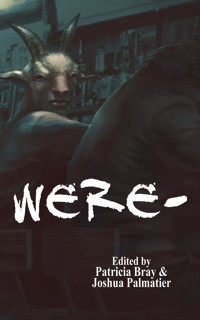
Werewolves rule the night in urban fantasy, but everyone knows there are other were-creatures out there just as dangerous and deadly, if not as common, each with their own issues as they struggle to fit into—or prey upon—society. What about the were-goats? The were-crows and were-wasps? Here are seventeen stories of urban fantasy by today's leading science fiction and fantasy authors that introduce you to some of those other were-creatures, the ones hiding in the dark background shadows, waiting to bite. Join Seanan McGuire, Ashley McConnell, Susan Jett, Eliora Smith, David B. Coe, April Steenburgh, Gini Koch, Mike Barretta, Elizabeth Kite, Danielle Ackley-McPhail, Jean Marie Ward, Katharine Kerr, Sarah Brand, Anneliese Belmond, Faith Hunter, Patricia Bray, and Phyllis Ames as they take you into the hidden corners of our world to see some lesser known were-creatures. You may want to bring along some silver … just in case.
Sie lesen das E-Book in den Legimi-Apps auf:
Seitenzahl: 471
Veröffentlichungsjahr: 2016
Ähnliche












WERE-
Other Anthologies Edited by
Patricia Bray & Joshua Palmatier
After Hours: Tales from the Ur-Bar
The Modern Fae’s Guide to Surviving Humanity
Clockwork Universe: Steampunk vs Aliens
Temporally Out of Order
Alien Artifacts
WERE-
Edited by
Patricia Bray
&
Joshua Palmatier
Zombies Need Brains LLC
www.zombiesneedbrains.com
Copyright © 2016Patricia Bray, Joshua Palmatier, and Zombies Need Brains LLC
All Rights Reserved
Interior Design (ebook): April Steenburgh
Interior Design (print): C.Lennox
Cover Design by C.Lennox
CoverArt “Were-” by Justin Adams
ZNB Book Collectors #7
All characters and events in this book are fictitious.
All resemblance to persons living or dead is coincidental.
The scanning, uploading, and distribution of this book via the Internet or any other means without the permission of the publisher is illegal and punishable by law. Please purchase only authorized electronic editions of this book, and do not participate or encourage electronic piracy of copyrighted material.
Kickstarter Edition Printing, July 2016
First Printing, August 2016
Print ISBN-10: 1940709105
Print ISBN-13: 978-1940709109
Ebook ISBN-10:1940709113
Ebook ISBN-13: 978-1940709116
Printed in the U.S.A.
Copyrights
Introduction copyright © 2016byJoshua Palmatier
“Best In Show” copyright © 2016bySeanan McGuire
“We Dig” copyright © 2016byAshley McConnell
“Eyes Like Pearls” copyright ©2016bySusan Jett
“Among the Grapevines, Growing” copyright © 2016byEliora Smith
“A Party For Bailey”copyright © 2016byDavid B. Coe
“Cry Murder” copyright © 2016byApril Steenburgh
“Missy the Were-Pomeranian vs the Masters of Mediocre Doom”copyright © 2016byJeanne Cook
“Paper Wasp” copyright © 2016byMike Barretta
“Point Five” copyright © 2016byElizabeth Kite
“The Promise of Death”copyright © 2016byDanielleAckley-McPhail
“The Five Bean Solution” copyright © 2016byJean Marie Ward
“Witness Report” copyright © 2016byKatharine Kerr
“Attack of the Were-Zombie Friendship With Benefits”
copyright © 2016bySarah Brand
“The Whale” copyright © 2016byAnneliese Belmond
“Anzu, Duba, Beast” copyright © 2016byFaith Hunter
“Shiftr” copyright © 2016byPatricia Bray
“Sniff For Your Life” copyright © 2016byPhyllis Irene Radford
Table of Contents
Introduction
by Joshua Palmatier
“Best In Show”
by Seanan McGuire
“We Dig”
by Ashley McConnell
“Eyes Like Pearls”
by Susan Jett
“Among the Grapevines, Growing”
by Eliora Smith
“A Party For Bailey”
by David B. Coe
“Cry Murder”
by April Steenburgh
“Missy the Were-Pomeranian vs. the Masters of
Mediocre Doom”
by Gini Koch
“Paper Wasp”
by Mike Barretta
“Point Five”
by Elizabeth Kite
“The Promise of Death”
by Danielle Ackley-McPhail
“The Five Bean Solution”
by Jean Marie Ward
“Witness Report”
by Katharine Kerr
“Attack of the Were-Zombie Friendship With Benefits”
bySarah Brand
“The Whale”
by Anneliese Belmond
“Anzu, Duba, Beast”
by Faith Hunter
“Shiftr”
by Patricia Bray
“Sniff For Your Life”
by Phyllis Ames
About the Authors
About the Editors
Acknowledgments
INTRODUCTION
When Patricia and I sit down at the bar, order our drinks, and begin brainstorming anthology ideas,asdepicted on the cover—I’m the guinea pig, Patricia is the goat—we often get a ton of ideas, none of them good. However, during one such session, we both agreed it would be cool to have an anthology based around the idea of “shifters,” people that could shift into animal forms. But we also agreed that we didn’t want an anthology filled with werewolves. They’vebeen done before, have become a standard trope of urban fantasy, and we’re always more interested in something different, something unique. But how could we get that across to the reader and the writers with the least amount of fuss?
Thus, WERE- was born. It seemed obvious to me that if there were werewolves, then there were likely werelions, weretigers, and werebears out there as well.(Oh my!) Why weren’t we telling their stories?What would those stories be? How would they be different from the standard werewolf story?
As soon as we announced the project, we had authors knocking on our door to participate. The results are the seventeen storiesyou have here, storiesthat take a were-something and tell its tale. We hope you enjoy.
In the meantime, Patricia and I have slipped into our alternate forms, slid onto our barstools, and ordered our next round.It’s time to start brainstorming again.
BEST IN SHOW
Seanan McGuire
The office was dark. Michael had found that the sort of clients who went looking for a private investigator in a strip mall rather than hiring one online wanted that classic Phillip Marlowe vibe as part of the service. They wanted to open the door and feel like they were stepping into a noir movie, complete with leggy dames, liquid lunches, and the threat of being gunned down at any moment.
Michael would have preferred bright lights and an ergonomic desk. But that would have been bad for business, and he liked his job. He liked setting his own hours, and he liked the fact that no two days were the same. If he had to live in the city until he’d saved up enough to buy himself a farm, a degree of enforced noir was a small price to pay for doing it the way he wanted.
Except on days like this one. The couple currently sitting across from him looked like they’d stepped out of a movie, and not one where the heroic detective saved the day with quick thinking and legwork. No, they were from the sort of murder mystery where a little old lady with blue-rinsed hair came along after half the cast was dead, declared that the butler had done it, and went home for tea. The man was tall, thin to the point of verging on cadaverous, and wearing a suit that was easily thirty years out of style, but was still impeccably pressed. The woman was slightly softer, with enough meat on her to keep her skin from actually sticking to her bones, and wearing a sensible pantsuit that was probably pale lavender. Under the dim office lights, it was exactly the color of grave dust.
Michael frowned. “I’m sorry, you want me to do what, exactly?”
“We want you to find proof that the Harrisons are cheating,” said the woman, as if it were the most reasonable thing in the world.
“At cat shows.”
“And dog shows, although that’s less important at the moment.” The man smiled, the smug, self-satisfied expression of someone who had always been able to get what he wanted out of life, and wasn’t intending to change that any time soon. “Westminster is months away. The North American Grand Championship title will be awarded this coming weekend. I’m sure you can see where time is of the essence.”
“Of course,” said Michael slowly. “But if you’re so confident that these people are cheating, why not bring it to the attention of the governing board of your association? I’m sure there are rules.”
“Wehavebrought it to their attention, and they’ve informed us that there are no signs of impropriety,” snapped the woman. “It simply isn’t true. No one has a cat that well-groomed, that well-behaved, and that obedient. Cats aren’t like that. Dogs, maybe—”
“Although even the best dog will act up more than Thea Harrison’s Great Dane,” said the man, cutting her off without a trace of apology. “These people are doingsomething. Witchcraft, robotics, drugs, I don’t know, and I don’t care. It needs to stop. You’re going to find out what it is, and then we’re going to put a stop to it.”
“I’m afraid this isn’t my normal area of expertise,” said Michael carefully. He didn’t like refusing work, and more, he didn’t like refusing work offered by the sort of entitled, arrogant customers who’d think it was completely appropriate to leave him bad reviews on all the website aggregators. Sometimes he thought wistfully about burning Yelp to the ground. Not because the company itself had done anything wrong, but because the mere existence of a public review system had turned the entire world into a baying pack of hostage-takers, willing to dangle a good review or threaten a bad one for the slightest infraction.
“We were told you were the best,” said the woman. She sniffed, gaze turning suddenly sharp. “Were we mis-informed?”
“If you could tell me who referred you—”
“Elizabeth Denkinger.”
Michael frowned. Elizabeth Denkinger had been an embezzlement case: she was a small business owner whose profits had gone into freefall after her new boyfriend’s teenage son had figured out how to access her accounting software. She’d lost the boyfriend but gained a great deal of peace of mind, and a much better safety net, after using Michael’sservices.
“I’m not sure her case relates to yours,” he said.
“Of course it does,” said the man. “Those titles are ours. They’re being stolen from us. Every time we come in second—or worse, fail to place at all—our business is devalued. It’s embezzlement, plain and simple.”
“I see.” If he thought about it that way, he could almost see where they were coming from. And being able to pay his bills would, as always, be a rare thrill. “My usual rates apply.”
“Naturally. We’ve brought the first payment.” The man offered an envelope across the desk.
Michael took it, opened the flap, and looked inside. He managed not to whistle at the figure on the check, instead mustering a professional smile and asking, “Where do you want me to get started?”
* * *
According to his clients—the Sanfords, of the Rhode Island Sanfords, although what East Coast old money was doing in California was anybody’s guess—the Harrisons never appeared together when there was a show. One of them always stayed home with the animals, while the other went to smile at the judges, greet the onlookers, and keep the cats or dogs that they had on display from going completely out of their minds. Because this weekend was a cat show, Nathaniel Harrison would be present, along with a selection of thecouples’ Maine Coon cats…and of course, their three-time International Grand Champion queen, Unto the Maine’s Lady of Shallot, more commonly referred to as “Shelly.” He’d been showing her for nearly five years, and it seemed like there wasn’t a ribbon or award in North America not claimed by that cat.
(That wasn’t quite true. There were awards reserved exclusively for kittens, and Shelly had done her first show as a two-year-old adult. The more Michael read about the dizzying web of rules and regulations governing the world of show cats, the more convinced he became that he wanted absolutely nothing to do with it.)
Getting into the show was easy. Michael paid his forty dollars at the door, electing against the upgraded eighty dollar ticket that would have come with a goodie bag and early access to the judging rings, and he was in. The woman in charge of taking his money smiled as she affixed a plastic band to his wrist, dropping her voice to a conspiratorial whisper as she said, “You made the right choice. I’m supposed to upsell you, but we’ve sold so damn many ‘VIP’ bands that it won’t make any difference at this point. Save your money, get yourself something nice.”
“Thank you for the advice,” he said, with a polite nod. “Do you think you could point me in the right direction? My sweetie’s been asking about getting a Maine Coon, and I thought I’d come and have a look at the local breeders.”
“Oh, you’ll want aisle six in the main show room.” The woman beamed, bright as a fluorescent bulb. “There are some incredible cats there. Wonderful bloodlines on display. I’m sure you’ll find what you’re looking for.”
“I hope so.”
That had been a good fifteen minutes ago. When he’d been approaching the cat show, he had expected this to be an easy assignment. Get in, find the Harrisons, take some pictures, maybe ask a few pointed questions about whether anyone other than his clients felt the couple cheated. Instead, he’d found himself wandering through a maze of makeshift rows formed from folding tables, collapsible cat cages, and portable awnings that wouldn’t have looked out of place in a flea market or Renaissance Fair. There were vendors selling cat-themed merchandise everywhere he looked, their products ranging from sweaters and embroidered pillows to portraits of your pet painted while you wait.
And of course, there were the cats. Everywhere cats. So many cats. Most of the fancy awnings belonged to the breeders, creating little enclaves of cat-dom where a single expression of a single breed could reign supreme. Fluffy cats, naked cats, big cats, little cats, cats, cats,cats. More cats than Michael had ever seen in his life. More types of cat than he had been awareexisted.
He stopped in front of a sign proclaiming “FairyTail Siamese: We Put the Wow Back in Meow.” There was a woman in the booth on the other side of the sign, dangling a feather on a string above a playpen filled with Siamese kittens. They were mostly snowy white at this age, with sooty paws and noses. Michael wasn’t sure he’d ever seen anything more adorable, and was equally sure that there would be something twice as cute on the next aisle. Which was why he needed to get out of here. He was going to suffer permanent cuteness overload if he didn’t.
“Excuse me, ma’am?” he said.
The woman looked up and smiled, dazzlingly bright. She had the sort of teeth that really qualified more as an investment, white and straight and perfectly aligned. Michael fought the urge to shy back from the glare.
“Yes?”
“Can you tell me how to find the Maine Coons? I thought it was going to be simple, but all of this,” he waved his hands vaguely, “is more complex than I’d expected.”
The woman’s expression softened, the frighteningly white teeth vanishing behind expertly painted lips. “Oh, you poor dear,” she said. “First cat show?”
“Yes, ma’am.”
“Go to the end of the row. Make a left at the kiosk selling catnip tea, go down two aisles, and turn right. You’ll come to the Maine Coons. Although if you’re here because you’re looking for the perfect cat for your lifestyle, may I suggest the Siamese? You look like an active fellow. Maine Coons need a lot of brushing, on a daily basis, and they won’t appreciate it if you need to leave the house for work. A Siamese, on the other hand, will be a devoted companion who understands that sometimes you need your own space. The best of all possible worlds.”
“I’ll take that under advisement, ma’am,” he said. “Thank you for the directions.”
“Think nothing of it,” she said, and went back to dangling the feather over her bushel of kittens. They jumped and swatted, tempting in every possible way, and Michael found himself thinking about how nice it would be to have a cat at home.
No,he silently scolded.Bad.He had a job to do, and besides, white cat hairs on a black duster didn’t really go with the “big, bad noir detective” reputation he was trying to cultivate. It might be attractive to a very specific sort of clientele…but working for those people might wind up dumping him in more situations like this one, where he was expected to prove cheating by a cat. Could cats even cheat? Most of the cats he knew spent their time sleeping in the sun and complaining about the state of their food dishes. Not much cheating there.
The woman’s directions were good: in no time at all, he found himself walking down an aisle filled with the sort of cats that weren’t actually supposed to exist outside of horror movies. The smallest one in sight had to weigh at least fifteen pounds, making it look more like a long-tailed bobcat than anything that belonged in a private home, and according to the tag on its cage, it was competing in the kitten category. Thekittencategory.
“If that’s a kitten, I’m the Queen of Denmark,” he muttered, staring at the cat. The cat stared back with unnervingly pumpkin-colored eyes and licked its lips, like it was considering what a private investigator casserole would taste like.
“I assure you, that’s a kitten, Your Majesty,” said a friendly voice.
Michael looked away from the cat to find himself facing a tall, slender man cast in varying shades of brown, from tawny skin to chestnut hair, with eyes that were somewhere in the middle. He swallowed, hoping the action would be enough to keep him from flushing. It wasn’t fair how people were allowed to wander around being so damned attractive all the time.
“It’s enormous,” said Michael.
“Yes, she is,” said the man. He cast a fond look at the cage. The kitten, in turn, looked up at him and made an odd chirping noise. “This is Unto the Maine’s Sweet Lady May. She’s on the track to place this show, which would be lovely for both of us. I assume you’re here because you want to see Shelly?”
It took Michael a moment to remember that “Shelly” was the name of the cat he was supposedly here to spy on. He still didn’t know how a cat could cheat. He also, upon some minor reflection, didn’t know why this man was offering to show her to him.
“How did you know?” he asked.
The man grinned. “Because everyone is here to see Unto the Maine’s Lady of Shallot. I could come with just her, and she’d still have admirers dropping by every five minutes to ooh and aah over her. It’s giving her a swelled head, if you ask me, but what do I know? I’m just the human who changes her litterbox. I’m Nathaniel Harrison, by the way. I assume you have a name, apart from your royal title?”
Michael blinked at him for a moment before he remembered his comment about being the Queen of Denmark. This time, he couldn’t keep his cheeks from turning red. “I mostly try to keep a low profile on the whole ‘royalty’ thing,” he said, as solemnly as he could. “You can call me Michael.”
“Well, Michael, what’s your interest in the Maine Coon?”
That wasn’t a question he’d been anticipating. Michael froze before blurting the first thing that came into his head: “They’rehuge! I didn’t know domestic cats could be this big. It’s amazing.”
“Ah. ‘Huge’ and ‘amazing’ are both accurate descriptors for the Maine Coon or, as some more old-school aficionados call it, ‘that Yankee cat.’ Come with me.” Nathaniel stepped back, fading into the stall and leaving Michael with little choice but to follow him.
Unto the Maine had one of the simpler setups in this area: it was just Nathaniel, a single chair behind a low table, and the cats. Three kittens, three adults. The adults were big enough to make the kittens seem like they were actually to scale. The adults...
Michael had been more right than he knew when he’d looked at Sweet Lady May and declared Maine Coons to be huge. The adults were at least four times her size, still proportionate to themselves; they looked more like longhaired bobcats with raccoon tails than domestic cats.
“May I introduce my pride and joy, Unto the Maine’s Lady of Shallot.” Nathaniel gestured grandly toward the largest cat, a smoky gray tabby with hints of orange. “I’m afraid I can’t ask if you’d like to hold her, for health reasons—hers, not yours, although she might scratch you if you’re as bad at holding cats as you look—but I can answer any questions you have, and I’m happy to brush her if you want to see whether her color comes off.”
Michael blinked. Nathaniel smirked.
“Oh, come now. I appreciate that the Sanfords have at least gone outside the cat show community for their latest spy, but you couldn’t be more out of place if you were carrying a large sign that read ‘I have been hired to poke my nose into your business, please show me your secrets.’ We have nothing to hide. Shelly is exactly as she appears. I can’t blame you for taking a job—one assumes you need to make a living like everyone else—and you haven’t done anything truly offensive as yet. That doesn’t mean you won’t.”
Michael’s cheeks flushed red again, this time with mortification. “I’d try to tell you that they have honest concerns, but really, I can’t,” he said. “They just sounded like sore losers to me. Sore losers who’d been referred to me by a good client, which means I have to at least pretend to take them seriously. Like you say, I need to make a living like everyone else.”
Unto the Maine’s Lady of Shallot made a squeaking noise that wasn’t quite a meow and wasn’t quite a warble. Michael stared at her.
“I think your cat is malfunctioning.”
“No, that’s what a Maine Coon is meant to sound like,” said Nathaniel. “Look. I have to get Sweet Lady May to judging, and Shelly is up this afternoon. I don’t mind your spying on us as much as I probably should, but I don’t have time for it right now. How do you feel about coming by the house early next week? We can show you around the property, and you can make up your mind for yourself?”
Michael thought about it for less than thirty seconds. “Absolutely,” he said. “Just give me the address.”
Nathaniel smiled.
* * *
The Harrisons lived almost an hour’s drive outside of city limits. Michael drove down a series of increasingly rural roads with the windows of his car rolled all the way down, breathing in the scent of green growing things and unprocessed air. People who’d seen his office tended to assume that he didn’t care for sunlight. The reality was that he didn’t likecitysunlight.It was too sterile, too…stale after being filtered through windows and crammed into the spaces between buildings. He’d rather sit in the dark than stand in city sun. But this, this was sun the way it was meant to be, clean and unfettered and falling on the grassy fields to either side without anything to slow it down.
The urge to pull over, climb over a fence, and run was remarkably strong. Michael forced himself to keep on going. Running around in other people’s fields was a good way to get arrested, andnota good way to do his job.
Maybe later. On the way home.
The Harrisons lived in a converted farmhouse surrounded by a perfectly cliché white picket fence. There was what looked like a barn out back, and several large dogs playing in the field, which had an equally traditional, if less suburban cattle fence around it. Michael parked behind the single car that was in the driveway, wiping his hands nervously against his jeans, and went to ring the doorbell.
The door opened. A woman with ashy blonde hair smiled at him through the screen, saying, “You must be Michael. Nathaniel told me you’d be dropping by today. Please, come in.” She opened the screen door. “I hope you don’t mind dogs.”
“No, ma’am, although sometimes they mind me.” Michael stepped into the front room. It was as traditional as the yard: floral couch, bookshelves, television neatly tucked away in an antique wood cabinet. It looked almost fake, like it had been copied out of a magazine. Only the battered cat tree in one corner made it feel like a real place. There was a cat curled there, massive and orange and fluffy.
Ms. Harrison’s eyes narrowed. “Dogs don’t like you?”
“Some do. I guess I’ve just been around a lot of, you know.” He gestured helplessly with his hands. “Small dogs. They get skittish when there are new people around.”
“Oh.” She smiled, looking relieved. “Small dogs aren’t going to be an issue here. I’m Thea. It’s a pleasure to meet you. Why don’t you come with?” She turned and walked out of the room, heading down a short hall to the kitchen. Michael followed.
The impression that the front room wasn’t real was just reinforced by the kitchen, which wassoreal that it could have made anything seem artificial. There was a large dining table, piled high with paperwork and with cats; Michael could see three of them sleeping among the paperwork, including Sweet Lady May, who was sprawled on her back with her belly exposed to the ceiling. A pair of braided rag rugs blunted the hardwood floor, and the appliances, while all reasonably modern, were clearly well-used.
There was also a dog, a Great Dane the size of a small pony, with dark brown fur, sleeping in the middle of the larger of the two rugs. Fiona stopped, giving it a fondly exasperated look.
“May I introduce Unto the Maine’s Sketchy Character—we call him ‘Stretch.’ I’m assuming that when the Sanfords hired you, they mentioned that we also show dogs?”
Michael nodded.
“I mostly handle preparing and showing the Great Danes. Stretch here has taken three Grand Championships, and he’s gearing up for a fourth. Great Danes are relatively mellow dogs, which makes them a good match for Maine Coon cats. They just get on with things. Unlike the Sanfords, who essentially embody the concept of the little yappy dog. They’d bite the ankles of the universe if they thought it would get them something.”
“I don’t have any trouble picturing that, ma’am,” said Michael. He crouched down, looking at the Great Dane. “You don’t do anything by halves, do you? Giant cats, giant dogs. It’s all big around here.”
“We enjoy sturdy things.”
Michael looked at the dog for a few more seconds, taking in the shape of its bones, the angles of its long face. Then he whistled softly. The dog opened its eyes.
“Huh,” said Michael. He stood, turning back to Fiona. “Where’s Mr. Harrison, ma’am?”
“He couldn’t be here today.”
“So he’s out?”
“That’s what I said, isn’t it?”
“No, ma’am, it isn’t, quite. I was just wondering, you see, if he messed up his count when he asked if I wanted to come for a visit. I’m guessing he’s a quarter-moon type of guy, since I assume he’d be on two legs right now if he could.”
Fiona blinked. There was a low growl from behind him. The dog was up, then. Good: this was always easier if everyone heard it at the same time.
“I wasn’t sure,” he said apologetically. “I mean, it seemed odd that you would show both cats and dogs, but I don’t know much about the show world. It could have been perfectly normal. So I did a little digging. You came out of nowhere, the pair of you, with the best cat and the best dog anyone had seen in years. No kitten or puppy pictures, though. It was like you’d just found them. No one’s ever seen a picture of the four of you, or of you with Lady of Shallot, or Nathaniel with Sketchy Character. You don’t breed them. You don’t appear with them. You missed a cat show last year when it fell on the quarter-moon. Do you not have a backup handler for when Nathaniel isn’t available?”
Fiona said nothing. Her eyes blazed hatred. That was answer enough.
There was a bump as Sketchy Character—Nathaniel’s—nose hit the back of Michael’s knees. Michael smiled a little. “I guess the logical thing here is for one of you to bite me. Can’t give you away if I’m one of you. There’s just one problem.”
“What’s that?” asked Fiona, through gritted teeth.
“It won’t work.”
“I assure you.” She smiled. There was nothing pleasant about it. “It will work just fine.”
“No, it won’t.” He held up his hand. How he hated this part. Only going partway was like thinking about masturbating: frustrating and ultimately fruitless. But it was what had to happen next. He concentrated.
The skin of his hand rippled, darkened, and began to spread, first fusing his fingers into a single mass, and then pulling back as his nails became thick and pink, expanding into a hoof. A few wispy strands of fur accompanied the change, but it stopped short of becoming true fur: if he let it go that far, he’d burst his clothes, and pants weren’t cheap.
“You can’t infect another therianthrope, ma’am,” he said, still apologetic.
Fiona stared. “You’re ahorse,” she said.
“Yes, ma’am.”
“They…those fools hired a werehorse to figure out whether we were cheating. Awerehorse. What are the odds?”
“I don’t know, ma’am.” He shrugged. “There are four P.I.s working that beat, so I suppose one in four.” His hoof rippled, melting back into a hand. He grimaced. “Wow, that itches.”
Fiona’s stare softened. “You poor thing,” she said. “You live in the city, don’t you?”
“Yes, ma’am.”
“When’s the last time you really got to run?”
Michael blinked at her before slowly, shyly, beginning to smile.
* * *
Some people were surprised when Unto the Maine expanded to begin showing Friesian horses alongside the dogs and cats they already had. Others felt it was a good thing: that sort of overreach would inevitably result in their quality slipping and other people being able to snatch up the prizes that were rightfully theirs. No one was quite sure what the relationship was between the Harrisons and their new live-in trainer, Michael Collins, but the three were thick as thieves. Michael took over the cat shows, while Fiona continued to show the dogs, and Nathaniel showed the horses.
No matter the phase of the moon, they never missed another competition. And if some people swore they’d seen a black Friesian racing around the Harrisons’ farm with a blue tabby Maine Coon clinging to its saddle and a brown Great Dane running at its heels, well, fresh country air can be intoxicating to those who aren’t accustomed to it.
WE DIG
Ashley McConnell
They felt the rumble first, a rise and fall like an ocean wave carrying them up and then down again, as if earth had momentarily become sea. Men’s eyes looked up from their breakfast eggs and met their wives’, and then went back to their plates. Forks scraped up the last bits just a little more quickly, and the women went out for water without saying anything. It might, after all, have been a planned detonation.
The church bells started tolling as the men were coming out of their homes, carrying their lunch boxes, kissing their wives goodbye. The sound froze them all in their tracks, as one and all they turned to look up at the hills around the town of Silverfield, seeking the column of smoke that had to be there.
The bells did not stop. The men shook themselves, started for the square between the church and the town hall, while their women and children clung to the doorways or windowsills, staring at the smoke, brown and gray against the blue sky.
A horseman came down the hill in a lathered gallop, shoving through the men, and the bells kept on tolling, tolling as they gathered, watching him spin the horse around, stand in his stirrups and wave frantically at the bell tower. It was not until all the men had gathered that the bells stopped.
“Half a dozen, I think,” he gasped. “In the Tolliver. We need…diggers.”
“What happened?” came a voice from the back of the crowd.
The man shook his head and licked his lips, trying to find enough moisture and air to answer. “Bad blast,” was all he said.
A mutter ran through the crowd: “Third time in six months!” Still, several men shouldered their way to the front, yelled for horses. Others did not wait, but started up the road, up the hill, toward the column of black smoke smeared against the blue sky.
By the time they made it to the mine head, at least twenty Flickers had joined the group and gathered in the open space before it. A frame office building stood perpendicular to the abrupt slope of the hill; across from it a sorting warehouse was open to the winds, and in front of it a set of railroad tracks ran into the mine. The entrance to the Tolliver mine shaft itself was a large hole, a black, forbidding square perhaps twice the height of a tall man framed by rough, squared-off timbers. Dust still hung in the air before the opening.
Next to the shaft was a tumble of huge rocks, waste from the excavation. On one of them, five men stood, arguing among themselves. Finally one of the foremen stood forth from the rest, his forehead creased, his face pale. “All right,” he said, raising his voice over the general mutters. “What do we have here? Diggers?”
“Macaque!” one man said indignantly.
“Pangolin,” Smetse—Smitty to his friends—Katangazu said, raising one hand.
“Moles,” chorused half a dozen others, squinting against the light.
“Armadillo,” another called from the back of the crowd.
“Fox!” someone yelped.
“Where thehelldid we find a pangolin?” the foreman muttered to himself. “Never mind. Where’s Tom Mitchell?”
“Here.” Tom came up from the back of the crowd and elbowed his way through to the front. “What have you got, MacDougal? What happened here?” He was a relatively short man, grizzled hair at his temples, even though he was a young man, not yet twenty-five, with dark hair and dark, dark eyes, wide shoulders, powerful arms. He walked with his chin thrust forward, as if daring anyone to take a swing at him. His clothes were the same as the rest of the diggers’: worn jeans and short boots, stained cotton shirt. The crowd of diggers made way for him as if it was his right.
MacDougal tugged on his suspenders—a nervous habit that had long since resulted in suspenders stretched out beyond any use for holding up his trousers, leaving them sagging on one side. “Blest if I know. Far as I can tell, some charges went off when they weren’t supposed to, and we had half a shift down there. We got six out, but there are six more, near as we can tell, behind the collapse. We need to dig them out, boys.”
Another man, standing behind him, stepped forward. He was tall, red-haired, dressed noticeably better than the men he looked down on, in a clean, if dusty, coat with good trousers, and diamond links for his sleeves.
“We’ve got to clear that tunnel,” he said. “I’m paying you men good money to get in there and get it done.”
They stared at him. Gillings was a Still, one of those who didn’t change, had no second soul. He made no secret of the fact that he thought that made him superior to those who Flickered between one phase and the other. He was not well liked. He also owned the mine.
“That’s suicide,” one of the moles said. “You’ve got a blast, no way to know what supports are still good, no way to know what else is going off? Just like the last time and the time before that?”
“Yeah,” Tom said, lowering his head and glaring at the mole under knitted brows. “And if it’s younexttime? I’ll do it.”
“Damn badgers,” someone muttered. “More teeth than brains.”
Tom smiled, showing teeth. The crowd jostled back a half step, starting with the moles. “I’m going for it. Who’s with me?”
“I’ll go,” Smitty said.
“And I.” “I’m with you.” “I’ll go.”
MacDougal nodded, clear relief washing the worry from his expression for at least a few seconds. “That’s good. Good. Look, boys, sign up before you go change, so Mr. Gillings here will have a record—“
“Because he has to have a record of every breath we take, in case we inhale some silver in his mine,” someone shouted from the back. Gillings’ head jerked up, and he stared at the crowd of diggers, looking for the speaker. The crowd stared back at him, sullen.
“What are the chances there’s anybody alive in there, really?” Mitchell asked. He had jumped up on the rock beside MacDougall and Gillings, brushing his hands together as if to get the dust off, and lowered his voice. “Why do you think they’re alive?”
“I heard them,” said another man at the foot of the rock, craning his neck to look up at them. His face and one leg were soaked in blood. “The roof came down right in front of us, but we could hear screaming. We were down the main shaft, past the store rooms, right where it branches. There’s a good vein there.”
“So what happened?”
The man shrugged and winced, putting one hand against the platform rock as he staggered. “We were setting charges. Mikey, he said he thought they were greasy, but—”
“It couldn’t be,” Gillings said. “I knew we were opening up a new shaft. New equipment, new everything. Somebody made a mistake. Somebody lit a short fuse.”
MacDougal shook his head. “Look, boys, there are six men still in there. The reason why doesn’t matter. Can we go get them? Now?”
Tom Mitchell looked at him consideringly. “It matters if it means there’s going to be another explosion that will take the rest of us out, yeah.” The Flickers behind him nodded, and a few yells of agreement echoed. “But you’re right. If someone’s still alive down there, we’re going to try to get them out.” He jumped down from the rock and started up the slope to the hole in the side of the hill. The other diggers looked at each other, shrugged, and followed. Behind them, MacDougal waved papers. They ignored him.
The first few yards past the timbers were illuminated by the sunlight through the opening, and their shadows stretched before them. When the shadows disappeared, they turned as a group into a small room carved into the guts of the hillside. There was barely light at all, as if light was only a memory from the outside.
They stripped, bundled their clothing in careful piles against the wall, and Flicked. In one instant they were men, scruffy, muscular, poor. In the time it took to look away and back again—in the Flick of an eye—they were not men any more. Not, at least, in shape.
The mine Flickers shook themselves and looked around the darkness, and a chorus of snorts and sniffs filled the space around them as they oriented themselves by smell. Tom Mitchell growled low as someone brushed by him—Smitty, by the feel of the scales that covered his body. The scent only confirmed it.
He could smell the moles, clustered together in a corner as far from him as he could get, and the human still within him grinned without humor. Badgers ate moles. Flickers didn’t eat each other—generally speaking—but the animals remembered. Tom wasn’t planning on eating anyone today, but the moles’ caution still amused him. The same magic that gave him, as a man, the proportionate strength of a badger—as well as the short temper, aggression, and weak eyesight—gave him a man’s ability to think, to reason, in his animal form. He was never one or the other, but always both.
Whelford was the macaque. Almost useless, really, in mines, but he did have one gross advantage over the rest of them: he still had hands. He also had a monkey sense of humor, and Tom found himself being used as a springboard as Whelford leaped from the floor, to Tom’s back, to a shelf above their heads. For a blind leap, it wasn’t that much of a risk; he’d done it before, knew what was stored there, and like the rest of them had been there before with a lamp.
And therewasa lamp on the shelf. Whelford brought it to the floor, fumbled with a match, and lit it. His job was to carry it down the shaft, hang it on a hook, and then leave. The single flame would provide enough light for the moles, who were nearly blind anyway, and the badgers, and the rest of the diggers to see where they were going, and more importantly, the way back out.
Tom let Whelford scamper well ahead before padding out of the change room, Smitty at his side. He couldn’t smell gas, and the flame should be safe enough, but he didn’t like fire, and he liked it less in fur form. They passed several more rooms, used to store carts, tools for the Stills—the ones who couldn’t change—and crates of explosives. Tom paused to look inside, sniffing deeply of the scent of dirt, explosive, wood, primer cord, the scent of the men who had carried the boxes here.
Smitty snorted and shouldered past, his long tongue touching here and there across the crates. Whelford, insatiably curious, came back to see what they were looking at, but there was nothing, nothing but the skittering of long gray insects across the crates. Smitty caught up a half dozen on a long, flexible tongue. The labels, with their large red warning text, were relatively bright against the wood, even in the impossibly dim light from the lantern. Tom snarled, and Whelford scampered away. Reluctantly, Smitty turned back to go with him down the shaft, wobbling a bit as he went. Pangolins walked on their foreclaws, huge and curved and impossibly sharp. Tom’s claws, by comparison, merely scarred the dirt and rock floor, a mixture of earth, rock, and guano under their paws. All the bats had fled when the collapse had started. The path sloped gently, and then not so gently, downward into the earth.
With a happy chirp, Whelford hung the lamp from a hook and took down another waiting in a niche beside it and continued leading them downward into the dark. They followed the railroad tracks laid down for ore carts until they veered away down the tunnel and a new hole appeared. This one was round, rough, without the relatively smooth finished sides of the mine shaft; rock outcrops jutted up from the ground and hung down from the ceiling. The scent trail said that miners had gone this way.
New lamp niches appeared every twenty feet, leaving tiny flames to provide more hope than illumination, marking support beams that grew shorter and shorter as the tunnel narrowed. TheTollivermine contained mainly silver, with some gold, zinc, lead, and even an occasional turquoise outcrop. The group of Flickers straggled into single file, ducking under outcrops that hung down from the ceiling, scrambling over knots of rock that had been too hard and too unproductive to bother removing from the floor. Three niches down, the macaque stopped and chittered. The shaft before them was completely blocked, with support beams sagging and splintered across boulders bigger than any one of them, and a fan of dirt poured out at their feet. As they surveyed the damage, the pile shuddered. More rocks fell, and more earth whispered down the sides of the tunnel. Whelford squeakedagain, set down his lamp, and scampered back up the tunnel. The opening before the rock fall was too low for a human form to stand comfortably, even one as short as most of them were.
The moles moved up, with nearly supersonic squeaks, and Mitchell snarled. One turned blindly toward him, still squeaking, and he reached out with a casual paw and batted it against the far wall of the tunnel. Every Flicker froze in place.
Mitchell listened.
A badger can hear the sound of an earthworm moving, smell the memory of a prairie dog’s passing. A Flicker could do that, and more. He could hear the air moving in and out of the lungs of the Flickers around him, the tiny, uncontrolled moan of the mole whose leg had been broken by his blow, and taste their fear in the air. He could hear the shifting of the earth above him, before him. He could smell, through layers of rock and dirt, blood and death and the stink of explosives. Stretching up on four short legs, he raised his head and focused on the rock fall before him. Next to him, Jerry’s long, wide ears swiveled forward to scoop sound out of the air.
When he had heard enough, he Flicked back into human form, coughed once to clear dust from his lungs. “I hear them,” he said. “Moles, take your friend back up and have him looked at. Next time,” he snarled at the protesting moles, “shut the hell up when you’re told to. Now move. Jerry and I will start here. Send us some Stills to move earth.”
One of the moles Flicked, hunched over in his human form, and spat on the ground between them. “We can help,” he said. “They’re our people, too. Even if they are Stills, they’re miners.”
Mitchell’s face twisted, as if to issue a snarl more suited to his other form, and then took a deep breath and let it go instead. “Allright,” he said. “But take care of him first.” He looked the injured Flicker in the face. “I’m sorry.”
The tiny, blind eyes blinked, as if in surprise. His human-form kin picked him up, carefully, and started back up the tunnel, bent double with the mole tucked against his chest. The rest of the moles gathered, shoulder to shoulder, and settled in, oozing stubbornness.
“I’m going up to the top of the slide,” Mitchell said. “I’ll let you know if—when—I need you.” There was general grumbling, but they kept it quiet, and Mitchell Flicked into his badger form. His real form, the form where he could breathe and move and dig.
He sniffed at the pile of dirt and rocks, then swarmed up the slope, ignoring the way the rock fall slid and shifted under his paws. In this form, he weighed only about thirty pounds, and it wasn’t enough to move the bigger boulders.
The ground wouldn’t stay still, though. He had to scramble to stay in place, get to a rock that would hold long enough for him to sniff deep at the place where the ceiling had given way. The Flickers below and behind him were silent. Silent as the tomb, he thought, and his lip curled, showing fangs. Some jokes weren’t so funny. Tombs were only supposed to be six feet deep.
Poised at the top of the collapse, he reached out one paw to test the consistency of the dirt, and snarled to himself. There wasn’t room for him to Flick back, not up here, and he’d wind up sliding all the way to the bottom and bringing more of the ceiling with him if he tried. He couldn’t talk in this form, and he really wanted Jerry’s claws right now to rip into the dirt and rock.
But he’d Flicked, he’d climbed, and now—he stretched out his front paws, armed with five long flat claws each, four of which were two inches long, and he took hold of the earth, and he began to dig.
His front feet scooped out the dirt, while his back feet shoved it clear behind him. In the right dirt, a badger could dig faster than a man with a shovel, and no man with a shovel could get in the places he could go. He could hear the Flickers below him chittering and talking—some of them must have Flicked back—but that didn’t matter now. What mattered was the movement, the resistance of the earth, the eagerness with which he sank into it, swimming through it, snarling as he hit rock, shaking dirt from his nose, digging deeper and deeper toward the voices and the howls and cries he could hear on the other side of the earth.
He could feel the earth pressing down against his back as he clawed at it. To either side he could feel the heat of other bodies that had followed him up the slope of the rock fall and were digging as well.
The ground shifted under his paws, and he stopped and growled a warning. Around him, the others stopped too, waiting for Earth to decide whether it would bury them today.
As they waited, Earth shuddered, and they could hear the frightened cries from the other side of the rock fall clearly now. They were close, close enough that the smell of blood and terror of the trapped Stills—all of the living ones Stills, according to his nose—filled his nostrils, and Mitchell reached farther, harder, to pull away the rock and grit separating them from him.
Off to one side a Flicked fox yelped as rock tumbled and slid. Mitchell forced himself to slow down. They didn’t have to remove the entire fall, only enough to allow the trapped men to get through. Behind him he could hear voices of Flickers in human form, talking about stretchers. He felt a shiver in the fur of his left foreleg, reached over, and snapped. A spasmodic quiver of life and blood between his teeth told him it was a mouse, and he swallowed without pausing in the steady reach, claw, swing back, shove rhythm of his excavation. His paws were bleeding now. Even badgers rarely tried to tackle rock.
Bugs, he thought, in some distant corner of his mind. He needed to talk to Smitty about the bugs.
His claws reached and pulled, narrowly avoiding the other Flicks around him.
A mole was the first to punch through, announcing its achievement with a startled squeak as it fell into the chamber on the other side. For an instant there was silence, and then they could hear voices, moans, cries from the miners on the other side. A single lamp’s-worth of light glowed feebly from the blocked chamber.
There was still no room to change to communicate. Mitchell growled and redoubled his efforts, nearly following the mole into the next room when he emerged at the top of a mass of rock that dropped off abruptly on the other side. Earth rumbled.
The trapped miners screamed as fresh air came in the opening and began clawing frantically toward it, and Mitchell, and the mole. Mitchell moved to one side as one by one they scrambled through.
All but one man, not much older than Mitchell, but with softer hands, and a left leg that clearly could not bear his weight. Mitchell growled down at him as the man tried again and again, with human hands and human feet, to climb up, but his injury was against him.
A rumble shivered through the air, and a fine patter of dirt and rock fell across them.
“Help me!” the Still screamed up at him. “Help me!”
This man didn’t belong here, down in the mines; he was too soft, his clothes too good, and Mitchell could smell the incipient panic in him from the closeness and darkness pressing in on them. But here he was. And here Mitchell was. The mole beside him squeaked a shrill warning as the ground shifted again, and fled.
“Hel—”
The man didn’t have the chance to finish the plea before Mitchell slid down the pile of rocks and Flicked. “Lie down on the slope, face up, andshut up,” he said. And then he Flicked again, and badger jaws clamped down on the rough collar of the Still’s shirt, and he began backing upward.
A fine patter of dirt rained down from the roof of the chamber. The Flicks at the top of the rock fall screamed, and Mitchell set his jaws hard and yanked, pulling nine times his own weight uphill, backwards, with only the man’s good leg pushing to help as he pulled, and now rocks were falling on them both. One chunk of ore, almost as heavy as he was, smashed down next to the man’s shoulder, and he arched up in panic, carrying the badger with him. Mitchell snarled again through the mouthful of cloth and slapped the man’s arm, and he settled into pushing as Mitchell pulled. They were nearly at the top when the roof caved in.
* * *
A week later, Tom Mitchell was summoned to the officesof the Tolliver Mining Company. MacDougal had sent a runner, a child of seven or eight years, down to Silverfield to find him as he prepared to join his shift for the first time since the rescue.
“What does he want?” Mitchell asked.
The child shrugged. “Don’t know. Just says, they want to see you in the big boss’s office.” He gave the man a sideways glance. “Trouble, maybe?”
Mitchell’s lip curled. “Maybe.” For whom, though?
Once again he trudged the familiar path up the hill to the square, the warehouse, the mine shaft. This time there were no crowds milling around, just the miners gathering, waiting to be checked into the mine for their shift in the bowels of the earth. He raised a hand to them, but instead of joining them, climbed the wooden steps to the door of the office building.
MacDougal, smiling, met him in the foyer and led him down the hall to the office in the back. “It’s a great thing today,” he said, “a great thing.” Mitchell lifted an eyebrow and did not bother to respond.
Six men were waiting in Gillings’ office, including Gillings, four well-dressed strangers he thought were members of the Board of Directors—their portraits lined the hallway—and another, younger man he could not place. By their scents, they were all Stills; they stank of cigars and wool and sweat. They were all seated in comfortable leather chairs, with Gillings behind a broad desk and the rest in a semicircle to the right and left, with a gap in the middle so the visitor would be properly awed. Gillings and the Board members glanced at each other as Mitchell came in and stopped in the middle of the room, hands on his hips, waiting. He was wearing his work clothes and boots, and a rough bandage was still visible under the collar of his flannel shirt. There was not, he noted, an extra chair available for him, or for MacDougal either.
“Mr. Mitchell!” Gillings said, rising from behind his desk and coming around it, a broad smile fixed on his face. “Thank you so much for joining us. This is a very special day. These gentlemen here are from the Board of Directors for Tolliver Mines, and they’ve all come together today just to meet you.”
The younger man cleared his throat. A shadow of annoyance flashed across Gillings’ face. “And of course this is Mr. Norris, from the Bureau of Mines.”
The last time Tom Mitchell had seen “Mr. Norris” was when he had dragged him by main force through a hole in the ground, just as the roof collapsed in the chamber where the miners had been trapped. Now Norris was cleaned up, smiling, levering himself out of his chair with a crutch, limping forward with hand outstretched. “Mr. Mitchell. I can’t tell you how glad I am to see you again.”
“We’re all very grateful,” MacDougal said from behind him. “We’re still trying to find out what happened;nobody wants this to happen again. Mr. Norris has been trying to discover what’s behind this.” He started to say something else, Mitchell thought, but Gillings made a sudden movement and MacDougal fell silent.
“We’d like to make a little presentation,” Gillings said, still smiling. “The Board has decided that we should show our appreciation for your courage in recent events.”
Mitchell looked around. The Board was nodding and smiling. Norris was still holding out his hand.
Mitchell waited a second before taking it. He could feel some calluses, but they weren’t from handling a shovel or pickaxe. Evidently men from the Bureau of Mines did not actually work in mines very often. The grip was not soft, though. It was the grip of a man who was sure of himself, and Mitchell thought he liked Norris, soft or not.
“I wasn’t the only one digging,” Mitchell said directly to Gillings. “Aren’t you going to call the rest of them in?”
Gillings laughed, taken aback. “Well. It was you who led them, Mac tells us. So we’re going to make our presentation, our thanks to you, and we’ll count on you to convey it to the rest of the…men. And of course you can share this with them, as you see fit.” He had turned back to his desk, picked up an envelope, and now offered it to him.




