


Erhalten Sie Zugang zu diesem und mehr als 300000 Büchern ab EUR 5,99 monatlich.
- Herausgeber: Titan Books
- Kategorie: Abenteuer, Thriller, Horror
- Sprache: Englisch
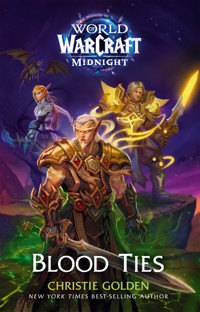
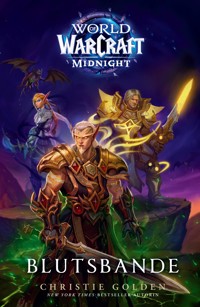
An official prequel novel to World of Warcraft: Midnight Arator the Redeemer was born to heroism. The son of High Exarch Turalyon and the legendary Alleria Windrunner, Arator has long borne the weight and expectations of their legacy. . . a legacy he inherited as a babe, the day his parents disappeared through the Dark Portal. Alleria and Turalyon's journey took them farther afield than they'd intended. While their absence spanned mere decades on Azeroth, the heroes experienced a thousand years at war against the Burning Legion—a demonic army seeking the destruction of all worlds. When at last they reunited with their son, Arator was a man grown, pledged to the very order of paladins for which they had once fought. The Legion fell quickly in a decisive final battle, yet the millennium of distance between the family was less easily conquered. Now, on the other side of recent events in Khaz Algar, Arator embarks on a new journey, investigating rumors of a strange glow emanating from the ruins of a long-abandoned Legion base. Turalyon and Alleria volunteer to assist, eager to eliminate their ancient enemy before it can threaten their world anew. As the family delves further into the mystery, Arator works to reconcile his parents' heroic legacy with the flawed people he has come to know. He sees both of his parents in himself: his father's high standards, his mother's intellect, their unwavering commitment to the defense of Azeroth. But Arator exists at the conflux of their greatest strengths and weaknesses—weaknesses that are revealed as the demonic threat proves to be a former lieutenant of the Burning Legion, intent on using Azeroth to launch a new campaign of destruction.
Sie lesen das E-Book in den Legimi-Apps auf:
Seitenzahl: 527
Veröffentlichungsjahr: 2025
Das E-Book (TTS) können Sie hören im Abo „Legimi Premium” in Legimi-Apps auf:
Ähnliche










Contents
Cover
Title Page
Leave us a Review
Copyright
Dedication
Map
Prologue Felsoul Hold Ruins, Suramar
Chapter One Light’s Hope Chapel, Eastern Plaguelands
Chapter Two The Nighthold, Suramar City
Chapter Three Felsoul Hold Ruins, Suramar
Chapter Four The Nighthold, Suramar City
Chapter Five Suramar City
Chapter Six Shattrath City
Chapter Seven Auchindoun
Chapter Eight Auchindoun
Chapter Nine The Dark Portal
Chapter Ten Felsoul Hold Ruins, Suramar
Chapter Eleven Suramar
Chapter Twelve Dreadscar Rift
Chapter Thirteen Dreadscar Rift
Chapter Fourteen Dreadscar Rift
Chapter Fifteen The Nighthold, Suramar City
Chapter Sixteen The Nighthold, Suramar City
Chapter Seventeen The Nighthold, Suramar City
Chapter Eighteen Lunastre Estate, Suramar City
Chapter Nineteen Felsoul Hold Ruins, Suramar
Chapter Twenty Felsoul Hold Ruins, Suramar
Epilogue Light’s Hope Chapel
Acknowledgments
About the Author
Also available from Titan Books
World of Warcraft: Illidan
World of Warcraft: Before the Storm
Warcraft: Durotan – The Official Movie Prequel
Warcraft – The Official Movie Novelization
World of Warcraft: Sylvanas
World of Warcraft: Shadows Rising
World of Warcraft: War of the Scaleborn
World of Warcraft: Crossroads: The War Within Anthology
LEAVE US A REVIEW
We hope you enjoy this book – if you did we would really appreciate it if you can write a short review. Your ratings really make a difference for the authors, helping the books you love reach more people.
You can rate this book, or leave a short review here:
Amazon.co.uk,
Goodreads,
Waterstones,
or your preferred retailer.
World of Warcraft: Blood Ties
Print edition ISBN: 9781835417522
E-book edition ISBN: 9781835417539
Published by Titan Books
A division of Titan Publishing Group Ltd
144 Southwark Street, London SE1 0UP
www.titanbooks.com
First edition: December 2025
10 9 8 7 6 5 4 3 2 1
This is a work of fiction. All of the characters, organizations, and events portrayed in this novel are either products of the author’s imagination or are used fictitiously. Any resemblance to actual persons, living or dead (except for satirical purposes), is entirely coincidental.
Copyright © 2025 by Blizzard Entertainment, Inc. All rights reserved.
Christie Golden asserts the moral right to be identified as the author of this work.
Warcraft, World of Warcraft, and Blizzard Entertainment are trademarks and/or registered trademarks of Blizzard Entertainment, Inc., in the US and/or other countries. All other trademark references herein are the properties of their respective owners.
A CIP catalogue record for this title is available from the British Library.
EU RP (for authorities only)eucomply OÜ, Pärnu mnt. 139b-14, 11317 Tallinn, [email protected], +3375690241
This book is dedicated to my mother,Elizabeth Colson Golden(March 25, 1925–July 22, 2024)
Who instilled in me a love of reading and respect for writing;never judged me when I wept for characters;and never, ever stopped being curious about the world.I love you, I miss you, and I wish you could read this one.
PROLOGUE
Felsoul Hold Ruins, Suramar
The Broken Isles
YOU’RE HAVING SECOND THOUGHTS.”
“No, I’m not,” Dionaar lied. He winced inwardly as he heard his voice quivering. “I just think . . . we may be pushing our luck. That’s all.”
The nightborne youth craned his neck to look up at the demonic structure. It was broken, a ruin created by a long-defeated foe. Dionaar knew it ought to have signified nothing more than a reminder of the past—a reminder, in fact, of a great victory.
But the stories of what had happened here were not easily forgotten, and this unnerved him.
“You’re certain no one followed us?” Corentyn stood up a bit straighter. He was taller than Dionaar, slim, almost bony. He had all the recklessness expected of his seventeen years, a confidence that Dionaar could only dream of possessing. The flickering orange glow of the torches played over his frowning, knife-sharp features, casting a capering shadow of his profile.
Confident and clever, but not too wise, Dionaar thought. Two weeks ago, in an act of rebellion, Corentyn had carved a protection glyph onto the back of his hand, bragging about it to all the students who would listen. If he’d spent even a little time studying, his bravado would have been productive. But he hadn’t, so of course he’d messed it up, and now the glyph etched into his very skin meant nothing. When his parents discovered it, they’d been furious with him, told him he’d simply have to wear it until he could earn enough coin to have it removed himself.
He’s all talk, Dionaar thought, though his stomach clenched. He shook his head vigorously. “Not that I saw, but . . . a patrol might come by here. Eventually.”
Corentyn gave a careless shrug. “We can just hide—wait until they pass.”
“If we were noticed . . .”
Corentyn laughed and prodded him in the chest with a forefinger. “I’ll just shove you out in front of me. You’d take the fall, right?”
Dionaar looked down and didn’t answer. It wasn’t fair, of course; Corentyn was always out in front showing off, and Dionaar was just his lackey, spreading the stories of all the great things Corentyn did or the creepy abandoned places they’d checked out together. Even now Dionaar was expected to convince the others that they needed to sneak out, see for themselves if the horror Corentyn warned them about was real.
Corentyn slapped him on the shoulder. “Ah, cheer up, I’ll get you out if your parents lock you up. But I need you at your best tonight because I have something special planned.” He toed the large sack he had brought. Its lumpiness shifted slightly, but Dionaar had no idea what might be inside it.
“What’s that?”
“Can’t reveal the trick.” He sniffed. “Don’t be too scared; you at least know it’s all fake.”
Even though Dionaar was in on every prank, sometimes Corentyn’s antics still scared him. “You sure about all this? Vanaur and the Mystralin girls are coming, and their uncle is part of the Duskwatch. What if they tell—”
“They won’t, or they’ll get in trouble, too.” Corentyn rolled his eyes. “Don’t be such a baby. Go on, get going. Oh, wait—tell them before they come that orc warlocks used fel magic to steal years of life from their own children so they would be old enough to fight!”
“What?” Dionaar had never heard this. “Cor, you’re making this all up. And no, I’m not going to tell them that.”
* * *
“THEY DID WHAT?” RENAE’S voice was a horrified whisper.
Dionaar nodded sagely. “They drained their lives with fel magic so that they grew years older in seconds!”
“I want to be older,” Julyan said.
“Not like that,” Vanaur said.
Each of the teenagers carried a torch, except for the youngest, who clung tightly to her sister’s arm. “Now, remember,” Dionaar said, “we have to be very quiet. No talking, not even whispering. Demons have excellent hearing.”
Their faces were turned up to him, their eyes wide, and they nodded. “I’m going to take you to where I last saw the fel magic, but we have to be careful to not attract any attention. Because if they find us . . .”
“They’ll eat us,” whispered Renae.
“No,” Vanaur said, rolling his eyes. “Haven’t you been listening? They’ll drain your life and make you old!”
“Oh, they might eat you afterward,” Dionaar said. “Probably shouldn’t stick around to find out, right?”
Energetic nods. “And one more thing. You can’t tell anyone what you saw here. Not a word. Ever.”
“But shouldn’t we—I mean, if there truly is a demon in these ruins . . .”
“I’ve, um, already alerted them,” Dionaar lied. “This is our last chance to see it before the Duskwatch takes care of it.”
They agreed silently, and Dionaar lifted his torch, stepping into the darkness.
It was a short, easy path, and Dionaar knew it well by now. He gasped and pointed at a puddle of “demon blood” (water thickened with luminous mushroom gills), a “victim’s bone” (which Corentyn had salvaged from a birthday celebration featuring roasted stag), and a “demon horn” (which had also belonged to the unfortunate stag).
The Mystralin sisters were properly alarmed, but Vanaur was growing bored. “You promised fel magic.”
“There’s only fel magic when they’ve fed souls of the innocents to the machinery,” Dionaar replied.
That was Corentyn’s cue, but nothing happened.
“And if we see that, we’ve stayed too long,” Dionaar said louder. “And we don’t want THAT.”
Nothing.
What’s going on? Corentyn had said something about a surprise, but maybe his trick didn’t work. This wouldn’t be the first time one of his pranks backfired. Still, by now he should have at least activated the lamp with the green glass, started the smoke . . .
“I knew it,” Vanaur said. “Just another one of your stupid pranks, you and Corentyn. You really shouldn’t—”
He broke off with a strangled sound, his mouth open, staring behind Dionaar, who exhaled in relief. Thank goodness. The audience was bathed in the familiar eerie green of the filtered light. But there was a smell . . .
Rotten eggs. Fel was supposed to smell like rotten eggs! So that was the surprise!
It was then that the sensation of fear struck Dionaar so powerfully that his knees buckled. The others shrieked, the promise of silence utterly abandoned, and they ran back the way they had come, the wildly bobbing orange flames of their torches growing smaller and smaller, then devoured by darkness.
Dionaar had dropped his own torch and made no effort to find it, his breath catching as he covered his head with his hands and curled into a tight ball. He tried to gulp air, but he could taste the awful odor, and there was another smell laced with the reek of rotten egg, a smell less innocently explained. The smell of something dead.
Then came the scream.
It was coming from right behind the rock, high-pitched and pure in its perfect terror, a sound that Dionaar had never heard issue from Corentyn’s throat but that was undeniably his. Dionaar squeezed his eyes shut against the green glow, but it seemed to penetrate his very skin. His throat hurt so badly, was so raw, and he realized it was because he was screaming, screaming to drown out Cor, whom he was sure was dying back there, dying—
And then there was silence, except for Dionaar’s panting and the pounding of his frantic heart.
“Are you all right, Dio? Looks like I scared you more than them!”
The voice belonged to Corentyn. He sounded . . . normal. Excited, even.
Dionaar’s body shook violently, but he slowly lifted his head to see his friend grinning down at him. “Good prank, huh?”
Emotions flooded Dionaar: Relief, anger, confusion. But most of all joy. He got to his feet and threw his arms around his friend.
“It’s all right,” Corentyn said, hugging him back awkwardly. “I’m fine. I’m fine.”
Dionaar pulled back and then swung at Corentyn, cursing him, but the young man ducked and laughed, fending him off easily. As Dionaar’s adrenaline ebbed, Corentyn explained what he’d done. He’d been hanging on to the rotten eggs and meat for a while, and he’d practiced his shriek several times near the shore, where his voice would be drowned out by the tide.
“I did too good of a job, though,” he said, relighting Dionaar’s torch from his own. “I suspect the Mystralin girls are going straight to Uncle Duskwatch now, to tell him they saw fel magic down here.” He flashed a grin. “Party’s over, but at least I went out on a high note . . . so to speak.”
“We should tell our parents the same thing,” Dionaar said. “So they won’t blame it on us.”
“Good idea. Let’s get going. Do you need to change your pants?”
“Oh, shut up!” Now that Corentyn had officially ended the hoax, Dionaar could laugh about everything. Even if his parents found out they’d been behind it, he was just glad that it had been a foolish joke.
Corentyn placed a hand on his friend’s shoulder and gently started to turn him around, but then Dionaar froze.
A hand was sticking out from behind the boulder.
A hand with a half-healed, miswritten rune carved into it.
Corentyn laughed, following his friend’s line of sight. “Looks pretty real, doesn’t it? I was going to wave it like I was trying to climb out, but those kids ran before I could even use it! What a waste.”
“Y-yeah,” murmured Dionaar, staring at the hand. “A waste.”
“Come on,” Corentyn said, “let’s get out of here.” He had already begun talking about their next prank before they reached the exit.
But as Dionaar glanced behind them, searching the green, unnatural glow, he could have sworn he saw the hand twitch.
CHAPTER ONE
Light’s Hope Chapel, Eastern Plaguelands
The Eastern Kingdoms
CLANG. CLANG. CLANG.
The sound of hammer against steel was a familiar one outside Light’s Hope Chapel. But this time Master Craftsman Wilhelm—who usually repaired the weapons and armor of the Knights of the Silver Hand—was not the one producing it. The gruff dwarf was instead leaning back against a grassy hillock, peering up at the brown-gray sky of the Eastern Plaguelands and belting out a smithing song between swigs of Thunderbrew lager. He paused long enough to pose a question to the half-elf champion who had offered to take his place.
“How long can that skinny little arm of yers keep this up, laddie?” Wilhelm’s eyes twinkled, his mustache wet with foam. The “laddie” in question, Arator the Redeemer, grinned at him as he wiped his brow.
“Yet again I lament that I do not possess the dwarven musculature,” he said with an exaggerated sigh.
Wilhelm guffawed. “Ah, well, we cannae all be so fortunate.”
Arator’s arm was certainly up to the task, but it was hot work, and neither his human nor his elven blood gave him the innate dwarven ability to long withstand the heat of the forge. He removed his upper body armor and laid it to one side, revealing a pair of dragon tattoos on his muscled upper arms. They were identical in style, both outlined in gold, but filled in with different hues: one bright as the White Lady moon and the other a shade of charcoal.
A human boy of about ten, Winthrop, sat beside him. Winthrop was the newest squire to the famed paladin Lord Grayson Shadowbreaker, a position that Arator himself had held when he was new to the order. It was the boy’s task to which Arator now plied his own efforts, working on cleaning and hammering dents out of the great man’s armor. Today marked young Winthrop’s first visit to Light’s Hope Chapel, and he was far too dazzled by the elite company he presently kept to have made much progress in mending his lord’s gambeson.
“I can’t believe you’re bothering to help me,” he told Arator. “I mean . . . you’re the son of High Exarch Turalyon and Lady Alleria Windrunner! They’ve statues in the Valley of Heroes, songs sung about them. You were practically born famous!”
Arator had heard all this before and had tired of it years ago. Still, it was hardly Win’s fault, and he meant well. Although Arator was much older than Winthrop, the years of a half-elf did not keep pace with those of humans. It was one of many challenges bequeathed by his unique parentage. For all Arator’s experience and all he had seen, in many ways, he felt more kinship with the new squire than with his lord knight.
Arator turned his smile on the boy. “As I said, I enjoy being of assistance.” Arator well remembered how many tasks had been assigned during his own time as Grayson’s squire. It was important to learn skills like armor repair, of course, but young Win seemed buried beneath mundane chores. Arator felt that there was no task so small it was beneath him, if he could help someone by performing it.
Winthrop’s brown eyes narrowed, and he glanced toward where Lord Grayson and another of his former squires were engaged in conversation. “I hope he doesn’t get angry at us,” Winthrop murmured.
Arator couldn’t blame the boy for being concerned. Tall, muscular, having lost his right eye in battle long ago, Lord Grayson could seem intimidating even when out of armor and chatting casually. As one of Stormwind’s foremost paladins, he’d trained many among their number, had even brought Arator with him to their order’s war council a time or two. It was hard not to see him as intimidating, formidable—certainly an enemy Arator would not want to meet in battle. Simply sparring with the man was hard enough. But Grayson had made a firm commitment to others in the order, and he’d served the Light longer than most.
“Don’t worry,” Arator reassured the boy. “He’ll know it was my idea, not yours, trust me.”
“I don’t want you to get in trouble, either.”
“I won’t.”
Winthrop sighed. “Everyone says I’m lucky he picked me, but . . .” The boy looked down. “He’s so . . . strong, and confident, and can knock me to the ground in seconds when we’re sparring. I’ve heard a lot of the stories—he’s a real hero! He’s more than just a knight, he’s a lord! I’ve got to make sure I don’t disappoint him.” As he spoke the words, Winthrop reached for the gambeson and set to mending it with renewed purpose.
Arator felt his smile fade slightly. Even though he might be the son of legends, he was, in Winthrop’s innocent words, just a knight of the Silver Hand. Many would say that was honor enough, but Winthrop’s easy dismissal of it only echoed Arator’s own thoughts. He had earned that rank for himself long ago, had even been recognized with a title. Now and then, the Light would grant a paladin inspiration regarding another’s destiny. Arator’s own father had been so moved to name the famous Uther “the Lightbringer.” Arator had been named “the Redeemer.” But whom or what exactly he would one day redeem eluded him. And until that moment came, it seemed the order was content to let him chase accolades without ever receiving them.
He tried not to let it bother him, but others younger than he, still panting and bloody, had received battlefield promotions. Their companions, weary but buoyed by victory, had cheered them with hoarse voices. Usually when he had such thoughts, Arator rebuked himself, as he did now, for being envious—and, perhaps, overly imaginative. He had joined the Knights of the Silver Hand to lend his strength to a worthy cause, and while acknowledgment of his efforts was nice, he certainly didn’t require it to continue his course.
Arator had fought well and valiantly in several wars already, but his efforts had been insufficient to attract much notice. At least, he thought ruefully, notice of the good kind. There seemed to be no end to the order’s rules, and Arator had bent, if not fully broken, most of them. He’d concerned himself too much with the locals here, hesitated there, gotten information from a questionable source another time. His methods were always a topic of discussion among the order, but Arator noticed that no one raised concerns with his results. Some had voiced, obliquely or bluntly, that his disregard for protocol and rules would one day harm his standing in the order, but Arator dismissed the idea. To him, it was simple: If he could not change his world, improve the lives of common folk, what purpose was left for a Knight of the Silver Hand?
In truth, it had been more than a willingness to be helpful that had prompted Arator to help young Winthrop. He had been summoned to Light’s Hope by Lord Maxwell Tyrosus, one of the central leaders within their order. Arator understood that Lord Tyrosus was an extraordinarily busy individual, and while he was not surprised he had to wait for an audience, he did need something to keep his mind off the meeting. Arator knew exactly why he had been asked to come here today, though he did not know what the outcome of the conversation would be.
Abruptly, Winthrop sprang to his feet, dropping the gambeson. “Lord Tyrosus!” he exclaimed, his voice climbing a half octave with excitement and delight.
But Arator felt only knife-sharp disappointment as he beheld the expression on the knight’s weatherworn face. An ominous clue as to the tone of the conversation. Arator schooled his own features lest Lord Tyrosus see how hard the blow had struck. Rising, Arator placed Lord Grayson’s armor down next to Winthrop, who was still gazing up at Tyrosus with wide eyes.
Lord Tyrosus glanced over the boy’s progress. “Good work, young man! But best pick up the pace, eh?”
Winthrop gulped and nodded furiously, unable to speak.
To Arator, Tyrosus said merely, “Come. Let us pay our respects together.”
They fell into step, heading toward the Sanctum of Light, the scent of stone and its coolness enveloping them as they descended. This had been the headquarters for the Knights of the Silver Hand since the Burning Legion’s invasion, and Arator knew it well. He had come here many times on Silver Hand business, but he often found himself at the sanctum for no other reason than to simply be with the Light, to draw inspiration from watching others perfect their skills, and to pay respect to the many who had gone before.
They paused before the tomb of the legendary Tirion Fordring. Tirion had been one of the five original paladins—the first in Azeroth’s history. Archbishop Alonsus Faol had called upon these five to lead the order long ago. Faol’s vision was to marry the Light’s compassion with the power of the hammer, knights who would be priest and warrior both. But where the Light had a tendency toward order and rigidity, Tirion knew it to be flexible and kind. He saw the Light’s reach in all he met, famously held empathy for his former enemies, and yet never feared raising hammer or sword when he saw injustice . . . even when it meant standing against his fellow paladins. Even when it meant exile from his home and this very order.
It had been the honor of Arator’s life to fight beside Tirion at the Broken Shore, a bleak and bitter fight that held catastrophic losses for their kind, including Tirion himself. The knight had died as he had lived, serving the people of Azeroth until his final breath. It was the kind of legacy Arator hoped to leave. Not a list of victories achieved by following every archaic convention to the letter, but a tapestry of service to his world, every thread a deed, a word, a thought.
“Heroism has never been commonplace, and yet it has never disappeared altogether,” Lord Tyrosus said quietly, as if speaking Arator’s thoughts aloud. “Even if it goes unremarked by history, it dwells in the hearts of good people. Some are trained for war. Others are ordinary folk who discover it in their souls and rise to the challenge when heroism is asked of them. Fordring taught us that heroic deeds need not be confined to the battlefield. They are also found when holding firmly to one’s faith and ideals, even if it costs one everything.”
“I know all of Tirion’s stories,” Arator said. “He ever fought for peace. I am glad he lived to see the Horde and the Alliance working together, however briefly, before the end.”
Lord Tyrosus nodded. “Charging into battle takes far less courage than enduring so much loss for doing the right thing. It is our most admirable, and rarest, quality. Compassion, a true understanding of justice, bravery . . . all these things make a paladin. But heroism transcends even that.”
Arator’s heart sank. This was starting to sound like a prelude to bad news. He turned, not looking at Lord Tyrosus, his visage a model of neutrality, hands lightly clasped behind his back. Part of him—likely his mother’s blood—longed to simply interrupt and be done with the conversation, but he held his tongue.
His superior continued. “In recent years, paladins and champions have risen to the demands of their order, and many have performed extraordinary acts. And even so, few have earned the right to accolades beyond knighthood.”
With uncharacteristic informality, Tyrosus placed a hand on Arator’s shoulder, turning the younger man to face him. “We have had our eye on you for some time, Arator. How could we not, given your lineage? We find you consistently remarkable both in battlefield skills and in the gentler aspects a paladin should embody. Like taking the time to help young Winthrop today. But we have not yet seen you rise to truly heroic heights. Therefore, we will not be considering you for lordship.”
Arator nodded. “I understand, Lord Tyrosus. I shall continue to strive to be better, so that I may more effectively serve those I am sworn to protect.”
Tyrosus squeezed his shoulder briefly. “I do not doubt that for an instant. I hope to be there when the truth of your title is revealed to us. I know you will astound us all.”
Arator felt the genuine warmth of these words, but then Lord Tyrosus continued. “After all, with the blood of High Exarch Turalyon and the legendary Alleria Windrunner flowing through your veins, you were practically born to heroism.”
There it was. The stone that inevitably dropped in every conversation he had with another of his calling. The comparison he could never escape. He summoned his rote response. “My lord, thank you. It is a high calling indeed. An honor and a responsibility both.”
The older man seemed pleased with this. “You are dismissed, if you’d like to rejoin your young admirer outside.”
“I believe Lord Grayson’s gambeson is, justly, consuming Winthrop’s attention,” Arator deferred. Tyrosus chuckled. “I’d rather stay here awhile, if you don’t mind, and meditate on what we discussed.”
“Of course. It is a lot to think about, and there is no better place to ponder than here.”
Arator listened until he could no longer hear the sound of boots, then turned to regard another image carved in stone: High Exarch Turalyon.
For Arator’s father, like Tirion, had been one of the original five paladins.
You were practically born to heroism, Tyrosus had said with complete confidence.
Was I? Arator wondered. Was I, truly?
Ever since he was old enough to understand the concept, he’d been introduced and spoken of as “the son of Turalyon and Alleria.” He had never asked for—nor accepted—anything that smacked of favor due to his parentage, but the fabled couple were so universally known that it had been impossible to conceal his identity among his fellows. Lord Tyrosus’s rejection stung in part because, although Arator worked harder than most to prove his worth and skill, his accomplishments were ever weighed against or eclipsed by those of his famous parents.
Alleria and Turalyon had lived through an extraordinary era. Arator’s own lifetime had certainly been fraught with danger, from demons to the undead to the shattering of Azeroth itself. So many had risen to join those battles, people from both the Horde and the Alliance who fought with skill and dedication and passion. But acts and feats that had been remarkable in earlier times were so no longer, and while Arator was glad that his companions on the field of battle excelled at what they did, he could not help thinking of the deeds of his parents, not just on Azeroth but on other worlds, performed so consistently and successfully for so very long.
Arator had grown to realize that, although he was a blend of humanity and elvenkind, rather than straddling both worlds, he increasingly felt that he belonged to neither. The rejection today also brought home other truths, other struggles. He had become an adult, his own person, long before his parents had returned. In many ways, he was still getting to know them, even as his life had been indelibly shaped by their legacy, by the idea of them. Arator wanted nothing more than to be with and learn from them after they had been so long away . . . but he also longed to stand apart, to contribute in his own ways and not be judged against their standard.
How long he knelt ruminating, in the shadow of his father’s statue, Arator did not know, but when he stood, his legs were stiff, and his heart was, perhaps, even heavier than it had been.
He emerged, blinking, into the daylight.
“Perfect timing,” said a friendly, familiar voice. “I’ve only been waiting a few moments.”
“Liadrin!” Arator exclaimed, surprise driving away the cloud for the time being. “What are you doing here?”
“I come bearing a special delivery,” she said, indicating the small, cloth-wrapped package she held.
Lady Liadrin led the sin’dorei paladins, an order called the Blood Knights. She had been the first of her order, a former priestess who turned to the tools of war to fight for her people. Though Liadrin and his father were quite different, Turalyon had done the same thing.
After his parents had been lost beyond the Dark Portal, Arator had been raised by his aunt Vereesa and the many friends who had loved his family. While his aunt Sylvanas had been kept busy by her duties as ranger general, her second-in-command, Lor’themar Theron, had taken Arator under his wing.
After the Scourge decimated Quel’Thalas, it was Lor’themar and Liadrin who had been at the forefront of the kingdom’s reclamation, but they had not forgotten Arator. From Arator’s youth, Lor’themar had trained him in the tradition of the Farstriders. And Liadrin had been a confidant, easy to talk to, who held his friendship close and his secrets closer, speaking both kindness and truth when he needed to hear it. He had remained fond of and grateful to her all his years.
“You’re a hard fellow to catch up with,” she continued. Her brow furrowed as she regarded his expression. “Don’t tell me you had a dressing-down.”
“No,” he replied quickly. “It’s nothing.”
“I see,” Liadrin said, her tone implying she knew quite well that it was not nothing. “Perhaps this will sweeten your mood.” She extended the package to him, untying the bow that held the cloth closed. Arator recognized the item instantly: honey from the Breezeblossom Apiary. He accepted the jar and dropped it into his satchel.
“Thanks.”
“You didn’t even ask which twin sent it.” At Arator’s listless shrug, she sighed. “Come on. I brought a bottle of Suntouched wine, too.”
* * *
LIADRIN AND ARATOR SAT on the dried, yellow grass of a hillock a short ride from Light’s Hope Chapel. His gaze was fixed upon the chapel as he took a decidedly inelegant swig from the excellent vintage. Then, in a quiet, flat voice, he told the Blood Knight leader what Lord Tyrosus had said.
Liadrin grimaced in sympathy and extended her hand for the bottle.
“I understand his point,” Arator continued. “But I was . . . frustrated. Disappointed.”
“Disheartened?”
“That, too, yes.”
Liadrin took a swig of wine, then handed him the bottle. “And now?”
A smile that had nothing of humor about it twisted his lips. “Frustrated, disappointed, and disheartened.”
She chuckled at that. “Would it surprise you to know that I am quite familiar with all of those emotions?”
It did. Liadrin had always struck him as confident, undaunted. She led the Blood Knights with passion, inspiring them to excel by modeling excellence and courage, a commander seemingly as bright as the Light she wielded. Her next words startled him even further.
“You know well that my path to knighthood was quite the winding road. Looking back on it, I welcome the false starts, the dead ends, the misconceptions. Without each of those, I would not have developed the strengths that got me to where I am. You’re on your own journey, Arator. It’s as unique as you are.”
“No shortcut through the farmer’s field, huh?”
“I’m afraid not. You must walk every step of it. And it might take you places you don’t want to go.”
“For a priestess, you’re doing quite poorly at cheering me up.”
“I cast that vocation aside long ago. I’m just telling you, now is not the time to imagine what might be written on a plaque beside your statue.”
He thought about what he’d been doing before Liadrin showed up and had to laugh. “Well, the words ‘The Great Failure of Two Great Peoples’ did come to mind.” Arator lifted the bottle to his lips, but Liadrin’s arm stayed him.
“Arator,” she said quietly, “look at me.” Reluctantly, he did so. Her gaze was steady and kind. “I’ve known you for many years now. I watched you grow into someone strong and kind and sincere. Lord Tyrosus’s denial is not the end of it. You will be acknowledged as exceptional with time. Or . . .”
Liadrin paused, seeming to reconsider the words she had been about to utter.
“Or . . . ?”
She was silent for another moment, then chose her words carefully. “Yesterday, I met with the regent lord and the first arcanist,” she said. “Thalyssra has received some reports regarding possible demonic activity near the ruins of Felsoul Hold.”
Arator raised an eyebrow. He’d heard that, during Azeroth’s most recent battle against the Burning Legion, the demon Azoran had made Felsoul Hold his base. The place contained a soul engine, a fel machine designed for harvesting souls to convert into fel magic. Azoran had planned to use the engine to fuel his command ship, which he would turn against the armies of Azeroth. Azoran had been slain, and the attack, thankfully, foiled. “I thought the nightborne led strikes to ensure the Legion’s soul engines were all disabled.”
“They did. And they were. At least . . . they thought so,” Liadrin replied. “But local inhabitants have reported witnessing what they said was a fel glow coming from the area.”
“That’s alarming.”
“Indeed. Thalyssra requested a small team of Blood Knights to conduct reconnaissance and report back to her. But I think you’re more than capable of handling that by yourself.”
“Just . . . scout and report back? Winthrop could do that. Well,” he amended, “almost.”
“Arator,” Liadrin said, sitting up straight and looking him in the eye, “think for a moment. If you go to Suramar City and volunteer, this puts you in an active role. You’re no longer waiting around, hoping for the Silver Hand to give you a task. And . . . it puts you in front of the First Arcanist of Suramar, and, very likely, the Regent Lord of Quel’Thalas, too. They think far differently about things than the Silver Hand does when it comes to what’s important. I can’t make any promises, of course, but if you do a good job for them, they might be inclined to write to the order about you in a positive light. The Silver Hand may be taking you for granted. It wouldn’t hurt to have other leaders remind them how lucky they are to have you.”
“I appreciate you saying that,” Arator said, moved.
“I wouldn’t say it if I didn’t believe it.”
He knew. “Do you really think she’ll do it?”
Liadrin extended her hand for the bottle and took a final drink. “Well,” she said, “there’s only one way to find out.”
CHAPTER TWO
The Nighthold, Suramar City
Broken Isles
SINCE CHILDHOOD, ALLERIA WINDRUNNER HAD yearned to make her own path in the world. It did not take long before she realized that yearning would fling open the door to a life filled with the unexpected, and tonight was no exception.
For most of her life, the land of Suramar had been the stuff of legends. Its enigmatic magical shield had isolated it for more than ten thousand years, and—as the world learned when they ended their isolation during the last Legion invasion—the inhabitants had changed over millennia, eventually becoming the nightborne. Simply stepping foot in Suramar had been beyond Alleria’s practical imagining, let alone forging a friendship with the nightborne’s present leader, their first arcanist. Yet here Alleria was, supping with Thalyssra and her husband. The fact that said husband was none other than Regent Lord Lor’themar Theron was another thing she could never have imagined.
Lor’themar had once been one of Alleria’s dearest friends, and he was certainly her oldest. She remembered many a sun-drenched morning in her childhood home of Windrunner Spire, where Lor’themar inevitably turned up to brief her ranger general mother on some Farstrider matter or another. Ever relied upon by her mother and later named her sister’s second-in-command, Lor’themar had known well the pressures Alleria experienced as the reluctant successor to the post of ranger general.
But Alleria had left Quel’Thalas, called to her own mission. After she had spent a thousand years battling demons in the Twisting Nether and heard tell of all the trials, changes, and upheavals that had reshaped Azeroth in her absence, she had been grateful to know that Lor’themar Theron, at least, remained. That he had provided a steady hand in training her son, had helped reclaim Quel’Thalas from the Scourge, and now stewarded their people was welcome news to her indeed.
And then, as it had with so many facets of her life, the Void had changed things. During a visit to the Sunwell—the center of Holy Light and arcane power for her people—Alleria’s mere presence had summoned creatures of the Void. Catastrophe had been narrowly averted, but her folly had come at a high cost: exile from her home and estrangement from her people, including Lor’themar.
But years later, an invitation had come . . . to the wedding of the regent lord and the first arcanist. It was a step toward mending a bridge, and while Alleria spent more time alone than ever these days, a part of her still desired Lor’themar’s friendship. He had witnessed so much that few around her could understand. Though Alleria was disappointed with what had transpired in the depths—that Xal’atath had again evaded her—her brief triumph over the Dark Heart continued to affirm to many that Alleria had mastered control of the Void. And while she was still not allowed back in Silvermoon, Thalyssra had kindly extended a dinner invitation to Alleria and her husband.
Her husband . . . That, too, was something the Void had wedged itself in the middle of. She and Turalyon had never formally wed.
They had overcome much in their millennia together, but mastery of her powers, facing down the Void threats still at large in their world . . . these matters would always come first—even before him. Turalyon knew that, but she still felt his pain every time she pulled away. She wondered how long they could continue like this, how long she could bear growing increasingly distant from the man she had once loved with all the passion that fueled her in battle and in life.
In truth, Alleria had felt at war within herself about this very dinner. Mending this bridge with Lor’themar came at the price of an awkward, formal meal, the kind she had long detested. That she and Turalyon would need to discuss matters beyond the most recent battles—laugh, exchange loving glances, pretend that their relationship was clear and uncomplicated—served only to increase her tension. But the time came when she realized she’d put the invitation off for too long and the offer was at risk of being rescinded. So, here they were.
Alleria brought her attention back to the present, as an honored guest of an intimate supper hosted by Thalyssra and Lor’themar. Their meal was being served outside, in one of the open, graceful courtyards, at a low table where the diners reclined on pillows rather than sitting in chairs. With only herself and Turalyon as guests, the two powerful leaders were quite different from what their people usually saw of them. The pair had shed their armor, both literally and figuratively, at least in their behavior to each other. While Lor’themar greeted the guests pleasantly, Alleria, who knew him so well, could still sense his reservations. Thalyssra’s welcome, though, felt so warm and genuine it served to put even Turalyon—who could be stiff in the best of circumstances—at ease.
“I still marvel at your willingness to have members of the Alliance as guests,” Turalyon said, taking a sip of arcwine.
“I believe the armistice is best served by Horde and Alliance regularly sitting down together over something other than strategies. It’s part of what inspired us to invite both sides to our wedding,” Thalyssra said. “Although there always seems to be some kind of distraction at weddings.”
Lor’themar nodded. “Quite true,” he said. “We were more fortunate than Thrall and Aggra in that regard. At least our disruptor only exchanged harsh words with Wrathion.”
“You did lose the cake,” Alleria pointed out, deadpan. “That was a tragedy.”
“It could have been, had we not prepared far more than enough.”
Turalyon looked a bit sheepish. “I confess . . . I did have seconds.”
“My husband had thirds.” Thalyssra’s voice was teasing as she mock-scolded Lor’themar.
“They were small pieces,” Lor’themar protested, matching her playful mood.
Alleria smiled a little. These two thrived when they were together, as if each amplified the best in the other without taking anything away. Lor’themar’s wit was less biting than Alleria recalled from her upbringing in Silvermoon, and in these informal surroundings, Thalyssra’s fierce intellect and boundless curiosity ensured the conversation never ran dry.
The warmth of their genuine love and respect for each other, along with the potency of the deceptively drinkable arcwine, loosened Alleria’s tongue. She found herself saying, “You’ve been back from your honeymoon for some time, but it doesn’t seem to be over. How do you do it?”
“Portaling,” Lor’themar quipped, but added more seriously, “and prioritizing.”
“And poetry!” Thalyssra reminded him. “Though I must say, before we met, we were married more to our duties. It was . . . a problem that persisted even after we’d exchanged vows.”
Lor’themar reached silently for her hand as she spoke.
She curled her fingers around his and continued. “We were so single-minded of purpose that we lost sight of the very reason those duties existed: so that our people would be prosperous and peaceful. The sin’dorei and the shal’dorei did not need only protection and physical nourishment. They deserve the chance to spend time with loved ones, on joyful pastimes. All the things that nourish a soul.”
A memory swam into Alleria’s mind, vivid and sweet, of the many simple hours spent with her sisters while their beloved little brother plucked at his lute and sang for them. How deeply the family had lived for those moments of peace, together in their cherished spot. It was impossible to reside there forever, of course, but it was a scene Alleria returned to often in her mind. Lor’themar was studying Alleria closely now, his guarded expression softening as he noted the hints of pain that doubtless flitted across hers. When he spoke, it was as if her old friend had read her thoughts.
“We sacrificed, so that they would not need to. So that they could remain as untouched by pain and loss as possible. We forwent lasting friendship, peace of mind, love, all in the name of duty . . .” He sighed. “One forgets the energy such pursuits provide. Love becomes stale, your home simply a structure, rather than a refuge.”
Alleria kept her features neutral so that the too-perceptive regent lord would not see how deeply his innocent words had cut.
She and Turalyon had leaped from battle to battle, partners in love, yes, but perhaps even more so in combat. War and violence had brought them together, had bound them as they spilled blood enough to fill an ocean. Demons did not rest, and so they did not rest. There had been barely time for food or sleep, let alone tenderness, or the simple act of lying on green grass and gazing up at a blue sky.
Or had there? The two leaders sitting before her had also faced terrible, tragic events. Their people had suffered greatly. But they had found the time. Or . . . had carved it out with the same determination with which they fought and cared for those in their charge. Alleria thought somberly that while all four of those seated here tonight had waged war for their people, only their hosts had waged it for themselves as well—against all the things, little and large, that seemed to pile up and fill a lifetime.
“How arrogant of us,” Thalyssra said, interrupting Alleria’s musing, “dispensing advice to you two. You have been married for a thousand years! We should be asking you!”
Alleria froze. Not only were she and Turalyon unmarried, she realized . . . she had no wisdom to dispense. Why take time for songs or poetry or stargazing when demons were burning their way across the Great Dark Beyond, searching for your world, for your child? Why spend a few hours in quiet conversation when one could seize such time for sleep or smithing or nourishment?
Even now, in a time of relative peace, she and Turalyon filled their days with all things martial, not marital. They had spoken of it, of course, from time to time, in the moments when they could catch their breath. When we return. After the war is over. Let things settle down. There was always something more important than a wedding to occupy themselves with. Now they moved in separate spheres, encountering each other infrequently, making time for intimacy even less. Was he content with only that?
Was she?
“Oh, I think you’re doing well enough,” Alleria said lightly.
“Indeed,” Turalyon agreed. “But I don’t think you asked us here just to enjoy good food, wine, and conversation.”
“We’ve tried before,” Thalyssra quipped. “The only way we could get you to accept tonight was by promising to discuss—”
“Fel activity,” came a voice.
Alleria’s heart quickened at the sound, and she made no attempt to hide her delight. She rose at once from the comfortable purple pillows to embrace her son. Turalyon wasn’t far behind her, his hand on Arator’s shoulder. Alleria turned to her hosts with the first genuine smile of the evening.
“You could not have thought of a better surprise,” she told her hosts gratefully.
The pair exchanged glances.
“I’m afraid we cannot take credit,” Thalyssra said.
“Arator!” Lor’themar exclaimed. “Your presence is a welcome surprise to us all.”
“Yes, please join us!” his wife invited. “We are only on the first course. How lovely to have the whole family for dinner!”
Arator bowed. “First Arcanist, Regent Lord, I apologize for the interruption. I’m afraid I’m here on business. I spoke with Lady Liadrin this afternoon, and she informed me that her Blood Knights had been tasked with a mission. I humbly offer my services to this endeavor in their stead, if it pleases you.”
At this, Lor’themar and Thalyssra laughed, shaking their heads. “You are truly cut from the same cloth as your parents,” Thalyssra said. “We had been about to speak to them of these very reports. Please, sit, and we will brief . . . well, all of you.”
Alleria listened with half an ear as Thalyssra outlined the sightings. The first arcanist seemed delighted to turn the task over to Arator and not the Blood Knights, thinking Liadrin’s idea sound. Although the orders were those of his wife, Lor’themar was visibly pleased that Arator had expressed interest in aiding Suramar.
It seemed simple enough: a routine scouting mission to investigate the rumors. It did not require the time and attention of several Blood Knights at this juncture, as Arator could certainly do it with ease by himself.
And yet . . . the arrangement still gave his mother pause. She had conquered the Void whispers in her mind; their fears and thinly veiled manipulations rarely troubled her these days. But Alleria had spent a millennium in the Twisting Nether, sometimes hunted by demons who sought to hurt her, her lover, or even their son. The Void could conjure any number of terrible ends Arator might meet on this mission, but there was another anxiety gripping her heart, one that gnawed at her and surged to the forefront thanks to the recent conversation and her son’s unexpected appearance.
Most parents made sacrifices for their children in the hopes of ensuring a better life for them. Certainly she and Turalyon had, sacrificing not just body but heart, spirit, and ideals. Hopes. Innocence. Things that had been ripped from them or deliberately laid aside in the pursuit of duty.
They sacrificed all these things so that their son would not need to.
But Arator’s decision to become a paladin put him on that road despite their efforts.
Perhaps that path can be altered, Alleria thought. Lor’themar, Thalyssra . . . they have found a way to fulfill their duties while still making a place for joy and love to flourish.
“Given that we have neither seen nor heard anything of this nature in years, we should treat the sightings with caution,” Alleria heard herself saying.
Turalyon did not respond. He was scrutinizing Arator, searching his son’s eyes as if seeking the answer to something.
Alleria could not speak her heart in front of Thalyssra and Lor’themar, so she rose, keeping her voice quiet and calm despite the tempest of emotions inside her.
“Turalyon, a word?”
He accompanied her as she stepped away. Alleria spoke quickly, before he could say anything. “We have nothing but a few reports to go on—he could be walking into a trap. Our son may have fought demons, but he doesn’t know them. Not like we do. No one in this or any other world does.”
Turalyon seemed pensive. “Arator is a grown man. Not a child. But . . .”
Alleria stared her love up and down. Something was amiss. “What do you know that I do not?”
“Arator has striven for years now to be promoted within the order. He met with Lord Tyrosus earlier today. I don’t know for certain, but I don’t think it went well.”
Alleria turned to look at Arator. He was chatting amiably with their hosts, but now she could see some of the disappointment in his body language. Alleria thought of her own struggle to prove herself when she was younger than her son was now, to find her own way against her strong-willed mother’s determination.
“Our son is a superlative swordsman and strong in the Light,” Turalyon continued. “And he’s a good, kind person. I think the only thing standing in his way is his readiness to bend the rules and bypass protocol. Which, by the way, he did moments ago by talking to Liadrin and then approaching Thalyssra directly.”
Alleria bridled slightly. “Had I obeyed protocol, we would never have met.”
“Oh, we’d have met,” Turalyon said, with the rock-solid surety he always conveyed when it came to their bond. For a moment, she let it warm her.
“Arator chose to join the Silver Hand knowing there would be established, respected methods he’d need to follow,” Turalyon said. “I’d like to observe him on a mission. See how he makes his decisions, what action he takes. Maybe guide him a bit.”
“He may not want to be analyzed by his father,” Alleria said.
“He may not want to feel coddled by his mother, either,” Turalyon pointed out.
Alleria sighed and placed a hand on his arm. “He may not want his parents,” she said, “but . . . he needs allies.”
Her love smiled softly. “I think we might, too. Let’s ask him.”
They strode back to the gathering. “Now that Thalyssra has briefed the whole family,” Turalyon interjected, “Alleria and I are wondering if perhaps the whole family should go. What do you think, Arator?”
Arator looked a bit startled. “All of us?” he said, frowning a little. “That . . . seems a bit excessive.”
Turalyon looked at him uncertainly, but Alleria pressed her lips together against a smile. “Completely unnecessary,” she said.
“A waste of resources, truly,” Arator continued. “I’m in.”
* * *
THEIR HOSTS APPEARED DELIGHTED with the decision, though Thalyssra was surprised that the family had chosen to leave almost immediately. She could not argue with Arator’s dedication, however, and had equipped them with magnificent manasabers to bear them to Felsoul Hold. The large cats were purple, their pelts covered with runes. They had evolved with an innate connection to Azeroth’s leylines, drawing power from them, and they had a nose for arcane energy. Plus, as Thalyssra told them, once they were out of their tack and rein for the day, they loved to be scratched behind the ears.
Felsoul Hold was not a great distance away from the city, and the short trip afforded Arator opportunity to think on the upcoming mission. The knight had been pleasantly surprised to encounter his parents in Suramar City. The warmth of his mother’s embrace and his father’s genuine, broad smile cheered Arator more than he would have thought, and he looked forward to having more time to spend with them doing something they all excelled at.
Even so, the three were quiet initially, as if, after anticipating a chance to get to know one another better, they were all suddenly hesitant. When the silence started feeling uncomfortable to Arator, he searched for a topic to get a conversation started.
Unexpectedly, it was his father who fired the opening volley. “I can’t help but feel at a disadvantage, starting a reconnaissance mission in the middle of the night. Both of you have much better vision than I do.”
“Ah, but it’s a beautiful night,” Alleria said, “and both moons are in the sky now.”
“But we’re going to go into . . . caverns. Where it’s dark anyway,” Arator pointed out.
“Perhaps you can light our way, dearest?” Alleria said, with exaggerated sweetness. Arator tensed, wondering how his father would react to a direct jab at his calling.
To his surprise, his father’s eyes twinkled, as if at a private joke. “Oh, like this?”
And then the high exarch’s armor began to glow, bright as a beacon. Cautiously, Arator said, “Great! We’ll just stand there and shine, and if there are any demons in Felsoul, they’ll run out to say hello.”
“That’s the plan,” Turalyon said, so earnestly that for an instant, Arator thought he was serious. At their son’s expression, Turalyon and Alleria started laughing, and Arator joined in. It was as if a door had been opened, and Arator was glad.
The manasabers were comfortable to ride, and their paws were silent as they ran. Arator guided his manasaber between those of his parents so he could speak easily with them both.
They spoke of ordinary things at first. Turalyon expressed his pleasure that Genn Greymane had been willing to mind Stormwind for a while so that Turalyon could come to the dinner—and, fortuitously, thus be present to join Alleria and Arator on this mission. Anduin had returned but had not yet formally reclaimed his title or his seat on the throne.
“How are they? Both of them?” Arator asked.
“Genn is glad to have Tess ruling Gilneas, but he seems to miss ruling himself. And I’m pleased to have someone willing to look after things in my stead every so often.”
Arator refrained from further comment on that issue. Turalyon was an excellent general and leader of troops but a bit too rigid to adapt well to the fluid and flexible nature of politics. The high exarch, from what Arator had heard, had rubbed many common folk the wrong way, and Arator knew he hadn’t enjoyed it much, either. But his king had asked this of Turalyon, and the paladin was nothing if not dutiful.
“I’m glad you were able to come with us,” Arator said, and the words were true. “And Anduin?”
Turalyon went quiet for a moment. “War is never without its costs,” he said. “And everyone is affected differently by it. Anduin was wise to realize he would best serve his people by stepping away for a time, and he made sure his kingdom would be protected while he did so. It took courage and faith to do that, and I respect him all the more.”
Arator told them about Lord Grayson’s wide-eyed squire and his excitement and apprehension about serving such a famous man. He did not, however, mention his meeting with Lord Tyrosus, and when he caught his parents exchanging glances as he spoke, he realized that Turalyon probably already knew—and had told his mother.
It was not a topic Arator cared to discuss, so he steered the conversation back to the present event.
“It was good to hear how Lor’themar spoke to you, Mother,” he said. “I hope the situation is thawing.”
“It seems to be,” Alleria replied. “I knew he would invite you to the wedding, but we didn’t expect an invitation after what happened.”
“Thalyssra said it had been her idea, and I think it a sound one,” Turalyon said. “It’s not what I would expect from a Horde leader, but it shows her commitment to keeping the peace. I found it surprisingly pleasant . . . other than, of course, the quarrel.”
“And the cake loss,” Arator said with a grin.
“Hey now, the regent lord had three pieces,” Turalyon said. “Your poor father can have two.”
“Maybe it’s all the cake that’s sweetened Lor’themar,” Arator mused. “He’s been different ever since he and Thalyssra finally admitted their interest in each other. And after the honeymoon, he’s almost unrecognizable in some ways.”
“He and Thalyssra talked about that very thing, before you arrived,” Alleria said. “How both of them changed. They decided to . . .”
Her voice trailed off and she drew her manasaber to a halt, staring at what was up ahead. Alleria shifted from mother to hunter, her body taut and ready to respond in an instant.
“What is it?” Turalyon asked quietly.
Alleria didn’t answer, but she did smile slightly. And a moment later, first Arator and then Turalyon saw it, too.
Demonic corruption withered and twisted everything it touched—flora and fauna alike. In areas that played host to demonic machinery and architecture, it even pooled into sludgy, glowing green goo in a bright, unnatural shade with which the three were deeply familiar.
The landscape before them, however, revealed the work not of demons, but of druids. Upturned rocks and craters revealed scars of battles past, but every rift was being overtaken by a different kind of green—soft mosses, creeping vines. Azeroth healed where her people tended. There was even a recent trail through the lushness, more evidence that Felsoul Hold was no longer feared by those its inhabitants had once terrorized.
Even so, despite the care of druids and the gentling blue-white glow of moonslight, they could all see the distinctive smudge of fel green. As their manasabers drew closer, the characteristic destruction of the demons became more apparent. The ground here was barren, and shortly they beheld stone shaped into terrifying form, a land violated rather than explored or even plundered. The expected sickly radiance, however, was dim. No fel fire burned, and the gooey lakes had long ago sullenly subsided.
The moons continued to light their path as they approached the edge of the hold. A few yards away, Arator signaled his mount to halt, slipped out of the saddle, and gently scratched the great beast’s neck. With a low, happy rumble, the animal moved to carefully headbutt Arator, indicating he should continue the pleasant sensation.
He chuckled. “You really are just oversized cats, aren’t you? Don’t worry, I’ll give you more when we come back.” Arator gave the manasaber a final pat, adjusted his sword, and went to join his parents while the manasabers, accustomed to waiting for their riders, plopped down and curled up like any house cat.




