


Erhalten Sie Zugang zu diesem und mehr als 300000 Büchern ab EUR 5,99 monatlich.
- Herausgeber: McNidder and Grace
- Kategorie: Geisteswissenschaft
- Sprache: Englisch
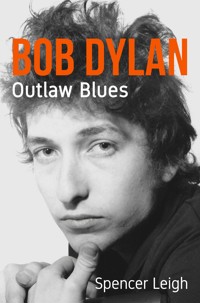
Bob Dylan: Outlaw Blues by Spencer Leigh is a fresh take on this famous yet elusive personality, a one-man hall of mirrors who continues to intrigue his followers worldwide. It is an in-depth account with new information and fascinating opinions, both from the author and his interviewees. Whether you are a Dylan fan or not, you will be gripped by this remarkable tale. Most performers create their work for public approval, but at the centre of this book is a mercurial man who doesn't trust his own audience. If he feels he is getting too much acclaim, he tends to veer off in another direction. Despite his age, Bob Dylan still tours extensively. Famously known for not looking happy, the author looks at what motivates him. 'Journalists are very fond of saying Bob Dylan is an enigma,' says Spencer Leigh, 'but that word is flawed. It's as good as saying you don't know... I have not called Bob Dylan an enigma at any point in the book as I have tried to find answers.' Spencer Leigh has spoken to over 300 musicians, friends and acquaintances of Bob Dylan in his research for this book.
Sie lesen das E-Book in den Legimi-Apps auf:
Seitenzahl: 1610
Veröffentlichungsjahr: 2020
Das E-Book (TTS) können Sie hören im Abo „Legimi Premium” in Legimi-Apps auf:
Ähnliche

















Praise for
Bob Dylan: Outlaw Blues
‘Few music biographers have the wit and wisdom necessary to catch the many nuances and details of Bob Dylan’s amazing life. Spencer Leigh certainly does, which makes Outlaw Blues such a tasty prospect. Bob Dylan’s story is well-documented by Spencer Leigh, finding new directions in the incredible maze of Dylan’s life.’
Colin Hall, Beatles biographer and custodian of Mendips
‘Bob Dylan is the most influential songwriter of the last half century and I know of no more perceptive pundit than Spencer Leigh.’
Gary Osborne, Songwriter, ‘Forever Autumn’, ‘Amoreuse’
‘Spencer’s work is meticulously researched and this tribute to the great Bob Dylan is no exception. His writing is imbued with an obvious respect for his subject and their work. Spencer is excellent!”
Charlie Landsborough
‘As a lyricist myself, I am interested in Spencer’s take on Bob Dylan’s songs. Writing a book is a massive task. Well done, mate.’
Barry Mason, Songwriter ‘The Last Waltz’, ‘Delilah’
‘I always know when I read a Spencer Leigh book I will get fresh insight into the music and lives of his subjects. I am tremendously excited how his acute research and profound musical knowledge challenges the many diamond facets of Bob Dylan.’
Barb Jungr, who has recorded three albums of Dylan songs
‘There simply aren’t enough books about Bob Dylan. So complex is he as a human being, a songwriter, a poet, a guitarist, a pianist, a vocalist (never a mere singer), enough words can never be written about him. Dylan is to this day – inscrutable and unfathomable.
Thank you, Spencer, for this, I feel some corners have been brightened, yet still you’ve left us plenty to ponder for ourselves, such is any great writer’s wish.’
Ian McNabb, Singer-songwriter and musician
‘Spencer Leigh has almost interviewed everybody, and always knows the right questions to ask. His enthusiasm for music history glows out of every sentence he writes.’
Peter Doggett, Former editor Record Collector for 17 years and noted biographer
‘Spencer for me is an absolute icon. His passion for music is inspirational. I love the way he can convey it with his writing and his broadcasting. Long may he reign!’
Janice Long, BBC Radio 2
‘Spencer is a fine researcher and writer. I always look forward to reading the connections he makes, and especially in this, between Bob and the Beatles. I think there’s quite of lot of them!’
Hunter Davies, Official Beatles biographer
Praise for
Spencer Leigh
‘Having read Spencer Leigh’s engaging Buddy Holly biography, I am eagerly anticipating the author’s new book on Bob Dylan. The detail embedded in the Holly book (and throughout Leigh’s previous work) ensures that the Dylan book will prove to be fascinating and essential.’
Simon Wells, Biographer of the Who and the Rolling Stones
‘One can guarantee that Spencer Leigh’s books are not only entertaining and informative, but also thoroughly researched and cross-referenced. I have continued to use them as ‘go to’ texts for my own research for they are full of primary source materials one seldom finds elsewhere.’
Mike Brocken, University lecturer on popular music
‘I can absolutely recommend any of Spencer Leigh’s books.’
Ian Kennedy, BBC Radio Merseyside
‘Spencer Leigh knows so much about popular music. He is a mine of information and we are so pleased to have him as one of our contributors.’
Dr Alex May, Oxford Dictionary of National Biography
About the author
The journalist, acclaimed author and BBC broadcaster Spencer Leigh is an authority on popular music, especially the Beatles. He has written many music biographies including, most recently, Simon & Garfunkel, Elvis Presley, Frank Sinatra and Buddy Holly.
Spencer Leigh has been broadcasting his weekly show, On the Beat, on BBC Radio Merseyside for over 30 years and he has interviewed thousands of musicians. He has written over twenty-five books, hundreds of album sleeve notes and he writes obituaries of musicians for the Guardian, the Independent and the Oxford Dictionary of National Biography.
Spencer is an Honoured Friend at Sir Paul McCartney’s Liverpool Institute of Performing Arts (LIPA) and has a Gold Badge of Merit from the British Academy of Composers and Songwriters
‘I kinda figure my life speaks for itself.’ Bob Dylan, 1986
‘No way.’ Spencer Leigh, 2020
Forewordfrom Ian McNabb
There simply aren’t enough books about Bob Dylan. So complex is he as a human being, a songwriter, a poet, a guitarist, a pianist, a vocalist (never a mere singer), hell, even a welder for all I know (I was delighted when I heard he loved to make wrought-iron gates – imagine his store Gates of Freedom), enough words can never be written about him. Dylan is, to this day inscrutable and unfathomable.
In the 2019 Rolling Thunder Revue documentary he even decided to add some more shaky and plainly false myths to his legend. Most artists of his dotage and breadth of work we have been able to summarise and analyse and contextualise and booglarise and file away, but Zimmo? Nope.
His songs straddle many styles on record and when you see him perform live you never know if ‘Blowin’ in the Wind’ / ‘Shelter from the Storm’ / ‘Lovesick’ / ‘Lonesome Day Blues’ etc. will be a dustbowl lament or a four-on-the-floor boogie. I have seen him do both, as hopefully have you dear reader. I have seen ballads turned into rockers and 40s-style jump’n’jivers turned into funeral marches. No artist has played with their own music so thrillingly and so often carelessly.
His work has been with us for so long now that it feels so familiar yet still so... unsolved...which is the only word I can think of. Another book of analysis is only more than welcome to this particular long-time fan. Thank you, Spencer, for doing this. I feel some corners have been brightened, yet still you’ve left us plenty to ponder for ourselves, such is any great writer’s wish. Whatever the artist gives of themselves, they always want us to find ourselves in their work. Thank you, Bob, thank you, Spencer and most importantly thank you, Quinn the Eskimo, whoever the fuck you are.
Always carry a lightbulb.
Contents
Foreword from Ian McNabb
Introduction: A Complete Unknown?
Chapter 1. Talkin’ Minnesotan Blues
I. I Pity The Poor Immigrant
II. So Much Older Then: 1941–1958
III. Play: Girl from the North Country
Chapter 2. On the Road
I. Blues and Beats
II. So Much Older Then: 1959–1960
Chapter 3. Talkin’ New York
I. Hey, Hey Woody Guthrie
II. So Much Older Then: 1961–1962
III. Film: Inside Llewyn Davis
Chapter 4. ‘It’s Something I Learned over in England’
I. Come Writers and Critics
II. So Much Older Then: December 1962–January 1963
Chapter 5. A Lone Guitar and a Point of View
I. The Cruel War
II. So Much Older Then: 1963–1964
III. I Can’t Help If I’m Lucky
IV. There but for Fortune: Phil Ochs
V. Hawk-eyed: Ronnie Hawkins and the Hawks
Chapter 6. Electricity + Eccentricity / No Limit
I. Big Bang Factors
II. So Much Older Then: 1965–July 1966
III. Reviews: World’s Fair
Chapter 7. Life in the Country
I. Illegal Smile
II. So Much Older Then: August 1966–August 1969
Chapter 8. Help Bob Dylan Sink the Isle of Wight
I. Festival Life
II. So Much Older Then: August 1969–1971
Chapter 9. Framed
I. Musicians Making Movies
II. So Much Older Then: 1972–1973
Chapter 10. And the New Bob Dylan is…
I. With Bob on Our Side
II. So Much Older Then: 1974–September 1975
Chapter 11. The Thunder Rolls
I. Pulled into Nazareth
II. So Much Older Then: October 1975–1978
Chapter 12. The Missionary Times
I. Religion and Rock
II. So Much Older Then: 1979–1984
Chapter 13. What Was It You Wanted?
I. Saving the World
II. So Much Older Then: 1985–1989
Chapter 14. Gruff and Ready
I. Tombstone Blues
II. So Much Older Now: 1990–1999
Chapter 15. ‘Me, I’m Still on the Road’
I. Don’t Start Me Talkin’
II. So Much Older Now: 2000–2012
Chapter 16. Oh Mama, Can This Really be the End?
I. Nobel-minded
II. So Much Older Now: 2013–2020
III. Drawing Blanks?
Acknowledgements
The Wicked Messenger – A Bob Dylan Bibliography
Appendix 1. Bob Dylan – US and UK discography
Appendix 2. The Band – US and UK discography
Appendix 3. Take What You Need: Covering Bob Dylan
Appendix 4. Odds and Ends: Bob Dylan Lists
Index
Please note:
The film title, Dont Look Back, does not have an apostrophe. It looks wrong, I know, but it’s right. The director D.A. Pennebaker thought it had more urgency that way: to each his own.
The song variously known as ‘Stuck Inside of Mobile with the Memphis Blues Again’, ‘Stuck Inside of Mobile with the’ (on the first UK copy of Blonde on Blonde) and ‘Memphis Blues Again’ is referred to as ‘Memphis Blues Again’ throughout the text.
Introduction: A Complete Unknown?
Mystery Train
Once upon a time…a fairy tale beginning.
Once upon a time…the opening words of Bob Dylan’s most famous song, ‘Like a Rolling Stone’, released in 1965 and a regular contender for the best single of all time.
Once upon a time…but this book is not fiction. This is a true story that happens to read like fiction.
Most performers create their work for public approval, but at the centre of this book is a mercurial man who doesn’t trust his audience. If he feels he is getting too much acclaim, he veers in another direction. Inevitably, he has slowed down because of age, vocal restrictions and the ability to play a guitar, but he doesn’t want to be a nostalgia act and so he is very different from Paul McCartney, Rod Stewart or the Rolling Stones. He rarely encourages an audience to sing along and even today he may act strangely on stage, practically obliterating the melodies of his famous compositions. Sometimes this is accidental, sometimes deliberate, but this restlessness has given him the most volatile career of anyone in popular music.
Accept that from the start that almost everything about Bob Dylan is unusual or different. True, there is the familiar trajectory of someone starting in small clubs, building up a following, having hit records and becoming a superstar – it applies to Bob Dylan but in a supremely unique way.
In ‘Like a Rolling Stone’, Dylan asks his adversary how it feels to be ‘a complete unknown’, and maybe that appeals to him. He wrote crazy, idiosyncratic songs, very different from anything else around, and he was regularly featured in magazines and newspapers, and yet the public knew little about him. He created his own back history – a fairy tale, if you like: lies, if you must – as though his true story of getting to Greenwich Village in the early 60s wasn’t worth telling. When he scorned his followers in the thinly-veiled ‘Positively 4th Street’, it was self-evident that the real story was as enthralling as anything he could invent.
In Dylan’s view, his creativity was what mattered and his private life was nobody’s business but his own. Look at the documentary film of his 1965 UK tour, Dont Look Back, and see how journalists walked on eggshells. He didn’t suffer fools gladly and he didn’t like daft, impertinent or probing questions. On another occasion, he said, ‘You wouldn’t ask these questions of a carpenter, would you?’ Fair enough, but you can’t expect public acclaim without attracting media attention.
Bob Dylan: Outlaw Blues attempts to get as close as we can to the real Bob Dylan. Some say he is enigmatic but that word is an admission of failure: it simply means the writer doesn’t know. When I researched biographies of Elvis Presley and Frank Sinatra, I felt that the more that I learnt about them, the more accurate the assessment would be. With Bob Dylan there are false trails and locked doors: he has something in common with illusionists as he knows how to misdirect the public, journalists and biographers. Even if somebody got to 95% of Dylan, there will still be that 5% that nobody knows about, which could change the whole picture. As the director of the documentary Dont Look Back, D.A. Pennebaker said to Andy Gill in 2007, ‘Bob Dylan and David Bowie live in a part of the brain that we know nothing about.’
As a result, it is difficult to predict Dylan’s reactions. Time and again, I have determined what would a reasonable person do in such circumstances but as he told his official biographer, Robert Shelton, ‘I hate to do the predictable.’
In 2006, Bob Dylan ended the Halloween edition of his Theme Time Radio Hour programme by saying goodbye, pausing, and then going ‘Boo!’ His career has been like that. The singer / songwriter Gillian Welch gave Emmylou Harris a talisman WWDD (What Would Dylan Do?) as a guide for songwriters.
So, this is the story of Bob Dylan, who is quirky as hell and wholly unpredictable. The story is, for the most part, told chronologically and please read it as though you don’t know what happens next. As Joan Baez laughed, ‘You can’t second guess with Bob Dylan. I never know what he is going to do next. Maybe I’m just bright enough to know that I’ll never know with him.’
Dylan knows that elusiveness attracts – of course he does. In 2001, he told Robert Hilburn, ‘A lot of my songs are misinterpreted by people who don’t know any better.’ Fair enough but he could easily resolve this with a couple of radio programmes explaining just where his critics had gone wrong. But Dylan will never provide footnotes for his songs. He likes mysteries. Given the choice between being coherent or being secretive, Dylan would take the latter.
The mysteriousness suits him fine. Dylan may be sceptical about his songs being scrutinised in universities but by saying no more than a few cryptic comments about them, he has created a growth industry. Some of his songs remain as impenetrable as Ingmar Bergman’s films. ‘Desolation Row’ opens with the line, ‘They’re selling postcards of the hanging’: what on earth is that about? Actually, I do believe I have solved that one.
It’s a good ploy. Fred Dellar, a noted New Musical Express journalist, says, ‘Dylan obviously thinks it is good to be mysterious. He writes lyrics which can be interpreted in so many different ways and many authors have tried to decipher them. Dylan caters to this. If he did suddenly explain something properly, people would say, “No, no, it doesn’t mean that”, and disagree with him. The fact that he has made himself a man of mystery has elongated his career. It makes him much more interesting as people want to know more.’
A former editor of Melody Maker, Ray Coleman, knew Bob Dylan. ‘Dylan’s a shrewd and cunning manipulator. He thinks that the longer we can be kept guessing, the longer the interest in his work will remain. ‘Subterranean Homesick Blues’ is a great track, full of innuendo, but no one knows what it’s about. Maybe it’s about nothing at all but it would be nice if Dylan did a song-by-song breakdown the way that John Lennon did.’
Dylan sometimes says that his songs mean exactly what you want them to mean: it’s a glib explanation and not what we want. We want to know what the songs mean to Bob Dylan. And he will never tell us. I suspect that he has a sly smile when he reads of writers and academics searching for his sources, his intentions and his meanings. John Lennon joked that the Beatles’ ‘I Am the Walrus’ would confuse the academics, and Dylan has done this time and again.
As much as I like Bob Dylan, this book is not hagiography and I am prepared to revise my opinions along the way. Indeed, Bob Dylan has been a moveable feast for me as I have gone back and forth about the qualities of some albums for years. There is a possibility that he is a fraud, a con man, an emperor wearing new clothes. Indeed, one of the thrills of writing this book is coming to grips with what has obsessed me, off and on, for 56 years. There is something wonderful about being alive at the same time as Bob Dylan.
In keeping with Bob Dylan’s personality, the structure of Bob Dylan: Outlaw Blues is unusual, but I think it tells a better story this way. The general format is to split the chapters into two parts: the first describes the background to something significant in Bob Dylan’s life and the second continues Bob’s story on a day-to-day basis. If you just want Bob’s story, then you can read the second sections on their own. If that is how you want to read the book, fine: I’m flattered that you want to read the book at all, but the overall picture is important and tells a much broader story.
The first parts of the chapters take up various themes and events in Dylan’s life and put them into context. What were the attractions of Woody Guthrie, the old-time blues singers and country music? How did Bob Dylan fit into the Civil Rights movement? What is the history of protest songwriting? What other performers have deliberately alienated audiences in the way that Bob Dylan did in 1965/6? What was the relationship between Bob Dylan and The Band and, indeed, Bob Dylan and the Beatles? What are Bob Dylan’s personal beliefs and how have they changed with the years? Why is Bob Dylan below par at major events, notably Live Aid? How does Dylan measure up to other Nobel prize winners?
Over the years I have spoken to hundreds of musicians about Bob Dylan and you will find a lot of contrasting views in this book. To me, that is one of the best things about him. If I collected all my quotes about the Beatles together, most people would be speaking as one about their music, but with Bob Dylan the assessments are all over the place.
I think you will enjoy the range of opinions and when combined with the many details of Bob Dylan’s life, I am sure you are going to find a lot of things that you haven’t read before. I have had an enormously enjoyable time putting this book together and I hope I can share this feeling with you.
And, considering all he has gone through, Bob Dylan’s greatest achievement could be in reaching his 80th birthday. Salute him when his birthday comes.
CHAPTER 1
Talkin’ Minnesotan Blues
‘Get born.’
Bob Dylan holds up a placard for his first video, ‘Subterranean Homesick Blues’, 1965
‘You always know who you are. I just don’t know who I’m gonna become.’
Bob Dylan to Sam Shepard, Esquire magazine, 1987
I. I Pity the Poor Immigrant
The opening verse of Bob Dylan’s ‘With God on Our Side’ contains the line, ‘The country I come from is called the Midwest.’ The nation Bob Dylan comes from is called the United States of America, and, according to the Census Bureau, the Midwest refers to the central states in the north, two of which, North Dakota and Minnesota, share a border with Canada.
The Voyageurs National Park is along the border between Minnesota and Canada. Its name comes from French-Canadian trappers who transported their pelts to Montreal by canoe, which took months. It was, and largely still is, a wilderness, populated by eagles, moose, bears and now tourists. There are some boarding houses and many visitors travel by kayak. The camping tips say: boil drinking water, check mercury levels before eating fish, look out for mosquitoes the size of small birds, and watch out for bears, obviously of any size.
Bob Dylan comes from Minnesota. During the ice age, the glaciers flattened most of the area and created thousands of lakes, while rivers ran along the eastern and western borders. In the winter, all those lakes could be frozen.
The name Minnesota is a Sioux word meaning ‘land of sky-tinted water’ while the name of the city Minneapolis is a mixture of Sioux and Greek and meaning ‘water city’ and it does have numerous lakes and parks. The lover Minnehaha in Longfellow’s poem, The Song of Hiawatha (1855) means ‘laughing water’ – so now you know how Minne translates. My favourite name belongs to the small town of Pipestone, Minnesota. It was named because the Native Americans used its soft red clay to make peace pipes.
As a child in the 1870s, Laura Ingalls Wilder travelled with her family to these new frontiers. Part of her journey was in Minnesota and she put her experience into a series of books generically known as Little House on the Prairie. In the 1970s it became a long-running TV series with over 200 episodes.
Rochester, a city in southern Minnesota, was created by migrants from Rochester, New York. It was devastated by a tornado in 1883 and as a result, Dr. William Mayo and his sons established the Mayo Clinic, the first group practice in the world. Today the city is regarded as one of most highly educated cities in the world.
The immigrants had originally come from Europe: British, French, German and Scandinavian, and with the callous cruelty of the day, they eased out the American Indian tribes. They made their living as farmers, fur traders and lumberjacks. Minneapolis was founded on money from the flour and saw mills.
A town called Pig’s Eye developed in the 1840s and became the state capital, St. Paul. Like Rome, it was built on seven hills and there are preservation orders to maintain the old buildings. One of the tourist attractions, Fort Snelling, dates from 1819. Nowadays, half of the state’s population lives around the twin cities of Minneapolis and St. Paul with friendly rivalry between them. St. Paul favours its old stone buildings while Minneapolis welcomes modern architecture. Minneapolis was the setting for The Mary Tyler Moore Show.
It is very cold around the twin cities with the temperature regularly around –6°C in winter. It is ideal for skiing and it’s chilly in autumn and spring. In July and August, it is hot and clammy. Minnesotans joke that they have two seasons – winter and road repair. Dylan has remarked, ‘I’m used to four seasons, California’s got but one.’
Dave Rave is a Canadian Elvis Costello. He wrote and recorded an album, Ashtray Makeup, with a Minnesotan group, the Governors in 2012. The opening track is ‘St. Paul’ and another song is ‘Duluth’. ‘I go to Minnesota a few times a year and it is a fun place to be, especially in Minneapolis,’ says Dave, a man who welcomes a challenge, ‘I purposefully go at the coldest time of the year – that is in January. It is great for rock music, and the Replacements and Soul Asylum are from the area. It is pop music with an edge and that is what I like. There was a big flood in Duluth and we wrote a song about it. St. Paul is right next to Minneapolis and is a great city. I am writing about what is in front of me. We are going to make it there, as the song says, because they need some entertainment.’
Perhaps because so much of the year is viciously cold, the crime rates are low as the locals are engrossed in keeping warm. As Bob Dylan remarked, ‘You couldn’t be a rebel – it’s so cold, you couldn’t be bad.’ There is however plenty of violent crime in the film and TV series of Fargo, also set in the north of America, albeit fictional. As the crime writer Mark Billingham told me, ‘You can’t beat blood on snow. That’s one reason why Scandi Noir is so popular.’
The hitmaker Bobby Vee (1943–2016) hailed from Fargo, North Dakota with a Finnish and Norwegian lineage. He appreciated Bob Dylan’s imagery. ‘I have sung ‘On a Night like This’ and ‘Forever Young’. He comes from northern Minnesota which is a fabulous place. It is cold but it is beautiful all the year around. He often writes about cabins and the frost on the windows, so those are the images of his youth. I can visualise being back home as soon as I hear some of his descriptions.’
The most famous entertainers to come from Minneapolis are the Andrews Sisters, who are associated with the war years and performing with Bing Crosby. F. Scott Fitzgerald was born in St. Paul in 1896 and his first novel, This Side of Paradise (1915), was partially set in Minnesota. The filmmakers Joel and Ethan Coen are from there, St. Louis Park to be precise. Joel’s wife, Frances McDormand plays a police chief from Minnesota in their film, Fargo (1996).
The fictional characters don’t need local accents. There isn’t one but the all-purpose Scandinavian phrase, ‘uff da’, is in the language which means ‘oops!’ Other popular phrases are ‘alrightee’, ‘doncha know’, ‘you betcha’ and ‘okey dokey’. To avoid an argument, a resident may say, ‘That’s different’.
There are now 2.5m people living in the twin cities, which has been described as a cultural Eden on the prairie. I’m not so certain of that as just outside the cities is the Mall of America, a monument to consumerism with over 500 stores, opening in 1992. Its owners will have to be astute to avoid the downsizing in retail stores in the western world.
The famed engineering company, Honeywell, was founded in Minneapolis and it retained its links with the area after moving its headquarters to New Jersey. There are 3,500 Honeywell workers in Minnesota. The 3M Company (the Minnesota Mining and Manufacturing Company) is another mammoth concern, still based in the area.
The American Indians realised that there was something unusual about the land and they talked of a great spirit being there. They were right – the earth was filled with iron ore and powerfully magnetic. The so-called Iron Range was discovered in the 1850s and more than a quarter of the USA’s iron ore was to come from there. The deposits played a crucial part in armaments for the two world wars.
Born in 1856, Franz Dietrich Von Ahlen left Hannover when 18. He moved to America, became Frank Hibbing and farmed in Wisconsin. After losing three fingers in an accident, he studied law and operated from Duluth as a land broker. When iron ore was discovered on the Mesabi Range in 1890, he led an expedition of 30 men and tapped a large vein, thus creating a vast mine. He established Hibbing in 1893.
The first residents in Hibbing were the lumberjacks who were building the houses for the miners. At first, it was cheap buildings in muddy streets and the tough workers would get into saloon brawls. Typhoid was a killer but the town prospered and Von Ahlen became rich before he died in 1897 at the age of 40. Not even wealth could save you from appendicitis, it would seem.
The Mesabi Iron Range, just north of Hibbing, which itself was 200 miles north of the twin cities, was the main mining area. Underground mines were built at first but the ore was often only lightly buried so this marked the start of open cast mining which has annihilated so many areas.
The deposits became so valuable and so important that the mine-owners wanted to move the entire town of Hibbing so that they could strip the area – and they did. The academic and Dylan scholar, C.P. Lee went on a Bob Dylan tour that included Hibbing: ‘Hibbing is like nothing you can imagine. I was with a busload of academics and we went through this flat wasteland, and we thought, “How could Dylan have come out of here?” When we left, we thought, “Why aren’t there more Dylans in Hibbing?” It is unique: they have created the world’s largest hole by extracting iron ore. In the 1920s, the mayor made a deal with the mine-owners. They wanted to use the area where the town was and they said that they would cut the houses off at ground level and move the entire town two miles west and so in 1925 they did just that. The mayor gave them a list of demands and the residents still get a percentage of the iron ore. The high school has marble halls, gold-plated door knobs and crystal chandeliers and the auditorium is based on the New York Opera House. The Americans with us had seldom seen this opulence in universities. Every child in Hibbing gets free medical and dental care. All their text books are paid for and yet Hibbing has but one main street.’
The stage at Hibbing High School is so palatial that everything else must have been an anti-climax to Bob Dylan. It’s a shame that the Pope John Paul II didn’t invite him to play the Sistine Chapel in 1997, but we’ll get to that later.
The Second World War brought even more prosperity to the region but the deposits in some mines were exhausted. Now there is the Hull-Rust Pit outside Hibbing that is three miles long, one mile wide and 500 feet deep and is advertised as a tourist attraction. Strip-mining has created the biggest slagheap in the world.
When Bob Dylan recorded his album, The Times They Are A-Changin’, in 1963, one song that showed the times were a-changin’ was the bleak ‘North Country Blues’. It is a desolate song in which Dylan plays a miner’s daughter who becomes another miner’s wife. Illness, serious injuries and fatal accidents are never far away and when the ore can be obtained cheaper in South America (‘where the miners work almost for nothing’), her husband moves away, leaving her with three children. She is in a dying town, knowing her children will have to leave if they want to work.
In 1966 when Bob Dylan’s biographer Robert Shelton told him that he had been to Hibbing, Dylan said, ‘You see that great ugly hole in the ground where that open pit mine was? They think up there that it’s beautiful. They are doing that now to the whole country.’ A poignant song on the subject, sharper even than Dylan’s, is ‘Paradise’ by John Prine, which describes how strip mining affects the townsfolk of Muhlenberg County, Kentucky.
In 1914, an enterprising Swede, Carl Eric Wickman started a small bus service to take workers from Hibbing to the mine in Alice at 15 cents a ride. He teamed up with another bus service that was going 60 miles to Duluth and this grew into the Greyhound Bus Company. It became increasingly important as airlines generally went to big cities and trains were axed on certain routes. The Greyhound became the only public transport system in some areas, a modern stagecoach if you like. There is a museum to celebrate Greyhound buses in Hibbing.
Ironically, times have changed and you can’t travel to the museum by Greyhound as they have stopped services to Hibbing. Even more ironically, Hibbing has a tourist exhibition for Greyhound buses but does not have one for its most famous son, Bob Dylan. There is a small collection of memorabilia on display in the public library but the privately-owned, themed restaurant, Zimmy’s, closed in 2014.
Are there any other candidates for Hibbing’s most famous or even most infamous inhabitant? Not really. Vincent Bugliosi who prosecuted Charles Manson came from Hibbing and so did Jeno Paulucci, who founded Jeno’s Pizza, and the baseball star Roger Maris. I’m clutching at straws here, or billiard balls. The pool player Rudolf Wanderone was known as Minnesota Fats but he didn’t come from the area. He adopted Jackie Gleason’s moniker in The Hustler (1961) and claimed that the film was about him.
The hit recorder of ‘Young Girl’, a highly dubious song in today’s climate, Gary Puckett was born in Hibbing in 1942 but raised in Union Gap, Washington. He didn’t attend the same school as Bob Dylan which is a pity as he would have only been a year behind.
Just 35 miles away is Grand Rapids where Frances Gumm was born in 1922. She became Judy Garland and there is a Judy Garland Museum in Grand Rapids. You can read Yip Harburg’s lyric for ‘Over the Rainbow’ as a song about wanting to escape and incidentally, David Bowie wrote ‘Starman’ after playing around with that song.
Judy Garland was a chameleon-like movie star who often created new looks for herself. You can see that too with Bob Dylan even if you only glance at the jackets of his different albums.
Seventy-six miles from Hibbing and 150 miles from the twin cities is Duluth. It was named in the seventeenth century after a French officer, Daniel Du Luth, who brokered a peace agreement with the Ojibwa and Sioux tribes which led to an agreement with the French to develop a fur trade. Minnesota is alongside Superior, Wisconsin and there are 30 miles of waterfront, making it the largest inland harbour in the US. Duluth exported timber and iron ore to Chicago and Pittsburgh and was known as the ‘air-conditioned city’ because of relatively mild winters and cool summers, but it’s usually windy.
Duluth does have some dark history. In 1918, a right-wing group, the Knights of Liberty tarred and feathered an anti-war Finnish immigrant. His death was ruled a suicide, though how you can tar and feather yourself is a mystery.
Duluth to St. Paul is now on Interstate 35, but Highway 61 is still functional and goes through forgotten towns. As the Dylan scholar, Michael Gray wrote, ‘These people feel proud that they can endure this climate. Its heartland ruggedness, they like to think, puts iron in their souls.’
In June 1920, six black workers with a travelling circus were arrested and accused of raping a 19-year-old white girl. Three of the men were taken from the cells and hanged from lamp posts. The crowd posed with the bodies and the lynching featured on postcards with the greeting, ‘Wish you were here?’, presumably to deter others from settling in Duluth. In 2002 Duluth erected a memorial to the murdered men. One of Dylan’s most mysterious lines is the opening of ‘Desolation Row’: ‘They’re selling postcards of the hanging.’ Could that lynch mob also explain ‘the haunted, frightened trees’ in ‘Mr. Tambourine Man’? It seems credible that Dylan knew of the murders and it’s even possible that a relative or two was in the crowd. We’ll get to ‘Desolation Row’ later, but maybe it is imbued with the spirit of Billie Holiday’s ‘Strange Fruit’.
In 1937 Bessie Smith died on Highway 61 near Clarksdale, Mississippi. Elvis grew up on Highway 61 and it went past the Lorraine Motel where Martin Luther King was shot. In 1964, David ‘Honeyboy’ Edwards cut ‘Highway 61’, which almost certainly prompted Bob Dylan’s ‘Highway 61 Revisited’.
Over a thousand miles long, Highway 61 is as familiar as Route 66, which is largely down to Bob Dylan, but there is little mythic about it today. The little towns are even smaller, often uninhabited and there are gigantic billboards along the way.
Going north from Duluth, you can travel through the wilderness, waterfalls and state parks to reach the Canadian border. Along the way is the International Wolf Centre – so take your pick if you are a Dylan tourist – the call of the wild or the call of the weird. Duluth Public Library is now the Bob Dylan Historical Library, but what’s in a name?
We will be seeing how Dylan’s early life influenced his songs and his poetry. He writes directly about Hibbing on the liner notes for The Times They Are A-Changin’ and also in his sardonic poem, ‘My Life in a Stolen Moment’. The main character in his book, Tarantula, talks about making a Faustian pact to escape. Even when you hate somewhere, something or someone, it can have a bearing on what you write – and Bob Dylan is living proof of that.
And so too is Sinclair Lewis. This Minnesotan from Sauk Centre won a Nobel Prize before Bob Dylan. His portrayal of small-town life in Main Street (1920) was a bestseller but the citizens of Sauk Centre were not amused, thinking that they had been portrayed as bigots and simpletons. Lewis stuck with this rather depressing theme in his work but nonetheless, he won the Nobel Prize in Literature in 1930, the first American to do so. His childhood home is now a museum in Sauk Centre. (The town is named after the Sauk tribe but fascinatingly, centre is spelt the British way.)
II. So Much Older Then: 1941–1958
In 1978, Bob Dylan said, ‘I don’t know how Jewish I am. These blue eyes are Russian.’
Dylan’s family name of Zimmerman is German, not Russian. Many Germans immigrated to Russia around the time of Catherine the Great in the late eighteenth century. A century later, the Russian ruler Nicholas II blamed the Jews for his problems and permitted violence against them. In November 1905 the anti-Semitic hysteria was so rampant in Odessa that over 1,000 Jews were killed in one day.
Dylan’s grandfather, the fantastically-named Zigman Zimmerman was born in Odessa in 1875 and owned a shoe factory in the Ukraine. The name means ‘carpenter’ so who knows what Tim Hardin was thinking when he wrote ‘If I Were a Carpenter’? Not to mention Ziggy Stardust. Zigman had no idea how long his factory or indeed his family would survive in Odessa. He fled the country in 1907 and sailed to America.
Zigman found the small but bustling port of Duluth, Minnesota entirely suitable. It already had a Jewish community and Zigman was used to its climate. Zigman sent for his wife Anna and family in 1910. There were Maurice, Minnie and Paul, and another three children – Jake, Abram and Max – were born in the US. It is possible that Jake was born in Odessa and that Zigman used the opportunity to register his birth in the US, and who could blame him.
At first, Zigman was selling clothes off a horse and cart to workmen and their wives. Once he had mastered English, he was selling shoes in the Fair Department store in Duluth. He established his own business, the Zimmerman Furniture and Appliance Company, selling furniture and kitchenware. Anna worked from home as a dressmaker.
Bob Dylan’s father, Abram (Abe) Zimmerman was born in Duluth on 19 October 1911. He attended Central High School in Duluth where the pupils were of immigrant stock, mostly Scandinavian. It was an impressively large building with a clock tower, although the writer Michael Gray remarked of its colour, ‘Looks like it’s been built out of dogshit.’ Abe was doing part-time work, delivering newspapers and shining shoes from the age of seven. There was no media entertainment and even baseball was played on stony ground.
The Zimmermans lived on Lake Avenue, across the road from the high school, and so they were not on the hill like most of the Jewish community. One of Abe’s brothers started a taxi service in Duluth in the early 1920s and apparently, the Zimmermans were the first in the area with a telephone, although if they were the first, who were they going to call? By 1920 Zigman opened his own shoe store and was a persuasive salesman. In 1925 the Zimmermans moved to a larger property.
Abe was humorous, quiet and good-looking, speaking Yiddish to his family but otherwise English. In 1929 he started as a messenger with Standard Oil. He saved enough money to allow his mother to visit her sister in New York. Although he was laid off after two weeks, he was reinstated a fortnight later and was able to pay for the journey. He became a clerical worker earning $60 a month for a six-day week and he clung to this job as the nature of his work saved him from conscription.
Abe met his future wife, Beatty in 1931, when she visited Duluth. She lived in Hibbing and was part of an immigrant family of entrepreneurs. B’chezer Edelstein was a blacksmith from Lithuania and in 1902, he came to Halifax, Nova Scotia with his wife Lybba and four children. Now calling himself Benjamin Harold Edelstein, he and his family moved to Superior, Wisconsin and then Hibbing, Minnesota. He had his own forge and he manufactured cast-iron stoves. They had 10 children and in the 1920s, he and his brother Julius were showing films in Hibbing, first in tent shows and then in their own movie theatre, the Gopher, which opened in 1925. It was exciting to visit a cinema back then, even more so when sound came along.
When Lybba died in 1942, the brothers dedicated a new cinema to her. By all accounts, Ben was a tough and stubborn businessman. He was Bob Dylan’s great-grandfather and Bob would have known him as he survived until 1961 when he was in his nineties.
Ben and Lybba’s oldest child, Florence Sara, was born in 1892, and in 1911, she married Ben Stone in Hibbing. Ben Stone is a very American name but don’t be fooled. Ben was Benjamin David Solemovitz, born in 1883, and he came from an immigrant family of Lithuanian Jews. His sister Ida had been murdered in 1906 by a Scotsman who had planned to marry her.
Ben sold clothing to miners and he could wash them in his Sample Shop in Stevenson, which had been named after a successful miner and was 12 miles from Hibbing. When the mine’s resources had been exhausted, he moved into Hibbing and opened Stone’s Clothing in a former bank building, keeping his stock in a vault. He did well and could afford a four-door Essex car, which they needed as they had a growing family – Vernon, Beatrice, Lewis and Irene. Bob Dylan’s mother, Beatrice, known as Beatty, was born on 16 June 1915 and had an independent spirit, being able to drive from the age of 14, simply from watching her father, a trait picked up by her son. She was to say, ‘Bobby is very much like I am. You either do it or you don’t.’ Beatty was warm-hearted and fun but she spoke fast, leaving little room for answers.
On New Year’s Eve 1931, Abe met the blue-eyed blonde Beatty at a party. The Depression had taken hold and Abe later said, ‘She didn’t know anyone else who had a job.’ As Abe lived in Duluth and Beatty in Hibbing, the winter storms kept them apart.
The inhabitants of Hibbing were 90% Catholic and rather than get married in Duluth with its choice of four synagogues, they waited for a visiting rabbi to marry them in Hibbing. They were married in Hibbing on 10 June 1934 when Abe was 22 and Beatty almost 19 but they settled in Lake Avenue, Duluth. They had a honeymoon in Chicago and moved in with Abe’s mother on East Fifth Street. Zigman and Anna were separated and there were five people in the house – Anna, Abe and Beatty, and Abe’s brothers, Paul and Maurice. This was constraining and so Abe and Beatty moved to 519 Third Avenue East. Zigman still lived in Duluth but he died in July 1936, following a heart attack during a heatwave.
Abe was earning $100 a month as a stock clerk at Standard Oil and Beatty sold clothes at a department store, Mangol’s. They both wanted a family. The collage in the first volume of The Bootleg Series (which despite the title was an official release in 1991) reproduces an old driving licence. It gives Bob’s date of birth as 11 May 1941, which is mystifying as he was born 13 days later. It also gives his adult height as 5 foot 11 inches when he is three inches shorter. Welcome to the crazy world of Bob Dylan.
It was a difficult birth as Beatty had a crooked bone at the end of her spine. The doctor operated and after a forced labour, Robert Allen Zimmerman was born at 9.05pm on 24 May 1941 at St. Mary’s Hospital, Duluth. He weighed 8 pounds 13 ounces and had blond hair and blue eyes and was lucky to be alive. He was also given a Jewish name, Shabtai Zisel ben Avraham, but Robert Allen was how he was known.
Bob Dylan was a Gemini – who are said to blow hot and cold. Robert Shelton tried to make something of this in his biography, but as I think the signs of the zodiac have no bearing on a personality, I am ignoring this and similar sentiments.
Similarly the folk singer Julie Felix says, ‘Bob is a Gemini and they were two heavenly twins; one fell to earth, and the one in heaven was always trying to reach the one on earth, and vice versa. There is never a feeling of contentment in a Gemini. They are always striving to find that other half within themselves. That drives Dylan a lot, I feel, and the majority of his songs are a search or a complaint about injustices, both on a personal level and a collective level. The earlier songs were on a collective level but the older he got, the more he has internalised this.’
By 1941, America had not joined the war, but the reports were grim and over 70,000 Jews had been killed in Odessa. When President Clinton was elected in 1993, Bob Dylan said on stage, ‘I was born in 1941, the year they bombed Pearl Harbour and I’ve been in darkness ever since.’ It was a great line, suggesting more than it meant. The bombing of Pearl Harbour by the Japanese brought America into the war. On the other hand, it could be a reference to the wars and conflicts in which the US has been involved since 1945. There was a gap up to the Korean war but since then, there has been considerable military action. Often they have been comparatively small conflicts for the Americans, if not for their enemies.
Beatty put ribbons in Bob’s hair, thinking he was pretty enough to be a girl. The photograph of him at 18 months shows his chubby cheeks. He was talking early and fond of saying, ‘I will be two in May.’ At first, he didn’t like going to Nettleton School and he had to be dragged there, kicking and screaming. School never got any better for him. He had however, a love of poetry and he could memorise poems he liked.
Right from the start, Bob was singing, his first recordings being on his father’s office Dictaphone. Their second son, David Benjamin Zimmerman, was born in February 1946. Perhaps to ensure that David wasn’t getting all the attention, Bob sang ‘Some Sunday Morning’, a current success for Helen Forrest and Dick Haymes, at a Mother’s Day event he attended with his grandma. When asked to repeat the song at his aunt’s wedding reception at a social club in Duluth, he said, ‘If it’s quiet, I will sing.’ He reprised his song, again a perfect choice as it was a wedding song. An uncle raised a collection for him but he gave it back, saying he sang for free. I wonder if a young Chuck Berry did the same?
Showing a professionalism beyond his years, he had an encore to hand, ‘Ac-cent-tchuate the Positive’, a million seller for Bing Crosby with those girls from Minneapolis, the Andrews Sisters. Both songs are from films but Bob would have picked them up from the radio or possibly a record as his parents did have some 78s.
In 1998 Dylan said while playing Duluth, ‘I was born on the hill over there. Glad to see it’s still there. My first girlfriend came from here. She was conceited and I used to call her Mimi.’ I suspect this was a feeble joke on ‘me, me’ but you never know with Dylan.
Dylan rarely mentions his childhood. The family gatherings at which he sang suggest that there were more, but we know nothing of them. Was he a lonely child? What were his fears, his emotions, did he cry much, how did he feel about being Jewish, did he accept authority? Bob has never said, but we know the answer to the last one.
The war ended in 1945 but Abe had his own problems at Standard Oil. He had tried to keep out the infamous Teamsters Union but the work force disagreed and signed up.
In 1946 Abe contracted polio but the hospital in Duluth didn’t have the right equipment. He discharged himself after a week, making his own way home and crawling up the steps to the front door. He was off work for six months and it left him with a limp so he couldn’t play ball games effectively with his children. Despite his efforts on the company’s behalf, Standard Oil’s management was not sympathetic and laid him off.
With no reason to stay in Duluth, Abe and Beatty moved in with Beatty’s parents, Ben and Florence, at 2323 Third Avenue East in Hibbing. Bob had only been in Duluth for the first five years and when asked for his memories, he could only recall the sound of the foghorns.
That new address was handy for Bob as the Alice School was next door, but Abe and Beatty wanted their own home. Their offer on another house was accepted and they kindly gave the current owners, the Madden family, time to move out. Mr. Madden had died and the Zimmermans appreciated it was a stressful time.
Their new address was 2425 7th Avenue East, a detached house in a good residential area. It is now Bob Dylan Drive, but the home is not a museum nor is it open to visitors. It is a beige stucco house unlike anything else around. Bob has visited it twice: once in the 1970s with his wife Sara and then with a black Labrador in 1984.
Hibbing had prospered during the war and Abe was soon selling furniture and electrical goods at Micka Electric with his brothers, Paul and Maurice. He and his brothers were a good team: Abe could do the books, Paul the selling and Maurice, being an electrician, the fitting. One of their slogans was ‘A kitchen range for the Iron Range.’
Beatty worked at Feldman’s Department Store so she was out during the day. Until their grandmother, Florence Stone, moved in, the children would return from school to an empty house.
Bob was quiet and well-behaved but he avoided things he didn’t like. He joined the boy scouts and wore the uniform but he left within a month. He liked the comic book series, Classics Illustrated, which reworked out-of-copyright adventure novels. Abe enjoyed solving the New York Times crosswords and Bob developed a love for the English language and the choice of words.
The Zimmermans had a piano but Bob didn’t want lessons: that was too much like hard work. When he was 11, a relative, Harriet Rutstein, a music teacher who had graduated from the University of Minnesota, attempted to teach him. Bob said, ‘I’m going to play the piano the way I want to.’ That is still his approach, experimenting until he hits something he likes. Bob started playing the harmonica and when he was 12, he got his first guitar. David was a better student and became a competent classical pianist.
The school’s music teacher tried to interest Bob in the school band, but he showed no flair for the trumpet or the saxophone. He bought a Spanish guitar tutor, which cost him $1, but he was largely on his own unpredictable path. Soon, he was playing some kind of music, sketching and writing stories and poems, but he had little interest in conventional school work. He told his grandmother that he wanted to be an architect but that involved a great deal of learning.
In 1951 Bob wrote each of his parents a poem, one for Mother’s Day, one for Father’s Day. Writing about his dad, he wrote, ‘Though it’s hard for him to believe, I try each day to please him in every little way.’
Because Bob’s family owned the Lybba cinema, he could get in free. He liked westerns but even if he saw The Gunfighter (1950) with Gregory Peck, it is doubtful whether a young boy, even Dylan, would have picked up its complexities. He wrote about his love of Gregory Peck and that film in ‘Brownsville Girl’.
According to his memoir, Chronicles, Volume One (2004), Dylan found life in Hibbing idyllic and he enjoyed the circus coming to town, which is referred to in ‘Desolation Row’. He listened to baseball commentaries on the radio.
Bob would visit his grandfather Ben Stone after school and Ben picked up on his intelligence, realising that once something took his interest there was no stopping him. Ben died in 1952 and his wife, Florence went to live with Abe and Beatty. When Bob visited the house in the 1970s, he said, ‘This was grandma’s room.’
The war was over and everyone wanted to get on with their lives. Conformity and complacency ruled the day and when Life magazine in 1950 asked the youth for their heroes, they chose President Roosevelt, General MacArthur, the wholesome cowboy actor Roy Rogers and the clean-cut Doris Day. Nothing to shake the system there but soon the younger generation would be saying, ‘Let’s go bonkers!’
Because of the demand for iron and steel, Hibbing’s economy had prospered in the war years and although it would benefit from the Korean War, business was not so good in peacetime. Abe had to repossess goods from non-payers and occasionally Abe would take Bob to his clients, something that deeply disturbed the young child. He would come to think that business was corrupt and people should not be humiliated.
Abe had many friends and was a part of the Hibbing Rotary and in 1952, the family had the first TV sets in Hibbing – well, they did sell them, after all. Bob favoured variety shows and westerns. He liked Wyatt Earp and Gunsmoke (Gunlaw in the UK), which featured James Arness as Matt Dillon, both starting in 1955. Episodes seem hammy and wholly predictable today but they were very popular at the time.
Bob loved to pretend he was an outlaw but later turned on childish games. He said of toy guns, ‘They are as much to be held responsible for the death and destruction of the planet as any important arms manufacturer. They’re just doing it for little people. They’re the ones who start the assembly lines of death.’
When Bob started collecting 78s, his first obsession was with the country singer Hank Williams as he hadn’t yet picked up on black R&B. We now know that Hank wrote several hit songs about his tortured relationship with his wife, Audrey. How soon Bob realised their authenticity, we don’t know but he must have sensed it. In 1991 he told an interviewer, ‘Hank Williams’ songs are not love songs. You’re degrading them by calling them love songs. They are songs from the tree of life.’
Bob mourned Hank’s death on New Year’s Day in 1953 and his admiration for Hank has grown with the years. He said, ‘In time I came to know that Hank’s recorded songs were the archetypal rules of poetic songwriting.’ Listen to the imagery in ‘I’m So Lonesome I Could Cry’ and you can see what he means. He added that Hank didn’t have a pretty voice but it was full of conviction, something he took on board for himself.
Another early influence was Johnnie Ray, albeit a middle-of-the-road singer in his day. On the face of it, he was a smart-suited nightclub entertainer, usually wearing a tux, but he was a real emotional guy who got so overwrought that he became known as the Prince of Wails. His signature song was ‘Cry’ and audiences would wait for him to break down on stage. Johnnie Ray was gay and his career was ruined in 1959 when he was arrested for soliciting in a toilet in Detroit. He’d been set up by the police and he said he would never play Detroit again. Like Hank Williams, Bob Dylan picked up on the genuine emotion in his voice. Johnnie Ray is a footnote in popular music but he can be seen as John the Baptist to Elvis Presley’s Jesus, the man who suggested what would be coming.
Bob had to study Hebrew for his bar mitzvah when he was 13: that is when you are deemed old enough to understand the Commandments and agree to follow them. Rabbi Reuben Maier was impressed with his grasp of Hebrew when he chanted the Commandments, little knowing that Bob would soon be living by his own directives. Bob was dressed in white, looking like a younger version of himself at the Isle of Wight Festival.
There were still no synagogues in Hibbing so the visiting rabbi had taught Bob his lines upstairs from ‘a rock’n’roll café’ (Bob’s words). Bob was hearing black American R&B for the first time, albeit fleetingly, but he found the stations on the radio and assimilated the fast-talking jive of disc jockeys from Chicago. He learnt songs quickly as he never knew when he would hear them again.
‘The Drunkard’s Son’, a lyric in Bob Dylan’s handwriting, has been discovered and is dated from 1954. This was considered an important find by some Dylan scholars, but Bob was transcribing a Hank Snow lyric with a few mistakes or amendments, possibly as he was writing it down from the radio. Everyone did it: you would scribble down lyrics as you heard them and then copy them out decently, filling in gaps as best you could. Indeed, there was a lyric, ‘Everybody But Me’, in Stu Sutcliffe’s handwriting which was considered an early Beatles’ song but in reality, came from a Ricky Nelson album.
Starting in 1954, Bob Dylan went to a Jewish summer camp, this one the Theodor Herzl Camp outside of Webster, Wisconsin. The idea of Bob, even a young Bob, socialising and joining in approved activities, seems unlikely but he got on okay and made friends – Louis Kemp, for example, became an administrator for his Rolling Thunder revue in the 1970s. There is a photograph of Bob as a bullfighter using a towel for a cape.
Bob had concerns about summer camp as he was on medication for asthma: he grew out of it but some say Bob always had a blocked nose. Bob met his first girlfriend, Judy Rubin, at summer camp. Short pants, romance.
Bob befriended Larry Kegan from St. Paul. In August 1954 he was a step ahead of Bob Dylan as he sang in a doo-wop group with three black boys. Bob was impressed.
Over in Canada, Dylan’s future organist Garth Hudson found himself loving doo-wop records but for a different reason: ‘The tenor sax solos were so short. When the doo-wop era came in, there would be only 12 bars for a tenor sax solo and some of them were masterpieces.’
In 1955 Bob was affected by reading John Steinbeck’s novel, The Grapes of Wrath, which is about farmers losing their living in the Oklahoma dustbowl and he wrote a 15-page essay about it. This was paving the way towards Woody Guthrie.
Bob saw some JD movies (Juvenile Delinquent movies now have their own genre). The Blackboard Jungle, set in the Bronx starred Glenn Ford as the harassed teacher and Sidney Poitier as the oldest pupil in the American school system – he was getting on for 30. Adolescents would dance in the aisles when they heard ‘Rock Around the Clock’ by Bill Haley and his Comets on the soundtrack. This kick-started the teenage revolution, although Haley himself looked like a variety entertainer.
Bob associated himself with two American actors: Marlon Brando, and James Dean who starred in East of Eden and Rebel Without a Cause. He died while racing illegally on a highway in September 1955 and his final film, Giant, was released posthumously in 1956. Through his uncle, Bob saw Rebel without a Cause several times. He had Dean’s pictures on his bedroom wall and dressed like him in a red-zipper jacket and tight jeans. Abe, fed up with his obsession, tore the photos from the wall, which could have itself been a scene from Rebel without a Cause.
At the time, James Dean’s acting style was very convincing and many artists have sung about him including the Eagles and Phil Ochs. A character from Andy Warhol’s Factory in Lou Reed’s ‘Walk on the Wild Side’ believes she is James Dean. When Bob Dylan appeared at the Newport Folk Festival, he sent his parents a review that was headed, Rebel with a Cause. Just how Bob saw himself at the time.
Marlon Brando was another naturalistic actor, mumbling away and pretending to be




