


9,59 €
Mehr erfahren.
- Herausgeber: Luath Press
- Kategorie: Geisteswissenschaft
- Sprache: Englisch
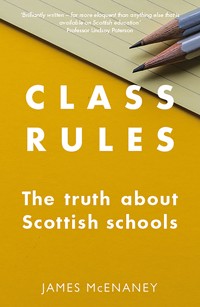
Every single person in Scotland has some kind of stake in the effectiveness of the nation's schools, so in writing this book my goal was to explain the intricacies and inconsistencies of the system, and to explore its strengths and weaknesses, in a way that would make sense to as many people as possible. How much do we really know about the state of Scottish education? Why do inequalities continue to dictate the school experiences of children across the country? What can be done to address the problems in the school system? James McEnaney does what he claims pundits and politicians cannot or will not do… tell the truth about Scottish schools. Class Rules makes the key issues and information surrounding Scotland's education system accessible to all. McEnaney delves into the successes and failures of the Curriculum for Excellence, interrogates the rhetoric around closing the 'attainment gap' between the richest and poorest pupils, and considers the impact of the global Covid-19 pandemic. Most importantly, this book also looks to the future to ask what changes can be made to improve the system for young people across the country, and is a must-read for anyone interested in the future of schools in Scotland.
Das E-Book können Sie in Legimi-Apps oder einer beliebigen App lesen, die das folgende Format unterstützen:
Seitenzahl: 324
Veröffentlichungsjahr: 2021
Ähnliche
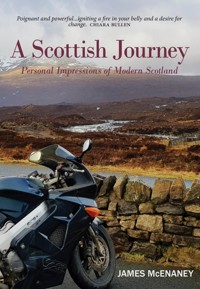


















JAMES MCENANEY is a journalist, author, lecturer and former secondary school teacher. He is a leading commentator on Scottish education, having investigated a range of issues affecting schools for publications including The Guardian, The Times, The Herald, The Sunday National, The Ferret and many more. He has contributed chapters to two anthologies – A Nation Changed? The SNP and Scotland Ten Years On and Scotland the Brave? Twenty Years of Change and the Future of the Nation – and is the author of A Scottish Journey: Personal Impressions of Modern Scotland.
First published 2021
ISBN: 978-1-910022-94-8
The author’s right to be identified as author of this book under the Copyright, Designs and Patents Act 1988 has been asserted.
Typeset in 10.5 point Sabon by
Main Point Books, Edinburgh
© James McEnaney 2021
Contents
Introduction
Timeline
1 A (Very) Brief History of Scottish Schools
2 A Curriculum for Excellence?
3 Closing the Attainment Gap
4 Making Sense of the Statistics
5 A Crisis in our Classrooms?
6 Coping with Covid
7 Finding Out What Works
8 Building Back Better
9 Conclusions
More Ideas for Improving Scottish Education
Selected Data Sources
Acknowledgements
For Ruth and Ciaran, still the most important people in Scotland, and for all of those who believe in a better future.
Introduction
WHEN THE FIRST coronavirus lockdown began in March 2020, a book on Scottish schooling – the idea for which had been brewing for months – was going to be my great personal achievement. While some people were learning languages, nurturing sourdough starters or finally getting the loft organised, I would be pulling together all my work from the past few years, and maybe adding some contributions from a range of others across the education system, in order to finally do what no one else would: tell people the truth about Scottish schools.
But it turns out that living through a deadly global pandemic isn’t particularly conducive to high levels of concentration, productivity or self-belief; 2020 came and went without a single word committed to a page, as did the first few months of 2021.
And then, on the ninth of March, I received the following email out of the blue from Gavin MacDougall of Luath Press, publisher of my first book, A Scottish Journey:
Would you be interested in writing/compiling a book on the future of education in Scotland? If so, happy to arrange a time for a phone call to discuss.
Best wishes,Gavin
A frantic fortnight later, with an outline submitted and a rough publication date established, I had agreed to finally write the book that I had been thinking about for nearly two years. The idea behind it hasn’t really changed. Over the course of the coming chapters I am going to help you cut through the endless political grandstanding, media misrepresentations, impenetrable statistical releases and pernicious class-based assumptions that obscure so much of Scottish education and, with it, the reality of our society as a whole.
Put simply: I am indeed going to tell you the truth about Scottish schools.
But before we get to that, I should probably let you know exactly where I’m coming from. Back in 2010, a couple of years after leaving university with an English degree and no plans whatsoever, I reluctantly applied to become a teacher. By the time I got around to it, however, the deadline had long since passed, and I was relieved to discover that courses at both Strathclyde and Glasgow universities were already full – but then the University of the West of Scotland invited me for an interview and, soon after, offered me a place. A few weeks later, I was a student teacher; a year after that, I was preparing my first lessons in my own classroom.
In Scotland, new teachers are offered one year of guaranteed work as part of the national induction scheme. Most soon-to-qualify teachers apply to the programme and rank their top five preferences of local authorities in which to be placed, but there is another option: you can tick the box. Doing so means that you agree to be sent to any part of the country – it could be somewhere you’ve never been or a school five minutes from your house – but in exchange you receive an extra £6,000 if you’re a primary teacher and £8,000 if you work in a secondary school.
I had recently gotten engaged and thought an extra eight grand sounded like a fantastic idea, so I ticked the box, took the cash, and was sent to teach at Arran High School, a job that I am utterly convinced will forever be the best I ever had. I was incredibly lucky to find myself in an English department run by Alan Kelly, a brilliant and hugely experienced teacher who has probably had more of an impact on my adult life than anyone else outside of my family. When I met him, I was 24years old, excited and eager but a bit daunted nonetheless. On my first day, he sat me down in my new classroom and asked me, straight up, can you teach?
‘Yeah… I think so.’
‘Good.’
He told me that working in such a small school – we made up two thirds of the entire English staff – and in his department meant that, if I was up for it, I’d be allowed to get on with the job, and I’d have as much support as possible to get really good at it. That was true for every single minute of the two years for which I was lucky enough to work with Alan before he took a well-earned retirement, and remained the case under his replacement.
At the end of my first year at the school I secured the English teacher job on a permanent basis. My wife and I were married that summer, and we moved into a little terraced house that looked out onto the fields and hills behind Lamlash. We got a dog, a border collie that I trained on the beach every day, and near the end of my third year on the island (our second together) we had a son. I loved those years on Arran. I had every intention of staying for a very long time and giving my boy a very different childhood from my own – but sometimes life gets in the way. In the end, circumstances largely revolving around healthcare, transport, and the general antipathy with which the central belt treats life on the islands meant that my family and I reluctantly returned to the mainland in October 2014.
Since then, I have been a college lecturer. I deliver a variety of ‘communication’ units to students in a range of different courses, but also teach National 5 and Higher English to people who have, for whatever reason, left school without them. It has been a privilege to help those looking for a second chance in education, although I have lost track of the number who should never have needed to be in my class in the first place: those who have only been forced to spend additional years attaining these qualifications in a college – sometimes at significant short-term and long-term expense – because they were failed by a school system designed for the benefit of others.
But in recent years something else has happened. Quite by accident I have drifted back towards an earlier, thus far frustrated, ambition: journalism.
It began with regular comment pieces on CommonSpace, a new media platform established by the Common Weal think tank following the 2014 independence referendum. Then in 2015, one of my first forays into Freedom of Information (FOI) requests turned into a year-long battle with the Scottish Government to uncover the truth about their standardised testing programme. In the end I revealed that the policy didn’t come out of any sort of detailed consultation – in fact, the government’s total written advice on the issue amounted to just four unsolicited emails from two individuals. Winning that fight, and publishing information that the government had been desperate to keep secret from the public, ended up being just the start.
After that, either alone or alongside the likes of Andrew Denholm (then of The Herald), Rob Edwards (The Ferret) or Severin Carrell (The Guardian), and very often supported by CommonSpace editor Angela Haggerty, I continued to investigate a range of issues in Scottish education. I learned to combine my knowledge of the system with the various complexities of FOI legislation to break stories like the narrowing options for pupils in poorer areas of Scotland, the lack of libraries in schools across the country, or even Prince Charles’ secret lobbying of the Scottish Government on behalf of Teach First, a fast-track teacher training provider from England. I also began to analyse and explain existing public data such as annual exam results and literacy rates, and in 2020 both predicted and then helped to break the story of the Scottish Qualifications Authority (SQA) results scandal.
Through all this time I had become increasingly frustrated by the fact that so much of the story of our schools remains inaccessible to many people, making it impossible for the public to know what is really going on and, as a consequence, undermining both faith in the system and our ability to hold our leaders to account.
Every single person in Scotland has some kind of stake in the effectiveness of the nation’s schools, so in writing this book my goal was to explain the intricacies and inconsistencies of the system, and to explore its strengths and weaknesses, in a way that would make sense to as many people as possible. I am not attempting to map the entire landscape of the Scottish education system, nor provide all the answers for how to make things better; instead, my focus has been on the issues that dominate the national debate over schooling – such as the ‘attainment gap’, teacher numbers or the problems with Curriculum for Excellence – and the changes that could make the biggest difference to young people’s experiences in the classroom.
Every chapter that follows, and even a number of the sub-chapters, could and probably should be whole books in their own right. There are times when I have had to sacrifice a bit of depth in exchange for much-needed clarity, which inevitably means that certain features, problems and controversies have been dealt with only briefly, while others have not been included at all. The physical state of Scotland’s schools, the ongoing debate surrounding the inclusion agenda and the role of religion in our education system are just three of a range of important issues that I have, at least on this occasion, been unable to explore.
While putting these pages together I found myself examining a system that may not quite be collapsing, but which is certainly under enormous and unsustainable strain. One where both teachers and pupils are too often the victims of a compromised curriculum, insufficient support, unreliable and even misleading data, poor-quality journalism and commentary, a dearth of serious leadership, the weight of an imagined past, the pressure of impossible expectations, the grip of small-c conservatism, and politicians’ willingness to weaponise our kids for their own benefit. In short, we have a school system that is both in need of and ripe for radical – even revolutionary – reform.
But it goes further than that. I have spent the last six years investigating and analysing the challenges facing Scottish education, immersing myself in official data and even helping to expand its scope – but had never brought all of it together before now. I always knew that the various problems affecting the system were endlessly interconnected, and that social inequality is ultimately the main factor influencing school and pupil performance, but the sheer, relentless, devastating logic of that reality has become clearer than ever. Attainment follows affluence and pass rates map postcodes. Those with the heaviest burdens face the greatest barriers. The system works for who it works for.
The truth about Scottish schools is that it’s not just about classrooms – it’s also about class.
Timeline of Scottish Schooling
1496
WORLD LEADERSScotland becomes the first country in the world to make schooling compulsory, although this only applies to the eldest sons of landowners.
17th century
PARISH SCHOOLSThe Reformationist attempt to provide a school in every parish is largely successful in the Lowlands, but far less so in the Highlands.
18th century
CULTURAL EXPANSIONThe school system is further expanded into the Highlands as attempts to suppress and supplant Gaelic culture continue.
1872
EDUCATION ACTA system of state schooling is introduced as most voluntary and religious schools are brought under official control. Schooling is made compulsory from ages to 5 to 13.
1888
SCHOOL QUALIFICATIONSThe Scottish Leaving Certificate is introduced and the first ever Highers awarded.
1918
EDUCATION ACTCatholic schools are brought into the state system but with the Church retaining some control over curriculum and staffing.
1962
NEW QUALIFICATIONSUpdated Highers and new O Grades are introduced to provide pathways for the increasing numbers of pupils staying at school beyond the leaving age.
1986
STANDARD GRADENew qualifications are introduced with courses available at three levels: credit, general and foundation. The intention is to ensure that all pupils leave school with recognised qualifications.
1999
DEVOLUTIONWith the Scottish Parliament reconvened, education is now fully devolved. Scottish Labour wins the first election with a manifesto that promises to build a ‘world class’ education system.
2002
NATIONAL DEBATE ON EDUCATIONThe government launches a consultation to consider the future of Scottish education, a process which will culminate in the development and delivery of a new national curriculum for schools.
2010
CURRICULUM FOR EXCELLENCEThe implementation period of the new curriculum officially begins as the previous 5–14 system is replaced. New S1 pupils will be the first to sit reformed qualifications in 2014.
2020/2002
THE PANDEMIC ERASchools are closed by the first Covid lockdown and do not reopen for most pupils before summer. The government apologises for an unfair exam replacement system. Further Covid disruption continues into 2021 with a second national schools closure and the cancellation of exam diets.
1
A (Very) Brief History of Scottish Schools
SCOTLAND’S SCHOOLS USED to be the envy of the world, right? Home of the ‘lad o’ pairts’, that boy of humble means who pulls himself up by his muddy bootstraps, using the power of education to transcend his circumstances and climb the social ladder. It’s a good story, but was it ever true? Yes and no. Mostly no. In fact – despite assertions to the contrary – it is probably truer now than it ever was in those largely imagined idyllic years.
Before we start digging into the latest data and deconstructing Curriculum for Excellence, or asking questions about where Scottish education is going, it probably makes sense to be a little bit clearer about how we got to where we are just now.
Pre-20th Century
In 1496 Scotland became the first country to make schooling compulsory, although this applied only to the first-born sons of landowners rather than to the population as a whole. Throughout the 1600s the Reformationist model of parish schools, which received funding from landowners and provided instruction in religion and literacy, was successfully expanded. For some, these schools were also a route to universities, hence the eventual development of the ‘lad o’ pairts’ myth of social progress. Although the system opened up avenues for some it was still a long way from being genuinely meritocratic, with the greatest benefits still out of reach to the poor.
Although the target of a school in every parish had been largely met in the lowlands by the end of the 17th century, the same was not true in the Highlands – but during the 18th century the broader push to suppress and supplant Gaelic culture was continued in part through schools teaching classes in English, many of them run by the Society in Scotland for Propagating Christian Knowledge.
The 1872 Education (Scotland) Act finally brought a wide range of voluntary, philanthropic and religious schools under the shared control of the Scotch Education Department and locally elected boards, thus establishing a genuine system of ‘state education’. The Act also made schooling compulsory for children aged 5 to 13, and the leaving age would be raised by another year by the beginning of the next century.
The first Highers were awarded in 1888 as part of the newly introduced Scottish Leaving Certificate.
20th Century
With the passage of the 1918 Education (Scotland) Act, Roman Catholic schools were finally brought into the state system, although the Church retained some control over areas such as curriculum and staffing. Education authorities, which replaced the elected boards, were required to provide secondary schooling for all, but this was initially based on a selective system admitting a minority of children following an examination at 12 years old.
By the middle of the century the school leaving age had reached 15, and post-war social changes meant that an ever-increasing number of pupils were staying on. In response, the qualifications available to school pupils were reformed, with Ordinary Grade – usually known as O Grade – examinations introduced in 1962. The school leaving age was increased to 16 in 1973. By the mid-’80s new Standard Grades – structured in Foundation, General and Credit levels – replaced O Grades. Designed to ensure that everyone left school with some qualifications, their introduction was initially hampered by the industrial dispute over pay and conditions between teachers and the Thatcher government, which ran from 1984 to 1986.
In the final years of the 20th century, academic and vocational qualifications in Scotland were brought together under the umbrella of the newly formed SQA, while reforms known as Higher Still led to the introduction of new courses as part of attempts to develop a ‘unified curriculum and assessment system’.
The Post-Devolution Era
When the Scottish Parliament was reconvened in 1999, a Labour and Liberal Democrat coalition formed what was then known as the Scottish Executive. Education in Scotland had always been distinct from provision in other parts of the UK, but it would now become a formally and fully devolved issue – sadly, it would also go on to become a dominant and bitterly politicised issue throughout the parliament’s childhood and adolescence.
Little more than a year after the first Scottish election, one of the new parliament’s early achievements was the abolition of homophobic legislation, widely known as Section 28, which barred schools from ‘promoting homosexuality’. The law was struck down after a 99 to 17 vote, with the Scottish Conservatives opposing the change and both Winnie and Fergus Ewing of the SNP choosing to abstain. This early success, which was important for both practical and symbolic reasons, was achieved despite a vicious ‘Keep the Clause’ campaign which even included a (failed) private postal referendum funded by one-time SNP donor Brian Souter. But just a few weeks later a scandal broke as failures at the SQA meant thousands of young people received inaccurate or incomplete exam results. It took months to properly identify and tackle the problems, during which time the education secretary was replaced and the existing SQA board swept away.
2002 saw the launch of the ‘national debate’ as part of a review into Scottish schooling. Over the coming years, this process would eventually lead to the development of a whole new initiative intended to transform the quality of education in the country: the replacement of the old 5–14 system with Curriculum for Excellence (CfE). The new curriculum was dogged by problems throughout both its design and implementation stages but, despite significant concerns, CfE was officially introduced in 2010, the year when the first students due to sit new exams (to be available from 2014) started secondary school.
In March 2020, all schools in Scotland were closed as part of efforts to combat the coronavirus pandemic. Most pupils would not return before the new school year began in August. Exams were cancelled, and an alternative system based on statistical moderation of grades submitted by teachers was put in place. In August, education secretary John Swinney was forced into a humiliating apology before parliament when it became clear that this process had discriminated against pupils from poorer areas. The approach was abandoned, and all reductions to the original, teacher-assigned grades were reversed.
Schools reopened as normal in August, but months of increasing disruption culminated in a second national closure, and the commencement of remote learning, from January 2021. A gradual reopening prioritising the youngest pupils followed. When schools did fully reopen many students in S4–6 found themselves facing an intense and controversial assessment schedule to replace the national exams that had been cancelled months earlier.
2
A Curriculum for Excellence?
IT IS IMPOSSIBLE to analyse the current state of Scottish schooling without understanding the system that underpins it: the supposed Curriculum for Excellence. Too often, however, discussions regarding the curriculum are riddled with assertions and inaccuracies, not least the claim that the entire project was some malign nationalist scheme instigated by the SNP.
So, before we go any further, let’s set the record straight.
Origins of CfE
Scottish education has always been distinctive and independent from provision in the UK as a whole, but with the advent of devolution, and return of the Scottish Parliament, it was inevitable that even greater attention would fall on schools. Responsibility for education was, alongside healthcare, one of the most important policy areas controlled by the new Scottish Executive (since given the more appropriate name of the Scottish Government), and while English schools were being directed towards the new Academies programme developed by the UK Labour Party, Scotland – led by a Labour and Liberal Democrat coalition – followed a different path.
In 2002, a ‘national debate on education’ was launched in order to spark a serious discussion about the future of schooling in the country. It asked about the sort of big-picture issues that are rarely, if ever, considered, rather than directing people to provide narrow responses to a series of overly restrictive questions. More than 20,000 people from a wide range of backgrounds participated in the national debate, offering their opinions on what was working well, what needed to change and, ultimately, what education should be for.
In (very) general terms, the responses revealed continuing support for Scotland’s comprehensive and non-selective system of schooling, but also highlighted the need for greater flexibility in the curriculum. Another key outcome was the acceptance that assessment, at all levels, required significant reform. Put simply, it was felt that the existing curricular framework, known as 5–14, meant that too much time was spent testing children, rather than teaching them, and that the focus of these assessments was too narrow. National testing was seen as particularly problematic and restrictive, constraining children’s educational experiences in pursuit of ever-improving statistics.
As Scotland moved into the 21st century, and its new parliament began to flex its muscles, the time had come for a new approach to educating its children.
The Design of the Curriculum
It is one thing to decide that things must change – actually making it happen is something else entirely. The existing 5–14 curriculum was seen as too proscriptive and restrictive, and a central goal of reforming it was to free teachers from this sort of bureaucracy and allow them to get on with actually teaching the young people in their care. But some form of framework is still required to outline what young people will learn, when they will learn it, and how that learning will be recognised.
Scotland’s new curriculum was supposed to support learning not from the ages of 5–14 but rather from 3–18, meaning that CfE would – at least in theory – offer a coherent but flexible learning experience from the early years right through to the end of secondary school. The idea was to equip young people with ‘the knowledge, skills and attributes needed for life in the 21st century’ – and that was a goal that attracted a level of broad social and cross-party support that seems unthinkable today. Unfortunately, the more CfE was developed the further it seemed to stray from those early ambitions, a problem which emerged out of a series of fundamental errors throughout the process and for which there is plenty of blame to spread around.
It all begins with the ‘four capacities’, which sit at the very heart of the curriculum and describe not what we want pupils to learn but rather who we want them to become: successful learners, confident individuals, responsible citizens and effective contributors. A successful learner will, for example, have ‘enthusiasm and motivation’ and will be able to ‘think creatively and independently’; a responsible citizen will have ‘respect for others’ and the ability to ‘develop informed, ethical views of complex issues’; confident individuals will possess ‘a sense of physical, mental and emotional wellbeing’ and be able to ‘assess risk and make informed decisions’; and effective contributors will show ‘an enterprising attitude’ while they ‘solve problems’ and ‘apply critical thinking in new contexts’.
The fundamental principle of designing a school curriculum around these sorts of attributes is by no means unique to Scotland but these broad – some may say vague – statements with interchangeable descriptors have become a lightning rod for critics of CfE who bemoan a lack of detail and, they claim, rigour.
After the four capacities come the ‘seven principles of curricular design’: challenge and enjoyment, breadth, progression, depth, coherence, relevance, and personalisation and choice. While developing their plans to ensure that the four capacities are explored and attained, teachers are expected to take these seven principles into account. This takes place across the eight curricular areas of languages (including English literacy and foreign languages), maths, sciences, expressive arts, social studies, technologies, health and wellbeing, and religious and moral education. Primary teachers are of course responsible for all of this but the drive for cross-curricular learning meant that even in secondary schools the areas of literacy, numeracy and health and wellbeing would be regarded as the ‘responsibility of all’.
There was also a series of five ‘Building the Curriculum’ papers to consider (the latter is in five parts and the whole collection runs to hundreds and hundreds of pages) and, later, dozens of Principles and Practice documents described as ‘essential reading for practitioners’.
But for all that paperwork there was actually very little detail, demands for which became stronger as the intended implementation date crept closer. As a consequence, the curriculum was broken down into the now infamous ‘Experiences & Outcomes’: a vast, overlapping array of ‘I can…’ statements that begin to define the things that students should be able to do and, often only by extension, the things that they should know.
There are more than one thousand ‘Es & Os’ across five levels covering nine curricular areas at early years (level 0), primary 1–3 (level 1), primary 4–7 (level 2) and S1–3 (levels 3 and 4). Here are a few examples:
Literacy 3-21a
I can use a range of strategies and resources and spell most of the words I need to use, including specialist vocabulary, and ensure that my spelling is accurate.
Numeracy 1-07b
Through exploring how groups of items can be shared equally, I can find a fraction of an amount by applying my knowledge of division.
Health & Wellbeing 2-23a
While working and learning with others, I improve my range of skills, demonstrate tactics and achieve identified goals.
Science 0-06a
I have experienced the wonder of looking at the vastness of the sky, and can recognise the sun, moon and stars and link them to daily patterns of life.
While the Es & Os can generally be made to make sense by professionals they nonetheless feel like they have been designed to be obtuse, almost as if the real goal all along was an exponential multiplication of teachers’ workload. It’s not even that they’re wrong – young children should experience the wonder of looking at the vastness of the sky, and we should value that sort of experience as much as any other, but in trying to atom-ise the curriculum down to this sort of level, those responsible seriously undermined the freedoms that were supposed to be at the heart of the reforms.
The Es & Os are a particularly good example of what went wrong with CfE. Worries about a lack of specificity were addressed not through exemplification but rather by a process of itemisation – instead of examples to look at teachers were basically being given boxes to tick. This caused problems not just because the information being provided was still too vague but also because it encouraged an audit-driven culture in classrooms.
For years after the launch of the Es & Os teachers raised concerns about the workload implications of an approach built on micro-management rather than trust. In some schools, staff went through the laborious process of ‘unpacking’ all those curricular organisers, breaking them down to even more minute levels, at the behest of management. Inevitably, the whole thing became an exercise in performative form-filling, with Es & Os shoe-horned into learning experiences – recorded in a planner, written on the board or stickered into a jotter – just to keep the powers that be happy, and whole new IT frameworks (there was even a website called The CfE Machine) being developed to record the information.
The people in charge did eventually accept that the Es & Os were not working – but their solution was the development of an even more extensive list of ‘benchmarks’ to explain what they meant. So in sciences, for example, outcome 2–15a (‘By contributing to investigations into familiar changes in substances to produce other substances, I can describe how their characteristics have changed’) was simplified through a transformation into five separate benchmarks:
• Investigates and explains physical changes to the properties of materials which are fully and partially reversible, for example, salt dissolving in water, chocolate melting and water freezing.
• Uses scientific vocabulary such as ‘melting’, ‘freezing’, ‘evaporating’ and ‘condensing’ to describe changes of state.
• Investigates and records chemical changes to the properties of materials which are irreversible, for example, cooking, rusting and striking a match.
• Observes and identifies some of the signs of a chemical reaction, for example, production of bubbles, colour/ texture change and heat given out/taken in.
• Explores and describes the characteristics of solids, liquids and gases, for example, solids retain the same volume and shape, liquids keep the same volume but the shape changes to fit the container and that gases change shape and volume to fill the container.
That the people in charge were unable to see just how ludicrous this whole process was says a great deal about the quality of leadership in Scottish education.
CfE expects teachers to not just deliver a curriculum but to actively construct, review and develop it, all within the context of their own school and with their own pupils in mind. And then at some point we’d also like them to find the time to actually teach the kids, if that’s not too much trouble. The sheer volume of workload and expectation was never understood by the people running the show, presumably because they weren’t the ones who would actually be in classrooms trying to make it all work, and that critical mistake meant that any idea of a transformation in Scottish schooling was already out of reach before CfE really got going.
Imperfect Implementation
Officially, implementation of CfE took place in 2010, because this was the year in which the first pupils due to sit the new exams in 2014 would enter secondary school. Those changes to senior school qualifications are worth explaining.
Prior to the reforms, the vast majority of students sat eight Standard Grades, which they completed over third and fourth year and which allowed them to be presented at two levels: everyone sat the middle level (General) paper, with some then also attempting the higher level (Credit) and others completing the lower level (Foundation). This dual-entry system worked well for students operating at the boundaries between the levels by ensuring that everyone had something to aim for and a safety net if they didn’t quite manage it. Those who achieved Credit level (grades one or two) would generally move on to study up to five Highers, while those with General (grades three or four) or Foundation levels (grades five or six) had the option of completing Intermediate courses, which were designed as both standalone (and well respected) qualifications and a stepping-stone to the next levels if appropriate. A relatively small number of pupils also completed other courses like Advanced Highers.
With the introduction of CfE, both the Standard Grade and Intermediate frameworks were swept away, replaced by qualifications known as Nationals: National 5 is, at least officially, broadly equivalent to a Credit Standard Grade or Intermediate 2; National 4 covers the General Standard Grade and Intermediate 1; and National 3 is comparable to a Foundation Standard Grade. Highers and Advanced Highers were retained but reformed.
The changes have been controversial for several reasons. First of all, the transfer to National 4 from General Standard Grade remains contested, with many teachers insistent that a pass at National 4 is by no means equivalent to a grade 3 under the old system. National 4 and below also do not have final exams or even grades, with success instead measured on a pass or fail basis through the completion of internal assessments and a final ‘Added Value Unit’. An exam-free approach to qualifications is perfectly workable (colleges, for example, make extensive use of it) but only applying it to the ‘lower’ qualifications inevitably led to accusations that a two-tier system had been created.
National 4 should, in theory, provide a stepping-stone for those not quite ready for National 5, but progression rates in many subjects are incredibly low. Of course, not all National 4 students will be able to move on to National 5, just as not all National 5 students are able to move on to Higher, but for those who are able there is a feeling that the National 4 is letting them down. At the same time, the lack of grades means that some who complete National 4 may move on to National 5 when they are not, in fact, ready to do so.
The switch to Nationals also affected the significant number of pupils who achieved a General Standard Grade and then used the Intermediate pathway to continue their progression. By removing this alternative qualifications route, CfE-related reforms have arguably narrowed the options available for those young people who do not progress seamlessly into Highers in fifth year.
Using 2010 as the official implementation date for CfE meant that a curriculum that was supposed to transform Scottish schooling, with the goal of recognising the full breadth, depth and value of education from the ages of three to eighteen, was ultimately defined by its relationship to the high-stakes exam system that would continue to dominate those final years of secondary schooling. The tail was already wagging the dog.
Aside from this fundamental, philosophical failure, teachers once again complained – again with justification – about the lack of practical support and exemplification from national bodies. Teachers at all levels were now expected to create their own course assessments in line with the reformed curricular demands. There are plenty of advantages to such a system, not least the ability to integrate assessment into learning in increasingly seamless ways, a process which should also make assessments more reliable by testing what students really know and can do, not the things they’ve been able to cram into their heads the night before a standalone exam.
It all hinges, however, on teachers having enough confidence to make it work, and that depends on providing them with sufficient support. Key to this is exemplification, where the standards at each level, or for different aspects of a course, are clearly demonstrated. If you show a teacher a good range of examples of what is expected then they can make a brilliant, bespoke course that is both supportive and challenging, but if all you do is hand over page after page of vague and repetitive guidance you achieve the opposite, because the lack of clarity pushes teachers towards safety-first, belt-and-braces tactics built on existing resources and approaches.
Councils made the problems worse by insisting on bureaucratic ‘tracking and monitoring’ systems that revealed their basic lack of trust in the teaching profession. This was best exemplified through the demand that every pupil at every stage be continuously graded as either ‘Developing, Consolidating or Secure’ at the relevant curricular level for their age. These sorts of approaches made massive demands on teachers’ time, undermined the very principles of the new curriculum, and drove schools even further towards a grim, audit-based, get-all-the-boxes-ticked culture that did nothing to improve the capacity of teachers and certainly damaged the experiences of pupils.
Another common criticism of the implementation of CfE is that those who raised concerns about the structure of the curriculum, or the approaches being adopted, were simply ignored in favour of those who could help to maintain the positive narrative. There was, and remains, a feeling that those in charge of the system are only interested in the opinions of those who will tell them what they want to hear, the sort of people that I once heard described, quite brilliantly, as the ‘tooth polishers’ of Scottish education.
The obvious problem is that dismissing criticism, whether it is because of defensiveness, a failure to grasp the issues at hand, or the desire to secure the next promotion, is a disastrous way to run an education system. Teachers warned for years about workload implications, the lack of support, and a host of other developing problems but were all too often ignored. As we will see later, a significant number of experienced staff left the profession over the last ten years and, anecdotally at least, problems linked to CfE are often cited as a factor in these decisions.
For all the mistakes that were made, however, there is another massive issue that affected the implementation of CfE, and it is one that is far too often overlooked.
Following a hung parliament in the 2010 UK General election, a Conservative and Liberal Democrat coalition responded to the 2008 financial crisis by imposing austerity on (most of) the population. Driven by right-wing ideology rather than economic necessity, it was an attempt to balance the books on the backs of the poor, further concentrating wealth and power in the hands of a few. In the years that followed the social fabric of the UK was ravaged: as ever, the poorest paid the highest price while those with most just took more and more.
Socialism for the rich and disaster for the rest.
It was against this backdrop that CfE




