


0,49 €
Niedrigster Preis in 30 Tagen: 0,00 €
Niedrigster Preis in 30 Tagen: 0,00 €
Mehr erfahren.
- Herausgeber: DigiCat
- Kategorie: Gesellschafts- und Liebesromane
- Sprache: Englisch
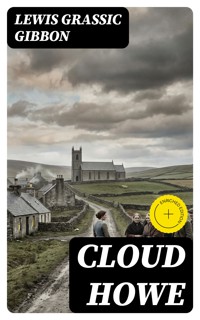
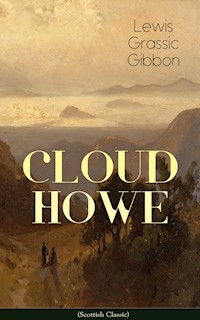
In "Cloud Howe," Lewis Grassic Gibbon intricately weaves a tale set against the backdrop of early 20th-century Scotland, exploring the tension between tradition and modernity. The novel unfolds through lyrical prose, characterized by Gibbon's vivid imagery and his deft use of dialect, immersing readers in the Scottish landscape and the lives of its characters. This work is notable for its deep psychological insight and social commentary, reflective of the Modernist movement yet steeped in the Scottish literary tradition, as Gibbon captures the nuances of life in the fictional village of Kinraddie during a time of profound change. Lewis Grassic Gibbon, born James Leslie Mitchell, was profoundly influenced by his upbringing in rural Scotland and his experiences during World War I. His commitment to capturing the Scottish identity and the struggles of rural communities is evident in "Cloud Howe," which mirrors the conflicts he witnessed and the societal transformations of his own time. Gibbon's nuanced understanding of the Scottish landscape and culture provides an authenticity that enhances the novel's exploration of human resilience. I highly recommend "Cloud Howe" to readers who appreciate a rich narrative that interrogates the complexities of identity and belonging. Gibbon's masterful storytelling not only draws you into the lives of his characters but also invites reflection on the broader sociopolitical dynamics of early 20th-century Scotland, making it an essential read for anyone interested in Scottish literature and its historical context. In this enriched edition, we have carefully created added value for your reading experience: - A succinct Introduction situates the work's timeless appeal and themes. - The Synopsis outlines the central plot, highlighting key developments without spoiling critical twists. - A detailed Historical Context immerses you in the era's events and influences that shaped the writing. - A thorough Analysis dissects symbols, motifs, and character arcs to unearth underlying meanings. - Reflection questions prompt you to engage personally with the work's messages, connecting them to modern life. - Hand‐picked Memorable Quotes shine a spotlight on moments of literary brilliance. - Interactive footnotes clarify unusual references, historical allusions, and archaic phrases for an effortless, more informed read.
Das E-Book können Sie in Legimi-Apps oder einer beliebigen App lesen, die das folgende Format unterstützen:
Veröffentlichungsjahr: 2022
Ähnliche


Cloud Howe
Table of Contents
Introduction
Cloud Howe unfolds where the longing for renewal collides with the granite facts of community, faith, and work, tracing the delicate line between private hope and public duty as a young woman, her minister husband, and a hard-bitten northern town test one another’s convictions amid shifting winds of belief, class, and memory, so that every sermon, season, and whispered judgment becomes a measure of how a people carry the past while stumbling toward an uncertain modern future told in a voice whose cadence binds field, kirk, and street into a single, questioning song that listens for dignity in ordinary lives and the costs demanded by change.
Lewis Grassic Gibbon’s novel belongs to the Scottish modernist tradition and stands as the central, middle movement of A Scots Quair, first published in the early 1930s during the unsettled interwar years. Its setting is northeast Scotland, drawing on the Mearns and a small town environment where the kirk, the fields, and the streets meet. The book’s realism is tempered by stylistic experiment, and its social canvas is firmly local yet porous to the wider currents of national and international change. Readers encounter not nostalgia but an exacting portrait of a community balanced between tradition and emergent modernity.
At its outset, the novel follows Chris Guthrie as she leaves the farming life for a new start in a town, newly married to a minister whose vocation draws them into the heart of civic and spiritual life. The local economy creaks, the congregation has factions, and the streets carry the after-rumour of war, but the narrative remains intimate, attentive to Chris’s sensibility and to the collective murmur around her. Gibbon weaves supple, close-third narration with choric passages that echo the town’s gossip and conscience, achieving a tone that is by turns lyrical, sardonic, and quietly compassionate.
Faith and doubt, duty and desire, solidarity and self-preservation: Cloud Howe explores these tensions through the daily acts that bind and divide a small place. Religion is not merely doctrine but an institution entangled with power, poverty, and pride, and the novel asks what compassion looks like when livelihoods fail and certainties thin. It is also a story of a woman negotiating autonomy within marriage and community, measuring her sense of self against roles prescribed by kin, kirk, and custom. The land and weather are never backdrops; they press upon the human drama, insisting on patience, endurance, and change.
Much of the power lies in Gibbon’s language, which blends Scots idiom with standard English in cadences tuned to thought and talk rather than to strict literary decorum. The result is an elastic, musical prose that can pivot from harsh comedy to sudden tenderness and from collective chorus to inward reflection without losing momentum. Readers new to the idiom quickly find that rhythm, context, and repetition carry meaning, and that the communal voice enlarges rather than obscures the characters. The structure encourages a double vision, hearing the town judge and jest while feeling the private costs beneath the noise.
For contemporary readers, Cloud Howe matters because it treats perennial dilemmas with uncommon clarity. It considers how communities survive economic strain, how public speech shapes belief, and how institutions earn or squander trust, questions that resonate in eras of precarity and polarized debate. The novel’s attention to women’s labour, to the ethics of care, and to the pressures of migration between countryside and town remains acute. Its defense of local speech as a vessel for complex thought has renewed significance in discussions of language, class, and identity. And its sense of place offers an ecological awareness without sentimentality.
Approached with patience for its rhythms and openness to its moral ambiguities, the book rewards the reader with a portrait of Scottish life that is both particular and capacious. It can be read on its own terms, yet it gains depth as the central panel of the trilogy, where personal renewal is tested by the communal weather of the interwar years. Without rushing to melodrama, it builds pressure scene by scene, inviting reflection rather than proclamation. What endures is its steady attention to ordinary lives under extraordinary strains, and its conviction that language itself is a form of witness.
Synopsis
Cloud Howe, the second novel in Lewis Grassic Gibbon’s A Scots Quair, follows Chris Guthrie into the unsettled years after the First World War. Having left the farming world of Kinraddie behind, she marries a Church of Scotland minister, Robert, and moves to the small town of Segget. The shift from croft to parish brings new rhythms of duty and observation. The novel situates Chris within a community still counting losses and learning new habits of survival, laying out the tensions of a place where church, commerce, and custom contend for authority amid the broader changes remaking Scotland.
Segget is presented as a layered society—shopkeepers and workers, kirk elders and aspiring politicians—held together by habit yet riven by rivalries. Robert’s arrival as minister excites curiosity and resistance; he speaks with fervor about conscience, charity, and social justice, unsettling the town’s comfortable arrangements. Chris, observant and self-contained, measures people against the land and seasons she still cherishes, even as she adapts to streets and pews. Gibbon’s narrative blends close interiority with communal perspective, interlacing Chris’s viewpoint with chorus-like passages that capture the town’s shifting gossip, grievances, and guarded sympathies.
Early episodes in Robert’s ministry trace the fault lines of Segget. He visits the poor and the proud alike, preaching sermons that press beyond decorum. His zeal tests the patience of those who prize order over candor, and church business meetings become miniature dramas of class and conscience. Chris negotiates her own place within the parish’s women’s circles, where kindness and competition mingle. The couple’s home becomes a crossroads for arguments about duty and change, while the narrative keeps one eye on everyday details—the cadence of speech, the weather’s hard edge—that foreshadow deeper storms within the community.
The economic backdrop shadows nearly every scene. Postwar contraction strains livelihoods; small trades wobble, and young people look outward for prospects. Political talk grows louder, from temperance campaigns to meetings where new movements try to name old injustices. Robert leans into public causes, convinced that faith must address hunger and humiliation, not just personal salvation. Chris, pragmatic and empathetic, sees the cost of zeal and the limits of rhetoric, yet she is drawn to the moral challenge of their work. The town’s leaders, cautious and protective of privilege, maneuver to contain both unrest and the minister’s unsettling influence.
Set-piece moments—crowded services, committee quarrels, and rituals that mark births, unions, and farewells—show how private pain and public duty are knotted together. The church remains the stage on which Segget plays out its anxieties, and Robert’s uncompromising tone sharpens divisions. Chris senses the strain widening between ideals and everyday compromise, trying to steady a household while registering the town’s moods. The narrative’s recurring imagery of sky and valley underscores the scale of forces pressing on human plans, as weather and land outlast the tempers and schemes that preoccupy Segget’s rulers and dissenters alike.
A pivotal crisis gathers from these tensions, bringing Robert’s convictions into direct collision with community expectations. The resulting upheaval tests loyalties, exposes reputations, and leaves Chris confronting the endurance required to live with both love and loss. Without resolving every quarrel, the novel brings Segget to a chastened recognition of consequence, while Chris’s path bends toward a future in which the pressures of a larger, harsher modern world will grow more insistent. The close of the story points ahead, carrying forward questions raised in Segget to the next phase of Chris’s life.
Cloud Howe endures as a searching portrait of faith, class, and change in interwar Scotland. It bridges rural memory and urban modernity, placing a woman’s consciousness at the center of debates usually told from pulpits or platforms. Gibbon’s blend of lyrical prose, Scots-inflected idiom, and polyphonic town commentary creates a distinctive social chronicle. By tracing how ideals meet institutions—and how a community talks itself into and out of courage—the novel achieves a resonance beyond its time, preparing the trilogy’s movement toward the city while keeping its gaze steady on the costs and consolations of belonging.
Historical Context
Cloud Howe (1933) by Lewis Grassic Gibbon, the second volume of A Scots Quair, is set in the fictional small burgh of Segget in the Mearns of northeast Scotland during the years after the First World War. The community’s life turns around established institutions—the Church of Scotland (the kirk), town council, local mills, shopkeepers, and landowners—typical of interwar Scottish burghs. The war’s losses and the 1918–1919 influenza pandemic left many parishes marked by bereavement, shaping attitudes to faith, family, and public duty. Against this backdrop, the novel observes how national pressures filter into a provincial setting, altering hierarchies and expectations formed in the Victorian and Edwardian eras.
Demobilization in 1919 brought rapid social change across Scotland. Returning servicemen sought employment and decent housing, pressing national and local authorities to act. David Lloyd George’s “homes fit for heroes” promise helped drive the Housing, Town Planning, etc., Act 1919 (the Addison Act), which enabled councils to build subsidized homes; Scottish burghs and counties began new estates on their outskirts. Industrial unrest accompanied this transition: Glasgow’s 1919 40 Hours Strike culminated in clashes in George Square and the deployment of troops. Even distant from Clydeside, small towns felt the ripple effects in wages, union organization, and anxieties about order.
The immediate postwar boom in agricultural prices collapsed in 1920–1921, hitting northeast Scotland’s mixed farming and tenant systems. Government wartime guarantees were ended in 1921, and falling grain and livestock prices forced rent pressures, wage cuts, and farm consolidations. Many estates reduced staff or sold land, and seasonal workers faced irregular employment. Rural depopulation, already underway since the late nineteenth century, continued as young people left for towns or emigrated. For communities like the Mearns, these shifts strained traditional ties between owners, tenants, and laborers. The altered countryside frames debates in the novel about security, responsibility, and changing livelihoods.
Segget, though fictional, reflects small Scottish weaving and linen towns whose fortunes waned in the interwar years. Textile centers in Angus, Kincardineshire, and Aberdeenshire had prospered earlier, but global competition, postwar market contractions, and modernization concentrated production elsewhere. Dundee’s jute dominated locally, while other towns saw mills close or reduce hours. Women made up a substantial part of the textile labor force, and irregular work reverberated through households, small shops, and parish relief. The novel’s attention to shops, mills, and burgh worthies echoes these structural changes, situating personal choices within the pressures of underemployment, indebtedness, and fading municipal prosperity.
Throughout the 1920s, labor conflict shaped Scottish public life. The 1921 miners’ dispute and “Black Friday,” when planned solidarity by rail and transport unions collapsed, weakened confidence in national bargaining. The 1926 General Strike further polarized opinion, with many small towns balancing sympathy for hardship against fears of disorder. Trade unions, friendly societies, and co‑operative societies organized relief, credit, and political education. Local rates and poor relief were persistently contested as unemployment rose. This environment informs the novel’s portrayal of class language and public meetings, where sermons, speeches, and committee debates translate national struggles into parochial judgments and alliances.
The Church of Scotland remained a central authority in burgh life, overseeing worship, charity, and moral discipline while negotiating its own reforms. The 1920s saw continued temperance campaigns and debates about the kirk’s social mission. In 1929 the Church of Scotland united with the United Free Church, reshaping parish boundaries and influence in many communities. Ministers and elders were drawn into disputes over poverty relief, youth work, and political agitation, while kirk sessions monitored respectability. By focusing on sermons, kirk committees, and the expectations they set, the novel examines how religious authority mediated between traditional duty and modern economic and political pressures.
Interwar politics in Scotland were transformed by franchise reform and party realignment. The Representation of the People Act 1918 greatly expanded the electorate; the Equal Franchise Act 1928 gave women electoral equality at age 21. Labour advanced in many Scottish constituencies during the 1922–1929 elections, and Ramsay MacDonald, a Scot, became Britain’s first Labour prime minister in 1924. Local government wrestled with unemployment relief and rates, while the co‑operative movement and socialist reading circles spread new ideas. These developments echo through the novel’s council chambers and halls, where appeals to progress, order, and community collide with entrenched interests and fatigue.
Cloud Howe appeared amid the interwar Scottish Renaissance, a movement associated with figures such as Hugh MacDiarmid that encouraged modernist experiment and the renewal of Scots language in literature. Gibbon’s hybrid idiom—Scots-inflected prose within an omniscient, ironic narration—reflects this climate while remaining accessible to a broad audience. The book’s portrait of a small burgh interrogates class hierarchy, the limits of municipal liberalism, and the authority of the kirk, set against economic uncertainty after 1918. By embedding national debates about progress, religion, and social justice into daily life, the novel offers a historically grounded critique of Scotland’s interwar aspirations and anxieties.
Cloud Howe
TO
GEORGE MALCOLM THOMSON
NOTE
Colquohoun is pronounced Ca-hoon, and Segget as with one hard g.
PROEM
The borough of Segget stands under the Mounth, on the southern side, in the Mearns Howe, Fordoun lies near and Drumlithie nearer, you can see the Laurencekirk lights of a night glimmer and glow as the mists come down. If you climb the foothills to the ruined Kaimes, that was builded when Segget was no more than a place where the folk of old time had raised up a camp with earthen walls and with freestone dykes, and had died and had left their camp to wither under the spread of the grass and the whins--if you climbed up the Kaimes of a winter morn and looked to the east and you held your breath, you would maybe hear the sough of the sea, sighing and listening up through the dawn, or see a shower of sparks as a train came skirling through the woods from Stonehaven, stopping seldom enough at Segget, the drivers would clear their throats and would spit, and the guards would grin: as though 'twere a joke.
But God alone knows what you'd want on the Kaimes, others had been there and had dug for treasure, nothing they'd found but some rusted swords, tint most like in the wars once waged in the days when the wife of the Sheriff of Mearns, Finella she was, laid trap for the King, King Kenneth the Third, as he came on a hunting jaunt through the land. For Kenneth had done her own son to death, and she swore that she'd even that score up yet; and he hunted slow through the forested Howe, it was winter, they tell, and in that far time the roads were winding puddles of glaur, the horses splashed to their long-tailed rumps. And the men of Finella heard of his coming, as that dreich clerk Wyntoun has told in his tale:
As through the Mernys on a day The kyng was rydand hys hey way Off hys awyne curt al suddanly Agayne hym ras a cumpany In to the towne of Fethyrkerne To fecht wyth hym thai ware sa yherne And he agayne thame faucht sa fast, Bot he thare slayne was at the last.
So Kenneth was dead and there followed wars, Finella's carles builded the Kaimes, a long line of battlements under the hills, midway a tower that was older still, a broch from the days of the Pictish men; there they lay and long months withstood the folk that came to avenge the death of Kenneth; and the darkness comes down on their waiting and fighting and all the ill things that they suffered and did.
The Kaimes was left bare and ruined with walls, as Iohannes de Fordun[1] tells in his time, a Fourdoun childe him and had he had sense he'd have hidden the fact, not spread it abroad. Some kind of a cleric he was in those days, just after the Bruce drove out the English, maybe Fordoun then had less of a smell ere Iohannes tacked on the toun to his name. Well, the Kaimes lay there in Iohannes' time, he tells that the Scots folk halted there going north one night to the battle of Bara; and one man with the Scots, a Lombard he was, looked out that morn as the army roused and the bugles blew out under the hills, and he saw the mists that went sailing by below his feet, the sun came quick down either slope of a brae to a place where a streamlet ran by a ruined camp. And it moved his heart, and he thought it an omen, in his own far land there were camps like that; and he swore that if he should survive the battle he'd come back to this place and claim grant of its land.
Hew Monte Alto was the Lombard's name and he fought right well at the Bara fight, and when it was over and the Bruce made King, he asked of the Bruce the lands that lay under the Kaimes in the windy Howe. These lands had been held by the Mathers folk, but they had made peace with Edward the First and given him shelter and welcome the night he halted in Mearns as he toured the north. So the Bruce he took their lands from the Mathers and gave them to Hew, that was well content, though vexed that he came of no gentle blood. So he sent a carle to the Mathers lord to ask if he had a daughter of age for wedding and bedding; and he sent an old carle that he well could spare, in case the Mathers should flay him alive.
For the Mathers were proud as though God had made their flesh of another manure from men; but by then they had come to a right sore pass in the mouldering old castle by Fettercairn, where hung the helmet of good King Grig, who first had 'stablished the Mathers there, and made of the first of them Merniae Decurio, Captain-chief of the Mearns lands. So the old lord left Hew's carle unskinned, and sent back the message he had more than one daughter, and the Lombard could come and choose which he liked. And Hew rode there and he made his choice, and was wedded and bedded to a Mathers quean.
But short was the time that he had for his pleasure, the English again had come north to war. The Scots men gathered under the Bruce at a narrow place where a black burn ran, the pass of the Bannock burn it was. And Hew was a well-skinned man in the wars, he rode his horse lathered into the camp, and King Robert called him to make the pits and set the spiked calthrops covered with earth, traps for the charge of the English horse. So he did, and the next day came, and the English, they charged right brave and were whelmed in the pits. But Hew was slain by an English arrow as he rode unhelmed to peer at his pits.
Before he rode south he had builded a castle within the walls of the old-time Kaimes, and brought far off from his Lombard land a pickle of weavers, folk of his blood. They builded their houses down under the Kaimes in the green-walled circle of the ancient camp, they tore down the walls of that heathen place, and set their streets by the Segget burn, and drove their looms, and were well-content, though foreign and foolish and but ill-received by the dour, dark Pictish folk of the Mearns. Yet that passed in time, as the breeds grew mixed, and the toun called Segget was made a borough for sake of the Hew that fell at the Burn.
So the Monte Altos came to be Mowat, and interbred with the Mathers folk, and the next of whom any story is told is he who befriended the Mathers who joined with other three lairds against the Lord Melville. For he pressed them right sore, the Sheriff of Mearns, and the four complained and complained to the King; and the King was right vexed, and he pulled at his beard--Sorrow gin the Sheriff were sodden--sodden and supped in his brew! He said the words in a moment of rage, unthinking, and then they passed from his mind; but the lairds remembered, and took horse for the Howe.
There, as they'd planned, the four of them did, the Sheriff went hunting with the four fierce lairds, Arbuthnott, Pitarrow, Lauriston, Mathers; and they took him and bound him and carried him up Garvock, between two stones a great cauldron was hung; and they stripped him bare and threw him within, in the water that was just beginning to boil; and they watched while he slowly ceased to scraich, he howled like a wolf in the warming water, then like a bairn smored in plague, and his body bloated red as the clay, till the flesh loosed off from his seething bones; and the four lairds took their horn spoons from their belts and supped the broth that the Sheriff made, and fulfilled the words that the King had said.
They were hunted sore by the law and the kirk, the Mathers fled to the Kaimes to hide, his kinsman Mowat closed up the gates and defied the men of the King that came. So they laid a siege to the castle of Kaimes; but the burghers of Segget sent meat to the castle by a secret way that led round the hills; and a pardon came for the Mathers at last, the army withdrew and the Mathers came out, and he swore if ever again in his life he supped of broth or lodged between walls, so might any man do to himself as he had done to the Sheriff Melville.
And for long the tale of Segget grows dim till there came the years of the Killing Time, and the Burneses, James and Peter they were--were taken to Edinburgh and put to the question that they might forswear the Covenant and God. And Peter was old, in the torment he weakened, and by him his son James lay on the rack, and even when the thummikins bit right sore and Peter opened his mouth to forswear, his son was before him singing a psalm so loud that he drowned the voice of Peter; and the old man died, but James was more slow, they threw him into a cell at last, his body broken in many places, the rats ate him there while he still was alive; and maybe there were better folk far in Segget, but few enough with smeddum like his.
His son was no more than a loon when he died, he'd a little farm on the Mowat's land. But he moved to Glenbervie and there took a place, and his folk had the ups and downs of all flesh till the father of Robert Burnes grew up, and grew sick of the place, and went off to Ayr; and there the poet Robert was born, him that lay with nearly as many women as Solomon did, though not all at one time.
But some of the Burneses still bade in Segget. In the first few years of King William's reign it was one of them, Simon, that led the feud the folk of Segget had with the Mowats. For they still owned most of Segget, the Mowats, a thrawn old wife the lady was then, her sons all dead in the wars with the French; and her wits were half gone, it was seldom she washed, she was mean as dirt and she smelt to match. And Simon Burnes and the Segget minister, they prigged on the folk of Segget against her, the weaver folk wouldn't pay their rent, they made no bow when they met the old dame ride out in her carriage with her long Mowat nose.
And at last one night folk far from Segget saw a sudden light spring up in the hills; it waved and shook there all through the dark, and from far and near as the dawn drew nigh, there were parties of folk set out on the roads to see what their fairely was in the hills. And the thing they saw was the smoking Kaimes, a great bit fire had risen in the night and burned the old castle down to its roots, of the stones there stood hardly one on the other, the Segget folk swore they'd all slept so sound the thing was over afore they awoke. And that might be so, but for many a year, before the Old Queen was took to her end and the weaving entirely ceased to pay and folk went drifting away from the Mearns, there were miekle great clocks in this house and that, great coverlets on beds that lay neist the floor; and the bell that rung the weavers awake had once been a great handbell from the hall of the Mowats up on the Kaimes high hill.
A Mowat cousin was the heritor of Kaimes, he looked at the ruin and saw it was done, and left it there to the wind and the rain; and builded a house lower down the slope, Segget below, yew-trees about, and had bloodhounds brought to roam the purviews, he took no chances of innocent sparks floating up in the night from Segget. But the weavers were turning to other things now, smithying and joinering and keeping wee shops for the folk of the farms that lay round about. And the Mowats looked at the Segget burn, washing west to the Bervie flow, and were ill-content that it should go waste.
But it didn't for long, the jute trade boomed, the railway came, the two jute mills came, standing out from the station a bit, south of the toun, with the burn for power. The Segget folk wouldn't look at things, the Mowats had to go to Bervie for spinners, and a tink-like lot of creatures came and crowded the place, and danced and fought, raised hell's delight, and Segget looked on as a man would look on a swarm of lice; and folk of the olden breed moved out, and builded them houses up and down the East Wynd, and called it New Toun and spoke of the dirt that swarmed in Old Toun, round about the West Wynd.
The spinners' coming brought trade to the toun, but the rest of Segget still tried to make out that the spinners were only there by their leave, the ill-spoken tinks, with their mufflers and shawls; the women were as bad as the men, if not worse, with their jeering and fleering in Segget Square; and if they should meet with a farmer's bit wife as she drove into Segget to go to the shops, and looked neat and trig and maybe a bit proud, they'd scraich Away home, you country cow!
But the Mowats were making money like dirt. They built a new kirk when the old one fell, sonsy and broad, though it hadn't a steeple; and they lived and they died and they went to their place; and you'd hear the pound of the mills at work down through the years that brought the Great War; and that went by and still Segget endured, outlasting all in spite of the rhyme that some coarse-like tink of a spinner had made:




