


1,99 €
Mehr erfahren.
- Herausgeber: Quickie Classics
- Kategorie: Gesellschafts- und Liebesromane
- Sprache: Englisch
In Spartacus, Lewis Grassic Gibbon retells the slave war against the Roman Republic as a severe meditation on freedom, power, and the fate of collective revolt. Rejecting melodrama, he writes in taut, rhythmic prose that moves between campfire councils, battlefields, and the calculating forums of Rome. Shifting viewpoints and aphoristic asides lend a modernist-historical texture typical of the interwar years, distinguishing this novel from later romantic treatments. Gibbon—pseudonym of James Leslie Mitchell (1901–1935), the radical Scottish author of A Scots Quair—brought to the theme a hard-earned sensitivity to class and empire. Raised in Aberdeenshire, seasoned by journalism and voracious reading in classical and revolutionary history, he channels socialist sympathies and skepticism toward hero-worship into a narrative attentive to rank-and-file voices. Recommended to readers who want historical fiction that thinks as keenly as it thrills: students of modernism, classicists seeking an antidote to Roman triumphalism, and anyone curious about the ethics of rebellion. Read it for its moral bite, stylistic economy, and unsentimental, enduring hope. Quickie Classics summarizes timeless works with precision, preserving the author's voice and keeping the prose clear, fast, and readable—distilled, never diluted. Enriched Edition extras: Introduction · Synopsis · Historical Context · Brief Analysis · 4 Reflection Q&As · Editorial Footnotes.
Das E-Book können Sie in Legimi-Apps oder einer beliebigen App lesen, die das folgende Format unterstützen:
Veröffentlichungsjahr: 2026
Ähnliche



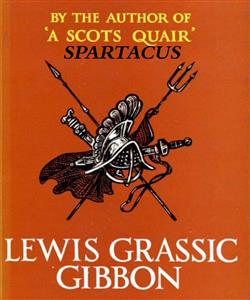

Spartacus (Summarized Edition)
Table of Contents
Introduction
Sliding from the humming certainties of modern life into the raw immensities of deep time, Three Go Back pits the pride of twentieth‑century progress against the stubborn, elemental tests of survival, compelling readers to weigh what in humanity endures when comfort, custom, and machinery fall away and to consider whether the stories we tell about civilization—its hierarchies, its desires, its wars and its tenderness—are evidence of ascent or simply new masks over ancient impulses that, faced with hunger, weather, and the unfamiliar gaze of other humans, reveal a continuity more unsettling than any dream of triumph, and yet, within that continuity, the novel seeks freedoms the present could not grant.
In the ferment of the early 1930s, amid interwar anxieties and fascination with scientific change, Scottish writer Lewis Grassic Gibbon turned to time‑travel science fiction to test modern assumptions. Three Go Back moves from a recognizable contemporary world to the Paleolithic past, using speculative displacement to create a double setting that is both immediate and millennia distant. The book belongs to the adventure tradition yet insists on reflective pauses that interrogate progress and power. Without relying on elaborate machinery or technocratic exposition, it situates its marvel within social experience, a hallmark of the era’s human‑centered speculative narratives and of Gibbon’s broader, critically incisive sensibility.
The premise is deceptively simple: three people from the modern world are abruptly cast into prehistory, where they must survive, observe, and reckon with lifeways that unsettle their own habits of thought. Gibbon stages their journey as a sequence of vividly rendered encounters and practical decisions, maintaining momentum while allowing room for argument and wonder. The narrative voice is lucid and unsentimental, tempered by curiosity and flashes of lyric description. Rather than offering encyclopedic world‑building, the book invites readers to experience strangeness as the protagonists do, discovering landscapes, dangers, and forms of kinship under pressure, and measuring knowledge by use, risk, and empathy.
At the heart of the novel is a searching examination of progress, asking whether technology and urban culture have liberated or only rearranged constraint. It explores how gender expectations, class habits, and ideas about evolution shape response to hardship, and how quickly self‑image alters when the environment changes. The contact between modern travelers and early humans becomes an ethical test of recognition: what counts as intelligence, what counts as law, what counts as freedom. Violence and tenderness, ritual and improvisation, group loyalty and individual desire are continually weighed, inviting readers to notice the fragile foundations beneath the structures they take for granted.
Stylistically, Three Go Back blends swift action with analytic clarity, the prose moving cleanly from terse survival detail to wider reflections on society and history. Gibbon’s descriptive power makes weather, terrain, and bodily effort palpable, while a wry, questioning undertone keeps triumphalism at bay. The book is compact but rangy in implication, trusting readers to supply context and to challenge the assumptions voiced by its characters. Its speculative method is less about explaining mechanisms than about observing consequences, which lends the narrative a documentary immediacy. That focus on lived texture grounds the extraordinary in the ordinary, sharpening both suspense and insight.
For contemporary readers, the novel’s relevance is striking. In an age of technological acceleration and ecological unease, its confrontation between modern confidence and elemental necessity raises urgent questions about resilience, community, and the costs of comfort. Its attention to cross‑cultural contact speaks to ongoing conversations about power, interpretation, and empathy, reminding us how easily misreadings become justifications. The book also models a kind of critical nostalgia, resisting easy primitivism while refusing complacency about the present. It prompts fresh thought about what we conserve, what we innovate, and who benefits when narratives of advancement decide which lives are deemed backward or expendable.
Approached as both imaginative expedition and moral inquiry, Three Go Back offers a reading experience that is brisk, unsettling, and reflective, well suited to readers who enjoy speculative adventures with intellectual bite. Certain attitudes and formulations bear the imprint of its interwar origins, and noticing those contours can deepen rather than diminish engagement by clarifying historical distance. The novel’s questions—about belonging, leadership, sexuality, kinship, and the uses of knowledge—are posed through situation rather than lecture, allowing debate to arise from action. Without foreclosing mystery, Gibbon leaves readers with a sharpened sense that time travel is finally a mirror, and survival a conversation.
Synopsis
Published in 1932 under the pen name Lewis Grassic Gibbon, Three Go Back is a concise, provocative work of speculative fiction that uses time displacement to probe ideas of progress and human nature. It opens in the modern world with a routine journey that ends in disaster, leaving three survivors abruptly hurled into deep prehistory. The novel frames their ordeal as both an adventure and an inquiry, contrasting contemporary assumptions with the demands of survival. From the outset, the narrative emphasizes observation over spectacle, setting up a study in contrasts between twentieth‑century expectations and a landscape and society shaped by Ice Age realities.
Stranded amid austere glacial terrain, the trio must secure shelter, food, and safety before they can comprehend what has happened. Signs in the flora, fauna, and climate mark the period as remote, long preceding recorded history. Their contrasting temperaments emerge: one approaches the unknown with curiosity, another with skepticism and impatience, and a third with anxious pragmatism. This balance of motives drives early choices about movement and cooperation. The book chronicles their improvisations with scant equipment, the erosion of modern habits, and the dawning recognition that they may be the strangers, not just in place but in time.
First contact with indigenous inhabitants transforms the dilemma from mere endurance to cultural encounter. The visitors observe skilled hunters and artisans whose tools, art, and kinship practices differ radically from their own yet exhibit coherence and purpose. Communication is halting, initially governed by gesture, mimicry, and exchanged objects. The strangers’ unfamiliar appearance and behaviors inspire alternating hospitality, suspicion, and ritual testing. Gibbon presents these scenes with anthropological attentiveness, sketching routines of subsistence, ceremony, and play without romanticizing them. The newcomers must decide whether to remain aloof observers or attempt integration, aware that every act can alter fragile perceptions on both sides.
As the narrative deepens, encounters widen to include neighboring bands with markedly different physiques, languages, and customs. The contrast challenges tidy hierarchies of “primitive” and “advanced,” and the protagonists disagree over how to interpret what they witness. Patterns of leadership, gender roles, and exchange vary between groups, revealing multiple adaptations to the same austere world. The trio’s debates—about ethics, evolution, and the meaning of culture—mirror their diverging personal needs. Friendship, attraction, and rivalry grow more complicated as integration advances, and each traveler uses or abandons fragments of modern knowledge according to conscience, opportunity, and the urgencies of survival.
External pressures—scarcity, seasonal change, and intergroup tension—raise the stakes. Inside the small modern cohort, jealousy and conflicting loyalties surface, transformed by the social codes of their hosts. What little they retain from the present becomes both resource and temptation, from materials to methods, and its use rapidly alters expectations. Questions of responsibility sharpen: should they leverage comparative advantage to protect allies, or refrain from interventions that could reshape lifeways they barely grasp? Gibbon ties these dilemmas to contemporary anxieties about empire, nationalism, and war, suggesting that violence wears different masks across eras while drawing from similar wells of fear and desire.
A pivotal crisis forces the three to choose between competing solidarities and to confront the costs of belonging. Acts taken in urgency carry cultural and personal consequences that cannot be entirely foreseen or undone. The narrative’s momentum accelerates toward an outcome that tests the protagonists’ convictions about progress, kinship, and sacrifice. Without disclosing particulars, the closing movements juxtapose intimate choices with long arcs of human continuity, implying that time travel reveals less a ladder of improvement than branching survivals. The resolution maintains the book’s tone of reflective restraint, leaving interpretive space around what constitutes victory, loss, and return.
Three Go Back endures as an interwar British time‑travel novel that weds adventure to an anthropological lens, reflecting Gibbon’s interest in social change. Its economy of incident supports a sustained inquiry into whether technology or empathy better defines civilization, and how identity shifts when context is upended. The book’s restrained speculation, period sensibilities, and ethical ambivalence keep it anchored in its moment while inviting ongoing debate. By turning modern readers into strangers among their ancestors, it reframes progress as a question rather than a creed, a perspective that lends the work continuing resonance without relying on spectacle.
Historical Context
Three Go Back, written by the Scottish author James Leslie Mitchell under the pen name Lewis Grassic Gibbon, appeared in the early 1930s, in interwar Britain. The United Kingdom was recalibrating after global conflict while still presiding over a sprawling empire. Scotland, where Gibbon came from, was tied to heavy industry and rural communities alike, both feeling pressure from change. Public life moved through institutions such as the British Parliament, the press, universities, museums, and the BBC, which amplified scientific and political debate. Set against this background, the novel harnesses contemporary ideas to examine what modern “progress” means and whom it serves.
Memories of the First World War shaped the mindset of readers and writers Gibbon addressed. Between 1914 and 1918, more than 700,000 British servicemen were killed, with millions wounded, and the 1918–1919 influenza pandemic compounded loss. Public faith in heroic narratives eroded, replaced by scrutiny of militarism and nationalism. The League of Nations, founded in 1920, embodied hopes for collective security while revealing deep diplomatic limits. The World Disarmament Conference convened in Geneva in 1932 as anxieties mounted about rearmament. In this climate, literature frequently questioned the costs of modernity and the uses of science, a skepticism that underlies Gibbon’s speculative approach.
The economic upheaval of the late 1920s and early 1930s provided another crucial frame. The Great Depression, triggered by the 1929 financial crash, crashed export markets and intensified unemployment across Britain, particularly in coal, shipbuilding, and steel. Scotland’s Clydeside and other industrial regions endured sustained hardship; earlier unrest such as the 1919 demonstrations in Glasgow and the nationwide General Strike of 1926 had already signaled deep class tensions. Public debates over welfare, planning, and inequity sharpened. Gibbon’s fiction frequently interrogates class hierarchy and the precariousness of livelihoods, and this novel channels interwar doubts about whether technological sophistication equates to humane social order.
Scientific discourse about human origins was unusually prominent when Gibbon wrote. Evolutionary theory was standard in British education and museums, even as the 1925 Scopes Trial in the United States made evolution a public spectacle. Finds of Neanderthal remains since the nineteenth century, discoveries of Cro-Magnon skeletons in France, and headline-making reports of Peking Man in the late 1920s and early 1930s broadened awareness of deep prehistory. Scholars such as Abbé Henri Breuil popularized Paleolithic lifeways and art. These developments furnished writers with a factual scaffold for imagining encounters across vast timescales, a device Gibbon uses to reassess modern certainties.
Technological modernity also framed public expectations. Civil aviation expanded rapidly after 1918; Imperial Airways, founded in 1924, connected London with imperial routes to the Middle East, India, and Africa. Airships and long-distance flights captured imaginations, while the 1930 crash of Britain’s R101 symbolized the risks of grand engineering ambition. The BBC, established in 1922, diffused scientific news alongside entertainment, fostering a shared sense of futurity. Within literature, H. G. Wells’s time-travel template and Olaf Stapledon’s sweeping speculations (notably Last and First Men in 1930) demonstrated how “scientific romance” could scrutinize society. Gibbon’s novel participates in that critical interwar tradition.
Scottish cultural life in the 1920s and 1930s was energized by the Scottish Renaissance, associated with figures like Hugh MacDiarmid, which encouraged literary experimentation and renewed attention to national identity and language. Gibbon, though versatile across genres, shared this reforming impulse in works from the same period, notably the A Scots Quair trilogy. He probed tensions between rural communities, industrial change, church authority, and class. Although Three Go Back is speculative rather than regionalist, it carries the same critical temperament, using narrative experiment to test received wisdoms about civilization, morality, and belonging that Scottish and British debates were actively renegotiating.
Interwar Britain was also a crucible for arguments about empire, race, and human difference. The British Empire remained extensive, even as crises—from the 1919 Amritsar massacre in India to Irish independence in 1922—exposed contradictions of rule. Meanwhile, eugenics, promoted by organizations such as the Eugenics Society, permeated policy debates and popular science, advocating selective breeding and hierarchies of “fitness.” Anthropometry and racial classification were routine in academic discourse. By juxtaposing modern assumptions with images of humanity drawn from prehistory, Gibbon’s novel places imperial and racial ideologies under pressure, inviting readers to question deterministic stories about superiority, progress, and the direction of history.




