


0,00 €
Niedrigster Preis in 30 Tagen: 0,00 €
Niedrigster Preis in 30 Tagen: 0,00 €
Mehr erfahren.
- Herausgeber: DigiCat
- Kategorie: Für Kinder und Jugendliche
- Sprache: Englisch
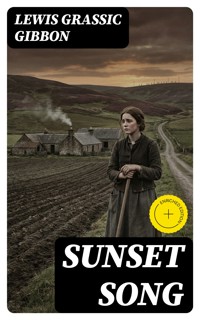
In "Sunset Song," Lewis Grassic Gibbon weaves a poignant narrative set in the early 20th-century Scottish countryside, capturing the essence of rural life through the eyes of his protagonist, Chris Guthrie. The novel is characterized by its lyrical prose, rich imagery, and a deep sense of place, as it explores themes of identity, land, and the impact of social change. Gibbon's use of the Scots dialect infuses authenticity into the dialogue, grounding the reader in the cultural and historical context of Scotland during a time of profound transformation, particularly in the backdrop of World War I. Lewis Grassic Gibbon, born Lewis Grassic, was a prominent Scottish writer deeply influenced by his experiences in rural Scotland. His work often reflects his commitment to social justice and his affinity for nature, which profoundly shaped his perspective on the struggles of the working class. "Sunset Song" is part of Gibbon's trilogy known as the A Scots Quair, which embodies his belief in the intricate connection between the land and the people's lives, presenting a bittersweet tableau of a changing Scotland during his time. This novel is highly recommended for readers who appreciate lyrical literature that marries personal and political narratives. Gibbon's masterful storytelling provides not only a glimpse into the life of one young woman but also a broader commentary on the resilience of the human spirit amidst change. "Sunset Song" stands as a classic in Scottish literature, making it essential reading for anyone interested in the complexities of identity and culture. In this enriched edition, we have carefully created added value for your reading experience: - A succinct Introduction situates the work's timeless appeal and themes. - The Synopsis outlines the central plot, highlighting key developments without spoiling critical twists. - A detailed Historical Context immerses you in the era's events and influences that shaped the writing. - A thorough Analysis dissects symbols, motifs, and character arcs to unearth underlying meanings. - Reflection questions prompt you to engage personally with the work's messages, connecting them to modern life. - Hand‐picked Memorable Quotes shine a spotlight on moments of literary brilliance. - Interactive footnotes clarify unusual references, historical allusions, and archaic phrases for an effortless, more informed read.
Das E-Book können Sie in Legimi-Apps oder einer beliebigen App lesen, die das folgende Format unterstützen:
Veröffentlichungsjahr: 2022
Ähnliche






Sunset Song
Table of Contents
Introduction
At the heart of Sunset Song lies the tension between the enduring claims of land and community and the disruptive sweep of modern change, a pressure felt most keenly by a young woman whose desire for learning, love, and self-definition must be weighed against the stubborn soil that forms her home and the chorus of voices that bind, judge, and sustain her, so that each choice she makes—toward rootedness or flight, toward speech in one tongue or another—becomes both an affirmation and a loss, a private reckoning echoing through fields, seasons, and the gathered stories of a place.
First published in 1932, Lewis Grassic Gibbon’s novel is a landmark of Scottish modernism and social realism, set in the farming community of Kinraddie in the Mearns of northeast Scotland around the years of the First World War. Drawing on the textures of local speech and the cadences of oral storytelling, it conjures a rural world on the cusp of change without romanticizing hardship or denying beauty. The book stands at once as an intimate portrait of a place and as a chronicle of a nation’s shifting horizons during the interwar period, when old certainties faltered under new pressures.
As the novel opens, the reader meets Chris Guthrie, a farmer’s daughter whose intelligence and quiet resolve mark her out, yet whose deepest attachments run into the soil she tills. The narrative moves with a supple, lyrical gait, blending English with Scots idiom and at times broadening into a communal voice that gathers the viewpoints of neighbors, fields, and seasons. The tone is unsentimental but compassionate, attentive to labor, weather, and the intimate economies of a small parish. The result is a reading experience at once immersive and reflective, demanding patience and rewarding it with clarity and resonance.
Central to the book is the question of how identity forms at the meeting point of language, land, and lineage. Chris’s education invites one future, the farm another; neither is cast as simple freedom or simple fate. The novel explores community solidarity alongside constraint, religious habit alongside skepticism, and the pull of memory alongside the necessity of change. Its treatment of gender is nuanced, attentive to the costs and strengths of women’s work within a patriarchal rural economy. By refusing easy oppositions, the story asks readers to recognize complexity where ideology seeks simplicity, and to consider what sustains a life.
The backdrop of accelerating social change gives the book its historical weight: agricultural methods shift, populations move, and the shock of global conflict alters horizons in even the most secluded fields. Yet the narrative keeps its focus on lived textures rather than grand abstractions, showing how markets, laws, and distant events register in the cadences of work, courtship, gossip, and grief. Without foreclosing hope, the novel insists on the endurance of consequences, asking what is preserved when traditions bend and what is lost when they break. The effect is both local and panoramic, intimate in detail yet expansive in implication.
The book’s language is crucial to its power, carrying the grain of place while keeping the prose lucid to readers beyond it. Gibbon’s rhythmic blend gives dignity to rural speech and refuses the false choice between accessibility and authenticity, modeling an art that can be rooted without being narrow. For contemporary readers, that linguistic poise resonates amid debates about cultural memory, minority languages, and whose voices count in the national story. The novel also speaks to present concerns about land stewardship, economic precarity, and migration, tracing how global forces reshape local lives while local loyalties continue to matter.
Though it is the first volume of A Scots Quair, Sunset Song stands complete as a narrative of becoming, and newcomers can read it on its own with full reward. Allowing its music to set the pace is the best way in: the cadences do the work of context, and the story’s clarity emerges from its patience. What remains after closing the book is a sharpened sense of what it costs to belong and what it costs to leave, a vision anchored in a particular earth yet open to readers everywhere who navigate change without wishing to forget where they began.
Synopsis
Sunset Song (1932), the first volume of Lewis Grassic Gibbon’s A Scots Quair, is set in the farming parish of Kinraddie in the Mearns of northeast Scotland. It follows Chris Guthrie from adolescent awakening into adult responsibility across the years surrounding the First World War. The narrative traces her struggle between the promise of education and the pull of the land, a conflict that frames choices about work, love, and belonging. Through Chris’s perspective, the novel charts the transformation of a rural community under modern pressures, balancing intimate family drama with a wider portrait of social change in early twentieth-century Scotland.
The book first surveys Kinraddie’s people and fields, laying out the parish’s rhythms of seedtime, harvest, and winter. Tenant farmers, farm servants, the minister, and the estate officials form a tightly interdependent world shaped by weather, rents, and the kirk. Gossip, local rivalries, and communal gatherings establish a living map of place before the plot narrows to Chris. Gibbon’s narration, blending English with Scots idiom, grounds readers in voices that feel rooted without excluding outsiders. This opening panorama not only situates the action but also frames the central tension: a landscape that promises continuity while the era’s economic and cultural forces press for change.
Within that setting, the Guthrie family embodies both endurance and strain. John Guthrie, a stern father devoted to hard work and thrift, drives the household with uncompromising will, while his wife, worn by repeated childbirth and labor, struggles to cope. Their children, including Chris and her brother, grow amid scarcity and expectation. A series of domestic crises reshapes the family and forces rapid maturity on Chris. She earns a scholarship that could lead to further study in town, yet the responsibilities of the farm at Blawearie and the tug of rooted life complicate the decision. The choice becomes moral as much as practical.
Following bereavement and upheaval, Chris elects to remain with the land, taking charge of the farm and its seasonal cycles. She marries Ewan Tavendale, a neighboring young farmer, and together they try to balance affection with relentless labor. The narrative dwells on daily tasks—ploughing, lambing, haymaking—and on the parish routines of worship, markets, and harvest suppers, evoking satisfactions earned by toil rather than sentiment. As Chris settles into adult life, her earlier inner divide does not disappear; it instead informs her resolve to make a home that honors both steadiness and self-respect, even as the wider world begins to intrude.
The outbreak of the First World War intrudes decisively, fracturing the parish’s stability. Enthusiasm, pressure, and duty draw men to enlist, while others hesitate or question the cause. Ewan joins up, and the separations and training that follow alter habits and tempers, testing marriages and friendships. With men away, farms wrestle with labor shortages, rising prices, and worry. Chris manages Blawearie, faces motherhood, and navigates the unease of letters that arrive irregularly and news that travels by rumor before confirmation. The war’s abstractions become immediate in changes of voice, gait, and glance, as familiar figures are marked by distance and discipline.
On the home front, the strains of wartime economics, church authority, and shifting social attitudes unsettle Kinraddie. Some seek solace in tradition; others embrace new politics or hard pragmatism. Sorrow accumulates in the parish rolls and gatherings, even as the fields demand the same unending attention. The novel registers how loss and return do not restore what existed before, and how the older pattern of tenancies and hierarchies gives way to a more precarious, modern arrangement. Through it all, Chris’s bond with the soil remains a point of steadiness, suggesting a continuity deeper than any single household or season can encompass.
Without relying on melodrama, Sunset Song achieves its force through the felt weight of place and the clarity of Chris Guthrie’s choices. Its enduring significance lies in how it joins intimate experience to collective history, showing modernization and war not as abstractions but as pressures measured in furrows, bodies, and speech. Gibbon’s use of Scots-inflected narration anchors a national literature while inviting wider readers to a universal story of identity, resilience, and change. The novel closes without easy consolation, yet with an abiding sense that the land and the language hold memory, shaping how a community carries itself into an altered century.
Historical Context
Sunset Song is set in the early twentieth century rural Northeast of Scotland, chiefly in the Mearns (Kincardineshire), a landscape of mixed arable and pastoral farms linked to market towns like Laurencekirk and Stonehaven. Life revolves around the parish, the estate and its factor, the local school, and the kirk. Farming families often held land as tenants under a laird, while unmarried male servants lived in bothies and were hired at feeing markets twice yearly. Seasonal rhythms—ploughing, sowing, reaping, threshing—structured work and community gatherings. This setting anchors the novel in a recognizably Scottish agrarian society on the cusp of profound social and economic change.
By this period, Northeast Scottish agriculture had long absorbed the “Improvement” ethos begun in the eighteenth century, yet most work was still powered by horses and human labor. Horse-drawn ploughs and binders dominated fieldwork; itinerant crews brought steam-driven threshing mills from farm to farm after harvest. Tenancy agreements could be insecure, with estate factors enforcing rent, improvements, and punctuality, and eviction an ever-present fear during downturns. Farm servants shifted employers at feeing markets, carrying their kists between bothies and kitchens. Such practices, combined with tight rural hierarchies, shaped class relations and domestic expectations that the novel documents with close attention to material detail and custom.
Compulsory schooling established after the Education (Scotland) Act of 1872 had, by the early 1900s, made literacy nearly universal and extended opportunities beyond village boundaries. Rural schoolhouses prepared promising pupils for bursary examinations that could lead to secondary education in nearby towns and, for a few, to university at Aberdeen. For daughters and sons alike, education opened paths to teaching, clerical work, or migration, yet it also conflicted with the farm’s demand for labor at busy seasons. These tensions between schooling, ambition, and family duty were common across the Northeast and form a crucial backdrop to characters navigating choices within a still-traditional society.
Religious life in the region centered on Presbyterian denominations, notably the established Church of Scotland and the United Free Church, which reunited with the Kirk in 1929. Sermons, Sabbath observance, and elders’ influence framed moral expectations regarding work, sexuality, drink, and deference. While formal kirk discipline had softened since the nineteenth century, a culture of strict Calvinist respectability remained strong in many parishes. Evangelical missions and temperance campaigns were visible features of community life. The novel situates its characters within this moral climate, tracing how religious authority could offer solace and solidarity yet also impose rigid standards that intensified domestic conflicts and social judgment.
Published in 1932, Sunset Song belongs to the Scottish Renaissance, a modernist movement that, in the 1920s and 1930s, sought to renew national literature and reclaim vernacular speech. Lewis Grassic Gibbon, the pen name of James Leslie Mitchell from the Mearns, experimented with a prose idiom blending Scots—especially the Doric of the Northeast—and standard English. This linguistic texture situates rural voices at the center of cultural representation, resisting genteel Anglophone norms. The movement, associated with figures like Hugh MacDiarmid, encouraged social realism, historical inquiry, and critique of romanticized “kailyard” pastoral, impulses that shape the novel’s unsentimental portrait of land, labor, and community change.
The First World War transformed even remote Scottish parishes. Recruitment drives and, after 1916, conscription drew farm workers and smallholders into the British Army, while casualty lists returned to villages with devastating regularity. Wartime demand raised food prices and intensified production, and women increasingly undertook agricultural labor, including through the Women’s Land Army from 1917. Letters, memorial services, and, after 1918, stone war memorials in kirks and town squares became focal points of communal grief. The novel registers this rupture, observing how the war’s losses and disruptions unsettled rural households, altered gender roles, and weakened the continuity of traditions that had anchored local identity.
In the early 1920s, Scottish agriculture entered a severe slump as wartime price supports ended and global markets depressed grain and livestock values. Tenants faced arrears, reduced hiring, and, in some areas, eviction or consolidation into larger units. Rural depopulation accelerated as young people left for cities or emigrated overseas. The Land Settlement (Scotland) Act 1919 enabled schemes for ex-servicemen smallholdings, though demand often exceeded provision outside the crofting counties. Mechanization advanced gradually with internal-combustion tractors and improved machinery, reshaping labor needs and diminishing bothy culture and feeing markets. These pressures eroded settled patterns of work and kinship, themes central to the novel’s social canvas.
Against this backdrop, Sunset Song functions as both chronicle and critique. It preserves the intimacies of Northeast farming life— the cadences of Doric speech, the pride in land, communal solidarities—while exposing the costs of patriarchal authority, economic precarity, and religious rigidity. By charting the impact of mass schooling, war mobilization, and agricultural change on one parish, the book interrogates narratives of national progress that overlook rural experience. Its focus on endurance, memory, and loss mirrors interwar Scotland’s struggle to reconcile modernization with tradition, offering a historically grounded meditation on what is sustained, and what is broken, when an older world gives way.
Sunset Song
TO
JEAN BAXTER
NOTE
If the great Dutch language disappeared from literary usage and a Dutchman wrote in German a story of the Lekside peasants, one may hazard he would ask and receive a certain latitude and forbearance in his usage of German. He might import into his pages some score or so untranslatable words and idioms--untranslatable except in their context and setting; he might mould in some fashion his German to the rhythms and cadence of the kindred speech that his peasants speak. Beyond that, in fairness to his hosts, he hardly could go--to seek effect by a spray of apostrophes would be both impertinence and mistranslation.
The courtesy that the hypothetical Dutchman might receive from German a Scot may invoke from the great English tongue.
L. G. G.
PRELUDE
THE UNFURROWED FIELD
Kinraddie lands had been won by a Norman childe, Cospatric de Gondeshil, in the days of William the Lyon[1], when gryphons and suchlike beasts still roamed the Scots countryside and folk would waken in their beds to hear the children screaming, with a great wolf-beast, come through the hide window, tearing at their throats. In the Den of Kinraddie one such beast had its lair and by day it lay about the woods and the stench of it was awful to smell all over the countryside, and at gloaming a shepherd would see it, with its great wings half-folded across the great belly of it and its head, like the head of a meikle cock, but with the ears of a lion, poked over a fir tree, watching. And it ate up sheep and men and women and was a fair terror, and the King had his heralds cry a reward to whatever knight would ride and end the mischieving of the beast.
So the Norman childe, Cospetric, that was young and landless and fell brave and well-armoured, mounted his horse in Edinburgh Town and came North, out of the foreign south parts, up through the Forest of Fife and into the pastures of Forfar and past Aberlemno's Meikle Stane[2] that was raised when the Picts beat the Danes; and by it he stopped and looked at the figures, bright then and hardly faded even now, of the horses and the charging and the rout of those coarse foreign folk. And maybe he said a bit prayer by that Stone and then he rode into the Mearns, and the story tells no more of his riding but that at last come he did to Kinraddie, a tormented place, and they told him where the gryphon slept, down there in the Den of Kinraddie.
But in the daytime it hid in the woods and only at night, by a path through the hornbeams, might he come at it, squatting in bones, in its lair. And Cospatric waited for the night to come and rode to the edge of Kinraddie Den and commended his soul to God and came off his horse and took his boar-spear in his hand, and went down into the Den and killed the gryphon. And he sent the news to William the Lyon, sitting drinking the wine and fondling his bonny lemans in Edinburgh Town, and William made him the Knight of Kinraddie, and gave to him all the wide parish as his demesne and grant to build him a castle there, and wear the sign of a gryphon's head for a crest and keep down all beasts and coarse and wayward folk, him and the issue of his body for ever after.
So Cospatric got him the Pict folk to build a strong castle there in the lithe of the hills, with the Grampians bleak and dark behind it, and he had the Den drained and he married a Pict lady and got on her bairns and he lived there till he died. And his son took the name Kinraddie, and looked out one day from the castle wall and saw the Earl Marischal come marching up from the south to join the Highlandmen in the battle that was fought at Mondynes, where now the meal-mill stands; and he took out his men and fought there, but on which side they do not say, but maybe it was the winning one, they were aye gey and canny folk, the Kinraddies.
And the great-grandson of Cospatric, he joined the English against the cateran Wallace, and when Wallace next came marching up from the southlands Kinraddie and other noble folk of that time they got them into Dunnottar Castle[3] that stands out in the sea beyond Kinneff, well-builded and strong, and the sea splashes about it in the high tides and there the din of the gulls is a yammer night and day. Much of meal and meat and gear they took with them, and they laid themselves up there right strongly, they and their carles, and wasted all the Mearns that the Cateran who dared rebel against the fine English king might find no provision for his army of coarse and landless men. But Wallace came through the Howe right swiftly and he heard of Dunnottar and laid siege to it and it was a right strong place and he had but small patience with strong places. So, in the dead of one night, when the thunder of the sea drowned the noise of his feint, he climbed the Dunnottar rocks and was over the wall, he and the vagabond Scots, and they took Dunnottar and put to the slaughter the noble folk gathered there, and all the English, and spoiled them of their meat and gear, and marched away.
Kinraddie Castle that year, they tell, had but a young bride new home and she had no issue of her body, and the months went by and she rode to the Abbey of Aberbrothock where the good Abbot, John, was her cousin, and told him of her trouble and how the line of Kinraddie was like to die. So he lay with her that was September, and next year a boy was born to the young bride, and after that the Kinraddies paid no heed to wars and bickerings but sat them fast in their Castle lithe in the hills, with their gear and bonny leman queans and villeins libbed for service.
And when the First Reformation came and others came after it and some folk cried Whiggam!and some cried Rome! and some cried The King! the Kinraddies sat them quiet and decent and peaceable in their castle, and heeded never a fig the arguings of folk, for wars were unchancy things. But then Dutch William[4] came, fair plain a fixture that none would move, and the Kinraddies were all for the Covenant then, they had aye had God's Covenant at heart, they said. So they builded a new kirk down where the chapel had stood, and builded a manse by it, there in the middle of the yews where the cateran Wallace had hid when the English put him to rout at last. And one Kinraddie, John Kinraddie, went south and became a great man in the London court, and was crony of the creatures Johnson and James Boswell and once the two of them, John Kinraddie and James Boswell, came up to the Mearns on an idle ploy and sat drinking wine and making coarse talk far into the small hours night after night till the old laird wearied of them and then they would steal away and as James Boswell set in his diary, Did get to the loft where the maids were, and one Πεγγι Δυνδας wας φατ ιν τhε βυττοcχς ανδ ι διδ λιε wιτh hερ.
But in the early days of the nineteenth century it was an ill time for the Scots gentry, for the poison of the French Revolution came over the seas and crofters and common folk like that stood up and cried Away to hell! when the Auld Kirk preached submission from its pulpits. Up as far as Kinraddie came the poison and the young laird of that time, and he was Kenneth, he called himself a Jacobin and joined the Jacobin Club of Aberdeen[5] and there at Aberdeen was nearly killed in the rioting, for liberty and equality and fraternity, he called it. And they carried him back to Kinraddie a cripple, but he would still have it that all men were free and equal and he set to selling the estate and sending the money to France, for he had a real good heart. And the crofters marched on Kinraddie Castle in a body and bashed in the windows of it, they thought equality should begin at home.
More than half the estate had gone in this driblet and that while the cripple sat and read his coarse French books; but nobody guessed that till he died and then his widow, poor woman, found herself own no more than the land that lay between the coarse hills, the Grampians, and the farms that stood out by the Bridge End above the Denburn, straddling the outward road. Maybe there were some twenty to thirty holdings in all, the crofters dour folk of the old Pict stock, they had no history, common folk, and ill-reared their biggins clustered and chaved amid the long, sloping fields. The leases were one-year, two-year, you worked from the blink of the day you were breeked to the flicker of the night they shrouded you, and the dirt of gentry sat and ate up your rents but you were as good as they were[1q].
So that was Kenneth's leaving to his lady body, she wept right sore over the pass that things had come to, but they kittled up before her own jaw was tied in a clout and they put her down in Kinraddie vault to lie by the side of her man. Three of her bairns were drowned at sea, fishing off the Bevie braes they had been, but the fourth, the boy Cospatric, him that died the same day as the Old Queen, he was douce and saving and sensible, and set putting the estate to rights. He threw out half the little tenants, they flitted off to Canada and Dundee and parts like those, the others he couldn't move but slowly.
But on the cleared land he had bigger steadings built and he let them at bigger rents and longer leases, he said the day of the fine big farm had come. And he had woods of fir and larch and pine planted to shield the long, bleak slopes, and might well have retrieved the Kinraddie fortunes but that he married a Morton quean with black blood in her, she smitted him and drove him to drink and death, that was the best way out. For his son was clean daft, they locked him up at last in an asylum, and that was the end of Kinraddie family, the Meikle House that stood where the Picts had builded Cospatric's castle crumbled to bits like a cheese, all but two-three rooms the trustees held as their offices, the estate was mortgaged to the hilt by then.
So by the winter of nineteen eleven there were no more than nine bit places left the Kinraddie estate, the Mains the biggest of them, it had been the Castle home farm in the long past times. An Irish creature, Erbert Ellison was the name, ran the place for the trustees, he said, but if you might believe all the stories you heard he ran a hantle more silver into his own pouch than he ran into theirs. Well might you expect it, for once he'd been no more than a Dublin waiter, they said. That had been in the time before Lord Kinraddie, the daft one, had gone clean skite. He had been in Dublin, Lord Kinraddie, on some drunken ploy, and Ellison had brought his whisky for him and some said he had halved his bed with him. But folk would say anything[2q].
So the daftie took Ellison back with him to Kinraddie and made him his servant, and sometimes, when he was real drunk and the fairlies came sniftering out of the whisky bottles at him, he would throw a bottle at Ellison and shout Get out, you bloody dish-clout! so loud it was heard across at the Manse and fair affronted the minister's wife. And old Greig, him that had been the last minister there, he would glower across at Kinraddie House like John Knox at Holyrood, and say that God's hour would come. And sure as death it did, off to the asylum they hurled the daftie, he went with a nurse's mutch on his head and he put his head out of the back of the waggon and said Cockadoodledoo! to some school bairns the waggon passed on the road and they all ran home and were fell frightened.
But Ellison had made himself well acquainted with farming and selling stock and most with buying horses, so the trustees they made him manager of the Mains, and he moved into the Mains farmhouse and looked him round for a wife. Some would have nothing to do with him, a poor creature of an Irishman who couldn't speak right and didn't belong to the Kirk, but Ella White she was not so particular and was fell long in the tooth herself. So when Ellison came to her at the harvest ball in Auchinblae and cried Can I see you home to-night, me dear? she said Och, Ay.And on the road home they lay among the stooks and maybe Ellison did this and that to make sure of getting her, he was fair desperate for any woman by then.
They were married next New Year's Day, and Ellison had begun to think himself a gey man in Kinraddie, and maybe one of the gentry. But the bothy billies, the ploughmen and the orra men of the Mains, they'd never a care for gentry except to mock at them and on the eve of Ellison's wedding they took him as he was going into his house and took off his breeks and tarred his dowp and the soles of his feet and stuck feathers on them and then they threw him into the water-trough, as was the custom. And he called them Bloody Scotch savages, and was in an awful rage and at the term-time he had them sacked, the whole jingbang of them, so sore affronted he had been.
But after that he got on well enough, him and his mistress, Ella White, and they had a daughter, a scrawny bit quean they thought over good to go to the Auchinblae School, so off she went to Stonehaven Academy and was taught to be right brave and swing about in the gymnasium there with wee black breeks on under her skirt. Ellison himself began to get well-stomached, and he had a red face, big and sappy, and eyes like a cat, green eyes, and his mouser hung down each side of a fair bit mouth that was chokeful up of false teeth, awful expensive and bonny, lined with bits of gold. And he aye wore leggings and riding breeks, for he was fair gentry by then; and when he would meet a crony at a mart he would cry Sure, bot it's you, thin, ould chep! and the billy would redden up, real ashamed, but wouldn't dare say anything, for he wasn't a man you'd offend. In politics he said he was a Conservative but everybody in Kinraddie knew that meant he was a Tory and the bairns of Strachan, him that farmed the Peesie's Knapp, they would scraich out
Inky poo, your nose is blue, You're awful like the Turra Coo
whenever they saw Ellison go by. For he'd sent a subscription to the creature up Turriff way whose cow had been sold to pay his Insurance, and folk said it was no more than a show off, the Cow creature and Ellison both; and they laughed at him behind his back.
So that was the Mains, below the Meikle House, and Ellison farmed it in his Irish way and right opposite, hidden away among their yews, were kirk and manse, the kirk an old, draughty place and in the wintertime, right in the middle of the Lord's Prayer, maybe, you'd hear an outbreak of hoasts fit to lift off the roof, and Miss Sarah Sinclair, her that came from Netherhill and played the organ, she'd sneeze into her hymnbook and miss her bit notes and the minister, him that was the old one, he'd glower down at her more like John Knox than ever.
Next door the kirk was an olden tower, built in the time of the Roman Catholics, the coarse creatures, and it was fell old and wasn't used any more except by the cushat-doves and they flew in and out the narrow slips in the upper storey and nested there all the year round and the place was fair white with their dung. In the lower half of the tower was an effigy-thing of Cospatric de Gondeshil, him that killed the gryphon, lying on his back with his arms crossed and a daft-like simper on her face; and the spear he killed the gryphon with was locked in a kist there, or so some said, but others said it was no more than an old bit heuch from the times of Bonny Prince Charlie. So that was the tower, but it wasn't fairly a part of the kirk, the real kirk was split in two bits, the main hall and the wee hall, and some called them the byre and the turnip-shed, and the pulpit stood midway.
Once the wee hall had been for the folk from the Meikle House and their guests and suchlike gentry but nearly anybody that had the face went ben and sat there now, and the elders sat with the collection bags, and young Murray, him that blew the organ for Sarah Sinclair. It had fine glass windows, awful old, the wee hall with three bit creatures of queans, not very decent-like in a kirk, as window-pictures. One of the queans was Faith, and faith she looked a daft-like keek for she was lifting up her hands and her eyes like a heifer choked on a turnip and the bit blanket round her shoulders was falling off her but she didn't seem to heed, and there was a swither of scrolls and fiddley-faddles all about her.
And the second quean was Hope and she was near as unco as Faith, but had right bonny hair, red hair, though maybe you'd call it auburn, and in the winter-time the light in the morning service would come splashing through the yews in the kirkyard and into the wee hall through the red hair of Hope. And the third quean was Charity, with a lot of naked bairns at her feet and she looked a fine and decent-like woman, for all that she was tied about with such daft-like clouts.
But the windows of the main hall, though they were coloured, they had never a picture in them and there were no pictures in there at all, who wanted them? Only coarse creatures like Catholics wanted a kirk to look like a grocer's calendar. So it was decent and bare-like, with its carved old seats, some were cushioned and some were not, if you weren't padded by nature and had the silver to spend you might put in cushions to suit your fancy. Right up in the lithe of the pulpit, at angles-like to the rest of the kirk, were the three seats where the choir sat and led the hymn-singing; and some called it the calfies' stall.
The back door, that behind the pulpit, led out across the kirkyard to the Manse and its biggings, set up in the time of the Old Queen, and fair bonny to look at, but awful damp said all the ministers' wives. But ministers' wives were aye folk to complain and don't know when they're well off, them and the silver they get for their bit creatures of men preaching once or twice a Sunday and so proud they hardly know you when they meet you on the road. The minister's study was high up in the house, it looked out over all Kinraddie, at night he'd see from there the lights of the farmhouses like a sprinkling of bright sands below his window and the flagstaff light high among the stars on the roof of the Meikle House. But that nineteen eleven December the Manse was empty and had been empty for many a month, the old minister was dead and the new one not yet voted on; and the ministers from Drumlithie and Arbuthnott and Laurencekirk they came time about in the Sunday forenoons and took the service there at Kinraddie; and God knows for all they had to say they might well have bidden at home.
But if you went out of the kirk by the main door and took the road east a bit, and that was the road that served kirk and Manse and Mains, you were on to the turnpike then. It ran north and south but opposite to the road you'd just come down was another, that went through Kinraddie by the Bridge End farm. So there was a cross-roads there and if you held to the left along the turnpike you came to Peesie's Knapp, one of the olden places, no more than a croft of thirty-forty acres with some rough ground for pasture, but God knows there was little pasture on it, it was just a fair schlorich of whins and broom and dirt, full up of rabbits and hares it was, they came out at night and ate up your crops and sent a body fair mad. But it wasn't bad land the most of the Knapp, there was the sweat of two thousand years in it, and the meikle park behind the biggings was black loam, not the red clay that sub-soiled half Kinraddie.
Now Peesie's Knapp's biggings were not more than twenty years old, but gey ill-favoured for all that, for though the house faced on the road--and that was fair handy if it didn't scunner you that you couldn't so much as change your sark without some ill-fashioned brute gowking in at you--right between the byre and the stable and the barn on one side and the house on the other was the cattle-court and right in the middle of that the midden, high and yellow with dung and straw and sharn, and Mistress Strachan could never forgive Peesie's Knapp because of that awful smell it had.
But Chae Strachan, him that farmed the place, he just said Hoots, what's a bit guff? and would start to tell of the terrible smells he'd smelt when he was abroad. For he'd been a fell wandering billy, Chae, in the days before he came back to Scotland and was fee'd his last fee at Netherhill. He'd been in Alaska, looking for gold there, but damn the bit of gold he'd seen, so he'd farmed in California till he was so scunnered of fruit he'd never look an orange or a pear in the face again, not even in a tin. And then he'd gone on to South Africa and had had great times there, growing real chieflike with the head one of a tribe of blacks, but an awful decent man for all that. Him and Chae had fought against Boers and British both, and beaten them, or so Chae said, but folk that didn't like Chae said all the fighting he'd ever done had been with his mouth and that as for beaten, he'd be sore made to beat the skin off a bowl of sour milk.
For he wasn't well liked by them that set themselves up for gentry, Chae, being a socialist creature and believing we should all have the same amount of silver and that there shouldn't be rich and poor and that one man was as good as another. And the silver bit of that was clean daft, of course, for if you'd all the same money one day what would it be the next?--Rich and Poor again! But Chae said the four ministers of Kinraddie and Auchinblae and Laurencekirk and Drumlithie were all paid much the same money last year and what had they this year?--Much the same money still! You'll have to get out of bed slippy in the morning before you find a socialist tripping and if you gave me any of your lip I'll clout you in the lug, my mannie.
So Chae was fell good in argy-bargying and he wasn't the quarrelsome kind except when roused, so he was well-liked, though folk laughed at him. But God knows, who is it they don't laugh at? He was a pretty man, well upstanding, with great shoulders on him and his hair was fair and fine and he had a broad brow and a gey bit coulter of a nose, and he twisted his mouser ends up with wax like that creature the German Kaiser, and he could stop a running stirk by the horns, so strong he was in the wrist-bones. And he was one of the handiest billies in Kinraddie, he would libb a calf or break in a horse or kill a pig, all in a jiffy, or tile your dairy or cut the bairns' hair or dig a well, and all the time he'd be telling you that socialism was coming or if it wasn't then an awful crash would come and we'd all go back to savagery, Dam't ay, man!
But folk said he'd more need to start socializing Mistress Strachan, her that had been Kirsty Sinclair of Netherhill, before he began on anybody else. She had a fell tongue, they said, that would clip clouts and yammer a tink from a door, and if Chae wasn't fair sick now and then for his hut and a fine black quean in South Africa damn the hut or the quean had he ever had. He'd feed'd at Netherhill when he came back from foreign parts, had Chae, and there had been but two daughters there, Kirsty and Sarah, her that played the kirk organ. Both were wearing on a bit, sore in the need of a man, and Kirsty with a fair letdown as it was, for it had seemed that a doctor billy from Aberdeen was out to take up with her. So he had done and left her in a gey way and her mother, old Mistress Sinclair, near went out of her mind with the shame of it when Kirsty began to cry and tell her the news.
Now that was about the term-time and home to Netherhill from the feeing market who should old Sinclair of Netherhill bring but Chae Strachan, with his blood warmed up from living in those foreign parts and an eye for less than a wink of invitation? But even so he was gey slow to get on with the courting and just hung around Kirsty like a futret round a trap with a bit meat in it, not sure if the meat was worth the risk; and the time was getting on and faith! Something drastic would have to be done.




