


4,99 €
Mehr erfahren.
- Herausgeber: Samuel Shepherd
- Kategorie: Ratgeber
- Sprache: Englisch
## 🌟 **Step Into the Shadows of the Unknown with**
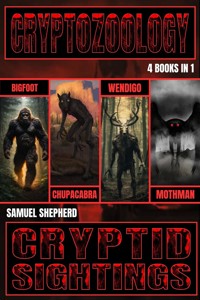
**CRYPTOZOOLOGY: CRYPTID SIGHTINGS**
**Bigfoot, Chupacabra, Wendigo & Mothman**
Are you ready to explore the legends that have fascinated and terrified humanity for centuries? 🌍✨ *Cryptozoology: Cryptid Sightings* takes you on an unforgettable journey into the mysterious, the unexplained, and the downright chilling. Packed with gripping stories, eyewitness accounts, and cultural insights, this four-part series dives deep into the world of legendary creatures that blur the line between myth and reality.
### 📚 **Inside the Series**
🦶 **BOOK 1: BIGFOOT CHRONICLES**
Discover the elusive North American giant that’s captivated cryptid hunters for decades. 🌲 Follow the trail of eyewitness accounts, chilling encounters, and scientific investigations. Is Bigfoot the missing link—or the ultimate mystery of the forest?
🩸 **BOOK 2: CHUPACABRA**
Explore the chilling tales of the "goat-sucker," a cryptid shrouded in terror and controversy. 🌵 From its alleged attacks to its evolution in modern folklore, uncover why this beast has become the vampire of the Americas.
❄️ **BOOK 3: WENDIGO**
Step into the frozen wilderness where the Wendigo lurks—a creature born of greed and isolation. 🧊 Delve into the terrifying legends rooted in Indigenous folklore, blending supernatural horror with powerful cultural warnings.
🦋 **BOOK 4: MOTHMAN MYSTERIES**
Soar into the skies with the Mothman, a figure tied to prophecy and disaster. 🔴 Unravel the eerie sightings, paranormal connections, and theories surrounding this enigmatic red-eyed harbinger of fear.
### 🕵️♂️ **What You'll Discover**
✨ *Fascinating Cryptid Histories*: Explore the origins of legendary creatures and their roles in global folklore.
👁️🗨️ *Eyewitness Accounts*: Hear from those who claim to have seen the impossible.
🌌 *Cultural Insights*: Learn how these cryptids reflect the fears, hopes, and mysteries of the human experience.
📖 *Thought-Provoking Theories*: From biological anomalies to paranormal entities, what lies behind these cryptid tales?
### 👀 **Why You'll Love This Book**
- **Unmatched Storytelling:** Each chapter is crafted to immerse you in the world of cryptids, combining gripping narratives with real-life accounts.
- **Multifaceted Exploration:** Science, folklore, psychology, and culture collide to offer a comprehensive look at these legendary beings.
- **Perfect for Fans of the Mysterious:** Whether you're a believer, a skeptic, or just love a good story, this series will ignite your imagination.
### 🛒 **Order Now and Unlock the Unknown!**
Whether you’re chasing Bigfoot through the dense forests of North America, braving the icy winds of Wendigo territory, or gazing at the ominous red eyes of the Mothman, *Cryptozoology: Cryptid Sightings* promises an adventure into the extraordinary.
👉 **Get your copy today!** Don't miss out on the cryptid hunt that has captivated generations. 🌟
🔗 **Dare to step into the shadows.** Unravel the mysteries, challenge the skeptics, and join the search for what lies beyond the edge of the known. 📖✨
Das E-Book können Sie in Legimi-Apps oder einer beliebigen App lesen, die das folgende Format unterstützen:
Veröffentlichungsjahr: 2024
Ähnliche


















CRYPTOZOOLOGY
CRYPTID SIGHTINGS
BIGFOOT, CHUPACABRA, WENDIGO & MOTHMAN
4 BOOKS IN 1
BOOK 1
BIGFOOT CHRONICLES: THE SEARCH FOR NORTH AMERICA'S HIDDEN GIANT
BOOK 2
CHUPACABRA: VAMPIRE BEAST OF THE AMERICAS
BOOK 3
WENDIGO: LEGENDS AND HAUNTINGS IN THE FROZEN NORTH
BOOK 4
MOTHMAN MYSTERIES: PROPHECIES, PARANORMAL PHENOMENA, AND FEAR
SAMUEL SHEPHERD
Copyright © 2024 by Samuel Shepherd
All rights reserved. No part of this book may be reproduced or transmitted in any form or by any means, electronic or mechanical, including photocopying, recording, or by any information storage and retrieval system, without permission in writing from the publisher.
Published by Samuel Shepherd
Library of Congress Cataloging-in-Publication Data
ISBN 978-1-83938-893-4
Cover design by Rizzo
Disclaimer
The contents of this book are based on extensive research and the best available historical sources. However, the author and publisher make no claims, promises, or guarantees about the accuracy, completeness, or adequacy of the information contained herein. The information in this book is provided on an "as is" basis, and the author and publisher disclaim any and all liability for any errors, omissions, or inaccuracies in the information or for any actions taken in reliance on such information.
The opinions and views expressed in this book are those of the author and do not necessarily reflect the official policy or position of any organization or individual mentioned in this book. Any reference to specific people, places, or events is intended only to provide historical context and is not intended to defame or malign any group, individual, or entity.
The information in this book is intended for educational and entertainment purposes only. It is not intended to be a substitute for professional advice or judgment. Readers are encouraged to conduct their own research and to seek professional advice where appropriate.
Every effort has been made to obtain necessary permissions and acknowledgments for all images and other copyrighted material used in this book. Any errors or omissions in this regard are unintentional, and the author and publisher will correct them in future editions.
BOOK 1 - BIGFOOT CHRONICLES: THE SEARCH FOR NORTH AMERICA'S HIDDEN GIANT
Introduction
Chapter 1: Whispers in the Forest: The Earliest Legends
Chapter 2: Footprints of Mystery: Tracking the Evidence
Chapter 3: Beyond the Woods: Eyewitness Encounters
Chapter 4: The Patterson-Gimlin Film: Fact or Hoax?
Chapter 5: Sounds of the Wild: Bigfoot’s Vocalizations
Chapter 6: Science Meets the Sasquatch: Analyzing the Unknown
Chapter 7: From Folklore to Fear: Bigfoot in Native Traditions
Chapter 8: Hunters, Hikers, and Hoaxes: When Reality Blurs
Chapter 9: Bigfoot Across Borders: Global Sightings and Similar Creatures
Chapter 10: The Endless Search: What Comes Next?
BOOK 2 - CHUPACABRA: VAMPIRE BEAST OF THE AMERICAS
Chapter 1: Blood and Shadows: The Birth of a Legend
Chapter 2: Puerto Rico’s Nightmare: Early Sightings
Chapter 3: The Scourge of Livestock: Trails of the Beast
Chapter 4: Anatomy of a Monster: Descriptions and Theories
Chapter 5: Fear in the Americas: Urban Myths and Panic
Chapter 6: DNA and Debunking: Scientific Investigations
Chapter 7: Chupacabra in Popular Culture: From Folklore to Media
Chapter 8: Alien Origins? The Extraterrestrial Connection
Chapter 9: Hoaxes and Hysteria: Separating Fact from Fiction
Chapter 10: Legends Endure: The Chupacabra’s Place in Cryptid Lore
BOOK 3 - WENDIGO: LEGENDS AND HAUNTINGS IN THE FROZEN NORTH
Chapter 1: Spirit of the North: Origins of the Wendigo Myth
Chapter 2: Cannibal Curse: Tales of Transformation
Chapter 3: Shadows in the Snow: Eyewitness Accounts
Chapter 4: The Hungry Beast: Anatomy of a Wendigo
Chapter 5: Frozen Terrors: Wendigo in Native American Culture
Chapter 6: Madness in the Cold: Psychological Perspectives
Chapter 7: Winter’s Whisper: Hauntings and Paranormal Encounters
Chapter 8: The Wendigo in Literature and Media
Chapter 9: Isolated and Starving: Survival Stories of the North
Chapter 10: Eternal Hunger: Modern Sightings and Interpretations
BOOK 4 - MOTHMAN MYSTERIES: PROPHECIES, PARANORMAL PHENOMENA, AND FEAR
Chapter 1: Wings in the Night: The First Sightings
Chapter 2: Point Pleasant: A Town Transformed by Terror
Chapter 3: The Red-Eyed Harbinger: Witness Testimonies
Chapter 4: The Silver Bridge Collapse: Omen or Coincidence?
Chapter 5: Paranormal Connections: UFOs, Men in Black, and the Mothman
Chapter 6: Cryptid or Cautionary Tale? Investigating the Origins
Chapter 7: Mothman in Modern Media: From Urban Legend to Pop Icon
Chapter 8: Sightings Beyond Point Pleasant: A Global Phenomenon
Chapter 9: Fear and Folklore: Psychological Impact on Communities
Chapter 10: Prophecies in Flight: The Enduring Mystery of the Mothman
Conclusion
Introduction
From the whispering forests of North America to the arid landscapes of Latin America, from the icy expanses of the northern wilderness to the shadowy skies above, tales of strange and elusive creatures have captivated humanity for centuries. Cryptozoology—the study of hidden or unknown animals—stands at the crossroads of myth and science, blending folklore, eyewitness accounts, and speculative investigation into a field that challenges the boundaries of what we consider possible.
This book, *Cryptozoology: Cryptid Sightings*, embarks on a journey through some of the most intriguing legends that have persisted across generations. It explores the mysteries of four iconic cryptids—Bigfoot, the Chupacabra, the Wendigo, and the Mothman—each with its own distinct origins, cultural significance, and enduring allure. These creatures, whether they roam the dense forests, lurk in desolate plains, haunt frozen landscapes, or soar through the night skies, share one thing in common: they embody the unknown, daring us to question the limits of our understanding.
The cryptids featured in this collection represent a fascinating mix of natural possibility, psychological intrigue, and cultural resonance. Bigfoot, the legendary ape-like creature of North America, raises questions about the undiscovered corners of our planet and the potential for relic populations of ancient hominids. The Chupacabra, known for its blood-sucking attacks on livestock, reflects the fusion of ancient fears and modern anxieties, a cryptid shaped as much by folklore as by contemporary sightings. The Wendigo, steeped in Indigenous legends, carries warnings about the dangers of greed, isolation, and cannibalism, its chilling presence serving as both cautionary tale and supernatural terror. Mothman, with its red eyes and eerie connection to disaster, transcends mere cryptozoological curiosity to become a figure of prophecy and forewarning, its appearances shrouded in mystery and fear.
Cryptozoology is often dismissed as pseudoscience, yet its allure lies not in definitive answers but in the pursuit of the unknown. It invites us to step into the shadows, to question what might still be hidden in the uncharted wilderness, and to listen to the stories that persist across time and cultures. These cryptids are more than mere curiosities; they are symbols of our collective imagination, reflections of our deepest fears and hopes, and reminders of the vastness of the world and the limits of our understanding.
This book is divided into four parts, each focusing on one of these legendary creatures. In *Bigfoot Chronicles: The Search for North America’s Hidden Giant*, we delve into the stories, sightings, and theories surrounding this iconic figure, exploring the possibility that a large, intelligent primate might still evade detection in the vast wilderness. *Chupacabra: Vampire Beast of the Americas* examines the origins of this bloodthirsty cryptid, from its first reported attacks to its evolution as a cultural phenomenon. In *Wendigo: Legends and Hauntings in the Frozen North*, we trace the roots of this terrifying creature in Indigenous folklore, examining how it has endured as a symbol of supernatural dread and human frailty. Finally, *Mothman Mysteries: Prophecies, Paranormal Phenomena, and Fear* takes us to the skies, unraveling the strange sightings, eerie connections, and enduring legacy of this enigmatic figure.
These chapters are not merely an attempt to catalog sightings or prove the existence of cryptids. Instead, they offer a deeper look into the cultural, psychological, and scientific dimensions of these legends. By examining the stories of those who claim to have encountered these creatures, the myths that have shaped them, and the mysteries they continue to inspire, this book seeks to capture the essence of what makes cryptids such enduring symbols in our world.
As you turn these pages, prepare to journey into the unknown. Whether you are a believer, a skeptic, or simply curious, this exploration of cryptid sightings will challenge your perceptions, ignite your imagination, and perhaps leave you wondering what else might be lurking just beyond the edge of the light. The world is vast, and its secrets remain many. Welcome to the hunt for the hidden and the unexplained.
BOOK 1
BIGFOOT CHRONICLES
THE SEARCH FOR NORTH AMERICA'S HIDDEN GIANT
SAMUEL SHEPHERD
Chapter 1: Whispers in the Forest: The Earliest Legends
Bigfoot, often referred to as Sasquatch, has long been a figure of mystery in the forests of North America, with tales and legends predating the arrival of European settlers. The earliest accounts of a large, hairy, human-like creature come from the oral traditions of Indigenous peoples, whose stories often describe a being that is both a guardian of the wild and a creature to be feared. These legends, passed down through generations, are deeply woven into the cultural fabric of Native American tribes, reflecting a profound respect for the natural world and its mysteries.
The term “Sasquatch” is derived from the Halkomelem language of the Coast Salish people in the Pacific Northwest, roughly translating to “wild man” or “hairy man.” For the Salish and other tribes, Sasquatch was not merely a physical entity but a spiritual one, symbolizing the primal forces of nature. Stories depict the creature as elusive and intelligent, a being that avoids human contact and resides deep within the dense forests, far from the reach of ordinary people. Many tribes believed Sasquatch could appear and disappear at will, existing in both the physical and spiritual realms. These qualities imbued the creature with an almost mythical status, elevating it beyond a mere animal to something otherworldly.
In the oral traditions of the Lakota, the Sioux, and other Plains tribes, similar beings are described, often associated with wilderness areas and remote mountains. The beings are said to emit powerful howls or screams, and their presence is often linked to ominous events or warnings. The Umatilla tribe of Oregon refers to Bigfoot-like creatures as “Seatco,” beings that are both protectors of the land and harbingers of danger. In their stories, these creatures were deeply respected but also feared, as encounters with them could signify a disturbance in the natural order.
Farther north, the First Nations of British Columbia tell of the Bukwus or “wild man of the woods,” a solitary creature often described as having long, matted hair and an intense, unyielding gaze. The Bukwus is not merely a physical being but also a spiritual force, embodying the untamed wilderness. These stories often served as cautionary tales, warning against venturing too deeply into the forests or disrespecting the natural world. Children were told to avoid areas known to be inhabited by the Bukwus, as it was believed the creature could lure the unwary into the woods, never to return.
The Inuit peoples of Alaska and Canada also share legends of similar beings, often called “Tornit” or “Mountain Giants.” These creatures are described as enormous, hairy beings that inhabit the harsh, remote regions of the Arctic. Unlike Sasquatch in temperate forests, the Tornit is adapted to the extreme cold, and their stories reflect the Inuit's reverence for survival in an unforgiving environment. Encounters with the Tornit were rare, but they were said to be unpredictable and potentially violent, further reinforcing their status as symbols of the raw power of nature.
Among the Cherokee of the southeastern United States, stories of the “Tsul 'Kalu,” a creature similar to Bigfoot, are common. The Tsul 'Kalu is described as a great lord of the forest, an immensely strong and hairy figure with deep connections to the earth and its creatures. Cherokee legends often portray Tsul 'Kalu as a mediator between humans and nature, ensuring balance and punishing those who disrupt the harmony of the land. Unlike other depictions of Bigfoot, the Tsul 'Kalu is sometimes said to interact with humans, even sharing wisdom or guidance, provided they approach with respect.
These early accounts, rooted in Indigenous traditions, share common threads that transcend geographical and cultural boundaries. The consistent descriptions of a tall, hairy, human-like creature living in the wilderness suggest a shared understanding of a being that exists on the fringes of human experience. These tales also highlight the duality of Bigfoot as both a physical and spiritual presence, embodying the mysteries of the untamed wild and the deep connection between humans and nature. Whether seen as a protector, a warning, or a symbol of untamed nature, these legends laid the foundation for the modern fascination with Bigfoot.
The stories of these creatures were not static; they adapted to the beliefs and needs of the communities that told them. In some instances, they served as moral lessons, reinforcing respect for nature and the dangers of overstepping human boundaries. In others, they reflected the awe and fear inspired by the vast, uncharted wildernesses of North America. These early legends have endured for centuries, forming the basis for the modern understanding of Bigfoot and the countless sightings and stories that continue to emerge from the shadowy forests of the continent.
Chapter 2: Footprints of Mystery: Tracking the Evidence
The search for evidence of Bigfoot has long captivated researchers, adventurers, and enthusiasts alike, with footprints emerging as one of the most compelling pieces of physical evidence linked to the elusive creature. These footprints, often discovered in remote, heavily wooded areas, have sparked countless debates about their origin, authenticity, and implications. The size, shape, and depth of these tracks have led many to believe they belong to a creature far larger and heavier than any known human or animal, fueling speculation about Bigfoot’s existence.
Reports of large, human-like footprints date back centuries, with Indigenous peoples and early settlers noting their unusual appearance in wilderness areas. The modern fascination with Bigfoot footprints began in earnest in 1958, when construction worker Jerry Crew discovered massive tracks near Bluff Creek, California. Measuring approximately 16 inches long and 7 inches wide, these prints were unlike anything seen before. Crew made plaster casts of the tracks, which were later publicized in local newspapers, igniting widespread interest in the phenomenon. The term “Bigfoot” itself was coined during this time, solidifying the connection between these tracks and the mysterious creature.
The Bluff Creek tracks inspired further investigations, with researchers analyzing the prints for details about the creature’s anatomy and movement. The sheer size of the footprints suggested a being of immense stature, with estimates placing its height between seven and nine feet. Additionally, the depth of the impressions indicated significant weight, far exceeding that of a human. Some tracks even revealed distinct dermal ridges, a characteristic feature of genuine biological prints, leading experts to question whether they could have been fabricated. These findings strengthened the argument for Bigfoot’s existence, though skeptics often dismissed the tracks as hoaxes.
One of the most iconic pieces of Bigfoot evidence came from the Patterson-Gimlin film, recorded in 1967 near Bluff Creek. After filming the now-famous footage of a creature walking through a clearing, Roger Patterson and Bob Gimlin also discovered footprints at the site. These tracks matched the size and shape of earlier Bluff Creek prints, further supporting claims that the creature in the film was authentic. Researchers made casts of these footprints, which remain central to Bigfoot investigations today. The consistency of the tracks, combined with the film footage, provided a compelling case for believers.
Beyond Bluff Creek, Bigfoot footprints have been reported across North America, from the dense forests of the Pacific Northwest to the remote wilderness of the Appalachian Mountains. Each discovery offers unique insights into the creature’s behavior and habitat. Tracks are often found in clusters, suggesting a pattern of movement or a potential migration route. Some researchers hypothesize that Bigfoot follows seasonal patterns, moving to different regions in search of food or shelter. The placement and spacing of footprints also indicate a bipedal gait, further distinguishing them from known animals such as bears or moose.
The physical characteristics of Bigfoot footprints have been extensively studied by experts in fields such as anthropology and primatology. Notable researchers like Dr. Grover Krantz and Dr. Jeff Meldrum have examined castings and photographic evidence, identifying features that align with a primate-like anatomy. For example, the flexibility of the foot, as seen in the midtarsal break—a feature found in some primates—supports the idea that the tracks belong to an unknown hominid. The absence of claw marks, which are present in most large animal prints, further strengthens the case for a bipedal creature.
Despite these findings, the authenticity of Bigfoot footprints remains hotly debated. Hoaxers have created artificial tracks using wooden cutouts or other tools, muddying the waters for genuine research. In some cases, footprints initially thought to be authentic were later proven to be deliberate fabrications, casting doubt on similar discoveries. However, the level of detail in many tracks, including dermal ridges, pressure indicators, and asymmetrical features, makes some experts argue that they would be nearly impossible to fake convincingly.
The global reach of Bigfoot-like footprints adds another layer of intrigue. Similar tracks have been reported in regions outside North America, such as the Himalayas, where the Yeti is said to dwell, and in Australia, where stories of the Yowie persist. These international sightings suggest the possibility of a broader phenomenon, hinting at a species that may have once roamed widely or adapted to various environments. The similarities in footprints across continents raise questions about evolutionary connections and the potential for undiscovered primates in remote regions.




