


4,99 €
Mehr erfahren.
- Herausgeber: Samuel Shepherd
- Kategorie: Religion und Spiritualität
- Sprache: Englisch
🌌
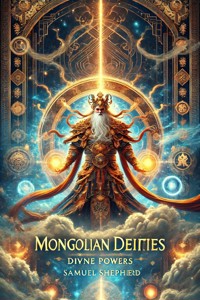
MONGOLIAN DEITIES: DIVINE POWERS
📖
✨
Unlock the Secrets of the Eternal Sky, Warrior Spirits, and Sacred Guardians of the Mongolian Steppe!
For thousands of years, the
Mongolian steppes have been home to powerful
gods, spirits, and divine rulers who shaped the fate of warriors, empires, and entire civilizations. From the
thunderous wrath of Tengri ⚡ to the
sacred wisdom of Buddhist lamas 🏯, the spiritual forces of Mongolia remain some of the most awe-inspiring in history.
This
four-book collection takes you on an epic journey through the
myths, legends, and divine forces that have defined Mongolia’s identity for generations.
📖
WHAT’S INSIDE?
🔥
Book 1: Heaven’s Wrath – The Power of Tengri, the Eternal Blue Sky 🔥
Tengri, the
supreme sky god, ruled over the fate of Mongol warriors, granting victories and punishing those who defied him. Explore the
mystical power of the heavens, the
sacred role of shamans, and how the
Mongol Empire’s conquests were believed to be
guided by the will of the sky. 🌪️🔵
👻
Book 2: Guardians of the Steppes – Mongolian Spirits and Ancestral Worship 👻
Beyond Tengri, the
land, water, and ancestors held immense power. Discover the
sacred mountains, totemic animals, and warrior spirits that
protected Mongolian tribes. Learn about
shamanic rituals, sacred sites, and the deep connection between nature and the Mongol soul. 🏔️🐺🔥
⚔️
Book 3: Khan of the Gods – The Mythology of Genghis Khan’s Divine Legacy ⚔️
Was
Genghis Khan merely a conqueror, or was he
a god among men? Dive into
the myths, omens, and prophecies surrounding his
divine mandate to rule the world. Unravel the secrets of his
hidden tomb, sacred relics, and the legends that foretell his return. 🏹👑🌠
🕉️
Book 4: Buddhas and Bodhisattvas of the Steppe – The Rise of Mongolian Buddhism 🕉️
How did a nation of warriors become
guardians of Buddhist wisdom? Explore the
fusion of Tibetan Buddhism and Mongol traditions, the
rise of sacred lamas, and the
mystical stories of reincarnated leaders who shaped Mongolian spirituality. Discover how Buddhism
survived communist suppression and experienced a
powerful resurgence in modern Mongolia. 🏯🙏✨
⚡
WHY YOU NEED THIS BOOK SERIES!
⚡
✅
A deep dive into Mongolian spirituality, mythology, and history 📜
✅
Perfect for history lovers, mythology enthusiasts, and seekers of lost wisdom 🧠✨
✅
Rare insights into the beliefs that shaped one of the greatest empires in history 🏹🏇
✅
Breathtaking stories of gods, spirits, and warrior-kings 👑🔥
✅
Visually captivating with rich descriptions of sacred rituals and legendary figures 🌌
📚
GET YOUR COPY NOW!
If you’ve ever been fascinated by
the Mongol Empire, shamanic traditions, divine rulers, or Buddhist enlightenment, this series is a
must-read!
📖
Order Now and Begin Your Journey Through the Divine Powers of Mongolia! 🏹🔥🏯
Das E-Book können Sie in Legimi-Apps oder einer beliebigen App lesen, die das folgende Format unterstützen:
Veröffentlichungsjahr: 2025
Ähnliche














MONGOLIAN DEITIES
DIVINE POWERS
4 BOOKS IN 1
BOOK 1
HEAVEN’S WRATH: THE POWER OF TENGRI, THE ETERNAL BLUE SKY
BOOK 2
GUARDIANS OF THE STEPPES: MONGOLIAN SPIRITS AND ANCESTRAL WORSHIP
BOOK 3
KHAN OF THE GODS: THE MYTHOLOGY OF GENGHIS KHAN’S DIVINE LEGACY
BOOK 4
BUDDHAS AND BODHISATTVAS OF THE STEPPE: THE RISE OF MONGOLIAN BUDDHISM
SAMUEL SHEPHERD
Copyright © 2025 by Samuel Shepherd
All rights reserved. No part of this book may be reproduced or transmitted in any form or by any means, electronic or mechanical, including photocopying, recording, or by any information storage and retrieval system, without permission in writing from the publisher.
Published by Samuel Shepherd
Library of Congress Cataloging-in-Publication Data
ISBN 978-1-83938-925-2
Cover design by Rizzo
Disclaimer
The contents of this book are based on extensive research and the best available historical sources. However, the author and publisher make no claims, promises, or guarantees about the accuracy, completeness, or adequacy of the information contained herein. The information in this book is provided on an "as is" basis, and the author and publisher disclaim any and all liability for any errors, omissions, or inaccuracies in the information or for any actions taken in reliance on such information.
The opinions and views expressed in this book are those of the author and do not necessarily reflect the official policy or position of any organization or individual mentioned in this book. Any reference to specific people, places, or events is intended only to provide historical context and is not intended to defame or malign any group, individual, or entity.
The information in this book is intended for educational and entertainment purposes only. It is not intended to be a substitute for professional advice or judgment. Readers are encouraged to conduct their own research and to seek professional advice where appropriate.
Every effort has been made to obtain necessary permissions and acknowledgments for all images and other copyrighted material used in this book. Any errors or omissions in this regard are unintentional, and the author and publisher will correct them in future editions.
BOOK 1 - HEAVEN’S WRATH: THE POWER OF TENGRI, THE ETERNAL BLUE SKY
Introduction
Chapter 1: The Eternal Sky – Understanding Tengri, the supreme god of the Mongolian steppe
Chapter 2: Origins of Tengriism – The ancient roots of Mongolia’s shamanic faith
Chapter 3: Tengri and the Mongol Empire – How belief in the Sky God shaped Genghis Khan’s rise
Chapter 4: The Sacred Connection: Khan and Heaven – The divine mandate of Mongol rulers
Chapter 5: Nature, Spirits, and the Balance of the Sky – How Tengriism views the natural world
Chapter 6: Rituals Under the Open Sky – Shamanic ceremonies, offerings, and prayers to Tengri
Chapter 7: Wrath and Favor: Tengri’s Omens – How victories, disasters, and signs were interpreted
Chapter 8: Tengriism vs Buddhism and Islam – The evolution of faith under Mongol rule
Chapter 9: Survival in the Modern Era – Tengriism’s revival and presence today
Chapter 10: Legacy of the Eternal Sky – How Tengri continues to influence Mongolian identity
BOOK 2 - GUARDIANS OF THE STEPPES: MONGOLIAN SPIRITS AND ANCESTRAL WORSHIP
Chapter 1: Spirits of the Land and Sky – Understanding the spiritual forces that govern Mongolia’s vast landscapes
Chapter 2: Ancestral Worship in Mongolian Tradition – Honoring the spirits of the past and their role in guiding the living
Chapter 3: Nature Deities and Sacred Mountains – The spiritual significance of mountains, rivers, and sacred sites
Chapter 4: The Role of the Shaman – How Mongolian shamans communicate with spirits and deities
Chapter 5: The White and Black Shamans – The dual forces of healing and cursing in Mongolian spiritual practices
Chapter 6: Tengrism and the Spirit World – The connection between the Sky God and the spirit realm
Chapter 7: Offerings, Rituals, and Sacred Fires – The importance of ceremonies in maintaining balance with the spirit world
Chapter 8: Animal Spirits and Totemism – The deep bond between Mongolians and their animal protectors
Chapter 9: The Influence of Buddhism and Foreign Beliefs – How Buddhism and other religions merged with Mongolia’s spiritual traditions
Chapter 10: The Spirits of Today – The survival and revival of Mongolian spirit worship in modern times
BOOK 3 - KHAN OF THE GODS: THE MYTHOLOGY OF GENGHIS KHAN’S DIVINE LEGACY
Chapter 1: The Birth of a Legend – Myths and omens surrounding the birth of Genghis Khan
Chapter 2: The Chosen of Tengri – How Genghis Khan was seen as divinely ordained by the Eternal Sky
Chapter 3: The Wolf and the Deer – The mythological origins of the Mongol people and their connection to Genghis Khan
Chapter 4: The Wrath of Heaven – How divine favor and punishment were believed to shape his conquests
Chapter 5: Khan as a God-King – The deification of Genghis Khan during and after his reign
Chapter 6: Sacred Relics of the Great Khan – The legendary objects said to hold his power and spirit
Chapter 7: The Afterlife of an Emperor – Mongolian beliefs about Genghis Khan’s spirit and his hidden tomb
Chapter 8: Forbidden Worship – The suppression and resurgence of Genghis Khan’s cult in history
Chapter 9: Genghis Khan in Prophecy and Folklore – His role in Mongolian prophecies and legends of his return
Chapter 10: The Eternal Khan – How Genghis Khan’s divine legacy continues to shape Mongolian identity and spirituality today
BOOK 4 - BUDDHAS AND BODHISATTVAS OF THE STEPPE: THE RISE OF MONGOLIAN BUDDHISM
Chapter 1: The Arrival of the Dharma – How Buddhism first spread to the Mongolian steppes
Chapter 2: The Rise of the Mongol Khans and Buddhism – The role of Kublai Khan and later rulers in promoting the faith
Chapter 3: The Dalai Lama and the Mongols – The spiritual alliance between Tibet and Mongolia
Chapter 4: Mongolian Bodhisattvas and Holy Figures – The revered Buddhist saints and teachers of Mongolia
Chapter 5: Blending Beliefs: Shamanism and Buddhism – How traditional Mongolian spirituality merged with Buddhist teachings
Chapter 6: Temples, Monasteries, and Sacred Sites – The architectural and spiritual centers of Mongolian Buddhism
Chapter 7: The Buddhist Warrior Kings – How Mongol rulers balanced warfare and spiritual devotion
Chapter 8: The Soviet Era and Religious Persecution – The decline of Buddhism under communist rule
Chapter 9: The Revival of Mongolian Buddhism – The resurgence of the faith in the modern era
Chapter 10: Enlightenment on the Steppe – The lasting impact of Buddhism on Mongolian culture and identity
Conclusion
Introduction
For thousands of years, the vast Mongolian steppe has been shaped not only by the fierce nomadic warriors and great khans who ruled its lands but also by the divine forces that governed the skies, the earth, and the fate of all living beings. In the spiritual world of the Mongols, gods, spirits, and celestial powers were not distant, abstract entities but active forces that determined warfare, leadership, survival, and cosmic balance. From the thundering wrath of Tengri, the Eternal Blue Sky, to the protective presence of ancestral spirits, from the mythic deification of Genghis Khan to the spread of Buddhism and its enlightened deities, Mongolian beliefs formed a complex and ever-evolving spiritual landscape.
This series, Mongolian Deities: Divine Powers, explores the sacred and supernatural forces that have defined Mongolia’s past, shaped its cultural identity, and influenced its people’s spiritual journey. Across these volumes, we travel through time, unraveling the origins, myths, and rituals that have governed Mongolian faith, from the shamanic traditions of the earliest steppe tribes to the powerful Buddhist philosophies that later took root in the region.
In Book 1 – Heaven’s Wrath: The Power of Tengri, the Eternal Blue Sky, we explore the supreme Mongolian deity, Tengri, whose divine will shaped empires, guided khans, and determined the fate of battles. To the Mongols, the sky was not merely an expanse above them—it was a living force, a god who watched over the earth. Tengri granted victory to those he favored and unleashed storms and disasters upon those who defied him. His presence was invoked before battle, his favor sought through rituals, and his wrath feared by all. Through this book, we uncover how Tengriism defined Mongolian political and spiritual life, ensuring that the Mongols saw themselves as children of the sky, destined to rule by divine mandate.
In Book 2 – Guardians of the Steppes: Mongolian Spirits and Ancestral Worship, we delve into the world of shamans, nature spirits, and totemic animals, who acted as intermediaries between the human and supernatural realms. Mongolian spirituality has always been deeply connected to the land, water, and sacred sites where spirits resided. Warriors carried the blessings of their ancestors into battle, and nomads sought the protection of the spirits that governed mountains, rivers, and open plains. We explore the rituals, offerings, and ceremonies used to honor these guardians, ensuring the Mongols lived in harmony with the forces that surrounded them.
In Book 3 – Khan of the Gods: The Mythology of Genghis Khan’s Divine Legacy, we uncover the transformation of Genghis Khan from a mortal conqueror into a mythological figure, a god-king whose spirit still looms over Mongolia. His story did not end with his death—legends claim his soul ascended to Tengri’s realm, where he continues to guide his people from beyond. His hidden tomb, sacred relics, and prophetic return have fueled Mongolian myths for centuries, ensuring that his name remains not just in history but in prayers, prophecies, and spiritual traditions. This book explores the divinization of Genghis Khan, how his legacy was woven into Mongolian religious beliefs, and how he continues to be revered as a divine ruler, protector, and eternal force.
In Book 4 – Buddhas and Bodhisattvas of the Steppe: The Rise of Mongolian Buddhism, we examine how Tibetan Buddhism merged with Mongolia’s shamanic past, creating a unique spiritual tradition that blended warrior ideals with Buddhist philosophy. From the patronage of Kublai Khan and Altan Khan to the spiritual authority of the Jebtsundamba Khutuktu, Mongolian rulers sought to balance their military power with spiritual wisdom. The introduction of Buddhas, bodhisattvas, and reincarnated lamas shaped Mongolian art, literature, governance, and everyday life. Even after decades of suppression under Soviet rule, Buddhism reemerged in Mongolia, reclaiming its place in the hearts of its people. This book explores the monasteries, sacred relics, and Buddhist warriors who helped shape Mongolia’s spiritual destiny.
Through these volumes, we uncover the deep spiritual roots of Mongolia, where the power of the sky, the voices of ancestors, the legend of the great khans, and the wisdom of the Buddha have all left an indelible mark on its people. The gods, spirits, and deities of the steppe continue to live on—not only in ancient myths but in the rituals, beliefs, and traditions that endure to this day.
BOOK 1
HEAVEN’S WRATH
THE POWER OF TENGRI, THE ETERNAL BLUE SKY
SAMUEL SHEPHERD
Chapter 1: The Eternal Sky – Understanding Tengri, the supreme god of the Mongolian steppe
Tengri, the supreme deity of the Mongolian steppe, has been venerated for centuries as the eternal and all-encompassing force that governs the heavens. This divine entity is not a god in the traditional sense of anthropomorphic deities but rather a cosmic force that embodies the vast, unending sky, watching over all life below. Tengriism, the spiritual system that centers around this deity, is one of the oldest belief systems in Central Asia, deeply interwoven with the lives of the nomadic peoples who have roamed the steppes for millennia. The sky, boundless and ever-present, was seen as both a protector and a judge, offering its blessings to those who lived in harmony with nature while punishing those who strayed from its path.
Tengri was not merely a distant celestial entity but an active force in the lives of the Mongols. His will was believed to manifest in natural events, from the movement of the stars to the fury of storms and the fertility of the land. A ruler’s legitimacy was directly tied to Tengri’s favor, as Mongol leaders claimed to rule by the decree of the Eternal Sky. The concept of köktengri, or "Blue Heaven," reinforced the belief that Tengri’s dominion was absolute, stretching over all known lands and peoples. This divine authority was not limited to Mongolian rulers but extended to their warriors and common folk, who sought Tengri’s guidance in times of war, hardship, and decision-making. Shamanic practices developed as a means of interpreting Tengri’s will, with shamans acting as intermediaries between the people and the sky god, reading celestial signs and communicating with spirits to discern the proper course of action.
The Mongols understood the world as a carefully maintained balance between the elements, spirits, and cosmic forces, with Tengri reigning supreme over this equilibrium. The earth was viewed as the feminine counterpart to the masculine sky, and the union of these forces was believed to sustain life. This duality shaped Mongolian cosmology, emphasizing the harmony that needed to be preserved between all living things. Offerings were frequently made to Tengri in the form of milk libations, horse sacrifices, and prayers spoken beneath the open sky. High places such as mountaintops and sacred ovoo cairns were considered particularly powerful sites for invoking Tengri’s blessings, as they bridged the earthly and celestial realms.
Mongolian warriors carried the belief in Tengri onto the battlefield, convinced that their victories were sanctioned by the Eternal Sky. Genghis Khan himself declared that his conquests were carried out with the mandate of Tengri, a belief that not only legitimized his rule but also instilled fear and reverence among his followers and enemies alike. This divine connection to the sky god was reinforced through the use of blue banners, a sacred color symbolizing the sky’s vastness and power. Rituals conducted before and after battles sought Tengri’s favor, ensuring that the warriors remained in alignment with his will. The outcome of a conflict was often interpreted as Tengri’s judgment, affirming the righteousness of the victors and condemning the defeated as having fallen out of favor with the celestial order.
Natural disasters, droughts, and plagues were similarly attributed to Tengri’s displeasure, prompting rulers and shamans to seek ways to restore balance. Great ceremonies were held to appease the sky god, often involving elaborate sacrifices and communal prayers. The Mongols believed that their prosperity depended on maintaining Tengri’s favor, making it essential to live in accordance with the principles of respect, loyalty, and humility. The vastness of the steppe itself reinforced this belief, as the endless blue sky served as a constant reminder of the deity’s omnipresence. Unlike many religious traditions that relied on temples and idols, Tengriism found its sacred spaces in nature itself, with the entire steppe functioning as a living temple beneath the sky’s watchful gaze.
Tengri’s influence extended beyond the spiritual realm into the governance and laws of Mongolian society. Leaders were expected to rule justly, as their authority was believed to be a direct extension of the sky god’s will. The Mongol code of law, the Yassa, emphasized principles of fairness, loyalty, and respect for the natural order, reflecting the belief that to govern in harmony with Tengri was to ensure stability and success. This divine mandate was so deeply ingrained in Mongolian culture that even after the empire’s decline, traces of Tengriism remained embedded in local customs, rituals, and the reverence for nature. The fusion of Tengriism with later religious influences, such as Buddhism and Islam, did not erase the presence of the Eternal Sky in Mongolian identity, as elements of Tengriist thought continued to shape the spiritual outlook of the people.
Chapter 2: Origins of Tengriism – The ancient roots of Mongolia’s shamanic faith
The origins of Tengriism stretch deep into the history of the Central Asian steppes, where nomadic tribes lived in close communion with nature, relying on the sky, land, and spirits to guide their existence. Long before the rise of the Mongol Empire, the belief in Tengri, the Eternal Blue Sky, had already taken shape among the early Turkic and Mongolic peoples. These societies, dependent on the unpredictable forces of the natural world, sought to understand and appease the powerful entities that governed their fate. Tengriism emerged as a spiritual framework that reflected the vastness of the steppe, emphasizing harmony with nature, respect for the sky god, and the interconnectedness of all living things. Unlike structured, temple-based religions, Tengriism developed organically as an animistic and shamanic belief system, where sacred knowledge was passed down through oral traditions and rituals conducted beneath the open sky.
The earliest roots of Tengriism can be traced to the nomadic tribes of the Bronze Age, who roamed the vast grasslands of Mongolia, Siberia, and Central Asia. Archaeological evidence suggests that these early steppe societies practiced ancestor worship and held strong beliefs in the spirits of the land, mountains, and rivers. Petroglyphs and burial sites dating back thousands of years reveal depictions of shamans, animals, and celestial symbols, indicating a deep spiritual connection between the people and their environment. The sky, being the most dominant and unchanging element of the landscape, was revered as the highest force, embodying both creation and destruction. The belief that Tengri governed the balance of the world led to the development of rituals aimed at maintaining harmony between the physical and spiritual realms.
As the steppe nomads organized into clans and tribal confederations, Tengriism became the unifying spiritual force that shaped their worldview. The concept of köktengri, or "Blue Heaven," symbolized an omnipresent deity whose favor determined the success of leaders and warriors. Early rulers of the Xiongnu, an ancient confederation that predated the Mongols, claimed their authority came from Tengri, establishing a tradition that would continue for centuries. The idea that earthly power was granted by the sky god gave rulers divine legitimacy, reinforcing their role as intermediaries between the people and the celestial forces. This belief also extended to military campaigns, where victories were seen as signs of Tengri’s blessing, while defeats signaled the loss of divine favor.
Shamanism played a central role in the early practice of Tengriism, as shamans acted as spiritual guides, healers, and mediators between the human world and the unseen realms. These individuals were believed to possess the ability to communicate with spirits, interpret omens, and conduct rituals to appease Tengri and other supernatural forces. The presence of black shamans and white shamans reflected the dual nature of the spiritual world, with white shamans focusing on healing, blessings, and positive energy, while black shamans wielded the power to curse, exorcise malevolent spirits, and control darker forces. The balance between these opposing spiritual roles mirrored the fundamental principles of Tengriism, which emphasized the coexistence of light and dark, order and chaos, and the cyclical nature of life.
The reverence for natural elements was another defining feature of Tengriism, as the steppe nomads viewed mountains, rivers, and animals as sacred manifestations of the divine. High places, such as mountain peaks and sacred ovoo cairns, were considered closer to Tengri, making them ideal sites for prayers and offerings. Horses, central to steppe culture and survival, were particularly significant in spiritual practices, often sacrificed to honor Tengri and ensure the well-being of the tribe. The wind, thunder, and sun were also believed to carry Tengri’s presence, and their changes were interpreted as signs of favor or warning. This deep respect for nature influenced the Mongols’ approach to warfare, governance, and daily life, reinforcing the idea that humans were merely part of a greater cosmic order.
The spread of Tengriism across the steppe was not limited to Mongolic-speaking tribes but also influenced the Turkic peoples, who shared similar nomadic lifestyles and spiritual beliefs. The Göktürks, one of the first major Turkic empires, openly worshiped Tengri and inscribed their devotion onto stone monuments that still stand today. The Orkhon inscriptions, created in the 8th century by the Göktürk Khaganate, explicitly mention Tengri as the supreme force guiding the destiny of rulers and nations. This fusion of Tengriist beliefs with governance and military success reinforced the enduring power of the sky god in Central Asian societies, setting a precedent for later empires, including that of Genghis Khan and his descendants.
As Mongolian tribes consolidated under Genghis Khan in the early 13th century, Tengriism provided both spiritual unity and a justification for conquest. The belief that the Eternal Sky had chosen Genghis Khan as its earthly representative strengthened his legitimacy and helped rally disparate tribes under his leadership. The legacy of Tengriism remained woven into Mongolian culture even as foreign religions, such as Buddhism and Islam, gained influence over the centuries. Though its ancient shamanic roots were gradually overshadowed by more structured religious systems, Tengriism persisted as an underlying spiritual force, shaping Mongolian identity and their deep reverence for the natural world.




