


4,99 €
Mehr erfahren.
- Herausgeber: Samuel Shepherd
- Kategorie: Religion und Spiritualität
- Sprache: Englisch
🔥
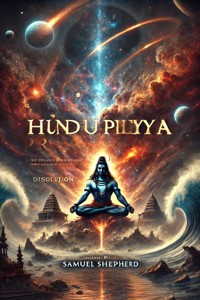
Hindu Pralaya: Dissolution – The Ancient Secrets of Cosmic Endings and New Beginnings
🔥
🕉️
What happens when the universe collapses? What lies beyond destruction? Is the end of the world truly an end—or just the beginning of something greater? Hindu philosophy has long understood that time is not linear but cyclical, where civilizations rise and fall, and even the gods themselves witness the dissolution of reality before it is reborn.
📖
Hindu Pralaya: Dissolution is an extraordinary four-book series that unravels the mysteries of cosmic destruction (
Pralaya), divine battles, apocalyptic science, and the spiritual rebirth that follows. Combining ancient Hindu texts, mythology, and modern scientific parallels, this collection reveals the profound truths hidden within the cycles of time.
🌍
Four Books, One Ultimate Revelation
🌍
🔹
Book 1: Pralaya – The Cosmic Cycles and the End of Time
⏳ Dive into the vast Hindu concept of time, where the universe undergoes cycles of creation, destruction, and rebirth. Learn how the Yugas shape human destiny and why even the cosmos itself must dissolve into nothingness before being reborn.
⚔️
Book 2: Myth and Reality – The Gods, Demons, and Battles of Pralaya
💀 Witness the epic wars between gods and demons at the edge of time! From Vishnu’s final battles to Shiva’s cosmic dance of destruction, uncover the ancient myths that explain how chaos reigns before dharma is restored.
🌪
Book 3: Science of the Apocalypse – Hindu Eschatology and Modern Catastrophes
🔥 Could Hindu end-time prophecies be connected to real-world science? Discover how modern threats—climate change, nuclear war, solar storms, and cosmic disasters—mirror the ancient warnings of
Pralaya.
🌀
Book 4: Karmic Rebirth – Life, Death, and Renewal in Hindu Thought
🕊 What happens after death? How does the soul navigate its journey through
samsara? Explore the mysteries of karma, reincarnation, and
moksha—the final liberation that frees the soul from the cycle of endless rebirth.
✨
Why You Need This Series
✨
🔮
Ancient Truths Meet Modern Understanding – Connect mythology with science to see the cycles of destruction and renewal in both the cosmos and personal life.
🛕
A Journey into the Depths of Hindu Cosmology – Discover hidden knowledge from the
Upanishads,
Puranas,
Bhagavad Gita, and esoteric texts that illuminate the nature of time and reality.
🌍
The End Is Just the Beginning – Understand why Hinduism sees destruction not as final but as the key to transformation and rebirth, both in the universe and in the self.
📜
Myth, History, and Science Interwoven – Explore how Hindu eschatology aligns with modern astrophysics, archaeology, and ecological collapse theories.
🔥
Is This Book for You?
🔥
✅ You’re fascinated by Hindu mythology, spirituality, and cosmic cycles.
✅ You love exploring the mysteries of life, death, and the universe.
✅ You want to connect ancient wisdom with modern reality.
✅ You seek deeper meaning in the cycles of destruction and renewal.
📖
Hindu Pralaya: Dissolution is an eye-opening journey into the heart of Hindu eschatology, revealing that beyond every end lies the promise of a new beginning. Whether you are a seeker, a scholar, or simply curious about the cosmic forces that shape our reality, this four-book series will transform the way you see the past, present, and future.
🚀
Are You Ready to Unravel the Secrets of the Universe?
🛒
Pre-order Now & Begin the Journey into Pralaya!
Das E-Book können Sie in Legimi-Apps oder einer beliebigen App lesen, die das folgende Format unterstützen:
Veröffentlichungsjahr: 2025
Ähnliche





HINDU PRALAYA
DISSOLUTION
4 BOOKS IN 1
BOOK 1
PRALAYA: THE COSMIC CYCLES AND THE END OF TIME
BOOK 2
MYTH AND REALITY: THE GODS, DEMONS, AND BATTLES OF PRALAYA
BOOK 3
SCIENCE OF THE APOCALYPSE: HINDU ESCHATOLOGY AND MODERN CATASTROPHES
BOOK 4
KARMIC REBIRTH: LIFE, DEATH, AND RENEWAL IN HINDU THOUGHT
SAMUEL SHEPHERD
Copyright © 2025 by Samuel Shepherd
All rights reserved. No part of this book may be reproduced or transmitted in any form or by any means, electronic or mechanical, including photocopying, recording, or by any information storage and retrieval system, without permission in writing from the publisher.
Published by Samuel Shepherd
Library of Congress Cataloging-in-Publication Data
ISBN 978-1-83938-927-6
Cover design by Rizzo
Disclaimer
The contents of this book are based on extensive research and the best available historical sources. However, the author and publisher make no claims, promises, or guarantees about the accuracy, completeness, or adequacy of the information contained herein. The information in this book is provided on an "as is" basis, and the author and publisher disclaim any and all liability for any errors, omissions, or inaccuracies in the information or for any actions taken in reliance on such information.
The opinions and views expressed in this book are those of the author and do not necessarily reflect the official policy or position of any organization or individual mentioned in this book. Any reference to specific people, places, or events is intended only to provide historical context and is not intended to defame or malign any group, individual, or entity.
The information in this book is intended for educational and entertainment purposes only. It is not intended to be a substitute for professional advice or judgment. Readers are encouraged to conduct their own research and to seek professional advice where appropriate.
Every effort has been made to obtain necessary permissions and acknowledgments for all images and other copyrighted material used in this book. Any errors or omissions in this regard are unintentional, and the author and publisher will correct them in future editions.
BOOK 1 - PRALAYA: THE COSMIC CYCLES AND THE END OF TIME
Introduction
Chapter 1: The Eternal Wheel – Understanding the Hindu Concept of Time
Chapter 2: Yugas and Ages – The Four Cosmic Epochs and Their Significance
Chapter 3: Creation and Dissolution – The Dance of Brahma, Vishnu, and Shiva
Chapter 4: Pralaya Explained – The Different Types of Cosmic Dissolution
Chapter 5: Floods, Fire, and Silence – Mythological Accounts of the End
Chapter 6: The Kali Yuga and the Future – Signs of the Final Age
Chapter 7: Scientific Parallels – Do Modern Theories Align with Pralaya?
Chapter 8: The Gods and the End – Role of Divine Beings in the Destruction and Renewal of the Universe
Chapter 9: Beyond the End – What Comes After Pralaya?
Chapter 10: Cycles Within Cycles – How Pralaya Reflects the Rhythms of Life and Death
BOOK 2 - MYTH AND REALITY: THE GODS, DEMONS, AND BATTLES OF PRALAYA
Chapter 1: The Cosmic Battlefield – Gods, Demons, and the Eternal War of Creation and Destruction
Chapter 2: Vishnu’s Great Deluge – Matsya Avatar and the Flood of Pralaya
Chapter 3: Shiva the Destroyer – Tandava, Cosmic Dance, and the End of Time
Chapter 4: The Daityas and Asuras – Demonic Forces That Challenge Cosmic Order
Chapter 5: The Churning of the Ocean – Creation from Chaos and the Struggle for Amrita
Chapter 6: Mahabharata and the End of an Age – The Great War and Its Connection to Cosmic Dissolution
Chapter 7: Kalki and the Final Battle – The Prophesied Warrior Who Ends the Kali Yuga
Chapter 8: The Sacred Fire – Agni, Cosmic Flames, and the Purification of Worlds
Chapter 9: Temples, Texts, and Symbols – How Mythology Preserves the Memory of Pralaya
Chapter 10: Between Myth and Reality – Do Ancient Stories Hold Truths About Past and Future Cataclysms?
BOOK 3 - SCIENCE OF THE APOCALYPSE: HINDU ESCHATOLOGY AND MODERN CATASTROPHES
Chapter 1: The End Foretold – Hindu Eschatology and the Prophecies of Destruction
Chapter 2: Cycles of Catastrophe – Cosmic Events and the Recurring Patterns of Doom
Chapter 3: Fire, Water, and Ash – Natural Disasters in Ancient Texts and Modern Science
Chapter 4: Solar Storms and Celestial Chaos – The Role of the Sun in Pralaya
Chapter 5: Earth’s Shifting Fate – Pole Shifts, Climate Change, and Geological Upheavals
Chapter 6: The Kali Yuga Crisis – Social, Political, and Environmental Collapse in the Final Age
Chapter 7: Forgotten Civilizations – Did Past Cataclysms Erase Advanced Societies?
Chapter 8: Quantum Destruction and Rebirth – Hindu Cosmology Through the Lens of Physics
Chapter 9: The End of Humanity? – Artificial Intelligence, Nuclear War, and Technological Pralaya
Chapter 10: After the Fall – What Hindu Philosophy Says About Rebirth After the Apocalypse
BOOK 4 - KARMIC REBIRTH: LIFE, DEATH, AND RENEWAL IN HINDU THOUGHT
Chapter 1: The Eternal Cycle – Birth, Death, and Rebirth in Hindu Philosophy
Chapter 2: Karma and Cosmic Justice – How Actions Shape Destiny Across Lifetimes
Chapter 3: Samsara and Liberation – Escaping the Wheel of Rebirth
Chapter 4: The Soul’s Journey – What Happens After Death According to Hindu Texts
Chapter 5: Pralaya and Personal Rebirth – How Cosmic Cycles Mirror the Individual Life
Chapter 6: Reincarnation in Myth and Reality – Stories of Past Lives and Modern Cases
Chapter 7: Gods, Gurus, and the Afterlife – Divine Beings and Their Role in Spiritual Renewal
Chapter 8: The Yugas and the Evolution of the Soul – Spiritual Growth Through the Ages
Chapter 9: The Final Liberation – Moksha, Enlightenment, and the End of Rebirth
Chapter 10: A New Beginning – How Hindu Thought Guides Us in Facing Life, Death, and Renewal
Conclusion
Introduction
The universe moves in cycles—of creation and dissolution, birth and death, time and eternity. Hindu cosmology describes this endless rhythm through the concept of Pralaya, the great dissolution, where worlds collapse, gods and demons clash, and time itself unravels before the process of rebirth begins again. Unlike the linear apocalyptic visions of many traditions, Hindu thought perceives destruction not as an ultimate end but as a necessary phase in the grand cycle of existence. Pralaya is the force that ensures renewal, wiping away the old so that the new can emerge, balancing the ever-turning wheel of samsara—the cycle of birth, death, and rebirth.
This book delves into the vast and intricate world of Pralaya, exploring its meaning through mythology, scripture, history, and modern science. Across four volumes, it examines not only the cosmic dissolutions that mark the end of great ages but also the deeper metaphysical truths they represent. The Puranas speak of periodic destructions, where the universe dissolves into an ocean of nothingness, only to be reshaped by divine will. The great battles between gods and demons, played out at the edges of time, reflect both cosmic upheavals and the eternal struggle between dharma (order) and adharma (chaos). The scientific perspective reveals striking parallels between these ancient accounts and modern theories of planetary extinction, climate collapse, and technological catastrophe, suggesting that the cycles of dissolution are not confined to myth but are part of the fabric of existence itself.
Each volume of this work unravels a different aspect of Pralaya, offering a comprehensive exploration of destruction and renewal. Book 1: Pralaya – The Cosmic Cycles and the End of Time lays the foundation, detailing the vast Hindu concept of time, the Yuga cycles, and the grand cosmic dissolutions that reset the universe. It explores how time is not a straight path leading to a final judgment but a spiral of endless creation and destruction, where even the gods are bound by the rhythm of existence.
Book 2: Myth and Reality – The Gods, Demons, and Battles of Pralaya delves into the stories of divine wars and apocalyptic conflicts that signal the end of ages. The battles between Vishnu, Shiva, Kali, and the great asuras (demons) are not merely tales of destruction but represent deeper truths about the forces that shape reality. These myths, passed down for millennia, contain hidden wisdom about transformation, resistance to chaos, and the inevitable rebirth that follows every fall.
Book 3: Science of the Apocalypse – Hindu Eschatology and Modern Catastrophes draws connections between the mythic past and the scientific present, exploring how natural disasters, climate change, nuclear threats, and cosmic dangers align with the eschatological visions of Hindu texts. From solar storms to supervolcanic eruptions, the end of civilizations has always been a recurring theme in history, and modern science now warns of threats that echo the ancient warnings of Pralaya.
Book 4: Karmic Rebirth – Life, Death, and Renewal in Hindu Thought shifts the focus to the personal, exploring how the grand cosmic cycles are mirrored in the journey of the soul. Just as universes dissolve and are reborn, so too does every individual undergo cycles of suffering, transformation, and renewal. The teachings of karma, reincarnation, and moksha (liberation) offer guidance on how to navigate these changes, revealing that destruction, whether personal or cosmic, is never the end—only a transition to something new.
Through these explorations, Hindu Pralaya: Dissolution seeks to unravel one of the most profound and mysterious aspects of Hindu cosmology, showing that the end is never truly the end. Whether in the collapse of empires, the death of a single life, or the dissolution of entire universes, Pralaya is the great force of transformation, ensuring that beyond every ending, something new always emerges.
BOOK 1
PRALAYA
THE COSMIC CYCLES AND THE END OF TIME
SAMUEL SHEPHERD
Chapter 1: The Eternal Wheel – Understanding the Hindu Concept of Time
Time in Hindu philosophy is not a linear progression but a vast, cyclical phenomenon, repeating itself across unimaginably long durations. Unlike the Western perception of time as a straight line with a beginning and an end, Hindu cosmology presents time as an eternal wheel, continuously moving through cycles of creation, preservation, and destruction. This grand conception of time is deeply embedded in Hindu scriptures, particularly in the Puranas and the Vedas, which describe the universe as undergoing repeated phases of existence, dissolution, and rebirth. The cycles of time are governed by cosmic forces, with divine beings such as Brahma, Vishnu, and Shiva playing essential roles in maintaining the rhythm of existence.
The concept of Yugas represents the four major divisions of cosmic time, each characterized by different levels of righteousness, morality, and human civilization. The first and most virtuous era, Satya Yuga, is marked by truth, harmony, and spiritual enlightenment, where human beings live for thousands of years and remain in close communion with the divine. As time progresses, the world transitions into Treta Yuga, where virtue begins to decline, leading to the gradual deterioration of moral and ethical values. The Dvapara Yuga follows, where conflicts intensify, lifespans shorten, and spiritual wisdom diminishes further. The final age, Kali Yuga, is the era of darkness and chaos, characterized by materialism, corruption, and moral decay, where humanity is at its lowest point. The scriptures assert that the present age belongs to Kali Yuga, and the signs of its influence are evident in the growing prevalence of greed, violence, and spiritual ignorance.
Each of these Yugas operates within an even grander framework known as a Mahayuga, which consists of the four Yugas combined, spanning approximately 4.32 million years. A thousand Mahayugas form a single Kalpa, which is one day in the life of Brahma, the creator deity. At the end of Brahma’s day, the universe dissolves into chaos and is reabsorbed into the cosmic void during Pralaya, only to be recreated when Brahma awakens for another day. His entire lifespan is said to be 100 divine years, equivalent to trillions of human years, after which a total dissolution occurs, and a new cycle begins. This staggering scale of time illustrates the infinitude of cosmic processes, reinforcing the notion that existence is never truly destroyed but merely transformed.
This cyclical perspective extends beyond the macrocosm of the universe and applies to human life and karma. The Hindu doctrine of Samsara, or the cycle of birth, death, and rebirth, mirrors the vast cycles of cosmic time. Every soul, bound by karma, moves through countless lifetimes in different forms, continually shaped by its actions and experiences. The ultimate goal is to attain Moksha, liberation from this endless cycle, thereby transcending time itself and merging with the eternal divine consciousness. The Upanishads and Bhagavad Gita emphasize the transient nature of existence, reminding seekers that time is an illusion (Maya), and true reality lies beyond its grasp.
The movement of celestial bodies also reflects the cyclical nature of time in Hindu cosmology. Hindu astrology, or Jyotish Shastra, is deeply rooted in the understanding of cosmic rhythms and planetary cycles, which are believed to influence human destiny. The positioning of planets, lunar phases, and solar movements dictate auspicious and inauspicious moments, reinforcing the idea that time is not merely a neutral background but an active force shaping events and experiences. Rituals, festivals, and spiritual practices are often aligned with these cosmic timings to harness their spiritual potency, emphasizing humanity’s connection to the greater cosmic order.
The idea of Kalachakra, the wheel of time, is a prominent theme in Hindu and Buddhist traditions, symbolizing the perpetual motion of existence. Time is viewed not only as a process of decay but also as an opportunity for renewal and transformation. The descent into Kali Yuga is not merely a path toward destruction but a necessary phase before the eventual return to Satya Yuga, completing the cosmic cycle. The Bhagavata Purana describes how Vishnu incarnates in different forms throughout history to restore balance, ensuring that no phase of time remains static or absolute. Each Yuga sets the stage for the next, demonstrating that time is a rhythmic process rather than a linear march toward an ultimate conclusion.
The Mahabharata and Ramayana, two of Hinduism’s greatest epics, are deeply intertwined with the concept of time. These narratives take place across different Yugas, illustrating how divine intervention manifests in accordance with cosmic rhythms. Krishna’s discourse to Arjuna in the Bhagavad Gita reinforces the impermanence of time-bound reality, urging humanity to act with detachment and wisdom. Krishna proclaims that time itself is an aspect of the divine, an unstoppable force that consumes everything, yet it is also the medium through which souls evolve and transcend their limitations.
Even within Hindu temple architecture and sacred art, the representation of time as a cycle is evident. Temples are designed to symbolize cosmic order, with their structures often reflecting astronomical alignments that mark solstices, equinoxes, and planetary movements. The dance of Nataraja, a representation of Shiva, encapsulates the essence of cyclical time, where creation and destruction occur simultaneously, maintaining the balance of existence. This depiction reinforces the idea that time is not to be feared but understood as an eternal process of dissolution and regeneration.
From the cosmic scale to individual life, the Hindu concept of time pervades every aspect of reality, shaping philosophy, spirituality, and human destiny. Time is not a linear road leading to an endpoint but an infinite wheel that turns endlessly, carrying all existence through its cycles of birth, death, and renewal.
Chapter 2: Yugas and Ages – The Four Cosmic Epochs and Their Significance
Time in Hindu philosophy is structured into vast cosmic cycles known as Yugas, which represent the rise and fall of dharma, or righteousness, across immense spans of time. The concept of Yugas is central to Hindu cosmology, illustrating how human civilization, morality, and spiritual wisdom evolve and decline in a continuous, cyclical process. These Yugas are detailed extensively in the Puranas and other sacred texts, defining four distinct ages: Satya Yuga, Treta Yuga, Dvapara Yuga, and Kali Yuga. Each Yuga is a phase within a larger cycle known as a Mahayuga, consisting of 4.32 million years. A thousand such Mahayugas form a Kalpa, which is one day in the life of Brahma, the creator deity. This cyclical nature of time is not a simple repetition but a structured, predictable pattern of cosmic evolution and dissolution.
Satya Yuga, also known as the Krita Yuga, is the golden age of truth and enlightenment, lasting 1.728 million years. This era is characterized by absolute righteousness, purity, and divine presence. Humanity exists in perfect harmony with the cosmos, with people possessing extraordinary lifespans and spiritual wisdom. There is no need for organized religion or structured learning because knowledge is innate, and dharma is upheld effortlessly. The earth provides abundantly, and suffering is nonexistent. There is no deception, greed, or conflict, and the gods walk among humans. Meditation, self-realization, and devotion to the divine are natural states of existence. The Treta Yuga follows, lasting 1.296 million years, marking the gradual decline of righteousness. This is the age of great rulers and divine incarnations, where virtue still prevails, but human desires and ambitions begin to manifest. The balance of dharma begins to waver as people shift from an instinctual connection with cosmic order to structured religious practices and rituals. The Ramayana, which describes the life and trials of Lord Rama, is set in this era, illustrating the struggle between virtue and corruption.
Dvapara Yuga spans 864,000 years and represents an even further decline in morality and spiritual awareness. The balance of truth and falsehood becomes unstable, and human lifespans decrease significantly. Knowledge is no longer intuitive but must be learned through dedicated study and discipline. Wars, conflicts, and power struggles increase, and society becomes dependent on scriptures and traditions to maintain order. This is the age in which the Mahabharata takes place, depicting the great war of Kurukshetra and the moral dilemmas faced by warriors and rulers. Lord Krishna, an incarnation of Vishnu, guides humanity through the Bhagavad Gita, offering profound wisdom on duty, righteousness, and devotion. The presence of divine figures becomes essential to preserving dharma as human beings struggle with their growing attachment to materialism and ego. The transition from Dvapara to Kali Yuga is marked by increasing deception, greed, and violence, leading into the present age.




