


Erhalten Sie Zugang zu diesem und mehr als 300000 Büchern ab EUR 5,99 monatlich.
- Herausgeber: Mercier Press
- Kategorie: Geisteswissenschaft
- Sprache: Englisch
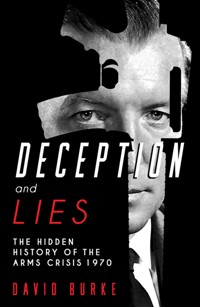
In May of 1970, two government ministers were dismissed from Cabinet for allegedly purchasing guns for the IRA. The Taoiseach Jack Lynch disavowed any knowledge of the plot. Few believed him. Charles Haughey, Minister for Finance, a captain in Irish military intelligence along with two others were put on trial. All were acquitted. Haughey refused to talk about the crisis for the rest of his life. Fianna Fail endured decades of splits, turmoil and leadership heaves. Until now, no one has revealed the pivotal role of an IRA informer in the affair. The part he played became the best-kept State secret of the last half-century. The book also reveals a dirty tricks campaign by Britain's Foreign Office to conceal the ancillary role of a British agent called Capt. Markham-Randall in the murder of Garda Richard Fallon on the eve of the eruption of the Arms Crisis.
Sie lesen das E-Book in den Legimi-Apps auf:
Seitenzahl: 502
Veröffentlichungsjahr: 2020
Das E-Book (TTS) können Sie hören im Abo „Legimi Premium” in Legimi-Apps auf:
Ähnliche
















Dedication
To My Parents
MERCIER PRESS
3B Oak House, Bessboro Rd
Blackrock, Cork, Ireland.
www.mercierpress.ie
www.twitter.com/MercierBooks
www.facebook.com/mercier.press
©David Burke, 2020
Epub ISBN:978 1 78117 788 4
This eBook is copyright material and must not be copied, reproduced, transferred, distributed, leased, licensed or publicly performed or used in any way except as specifically permitted in writing by the publishers, as allowed under the terms and conditions under which it was purchased or as strictly permitted by applicable copyright law. Any unauthorised distribution or use of this text may be a direct infringement of the author’s and publisher’s rights and those responsible may be liable in law accordingly.
Acknowledgements
I wish to thank all those who were instrumental in bringing this book to publication. Many people gave of their time freely to talk to me about the events in question and most of those who kindly allowed themselves to be interviewed are listed in the endnotes. Certain people for varying, but valid, reasons did not wish to be named; and their testimony is ascribed to ‘private information’.
To those people who read drafts of the book along the way – thank you for your comments, suggestions and encouragement.
The endnotes show where printed sources have been used; thanks are here expressed to the authors and publishers concerned.
The photograph of Charles Haughey which appears as part of the front cover design is reproduced by kind permission of the National Library of Ireland. It was taken by the late Rex Roberts who donated his archives to the NIL.
Special thanks to Mary, Deirdre, Noel and Sarah of Mercier Press with whom it was a joy to work. Despite the difficult circumstances we found ourselves in, and the limitations imposed by the Covid pandemic, they managed to bring the project to completion on time. A special thanks also to Charlie Bird for his imaginative ‘virtual launch’ of the book and his camera operator Alison.
And a special thank you to my friends and family who have supported me throughout this whole endeavour with unwavering enthusiasm.
Dramatis Personae
Berry, Peter: Secretary General at the Department of Justice in 1969 and 1970.
Blaney, Neil: Minister for Agriculture and Fisheries, November 1966–May 1970. Member of the cabinet sub-committee on Northern Ireland established in 1969. Arms trial defendant who had charges struck out against him on 2 July 1970.
Boland, Kevin: Minister for Social Welfare July 1969–May 1970; Minister for Local Government, November 1966–May 1970.
Brennan, Joseph: Minister for Labour, July 1969–March 1973. Minister for Social Welfare, May 1970–March 1973. Member of the cabinet sub-committee on Northern Ireland, which was established in 1969.
Callaghan, James: British Home Secretary, November 1967–June 1970; Prime Minister, April 1976–May 1979.
Childers, Erskine: Minister for Health, July 1969–March 1973.
Colley, George: Minister for Industry and Commerce, July 1966–May 1970; Minister for the Gaeltacht, July 1969–March 1973; Minister for Finance, May 1970–March 1973.
Cosgrave, Liam: Leader of Fine Gael, April 1965–July 1977; Taoiseach March 1973–July 1977.
Delaney, Maj. Gen. Patrick: Director of Military Intelligence, G2, April 1970–April 1971.
Devine, John: Public relations officer of the Irish Labour Party in 1969. Author of the Devine Memorandum.
Devlin, Paddy:CDC leader. Nationalist MP at Stormont, 1969–1972. Founding member of the SDLP.
Doherty, Paddy:Derry CDC leader.
Fagan, Anthony: Assistant Principal Officer in the Department of Finance under Charles Haughey.
Fallon, Garda Richard: Killed by Saor Éire in April 1970.
Faulkner, Pádraig: Minister for Education, July 1969–March 1973. Member of the cabinet sub-committee on Northern Ireland which was established in 1969.
FitzGerald, Garret:Fine Gael TD, July 1969–November 1992. Leader of Fine Gael, July 1977–March 1987. Taoiseach, June 1981–March 1982 and December 1982–March 1987.
Fleming, Chief Superintendent John: Head of the Special Branch in 1969 and 1970.
Gibbons, James: Minister for Defence, July 1969–May 1970. Minister for Agriculture, May 1970–March 1973.
Gilchrist, Andrew: British ambassador to Dublin, 1967–1970.
Goulding, Cathal: Chief of Staff of the IRA. Founding member of the Official IRA. Marxist in his political outlook.
Haughey, Charles: Minister for Finance, November 1966–May 1970. Leader of Fianna Fáil December 1979–February 1982. Taoiseach, December 1979–June 1981, March 1982–December 1982 and March 1987–February 1992. Member of the cabinet sub-committee on Northern Ireland which was established in 1969. Arms trial defendant.
Haughey, Pádraig (‘Jock’): Businessman and brother of Charles.
Hefferon, Col Michael: Director of Irish Military Intelligence, G2, 1958–1970.
Hillery, Paddy: Minister for External Affairs July 1969–1973.
Keenan, Seán: Member of the IRA and CDC leader in Derry. Founding member of the Provisional IRA.
Kelly, Capt. James: Joined the Irish Army in 1949. He went into the intelligence directorate, G2, in 1961. He was posted to the Middle East, 1963–65. He returned to G2 and retired in 1970.
Kelly, John: National organiser for the Citizens Defence Committees, IRA member and arms trial defendant.
Lemass, Seán: Leader of Fianna Fáil and Taoiseach, June 1959–November 1966.
Lenihan, Brian: Minister for Transport and Power July 1969–January 1973. Minister for Foreign Affairs, January 1973–March 1973.
Luykx, Albert: Businessman and arms trial defendant.
Lynch, Jack: Leader of Fianna Fáil, November 1966–December 1979. Taoiseach, November 1966–February 1973; July 1977–December 1979.
MacEoin, Lt Gen. Seán: (John McKeown). Chief of Staff of the Irish Army, April 1962–March 1971.
McGrath, William: Associate of Ian Paisley.
McKeague, John: Associate of Ian Paisley. Leader of SDA in Belfast in 1969.
McMahon, Philip: The former head of Garda Special Branch who was the handler of ‘The Deceiver’ in 1969 and 1970.
MacStíofáin, Seán:IRA Director of Intelligence. Founding member of the Provisional IRA.
Ó Brádaigh, Ruairí: Chief of Staff of the IRA during the 1960s. Founding member of the Provisional IRA. First president of Provisional Sinn Féin.
O’Brien, Conor Cruise: Irish Labour Party TD, June 1969–June 1977. Minister for Posts and Telegraphs, March 1973–1977.
Ó Moráin, Mícheál: Minister for Justice, March 1968–May 1970.
O’Malley, Des: Chief Whip, July 1969–May 1970 Minister for Justice, May 1970–March 1973.
O’Neill, Capt. Terence: Prime Minister of Northern Ireland, March 1963–May 1969.
Paisley, Ian: Founding member and leader of the Democratic Unionist Party (DUP), September 1971–May 2008. First Minister of Northern Ireland, May 2007–June 2008.
Peck, John: British ambassador to Ireland, 1970–1973.
Markham-Randall, Capt.: The nom de guerre of a British spy who attempted to penetrate the CDC arms quest in London and Dublin in November 1969.
Sullivan, Jim:CDC leader in Belfast and member of the IRA. Founding member of the Official IRA.
Wilson, Harold: Labour Party prime minister of the UK 1964–70 and 1974–6.
Organisations
B-Specials: Members of the Ulster Special Constabulary, a part-time force disbanded in 1970
Citizen Defence Committees (CDCs): A collective description of the groups which assembled in 1968 and 1969 to defend nationalist communities in Northern Ireland from attacks by loyalist extremists and the B-Specials.
Fianna Fáil: Irish political party originally formed from those who opposed the Treaty with Britain signed in December 1921. In the period under review it was led by Jack Lynch who succeeded Seán Lemass as its leader in 1966.
Fine Gael: Irish political party formed from those who supported the Treaty of 1921. During the period under review it was led by Liam Cosgrave.
Garda Síochána: The police force of the Republic of Ireland.
Garda Special Branch: The intelligence-gathering apparatus of An Garda Síochána.
G2: Irish Military Intelligence.
MI5: Britain’s internal intelligence service. Attached to the Home Office. Responsible for security operations within the UK.
MI6: Britain’s overseas intelligence service also known as the Secret Intelligence Service (SIS). Attached to the Foreign & Commonwealth Office.
NICRA: Northern Ireland Civil Rights Association.
OfficialIRA: The Marxist wing which emerged after the IRA split in December 1969. Its chief of staff in 1970 was Cathal Goulding.
RUC: The Royal Ulster Constabulary, the police force of Northern Ireland.
RUC Special Branch: The intelligence-gathering arm of the Royal Ulster Constabulary.
Saor Éire: Dissident republican movement. Responsible for the killing of Garda Richard Fallon in April 1970.
SDLP: Social Democratic and Labour Party – a nationalist political party supporting united Ireland achieved through non-violence.
ProvisionalIRA. The wing of the IRA which emerged after the IRA split in December 1969 with the intention of ending British rule in Northern Ireland. Its chief of staff in 1970 was Seán MacStíofáin.
Introduction
A State of Paranoia, Intrigue & Murder
In 1921 negotiations took place between the British government and Irish rebels who were seeking independence to see if a peaceful resolution could be found to settle their differences. The process culminated in a treaty which sparked a civil war in Ireland. The pro-Treaty forces prevailed and set up a political party called Cumann na nGaedheal, which held office until 1932. It later evolved into Fine Gael.
The defeated anti-Treaty forces led by Éamon de Valera put aside their arms and embraced constitutional politics in 1926 under the political banner of Fianna Fáil. With only two exceptions, they won every Irish general election between 1932 and 1973. All the while they made loud noises about ending British rule in the six counties in the north partitioned from the rest of the island, yet they never took up arms to achieve this.
After Seán Lemass succeeded de Valera as leader of Fianna Fáil and became taoiseach in 1959, he began to adopt a more conciliatory approach to Northern Ireland. He held a historic meeting with his counterpart Capt. Terence O’Neill, in January 1965. The two men who succeeded him as taoiseach, Jack Lynch and Charles Haughey, supported Lemass enthusiastically. Some hard-liners in his cabinet, such as Neil Blaney, were uncomfortable about this development, believing that Lemass was conferring de facto recognition on the Northern Ireland state. However, the party continued to rule without any significant internal strife.
Meanwhile, the IRA was going through a period of transformation under the leadership of Cathal Goulding, who was coaxing the movement away from militarism towards left-wing political agitation. Goulding himself had become a Marxist.
Despite the IRA’s shift towards politics, militant loyalist hard-liners reformed the Ulster Volunteer Force (UVF). Men such as Gusty Spence joined it. They were convinced the IRA was about to go on a war footing. They launched a campaign of violence in 1966, in the pretence that some of it was being perpetrated by the IRA. The masquerade was not a success and Spence was imprisoned for murder in 1966 and the UVF was proscribed.
Also in 1966, Fianna Fáil politicians Charles Haughey and Neil Blaney threw their hats into the leadership ring after Lemass announced his resignation, but whipped them back out when it became clear they would not win. In Haughey’s case, one of the problems he faced was that he was not perceived as someone with sufficiently good republican credentials to appeal to voters.1Jack Lynch emerged as a compromise taoiseach in November of that year.
Lynch pursued Lemass’ policy of rapprochement with Capt. O’Neill. Haughey remained a keen supporter of the process.
In 1967 the Northern Ireland Civil Rights Association (NICRA) began campaigning against anti-Catholic discrimination in housing, employment and the gerrymandering of electoral constituencies. Militant loyalist hard-liners convinced themselves that NICRA was nothing more than a front for the IRA.
In 1968 Capt. O’Neill attempted to persuade his fellow unionists that if they embraced Catholics, they might accept Stormont and partition could be preserved. ‘He is a bridge builder, he tells us. A traitor and a bridge are very much alike for they both go over to the other side,’ the staunch unionist, Rev. Ian Paisley, thundered in opposition.2
For a while there were some indications that Capt. O’Neill’s policies were bearing fruit. A number of Nationalist MPs who had been elected to Stormont, but had not taken up their seats, did so after the Lemass-O’Neill process gained pace. The Northern Ireland police force, the Royal Ulster Constabulary (RUC), had decided to disarm itself in the absence of any threat from Goulding’s docile IRA.
However, this was to prove a false dawn. Militant loyalists, inflamed by Paisley’s rhetoric, martialled their anger and directed it against NICRA and the nationalist community at large. This continued through late 1968 and into 1969, reaching a notorious crescendo with the ‘Battle of the Bogside’ in August 1969, which resulted in British troops returning to the streets of Northern Ireland. In the weeks and months that followed, the nationalist communities in Northern Ireland feared further attacks, and sought help.
It was amid this background that the tumultuous Arms Crisis of 1970 – one of the greatest Irish political scandals of the twentieth century – exploded. The Irish public awoke on 6 May to learn that two ministers, Haughey and Blaney, had been dismissed from Lynch’s cabinet for allegedly attempting to import arms to the Republic. It was automatically assumed the guns had been intended for the IRA.
People who followed politics were shocked at Haughey’s dismissal as he was not seen as a hardliner over Northern Ireland let alone a supporter of the IRA. His time as minister for justice was recalled, especially the steps he had taken to quell an IRA campaign in the early 1960s. He was also well recognised as a supporter of rapprochement and was friendly with Brian Faulkner, a Stormont government minister and a future prime minister of Northern Ireland. Up to this point his reputation was that of a highly competent and imaginative government minister who had focused on modernising the state, in particular the economy. The public was less shocked about Blaney, who was seen as a die-hard from a border constituency.
From the start there were whispers that other cabinet members had known about the importation plot all along, despite strong denials by Lynch in Dáil Éireann. There were also claims that MI6 had played an active part in the events, which had culminated in the Arms Crisis.
In September 1970 Haughey, along with James Kelly, a captain from G2, Irish military intelligence, and two others, were put on trial at the Four Courts in Dublin. It soon collapsed. A fresh prosecution commenced in October 1970. The evidence that emerged at the two trials electrified the nation.
It has taken fifty years for the truth about the Arms Crisis to emerge. The missing piece of the puzzle – the best kept state security secret of the last half-century – is the role played by a deceitful and mischievous puppet master who lurked in the shadows. He not only pulled the strings of the special branch but managed to convulse the political order on the island. This is the story of how he did it.
1 The Descent into Madness
Ian Paisley bounded onto the political stage in the 1950s, eager to whip up a religious fervour against the Catholic minority of Northern Ireland, a community he later claimed bred ‘like rabbits’ and multiplied ‘like vermin’.1 No one – not even British royalty – was safe from his invective. When the Queen Mother and Princess Margaret visited Pope John in 1958, he accused them of ‘committing spiritual fornication and adultery with the Anti-Christ’.
By the end of the 1960s, Paisley and his fiercely unionist supporters hurled Ireland into turmoil in the fanatical belief they were preserving Northern Ireland from a deeply mendacious pope who was conspiring against them in Rome.
Paisley’s high profile and his eventual elevation to the post of first minister at Stormont in 2007 has overshadowed the pivotal roles played by those around him, especially William McGrath and John McKeague, in the events leading up to the explosion of the ‘Troubles’.
McGrath perceived the Catholic church as the instrument of the anti-Christ and was determined to expunge it from the four corners of Ireland so that the Protestant community – which he believed was descended from the Tribe of Dan of Caanan, one of the Lost Tribes of Israel – could prevail. He perceived himself as a soldier in what he called the ‘battles of the Lord’.2 His self-anointed duty was to prevent the pope enslaving the Protestants of Northern Ireland and Britain. Paisley, who was nearly ten years younger than McGrath, became a British-Israelite too. The pair had met in 1949 through their involvement in the Unionist Association in the Shore Road area of Belfast where Paisley was studying at a bible college.3
McGrath was later convicted of the sexual abuse of teenage boys at Kincora Boys’ Home in Belfast in 1981. McKeague was another deviant. He had converted to Paisley’s brand of Free Presbyterianism in 1966, and acted as Paisley’s bodyguard for a time. Bizarrely, he was obsessed with Satanism. McGrath and McKeague would have remained irrelevant figures trapped inside a claustrophobic loyalist cocoon but for the charisma and rhetorical flourish of the young Paisley.
Roy Garland, a one-time ally of McGrath, attended Paisley’s church in the early 1960s where worshippers were led to believe the pope, his cardinals and Fianna Fáil were plotting to take over the island of Ireland as a springboard to enable Rome regain control of Britain. McGrath assured Garland that the Vatican plot would be met with determined resistance.
In 1962 McGrath produced a pamphlet that urged support for the formation of a loyalist militia and alluded to the deeds of the Ulster Volunteer Force (UVF).4 According to Roy Garland, McGrath was ‘fomenting an atmosphere of suspicion’ with allegations of ‘deeply laid plots to destabilise and overthrow’ the Northern Ireland state. ‘For at least a decade he had been predicting that blood would be flowing in the streets of Belfast. The scene was being set for the reintroduction of armed militias’.5
As the 1960s proceeded, Paisley, McGrath and their allies ratcheted up the level of sectarian tension. They were key figures in the Ulster Constitution Defence Committee, which was the parent organisation of the Ulster Protestant Volunteers (UPV), a Christian evangelical paramilitary organisation that would soon become involved in a bomb campaign with the UVF.
During the 1964 Westminster elections, Paisley and McGrath sparked a two-day riot in Belfast in response to the display of a Tricolour and a Starry Plough at the election campaign HQ of Sinn Féin’s West Belfast candidate, Billy McMillen. Jim Kilfedder, the successful Ulster Unionist Party candidate in the contest, thanked Paisley after he won, stating he could not have done it without Paisley’s help.
The 1965 meeting between Taoiseach Seán Lemass and Northern Ireland Prime Minister Capt. Terence O’Neill incensed Paisley, McGrath and their ilk. Absurdly, they convinced themselves that it was a sham and that Dublin was conspiring in the shadows with the IRA and the pope to subjugate Northern Ireland. In 1965, McGrath told Garland that the UVF was ‘being re-formed to meet the perceived threat’, as indeed it was.6
Paisley and McGrath kept the tribal drums beating. In 1966 they mounted counter-demonstrations to the Easter parades, which had been organised by nationalists for the fiftieth anniversary of the Easter Rising. McGrath, believing he was fighting for the very survival of his religion, prepared banners that bore slogans such as, ‘For God and Ireland’ and ‘By Right of Calvary, Ireland belongs to Christ’.7
One of the men who joined the born-again UVF was an ex-British Army soldier called Gusty Spence who hailed from Belfast. When he joined the UVF, some of the dire predictions spouted forth by McGrath appeared to be coming true. In the real world, however, there was no threat from the rather toothless IRA, which was commanded at the time by Cathal Goulding. He had abandoned physical force violence in favour of left-wing political agitation. Hence, the hard men in the UPV/UVF decided to conjure up a faux version of the IRA for public consumption.
The Easter Rising had taken place on 24 April 1916. On the night of 16 April 1966, as the anniversary loomed large, gunmen from the Shankill Brigade of UVF fired two shots through the door of John McQuade, the right-wing unionist MP for Woodvale, and blamed the IRA for it. The following month the UPV/UVF ‘retaliated’ by attempting to petrol bomb an off-licence on the Shankill Road owned by a Catholic but set fire to the building next door, killing Martha Gould, a helpless elderly Protestant lady, instead.
On 21 May the UPV/UVF declared war against the IRA and its splinter groups, threatening that ‘known’ IRA men would be ‘executed mercilessly and without hesitation’.8 Six nights later, Gusty Spence and his gang threw themselves into a mission to assassinate a republican called Leo Martin who lived in a mixed nationalist-loyalist area. The assassins were unable to find him, however, as he had learned of the threat and had left his home. Instead, they torched the property and shot John Scullion, a random Catholic they found walking the streets. Scullion died a fortnight later.
Spence’s gang tried for Martin again the following day but without success. Rather than return home without a scalp, they attacked four young men as they left the Malvern Arms, killing one of them – Peter Ward, aged eighteen – and wounding two others. Spence had seen them in the public house where he had been drinking himself and had ruled they were IRA gunmen and therefore pronounced a death sentence upon them.
It didn’t take the police long to link Spence to the spree of violence and arrest him. In the wake of the detention, McGrath claimed that Scullion had been part of a Communist conspiracy centred on the International Hotel in Belfast, the members of which were intent upon overthrowing the Northern Ireland state. After Spence went on trial for the murder of Ward at Crumlin Road, McGrath published an anonymous pamphlet which attacked Ward, claiming he ‘was an enemy agent who was working in cooperation’ with ‘Anti-Ulster’ MPs at Westminster. In reality, Ward was simply a barman. At Spence’s trial, Lord Chief Justice McDermott felt obliged to warn the jury about the pamphlet. Spence was found guilty and sentenced to life imprisonment with a stipulation that he serve a minimum of twenty years.
After the conviction, John McKeague published an article in his paper, Loyalist News, which portrayed Spence as the victim of injustice and police brutality. McKeague alleged that, ‘Twenty-four detectives working in relays of four grilled and questioned him, threatening him, so as to make a statement, for over eighteen hours. He refused to make any statement, he was struck on repeated occasions and we have the names of the police officers who used the brutality.’9
There was no let-up in the tempo of sectarian scaremongering. On 25 June 1966 McGrath distributed leaflets at the annual Whiterock Orange parade entitled The NationalCrisis of Faith in which he claimed a major crisis faced Northern Ireland, one which eventually broke out into armed conflict between those who ‘fight the “battles of the Lord against the mighty” and those who know nothing of “the glorious liberty of the children of God”. Blood had ever been the price of liberty … Oliver Cromwell once said “choose ye out Godly men to be Captains and Godly men will follow them.” We must do the same.’10
McGrath commanded another loyalist paramilitary organisation, which he called Tara. Some of its members were also in the UVF. Tara wanted to close all Catholic schools and outlaw the Catholic church.11 Roy Garland, who served as the deputy leader of Tara, has explained how he and other young men were taken in at the time by the dire predictions conjured up by McGrath and Paisley. In 2014 Garland told the investigative journalist Chris Moore that they had been ‘led to believe that there was this big cataclysm coming but in actual fact we were creating the problem’.12
When the Northern Ireland Civil Rights Association (NICRA) emerged in 1967, Paisley saw it as nothing more than a front for the IRA, as did many in the Royal Ulster Constabulary (RUC) and their political masters at Stormont. This came to a head in October 1968 when NICRA supporters organised a march in Derry to protest against anti-Catholic discrimination by the city’s corporation in the allocation of houses. Unionists dominated the corporation. The Stormont government banned the march but the organisers decided to press ahead with it nonetheless. On 5 October, the day of the protest, the police attacked them. One of the marchers, Deirdre O’Doherty, took refuge in a café: ‘A door opened and a policeman came in with a baton in his hand with the blood dripping off it’, she recalled to the BBC on the fiftieth anniversary of the event. ‘He was young. He looked vicious. I never saw a face with so much hatred in all my life. I thought that was it. He turned, though, and walked out’.13 Seventy-seven civilians and eleven police were injured during the upheaval that ensued.
The heavy-handed response of the police was captured on film by an RTÉ camera crew and broadcast to the world. In turn this attracted the attention of the British government, led by Harold Wilson, who exerted pressure on O’Neill to enact civil rights reforms, something that incensed extreme loyalists even further.
After the brutality in Derry, the Director of Irish military intelligence, G2, Col Michael Hefferon, who was based in Dublin, became so concerned about the festering violence occurring in Northern Ireland that he sent G2 agents across the border to monitor events. The gardaí failed to send anyone.
By now John McKeague had stepped up to the front line. On 30 November 1968, he marshalled a convoy of thirty cars and descended upon Armagh where a NICRA demonstration was about to take place. His mob took over the centre of the town. In response, the RUC stopped the march and confiscated over 200 cudgels from McKeague and his followers, some of which were studded with nails; they also seized a pair of guns and other weapons. Paisley was arrested and later sentenced to six months’ imprisonment for organising the counter-demonstration. He served three months in Crumlin Road Prison.
These interventions did not quell the simmering tensions. On 1 January 1969, a group of university students were attacked by a loyalist mob who regarded them as nationalist upstarts at Burntollet Bridge near Derry while attempting to complete a march they had begun in Belfast. A student at Paisley’s Free Presbyterian ministry had earlier announced that the UPV would see the march stopped. In the event this was achieved with the assistance from off-duty members of the Ulster Special Constabulary (B-Specials). Loyalist thugs hurled piles of granite stones at the students. One young woman was beaten senseless and shoved into the river. A group of men continued to attack her. One of them pierced her leg with a long nail, which he had driven through a wooden stick and as she lay face down in the water drowning, spurts of blood gushed from her calf. A group of nearby RUC officers failed to intervene, but she was saved from drowning by some of her fellow students after the loyalist gangs moved away.
After the protest, RUC officers swelled the ranks of the loyalist mob. They invaded the nationalist estates of Derry, smashing windows and breaking doors. Anyone they encountered and adjudged Catholic became fair game for a beating. One pensioner was clubbed to the floor in Woolworths. Old people were attacked in their homes. The marchers were ferried to hospital by a relay of ambulances. No one was prosecuted. The then British home secretary, and future prime minister, James Callaghan, was aghast:
The march itself was ill-advised, but there was no excuse for the ambush of about 500 marchers at Burntollet Bridge by 200 Protestant extremists who most ferociously attacked them. That night groups of policemen, a few of whom had too much to drink, charged into the Bogside, the Catholic area of Derry. The verdict on their behaviour was given later in the year by a Commission of Enquiry headed by Lord Cameron, who was appointed by O’Neill to examine the causes and nature of the violence and disturbances, and who found that ‘a number of policemen were guilty of misconduct which involved assault and battery, and malicious damage to property.’14
After Burntollet, Seán MacStíofáin, the IRA’s director of intelligence, urged his colleagues on the IRA’s Army Council to sanction retaliatory attacks against RUC, but received little support. However, as the violence continued, Cathal Goulding, the IRA’s chief of staff, came under increasing pressure to respond in kind, something he was loathe to do as he was determined to focus on politics rather than physical force. He believed that the working class loyalists had more in common with their southern brethren than they had with the capitalists in charge of Stormont and it was his ambition to reach out to them and convince them to work together in the class struggle against their overlords.
All Goulding was prepared to do was to issue empty verbal threats. In February 1969 he found himself telling an interviewer that the IRA had not ‘gone out of existence and we don’t intend that it ever would’. As the tempo of violence grew more intense, Goulding found himself on BBC radio the following April spouting: ‘if our people in the Six Counties are oppressed and beaten up … then the IRA will have no alternative but to take military action’.15 It was all hot air.
Goulding’s ally, Tomás Mac Giolla explained that ‘what we were trying to do was to avoid getting involved in any campaign. That’s why Seán MacStíofáin was such an embarrassment. The object was to avoid military confrontation and to avoid any appearance of sectarianism’.16
Four weeks after Burntollet, O’Neill called an election, which his ruling Unionist Party won. Paisley stood against him in the Bannside constituency and polled favourably, an outcome that severely undermined O’Neill’s standing. Weakened but back in office, O’Neill forged ahead with his reforms. On 23 April 1969, he persuaded his government to support adult suffrage in local government elections. This in effect gave the Civil Rights organisation the ‘one man, one vote’ they had been looking for, but led to more dissension: for example, O’Neill’s minister for agriculture, Major James Chichester-Clark, resigned.
The response of McKeague and his UVF/UPV militia to O’Neill’s programme of reform was savage: between 30 March and 23 April 1969, they orchestrated a series of explosions. On the eve of a crucial Unionist Party meeting to discuss leadership issues, four explosions destroyed the electricity sub-station at Castlereagh, Belfast. On Sunday 20 April, another two explosions detonated at the Silent Valley Reservoir in Co. Down, wrecking valves and supply pipes which cut off two-thirds of the water supply to Belfast. On the same night in Kilmore, Co. Armagh, an electricity pylon was damaged and high-tension wires were cut. Three days later another water supply pipe in Antrim was destroyed. On 24 April an explosion damaged yet another supply pipe. The bombs were designed to convince the public the IRA was on a war footing. They hoped to portray Capt. O’Neill as weak, ineffectual and an appeaser, thereby providing a springboard to eject him from office.
On 28 April 1969, Prime Minister Terence O’Neill resigned. ‘Either we live in peace or we have no life worth living’, he told his party.17 These were prophetic words. In his memoirs, he acknowledged that the bombs ‘quite literally blew me out of office’.18Chichester-Clark assumed his office.
***
After the UPV/UVF explosions, William McGrath orchestrated a campaign to place the blame for them on Jack Lynch, Paddy Hillery, Erskine Childers, George Colley, Charles Haughey et al in the Dublin government. In May 1969, in the pro-Paisley newspaper, TheProtestant Telegraph, he declared that a source ‘close to [Stormont] Government circles’ had informed the paper that a purported ‘secret dossier’ on the Castlereagh electricity sub-station explosion contained ‘startling documentation and facts. Original reports suggested that the IRA could have been responsible, but in Parliament no such definite statement would be made ... We are told that the Ministry of Home Affairs is examining reports which implicate the Éire Government in the £2 million act of sabotage. By actively precipitating a crisis in Ulster, the Éire Government can make capital, win or lose. The facts, we hope, will be made public, thereby exposing the chicanery of the Dublin regime’.19
McGrath had used the then deputy editor of TheProtestant Telegraph, David Browne, a member of Tara, as his conduit to plant the story in the paper. Browne had been present at a meeting in McGrath’s house at Greenwood Avenue on the Upper Newtownards Road a few hours after one of the April 1969 bombs had exploded. McGrath had told his audience that the attack had been carried out by a special unit attached to the Irish Army, nominating a figment of his imagination called Major Farrell as its leader. Farrell’s mission, he alleged, was to destabilise Northern Ireland as a precursor to an invasion by the Republic. Browne later became editor of the newspaper.20
In May 1969 Billy Spence, a brother of Gusty, formed the Shankill Defence Association (SDA). He quickly turned it over to a trio consisting of McKeague, Alan Campbell (another child rapist) and William McCrea, a twenty-year-old devotee of Paisley.21 Under their leadership the SDA began a ruthless and systematic programme of eviction of Catholic families from predominantly loyalist neighbourhoods. McKeague was often seen wearing a helmet and wielding a stick to direct his troops. Houses were set on fire, people were beaten up and bullets delivered as warnings to drive people out. Often families were not given an opportunity to carry their goods with them.
The Army Council of the IRA did not deploy its volunteers to protect nationalist communities. Instead, ordinary nationalists began to form defence committees to defend themselves.
2 The Citizen Defence Committees
The citizen defence committees (CDCs) which began to spring up in nationalist communities across Northern Ireland were led by Stormont MPs, businessmen and members of the clergy. While members of the IRA were involved too, they did so in a private capacity. The CDCs were not front organisations for the IRA. James Callaghan described how the one in Derry ‘represented the genuine fears of many people’.1
In Belfast the most prominent IRA figure involved in the defence committee structure was Jim Sullivan who, like Goulding, had repudiated ‘physical force’ violence. In Derry, Seán Keenan, a veteran IRA man, became chair of the Derry committee but was surrounded by a group of local figures who were opposed to the IRA.
By April 1969 there were two defence committees in the Bogside, with another next door in Brandywell, and a fourth located across the river in the Waterside. By July 1969 Keenan had established the Derry Citizens Defence Association (DCDA) with the intention of uniting the CDCs in Derry. He developed a plan to seal off the Bogside and Creggan from any further incursion by rampaging loyalist mobs.
Paddy Doherty, a friend of John Hume MP, the independent nationalist member of the Stormont parliament, attended an early meeting of the defence committee. More than 100 people were present when it commenced. In his book, Paddy Bogside, Doherty recalled how, ‘Even though Keenan was operating in home territory, many people began to display considerable resentment toward him’ because they ‘identified Republicanism with armed force’. Keenan assured them that the republican movement had no intention of exploiting the emergency for political purposes and stressed that he was the only republican on the platform, and even then, he was acting in a private capacity.2 Additional members were appointed from the floor. According to Doherty, they were people with ‘impeccable records of service to peace and the civil-rights campaign’. He felt their ‘integrity strengthened Keenan’s mandate’.
Keenan was elected chairman of what was then called the Bogside Defence Association. He immediately gave an undertaking to maintain the peace on what was feared would be a flashpoint date: 12 August 1969, when the Apprentice Boys’ annual parade proceeded through Derry. Since it was thought likely it would inflame many Bogsiders, who would then try to attack it, the committee decided to appoint stewards to curtail them. Keenan proposed Len Green as chief marshal. Doherty recalled that he ‘was a very kind and affable Englishman who had arrived in Derry in a submarine some years before. He had married a Derry girl and settled in the city, and was raising a family there. He had fully and successfully integrated himself into the community’.3
Dr Niall Ó Dochartaigh has argued that while republicans were involved in the establishment of the defence committee, as ‘time went on, the Defence Association became even less dominated by the presence of republicans to the extent that it seemed to some republicans that Seán Keenan ended up as a “token Republican” on it’.4
Inevitably, there was some retaliation against vulnerable loyalist families in nationalist areas by disgruntled elements who were connected to neither the CDCs nor the IRA. Nonetheless, McKeague and his colleagues misrepresented their action as further proof of a hostile campaign by the IRA against the unionist community. In reality, as Bishop and Mallie have pointed out, Goulding had urged members of the IRA to:
involve themselves in the citizens’ defence committees that were set up in Derry, Belfast and Newry as [1969] progressed. What the leadership had in mind was not to infiltrate and subvert the [citizen defence] committees, as the Special Branch officers of the RUC had immediately assumed, but to shift the burden of defence away from the IRA and on to the shoulders of the Catholic population itself. ‘The objective was,’ said Mac Giolla, ‘to try and help the people defend the areas rather than have the IRA come out and start a new campaign. We never wanted the role of the defenders of the Catholics’ ... However, the Army Council did promise the release for defence purposes of some Thompson machine-guns hidden in farmyard dumps, but by the time of the critical riots of 12–15 August [1969] they still had not arrived.5
As 12 August drew closer, Doherty proposed that the Derry defence committee should approach the Irish government for help in protecting the Bogside. Keenan opposed this initially but suggested that if the motion was changed ‘to an appeal to the Irish people, so as not to rule out help from any other quarter, he would support it’.6Doherty was satisfied with this and arrangements were set in train to get Eddie McAteer, leader of the Nationalist Party at Stormont, and John Hume to organise a meeting with Jack Lynch in Dublin. Keenan and Doherty were assigned to it while others were tasked with securing help from elsewhere in Northern Ireland.
After the Derry defence committee meeting, Keenan and Doherty went to City Hotel where they met Hume. Hume and Keenan discussed how it might become possible to involve the Irish government in the defence of the Bogside.7
James Callaghan observed that as 12 August 1969 approached:
… tension grew. Some were hard at work endeavouring to allay fears. John Hume, the young, able and hard-working Stormont Member for the Foyle Division of Londonderry whose constituency included the Bogside area, spent every day and much of the night working to damp down the increasing fears. On the whole, the Catholics seem to believe that the Bogside was likely to be invaded whether the march went on or not and prepared themselves accordingly. The Derry Citizens Defence Association, which had been set up the previous month with the aim of protecting the area against either a Protestant or a police invasion, undoubtedly represented the genuine fears of many people some of the younger members of the community were quite eager to take part in any trouble that might start, and by the weekend they had erected barricades of paving stones, wooden shutters and other materials in a number of streets, leaving only narrow entrance points through which to pass. There was no doubt that they were substantially influenced by events of the previous January and April, when a number of policemen had run through the Bogside using unnecessary violence, breaking windows and smashing glass in houses. There was a general determination, by no means confined to the young, that those events would not be repeated in August.8
Tragically, the fate of Northern Ireland had fallen into the hands of a motley collection of murderers and bigots, not to mention a handful of paranoid fantasists and child abusers among their number. By 16 August, seven people would be dead.
3 The Quest for Arms Begins
The British government and its civil service had been monitoring the turmoil that was unfolding in Northern Ireland with increasing alarm. Two subcommittees were set up to get to grips with it, both of which were independent of Stormont. Prime Minister Harold Wilson, Home Secretary James Callaghan, Defence Secretary Denis Healy, and Foreign Secretary Michael Stewart sat on the first one, which was called Misc 238. The second one, Misc 244, included senior officials from the home office, the ministry of defence, the FCO, MI5 and the cabinet office.
Wilson was informed by Gen. Sir Geoffrey Baker in May 1969 that the RUC was ‘behind the times, poorly led and administered … [and that] speculation and guesswork [have] largely replaced intelligence. … Neither the special branch nor the Northern Ireland government have the remotest idea as to who was behind the recent sabotage’, i.e. the April 1969 bomb campaign.1 In light of Baker’s report, Misc. 244 resolved to consult the Joint Intelligence Committee (JIC) ‘on the means of obtaining information otherwise than through the Northern Ireland official sources’.2 This problem was solved by the appointment of a security liaison officer from MI5 who became Britain’s first independent source of information in Northern Ireland and a key part of the ‘slightly better intelligence service on Northern Ireland’ that ensued.3
Meanwhile, the Dublin government was acutely aware that the Apprentice Boys’ parade was destined to become a flashpoint. Hence, on 1 August 1969, Patrick Hillery, the new minister for external affairs, paid a secret visit to London to appeal to Michael Stewart, Britain’s Foreign Secretary. Sir Edward Peck, chairman of the JIC, attended the meeting where Hillery wanted the British government to intervene to ban the march. Stewart rebuffed him, stating there was ‘a limit to the extent to which we can discuss with outsiders – even our nearest neighbours – this internal matter’.4Hillery responded by expressing his concern about the impartiality not only of the RUC but more so the B-Specials, and referred to reports that they were using weapons which had been issued to them officially for ‘private purposes’. He added that if violence was to occur in Derry, it could well spill over into the Republic, and he might have to raise it at the UN.5Stewart retorted that if this happened, ‘he was afraid’ Dublin would have to accept that it would still be ‘strictly an internal matter’.6
Paddy Doherty and Seán Keenan reached Dublin the day before the Apprentice Boys’ parade for their meeting with the taoiseach and were met by ‘a tall, austere-looking man’ who told them that Lynch was unavailable but that he, secretary to the Taoiseach, had been asked to see them. His ‘lips became dry and his face paled’ when Keenan raised the prospect of violence in Derry and became even more uncomfortable when ‘Keenan pressed for military assistance in case the worst happened. Whatever briefings he had received had not prepared him for this. But, like all civil servants, he had already prepared his escape route’ by fobbing them off on ‘two experts’ at the Department of External Affairs.7 When they met a short while later, Doherty asked the experts, ‘Will you protect the people of Derry in the circumstances we have outlined?’ They told him they would and that he could take that message back to Derry. Doherty was not convinced and left the meeting ‘not feeling happy’.8
While still in Dublin, Keenan proposed going to see his ‘commander-in-chief’, Cathal Goulding. Keenan did not appreciate that Goulding clearly wanted to avoid a clash with the forces of working-class loyalism, whom he saw as his natural political bedfellows. Keenan was far closer in his outlook to one of Goulding’s opponents on the Army Council, Seán MacStíofáin. MacStíofáin had argued at a recent Army Council meeting that the IRA should have been making preparations to protect nationalists in ‘isolated enclaves’ lest an ‘Orange pogrom’ begin. MacStíofáin had then listened in ‘utter disbelief’ when one of his colleagues suggested that the British Army ‘would have to protect people in the North from the excesses of the RUC!’ His response was immediate: ‘I put up a modified proposal which, I believe, might be more easily accepted. It was supported by others who felt as I did. I suggested that, instead of bringing up the strength of the IRA by recruiting openly, we would set up a system of auxiliary units purely for the defence of the nationalist districts, particularly Derry. There we had the services of Seán Keenan, a well-known and highly respected republican veteran who was the ideal man to take charge of the new unit’.9
As Keenan and Doherty walked into Goulding’s builders yard, the posters of Marx, Lenin and Mao Tse-tung that ‘glowered down from the walls’ struck Doherty. After a few pleasantries were exchanged, Keenan told Goulding that the ‘citizens of Derry call upon the people of Ireland to come to their assistance if the Bogside is attacked’.10Goulding was ‘sitting on top of the table, one sandalled foot on the floor, the other swinging freely. What we heard next shattered a myth as the commander replied: “I couldn’t defend the Bogside. I have neither the men nor the guns to do it”.’ Doherty described how ‘Keenan stood there, motionless, as if the message hadn’t sunk in yet’. Doherty, however, had had enough and stood up. ‘I told you the IRA was only a myth, a fantasy army, with nothing to offer the people of Ireland,’ he sneered and sat down. ‘The toy soldier, the commander-in-chief of the phantom army, was shaken by my reaction. In an effort to retrieve the situation, he said, “But I will have the Chief of Police or the minister for home affairs assassinated”.’11
Goulding’s response was rash and out of character, probably no more than a ham-fisted attempt to save face with Keenan whom he perceived as a militant. Since Goulding had never met Doherty before, he probably assumed he was cast from the same mould. But Doherty was shocked: ‘“My God,” I exploded. “As if we didn’t have enough problems in Northern Ireland”.’ Turning to Keenan, he said, ‘Let’s go back to Derry, where there is work to be done.’12
They made it home by nightfall to a city that was on a war footing. Doherty addressed a large gathering in the Stardust Ballroom: ‘We have no guns; there will be no guns. We will attempt to keep the peace, but if we fail, we will defend the Bogside with sticks and stones and good old petrol bombs’.13
***
On 12 August, seventy Orange bands with brass, flute, fife and drums assembled with the intention of processing through the old city. A large deployment of the RUC was present to make sure the 15,000 marchers would not be obstructed. The B-Specials, some of whom were in the UVF, were also present in force. On the ancient walls above them, a number of the unionist MPs looked down with approval. Meanwhile McKeague and two busloads of his supporters had also made the journey to Derry. They were convinced Northern Ireland was in the grip of an IRA inspired uprising. McKeague’s real interests lay in Belfast where trouble was also brewing. He left Derry for there before the march began.
The clash that erupted between the RUC and nationalists in the Bogside determined to halt the march on 12 August became known as ‘The Battle of the Bogside’. It was a violent and brutal affair. School children learned how to place pieces of cloth inside milk bottles partially filled with petrol before feeding them to adults to hurl at the RUC as they tried to break into the Bogside. As Niall Ó Dochartaigh has shown, Doherty was accosted by a group of younger men on the Lone Moor Road who demanded ‘that guns now be supplied and used to stop the RUC advance. Essentially they were demanding that the IRA conduct an armed defence of the area. Keenan rejected these demands and argued that they should not use guns’.14
According to Doherty’s account that night, as the battle raged outside, he received a visit at his home from a contingent of Irish Army soldiers who were based at Carndonagh, an auxiliary military base in Co. Donegal. They offered him 200 rifles and ammunition, which he refused.15
On 13 August in Belfast, a group of civil rights activists gathered at Divis Flats before marching to the local RUC station where they delivered a letter protesting at the behaviour of the RUC and B-Specials in Derry. A few stones were then thrown at the station with the intention of causing them to deploy and thereby stretch their resources thus relieving the pressure on Derry. Rioting ensued which continued into the next day. Others protests were orchestrated in Strabane, Lurgan, Dungannon, Coalisland and Newry over the subsequent nights. In Armagh a man called John Gallagher was killed on 14 August when B-Specials opened fire after a civil rights meeting.
On the evening of 14 August, McKeague led the troops of the SDA and the UVP on a rampage in Belfast. At first the RUC and some B-Specials attempted to separate them from a crowd of nationalists who had assembled along Cupar Street (which runs between the Shankill and the Falls), but to no avail. Alarm spread quickly across vulnerable nationalist districts in the city.
According to Billy McMillen, the republican leader in Belfast, the IRA had only twenty-four guns available to it in the city, most of which were handguns. He rejected requests to distribute them because they were only likely to justify a greater use of loyalist force if discharged.
Since early 1969 MacStíofáin had been running small numbers of arms to Belfast behind Goulding’s back. ‘I disliked going about this on my own, and I had to be extremely cautious in doing it. I began to collect supplies which I knew of in the South, including ammunition, an occasional weapon and a few hand grenades. I passed these myself directly to the intelligence officer in Belfast. I had the closest contact with him and could trust him to keep these transactions quiet, so that they would not leak back to the Army Council and raise hell.’16 A small number of guns were eventually deployed in Belfast for defensive purposes.
According to the report prepared for the British government by Lord Scarman on the violence, ‘Undoubtedly there was an IRA influence at work in the Derry Citizens Defence Association (DCDA) in Londonderry, in the Ardoyne and Falls Road areas of Belfast, and in Newry. But they did not start the riots, or plan them: indeed, the evidence is that the IRA was taken by surprise and did less than many of their supporters thought they should have done.’17
On the night of 14 August the RUC took to the streets in Shorland semi-armoured vehicles manned with Browning 0.30 medium machine guns, which had a two and a half mile range. They sprayed bullets into the nationalist Divis flats. One tracer bullet tore into nine-year-old Patrick Rooney’s head. When Paddy Kennedy, MP, visited the flat, he found the boy’s father scraping his brains off the wall with a spoon. Hugh McCabe, a soldier with the Queen’s Royal Irish Hussars, who was on leave from Germany, was also shot dead in the flats by the RUC.
B-Specials armed with rifles, revolvers and machine guns swelled the loyalist mobs. Together they advanced on the Falls Road where the nationalists lived, and attacked their homes. In the Ardoyne, the RUC led a violent drunken loyalist mob. Samuel McLarnon was shot in his wheelchair in the front room of his home on Herbert Street.
Half of the houses on Bombay Street were gutted by arsonists but not before many of them were looted. 150 houses were burned and another 300 were badly damaged. All told, seven people were killed in Belfast.
Paddy Devlin described the semi-biblical tactics deployed by McKeague’s thugs to identify their victims. Men who knew the streets ‘daubed whitewash marks on the doors or windows of Catholic homes. These homes were then emptied of the people and burned. As far as I could tell around 650 Catholic families were burnt out that night. ... Police in uniform, covered in civilian coats, were recognised amongst loyalist attackers in Dover Street ...’18
As the sun began to rise, the Falls Road ‘was filled with heavily laden prams and hand carts carrying the household utensils and furniture of the unfortunate refugee families who had lost their homes’, Devlin wrote. ‘Schools and halls were thrown open as temporary accommodation and school meal-making facilities, idle because of the holidays, were reactivated’.19
McKeague was proud of what he had achieved, boasting that if he had been given ‘another forty-eight hours’ his men would have burned all of the nationalists out of the maze of side streets around the Clonard.
In the absence of any preparation for these assaults, Goulding’s response was to unleash another blast of grandiose fictitious bravado, this time about ‘fully equipped units’ of the IRA which he alleged had been sent across the border, adding that in Belfast the IRA and other organisations had ‘co-operated with the Citizen Defence Groups and used their all-too-limited resources in an attempt to hold off the terrorist forces of reaction which had been unleashed upon peaceful men, women and children. The people of the Falls Road area have gratefully acknowledged this assistance in the past few days and have contrasted it bitterly with the failure of the Dublin government to act in their defence’.20 Paddy Doherty was incensed at Goulding’s bluster because many loyalists took it as confirmation that the events in Derry and Belfast had been organised by the IRA after all.
MacStíofáin had taken himself to the border, hoping to confront the B-Specials. However, his plans were thwarted by ‘an amazing procession of messengers’ from Dublin. ‘The leadership had sent each of them to find me with the same agitated instructions. I was to do nothing, and if I was doing anything already, I was to stop.’21MacStíofáin developed a scheme to disobey Goulding: ‘We had our plans worked out. I issued instructions to the units on the Northern side that if they ran across any B-Special patrols, they should open up on them regardless. I had made up my mind to report back to HQ that the Specials had opened fire first. It was exactly the same excuse that the RUC had put out in Belfast when they had fired on civilians, so it would even matters up a bit. But the Specials were apparently taking no chances. They did not appear, and we had no such engagements’.22
***
In Dublin Neil Blaney, minister for agriculture and fisheries, received a phone call from the Bogside shortly before midnight on 12 August alerting him to the upheaval across the border. This came as no surprise to him. ‘My colleagues weren’t aware of what was happening in the Six Counties, even though I was feeding them at every opportunity. Partly because it was the end of the ’60s, that period of optimism and idealism – everything was swinging I was told – they didn’t want to hear this gobshite from the North telling them about the signs he’d been reading that were totally at variance with the euphoria at the time.’23
According to Blaney’s biographer, he ‘was up until five o’clock that morning, sitting on the stairs in his Dublin home trying to contact the Taoiseach’, while others including the secretary of the taoiseach’s department, were also attempting to locate Lynch. Blaney recalls that, ‘He just could not be got out of his house by the phone or physically during the hours of twelve midnight and five o’clock on the morning of August 13th’. Lynch’s private secretary went out to his house at around one o’clock and knocked on his door and rang the bell. ‘He could hear the two phones ringing. He eventually kicked the door.’ One civil servant, who worked with Lynch, was aware that he was a heavy whiskey drinker and believes he had fallen into a stupor.24
A cabinet meeting was scheduled for the morning of 13 August. Paddy Hillery was on a painting retreat on Achill Island and it took a number of hours for his officials to make contact with him. Despite these setbacks, the cabinet convened and then deliberated continuously over the next week. At the outset, on 13 August, they ordered the building of camps and field hospitals along the border for the thousands of refugees who were flooding across it with soldiers assigned to protect them. All told, 1,500 soldiers were deployed.25 An implied threat of invasion lurked behind this initiative, something that was underlined by Lynch’s appearance on RTÉ on 13 August when he told the nation that ‘the Irish Government can no longer stand by and see innocent people injured and perhaps worse’.
As the Irish troops were settling in along the border, consternation grew at Stormont. Prime Minister Chichester-Clark wanted to seal off the road crossings with the Republic. He spoke to James Callaghan on 15 August. Callaghan argued that taking such ‘a step would be ineffective’ since there were ‘barely enough troops available for riot control in the areas immediately affected and the closure would therefore be only a gesture’.26
Kevin Boland, who served as minister for local government in Lynch’s cabinet, was adamant that an actual invasion was never mooted. ‘There was then complete unanimous realisation that there could be no suggestion of any crossing of the border unless the situation was already so bad that no action of ours could make it worse – in other words, unless we had [what the minister for defence, James] Gibbons’ [described as a] “Doomsday Situation”.’27 Boland’s account tallies with that of Des O’Malley, who served as chief whip at the time, a position which entitled him to attend cabinet meetings. Their convergence is significant because these men occupied opposite ends of the Fianna Fáil political spectrum.
Irish troops on the ground had certainly been prepared to cross the border if so ordered. According to Paddy Doherty, who visited an Irish Army camp where he met ‘an officer who stood over 6 feet tall’ and dwarfed him said, ‘My God, we should have taken Derry. There are 800 of the finest fighting men in Ireland here and for a full forty-eight-hour stretch we worked like men possessed preparing for the invasion. Not one word of protest from any one of them. When Lynch made his “we can no longer stand by” speech, we thought, “This is it”. Oh, the frustration, the disappointment. Why the orders to go in were not given, we will never know. Every one of them would have given his life to free the North ...’28
What would have happened if the troops had crossed the border? According to John Hume’s biographer Barry White, ‘The Irish and British Army commanders in the north-west later revealed privately, on separate occasions, that if there had been killing on a major scale and they were ordered to go in and stop it, they had the same instructions. Both were told that if they met soldiers of the other nationality, in Derry, they should stop and hold the line’.29 Paddy




