


Erhalten Sie Zugang zu diesem und mehr als 300000 Büchern ab EUR 5,99 monatlich.
- Herausgeber: Mercier Press
- Kategorie: Geisteswissenschaft
- Sprache: Englisch
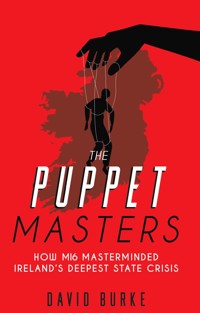
David Burke uncovers the clandestine activities of Patrick Crinnion, a Garda intelligence officer who secretly served MI6 during the early years of the Troubles. As the Garda Síochána launched a manhunt for the Chief-of-Staff of the IRA, Crinnion found himself playing a crucial role in the effort to track him down. Before his disappearance, Crinnion's actions exposed a web of secrets including those of another British spy in the Irish police, damaging intelligence leaks, gunrunning by Irish politicians, and a cover-up related to the murder of a Garda. Burke reveals MI6's shady dealings, from attempts to smear Irish politicians to plans for using criminals as assassins and the secret surveillance of a key IRA member. Crinnion fled into exile. The Puppet Masters not only reveals what became of him but also provides an insightful look into a turbulent period marked by covert operations, betrayal, and the power struggle that shaped modern Irish history.
Sie lesen das E-Book in den Legimi-Apps auf:
Seitenzahl: 513
Veröffentlichungsjahr: 2024
Das E-Book (TTS) können Sie hören im Abo „Legimi Premium” in Legimi-Apps auf:
Ähnliche
















DedicationTO MY FAMILY
MERCIER PRESS Corkwww.mercierpress.ie
© David Burke, 2024
ISBN: 978-1-78117-865-2
978-1-78117-866-9 eBook
This book is sold subject to the condition that it shall not, by way of trade or otherwise, be lent, resold, hired out or otherwise circulated without the publisher’s prior consent in any form of binding or cover other than that in which it is published and without a similar condition including this condition being imposed on the subsequent purchaser.
No part of this publication may be reproduced or transmitted in any form or by any means, electronic or mechanical, including photocopying, recording or any information or retrieval system, without the prior permission of the publisher in writing.
This digital document has been produced by Nord Compo.
Contents
Author’s Note
The events of 1969–70, which include the Arms Crisis, are the subject of two books I have previously written: Deception and Lies (2020) and An Enemy of the Crown (2022). The Arms Crisis concerned allegations that two Fianna Fáil politicians, Charles Haughey and Neil Blaney, together with others, broke Irish law in an illegal attempt to import weapons with the assistance of Irish military intelligence, G2, to arm the Provisional IRA. In those books I set out the basis for my belief that the endeavour, while a chaotic shambles, was not an illegal operation.
A quarter of the present book includes new evidence about the role played by Britain’s Secret Intelligence Service, MI6, and their mole within garda intelligence, Patrick Crinnion, in the Arms Crisis. Some of the information published in my previous books is revisited here, albeit in summary form. I have included footnotes which direct interested readers to the unabridged versions of these events which are available in my earlier works. The summaries are included in this volume to maintain a coherent narrative.
I enjoyed access to two separate tranches of documents written by Patrick Crinnion during my research for this book. First, a collection of letters Crinnion sent to various parties in 1973. Second, a compilation of memoranda, also from 1973, which were written by Crinnion. The latter was supplied to me by a source who must remain confidential. For clarity and to avoid repetition, I have made some very minor edits to the 1973 memoranda and I have chosen not to place a footnote after each quote from that material. Readers can assume that where Crinnion is quoted without the addition of a footnote, the words emanate from the second tranche of documentation.
Various people quoted in this work have spelled the names of other individuals and organisations differently. In order to avoid confusion, and for consistency, I have amended these.
When Seán MacStíofáin published his memoirs in 1975, he spelled his name as Seán MacStíofáin, which is the form used throughout this book, except in direct quotations. Crinnion, for example, spelled it Sean Mac STIOPHAIN.
DAVID BURKE, DUBLIN, 2024
Dramatis Personae
AINSWORTH, Joseph: Garda intelligence chief.
BERRY, Peter: Secretary-General to the Department of Justice, 1960–70.
BLANEY, Neil: Fianna Fáil politician. Charged along with Charles Haughey for attempting to import arms illegally into the Republic of Ireland in 1970. The charges against him were dropped at an early stage.
CALLAGHAN, James: Home Secretary 1967–1970. British prime minister, 1976–79.
CASEY, Martin: a member of Saor Éire.
COSTELLO, John A:Fine Gael politician who served as Taoiseach, 1948–1951, and 1954–1957.
COSGRAVE, Liam: Leader of Fine Gael, 1966–1977; Taoiseach 1973–77.
CRINNION, Patrick: a member of the special detective unit (SDU) of An Garda Síochána’s assigned to C3, garda intelligence division.
CULHANE, Detective Sergeant Patrick: a member of the SDU.
DOOCEY, Detective Inspector Patrick: a member of the SDU.
FITZGERALD, Garret: Leader of Fine Gael, 1977–1987. Taoiseach 1981–1982; 1982–87
FLEMING, Chief Superintendent John: Head of the SDU.
GIBBONS, James: Fianna Fáil politician and Minister for Defence, 1969–70.
GILCHRIST, Andrew: British ambassador to Dublin, 1966–70.
GODFREY, Hyman: Scotland Yard and/or MI6 agent who posed as an arms dealer in London in 1969.
GOULDING, Cathal: Chief-of-Staff of the IRA. Founding member of the Official IRA. Marxist in his political outlook.
GRAHAM, Peter: a member of Saor Éire.
HAUGHEY, Charles: Minister for Finance, November 1966–May 1970. Leader of Fianna Fáil, December 1979–February 1982. Taoiseach, December 1979–June 1981, March 1982–December 1982 and March 1987–February 1992. Arms trial defendant.
HAUGHEY, Pádraig (‘Jock’): businessman and brother of Charles Haughey.
HEATH, Edward: Conservative Party Prime Minister of the UK, 1970–74.
HEFFERON, Col Michael: Director of Irish Military Intelligence, G2, 1958–1970.
HILLERY, Patrick: Minister for External Affairs July, 1969–1973.
HUGHES, Detective Garda Michael: a member of the SDU.
KEANE, Frank: a member of Saor Éire.
KELLY, Capt. James: joined the Irish Army in 1949. He went into the intelligence directorate, G2, in 1961. He was posted to the Middle East, 1963–65. He returned to G2 and retired in 1970.
LITTLEJOHN, Keith: criminal and MI6 agent and brother of Kenneth.
LITTLEJOHN, Kenneth: criminal and MI6 agent and brother of Keith.
LYNCH, Jack: Fianna Fáil politician. Taoiseach, 1966–73; 1977–79.
McMAHON, Superintendent Philip: head of Garda Special Branch, 1961-69.
MacSTÍOFÁIN, Seán: IRA Director of Intelligence. Founding member of the Provisional IRA.
MALONE, Patrick: Head of C3 in the late 1960s and early 1970s. Garda Commissioner, 1973–75.
‘MARKHAM-RANDALL’, Capt.: the nom de guerre of a British spy who visited Dublin in November 1969.
MULLEN, Thomas: Garda intelligence officer attached to C3 in the 1950s and early 1960s.
O’BRIEN, Conor Cruise: Irish Labour Party TD, June 1969–June 1977. Minister for Posts and Telegraphs, March 1973–1977.
O’DEA, Detective superintendent Ned: a member of the SDU.
O’MALLEY, Des: Chief Whip, July 1969–May 1970; Minister for Justice, May 1970–March 1973.
OLDFIELD, Maurice: Deputy Chief of MI6, 1964–73; Chief of MI6, 1973–78; director and co-ordinator of intelligence, Northern Ireland, 1979–80.
PECK, John: British ambassador to Dublin, 1970–73. Founding member of the IRD, and director of the IRD, 1952–53/4.
RENNIE, Sir John: Head of the IRD, 1953–58. Chief of MI6, 1968–73.
ROWLEY, Allan: Director and Controller of Intelligence (DCI) Northern Ireland, 1972–73
SMELLIE, Craig: MI6 Head of Station, Lisburn, 1973–75.
STEELE, Frank: MI6 officer stationed in Northern Ireland, 1971–73.
TIMMONS, Richard: a member of Saor Éire.
WALLACE, Colin: Psychological operations officer with the British army at HQNI in the early and mid-1970s.
WALSH, Liam: a member of Saor Éire.
WARD, Andrew: Secretary of the Department of Justice, 1971–86.
WHITELAW, William: Secretary of State for Northern Ireland, 1972–73.
WILSON, Harold: Labour Party Prime Minister of the UK, 1964–70, and 1974–6.
WREN, Larry: Head of C3 in the 1971–79, and Garda Commissioner 1983-87.
WYMAN, John: MI6 officer.
Organisations, terms, locations and acronyms
B Specials: the auxiliary force of the Royal Ulster Constabulary.
C3: Garda intelligence unit responsible for the analysis and co-ordination of information collected by the SDU.
Citizens’ Defence Committees (CDCs): A collective description of the groups which assembled in 1968 and 1969 to defend Nationalist communities in Northern Ireland from attacks by Loyalist extremists, RUC and B Specials.
CDCs: see citizen defence committees.
Dáil Éireann: Irish parliament, located in Dublin.
DoJ: Department of Justice, Dublin, Ireland.
Dublin Castle: Headquarters of the Special Detective Unit (SDU) of An Garda Síochána.
FCO: The Foreign and Commonwealth Office of the United Kingdom.
FDCO: The Foreign, Commonwealth and Development Office (FDCO), formerly the Foreign and Commonwealth Office (FCO) of the United Kingdom.
FO: Foreign Office of the UK.
Fianna Fáil: Irish political party led by Éamon de Valera, 1926–1959, Seán Lemass, 1959–66, Jack Lynch, 1966–79, and Charles Haughey, 1979–92.
Fine Gael: Irish political party led by Liam Cosgrave, 1965–77, who was succeeded by Garret FitzGerald, 1977–87.
G2: Irish Military Intelligence.
Gaeltacht: a region in which the Irish language is spoken.
Garda Síochána: the police force of the Republic of Ireland.
Garda Special Branch: The intelligence gathering apparatus of An Garda Síochána. It is also known as the special detective unit (SDU).
HQNI: British army headquarters NI, based in Thiepval Barracks in Lisburn.
IRD: Information Research Department. A propaganda and forgery department attached to the FCO.
MCR: monthly confidential reports which were prepared by the C3 directorate of An Garda Síochána. They were produced by the gardaí for the Department of Justice.
MI5: Britain’s internal security service, active inside the United Kingdom and her overseas colonies. It is attached to the Home Office.
MI6: Britain’s overseas intelligence service, also known as the British secret service. It is attached to the Foreign Office. It is often referred to as the Secret Intelligence Service (SIS).
MoD: Britain’s Ministry of Defence.
NAI: National Archive Ireland.
NIO: Northern Ireland Office.
OC: Officer-in-command
Official IRA: the Marxist wing of the Republican Movement which emerged after the split in December 1969. Its chief-of-staff in the 1970s was Cathal Goulding.
Partition: a phrase used to describe the division of Ireland pursuant to the Government of Ireland Act 1920 by a border into two separate jurisdictions, whose successor states are the Republic of Ireland and Northern Ireland.
Provisional IRA: the wing of the IRA which emerged after the IRA split in December 1969 with the intention of ending British rule in Northern Ireland.
PSYOPs: Psychological Operations to influence people and events by manipulation and deception.
RTÉ: Radio Telefís Éireann, the national television and radio broadcaster of the Irish state.
RUC: Royal Ulster Constabulary, the police force of Northern Ireland.
Saor Éire: a Republican socialist paramilitary organisation responsible for bank robberies, the killing of Garda Richard Fallon and an arson attack on Fianna Fáil HQ in 1967.
SDU: special detective unit or special branch of An Garda Síochána
TD: Teachta Dála or member of the parliament of the Republic of Ireland.
UDA: Ulster Defence Association.
UPV: Ulster Protestant Volunteers.
UVF: Ulster Volunteer Force.
IntroductionA Fog of Deceit
Detective Garda Patrick Crinnion was a senior member of C3, the intelligence wing of An Garda Síochána (the gardaí), in the 1960s and 1970s. Secretly, he was working for the British secret service, MI6.
Crinnion rose to become C3’s leading analyst. One of those who came under his microscope was John Stevenson, an Englishman better known to history as Seán MacStíofáin. The latter was appointed as director of intelligence of the IRA by its chief-of-staff, Cathal Goulding, and his colleagues on the Army Council, in 1966.
MacStíofáin and Goulding were of immense interest to Crinnion and MI6.
Goulding wanted to nudge the Republican movement in the direction of mainstream politics. That entailed recognising the legitimacy of Dáil Éireann, the Irish parliament, and Stormont in Belfast. MacStíofáin was steadfast in his opposition to both of those assemblies. Instead, he wanted to retrieve the pike from the thatch, swap it for a machine gun, and lead another charge at the British empire in order to achieve full Irish independence.
Crinnion watched the IRA through the prism of his spy-glass as the power struggle between these two Republicans grew in intensity in the mid-1960s. The clash culminated in the fracture of the IRA, in 1969, into the Officials, supported by Goulding, and the Provisionals, led by MacStíofáin.
Although MacStíofáin and Goulding had been arrested in 1953, after a raid on an armoury in England, and had served six years in prison at Wormwood Scrubs, they ultimately had little in common. Goulding developed a Marxist vision of a united Ireland hoping to make common cause with working-class Loyalists. MacStíofáin, on the other hand, believed that Unionists were a rabble who ‘lacked a cultural identity’ and would be taught to speak Irish after reunification. ‘I don’t see this Irish-speaking provoking a reaction from Northern Protestants . . . Adopting the Irish language would show them the real difference between being Irish and being English’.1
MacStíofáin was conservative in his views; Goulding a liberal. The former saw himself as a family man. He was a non-smoker and professed not to drink alcohol, whereas Goulding was a ‘relentlessly cheery’ individual who made friends easily and frequented the ‘fashionable bars around St Stephen’s Green drinking with writers, musicians and painters and became a recognised feature of Dublin Bohemia’.2 The writer Brendan Behan, an ex-IRA man, featured prominently among Goulding’s friends. The pair had been close since childhood. In adulthood, they shared a common trade as decorators and a similar political outlook.
MacStíofáin was a practising Catholic, whereas Goulding’s religion was Marxism. Throughout the years that MacStíofáin spent in prison in the 1950s, he was ‘sustained’ by his ‘belief in God and in the practice of our religion, which I have always found to be a great consolation any time I have been in a tight spot’.3 In jail, Goulding played chess with a God-less Russian spy convicted of attempting to steal atomic secrets.
WHILE HE WAS LIVING in Cork in the 1960s, MacStíofáin once refused to sell the United Irishman newspaper because it had published a letter by Dr Roy Johnston which criticised the recital of the rosary at IRA commemorations as ‘sectarian’. At one stage he would only attend mass if it was celebrated in Irish. He told Rosita Sweetman, in 1972, that in a united Ireland he saw the Catholic Church ‘playing a very important role’. ‘I don’t see why the educational control should be taken from the Catholic Church. I think people like the Christian Brothers have done great work in promoting the Irish language and Irish games. What I do think though, is that the same educational facilities should be offered to other non-Catholic people to educate their children.’4 He would eventually move to live in a Gaeltacht in Meath and place a mat at his doorway instructing visitors thus: ‘Labhair Gaeilge anseo’. (Speak Irish here).
MacStíofáin had conservative views about divorce and contraception. ‘I don’t think these things should be [contained in the] written or unwritten laws of any country. They’re a matter of conscience. I do think family planning clinics should be set up to help young married couples, but there are other ways of planning a family you know than these artificial contraceptives. I don’t agree with divorce, I think it undermines the foundation of marriage, and I wouldn’t agree with contraceptives in slot machines on the street like you have in London and America. But I’ve never had any problems like this myself.’5 When the IRA discovered condoms could be used to make acid fuse bombs, MacStíofáin refused to smuggle them into the Republic.
When the IRA split in December 1969, MacStíofáin became one of the key architects of the Provisional IRA. At first the dissidents were perceived by many as a splinter group that would fade away, as had so many other offshoots. They maintained a low profile, recruited volunteers, raised funds and armed themselves. Aside from Goulding, who called MacStíofáin a ‘petty-minded conspirator’, few had an inkling of MacStíofáin’s determination, ability and cunning. He became the Provisionals’ first chief-of-staff. While the Provisionals engaged in the defence of the Nationalist ghettoes in Northern Ireland in 1970, they did not go on the offensive until early in 1971.
During his career as an IRA leader MacStíofáin kept many secrets from his colleagues, one of which was that he was an informer for the special branch, or special detective unit (SDU) of the gardaí.
But MacStíofáin, in reality, was playing cloak and dagger games with the gardaí. He never wavered from his vision of Republicanism. He was a quasi double agent.
MacStíofáin’s masquerade lasted more than a decade during which he benefited from the immunity afforded to him by his role as an apparent ‘informer’. He used his influence to deflect garda attention away from himself towards his rivals, especially Goulding. After the creation of the Provisionals, MacStíofáin enjoyed a breathing space which lasted an impressive two and a half years during which he imported arms and trained his recruits, with far less scrutiny and intrusion from the police than he might otherwise have encountered.
A lot has been written about MacStíofáin. The overlapping story of Patrick Crinnion has received minimal attention from historians despite the massive disruption his career as a garda and British spy occasioned to his homeland.
Between them, Crinnion and MacStíofáin would change the course of Irish politics, throw Fianna Fáil into disarray, and create an atmosphere in which the most militant form of Republicanism came to the fore.
1The Man from Mensa
Joseph Crinnion and Mary Hogan were married in October 1933 in Monkstown, Co. Dublin. Joseph, a carpenter, lived in Dun Laoghaire. The couple welcomed their first child, Patrick, to the world on 15 November 1934. He was born at the family home at Mill Lane Shanganagh, Co. Dublin. Another boy, Peter, followed on 12 February 1939, and a daughter, Phyllis, after that.1
The Crinnions went to work for Mervyn and Sybil Wingfield and, later, his son Mervyn Patrick, the viscounts of Powerscourt, Enniskerry. Mary served as a housekeeper at their magnificent family home. It was originally a thirteenth-century castle, part of the estate of Phelim O’Toole. In 1603, King James I of England granted a lease of the property for twenty-one years to Sir Richard Wingfield, to punish O’Toole for his disloyalty to the crown. The Wingfields murdered O’Toole in the Killing Hollow, near Powerscourt, in May of 1603. The property remained in the Wingfield family for the next four centuries.
Patrick Crinnion grew up in more humble surroundings. The Wingfield family owned a row of cottages on the Boghall Road, Bray, County Wicklow, in which loyal and trusted servants of the family, such as the Crinnions, were allowed to reside.2
The Powerscourts went into a decline in the late 1920s and, by the early 1930s, Mervyn was talking about having to sell the estate. The family was saved by Patrick’s marriage to the poet Sheila Claude Beddington.
Mervyn and Sybil died in 1947, almost simultaneously, a double blow that meant that their son Patrick faced dual death duties which took their toll on the wealth of the family.3
Crinnion’s parents continued to work for the Wingfields. By the 1950s, the mansion had become a ‘sombre’ place. ‘There were no visitors, nobody went out in the evenings, and the gates were locked at half past ten.’4
On the positive side, the Wingfields were good employers, certainly to the Crinnions. Patrick Crinnion’s father Joseph predeceased his mother, Mary. She spent her retirement years in a pleasant apartment on the second floor of a Georgian house on Vevay Road which the Wingfields kept for their former servants.
Crinnion, a bright student, was educated at the local national school. He went on to become a member of Mensa. The latter is an organisation recognising those who achieve a 98% score in a supervised IQ examination or other approved intelligence test. Mensa boasts many policemen within its elite membership and, in 1955, Crinnion chose a career in An Garda Síochána. Aged twenty, he commenced his service on 10 May of that year. One of his early tasks, while stationed at Donnybrook garda station, was to protect the home of the then Taoiseach, John A. Costello, at 20 Herbert Park in Ballsbridge.
Nancy Lattimore lived in a mews house on Morehampton Lane, Ballsbridge, with her parents. She met Crinnion one day while he was on guard duty at Herbert Park and they became friends.5 Soon, they were dating. Such was his acceptance by her family that Nancy’s mother now found herself preparing meals for Crinnion when he came off duty. The Lattimores had a military background. One of Nancy’s family had served in the British army during the First World War and had been gassed in the trenches. Although he survived, he never got over the ordeal. Two of Nancy’s brothers joined the British army. One of them, Seamus, rose to become a major. Patrick Crinnion trotted after Seamus like a besotted pup.
One night, shortly after joining the force, Crinnion was walking beside the wall of a school on his beat in Dublin when he noticed a bundle of old newspapers on the footpath. When he prodded them with his boot, bank notes spilled out. Crinnion could have trousered the money but gathered it up and brought it back to his desk sergeant in Donnybrook. The rule was that if no one came looking for money, the finder could claim it after a year. No one staked a claim. When he went to collect the cash, he was told that since he had been on duty the night he stumbled across the notes, they belonged to the Exchequer.
The money meant a lot to Crinnion. He was outraged that the cash was not returned to him. He approached John A. Costello, whom he had befriended while on protection duty outside his house in Donnybrook, about the matter. The passage of time did not dampen his indignation. In 1973, Crinnion wrote to John’s son, Declan Costello, the then attorney-general, recalling how:
… although I know you cannot picture me now, during the I.R.A Border Campaign of 1956/62, I spent about a year on duty outside your home on Herbert Park protecting your father who was then An Taoiseach. It was while on this duty that I met the girl from nearby who is now my wife. As well, in a matter where I found a hoard of money which the State sought to retain, usurping my rights as a citizen, your father took an interest and I brought the then Commissioner [Daniel Costigan]6 to court in a civil action which although it failed on a technicality satisfied honour.7
Crinnion was a non-smoker and teetotal. His potential was recognised quickly by his superiors and he was assigned to the special detective unit (SDU) at the end of the 1950s. To aid his finances, he worked many hours overtime, including VIP protection assignments.
With his career moving in the right direction, Patrick purchased a property in his sole name on Rathmore Avenue, on the Lower Kilmacud Road in Stillorgan, Co. Dublin, on 28 August 1959. He and Nancy were married on 12 September 1959.
Crinnion became a part of the garda intelligence machine that extinguished the flickering embers of the IRA’s Border Campaign of 1956–62, an offensive that never caught fire.
In a memorandum prepared in 1973, Crinnion recalled how, when:
married first I was working on shift [duty and] in order to get to the [Dublin] Castle [the HQ of the SDU] at say 5.45 a.m. on my bike, allowing for windy weather or punctures, I had to set my new alarm clock for a 4.30 a.m. early rise, put on the kettle, wash and shave and have a bit of breakfast, pick up my lunch and leave the house no later than 5.05 a.m. for the [cycle] journey a minimum of 30 minutes and during the winter, in the frost and ice, time was critical to me. At that early hour in the morning and at that time there was no radio station on for me to check the time as I had my cup of tea in the kitchen. The money situation was not good either and I confess I had no watch either.
In the late 1950s a brilliant piece of sleuthing and deduction brought Crinnion to the attention of one of the leading figures of garda intelligence, Patrick Carroll, the officer who commanded C3, the brain centre of garda intelligence at the Phoenix Park. Later, Carroll was promoted to oversee all of the departments in C division, and eventually rose to become garda commissioner, 1967–68. In one of his 1973 memoranda, Crinnion recounted how Carroll:
met me once while he was Chief Supt. C3 and I was a D/Gda. in SDU. He summoned me to his office to explain how I had reached a conclusion in a certain case where scurrilous anonymous documents, directed against political office holders were being distributed in the West of Ireland. He may recall that from sheer interest, although not specifically allotted the case; I had shown the culprit to be a particular person. The case had reached a dead end in the routine investigation and as was the custom then in SDU, the file was read [out] to the men, in case anybody might recall or know something to go further.
The young man impressed Carroll. The meeting proved to be Crinnion’s big break. According to one of Crinnion’s 1973 memoranda, in late December 1960, he was assigned to C3, and entered a world of deception and lies. The department was based at the Phoenix Park, whereas the SDU was spread out across the country with a HQ at Dublin Castle. C3 collected, analysed and co-ordinated the streams of intelligence which flowed into it from the various SDU divisions dotted across the country. Crinnion continued to work at C3 for the rest of his career as a garda. His role ‘was to utilise my special knowledge of [subversive organisations] for the benefit of the State’.
This provided him with the opportunity to peer inside the inner workings of the IRA. During the Border Campaign the IRA had been determined to shield their command and coordination network from the gardaí and the RUC. Crinnion recalled in a memorandum in 1973 how a phone tap revealed that ‘in the last two years’ of the conflict:
the controlling contact for all the ASU (Active Service Units) along the Border was [a] woman here in Dublin, who knew personally at least one man in each unit. This gave her a check on the authenticity of any caller . . .
Crinnion, however, had a haughty streak. In a letter he wrote to Garda Commissioner Patrick Malone, who had been his superior at C3 in the late 1960s and early 1970s, he described his work at C3 as ‘not just first class but exceptional’.8 He spoke of his irritation at ‘inexperienced officers’ whom he believed should not have been ‘left to gain experience [in garda intelligence] in a hit and miss fashion’.9 He criticised the fact that some of them had ‘never previously worked exclusively on Special Branch duties’ and, damningly, that a number had had to ‘be trained by the Staff [at C3] even in such elementary matters as recognition and, according to the SDU timescale, identification of the enemies of the State’.10 He saw his own role as crucial because ‘the basic recognition and correlation of information’ which he developed was the ‘most profitable [method of] counter-action’ against subversives. That work depended ‘on the reflexes of the [SDU] Detective in C3’.11 Narcissus-like, he was clearly referencing himself.
The type of work Crinnion found himself performing at C3 was stimulating, such as the time he concluded that a maverick element of the IRA had tried to kill President Éamon de Valera.
2The De Valera Bomb Plot
During the early hours of St Patrick’s Day, 17 March 1963, two young men crept into St Finbarr’s Cemetery in Cork under the cover of darkness. St Finbarr’s is a hallowed place for Republicans. ‘Old’ IRA men from the War of Independence are buried there. It is the resting place of Terence McSwiney and Tomás Mac Curtain, both former lords mayor. The remains of the hunger striker Joseph Murphy can also be found inside its walls.
The men, Des Swanton and Gerry Madden, found what they were looking for, a platform made of tubular scaffolding and planks of wood beside a memorial. The structure had been erected for a ceremony which was due to take place the next day. They had brought a suitcase with them containing a bomb.
Their target was the memorial, which President Éamon de Valera was due to unveil at the plot, shortly after noon, that day.
Seán MacStíofáin and his colleagues in the Cork IRA were displeased about the forthcoming visit. The IRA had long since parted company with de Valera, a former IRA leader who had become a politician in 1926, when he established the Fianna Fáil political party. The actions his government had taken against the IRA during the Second World War were still fresh in their minds. Many volunteers had been interned. John Joe Kavanagh, an IRA man who had been killed by gardaí in 1940, was buried at St Finbarr’s. Some of the younger IRA men wanted to sabotage the ceremony but were told to stand down by the leadership, including MacStíofáin. Swanton and Madden defied the dictate. Madden stated later:
After carefully considering several courses open to us, Volunteer Swanton and myself decided that at this late stage in the proceedings there was only one alternative open to us that was to blow up the memorial to prevent the desecration of our patriots’ graves by those who had sold out the Irish Republic.
On the night prior to St Patrick’s Day, Volunteer Swanton and myself were engaged in preparing a mine when two members of the Army [IRA] came upon us. They were looking for a useless revolver, which we gave to them. These men were very obviously under most terrific pressure at the time. Members of the Staff were aware of this and had supplied them with a car to collect the weapon. This interruption delayed us an hour and also endangered the security of the operation.1
A celebration was taking place that night for Séamus Ó Líonacháin, an IRA volunteer, who had been captured by the RUC at Torr Head, Co. Antrim, on 12 December 1956, and had been in jail in Belfast Prison until March 1963. He was attending a ‘welcome home’ event at the Thomas Ashe Hall in Cork. Ó Líonacháin recalled that:
In the course of the night I noticed some agitation and heated discussions taking place and eventually I was approached by a tearful Elma O’Connell, [Dáithí Ó Conaill’s] sister who asked me if I could intervene and do something to prevent her boyfriend from doing something. She explained that on the following day de Valera was coming to the Republican Plot to unveil a monument and that her boyfriend and another volunteer intended to blow up the monument that night. I immediately approached the local OC and another senior member of the movement and we went upstairs to the library to discuss it and I was amazed at their casual attitude to what I thought could turn into a disaster. They said that they had warned the two lads that if they went ahead with their plan it would be an unofficial action and they would be dismissed from the movement and I felt that the least that should be done was that a group should go down to the house in Blackrock and detain the two lads there until after Dev had departed again. However, the senior members’ response was that he had come to the dance with his wife and no one was going to spoil his night’s enjoyment so he went back to the dance hall again.
As it turned out, the two lads went ahead with their plan and at about three a.m. as John and myself were walking up Mount Carmel Road there was a mighty explosion and I prayed that the two lads would be all right.2
Patrick Crinnion later analysed the attack. He believed it took place after midnight, not at three in the morning. He recalled in one of the memoranda he prepared in 1973 that the:
two members of the Gardaí on duty in St Finbarr’s Cemetery, Cork, [that night] were sheltering near the Caretaker’s House and heard the church chimes ringing out for midnight. Within a period of time which I cannot specify now, without access to the file, but certainly far less than 30 minutes, there was a flash and a bomb exploded beside the platform, killing outright a young man who from post mortem and other deductions was clearly bending over the bomb when it exploded. His companion was maimed.
Séamus Ó Líonacháin further recalled:
The next morning as I was returning from Mass I called to the old Fire Station on Sullivan’s Quay and the firemen told me that Elma’s boyfriend [Des Swanton] had been blown to bits and that they had collected his remains in buckets and that the other volunteer [Gerry Madden] was so badly injured that he wasn’t expected to survive. Despite his severe injuries he did in fact survive but he lost a leg and an eye and as a matter of fact the monument wasn’t even scratched and if they had succeeded in blowing it up they would have emptied most of the graves in the Plot.3
Thereafter, Madden took to wearing an eye patch.4
CRINNION WAS AWARE that the IRA was using alarm clocks in their bomb-making:
At that particular period the IRA was training in the manufacture of clock-timed suitcase bombs. Their training leaflet, (and I believe I have one at home still somewhere in my papers) . . . was far from being foolproof. The whole concept of the construction was fraught with danger for the operation, as if on a training class or dummy construction the operator had not realised that the wiring as laid out in the training leaflet would in fact sometimes SHORT-CIRCUIT the moment the device was armed. The short-circuiting would also of course fire the bomb instantly.
Crinnion had an overly active and inquisitive mind. The purchase of an alarm clock for his personal use had provided him with an insight, or so he thought, into something he believed would never have occurred to the ordinary citizen – an understanding of the hazards involved in the making of a bomb with such timekeeping devices. In the 1950s, many such devices required regulation and adjustment before they managed to keep good time. He became focused on the possibility of a fault in the regulation of the clock used in the Cork bomb. On his cycle to work, the first opportunity Crinnion found to ‘check’ the accuracy of his:
new alarm clock was passing the Monument Creamery on the main road. There was a clock inside and they had some kind of light on all night. On several occasions, indeed until we eventually got the clock properly run in and correctly regulated, I found when I arrived at the Monument Creamery/shop that during the night my own new alarm clock had run either slow or fast and in my anxiety to be on time found that my safety margin was considerably shortened. Alarm clocks give a plus or minus error until regulated.
Joe Ainsworth, who would later direct garda intelligence, was asked by the garda commissioner to carry out the investigation into the attack at the cemetery. As Crinnion recalled, Ainsworth and his team discovered that:
during that day these two young men had gone into Roches Stores, Cork, and bought a new alarm clock. (Fragments recovered were identified with similar clocks in the shop). They had during the day constructed the bomb according to the IRA Training leaflet and here lies the one fatal flaw . . . The diagram told the constructors to put the clock into the suitcase FACE DOWNWARDS AFTER SELECTING THE TIME FOR THE EXPLOSION WITH THE ALARM HAND. Those young men constructed the bomb following the leaflet available to them and left the final connection or the safety device unconnected until the last moment. In other words as you built the bomb, you selected your time, wound the clock and fixed it in the case, firmly, face downwards. This gave you a selection of anywhere inside a 12-hour period …
Crinnion concluded that Swanton and Madden had placed the device upside down without noticing that it was running a little behind time. Thus, he decided, although the intention was for the device to explode at 12 noon the following day, or shortly thereafter, it exploded 12 hours prematurely, shortly after 12 midnight, just as they were planting it. The explosion, however, took place at 3 a.m. which renders Crinnion’s deduction about the murderous intent of Swanton and Madden entirely hollow.
Crinnion believed that ‘only married men like myself [with imprecise alarm clocks] would [have spotted] this fault [as] young single men would not realise, especially if they lived at home and were called for work by their parents’ and were not familiar with such devices.
It is universally accepted that the purpose of the enterprise was to damage the monument De Valera was about to unveil. This was a view shared by Joe Ainsworth and his team. Crinnion, however, took a far more extreme view. He was adamant that if:
the suitcase had been successfully placed in position, tied or wedged or propped under the floor of the platform, (or indeed even laid on the ground and covered over with earth or some other material to disguise its presence and prevent it from being seen) it would have exploded while the platform party stood overhead. This is an undeniable and provable fact.
Crinnion indicated to his superiors ‘in precise detail how there had been in existence a plot to murder President de Valera’. He believed that ‘clearly persons had put into operation a plot to murder the President shortly after noon one day in St Finbarr’s Cemetery, Cork’. In support of this, he argued that the ‘President and his party [had been] due to stand on a platform there in the cemetery during a ceremony scheduled to commence shortly after noon.’
The bomb could have exploded prematurely for a variety of reasons other than that put forward by Crinnion. In the first instance, the assembly process was interrupted by the IRA men looking for the ‘useless revolver’, placing Swanton and Madden under greater pressure to assemble the device than would have otherwise been the case. The wires may have been positioned irregularly due to time constraints. The ‘safety device’ may have been misassembled or inserted incorrectly, or left aside entirely. The hands of the clock may have been adjusted erroneously. Crinnion’s conclusion was not, as he claimed, an ‘undeniable and provable fact’. It is not credible that Swanton and Madden were intent on murdering de Valera and the dignitaries at his side, including religious figures. It is hardly feasible that they would have exploded a bomb which could have killed and injured the Republicans and their families who were planning to attend the event. Had de Valera been killed, the perpetrators would hardly have evaded detection. The death penalty was still on the statute books for such a crime.5 It was clearly the intention of the pair to damage the memorial, perhaps a few minutes after it actually exploded at about three a.m., when it would have done no person any harm. Crinnion’s analysis of the purpose of the bomb is an early example of his full-bodied self-belief and proclivity to interpret events involving Republicans in the most extreme and alarming manner despite an abundance of evidence to the contrary. While Crinnion was a member of MENSA, he seems to have lacked an abundance of common sense.
Going forward, it is also worth noting, that Crinnion had a habit, when typing, of highlighting a point he wanted to emphasise by tapping out the words in uppercase. The significance of this will become apparent later.
3The Nerve Centre of Garda Intelligence
The Old Military Road runs north-south across the spine of the Wicklow Mountains. It was built by the British administration in Ireland after the 1798 rebellion to open up the terrain so they could hunt down the rebels who had taken to the hills. Four barracks were built along the route at Glencree, Laragh, Glenmalure, and Aghavannagh. The British army installed a firing range at Cruagh Wood, not far from the Old Military Road. It was used by soldiers and also officers from a nearby Royal Irish Constabulary (RIC) station. Although it had fallen into disuse and had become overgrown, Patrick Crinnion knew its location. He sometimes hiked up there to practice firing his Walther pistol at the old bank left behind by the British army. The practice stood to him. In one official garda shooting test, he achieved a 92% score for accuracy.
C3, based at Garda HQ in the Phoenix Park, was the brain centre of garda intelligence. It processed more paperwork than any other unit at HQ. Crinnion flourished there. He was able to touch type, and his paperwork was always neat and in order. He could lay his hands on any file he wanted with great speed. He was also personable and resourceful. These positive traits drew approval from his superiors at C3.
C3 was housed in a suite of offices in the large two-storey building to the left of the Phoenix Park Garda HQ as one observes the premises from the main entrance. It was next to the Officers’ Mess which had been built for the Royal Irish Constabulary. The unit’s offices were sealed off from the rest of the complex. Inside, there was a series of old wooden pigeon holes which accommodated files relating to ongoing investigations and operations. These shelves had been placed there before 1921. The officers called it the ‘registry of files’. Once beyond the locked doors, the documents maintained in the pigeon holes were generally open to all. Hence, Crinnion enjoyed access to information on the IRA and, later, splinter groups such as Saor Éire, as did his fellow officers. Particularly sensitive files were held elsewhere and were not accessible by him without permission from his superiors.
Crinnion contributed to the compilation of detailed summaries about the activities of subversive organisations. They were called the ‘monthly confidential reports’ (MCRs) and were derived from the intelligence supplied by the SDU to C3.
Eleven people worked in C3. It had five telephones and an intercom. There was a main office, a medium-sized room, where three of the phones were located along with the intercom. There were seven typewriters, two photocopying machines and one Gestetner duplicator.
The conditions were less than satisfactory. Crinnion recalled in one of his 1973 memoranda that:
Facilities are virtually non-existent and the toilets outside, which are used by the C3 staff are the original ones installed by the British, when they built the Garda Depot. There is no place to have a cup of coffee just off the cuff and I recall the improvisation of a quick-thinking Sergeant when confronted by a visiting British Police Woman who wanted to ‘powder her nose’. Luckily it was after dark, or a dark evening, so he said ‘excuse me one moment, while I slip down and make sure the toilet is unoccupied’. Quick thinking saved the day – he took the light bulb out of the toilet and hid it, then went back to the policewoman and said – ‘I’m sorry it’s going to be very awkward as the light bulb seems to be broken, but I’ll switch on the light out in the yard and the light through the window is the best we can manage just now’. What a story she would have carried back to England if she had been able to see the vile condition of the place.
At C3 Crinnion served under eight chief superintendents, including Alfred Flood, Patrick Malone and Lawrence Wren. By the early 1970s, he had become the longest serving officer in C3 and possessed an extensive knowledge of the secrets of the IRA, Saor Éire and, after December 1969, the newly formed Provisional and Official wings of the IRA.
The most significant influence on Crinnion at C3 was Sgt Thomas Mullen, a man who lived in Milltown, south Dublin, not far from where Crinnion resided. Mullen became an undue influence over Crinnion. Over time, he divulged to him the best kept secret at C3: a clandestine role he – Mullen – was performing there.
4Serving Her Majesty
In the early 1960s, Patrick Crinnion fell into the orbit of Britain’s external espionage service, MI6 (sometimes referred to as SIS). Crinnion joined the ranks of an unbroken line of British agents who had served inside C3 after the Second World War. His mentor, Sgt Thomas Mullen, was one of them.
When it came to espionage directed against the gardaí, MI6 often preferred to work with second tier officers, not their superiors. The bosses came and went, while their subordinates remained in place far longer.
As Mullen’s retirement approached, he chose Crinnion as his replacement. Mullen was born in or about 1902. He enlisted Crinnion in the early 1960s. Mullen later told Mick Hughes of the SDU that he himself had been recruited by a retiring C3 officer. ‘There has to be someone to forward [the information]’, was Mullen’s explanation for his actions.
Crinnion was an intelligent man. He knew that his relationship with MI6 was a breach of his oath as a garda and the provisions of the Official Secrets Act. He was acutely aware that the majority of citizens of the Republic of Ireland viewed British agents as traitors, the most reviled creatures in Irish society. So why did he agree to work for MI6?
Crinnion never divulged his motive for cooperating with MI6. There is not a shred of evidence that he collaborated by reason of being compromised in any way. Money was hardly the motive for his collusion with London, although it was available and the evidence suggests he accepted payment for his service.
Crinnion did not grow up within a Republican family. On the contrary, he was reared by parents in service to the aristocracy. He joined the gardaí while he was young and impressionable. There, he was absorbed rapidly into intelligence work, an assignment that required him to frustrate the work of Republicans. When he reached C3 at the end of 1960, he was mentored by Thomas Mullen, a man who had been working for London over many years.
Crinnion was in his late twenties when Mullen recruited him. MI6 knew how to manipulate a young and susceptible man like him. Those who knew Crinnion, say he was ‘prim and proper’ and had a high opinion of himself. Flattery and the massaging of the ego were time-honoured tactics of MI6 which were put to good use with Crinnion. He was made to feel that he was being taken seriously by MI6, and said so later to a friend.1
C3 and the SDU had only one real enemy, militant Republicanism. Crinnion had no difficulty operating in an antiRepublican environment. To his mind, MI6 was the enemy of his enemy, the IRA.
Crinnion later attempted to legitimise his engagement with MI6 by claiming the British service was engaged in the same type of work as C3, and therefore it was natural for him to liaise with them. This was not so. In the first instance, MI6 sent spies abroad whereas C3 operated on home soil. Secondly, C3 officers went about their work openly at the Phoenix Park, albeit in a closed section of HQ, whereas MI6 officers often posed as diplomats, journalists or tourists while on foreign soil hiding all clues as to their true identities. Thirdly, C3 officers operated with legal authority whereas MI6 had no legal standing during their covert operations on foreign soil. Fourthly, MI6’s work involved a huge level of criminality. The service carried out assassinations on foreign soil such as Egypt, Iran and the Republic of Congo. It penetrated and, sometimes, toppled foreign governments. C3’s work was entirely legitimate.
To many of Crinnion’s contemporaries, MI6 was a toxic organisation whereas New Scotland Yard, responsible for policing in London, was an entity which the gardaí respected. The Yard had responsibility for thwarting IRA activity in London.
Crinnion has offered conflicting versions of his enrolment with MI6. One account he put forward involved him meeting a man called John Wyman in the belief Wyman was working with New Scotland Yard. The meeting took place ‘sometime in the early 1960s’. In reality, Wyman, born to British parents in Bulu, Cameroon, in 1937, was a young MI6 officer who was building a network of spies and agents in the Republic.
By this telling, Crinnion’s collaboration with London commenced after some student lodgers who ‘were staying with us left for home’. This opened up the possibility for a short trip to the UK. According to one of his 1973 memoranda:
I planned to go to London for a week to give my wife a break from the house as we had been both working very hard, she with students and I had at the time 300 hrs overtime on night work protection at the British Embassy. I had bought a do-it-yourself central heating kit and for a month or more the house was going to be in a state of upheaval while the work was going on. [A contact at Scotland Yard] told me he would be out of London but if I wanted to do a tour of Scotland Yard to phone and ask for a colleague of his, name and phone [number were] supplied. We had been shopping and sightseeing for about three to four days when a phone message was received at our hotel asking me to ring a number, I did this and my Scotland Yard man answered. He was back sooner than he expected, and as I hadn’t seen around the Yard he would be glad to give us a conducted tour. But my wife was footsore from walking and I declined his kind invitation. He told me he was finished with the department and that a young colleague of his would be linking up with people in the Republic. He said this chap had a rudimentary knowledge of Dublin and Ireland and perhaps from time to time I might be able to give him a helping hand and in time he might be able to put some information my way.
He asked me to meet him for a cup of coffee so that I couldn’t go back and say I hadn’t been offered the smallest hospitality after all the years of co-operation between the two forces; these are not the right words but something in or about the same. It was the least I could do so I accepted.
It was Wyman who turned up for the coffee:
. . . then Wyman and I went to have our coffee. We then exchanged our names and addresses. [The original contact from Scotland Yard] was no stranger, he was someone I had seen and spoken to over the years in C/3. He is now [in 1973] settled in the South of Ireland, his wife is in bad health.
Crinnion cited alleged immaturity as an excuse for falling into MI6’s orbit:
I must confess that I was so immature that it was not until sometime in the early 1960s when I was given the task of discussing and sorting out some point with the second man, while his partner and my C/S were absent elsewhere that I realised the facts which everyone so slovenly acted out. John Wyman is a member of the B/Service [MI6] which is the equivalent of C3. He was introduced to me by a man [from New Scotland Yard] who has done a lot to assist the Garda in the past. [The man from New Scotland Yard] is a man for whom I have great personal respect. In view of the way things are being sordidly regarded I do not wish to name him unless I can get his personal permission to do so. Over the years Scotland Yard, the British Home Office and the regional police college in Scotland and England, have given full use of their excellent facilities to the Garda.
Crinnion’s account of his recruitment omitted any reference to Thomas Mullen, the retired C3 officer who had inducted him, and with whom he maintained contact after he retired. On another occasion, however, Crinnion was more forthcoming and conceded that Mullen had indeed enlisted him. The probable truth is that he knew full well what Mullen was doing and agreed to go to London under cover of a short holiday to meet with Mullen’s contacts. Simply put, he knew all along that Wyman was an MI6 officer, not someone from New Scotland Yard.
By the 1960s, Crinnion had graduated from a bicycle to a Morris Minor car. Meanwhile, most of his colleagues were still cycling. Crinnion not only purchased the vehicle, but did so at the start of his mortgage. His family did not have the resources to bestow a car on him, nor his in-laws. His wife’s family, while providing well for their children’s essential requirements, had little disposable income.2
One interpretation of these facts is that Crinnion accepted money from MI6; a more benign one is that he worked so much overtime, and engaged in a lot of part-time work outside the force, that he accumulated a fund for the vehicle from his own endeavours.
John Wyman, the spy Crinnion met in London, developed a network in the Republic of which Crinnion must have been the most important figure (until the 1970s).3 Secrecy was the hallmark of their relationship. One day Nancy Crinnion was about to visit her mother in Donnybrook when an Englishman, probably Wyman, arrived at the house with an envelope for her husband. She put it in the back of the Morris Minor, where her young son, having chewed it, pushed it playfully down the seat out of sight. On her way home, she paid a visit to the home of a relative. A while later, Crinnion, having ascertained where she was, marched into the house. Normally, he was a ‘prim and proper’ individual. On this occasion, he lost his cool, demanding to know what had happened to the envelope. There was consternation when it could not be found. A frantic search continued until it was eventually discovered between the gap in the seat where the infant had pushed it. This incident took place around 1964. The envelope most likely contained instructions from Wyman, which, if they had fallen into the wrong hands, could have exposed his double role.
While at C3, Crinnion used his influence to forge stronger bonds between garda intelligence and Britain’s special branch, the eyes and ears of MI5 in the UK.
5The Visitors from London
Crinnion argued that his relationship with John Wyman of MI6 was not that unusual. The gardaí, he contended, had enjoyed a form of quasi-official co-operation with Britain since the Second World War. This analysis was misleading. The ‘quasi-official co-operation’ involved New Scotland Yard, not MI6.
Crinnion once outlined the type of visitors who were received at Phoenix Park: ‘I have on countless occasions known, seen and was sometimes concerned in visits to that office by people from services performing work similar to ours in foreign countries’ he once asserted. They were, ‘In fact foreign agents as defined under section 10, Official Secrets Acts 1963. People [so] defined [visited C3 at the Phoenix Park] from [the] RUC, British, American, French, Canadian and Australian [security and intelligence] services.’
Not once, as the years rolled by, Crinnion pointed out, did he ‘hear of, know of, or see any permission or direction on these matters from the Department of Justice’. In other words, there was an unwritten tolerance of co-operation with the UK.
One of those Crinnion encouraged to meet with British officials was his superior at C3, Patrick Malone. Malone was a police officer with a brilliant memory. While giving lectures to fellow gardaí he was able ‘to close his eyes and . . . recount an Act from A to Z. He had a remarkably precise mind. He was a tough and very able officer’, a garda who attended one of these talks recounted after Malone passed away in 2001.1 As a chief superintendent, Malone was in charge of C3 when the Troubles began. One day he received an unexpected message: two men from New Scotland Yard’s special branch were making their way to the Phoenix Park for ‘an informal meeting with him’. The proposed topic was ‘matters of mutual interest’. Malone was concerned. He called in Crinnion and told him ‘that he had looked through his file of instructions and could find no authority for such [a] liaison’. Crinnion, who appears to have known of the proposed visit, seized the opportunity to push this door ajar. The more it eased open, the less he would need to hide behind it. Crinnion was able to refer to earlier meetings between C3 and New Scotland Yard. In one of his 1973 memoranda, Crinnion recounted how he told Malone that ‘as the second longest member serving in the section … I understood this was an accepted and mutually beneficial arrangement which originated during World War Two’. Crinnion backed his argument up with facts. ‘I had seen correspondence’, Crinnion told Malone, ‘on old files which showed that ex Commissioner Patrick Carroll, BL, Ranelagh, Dublin, who was for many years in charge of C3, had even then dealt with the British and RUC on an informal basis.’
Another detective called Vaughan supported Crinnion, confirming ‘his knowledge of the liaison’ with Britain.
Crinnion found he was not pushing at an open door. Malone was not assuaged. He left Crinnion and Vaughan standing and ‘went out of his office into the office of Deputy/Commissioner Donovan, who himself was Malone’s overseer in C3’. He returned ‘after a few minutes, smiling and said he was sorry’. Donovan not only knew about the meeting but the names of the visitors. One was Ferguson Smith, the head of Scotland Yard’s special branch. Smith, then in his mid-50s, had garnered a wealth of experience working with MI5. Together Smith and




