


9,59 €
Mehr erfahren.
- Herausgeber: Oldcastle Books
- Kategorie: Geisteswissenschaft
- Sprache: Englisch
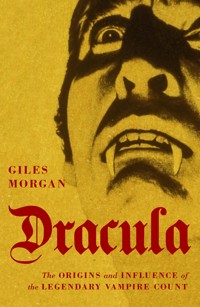
Few fictional characters have proven to be as enduringly popular as the legendary Count Dracula. First published in 1897, Bram Stoker's gothic masterpiece thrilled and disturbed Victorian society with its dark and compelling themes of violence, lust, cruelty and death. For many, the elegant but threatening figure of Dracula has come to epitomise the concept of the vampire. It is thought that Stoker took the name Dracula from the real-life historical figure of Vlad the Impaler, a medieval Romanian prince with a dark and sinister reputation. However, Stoker was also influenced by European literary creations such as The Vampyre, written in 1819 by John Polidori, the personal physician of Lord Byron. Polidori based his central character on the personality of the infamous poet and in doing so did much to crystalise the modern concept of the vampire as a sophisticated and sensual aristocrat. It is arguably within the medium of film, however, that the figure of Dracula has achieved its greatest fame within popular culture. In Dracula: The Origins and Influence of the Legendary Vampire Count, author Giles Morgan examines the roots of the vampire myth and the creation of Bram Stoker's masterpiece of horror.
Das E-Book können Sie in Legimi-Apps oder einer beliebigen App lesen, die das folgende Format unterstützen:
Seitenzahl: 190
Veröffentlichungsjahr: 2022
Ähnliche















For Georgina
Introduction
When Bram Stoker’s Dracula was first published in 1897 a legend was born.
Or perhaps more appropriately a legend was reborn as belief in the existence of vampires can be traced far back into the distant past. Stoker’s vampiric count is very much a product of the historical period that he was created in and offers a fascinating window on the concerns and neuroses of Victorian society.
However, vampires in the past were conceived to be very different to the rather elegant and strangely attractive aristocrat of Stoker’s novel. Early variations of the vampire legend include the figure of Empusa who, in Greek mythology, is the demonic daughter of the goddess Hecate. According to ancient sources Empusa was able to change her shape into the form of a beautiful young woman who seduced unwitting men in order to drink their blood. Further east in Persia, similar stories were told of terrifying creatures that hunger for the blood of men. It is said that the myths concerning the female demon of Jewish culture called Lilith who attacks both men and women were in part influenced by Babylonian tales of a similar figure called Lilitu who, horrifically, drank the blood of babies. The Indian goddess Kali was depicted as having fangs and was believed to drink blood.
Vampires can be found in folklore around the world, from the Jiang Shi of Chinese origin, said to attack people in order to drain them of their life force to the bizarre chupacabra or ‘goat-sucker’, supposed to exist in the modern era in countries such as Mexico and Puerto Rico. Interestingly, it is arguable that, in Western Europe, Christianity was to play a major role in the popular folk belief in vampires. Indeed Pope Innocent VIII lent weight and credence to the belief in demons and blood-feeding incubi when he published the papal bull Summis desiderantes affectibus on 5 December 1484 that acknowledged their existence. Belief in the reality of vampires was particularly intense in the Balkans and throughout Eastern Europe it was believed that, on the eve of certain Christian festivals such as St George’s Day, demonic forces grew particularly powerful and that precautions had to be taken against them.
There has been a great deal of speculation about the inspiration behind the creation of Bram Stoker’s fictional Count Dracula. Perhaps unsurprisingly many have argued that Stoker derived elements of the count’s persona from individuals that he knew. Today Stoker is famous as an author but in his own lifetime he was perhaps better known as the business manager of the Lyceum Theatre and the personal assistant of the actor Sir Henry Irving.
In Victorian society Irving was a hugely popular and famous figure and it has been claimed that Stoker based the character of Dracula, in part at least, on him.
It is known that Stoker spent around seven years researching the subject of vampires in European folklore. Although Stoker took the name Dracula from a medieval Romanian prince better known to history as Vlad the Impaler or Vlad III Dracula there has been some argument over to what extent he based his character on him.
The name Dracula derives from the term ‘draco’ which in Vlad’s time meant dragon but has come to be more specifically seen in later interpretations of the phrase as meaning ‘devil’.
Analysis of the known facts about the life of Vlad the Impaler and its influence on Stoker’s creation shows interesting parallels between the two not least in physical descriptions that survive of Vlad the Impaler and Stoker’s depiction of the fictional count. But Stoker was also strongly influenced by more recent European literature and in particular the 1819 novella, The Vampyre, written by John Polidori. Polidori was the personal physician of the infamous poet Lord Byron whose own colourful life had shocked and outraged many in European society. It is thought that Polidori based his central character on Lord Byron and established the popular idea of the vampire as an aristocratic figure with sensual leanings.
More recently modern critics have come to see Stoker’s novel as a fascinating insight into the Victorian mind and its obsessions with death, disease and sexuality as well as offering an interesting metaphor for the emergence of a scientific world of rationalism pitted against a disappearing past based on superstition and fear. The figure of Dracula has, of course, gained greatest prominence and fame within popular culture through the medium of film. There has been a multitude of movies either adapted from or influenced by Stoker’s novel including the 1922 German silent film Nosferatu and the 1931 Universal horror classic starring Bela Lugosi as the undead count.
The success of the Dracula story has been such that it has filtered into seemingly all levels of popular culture ranging from literary criticism to 1970s exploitation films such as Blacula. He has even become an icon of children’s entertainment appearing in the television programme Sesame Street as the much-loved character of ‘The Count’, who was based on Bela Lugosi’s interpretation of Dracula.
In the 1990s, Francis Ford Coppola produced his version of the original novel called Bram Stoker’s Dracula and the subject of vampirism has, if anything, grown in popularity and appeal. Dracula has also continued to inspire within the literary world and the bestselling novel The Historian by Elizabeth Kostova is heavily influenced by Stoker’s creation and features the count as its central character.
Most recently writers Mark Gatiss and Steven Moffat have produced a radically different interpretation of Dracula in a 2020 BBC television series that features a strong female central character and reconsiders the very nature of the count himself.
It has been suggested that the figure of Dracula has an even greater relevance to the modern world and for the foreseeable future the character shows no signs of resting peacefully in its grave. The legend of the vampire lives on.
Chapter One
The Vampire in European Folklore
Vampires are mythological creatures of folklore and legend that can be found in a wide variety of world cultures. They are conceived of as some form of revenant who has died as a religious heretic or was some other form of social outcast or criminal and they are popularly believed to leave their graves at night to feed on the blood of the living. Commonly, they are said to prey on the communities to which they used to belong. The modern concept of the vampire has, of course, been hugely influenced by Bram Stoker’s fictional, aristocratic villain, Count Dracula. The image of the vampire as a frightening yet often attractive and elegant figure has become something of an archetype and can be found in a range of fiction, particularly in the mediums of film and television.
The development of the popular concept of the vampire through literature and cinema will be examined more thoroughly in later chapters but it is important in examining the genesis, production of and influence of Dracula to look at the earliest mythological and historical precedents for his character. Whilst modern vampires are imagined as pale and gaunt in appearance, in ancient cultures they were often described as ruddy and swollen from gorging on blood. As we shall see the modern image of the vampire developed mainly in the post-Romantic period and is often markedly different from the brutish, animalistic vampires of myth. Today, of course, vampires are seen as a staple of the horror genre and are seen as products of the superstitious and irrational beliefs of the past. It has been argued that belief in vampires may have developed from fears surrounding death and instances when the bodies of the deceased appeared either not to have decomposed due to the circumstances of their burial or seemed bloated and distended. The continued growth of human hair and nails after death might also lend the appearance of unnatural life to a human corpse. However, as we shall see, belief in real vampires persists to this day with a prime example being the South American chupacabra that is believed to terrorise farm animals and feed on their blood.
The term vampire derives from the early eighteenth century and can be traced mainly to the cultures and superstitions of Eastern Europe. It is a word that can be found in most Slavic languages as ‘vampir’. Some have argued that it has made its way into the English language through the German language that also uses the word ‘vampir’.
Very often in post-Dracula fiction vampires are imagined as sexually threatening male characters but it is interesting to discover that in ancient mythology vampiric beings were often imagined as female and were sexually predatory in nature.
Lilith
It is arguable that the female demon of Jewish culture called Lilith has been one of the greatest influences on the development of the concept of vampires. The origins of Lilith appear to be very ancient, as references can be found to her in the form of a storm demon in ancient Sumerian culture. In this context she was known as Lilitu and belief in her role as a form of wind or storm demon is thought to date to as early as 4000 BC. In the Hebrew Bible Lilith is described in the Book of Isaiah 34:14 as residing in the desert. In the fifth-century Vulgate version of Isaiah the name Lilith is substituted for the Greek term ‘Lamia’ which, as we shall see, has similarly vampiric overtones. In the King James Bible (begun in 1604 and completed in 1611), ‘Lamia’ is re-translated as ‘screech-owl’. In Roman mythology the screech-owl is often associated with vampire-like creatures known as the Strix. The motivation for using the term screech-owl may have been that it was difficult to translate the Jewish and Greek terms successfully into English and so they were equated with this night-time bird. Ancient folk traditions record the story that Lilith was the first wife of Adam but refused to submit to him because she was made from the same clay as him.
Lamia
One of the oldest figures from European mythology to share characteristics with the modern concept of the vampire is the female demon Lamia. According to Greek mythology Lamia was the Queen of Libya and came to be seen as a personification of that country. In some versions, she was the daughter of Poseidon the God of the sea and Lybie. As is so often the case in Greek myth, Zeus, the most senior of the Olympian gods, desired Lamia and had an affair with her. She gave birth to several children by him. When Zeus’s wife, Hera, discovered this, she was so angry she killed all but one, a child called Scylla. Lamia’s pain and grief were so intense at the loss of her children that she began killing children in a twisted form of revenge. Some accounts of this disturbing tale describe Zeus attempting to assuage her loss by granting her the gift of prophecy and by giving her the bizarre ability to pluck out her own eyes and then replace them. She is also described as having a terrifying face and being half human and half snake. It was also said that Lamia would seduce young men and then gorge on their blood whilst they were asleep.
Robert Graves argues that Lamia was the demonised form of the Libyan goddess of War and Love, Neith. The name ‘Lamia’ seems to derive from the Greek word for gullet which is ‘Laimos’, an allusion to her eating children. Over time Lamia became a kind of bogeyman figure that Greek mothers would use to frighten their children in order to make them behave. In the Book of Isaiah (34: 14), as we have seen, there is a reference to Lilith that Jerome translated in the Vulgate as ‘Lamia’ and this had the effect of identifying her with the seduction of men just as Lilith had seduced Adam. Lamia was to prove a source of inspiration to a number of later artists such as the painter John William Waterhouse and John Keats who wrote the poem Lamia in 1819.
Empusa
In ancient Greek mythology a shape-shifting female being called the Empusa (or Empousa) displays distinctly vampire-like characteristics. They were said to be demons who were the children of the goddess Hecate. In stories about them they are described as having only one leg which is sometimes said to be made of copper and sometimes that of a donkey. Such folklore stated that these beings commonly adopted the form of female animals or beautiful women. When they changed their shape into attractive women they would seduce men and afterwards drain them of their life-force whilst they slept. Interestingly, they were also said to ‘frighten travellers, but they may be routed by insulting words, at the sound of which they fly shrieking’ (Robert Graves, The Greek Myths, p.189).
It is thought that belief in these beings was probably based on the idea of the children of the demon goddess Lilith who were termed the ‘Lilim’.The story was then carried from Palestine to Greece where it was adopted and adapted. The Lilim, like the Greek Empusa, were described in Jewish folklore as ‘ass-haunched’. This odd characteristic is believed to derive from the concept of the donkey as a symbol of cruelty and lechery.
Greek Vampires
In later Greek folklore the vrykolakas is said to be a malevolent undead creature that troubles the living. It originates from a Slavic term that commonly was used to describe a werewolf. In other European countries such as Serbia, Croatia and Bosnia the related term ‘vukodlak’ is now used to mean vampire. As we shall see in Chapter Two the concepts of the vampire and the werewolf are in many ways interlinked.
However the Greek vrykolakas, although similar in many respects to the vampire described in the folklore of the Balkans, is less often described as drinking the blood of its victims. There were believed to be a number of reasons why an individual could become a vrykolakas after their death, many of which can be viewed as punishment for not adhering to Christian values. For example, if a person had been excommunicated by the church and died they could suffer this condition or if they had been buried improperly. It was claimed that a vrykolakas, like the vampire, would not rot in the grave but that their body would remain fresh although it would develop a ruddy appearance.
It was believed that after death the vrykolakas would clamber from its burial site and harass the living by knocking on their doors and shouting out the names of people. It was said that if a person answered the knock at the door or the call of the vrykolakas they would die shortly afterwards. Just as disturbingly it was also thought that the vrykolakas were responsible for the suffocation or crushing of victims during sleep. This is a similar concept to that of the incubus. It was believed that unless the vrykolakas was destroyed it would continue to terrorise the living and was also a plague carrier. It was also thought that the vrykolakas should be destroyed by a combination of impaling the body and severing the head. Afterwards the body was burned.
There is an acknowledgement in stories concerning these undead people that they are not only a threat to living people but that they themselves are trapped in a kind of eternal suffering. This has become a common idea within the mythology surrounding the vampire. During the seventeenth century written accounts of folklore surrounding the vrykolakas began to appear in Western Europe. One Father Francois Richard produced a book concerning the island of Santorini in 1657 that describes the vrykolakas and Joseph Pitton de Tournefort recounts having seen a community destroy a body that they believed was such a being on Mykonos in 1701, published in 1718.
Striges
In ancient Roman folklore reference is made to a vampire-like being called a strix, the plural of the word being ‘striges’. The concept derives from a legendary ancient Greek creature whose name means ‘screecher’ and was commonly associated with owls. In a story that is very similar to that of Lycaon who was transformed into a wolf for having eaten human flesh a woman called Polyphonte was turned into a strix in an ancient Greek story. The strix is usually described as a person who is able in some way to change their form, and preys upon humans and drinks their blood. The association with the obviously deep fear of the night habits of owls appears to be widespread in ancient beliefs. It is interesting to note that the taxonomist Carl Linnaeus established the genus strix to describe and classify earless owls in 1758, drawing on this expression. It was also used, albeit incorrectly, as a common scientific term for other types of owls.
The Eucharist
There are a number of passages within the Bible that place a taboo on the act of consuming blood with the implication that to do otherwise is in direct contravention of God’s laws. In Deuteronomy 12:23, for example, it says, ‘Only be sure that you do not eat the blood; for the blood is the life, and you shall not eat the life with the meat’.
A comparable passage from Leviticus states that, ‘For the life of the flesh is in the blood…therefore I said unto the children of Israel, “No soul of you shall eat blood, neither shall any stranger that sojourneth among you eat blood.”’ Leviticus 17:11-12.
In a key passage from Dracula an almost identical comment is made by Renfield the zoophagous patient at the lunatic asylum run by Dr Seward when he laps up blood that has fallen from the injured wrist of the doctor, ‘The blood is the life! The blood is the life!’ (Bram Stoker, Dracula, Oxford University Press, 1998 edition, p141).
Blood is of course symbolic of physical vitality and life but to see it flowing from a wound is an indication of danger and a loss of the life force. In the Greek cult of the god Dionysus red wine was drunk by his followers as symbolic of consuming his blood. Dionysus was credited with giving the vine to humanity. Within the Christian tradition the ritual of the Eucharist where Christians drink wine and eat the wafer is symbolic of the blood and flesh of Christ. It is both an act of commemoration and spiritual renewal and unification with God.
The Vampire and Medieval European Folklore
During the middle ages there was a widespread belief in the existence of incubi and succubi. An incubus was a male demon that was supposed to lie on top of sleeping women and have sex with them. It is thought that this was often given as an excuse for unwanted pregnancies but nonetheless many in the Catholic and Orthodox Churches believed in their existence. The female equivalent of the incubus was the succubus, which was also thought to be a demon that took human shape in order to have sex with men. In the treatise on witches called Malleus Maleficarum or Hammer of the Witches, written in 1486 by Heinrich Kramer and Jacob Sprenger, it was claimed that the succubi gathered semen from men which they then passed on to the incubi who would impregnate women with it. It was often believed that children who were born with deformations or abnormalities were a result of these demons and that they were also open to the influence of evil spirits. Such ideas would also influence the belief in vampires and both ideas share a common concern with night-time predation on sleeping victims and the draining of their energies.
Revenants
The concept of the vampire has much in common with the medieval belief in the revenant. A ‘revenant’ was the name given to a corpse or spirit that was believed to have returned from the grave to trouble living people. The idea of the revenant arose particularly in Western Europe, although it has clear parallels with similar concepts from other cultures. There are a number of distinguishing themes in tales of revenants.
They generally feature an individual who is identified as having been impious or done some form of wrong, someone who has committed bad deeds in life and who returns from the grave to attack members of their community or bring sickness to the living.
A number of examples have survived of medieval chroniclers, such as William of Newburgh whose work dates from around the twelfth century, who describe instances of revenants returning to haunt the living. Although vampires have in folkloric belief often been thought to have been people who in life were heretics or witches there are other reasons given for their transformation after death. In the folklore of many Slavic countries it was said that, if a dog or a cat was to jump over the body of a corpse, then this could create a vampire. An interesting method for controlling vampires was to scatter grain, sand or seeds around their graves because when they arose to feed on the living they would be compelled to stop and count them all.
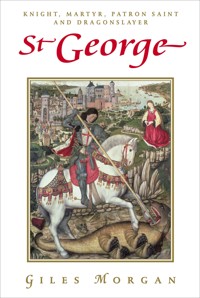
There are a number of charms or items which are said to deter revenants. Although there is variation in these they are often said to include holy water and garlic. Garlic was arranged around important entrances such as windows, chimneys and doors. Famously vampires were said to be repelled by crucifixes and rosaries. The appropriate way to destroy a vampire was by driving a wooden stake through its heart. There are some interesting parallels between the act of staking a vampire and the symbolism of the Christian warrior martyr St George who famously slew the dragon, a potent symbol of evil, by driving a lance into its mouth before beheading it. As we shall see, the eve of St George’s Day, 23 April, was believed in Eastern Europe to be the time when vampires and evil creatures held full sway.
Bram Stoker included this folkloric reference in Dracula and it is also interesting to note that Vlad Dracula, the Wallachian medieval nobleman from whom Stoker took the name for his character (see Chapter Six), was a member of a chivalric order of the Dragon of St George.
Feast of St George
In Chapter One of Dracula the young English solicitor Jonathan Harker, who is travelling to Transylvania to assist the count in acquiring properties in England, is warned that he should not travel on the eve of St George’s Day. He is staying in the Golden Krone hotel in Bistritz before travelling on to Dracula’s Castle and, when he questions the hotel landlord and his wife about the count, they are strangely reticent, pretending not to understand his German and crossing themselves. However, just as he is about to set out on his fateful journey the landlord’s wife begs him to stay.




