


Erhalten Sie Zugang zu diesem und mehr als 300000 Büchern ab EUR 5,99 monatlich.
- Herausgeber: Luath Press
- Kategorie: Gesellschafts- und Liebesromane
- Sprache: Englisch
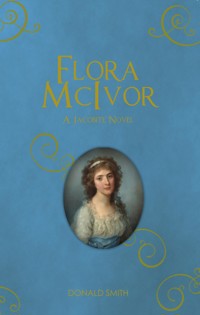
On the Feast Day of Bride, The Daughter of Ivor, Shall come from her mound, In the rocks amongst the heather. I will not touch Ivor's daughter, Nor shall she harm me. Two extraordinary women come back to full-bodied life. Flora McIvor has been rescued from the pages of Sir Walter Scott, who sent her to a nunnery. Her close friend, the real life Clementina Walkinshaw, was the love of Bonnie Prince Charlie, and mother of his only child. Both are caught up in a tangle of espionage and treachery following the defeat of the 1745 Jacobite Rising in Scotland.
Sie lesen das E-Book in den Legimi-Apps auf:
Seitenzahl: 258
Veröffentlichungsjahr: 2017
Das E-Book (TTS) können Sie hören im Abo „Legimi Premium” in Legimi-Apps auf:
Ähnliche














DONALD SMITH is a storyteller, novelist and playwright. Of Irish parentage, he was a founding Director of both the Scottish Storytelling Centre in Edinburgh’s Netherbow and the National Theatre of Scotland. In this book, his fourth historical novel, he returns to a lifelong fascination with the Jacobites, and their place in Scotland’s evolving story.
Flora McIvor
DONALD SMITH
First published 2017
ISBN: 978-1-910324-92-9
The author’s right to be identified as author of this book under the Copyright, Designs and Patents Act 1988 has been asserted.
© Donald Smith 2017
For Naomi Mitchison
On the Feast Day of Bride The Daughter of Ivor Shall come from her mound In the rocks amongst the heather. I will not touch Ivor’s daughter Nor shall she harm me.
Alles ist ein Traum
A Note for Readers: Jacobites in Books
WHY DID SO many people in Scotland support the restoration of their exiled Stuart kings, not least in 1745 when it seemed a long shot?
In his first novel Waverley, Walter Scott provides an answer that most people still accept. It was a Romantic cause – a gallant adventure – though doomed to failure because it ignored the power of the British state, following the Union of England and Scotland in 1707. The main purpose of that Union had been to keep the exiled Stuarts out.
So Scott’s treatment of his Jacobites in Waverley is admiring but also ironic – they will become mature adults in due course. That is why Flora McIvor, who is shaping up to be his heroine, must be sent to a nunnery, and the pallid hero Edward Waverley steered into the safer, more docile embrace of Rose Bradwardine. It is possible though to imagine a different future for Flora, one that reflects the powerful family loyalties and cultural values which motivated the Jacobites.
Which takes us to Alister Ruadh McDonell, often known as Young Glengarry since his father was chief of the Glengarry McDonells. They were among the most loyal of loyal Jacobite clans, and Alister Ruadh was pivotal in continuing Highland resistance after the defeat of the 1745 Rising at Culloden. The McDonells were later fêted by Walter Scott as the epitome of Highland virtues, which were happily harnessed to extending the British Empire through war and conquest. The Glengarry of his day gratefully presented Sir Walter with a pet deerhound.
But, unknown to Scott, and to subsequent readers, Young Glengarry had lived a double life. This left little trace, though perhaps it is no coincidence that Glengarry was the location of the first large scale clearance of Highlanders from their ancestral lands. I am grateful to Andrew Lang, a fellow writer and lover of Scotland, for painstakingly tracking down whatever documentary evidence my story can claim.
Overture
SHE WAS ON Clementina’s right, set slightly back. Yet although she kept her shoulders rigid, she could by straining forward peer down into the theatre. She was drawn by its warmth, away from a cold draught that blew from the rear of the box and touched her upper back with goose pimples.
For a moment Flora felt that draught as a welcome relief. Her whole frame was burning, but the pictures in her mind were as vivid as the stage she saw below her. Candles flickered unevenly amidst a fug of velvets and satins. The gloom was lit by gleams of jewellery or glittering brocade.
She saw her thirteen year old self at a distance but clearly, as if through a spy glass. Then she heard the music. It seemed to come from the ferment inside her body. Somewhere in the dark recess of the pit, the overture had begun. The music was sombre but flowing and Flora felt her body relax as the melody sounded through and around. She had felt the same way in church as a girl when the choir filled the cavernous spaces, and she became part of the rising wave.
But Flora was not then free to dream. To the left Her Majesty was upright, unbending. The high narrow forehead was averted in denial of such worldly pleasure. Her attendance was a duty – to be seen in the face of the world as consort of the legitimate king of Britain. The tiara glinting above her bound curls was worn like a crown of thorns. Queen Clementina’s gaze was directed to her left on the two princes, her sons. Charles Edward and little Henry sat right against the balcony on the stage side to get the best view. Oblivious to their mother’s determination that they be seen and admired, the boys were caught up in the music. Both were natural musicians, and for all her austerity Clementina was an indulgent mother, especially when it came to Charles Edward.
Calmed by the music, Flora’s mind was back in those interminable days of shadowy waiting. Charles’ cello had been a welcome diversion in the sombre routine favoured by Clementina. Her Majesty and His Majesty, King James, did not appear as a couple in Rome or travel together in public. It was as if there were two Courts at the Palazzo Muti existing side by side, between which the young princes were sole emissaries.
Flora focused on the memories in her mind, blocking out the twisted blankets, the narrow bed and the pain that demanded her attention.
What had she felt in the midst of those strange separations? Or had it not seemed strange? Her own parents were gone, and she had been taken away from her brother, who had stayed in France to be a soldier. The music had always been unalloyed pleasure; daily tension eased away.
King Orpheus and Eurydice his queen were singing together, blissfully carefree and in love, despite their royal alliance.
Welcome, my lord and love, Sir Orpheus, In this life you ever are my king.
Each sang to the other and then the two voices intertwined and blended, till finally their lips met in a loving kiss, only for the music to swell once more, and for the voices to separate and join in gradual crescendo.
Faces of Flora’s own long lost father and mother rose up in the darkness, like the miniature portraits she kept always at her bedside. They had loved each other as deeply as Orpheus and Eurydice, and had been divided by death. Yet she felt them still as loving presences, near to her in the same way that she and Fergus had been close, even though they too were kept apart. She wanted to enjoy the happiness of the lovers before they were sundered.
What if her own Lorenzo would not return? She would be left now in these rooms entombed by fire and pain forever. She reached out a hand from the covers but touched no-one. He too was lost. Even Bessie had gone.
She forced herself back to the candlelit stage. The underlying mood was brooding, but ornamented with forced happiness as Eurydice appeared. Soon tragic events were unfolding with the venomous sting of a snake prompting the removal of the young queen into the kingdom of death. Orpheus was left bereft as the music moved from disaster to lament. He could not stay in the palace alone, but taking his harp set out in search of his lost love. The scene was transformed by a backcloth of lonely woods, where he sat down on a rock and began to sing.
Flora saw immediately that the singer was not playing his harp, but drawing a demonstrative hand across its silent strings while the orchestra took up his plangent lament.
O doleful harp, with many a string, Turn all thy mirth and music into mourning And cease from all thy sweet melodies To weep with me thy lord and king, For I have lost in earth all my Joy – Where hast thou gone my Eurydice?
Flutes became birds singing in sad harmony, while the strings trembled like leaves in sympathy. This was how she and Fergus had been left, when first their father and then their mother had died in France. She no longer gazed at the singer with his gold painted face and high-crested wig. Instead she saw white skin and dark hair, and felt the warm hand of her brother as he led his little sister through the gardens at St Germain, pointing out her favourite flowers. As Flora wandered in her memories, Orpheus rose from his rock and continued to search, begging the gods to aid his quest. Till suddenly a triple masked monster burst from the wings – Cerberus, the dread porter, guardian of hell’s gate.
But Orpheus took up his harp again and lulled the three heads to sleep. Something menacing entered the music, as a procession of underworld beings came on stage encircling Orpheus in a slow dance. They touched him with black wands and nodding, dark plumed helmets while he stood bewildered by this phantasmagoria, until the dancers broke away on either side to reveal Hades and Persephone raised on two thrones, etched in ebony and silver. The audience gasped at the skill with which this tableau had been revealed by the swift movement of curtains behind the dancers. The king and queen of Death wore half masks, which gave their faces a sinister cast, and high pointed black crowns, studded with pearls.
Flora knew she had to tear off those masks. Who was hidden there? Face after face was exposed in rapid succession – James, Charles Edward, Murray, O’Kelly, yet she also knew they were all disguises. Only one face would appear, in its arrogant beauty, its cold disdain. She struggled to get up but her body was weighted, enveloped. Strong hands were pressing her down. All she could do was watch, trapped in the royal box.
Orpheus went down on one knee, resting his harp on the other, and began to play. This music pled his sorrow and his desire. Persephone turned towards her lord, but he listened impassively until the music faded to its end, when he lifted his right hand and gestured towards the wings.
Unnoticed as the music played, Eurydice had stepped into the shadows. She was clothed in a plain white shift, and her face was deathly white, her hair cropped short, while her arms hung down helplessly on each side of her emaciated, fevered body. Orpheus moved instinctively in her direction, but then froze in shock as Eurydice came into the light. His anguish was barely audible.
My lovely lady, my delight, How are you changed, how – Where are your rosy cheeks, Your crystal eyes and lashes dark, Your lips so red, soft to kiss?
Persephone put a hand on Hades’ arm, speaking in a full contralto.
Lord Hades, king of all below, Recall my coming here to dwell, My wasting and decline, My mother’s grief and woe, Till your heart gave way Yielding the boon of my return.
It seemed at first as if Hades would not even acknowledge this plea, staring inflexibly ahead through the eye slits of his mask. But then the orchestra took up compassion’s cause.
Clementina Sobieski rose abruptly from her seat, turning her back on the stage, and moved stiffly towards the door at the rear. Charles Edward looked round crossly,
‘Maman,’ he hissed, ‘you can’t leave now.’
‘Stay with Henry,’ she instructed over her shoulder, ‘I will send the carriage back before the final curtain.’
Flora should go with her mistress. Charles Edward looked back towards the action, the scene was dissolving, and Clementina was not to be seen. She tried to follow, but could not rise from this bed.
‘Please, Missis, drink this, Master will be coming home soon. Drink this, Missis, so’s you can lay back an’ rest.’
1
AS FLORA CAME out of sleep, sunlight was filling her room. It flowed in waves through the narrow windows and the door onto the rampart which she had insisted on leaving unscreened. There was blue sky and a few puffy white clouds blowing in early spring air.
She was home, her own grown up self. It was true.
Just for a moment Flora stayed beneath warm blankets hugging the pleasure to herself.
Sounds were gradually filtering through. The talk of people below; the clash of bowls and platters as remnants of the night’s feasting were cleared away; voices outside as the first clansmen of the day arrived or departed; the wheeling cries of birds that Flora was only beginning to be able to name and distinguish. How odd that all this should be fresh, when it was so old to her parents, like a birthright. To experience this after the seclusions of childhood, the gloomy curtained rooms, and the candlelit shadows. It was a world begun anew, her world.
Soon old Mairi would bring water in a cracked pitcher that had once belonged to Flora’s grandmother. Nicolette, the maid she had brought with her from St Germain, as instructed by Fergus, would also be in attendance. But Nicolette was struggling in the absence of toilette, with the mealtimes when knives and fingers were the only implements, and the sight of bare hairy legs. She did not seem to be acquiring Flora’s innate sense of ancient culture that lay beneath every aspect of Highland life.
Fergus, himself chief of Clan McIvor, was fully in command, having returned from exile two years before when the forfeitures of 1715 faded from the statutes. Flora’s new role was to act the hostess for her unmarried brother. Clan envoys and messengers were arriving daily from all points of the compass. Things were stirring which was why Fergus had called his sister home. The opportunity to restore McIvor fortunes was looming.
Yet Flora’s joys were the hunt and the poetry. She loved the feel of wind and rain on her face, out on the hill scenting deer to track. This was man’s preserve yet as daughter and brother of a chief she claimed her rightful place at the hunt. Flora could put a musket to her shoulder as firmly as any gillie, and she could draw a bowstring and let fly swift and sure as any clansman. Only decorum prevented her racing to the kill and gralloching the fallen beast with her own dirk. Such physical freedom attacked every sense in her body like the shock of the clear cold air on long muffled skin.
But her deepest pleasure was in the poetry and music, the bardachd of the clan. Flora had never lost the childhood Gaelic that had surrounded her French infancy, though the idiom of Clan McIvor’s Bard was rich and strange. Flora was determined to master this ancient tradition and to accompany her own halting Gaelic with the clarsach. This tree of strings seemed to resonate with the windblown hill country, the melancholy of its loves, and more recent struggles. This was her own culture, however distant and long denied. Like someone emotionally starving from a dragged out confinement, she wanted to grasp every impression, every experience, with both hands outstretched.
Suddenly, Mairi’s wheezes could be heard on the twisting stair, and without a moment’s further thought Flora swung out of her covers ready to splash the barely warm water generously over her tingling arms, shoulders and breasts. The sun embraced her white flesh as if she were a shining maiden of the dawn, while the old woman rubbed, and mopped and muttered in Gaelic around this long lost daughter of Ivor, who had at last come home.
Ablutions done, Flora pulled on her cotton petticoats and then the silk gown. Nicolette stood hapless while Flora added a tartan philabeg wrapped round twice like some eastern mantle. Then she was out on the ramparts, leaving Mairi’s grumbles and her maid’s tut-tutting adrift. With eyes closed she drew a deep lungful of bright air and, releasing it slowly into the breeze, she allowed her eyes to open onto a prospect she was sure she had once dreamed; if she was not dreaming still.
The brightness of morning was bringing out subdued colours from a landscape that had not yet fully woken to spring. The hill grasses were a dull yellow, the heather scrubbed by frost, and the birches huddled around the river leafless though silver in the sun. But those details were swept up by the scale of blue sky travelling over windblown clouds. They were like runners traversing the glens with feet barely touching the wintered earth.
The valley was unusually wide. Now that Flora had walked or ridden over most of the surrounding landscape, she realised that this glen was like a plateau. Below were much steeper valleys and narrow inclines twisting down towards the eastern lowlands. The river went directly south eventually reaching a steep, rocky pass which was guarded by the castle of Baron Bradwardine, the McIvor’s longstanding friend and neighbour. Once this had been a hostile gateway; dividing Highland and Lowland.
To the north, the wide glen was populated with scattered townships of single-roomed stone cottages. In them, family and animals shared the smoke filled, earth floored accommodation all winter. Beyond were the summer huts or sheilings, to which the cattle were driven leaving the lower ground for corn and oats. Further again, much higher mountains raised sharp peaks still streaked with snow. On some days when Flora looked from her tower those peaks seemed far distant, but on others when the air was still or moist they seemed to be unexpectedly clear, and near at hand.
But Flora’s gaze was more focused on what was happening around the castle. This was the McIvor realm though the stronghold was a tower house more than a castle. It had been built by Fergus’ grandfather who had decided to make this his ancestral seat, so bringing the former wanderings of the Clan Ivor to an end. Or so he had hoped. The ground spread out in all directions except east where a series of rocky ledges protected the flank of the rude fortress.
So extended was the valley that below the castle the river flowed into a broad shallow loch, and then out again at its southern end into the narrow descent. The loch, nearly two miles in length, was a moat for the kingdom of McIvor, and a ready source of fish and game birds for the hard pressed, hospitable chiefs. There were several islands in the loch and its edges were fringed with woodland, indented bays and a few pebbled beaches. Small boats were already on the water, one under sail.
Below the tower itself the ground levelled out towards the loch providing a natural gathering place for games or parades but there was no garden, formal or informal. Fergus’ piper was already tuning up for his morning salute and, as Flora had heard from her room at the top of the castle, a bustle of arriving and departing messengers fanned out from the gateway. She tore herself reluctantly away from the view to get the day’s news.
When Flora came down into the hall a table was already set out at the upper end with bowls of porridge and, in concession to foreign ways, some bread made from fine milled flour. The normal supplies of small ale and usquebagh were to hand, but beside them sat a solitary china tea cup waiting for infusion of the luxury leaves. So much as usual, but where was Fergus? Suddenly he hurried in already booted, and with his philabeg wrapped tight for travel.
‘Forgive me, Flora, but I must go to meet an unexpected guest.’
‘Who is that?’
‘Captain Waverley of Waverley Honour.’
‘An English officer is our guest?’
‘He comes from an old Jacobite family, and he is staying with the good Baron at Tullyveolan.’
‘I thought you were in dispute with Baron Bradwardine.’
‘A mere trifle of missing cattle. That misunderstanding has been washed away by our retrieval of beasts lifted by Donald Lean. Evan Dhu has been about the business.’
‘Donald Lean is a rogue, and I don’t know why you indulge him,’ chided Flora, galled to think how McIvor’s association with that lawless cateran must look in the eyes of the Baron and his gently educated daughter, Rose.
‘Even rogues have their uses.’ The lines round Fergus’ dark McIvor eyes crinkled in a smile which his mouth refused. ‘It is Donald that has brought Edward Waverley to Castle McIvor at this moment.’
‘Is he a serving officer?’
‘His regiment is stationed at Dundee. But we need the Jacobite English above all men.’
‘Would Waverley of Waverley Honour desert his commission?’
‘He is on leave visiting the Baron. Their families, as you know, served together in the Rising of 1715. We cannot ask anything dishonourable of our guest, but when the time comes for action… We must test his intentions, and encourage a change of heart.’
‘Are things really at a crisis, Fergus?’ Flora had taken hold of her brother’s arm and pulled him a little towards her.
The McIvor eyes swivelled out of focus. His face became blank, smooth skinned. ‘I must go or we will be late. Come, Calum,’ he shouted over Flora’s shoulder, ‘we’ll go and meet Euan Dhu on the way.’
The figure sweeping from the hall, followed by his personal attendant, was compact and sturdy; he seemed to take all the energy with him out of the room. His less than average height was balanced by broad shoulders, controlled force and poise. Though traditionally equipped with sword, pistols and dirk, Fergus wore tartan trews and sported a stylish bonnet with three eagle feathers. His dark beard was closely trimmed with the rest of his tanned face shaven and shining.
Flora dipped some bread in cream and slowly scooped up porridge from a wooden bowl. After chewing a few mouthfuls she retired back to her chamber on the topmost storey to reconsider the dressing of her own unruly raven hair.
Later in the morning, in accordance with the routine of recent months, MacMurrough the Bard appeared to give Flora instruction in the music of the clarsach. Using a combination of her childhood Gaelic, the clan poet’s elementary English, and the universal language of music, steady progress was being made. Yet Flora’s attention was not on the old man’s lessons.
‘We are expecting a guest.’
‘An English.’
‘Yes, but not any Englishman. Captain Waverley is a soldier of ancient family, loyal to our king.’
‘The king over the water!’ MacMurrough looked round for a flask from which he could pledge his loyalty. ‘We are in strange times to be welcoming a redcoat.’
‘Perhaps, you will compose a poem for the occasion?’ Flora was unsure of the etiquette, yet knew that the Bard could compose spontaneously when he chose.
‘The Bard will sing in honour of his chief.’
‘Of course,’ Flora acquiesced, ‘yet the chief’s guests are also deserving of honour.’
MacMurrough began to stroke the strings and to recite some classic verses about the beauty, strength, fame, endurance, audacity, wisdom and virtue of Fergus McIvor, culminating with his generosity to poets and harpers. As Flora murmured appreciation the Bard began a catalogue of all the Highland clans and their qualities. Flora was barely able to follow but understood that the selection of MacDonalds, McDonells, MacLeans, Camerons and MacNeills, amongst others, was based on their allegiance to the exiled Stuarts.
Then came an unfamiliar verse that Flora made MacMurrough repeat until she had the sense and the melody at her own command.
Fair-haired stranger from the land that is green Whose steed is shining and smooth as raven’s wing And raises its head to neigh like the eagle’s battle cry, Remember the faith and courage of your forbears, The loyalty they held in their hearts without faltering.
Clearly, Fergus had already briefed the Bard as to what might be required, and Flora was happy to follow suit, till she had the song fully learned.
After MacMurough’s withdrawal, Flora called Nicolette, to wash her hair and curl its tumbling waves into more orderly ringlets. This evening had turned into a test for the young McIvors, who had been left orphans and exiles to pick up the ragged threads of their heritage. Flora was determined to succeed whatever the cost to herself. Even the small pension she received from the will of Clementina Sobieski, her deceased royal mistress, had been diverted to the support of the clan’s officers, not least the Bard and his extended family. When her hair was dried, Flora had her best silks laid out on the bed. Despite several variations of ribbon and lace, pride of place remained with the McIvor plaid wrapped round her bare white shoulders. The combination even viewed in her mottled mirror was striking.
By late afternoon Flora was out on the battlements which were still warmed by sunlight coming from the western side of the glen. There were a few boats still on the loch but the main activity was on the other side of Castle McIvor. In the distance, straggles of people could be seen moving out of the townships. Closer to hand these appeared as family groups heading towards the evening gathering. Below the walls, clansmen were milling about in their best philabegs, fully armed with claymores, pistols, dirks and metal studded shields slung over their shoulders. At their centre a smaller group – the chief’s personal bodyguard – held Lochaber axes in addition to their other weapons. There was no sign of Fergus.
Suddenly the sound of bagpipes was heard from the lochside. One of the boats had pushed ashore and Flora could see three figures stepping out. First unmistakably came the tall frame of Evan Dhu, then Fergus, and lastly, helped out by Evan, a slender red-coated stranger. The three began to walk towards the castle, gathering an escort as they came.
Meanwhile the bustle below had formed itself into an assembly. The men stood in curved rows fanning out from the gateway, each rank bristling with weapons. As the three figures came closer there was a strange groaning as more bagpipes were swelled, and a wave of sound broke into the air. When the chief himself appeared the men clashed swords on shields and shouted in acclamation. Fergus stopped with the redcoat at his side and Evan behind. He raised his hand and silence fell.
‘The McIvor is honoured by the greeting of his people. And our clan is honoured to welcome Edward Waverley. You must excuse our customs, Captain Waverley. I had forgotten that some of my clansmen were gathering today for our feast.’
At a signal from Evan, the clashing of swords and skirling of pipes broke out again. Listening now from the shelter of her room, Flora could imagine the tall fair-haired stranger being ushered through the battered gates, as if this display of martial tradition was a routine hardly worth particular notice. As yet, Flora herself had been unable to get a good look at the young man whom Fergus was so determined to impress.
By the time Flora was summoned to the high table of the feast everyone was in their places. As she approached, Captain Waverley rose to his feet and she nodded in acknowledgement of his courtesy but slipped past unnoticed to her seat on Fergus’ left hand. The din was deafening and ruled out polite conversation.
The chief and his principal guests sat at an extended top section of a huge oak table which stretched the length of the hall which in turn took up the whole ground floor of the castle. Below Fergus, Waverley and visitors from neighbouring clans were Clan McIvor’s main land holders, most of whom were related through ties of blood or ancient obligation to the chief. Next were the officers of the chief’s household and below them again the clansmen, small farmers and cottars who made up the body of the clan. On this occasion the feast continued on trestles out the hall doors into the courtyard and then onto the green beyond. The lower tables were surrounded by landless men, dependents, women, children and finally a tumultuous host of dogs which having come in various company were now vying lustily for place and attention.
Men and women moved busily about the tables bringing food, replenishing drinking vessels and scooping up leftovers to carry down to the dogs and humans, who were below even the lowest table. Those at the high end were eating from boards and ashets piled with finely dressed cuts of venison, mountain hare, whole salmon, grouse and ptarmigan. Further down the table were roughly hewn joints of mutton and beef, but the centrepiece was a whole roast lamb still standing upright with a sprig of parsley stuck in its mouth. Those nearby hacked at the carcass with their dirks.
Further down again were pots of broth, cheese, onions and oatcakes, supplemented by the leftovers from higher up. These supplies were constantly passed on to the crowd outside. Drinks were administered in the same degree with champagne and claret flowing at the top end while whisky and then strong beer were poured as the table descended. At the far end penny ale found its way in copious quantities through the hall doors so ensuring that none felt slighted or excluded.
Since her own arrival some months before, Flora had experienced many clan feasts but there was something hectic and raucous about this occasion. There were more armed clansmen gathered than she had seen before; barely suppressed excitement and even fervour seemed to possess the whole company. Flora wondered what Captain Waverley of Waverley Honour would make of such an excess of Highland custom. It was certainly too noisy to ask, as neighbours competed to be heard across a table that looked increasingly like the aftermath of a battle.
Then suddenly the hubbub subsided. Bidden or unbidden, MacMurrough had taken up his place beside the fire. He stood small harp in hand, as the last voices died away, and when the Bard was satisfied he had the assembly’s full attention he struck his first chord. Flora knew what was coming and followed closely. First was the traditional panegyric of the chief, his ancestry, valour and virtue, the strength of his fighting men, the loyalty of his whole clan to their last breath. Next came praise of neighbouring and allied clans, at which their representatives at the high table rose and bowed in gracious recognition. Then came the verse praising Waverley. Flora stole a glance in his direction as did many others in the hall. The young visitor remained still and formally upright, though clearly gripped by this unfamiliar performance.
Then abruptly the music changed to a more vigorous tempo. MacMurrough struck the strings with renewed force and poured a passionate river of angry words into the atmosphere. This was unexpected but Flora recognised the form if not the precise meaning. This was a call to arms and incitement to battle. She could feel the pent up energy build till it could be held back no longer and with a full throated roar the long table took up the refrain, fists, knives and gun butts beating on the oak boards.




